Rādhā-Braja-mohana Mandira
राधा-व्रजमोहन मन्दिर Hindi name proposed
Also called Rādhā Braja-mohana Temple, Braja-mohan, Rādhā Braja-mohan
In short
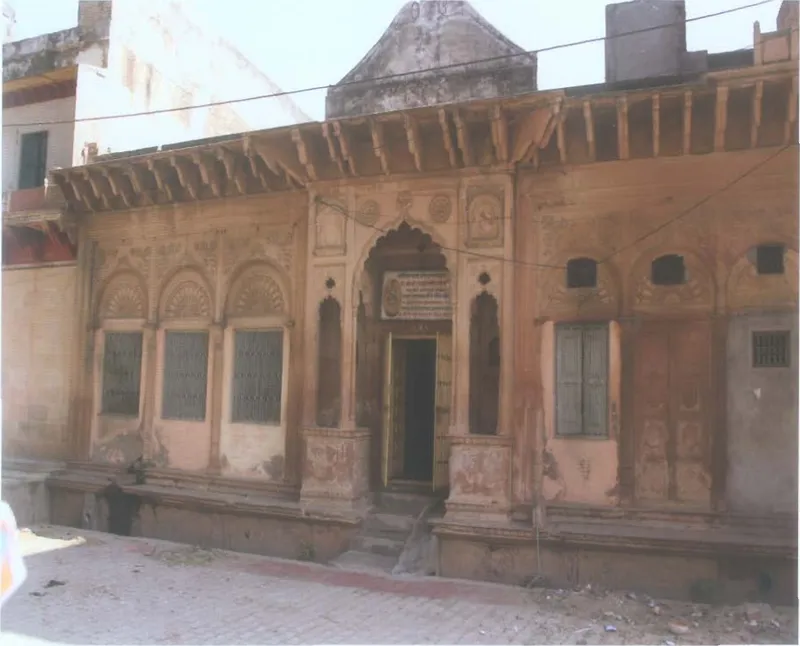
The Rādhā-Braja-mohana Mandira is a temple in Vṛndāvana whose entrance faces Jñāna-gudaḍī.[1] According to the guidebooks The Color Guide to Vṛndāvana (2000) and Vṛndāvana, the Playground of God (2010), its main Deity is the Braja-mohana whom Śrīla Narottama dāsa Ṭhākura installed at the great festival in his home village of Kheturi, in Bengal, where Śrīla Śrīnivāsa Ācārya performed the abhiṣeka, the ceremonial bathing of the Deities.[2 +6] The Bhakti-ratnākara names Śrī Brajamohana among the Deities of Kheturi but does not tell of Him coming to Vṛndāvana; the oldest source found that does is a Bengali book of 1920.[2 +5]
Key facts
| Kind | temple |
|---|---|
| Region · area | Vṛndāvana |
| Ācāryas | Śrīla Narottama dāsa Ṭhākura, Śrīla Śrīnivāsa Ācārya |
The Gosvāmīs and ācāryas
The festival at Kheturi
The Bhakti-ratnākara (Tenth Wave) tells the festival at Kheturi on the full moon of Phālguna. With the permission of Śrī Caitanya Mahāprabhu's associates, Śrīla Śrīnivāsa Ācārya performed the abhiṣeka of six Deities, seated them on their thrones and announced the names that the Lord had made known in a dream: Gaurāṅga, Ballabīkānta, Śrī Brajamohana, Śrī Kṛṣṇa, Śrī Rādhākānta and Śrī Rādhā-Ramaṇa.[2 +5] Then, the same work tells, Śrīla Narottama dāsa Ṭhākura bowed down, full of joy, and spoke a verse of his own that names the six.[2 +5]
শ্রীকৃষ্ণ শ্রীরাধাকান্ত শ্রীরাধারমণ ॥ এ ছয়ের অভিষেক-শোভা অতিশয়। … নরোত্তম সুখের সমুদ্র মগ্ন হৈয়া। প্রণময়ে শ্রীপ্রভুগণের নাম লৈয়া ॥ তথাহি তৎকৃতপদ্যং ॥ গৌরাঙ্গবল্লবীকান্ত শ্রীকৃষ্ণব্রজমোহন। রাধারমণ হে রাধে রাধাকান্ত নমোহস্ত তে ॥
śrīkṛṣṇa śrīrādhākānta śrīrādhāramaṇa
e chaẏera abhiṣeka-śobhā atiśaẏa| … narottama sukhera samudra magna haiẏā| praṇamaẏe śrīprabhugaṇera nāma laiẏā
tathāhi tatkṛtapadyaṁ
gaurāṅgaballabīkānta śrīkṛṣṇabrajamohana| rādhāramaṇa he rādhe rādhākānta namohasta te ||
Śrīla Jāhnavā-devī and Śrīla Vīrabhadra Gosvāmī were present, as a purport in Śrīla Prabhupāda's Caitanya-caritāmṛta records from Śrīla Bhaktisiddhānta Sarasvatī Ṭhākura's Anubhāṣya; the Bhakti-ratnākara shows Śrīla Jāhnavā-devī seated apart during the abhiṣeka.[2 +4] The two guidebooks call it the first festival held for Śrī Caitanya Mahāprabhu's appearance day, attended by all the important Vaiṣṇavas of the time.[2 +4]
General teaching (does not name the place)“Kānu Ṭhākura was present during the Kheṭari utsava, when Jāhnavā-devī and Vīrabhadra Gosvāmī were also present.”
Śrīla Prabhupāda, Śrī Caitanya-caritāmṛta, Ādi-līlā 11.40, purport (quoting Bhaktisiddhānta Sarasvatī's Anubhāṣya) · vedabase.io
The Deity in Vṛndāvana
The Bengali Vṛndāvana-kathā (1920) says that Brajamohana, one of the six Deities of Khetarī that Śrīla Śrīnivāsa Ācārya bathed, was brought from that village on the bank of the Padmāvatī and is kept at "Narottama Ṭhākura's pāṭa", in the house of worship of the zamindars of Rajshahi. It gives no date, does not say who brought Him, and does not name Jñāna-gudaḍī, so that this is probably the same temple, but the book does not say so.[2 +6] The Color Guide to Vṛndāvana (2000) adds that of the Kheturi Deities He is the only one brought to Vṛndāvana for worship; it is the only source for this, and it gives no date or reason.[3 +1] No source found tells when this temple was built or by whom.
Location
| Where it is | 'opposite Jñāna Gudri'[13] |
|---|
Nearby places
Jñāna-gudri
Where the sources differ
The sources differ on several points of the Kheturi festival. The Bhakti-ratnākara, the guidebooks and the Vṛndāvana-kathā give different numbers of Deities installed there.[5 +1]
Accounts differ How many Deities were installed at the Kheturi festival
- Bhakti-ratnākara, Tenth Wave (1912 ed. pp. 639-640)six Deities (śrī-vigraha chaya), named Gaurāṅga, Ballabīkānta, Śrī Brajamohana, Śrī Kṛṣṇa, Śrī Rādhākānta, Śrī Rādhāramaṇa
- Vṛndāvana, the Playground of God (2010)Śrīnivāsa 'carefully placed each of the six Deities on Their own thrones' and announced the same six names
- The Color Guide to Vṛndāvana (2000)'Of the five Deities installed at that time' (entry 70); 'Narottama installed five sets of Deities' (Narottama's entry)
- Vṛndāvana-kathā (1920), printed pp. 99 and 250five Rādhā-Kṛṣṇa forms and one Deity of Caitanya, installed at Narottama's request by King Santoṣa Datta (p. 99); one of the six Deities installed with abhiṣeka by Śrīnivāsa (p. 250)
The wording of these accounts is our summary of the sources, not a published translation.
Whom the sources name as holding the festival.[5 +2]
Accounts differ Who is named as holding the Kheturi festival
- The Color Guide to Vṛndāvana (2000)Narottama returned to Kheturi and organized the first Gaura-pūrṇimā festival, installing the Deities
- Śrīla Bhaktisiddhānta Sarasvatī's Anubhāṣya as quoted in CC Ādi 11.29 purport'the festival at Khetari' that Śrīmatī Jāhnavā-devī 'performed'
- Bhakti-ratnākara, Tenth Wavethe festival is held at Narottama's temple; Śrīnivāsa performs the abhiṣeka with the associates' permission; Jāhnavā sits apart (no organizer named on the pages read)
- Vṛndāvana-kathā (1920), printed p. 99at Narottama's request King Santoṣa Datta installed the Deities at Khetarī with great pomp; Śrīnivāsa performed the abhiṣeka
When the festival took place: one guidebook gives about thirty years after Śrī Caitanya Mahāprabhu's disappearance, and the Vṛndāvana-kathā (1920) reports dates from 1582 to about 1615.[2 +4]
Accounts differ When the Kheturi festival took place
- Vṛndāvana, the Playground of God (2010)'approximately 30 years after the disappearance of Lord Caitanya Mahāprabhu' (no year)
- Vṛndāvana-kathā (1920), printed p. 101, textafter this festival the installation of Rādhā-Kṛṣṇa Deities spread in Bengal; then [it was] about 1615 AD, in Jahāṅgīr's reign, nearly a hundred years after Caitanya-deva's journey to Vṛndāvana
- Vṛndāvana-kathā (1920), printed p. 101, footnote (reporting others)Dineś Bābu: Śaka 1504 (1582 AD); another author: Śaka 1510 (1588 AD); Nagendra Bābu's Braja-parikramā: Vīra-hāmbīra's reign began in Śaka 1519 (1597 AD), the books came after some years and the festival later, so near the end of Akbar's reign
- Bhakti-ratnākara, Tenth Wave (pages read)the Phālguna full moon; no year
The wording of these accounts is our summary of the sources, not a published translation.
Where the guidebooks place Kheturi today.[2 +4]
Accounts differ Where Kheturi is today
- The Color Guide to Vṛndāvana (2000)the Kheturi festival 'in West Bengal'
- Vṛndāvana, the Playground of God (2010)'Kheturi in current-day Bangladesh'
- Vṛndāvana-kathā (1920), printed p. 250the village Khetarī on the bank of the Padmāvatī (no district or country named); the Deity is kept in Vṛndāvana by the zamindars of Rajshahi
- Bhakti-ratnākara, Eleventh Wave (1912 ed. p. 680)from Khetari Jāhnavā's party crossed the Padmāvatī to the village Budhari (no district named)
The wording of these accounts is our summary of the sources, not a published translation.
References
13 references
- Vṛndāvana, the Playground of God (2010), Bhakti Caitanya Svāmī, PDF p. 226
- Vṛndāvana, the Playground of God (2010), Bhakti Caitanya Svāmī, PDF p. 225
- The Color Guide to Vṛndāvana (2000), Written and Photographed by Rājaśekhara dāsa Brahmacārī, PDF p. 134
- The Color Guide to Vṛndāvana (2000), Written and Photographed by Rājaśekhara dāsa Brahmacārī, PDF p. 113
- Śrīla Narahari Cakravartī, Bhakti-ratnākara, Tenth Wave (daśama taraṅga), 1912 ed. p. 639, 2nd ed., 1912
- Pulinbihārī Datta, ch. 20 (viṁśa pariccheda), list of temples, item 9 'নরোত্তম ঠাকুরের পাট' (Narottama Ṭhākura's pāṭa), printed p. 250
- Śrīla Narahari Cakravartī, Bhakti-ratnākara, Tenth Wave (daśama taraṅga), 1912 ed. p. 640, 2nd ed., 1912
- Pulinbihārī Datta, ch. 7 (saptama pariccheda), on Narottama dāsa Ṭhākura, printed p. 99
- Śrīla Narahari Cakravartī, Bhakti-ratnākara, Tenth Wave (daśama taraṅga), 1912 ed. p. 640, 2nd ed., 1912
- Śrīla Prabhupāda, Śrī Caitanya-caritāmṛta, Ādi-līlā 11.40, purport (quoting Bhaktisiddhānta Sarasvatī's Anubhāṣya) · vedabase.io
- Śrīla Prabhupāda, Śrī Caitanya-caritāmṛta, Ādi-līlā 11.8, purport (quoting Bhaktisiddhānta Sarasvatī's Anubhāṣya) · vedabase.io
- Śrīla Prabhupāda, Śrī Caitanya-caritāmṛta, Ādi-līlā 11.29, purport (quoting Bhaktisiddhānta Sarasvatī's Anubhāṣya) · vedabase.io
- Vṛndāvana, the Playground of God (2010), Bhakti Caitanya Svāmī