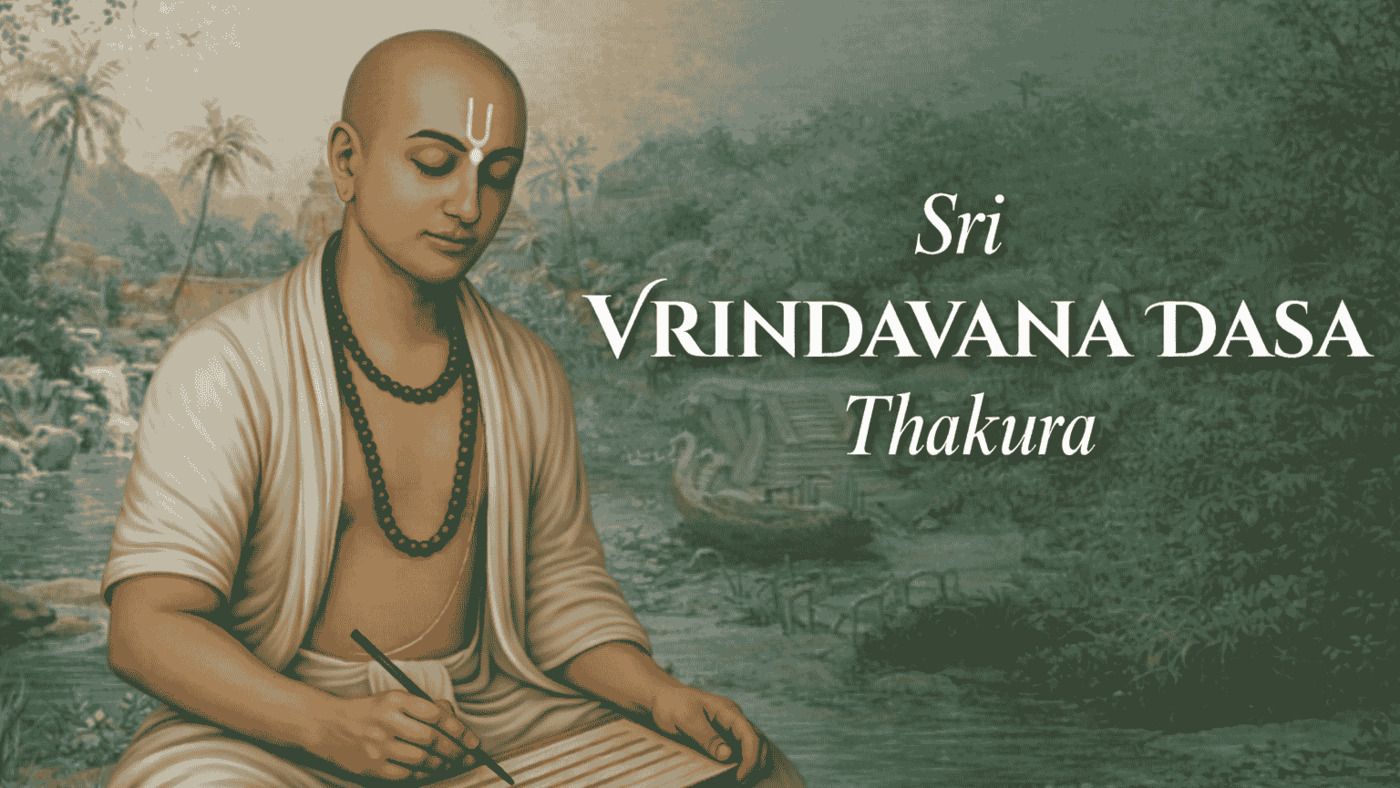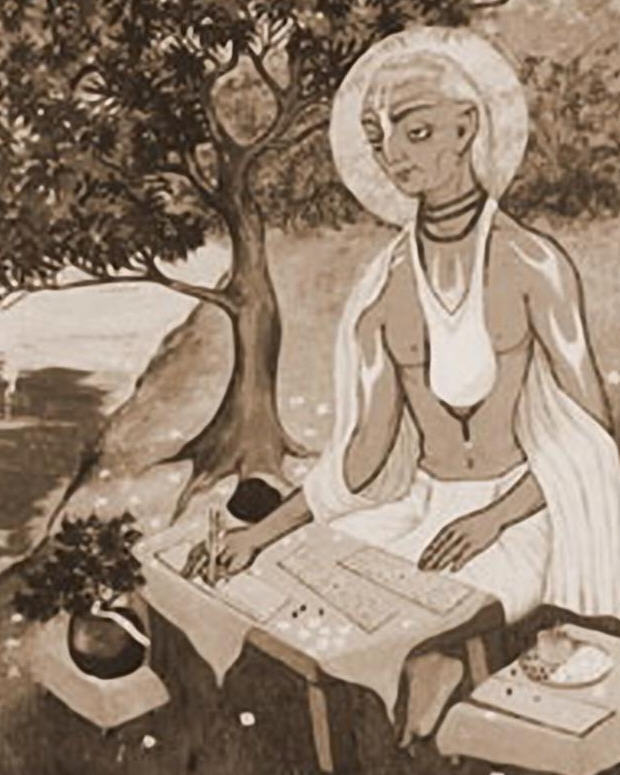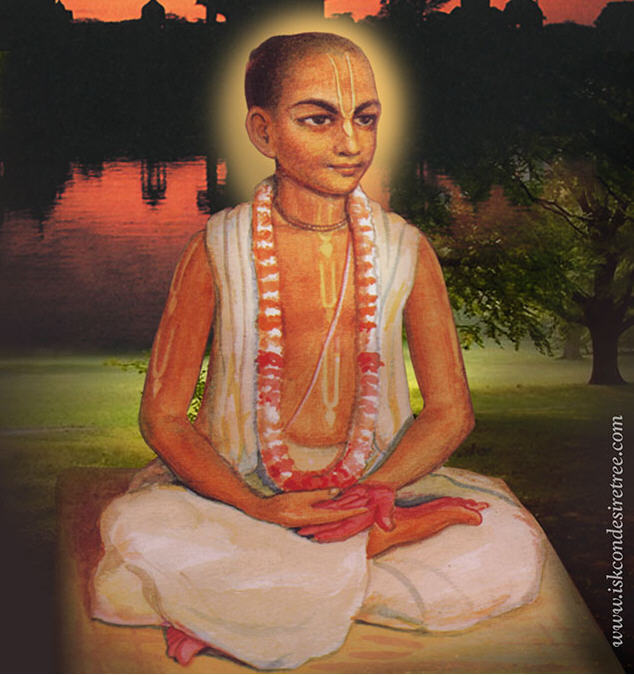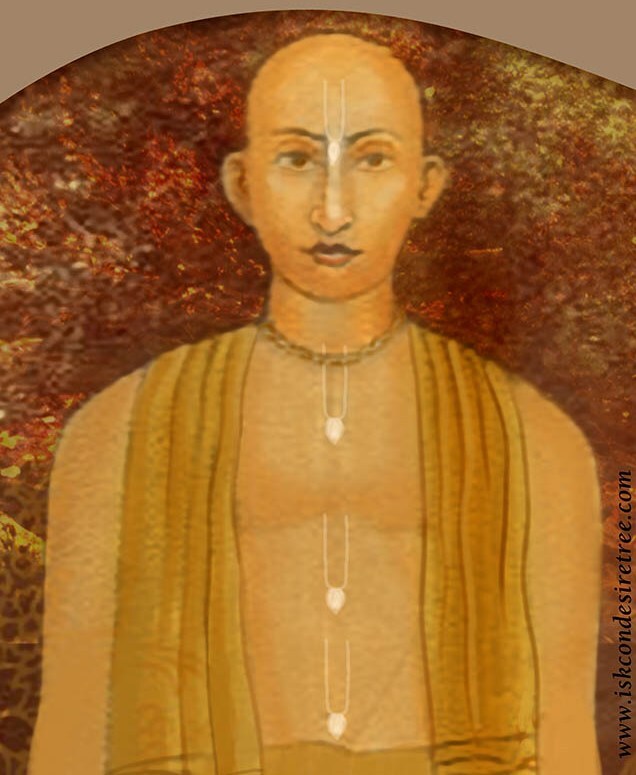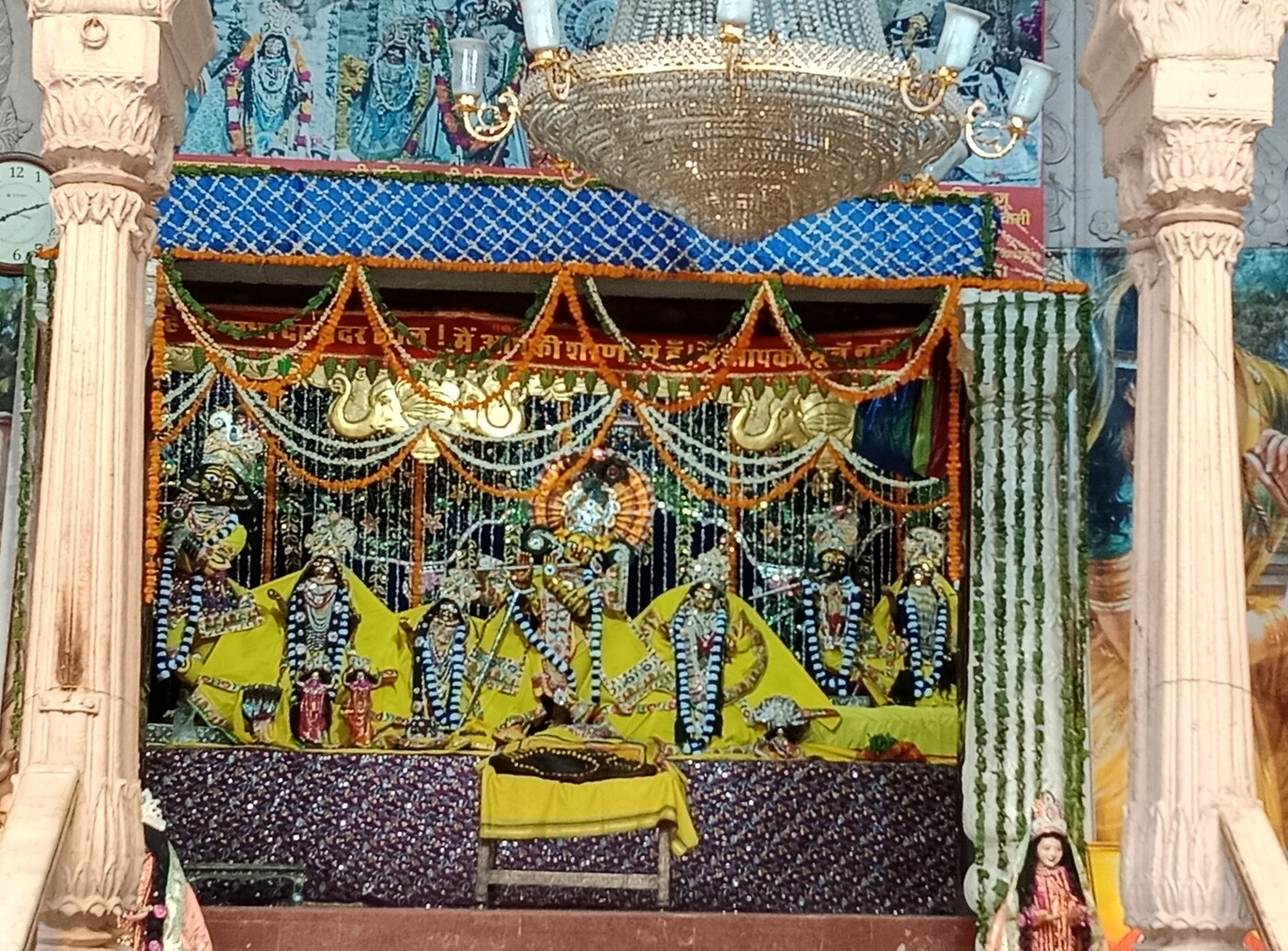
Srila Srinivasa Acharya
The Acharya Who Carried the Goswamis' Scriptures to Bengal
Also known as Srinivasa Acharya, Shrinivas Acharya, Srinivas Acarya, Shrinivasa Acarya, Srinivasa Acarya Thakura
“kṛṣṇotkīrtana-gāna-nartana-parau premāmṛtāmbho-nidhī / dhīrādhīra-jana-priyau priya-karau nirmatsarau pūjitau - They are always engaged in chanting the holy name of Krishna and dancing, like an ocean of love of God, popular with both the gentle and the ruffians, because they are not envious of anyone.”
Opening verse of Srinivasa Acharya's Sad-Gosvamy-ashtaka, sung before Bhagavatam class in Gaudiya Vaishnava and ISKCON temples worldwide
doyā koro śrī-ācārya prabhu śrīnivāsa
rāmacandra-saṅga māge narottama-dāsa
"O Srinivasa Acharya, successor to the six Goswamis, please be merciful to me. Narottama dasa always desires the company of Ramachandra." So Narottama Dasa Thakura prays for his own siksha guru's mercy in his song Savarana-sri-gaura-pada-padme. Srila Prabhupada's purport to this verse begins: "After the six Gosvamis, the next acharya was Srinivasa Acharya. Actually, Narottama dasa Thakura was in the disciplic succession after Srinivasa Acharya and was almost his contemporary... The whole process is that we should always pray for the mercy of the superior acharyas and keep company with pure devotees."
According to tradition, Srinivasa Acharya was born only because Chaitanya Mahaprabhu Himself promised a childless brahmana couple in Bengal that their son would carry the Goswamis' writings out of Vrindavana. Decades later, that is almost exactly what happened. Srinivasa was trained directly by Jiva Goswami and Gopala Bhatta Goswami. He carried the core scriptures of Gaudiya Vaishnavism from Vrindavana to Bengal on an ox-cart. A bandit-king stole them from him, but Srinivasa came through this and converted that same king to Vaishnavism. He spent the rest of his life preaching. He married, raised a family of teachers, and helped organize the movement's most important early gathering at Kheturi.
| Detail | Description |
|---|---|
| Birth | Full-moon day of Vaishakha; year given variously as roughly 1517 or 1530 (disputed, see below) |
| Birthplace | Chakhandi, on the Ganges, Bengal |
| Parents | Gangadhara Bhattacharya (later known as Chaitanya Dasa) and Lakshmi Priya |
| Diksha Guru | Gopala Bhatta Goswami |
| Siksha and philosophical training | Jiva Goswami |
| Chief works | Sad-Gosvamy-ashtaka (Eight Prayers to the Six Goswamis); a commentary on the Bhagavatam's four core verses |
| Manjari identity | Mani Manjari, assisting Guna Manjari (Gopala Bhatta Goswami) in the service of Radha and Krishna |
| Disappearance | Place and year not recorded by tradition |
A Son Promised by Chaitanya Mahaprabhu #
The story tradition tells about Srinivasa's birth begins with his father. A Bengali brahmana named Gangadhara Bhattacharya traveled to the town of Katwa. He arrived just as Chaitanya Mahaprabhu was taking sannyasa, the renounced order of life. Watching the Lord's hair being cut, Gangadhara was dazed with grief and love, and he could do nothing but repeat "Chaitanya! Chaitanya!" The name stayed with him, and from then on people called him Chaitanya Dasa. Some years later, still childless, he and his wife Lakshmi Priya traveled to Jagannatha Puri to ask Mahaprabhu's blessing for a son. According to the Bhakti-ratnakara, Chaitanya Mahaprabhu spoke to His servant Govinda while the couple could hear. He said that a son named Srinivasa, "the manifest form of My love," would soon be born to them. He also said that just as the Lord would bring the bhakti scriptures into the world through Rupa and Sanatana Goswami, He would have them distributed through Srinivasa. The child was born on a full-moon day of the month of Vaishakha in the small village of Chakhandi, on the Ganges. Sources disagree on the year. Some accounts place his birth around 1517 and others around 1530. Neither date can be confirmed by an independent record, so the year remains open, not settled. But the sources agree on his age compared with the others. Srinivasa was older than both Narottama and Shyamananda, and by most estimates he was already a young man by the time of Chaitanya Mahaprabhu's own disappearance.
Losing Every Teacher Just Before Meeting Them #
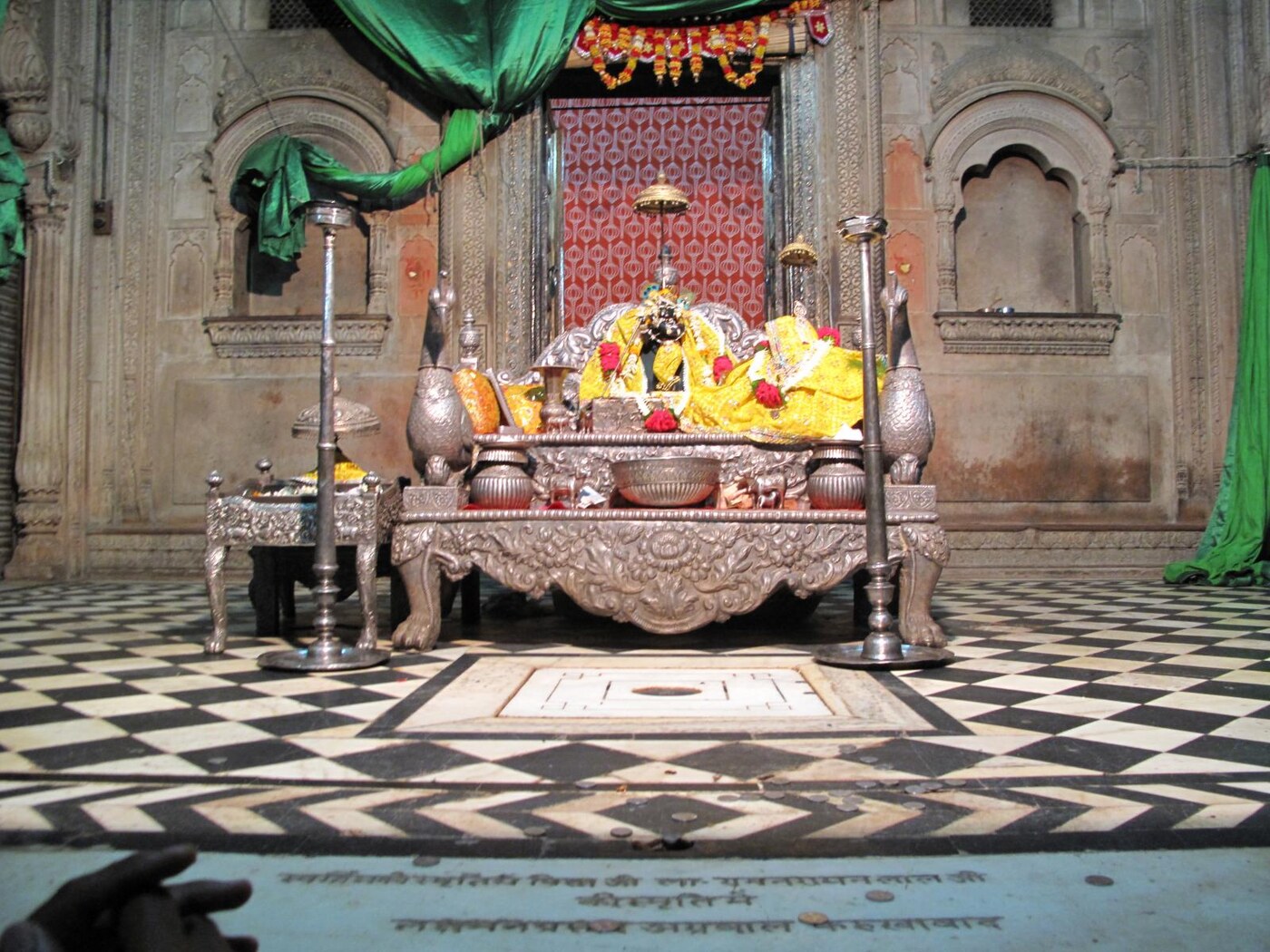
Srinivasa's early life shows a strange pattern. Again and again, he set out to meet a great devotee and arrived just after that person had already left the world. He studied grammar and poetics as a boy under the scholar Dhananjaya Vidyavachaspati. He took his first instruction in devotion from Narahari Sarakara Thakura of Shrikhanda, a close associate of Chaitanya Mahaprabhu. When his father died, Srinivasa moved with his mother to Jajigram. From there he set out for Jagannatha Puri to see Mahaprabhu in person. But on the road he learned that the Lord had already disappeared. He was filled with grief, but because of a dream he continued to Puri anyway. There he was received by Gadadhara Pandita, who told him that Mahaprabhu Himself had asked him to teach Srinivasa Srimad-Bhagavatam. That teaching had barely begun when Gadadhara Pandita, too, passed from the world.
The same thing happened again when Srinivasa finally set out for Vrindavana years later. He learned along the way that Sanatana Goswami had died four months earlier, and when he reached Mathura he was told that Rupa Goswami had died only three days before. By his own account he collapsed on the ground, certain he was the most unfortunate man alive. He had now failed, three times over, to reach a teacher before that teacher's disappearance. Tradition says Rupa and Sanatana appeared to him that night in a dream and told him to take shelter of Gopala Bhatta Goswami and study under Jiva Goswami instead. The tradition sees these repeated disappointments as a test of his devotion, not just as bad luck. This cannot be checked as history. Only the pattern itself is reported the same way across the sources.
Diksha Under Gopala Bhatta, Training Under Jiva Goswami #
More than one great teacher shaped Srinivasa's formal education, so naming just one "guru" for him does not give the full picture. The sources agree clearly on his diksha, or formal initiation. Srinivasa received it from Gopala Bhatta Goswami at Vrindavana. According to the Prema-vilasa, Gopala Bhatta Goswami also revealed to Srinivasa his eternal identity in Krishna's pastimes. This identity is Mani Manjari, who forever assists Guna Manjari in her service to Radha and Krishna. Guna Manjari is Gopala Bhatta Goswami's own manjari-svarupa. The same source describes Srinivasa as an incarnation of Mahaprabhu's own ecstasy. Gopala Bhatta then sent him to Jiva Goswami, who was by then the leading philosopher among the Goswamis. He sent him for the deeper education in Gaudiya Vaishnava theology and scripture that diksha alone does not give. Jiva took personal charge of Srinivasa's studies. Jiva was deeply impressed by how Srinivasa explained a verse from Rupa Goswami's Ujjvala-nilamani, and it was Jiva who gave him the title "Acharya." Two other young students were studying under Jiva at the same time. One was Narottama, who had already been initiated by Lokanatha Goswami. Jiva now gave him the name Narottama Thakura Mahasaya. The other was Duhkhi Krishnadasa, a disciple of Hridaya Chaitanya, whom Jiva renamed Shyamananda. The three became close friends for life. Later, Jiva Goswami gave these same three the task of carrying the Goswamis' writings back to Bengal. They were Srinivasa, Narottama Dasa Thakura, and Shyamananda Pandit. The fuller account of this training is told in Training Under Jiva and Gopala Bhatta Goswami.
Carrying the Scriptures to Bengal, and a Robber King's Conversion #
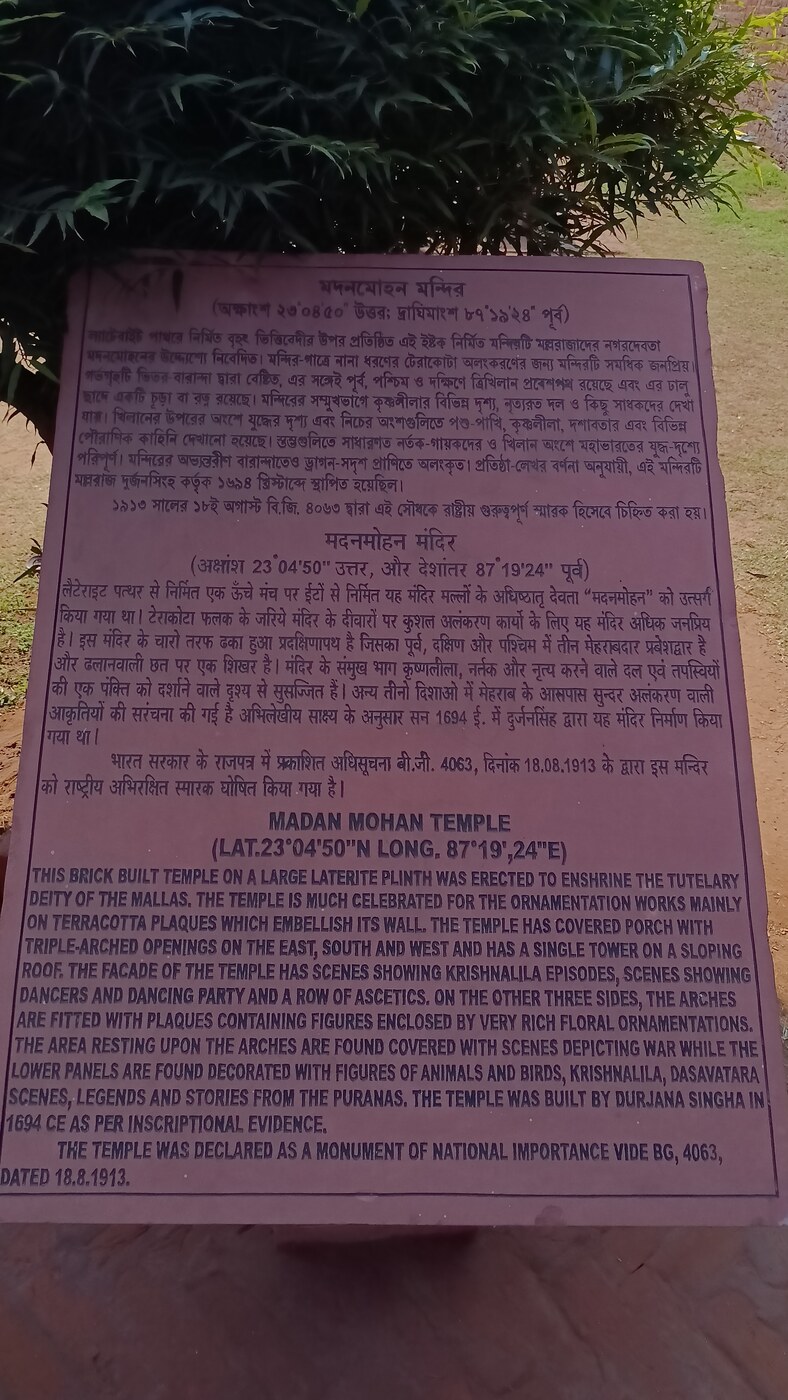
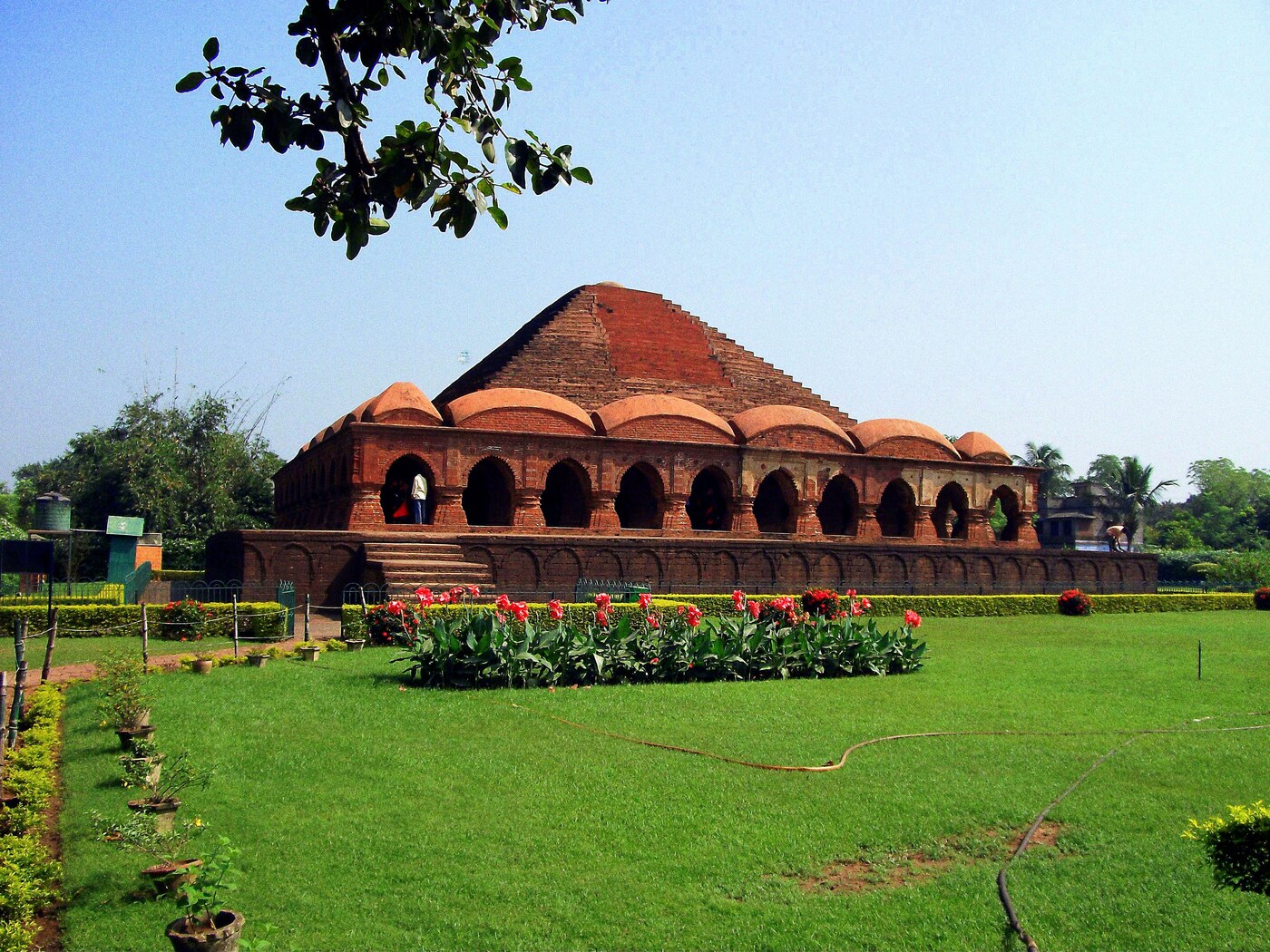
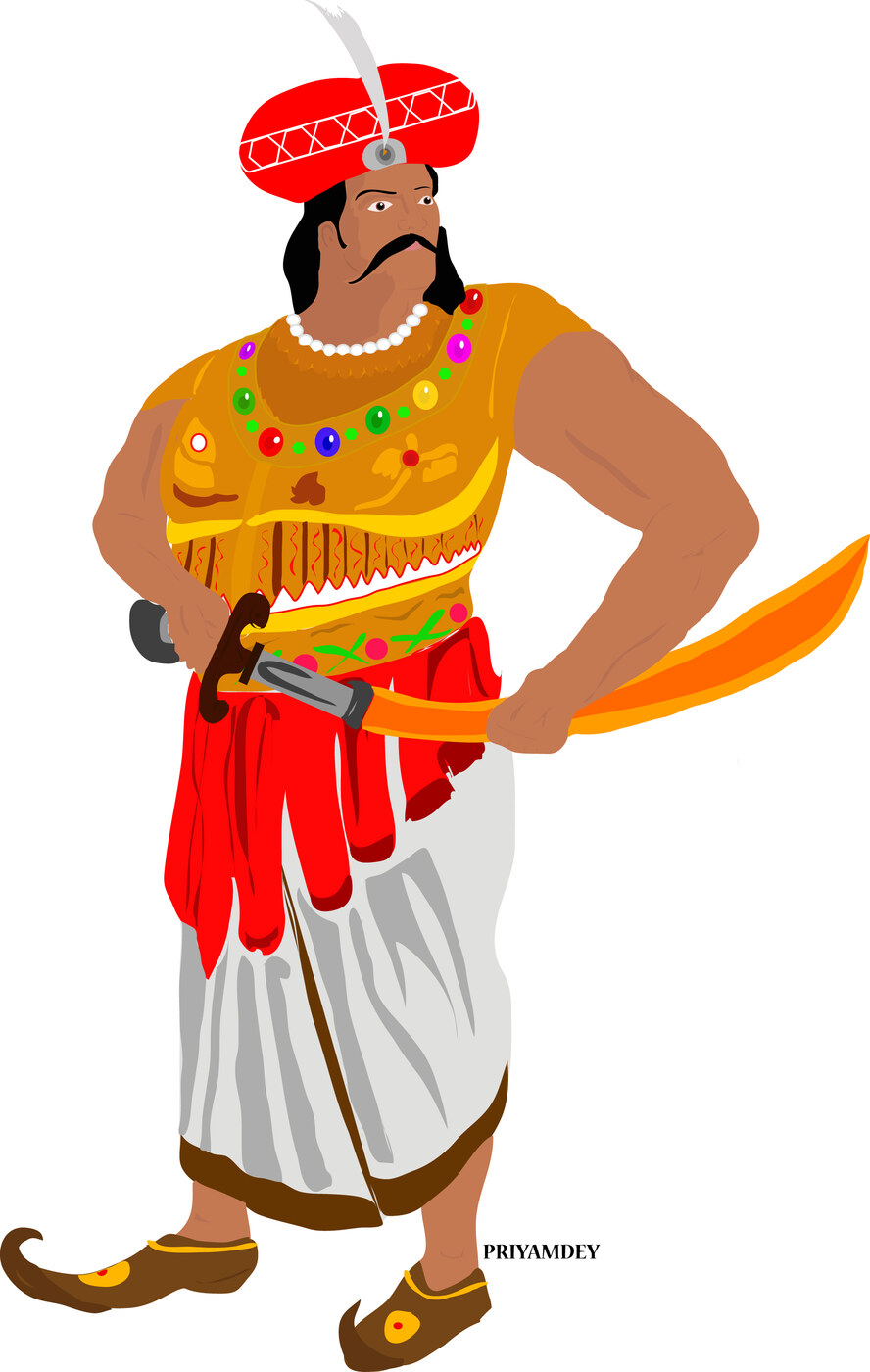
Jiva Goswami arranged an ox-cart, armed guards, and even a royal passport for the three preachers' journey east. This was because the manuscripts were the only copies in existence. They were the works of Rupa, Sanatana, Gopala Bhatta, Raghunatha Dasa, and Jiva himself, which make up the philosophical and devotional foundation of the entire Gaudiya tradition. They included material that would later be organized into the Sat-sandarbha, the Bhakti-rasamrita-sindhu, and the Hari-bhakti-vilasa. Tradition remembers this as the very first travelling sankirtana party in Gaudiya Vaishnava history. It set a pattern of taking Krishna consciousness on the road, and centuries later Srila Prabhupada revived it when he sent ISKCON's own book distributors and sankirtana parties out across the world. When the party reached the edge of the small Malla kingdom of Vishnupura (present-day Bishnupur, in Bankura district, West Bengal), they were robbed in the night. The robbers were dacoits working for the local king, Vira Hambira. He was as much a bandit-chief as a king. Srinivasa stayed behind to recover the manuscripts while Narottama and Shyamananda went on with the mission. What followed is one of the best-known stories in later Gaudiya history. Vira Hambira slowly came to respect the "treasure" he had actually stolen. In the end he submitted to Srinivasa and was fully converted to Vaishnavism. The story is told in detail, comparing the sources, in Carrying the Scriptures to Bengal and The Encounter With Vira Hambira.
Preaching, Marriage, and a Family of Teachers #
With the books recovered, Srinivasa settled into a life divided between Jajigram and Vishnupura. With Vira Hambira's support, Vishnupura had now become a major center of Vaishnava learning and art. On the advice of his own teacher Narahari Sarakara and his mother, he married Ishvari (also called Draupadi), the daughter of a Jajigram brahmana. Later, after the early deaths of his sons by that marriage, he married a second time, to Gauranga-priya. His daughter by his first wife, Hemalata Thakurani, grew into one of the most significant women preachers of the tradition and initiated disciples. His most celebrated disciple, Ramachandra Kaviraja, is named directly in Sri Chaitanya-charitamrita as a devotee who "greatly assisted in the preaching work of Srinivasa Acharya and Narottama Dasa Thakura." Tradition remembers how close the two were. It tells that once Srinivasa lay absorbed in trance for three days as Mani Manjari, searching the Yamuna in meditation for Radharani's fallen nose-ornament. Ramachandra Kaviraja entered the same meditative vision to help find it. Only when the ornament was recovered did Ramachandra Kaviraja bring Srinivasa out of his trance. Karnananda records that Srinivasa kept a settled daily routine wherever he stayed. Each morning he read and explained scripture, including the Bhakti-rasamrita-sindhu, Hari-bhakti-vilasa, and Srimad-Bhagavatam. He chanted japa through midday, and each evening he led kirtana with his disciples. The fuller story of this period is told in Marriage, Family, and Disciples.
The Kheturi Festival and Final Years #
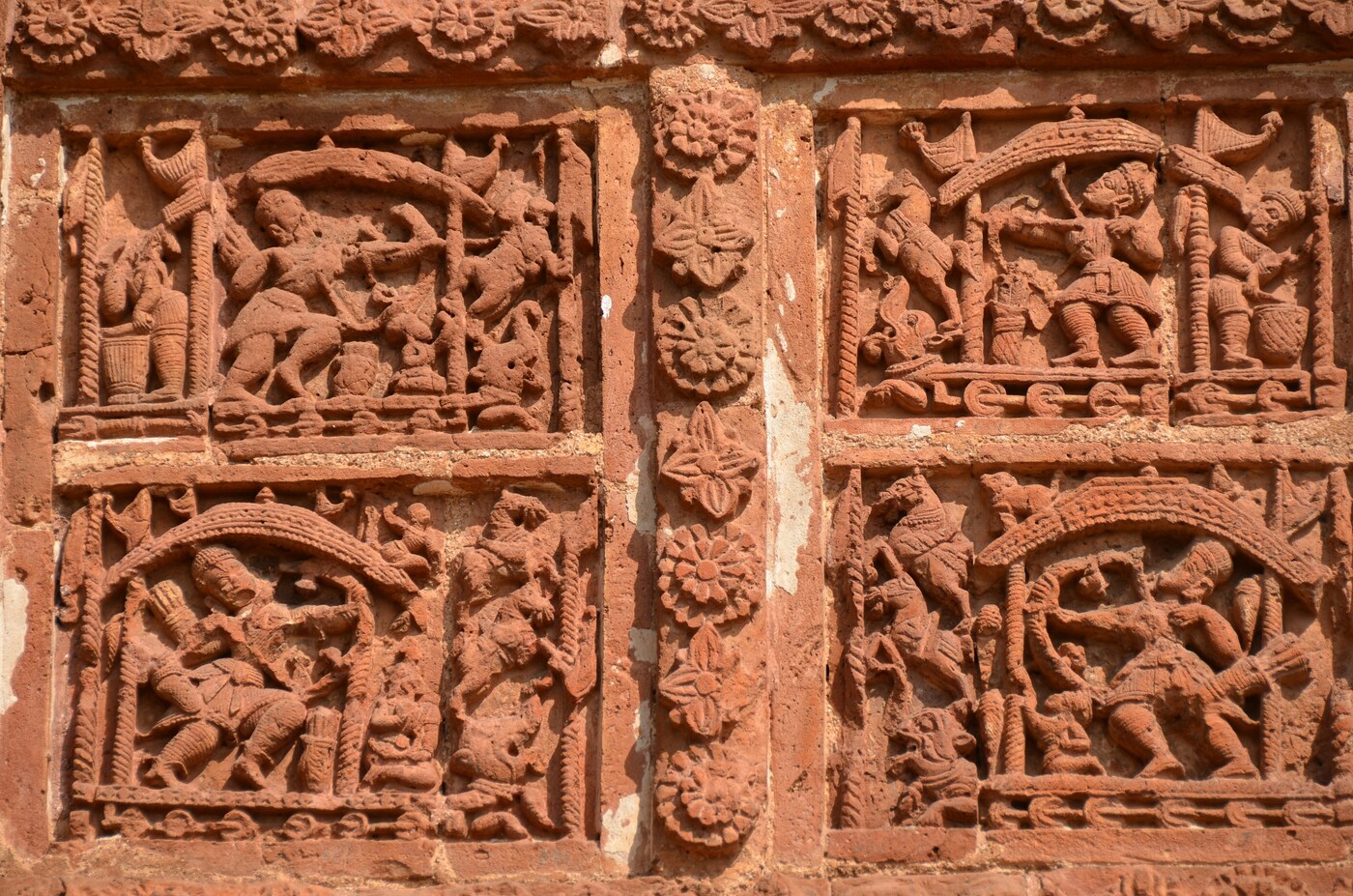
Alongside Narottama Dasa Thakura, Srinivasa was a chief organizer of the Kheturi festival. This historic gathering drew Vaishnavas from across Bengal and Odisha. It is widely credited with uniting the scattered followers of the Six Goswamis into a single community. Srinivasa performed the installation rites for the six Deities enshrined there. The Kheturi Festival tells that event in full. Srinivasa's own part in it is described in Preaching in Bengal and the Kheturi Festival. In his later years he continued preaching across Birbhum, Bankura, Burdwan, and as far east as Tripura. He developed a distinctive style of congregational chanting remembered as Manohara-sahi kirtana. Almost nothing was recorded about his own disappearance. Some biographers read this silence as deliberate. They see it as matching the way the tradition treats the passing of its greatest teachers. The final page in this series, Final Days and Legacy, gathers what is and is not known.
Srinivasa Acharya wrote only a little himself. By one count he wrote only five original padas, and three of these also appear in the anthology Pada-kalpataru. But one of his works is sung daily in Gaudiya Vaishnava and ISKCON temples worldwide. This is the Sad-Gosvamy-ashtaka, eight verses of homage to the Six Goswamis. Srila Prabhupada quoted it in his own lectures and purports more often than almost any other single composition from this generation of the tradition. The song archive also lists a composition attributed to him, Krishnotkirtana Gana Nartana. This is the first verse of that same Sad-Gosvamy-ashtaka, and its content confirms that it belongs to this Srinivasa Acharya.
What Srila Prabhupada said
The six Gosvamis... Then from the Gosvamis there is Srinivasacarya. Then from him, I think, this Krsnadasa Kaviraja Gosvami, and then Narottama dasa Thakura. Then Visvanatha Cakravarti Thakura, then Jagannatha dasa Babaji, then Bhaktivinoda Thakura, then Gaura Kisora dasa Babaji Maharaja, then my Guru Maharaja.
Room Conversation with Professor Olivier Lacombe: Conversation, June 14, 1974, Paris
These six Gosvamis were directly instructed by Lord Caitanya for spreading this movement of Krsna consciousness... And after the six Gosvamins, the next acarya was Srinivasa Acarya. So he's also praying Srinivasa Acarya.
Purport to Sri Krsna Caitanya Prabhu Prayer: Lecture, January 11, 1969, Los Angeles
doya koro sri-acarya prabhu srinivasa / ramacandra-sanga mage narottama-dasa [O Srinivasa Acarya, successor to the Six Gosvamis! Please be merciful to me. Narottama Dasa always desires the company of Ramacandra Cakravarti.]
Sri Krsna Caitanya Prabhu Bhajan: Lecture, March 15, 1969, Hawaii
he radhe vraja-devike ca lalite he nanda-suno kutah... [Srila Srinivasa Acarya] So this Ratha-yatra festival is very nice, feeling festival for the Vaisnava.
Ratha-yatra Festival Address: Lecture, July 16, 1972, London
Srila Srinivasa Acarya describes in his prayers to the six Gosvamis that they were all highly learned scholars, not only in Sanskrit but also in foreign languages, such as Persian and Arabian.
Nectar of Devotion Lecture: Lecture, December 26, 1972, Bombay
Just like our Gosvamis, the six Gosvamis in Vrndavana, how they executed devotional service is described by Srinivasa Acarya: krsnotkirtana-gana-nartana-parau premamrtambho-nidhi...
krsnotkirtana-gana-nartana-parau premamrtambho-nidhi... [Srinivasa Acarya] These six Gosvamis directly got the mercy of Sri Caitanya Mahaprabhu.
Srimad-Bhagavatam Lecture: Lecture, August 12, 1974, Vrindavana
The Gosvamis, they were always engaged, krsnotkirtana, loudly chanting. The same process we are following: loudly chant always; be engaged in arcana.
Srimad-Bhagavatam Lecture: Lecture, October 29, 1975, Nairobi
- Srinivasa Acharya - Gaudiya History
- Srinivasa Acharya - Biography (Bhakti-ratnakara excerpts and Satyaraja Dasa/Steven Rosen narrative) - Gaudiya History
- Srinivasa Acharya - Pastimes (from Sri Chaitanya: His Life and Associates, Bhakti Ballabh Tirtha Goswami Maharaja) - Gaudiya History
- Ramacandra Kaviraja - Biography - Gaudiya History
- Sri Chaitanya-caritamrta, Adi-lila 11.51, purport
- Sri Chaitanya-caritamrta, Madhya-lila 1.33, purport
- Room Conversation with Professor Olivier Lacombe, June 14, 1974, Paris
Disciples
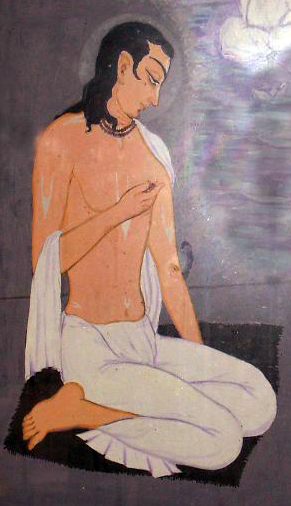
Srila Ramachandra Kaviraja
Poet-Disciple of Shrinivasa Acharya and Closest Friend of Narottama Dasa Thakura
Not recorded by year; lived in the generation after Sri Chaitanya Mahaprabhu's own associates, as a disciple of Shrinivasa Acharya (later 16th century) – Not recorded by year; sources differ on the exact date (the dark-fortnight tritiya of Pausha per one account, Krishna-trayodashi of Magha per another)
4 pastime pages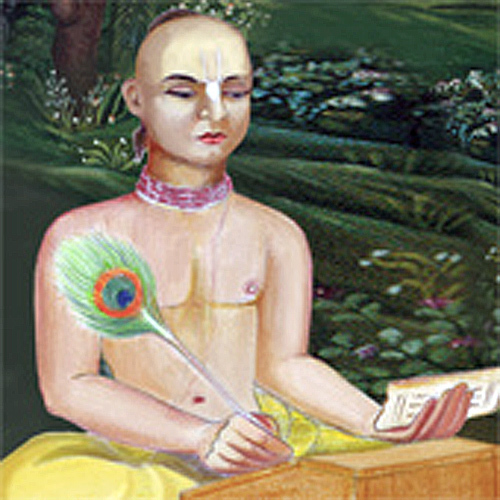
Srila Govinda Dasa Kaviraja
Bengali Padavali Poet, Author of Bhajahu Re Mana
c. 1535 (traditional dating found in secondary sources; not stated in Sri Chaitanya-charitamrita itself) – c. 1613 (traditional date; not confirmed by any original source we found)
3 pastime pagesFrequently asked
When was Srila Srinivasa Acharya born?
Srila Srinivasa Acharya appeared Full-moon day of Vaishakha; year disputed, roughly 1517-1530 in Chakhandi, on the Ganges, Bengal.
Who was the guru of Srila Srinivasa Acharya?
The spiritual master of Srila Srinivasa Acharya was Sri Gopala Bhatta Goswami.
When and where did Srila Srinivasa Acharya disappear?
Srila Srinivasa Acharya disappeared Not recorded by tradition at Not recorded by tradition.
What are the main pastimes of Srila Srinivasa Acharya?
The pastimes covered here include: Early Life and Going to Vrindavana, Training Under Jiva and Gopala Bhatta Goswami, Carrying the Scriptures to Bengal, The Encounter With Vira Hambira, Marriage, Family, and Disciples, Preaching in Bengal and the Kheturi Festival, Final Days and Legacy.