Rādhā-Kānta Mandira (Rādhā-kuṇḍa)
राधा-कान्त मन्दिर (राधा-कुण्ड) Hindi name proposed
Also called Śrī Śrī Rādhā-Kānta Maṇḍira, Rādhā Kānta Maṇḍira
- What it is
- The Rādhā-Kānta Mandira is a temple in the village of Rādhā-kuṇḍa, just opposite the Gopāla Maṇipura Mandira.
- Visiting
- The Colour Guide (1999) describes the altar with Rādhā-Kānta, Lalitā-sakhī and Śrī Caitanya Mahāprabhu, the puṣpa-samādhi and mūrti of Śrī Vakreśvara Paṇḍita, and a wall painting of Rādhā and Kṛṣṇa …
In short
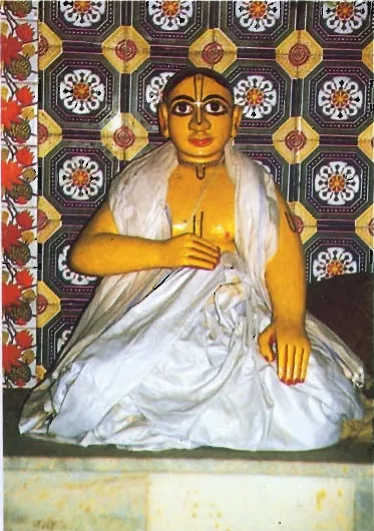
The Rādhā-Kānta Mandira is a temple in the village of Rādhā-kuṇḍa, just opposite the Gopāla Maṇipura Mandira. The Colour Guide to Rādhā-kuṇḍa (1999) says that it holds pratibhū Deities of Śrī Śrī Rādhā-Kānta, representative forms of the Rādhā-Kānta of Jagannātha Purī, with Lalitā-sakhī and Śrī Caitanya Mahāprabhu on the altar.[1 +2] The same book shows here a puṣpa-samādhi (a memorial shrine) and a mūrti, a sacred image, of Śrī Vakreśvara Paṇḍita.[1 +2] Who established the Deity of Purī the sources tell differently. No source gives a date or a builder for this temple.
Key facts
| Kind | temple |
|---|---|
| Region · area | Rādhā-kuṇḍa |
| Also part of | Rādhā-kuṇḍa (village) |
| Ācāryas | Śrī Vakreśvara Paṇḍita |
Traditional accounts
In its table of pratibhū Deities, The Colour Guide (1999) gives the original Rādhā-Kānta as the Deity of Śrī Vakreśvara Paṇḍita.[3] Read more: The pratibhū Deities of Rādhā-kuṇḍa →
Śrīla Prabhupāda speaks of the Deities taken from Vṛndāvana to Jaipur, but he names only Govinda, Gopīnātha and Madana-mohana, and he does not mention Rādhā-kuṇḍa or Rādhā-Kānta:[4]
General teaching (does not name the place)“In the Jaipur there is Govinda-seva temple of Govindaji. The king of Jaipur took away, when Aurangzeb was harassing Hindus and he was breaking some of the Hindu temple, at that time from Vṛndāvana the Govinda mūrti—not only Govinda, but Govinda Gopinatha and Madana-mohana—these mūrtis were taken from Vṛndāvana to Jaipur.”
Śrīla Prabhupāda, Śrīla Baladeva Vidyābhūṣaṇa Appearance lecture, Los Angeles, 14 June 1970 · vedabase.io
The Gosvāmīs and ācāryas
Śrīla Prabhupāda writes of the house in Jagannātha Purī where Śrī Caitanya Mahāprabhu lived, and of the Deity of Rādhākānta there.
Śrīla Prabhupāda writes of the house in Jagannātha Purī where Śrī Caitanya Mahāprabhu lived, and of the Deity of Rādhākānta there. He does not speak of Rādhā-kuṇḍa:[5]
General teaching (does not name the place)“In Jagannātha Purī Lord Caitanya lived at the house of Kāśī Miśra, who was the priest of the King. Later this house was inherited by Vakreśvara Paṇḍita and then by his disciple Gopālaguru Gosvāmī, who established a Deity of Rādhākānta there.”
Śrīla Prabhupāda, Śrī Caitanya-caritāmṛta, Ādi-līlā 10.131, purport · vedabase.io
The Colour Guide says instead that Śrī Vakreśvara Paṇḍita himself established the Rādhā-Kānta of Purī, next to the Gambhīrā; the accounts are set side by side below.[5]
In another purport Śrīla Prabhupāda cites the Gaura-gaṇoddeśa-dīpikā (71): Śrī Vakreśvara Paṇḍita was an incarnation of Aniruddha, one of the four expansions of Viṣṇu. The Colour Guide records a belief that he is the sakhī Tuṅgavidyā and that the temple stands where Tuṅgavidyā's kuñja (grove) is in the unmanifest pastimes. That is the guidebook's view only: the Gaura-gaṇoddeśa-dīpikā (163) names another devotee, Śrīla Prabodhānanda Sarasvatī, as Tuṅgavidyā.[6 +1]
Visiting today
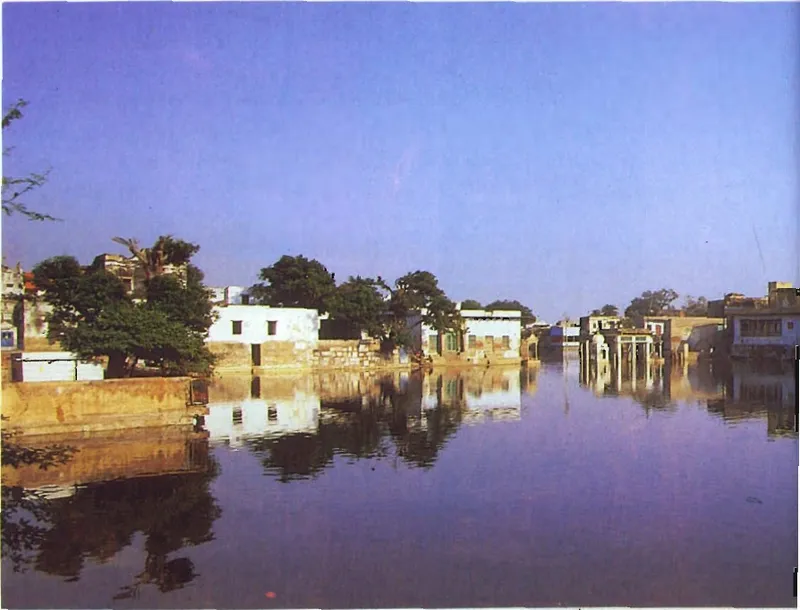
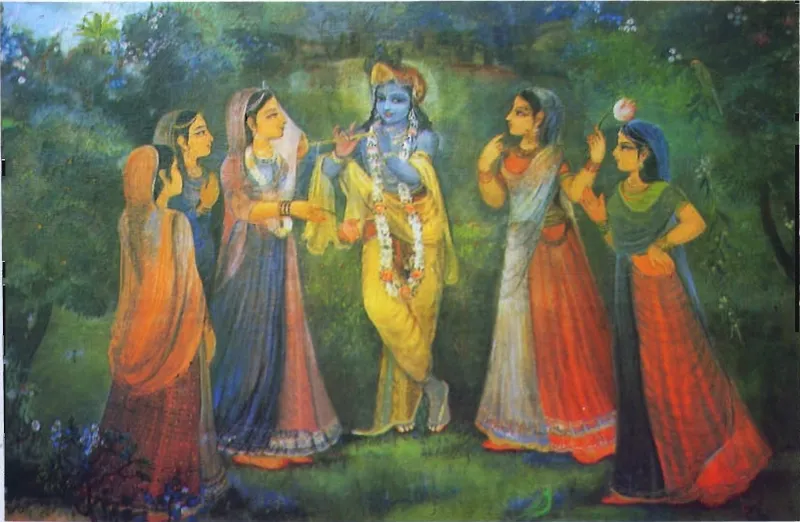
The Colour Guide (1999) describes the altar with Rādhā-Kānta, Lalitā-sakhī and Śrī Caitanya Mahāprabhu, the puṣpa-samādhi and mūrti of Śrī Vakreśvara Paṇḍita, and a wall painting of Rādhā and Kṛṣṇa with the gopīs. One of its photographs shows the kuṇḍa seen from the temple. It is the only source for all of this, and it describes the temple as it was in 1999.[1 +2]
Location
| Where it is | Just opposite the Gopāla Maṇipura Maṇḍira; "next to Rādhā-kuṇḍa".[8] Photo caption "A view of Rādhā-kuṇḍa from Rādhā Kānta Maṇḍira"[9] |
|---|
Nearby places
Gopāla Maṇipura Mandira · Rādhā-kuṇḍa · Tuṅgavidyānandada-kuñja
Pictures
2 pictures
Where the sources differ
Accounts differ Whose Deities Rādhā-Rādhākānta are and who established them (the original Rādhā-Kānta of Jagannātha Purī, of which this temple is said to hold a pratibhū).
- The Colour Guide to Rādhā-kuṇḍa (1999)Śrī Vakreśvara Paṇḍita established the original Rādhā-Kānta in Jagannātha Purī next to the Gambhīrā; its table lists Rādhā Kānta as established by 'Vakreśvara Paṇḍita Gosvāmī'.
- Śrīla Prabhupāda, CC Ādi 10.131 purportKāśī Miśra's house, where Lord Caitanya lived, was inherited by Śrī Vakreśvara Paṇḍita and then by his disciple Gopālaguru Gosvāmī, who established a Deity of Rādhākānta there.
- Vṛndāvana, the Playground of God (2010)After Lord Caitanya's departure Vakreśvara took over the worship and maintenance of the Gambhīrā in Purī; after him Śrī Gopāla Guru Gosvāmī took charge of the temple and of worshipping 'Vakreśvara's Deities, Rādhā-Rādhākānta' (its photo caption calls the Vṛndāvana Deities 'pratibhū forms of the Deities of Gopāla Guru Gosvāmī').
- The Color Guide to Vṛndāvana (2000); the undated parikramā notes VṛndāvanaOf the Rādhā-Kānta temple in Vṛndāvana: 'These are the Deities of Gopāla Guru Gosvāmī. This temple was established by Gopāla Guru Gosvāmī who was a disciple of Vakreśvara Paṇḍita.'
More on this place
The pratibhū Deities of Rādhā-kuṇḍa
References
9 references
- The Colour Guide to Rādhā-kuṇḍa (1999), Rājaśekhara dāsa Brahmacārī, PDF p. 78
- The Colour Guide to Rādhā-kuṇḍa (1999), Rājaśekhara dāsa Brahmacārī, PDF p. 79
- The Colour Guide to Rādhā-kuṇḍa (1999), Rājaśekhara dāsa Brahmacārī, PDF p. 63
- Śrīla Prabhupāda, Śrīla Baladeva Vidyābhūṣaṇa Appearance lecture, Los Angeles, 14 June 1970 · vedabase.io
- Śrīla Prabhupāda, Śrī Caitanya-caritāmṛta, Ādi-līlā 10.131, purport · vedabase.io
- Śrīla Prabhupāda, Śrī Caitanya-caritāmṛta, Ādi-līlā 10.17, purport · vedabase.io
- Gaura-gaṇoddeśa-dīpikā, v.163
- The Colour Guide to Rādhā-kuṇḍa (1999), Rājaśekhara dāsa Brahmacārī, p. 74
- The Colour Guide to Rādhā-kuṇḍa (1999), Rājaśekhara dāsa Brahmacārī, p. 32