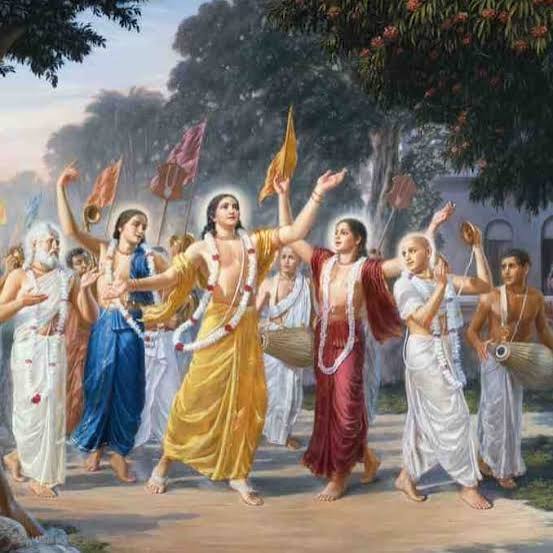
Sri Vakresvara Pandita
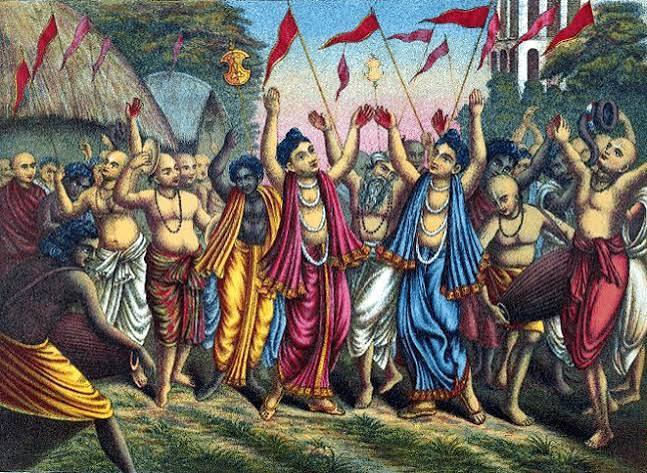
The Ecstatic Dancer Mahaprabhu Called His Own Wing
Also known as Vakreshwara Pandita, Vakreswar Pandit, Vakreshwar Pandita, Vakreshvara Pandit
“You are like a wing. If I had another like you, I would be able to fly in the sky!”
Sri Chaitanya Mahaprabhu's reply to Vakresvara Pandita after his ecstatic dancing, Sri Chaitanya-charitamrita, Adi-lila 10.20
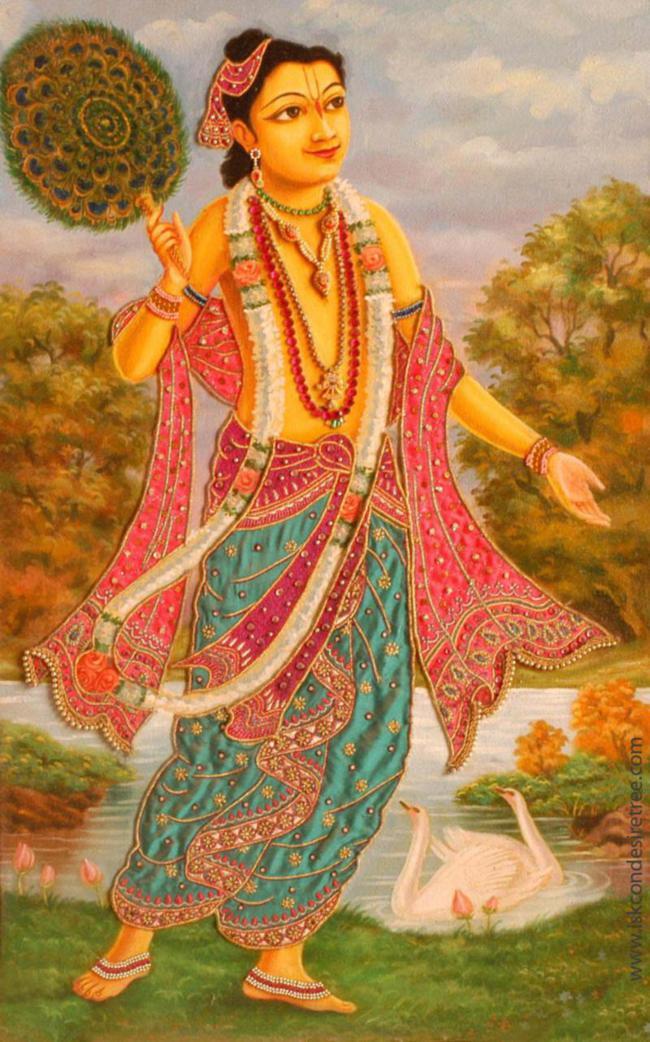
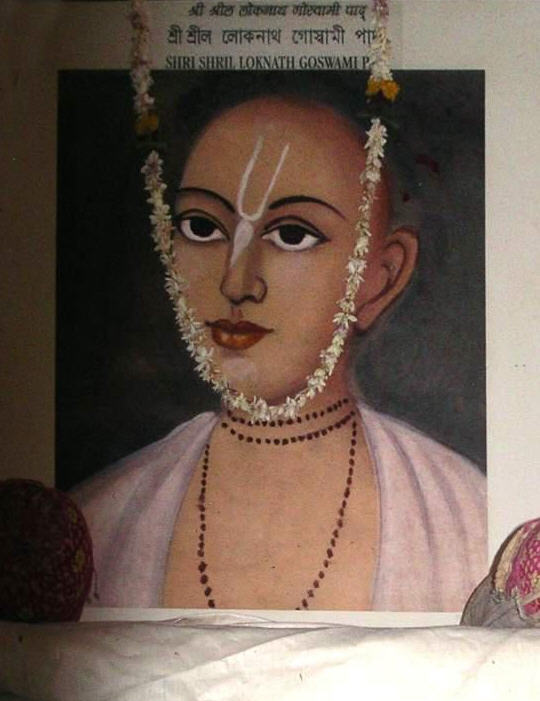
Long before he became known as one of Sri Chaitanya Mahaprabhu's most extraordinary dancers, Vakresvara Pandita was simply a boy from Guptipara, a village near Triveni in Bengal. He found his way into the Lord's earliest sankirtana gatherings at Navadvipa. He stayed at Sri Chaitanya Mahaprabhu's side for the rest of his manifest life, first in Bengal and then at Jagannatha Puri. Sri Chaitanya-charitamrita names him as the fifth branch of the Lord's own tree of devotees. He is remembered above all for one feat. He danced in unbroken spiritual ecstasy for seventy-two hours without stopping. Krishnadasa Kaviraja Goswami records this directly in the text, not only in later legend.
| Detail | Description |
|---|---|
| Birthplace | Guptipara, near Triveni, Bengal |
| Named in Chaitanya-charitamrita as | The fifth branch of Sri Chaitanya Mahaprabhu's own tree of devotees (Adi 10.17) |
| Signature feat | Danced in constant ecstasy for seventy-two hours (twenty-four prahara) without stopping |
| Identity | Aniruddha, fourth of the catur-vyuha expansions of Lord Vishnu (Gaura-ganoddesha-dipika 71; Chaitanya-charitamrita Adi 10.17 purport) |
| Diksha guru | Not recorded in any available source; his significance comes from direct personal association with Sri Chaitanya Mahaprabhu Himself |
| Foremost disciple | Sri Gopala Guru Goswami, later custodian of the Deity of Sri Radha-Kanta at Puri |
| Deity established | Sri Sri Radha-Kanta, worshipped at Kashi Mishra's house (later called the Gambhira), Puri |
At a Glance
- He joined Sri Chaitanya Mahaprabhu's sankirtana movement from its earliest days in Navadvipa and danced at the houses of Srivasa Thakura and Chandrashekhara Acharya, then followed the Lord to Puri and stayed there for the rest of his life.
- His seventy-two-hour dance is recorded directly in Sri Chaitanya-charitamrita, not only in later devotional biographies. It also led to one of Mahaprabhu's most quoted lines: "You are like a wing. If I had another like you, I would be able to fly in the sky."
- By his mercy, a proud Bhagavatam scholar named Devananda Pandita was freed from a serious offense against Srivasa Thakura and given Mahaprabhu's own mercy in turn.
- He became guru to Gopala Guru Goswami, a fact Srila Prabhupada's own purport confirms directly, and passed on to him the seva of the Deity of Sri Radha-Kanta at Puri.
- A later text claims that he was a gopi in Krishna's pastimes. But the verse usually quoted for him, Gaura-ganoddesha-dipika 71, does not actually say so, and the full picture is more complicated than any one source shows.
Growing Up in Guptipara, Joining Mahaprabhu's Kirtan #
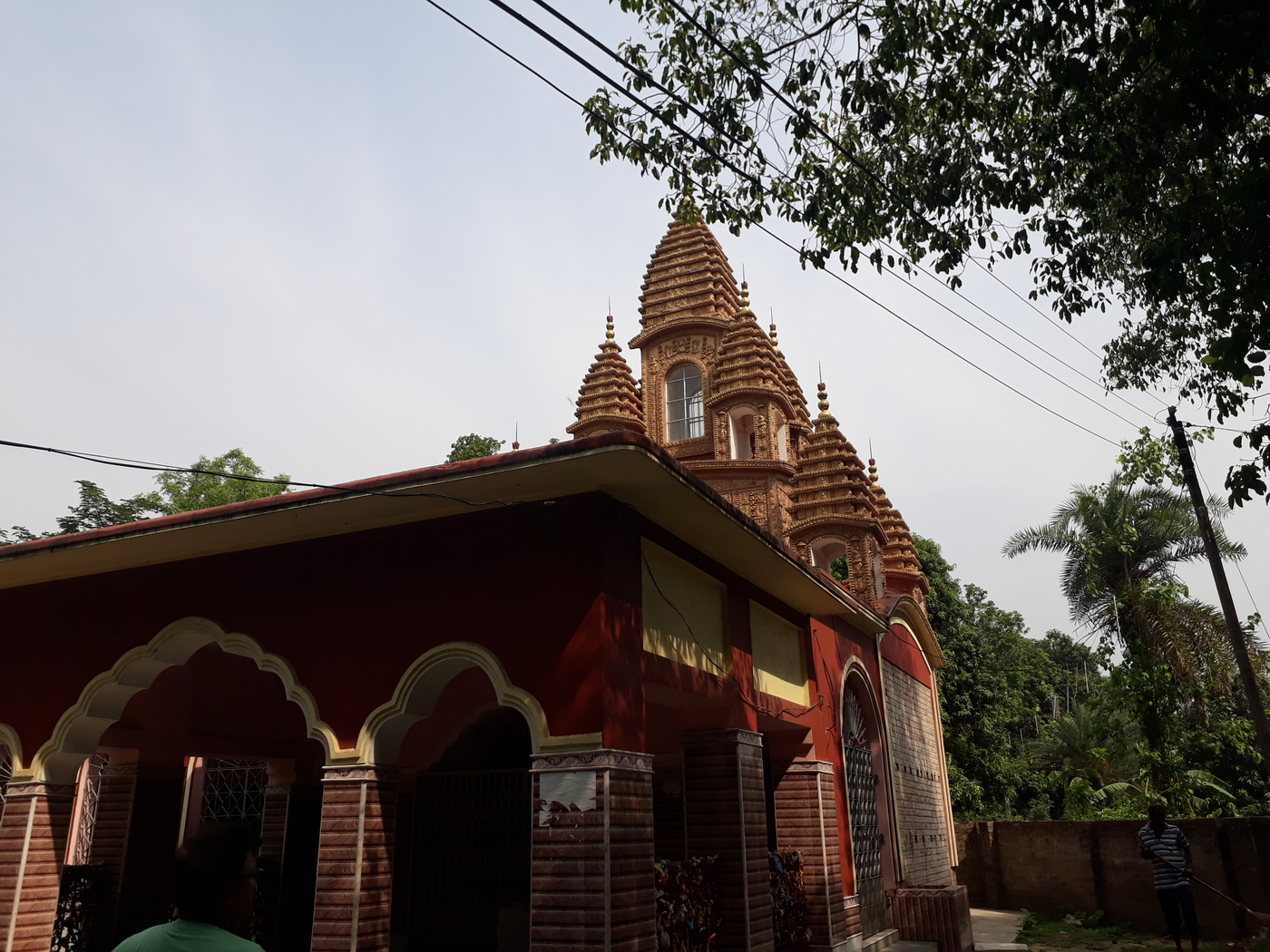
Gaudiya tradition places Vakresvara Pandita's birth in Guptipara, a village near Triveni on the Bhagirathi river in Bengal. But no year survives for either his birth or his death. There is only a lunar date, the fifth day of the dark fortnight of the month of Ashadha, which was recorded much later in Sri Dhyanachandra Goswami's Dhyana-chandra-paddhati. What he did after he met Sri Chaitanya Mahaprabhu is much more clearly recorded. He joined the Lord's congregational chanting in Navadvipa almost from its beginning. All accounts agree that he became one of its most gifted singers and dancers. The fuller story of his early years and his place in Mahaprabhu's inner circle is told on Life and Association with Mahaprabhu.
The Fifth Branch: Seventy-Two Hours Without Stopping #
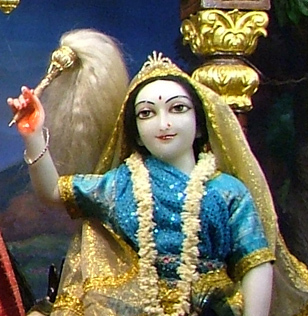
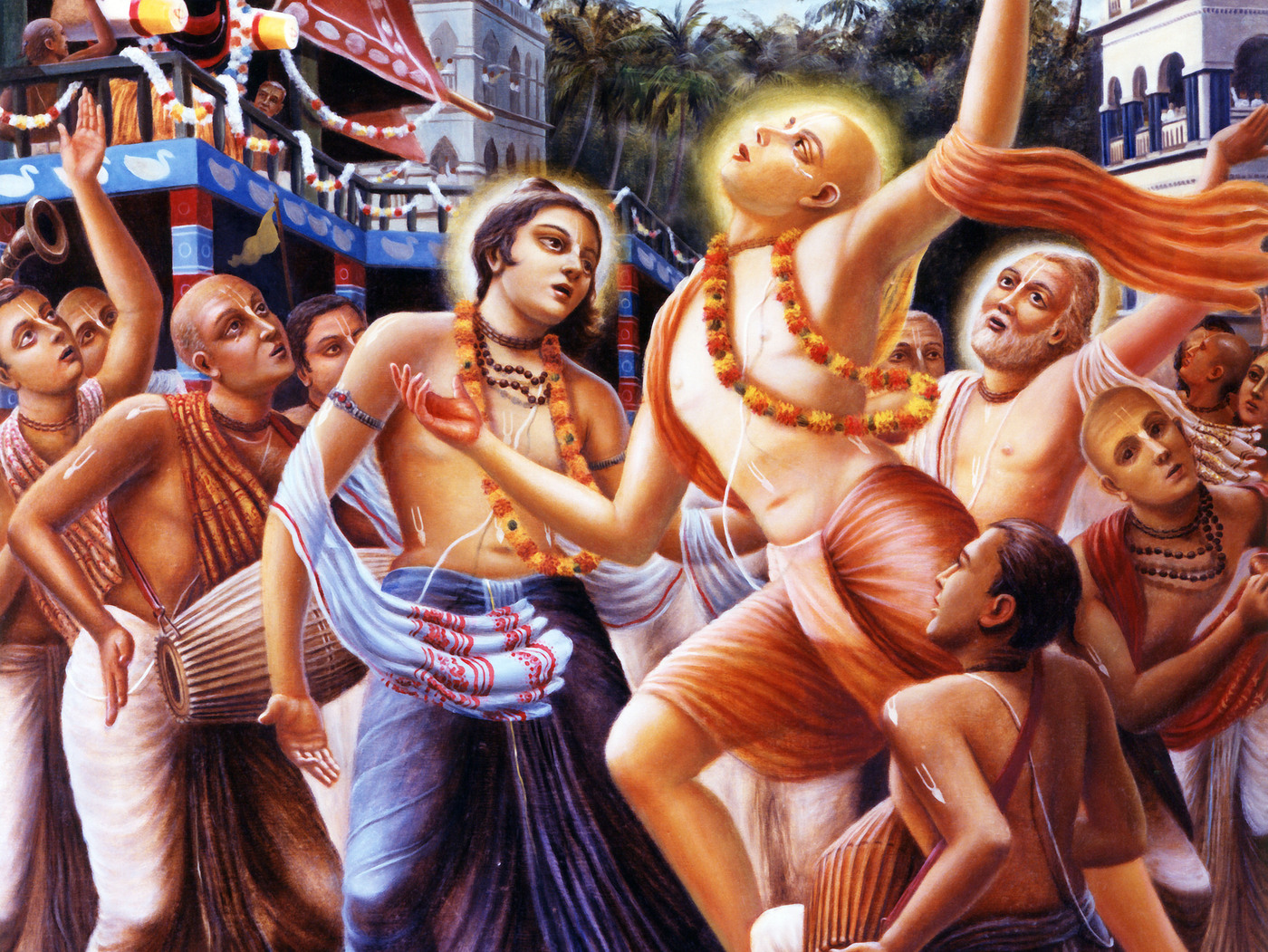
Krishnadasa Kaviraja Goswami built the tenth chapter of the Adi-lila of Sri Chaitanya-charitamrita entirely around the image of Mahaprabhu as a tree and His devotees as its branches. In that chapter he names Vakresvara Pandita directly as the fifth branch. He states plainly that Vakresvara Pandita "could dance with constant ecstasy for seventy-two hours" (Adi 10.17). This number was not made bigger in later retellings. It is in the text itself. Srila Prabhupada's purport adds that this happened during dramatic performances at the house of Srivasa Thakura. Quoting Kavi Karnapura's Gaura-ganoddesha-dipika, the purport also says that Vakresvara Pandita was considered an incarnation of Aniruddha, one of Krishna's four original expansions. After one such performance, Vakresvara, still in ecstasy, caught hold of Mahaprabhu's feet and asked for ten thousand Gandharva singers to accompany his dancing. The Lord's famous reply, that Vakresvara was like one of His own wings, is given word for word in the text (Adi 10.19-20). His dancing was not limited to Navadvipa. At Puri, Vakresvara led his own sankirtana party during the annual Ratha-yatra, and years later Mahaprabhu personally sang for him again. The full account, along with the story of how his dancing delivered a proud scholar named Devananda Pandita from a serious offense, is told on The Ecstatic Dancer.
The verse Srila Prabhupada refers to in that purport to Chaitanya-charitamrita Adi 10.17 is Gaura-ganoddesha-dipika 71. It also links the identity to his dancing:
vyūhas tūryo'niruddho yo sa vakreśvara-paṇḍitaḥ
kṛṣṇāveśaja nṛtyena prabhoḥ sukham ajījanat
"Lord Aniruddha, the fourth member of the Catur-vyuha, appeared in Lord Caitanya's pastimes as Vakresvara Pandita. Lord Krsna personally entered Vakresvara's body and caused Him to dance in ecstasy." (Gaura-ganoddesha-dipika 71)
Guru to Gopala Guru Goswami, and a Disputed Gopi Identity #
After Sri Chaitanya Mahaprabhu's own disappearance, Vakresvara Pandita remained at Puri and initiated disciples. This is recorded not only in devotional memory but also in Srila Prabhupada's purports to Sri Chaitanya-charitamrita. Srila Prabhupada's purport to Adi 10.17 names Gopala Guru Goswami directly as one of Vakresvara Pandita's Oriya disciples. A separate purport, to Adi 10.131, confirms that Gopala Guru Goswami inherited both Kashi Mishra's house at Puri and the seva of Vakresvara Pandita's own worshipable Deity, Sri Radha-Kanta. A theological question about this guru-disciple relationship is still truly unresolved. Which of the two men, if either, was previously the gopi Tungavidya Sakhi in Krishna's own pastimes in Vraja? Gopala Guru Goswami's own page reports this dispute honestly, without taking a side. But when we read the full text of the Gaura-ganoddesha-dipika, and not only the one verse usually quoted, the picture becomes more complicated than either side of the dispute suggests. The full account, with the fuller sources available, is on Training Gopala Guru Goswami.
Legacy at the Gambhira and Beyond #
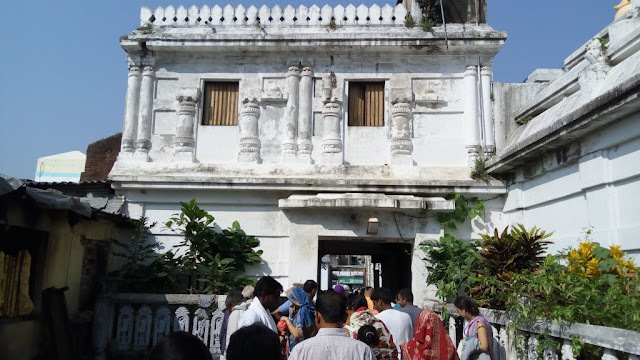
No one disputes that Vakresvara Pandita's place in Gaudiya Vaishnava memory rests on solid ground that the texts confirm. He is a named branch of Sri Chaitanya Mahaprabhu's own tree of devotees. He was a dancer whose seventy-two-hour ecstasy drew personal praise from the Lord Himself. And he was a guru whose spiritual line, through Gopala Guru Goswami and Sri Dhyanachandra Goswami, can still be traced in Gaudiya Vaishnava worship practice today. Unlike several of the great Goswamis of Vrindavana, he left no surviving book under his own name. The one full biography of him, called Gaura-krishnodaya, was written about him by a contemporary Oriya devotee named Sri Govinda dasa. It does not appear to survive in any widely accessible form today. What does survive, and what pilgrims can still see, is told on Legacy.
Scriptural evidence
Quoted in the text above:
- Verse 71 Gaura-ganoddesha-dipika
Further verses:
বক্রেশ্বর পণ্ডিত—প্রভুর বড় প্রিয় ভৃত্য ।
এক–ভাবে চব্বিশ প্রহর যাঁর নৃত্য ॥ ১৭ ॥
vakresvara pandita -- prabhura bada priya bhrtya
eka-bhave cabbisa prahara yanra nrtya
Word for word
vakresvara pandita: Vakresvara Pandita; prabhura: of the Lord; bada: very; priya: dear; bhrtya: servant; eka-bhave: continuously in the same ecstasy; cabbisa: twenty-four; prahara: a duration of time comprising three hours; yanra: whose; nrtya: dancing.
Vakresvara Pandita, the fifth branch of the tree, was a very dear servant of Lord Caitanya's. He could dance with constant ecstasy for seventy-two hours.
From the purport: Purport excerpt: "In the Gaura-ganoddesa-dipika (71) it is stated that Vakresvara Pandita was an incarnation of Aniruddha... Among these disciples are Sri Gopalaguru and his disciple Sri Dhyanacandra Gosvami."
The direct textual basis for the seventy-two-hour dancing feat and for calling Vakresvara Pandita the fifth branch of Sri Chaitanya Mahaprabhu's own tree of devotees, not Nityananda Prabhu's.
প্রভু বলে—তুমি মোর পক্ষ এক শাখা ।
আকাশে উড়িতাম যদি পাঙ আর পাখা ॥ ২০ ॥
prabhu bale -- tumi mora paksa eka sakha
akase uditama yadi pan ara pakha
Word for word
prabhu bale: Lord Sri Caitanya Mahaprabhu replied; tumi: you; mora: My; paksa: wing; eka: one; sakha: one-sided; akase: in the sky; uditama: I could fly; yadi: if; pan: I could get; ara: another; pakha: wing.
Lord Caitanya replied, "I have only one wing like you, but if I had another, certainly I would fly in the sky!"
This is the exact source of the site's chosen quote for Vakresvara Pandita - Mahaprabhu's own image of him as a wing of His sankirtana mission.
What Srila Prabhupada said
vakresvara pandita -- prabhura bada priya bhrtya / eka-bhave cabbisa prahara yanra nrtya... apane mahaprabhu gaya yanra nrtya-kale / prabhura carana dhari' vakresvara bale
Vedabase catalogs this transcript as a verse-recitation session (labeled "Other" rather than a full spoken class) in which Srila Prabhupada recites the Adi-lila chapter naming Vakresvara Pandita as the fifth branch of Sri Chaitanya Mahaprabhu's tree, ahead of a class on the same chapter.
- Sri Chaitanya-charitamrita, Adi-lila 10.17-20, with Srila Prabhupada's purport
- Sri Chaitanya-charitamrita, Adi-lila 10.131, with Srila Prabhupada's purport
- Sri Chaitanya-charitamrita, Madhya-lila 11.228 and 14.100
- Gaudiya History (ISKCON Desire Tree): Sri Gaura-Ganoddesha-Dipika (full translation)
- Gaudiya History (ISKCON Desire Tree): Vakresvara Pandit
- Gaudiya History (ISKCON Desire Tree): Vakresvara Pandit - Biography
- Gaudiya History (ISKCON Desire Tree): Vakresvara Pandit - Biography (with Chaitanya-Bhagavata excerpts)
- ISVARA.org Vedic Library: Vakresvara Pandita, by Manonatha Dasa Vanacari
- Krishna.org: Who Is Vakresvara Pandita?
- Related page: Sri Gopala Guru Goswami
- ISKCON Desire Tree: Vakresvara Pandit Appearance, by Ramai Swami
Frequently asked
When was Sri Vakresvara Pandita born?
Sri Vakresvara Pandita appeared Traditionally the fifth day of the dark fortnight of Ashadha (June-July); no year is recorded. Village of Guptipara, near Triveni, Bengal in Guptipara, near Triveni, Bengal (present-day Hooghly district, West Bengal).
When and where did Sri Vakresvara Pandita disappear?
Sri Vakresvara Pandita disappeared Traditionally the sixth day of the bright fortnight of Ashadha (June-July); no year is recorded at Not recorded with certainty; devotional tradition places his samadhi in Vrindavana.
What are the main pastimes of Sri Vakresvara Pandita?
The pastimes covered here include: Life and Association with Mahaprabhu, The Ecstatic Dancer, Training Gopala Guru Goswami, Legacy.