Ratnākara-sarovara (Kokilāvana)
रत्नाकर-सरोवर (कोकिलावन)
Also called Ratnākara Sarovara
On this page
In short
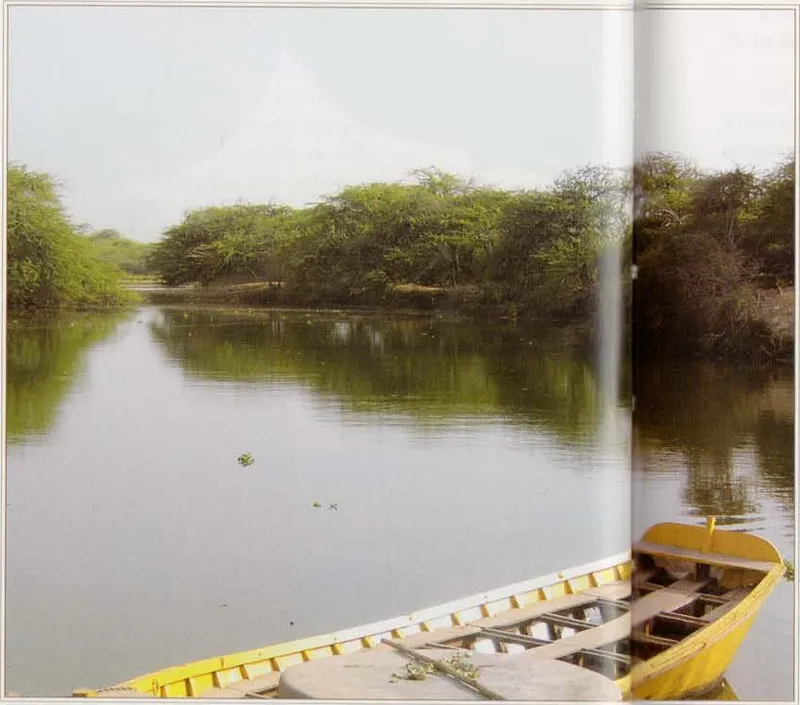
The Ratnākara-sarovara, "the lake that is a mine of jewels", is a pond in Kokilāvana, the forest of the cuckoo. Śrīla Nārāyaṇa Bhaṭṭa Gosvāmī's Vraja-bhakti-vilāsa names it as the first sign of the forest, with the rāsa-maṇḍala, the circle of Kṛṣṇa's dance, beside it.[1 +2] The same book gives a prayer for bathing in it that calls it "arisen from the milk of the sakhīs".[3 +1] According to the guidebook Śrī Vraja-maṇḍala Parikramā (2007), Śrī Rādhā's sakhīs made the pond with milk, and the jewels that appeared from it adorned Her.[5 +1]
Key facts
| Kind | sarovara |
|---|---|
| Region · area | Jāvaṭa · Kokilāvana |
| Ācāryas | Śrīla Nārāyaṇa Bhaṭṭa Gosvāmī |
Why it is glorified
In its list of the forests and their signs, the Vraja-bhakti-vilāsa quotes the Nārada-pañcarātra for Kokilāvana: the Ratnākara pond, and beside it the rāsa-maṇḍala.[1 +1] In its ninth chapter, on the walk round Kokilāvana, it gives the prayer to be said while bathing in the pond and sipping its water. The prayer bows to the Ratnākara-sarovara as arisen from the sakhīs' milk, the place where many kinds of jewels arise, the giver of boons; said seventeen times with bathing and bowing, it makes one full of many kinds of jewels (summarised here, not translated).[3 +1] Śrī Vraja-maṇḍala Parikramā (2007) prints the same verse with the source "Nārada Pañcarātra", but the Vraja-bhakti-vilāsa gives this verse no source, and the Nārada-pañcarātra could not be checked.[3 +1]
Traditional accounts
According to Śrī Vraja-maṇḍala Parikramā (2007), the sakhīs brought milk from their homes to make this pond. Many kinds of jewels appeared from it, and with them they decorated Śrīmatī Rādhikā. The book adds that the pond destroys sins, gives wealth and can give causeless devotion to Śrī Rādhā and Kṛṣṇa. The milk and the jewels are in the words of the Vraja-bhakti-vilāsa's prayer, but the decoration of Rādhikā and the promise of devotion are the guidebook's own.[5 +1]
The 2007 guidebook also says that after a rāsa dance at Kokilāvana the gopīs played in the water of this pond. Śrīmad-Bhāgavatam (10.33.22–24) tells that at the end of the rāsa Kṛṣṇa entered "the water" with the gopīs and then walked in a garden on the Yamunā's bank; its translation and most commentators read the water as the Yamunā, and it names no pond.[7 +3] The accounts are set side by side on the Kokilāvana page.[7 +3]
Location
| Where it is | in Kokilāvana (per Vraja-bhakti-vilāsa)[11] |
|---|
References
- Śrīla Nārāyaṇa Bhaṭṭa Gosvāmī, Vraja-bhakti-vilāsa, chapter 2, the signs (cihna) of the forests, Kokilāvana, quoted from the Nārada-pañcarātra, printed p. 50, 1st ed., publ. Bābā Kṛṣṇadāsa, Kusuma-sarovara, Saṁvat 2008
- Śrī Vraja-maṇḍala Parikramā (2007), PDF p. 222
- Śrīla Nārāyaṇa Bhaṭṭa Gosvāmī, Vraja-bhakti-vilāsa, chapter 9, the circumambulation of Kokilāvana: the prayer at the Ratnākara-sarovara, printed p. 203, 1st ed., publ. Bābā Kṛṣṇadāsa, Kusuma-sarovara, Saṁvat 2008
- Śrī Vraja-maṇḍala Parikramā (2007), PDF p. 249
- Śrī Vraja-maṇḍala Parikramā (2007), PDF p. 224
- the undated parikramā notes Kokilāvana, ¶34
- Śrīmad-Bhāgavatam 10.33.22, GRETIL
- Śrīmad-Bhāgavatam 10.33.24, GRETIL
- Śrīla Sanātana Gosvāmī: commentary on ŚB 10.33.22
- Śrīla Prabhupāda, Kṛṣṇa, the Supreme Personality of Godhead (Kṛṣṇa book), Chapter 33, 'Description of the Rāsa Dance' · vedabase.io
- Śrī Vraja-maṇḍala Parikramā (2007), p. 422-423