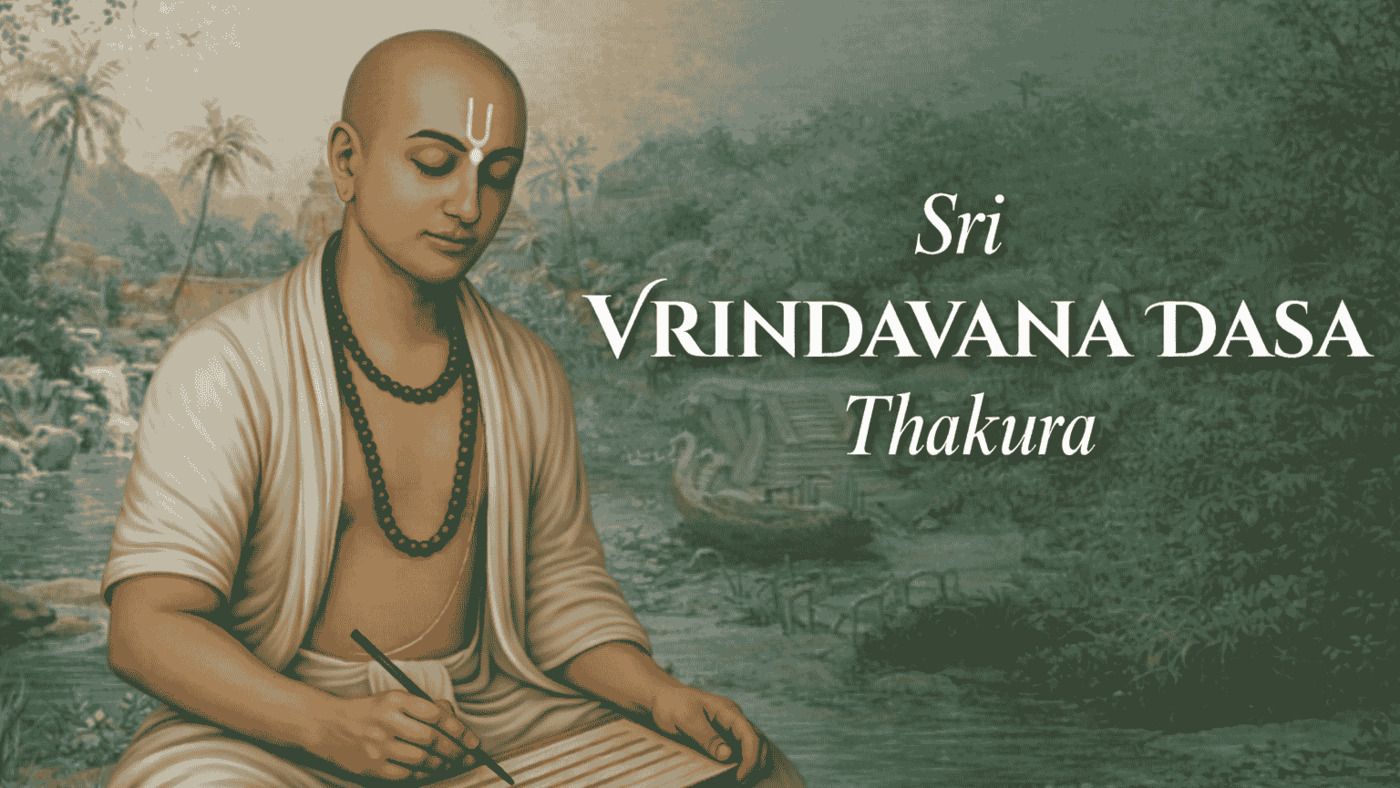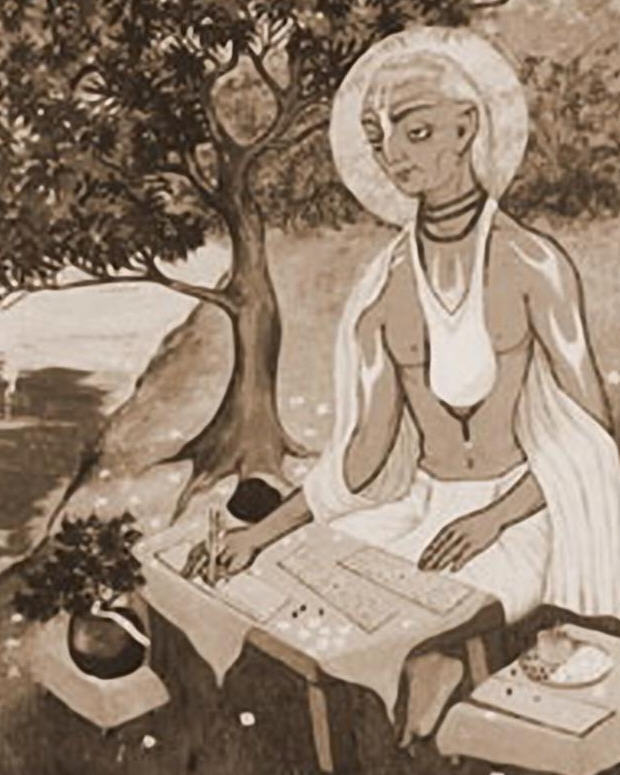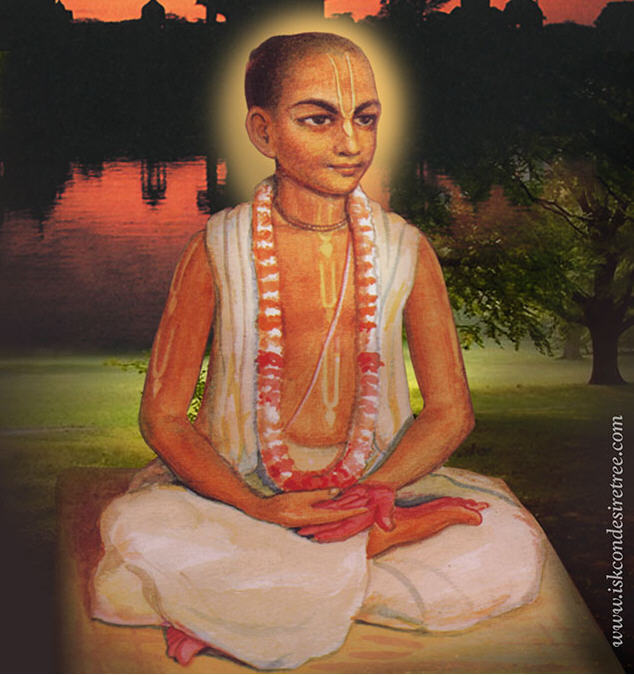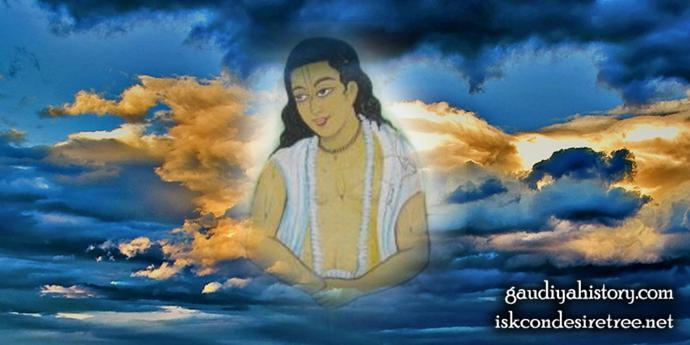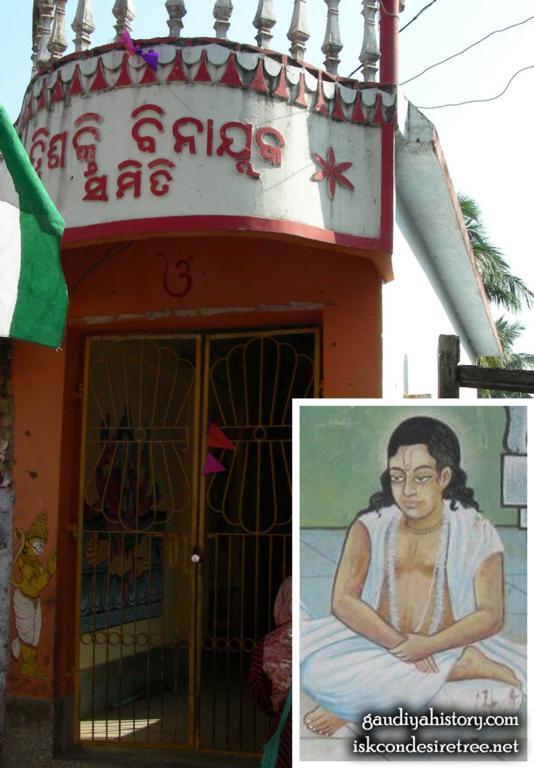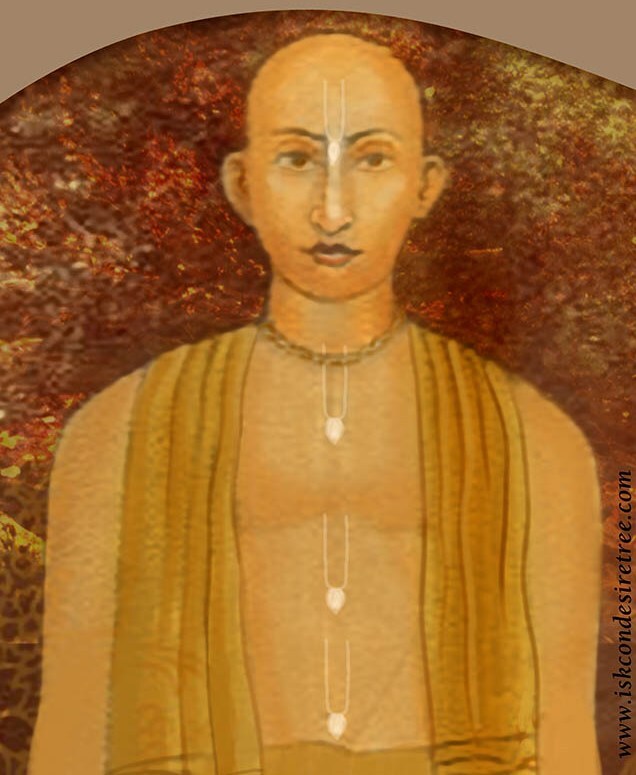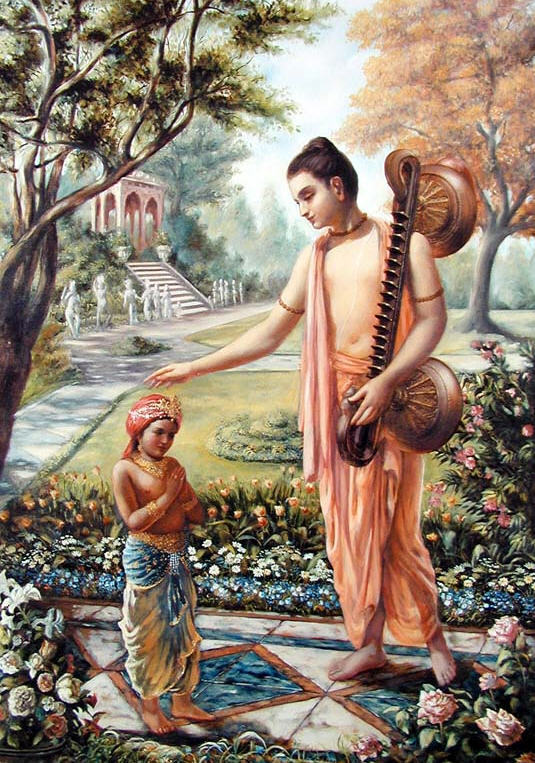
Srila Narayana Bhatta Goswami
Rediscoverer of Vraja's Twelve Forests, Author of Vraja-bhakti-vilasa
Also known as Narayan Bhatt, Narayana Bhatta Gosvami, Bhattaji, Vrajacharya
“Vraja-bhumi is enchanting — the groves are enchanting, Sri Vrindavana is enchanting, and the waters of the Yamuna are enchanting.”
From a Brajbhasha verse in his own Vraja-bhakti-vilasa, quoted in Bhaktivedanta Narayana Maharaja's Sri Vraja-mandala Parikrama
Srila Narayana Bhatta Goswami was a Gaudiya Vaishnava acharya who spent most of a long life walking the forests, riverbanks and villages of Vraja. He matched almost every grove and pond to a specific pastime of Radha and Krishna. He is not one of the Six Goswamis of Vrindavana. They are Sri Rupa Goswami, Sanatana Goswami, Raghunatha Bhatta Goswami, Gopala Bhatta Goswami, Jiva Goswami and Raghunatha Dasa Goswami. But Vrajavasis have long spoken of him as an unofficial seventh Goswami, the Vrajacharya. His book laid out the holy places of Vraja in detail, as a route that pilgrims still follow on foot.
| Detail | Description |
|---|---|
| Birth | c. 1531 (sources vary), Madhurapattana (Madurai), South India |
| Identity | Held in his tradition to be an avatara of Narada Muni (Vraja-bhakti-vilasa, Hindi edition introduction) |
| Guru | Krishna Dasa Brahmachari |
| Arrived in Vraja | c. 1545–46 CE |
| Chief work | Vraja-bhakti-vilasa (composed c. 1552–53 at Radha-kunda) |
| Known as | Vrajacharya; informally, "the seventh Goswami" of Vrindavana |
| Disappearance | Not reliably documented; samadhi at Unchagaon, near Barsana |
Birth in Madurai and a Journey North #
Narayana Bhatta Goswami was born into a Tailanga brahmana family in Madhurapattana, today's Madurai, in South India. His father, Sri Bhattaji, was known for his learning. When Narayana Bhatta Goswami was a boy of about twelve to fourteen, he turned away from ordinary life and made the long journey north to Vraja. He arrived around 1545–46 CE. Sources give slightly different ages for when this happened. In this same century, an unrelated Sanskrit scholar with nearly the same name lived in Benares and wrote on Dharmashastra and pilgrimage law. The two are easily confused, but they were different people from different families. The full story of his birth and early years is told on Birth in Madurai and the Journey to Vraja.
Guru and Place in the Parampara #
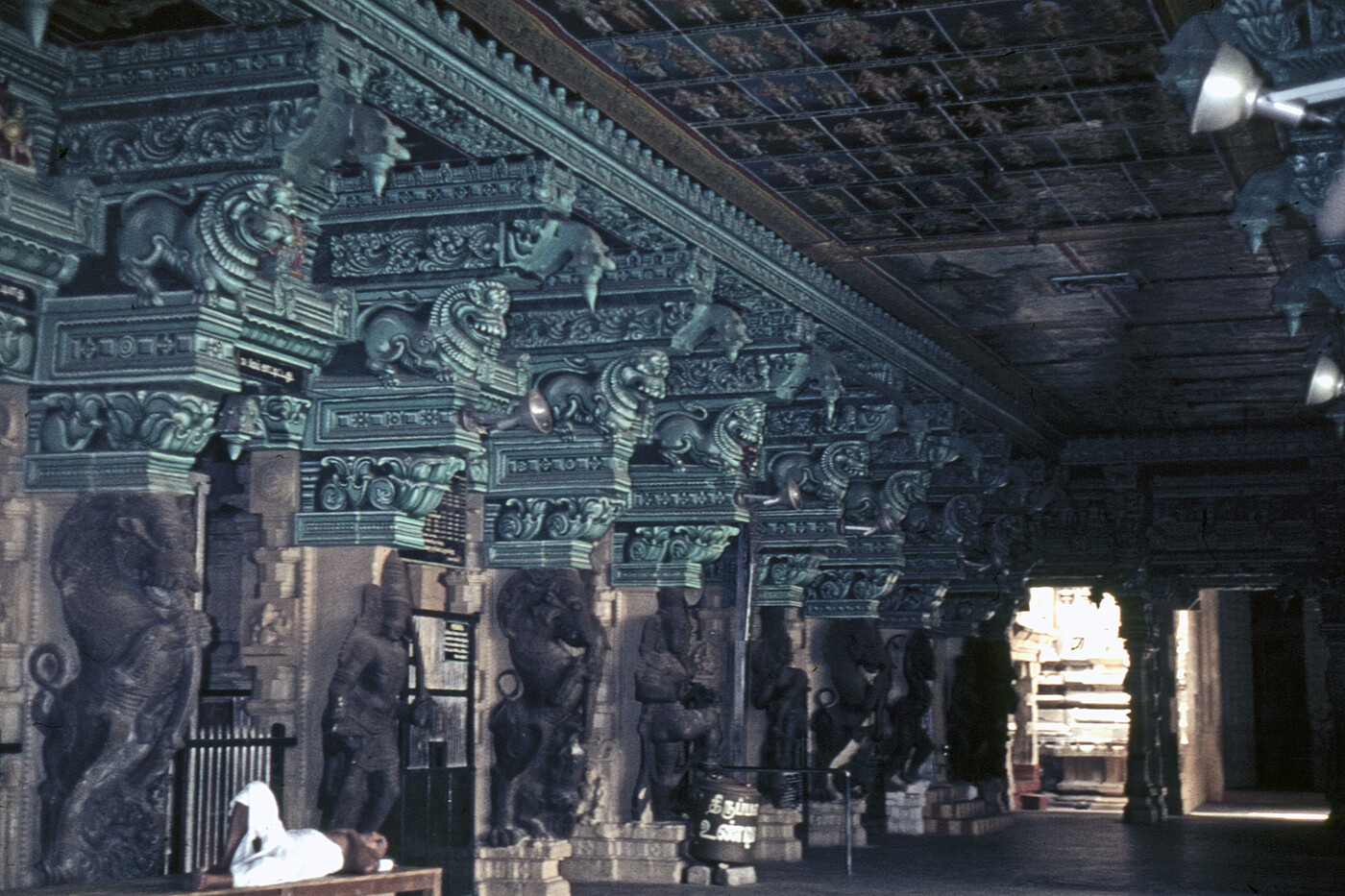
In Vraja he took initiation from Krishna Dasa Brahmachari and settled near Radha-kunda under his guidance. Sources disagree about who Krishna Dasa Brahmachari's own guru was. Some say he stood in the line of Gadadhara Pandit, one of the closest associates of Sri Chaitanya Mahaprabhu. Others describe him as a disciple of Gopala Bhatta Goswami. This disagreement has not been resolved, so both views are given here without choosing one. Like Gopala Bhatta Goswami and Prabodhananda Saraswati, Narayana Bhatta Goswami himself came from a South Indian brahmana background. This pattern is seen among several of Vraja's early Vaishnavas. But no source records any direct family or personal connection between them beyond this shared origin.
Rediscovering the Twelve Forests #
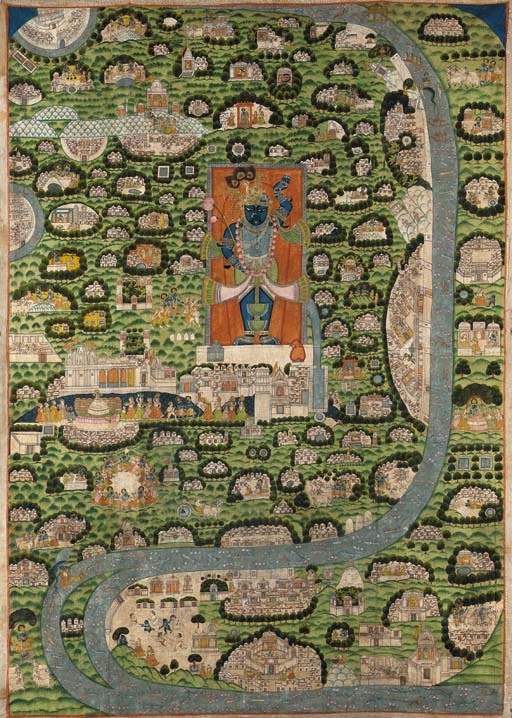
For roughly eight years Narayana Bhatta Goswami walked the twelve forests (dvadasha-vana) of Vraja-mandala. They are Mahavana, Kamyavana, Madhuvana, Talavana, Kumudavana, Bahulavana, Bhandiravana, Bhadravana, Khadiravana, Lohavana, Vrindavana and Belvana. He traced local memory and references in the Puranas back to specific sites of Krishna's pastimes. He uncovered deities that had been lost, and he fixed the boundaries of the land that later pilgrims would walk around. He is also said to have organized this same land into four rings, one inside another: vana, upavana, prativana and adhivana. Together they cover the traditional eighty-four kos that the Chaurasi-kos Parikrama still covers. Tradition even says that the deity now worshiped in the Shriji Temple at Barsana manifested around 1570 CE through his prayers. The full story, including what is and is not well recorded in it, is told on Rediscovering the Twelve Forests of Vraja.
Vraja-bhakti-vilasa and the Ban-Yatra #
He wrote down the results of that work in Sanskrit as the Vraja-bhakti-vilasa. He composed it around 1552–53 on the bank of Radha-kunda and based it on the authority of the Varaha Purana. The book names a very large number of Vraja's groves, ponds and villages (one count puts it at 333 sites) and connects each to its own lila. In this book Narayana Bhatta Goswami also names his own eternal identity as Narada Muni. But this is his own description of himself in his own book, not an entry in Kavi Karnapura's Gaura-ganoddesha-dipika. Following the route given in the book, he then organized the twenty-three day forest pilgrimage in the month of Bhadrapada that is still known as the Ban-yatra. He is also credited with reviving rasa-lila as a danced retelling of Krishna's pastimes, performed at the very places where they took place. This tradition is still performed today, for example at Sankari-khor in Barsana on Radhashtami. See Writing the Vraja-bhakti-vilasa and The Ban-Yatra Tradition.
Descendants and Lasting Legacy #
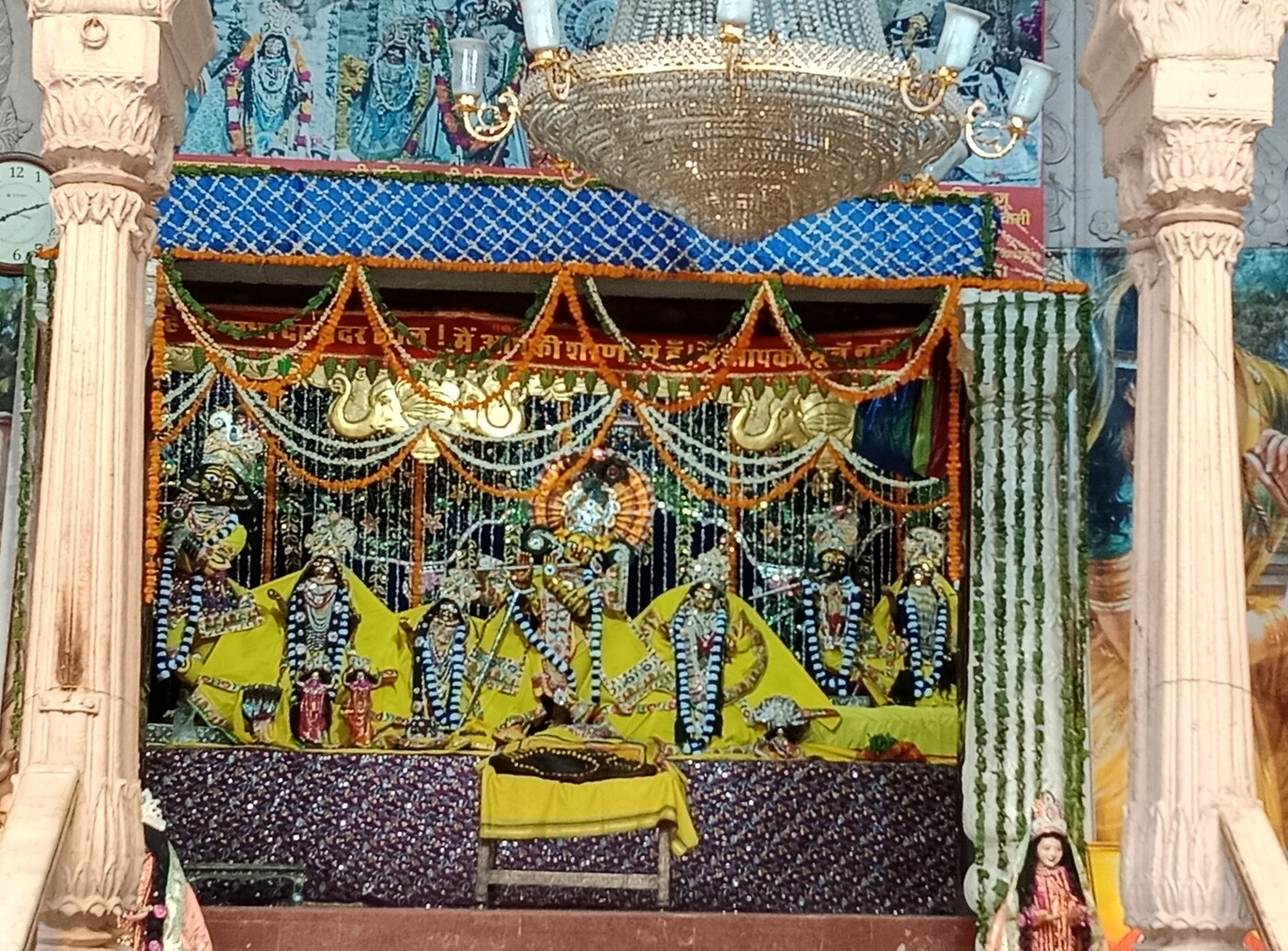
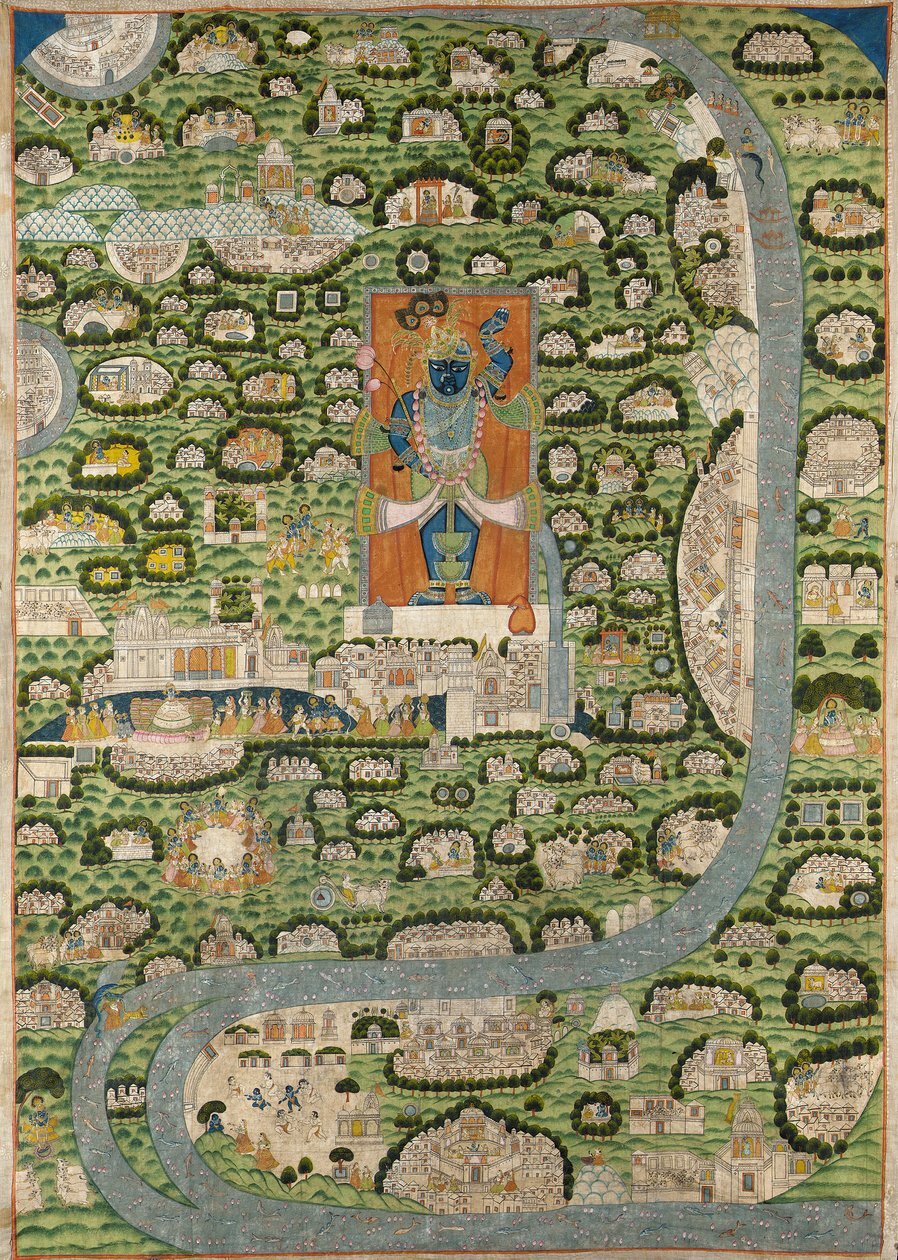
Later in life he appears to have married and settled at Unchagaon, near Barsana. There his chief personal service was at the Dauji Temple, which is said to have been built on his instruction by Raja Todaramala. According to Srila Bhaktivedanta Narayana Maharaja's Sri Vraja-mandala Parikrama, the priests of the Shriji Temple at Barsana take initiation from his descendants to this day. This is the temple built around the deity of Radharani that, tradition says, manifested through his prayers. It is the clearest recorded sign of a living pujari family descending from him. Exactly when he passed away is not reliably recorded, and this page does not fill that gap with an invented date. That lineage, the uncertainty around his final years, and his lasting place in how Vraja is walked and understood are covered on Descendants and Legacy. Pilgrims within Srila Prabhupada's own movement who still walk or visit Vraja's holy places are, in a real sense, walking through land that this Vrajacharya first mapped by name.
Scriptural evidence
brajbhumi mohini main jani
mohini kunj, mohan sri-brndavan mohan jamuna pani
mohini nari sakal gokul ki boli mohini bani
sri-bhatt ke prabhu mohan nagar mohini radha rani
Vraja-bhumi is enchanting — the groves are enchanting, Sri Vrindavana is enchanting and the waters of the Yamuna are enchanting. All the women of Gokula are enchantresses who speak in an enchanting way. Sri Bhatta's own master and mistress are Mohana Nagara and Mohini Radharani.
A rare surviving vernacular Braj-bhasha verse attributed to Narayana Bhatta Goswami himself, used here as the source for the biography page's pull-quote.
- Narayana Bhatta Goswami | Gaudiya History
- Shri Narayan Bhatt: Redefining the Pilgrimage in Sixteenth Century Braj — Indica Today
- Who is Narayana Bhatta Goswami? — Moods of Vraja
- Sri Vraja-mandala Parikrama, Srila Bhaktivedanta Narayana Maharaja (full text)
- Journey Through the Twelve Forests: An Encounter with Krishna, David L. Haberman (Oxford University Press)
Frequently asked
When was Srila Narayana Bhatta Goswami born?
Srila Narayana Bhatta Goswami appeared c. 1531 (sources vary) in Madhurapattana (Madurai), South India.
When and where did Srila Narayana Bhatta Goswami disappear?
Srila Narayana Bhatta Goswami disappeared Not reliably documented at Unchagaon, near Barsana, Vraja (samadhi site).
What are the main pastimes of Srila Narayana Bhatta Goswami?
The pastimes covered here include: Birth in Madurai and the Journey to Vraja, Rediscovering the Twelve Forests of Vraja, Writing the Vraja-Bhakti-Vilasa, The Ban-Yatra Tradition, Descendants and Legacy.