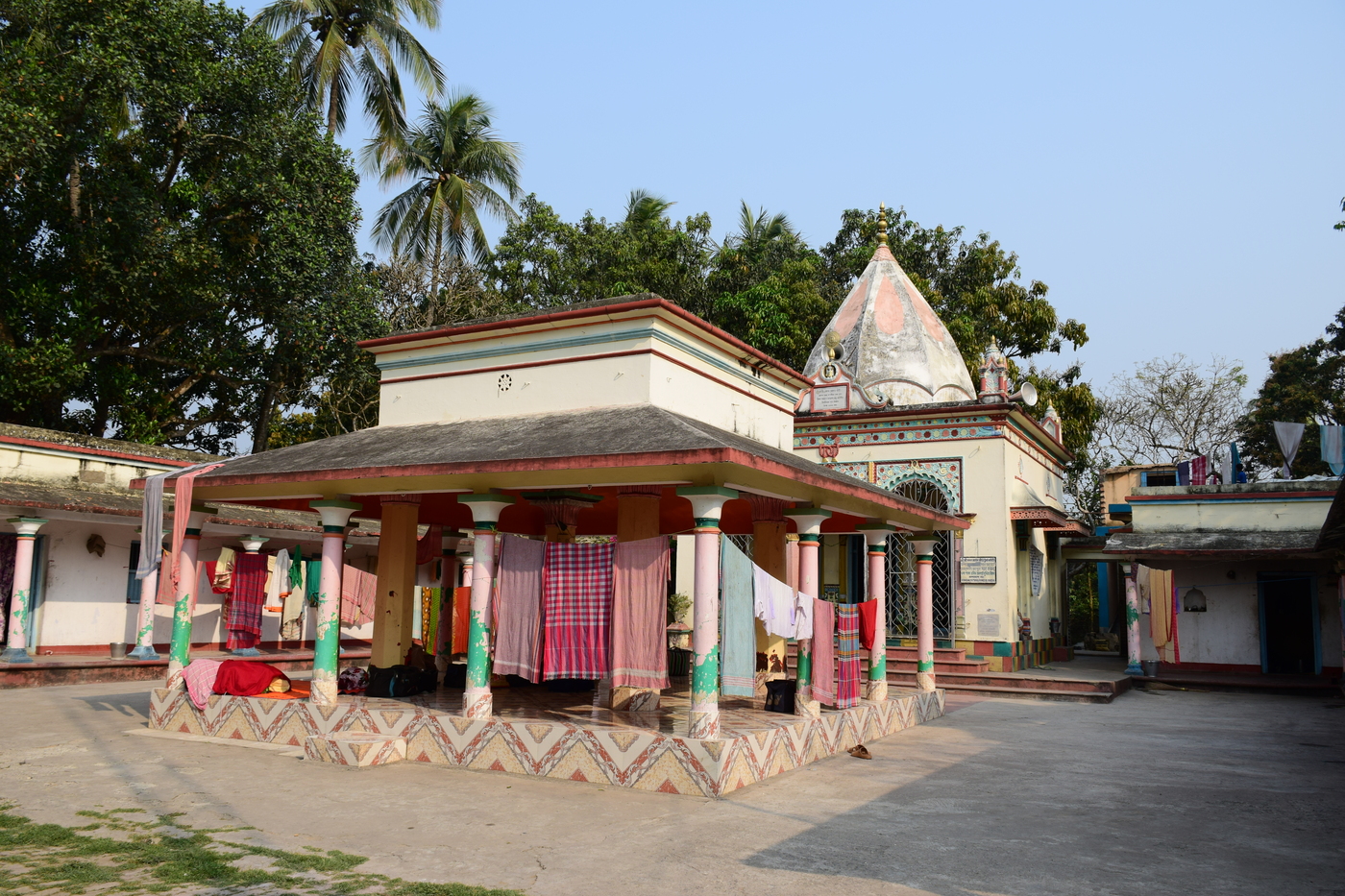
At birth, Sri Anupama Mallika had a simpler name, Sri Vallabha. Chaitanya-charitamrita traces the family back several generations to a Karnataka-brahmana line that later settled in Bengal. But the part of the story that shapes his own life starts with his father, Kumaradeva. Kumaradeva made his home in Bakla-Chandradvipa, near what is now Fateyabad in the Jessore district of Bangladesh. Of Kumaradeva's several sons, three took up Vaishnava life: Sanatana, the eldest; Rupa, the middle brother; and Vallabha, the youngest. Later the three brothers moved from Chandradvipa to a village called Ramakeli, in the Maldah district of Bengal. In time, Srila Jiva Goswami would be born in this village.
All three brothers entered government service under Nawab Hussain Shah, the Muslim ruler of Gauda. Sanatana rose to a senior minister's post, remembered in Chaitanya-charitamrita as Sakara Mallika. Rupa became Dabir Khas, the ruler's chief secretary, and was trusted with writing the Sultanate's official letters. Vallabha, the youngest, is remembered by tradition as having been placed in charge of the royal mint. This tradition is recorded in the Bhaktiratnakara. It was demanding and highly respected work. It placed all three brothers inside the same Muslim court whose politics and royal support shaped so much of sixteenth-century Bengal.
Because the three brothers served the Sultanate's government in this way, the whole family received a title of honor: Mullik, also written Mallika or Malik. Srila Prabhupada explains the title at length in his purport to Chaitanya-charitamrita. He notes that it worked much like the English title "lord." It was given to families of wealth and standing who had close connections with the ruling government, whatever their caste or religion. He even mentions his own family's long-standing connection with another branch of Mulliks in Calcutta. This shows that the title never belonged to one family line only. This detail matters here because it is easy to read "Mallika" as a personal name belonging to one man only. A reader might even mistake it for something else entirely, a different name or a different person. It was neither. It was a shared family title that Sanatana, Rupa and Vallabha all carried for the same reason, at the same time, in the same court.
A particular meeting made "Mallika" part of one man's own name. Srila Prabhupada's purport to Chaitanya-charitamrita records this meeting. When Sri Chaitanya Mahaprabhu passed through Ramakeli on His way toward Vrindavana, He stopped in the village and met Vallabha there directly, along with his brothers. The main narrative gives the result of that meeting a little later, when Rupa and his brother set out to find the Lord again at Prayaga: "Rupa Gosvami's younger brother was a great devotee whose actual name was Sri Vallabha, but he was given the name Anupama Mallika" (CC Madhya 19.36). From then on, the text calls him only by this new name. It does not say simply "Anupama," but "Anupama Mallika" together. It is as if Sri Chaitanya Mahaprabhu Himself had decided that the family title should stay beside the new name for good.
The three brothers did not remain together in government service for long after this. Rupa was the first to break free, and he resigned his own post completely. When he set out to find Sri Chaitanya Mahaprabhu, Vallabha, by then known as Anupama Mallika, chose to travel with him instead of staying behind in Gauda. Sanatana Goswami followed later, through an escape from imprisonment that has become one of the best-known episodes in Gaudiya Vaishnava history. The page The Journey to Vrindavana and a Sudden End tells what happened to him on that journey, and how briefly it lasted.
