Sri Anupama Mallika
Youngest of the Three Gosvami Brothers, Father of Srila Jiva Goswami
The complete life, on one page: The main biography and every pastime page, in order, in one place
Introduction
Sri Anupama Mallika is remembered today mainly for two facts. He was the youngest of the three brothers who gave Gaudiya Vaishnavism its most important theologians, and he was the father of Srila Jiva Goswami. He left no books and founded no institution. Sri Chaitanya-charitamrita itself gives almost everything that is reliably known about him. His birth name was Sri Vallabha. Krishnadasa Kaviraja Goswami records that Sri Chaitanya Mahaprabhu met him at Ramakeli and gave him a completely new name, Anupama Mallika. Here "Mallika" is not a newly invented name, and it is not a woman's name attached to him by mistake. It was the family title that his elder brothers also carried for their service in the government of the Bengal Sultanate. It is the very title behind Sanatana Goswami's own court name, Sakara Mallika. Beyond this renaming, Chaitanya-charitamrita records something unusually specific about Anupama, for a man who wrote nothing. He had a real disagreement with his brothers over whose Lord he should worship, and the text keeps his own answer to it.
| Detail | Description |
|---|---|
| Birth name | Sri Vallabha |
| Family | Youngest son of Kumaradeva; younger brother of Sanatana Goswami and Rupa Goswami |
| Renamed by | Sri Chaitanya Mahaprabhu, at Ramakeli, as "Anupama Mallika" |
| Government post | Reportedly Chief of the Mint under Nawab Hussain Shah of Gauda (Bhaktiratnakara) |
| Worshiped | Lord Ramachandra (Raghunatha), from childhood onward |
| Son | Srila Jiva Goswami |
| Disappearance | Sakabda 1436 (A.D. 1514), soon after returning to Bengal from Vrindavana |
At a Glance
- Born Sri Vallabha, the youngest of the three sons of Kumaradeva who entered government service in Bengal. All three received the family title Mallika (Mullik).
- Renamed Anupama Mallika by Sri Chaitanya Mahaprabhu at their meeting in the village of Ramakeli.
- Worshiped Lord Ramachandra from childhood and never shifted his devotion to Radha-Govinda, even when his own brothers urged him to.
- Traveled with Rupa Goswami toward Vrindavana, meeting the devotee Subuddhi Raya at Mathura and touring its twelve forests with him.
- Died in Bengal soon after that journey, before his infant son Jiva Goswami could grow up knowing him.
Scriptural evidence for the introduction (2)
অনুপম–বল্লভ, শ্রীরূপ, সনাতন । এই তিন শাখা বৃক্ষের পশ্চিমে সর্বোত্তম ॥ ৮৪ ॥
anupama-vallabha, sri-rupa, sanatana
ei tina sakha vrksera pascime sarvottama
Word for word
anupama-vallabha: Anupama, or Vallabha; sri-rupa: Sri Rupa; sanatana: Sanatana; ei: these; tina: three; sakha: branches; vrksera: of the tree; pascime: on the western side; sarvottama: very great.
On the western side were the forty-third, forty-fourth and forty-fifth branches - Sri Sanatana, Sri Rupa and Anupama. They were the best of all.
From the purport: Purport excerpt: "Because of working in the Muslim government, these three brothers were given the title Mullik... Similarly, Rupa, Sanatana and Vallabha were also given the title Mullik. Mullik means 'lord.'"
This is the genealogical verse placing Anupama, together with Rupa and Sanatana, as branches of the tree of Sri Chaitanya Mahaprabhu's associates; Srila Prabhupada's purport to it is the fullest single account of the family and the Mullik title.
তাঁর লঘুভ্রাতা — শ্রীবল্লভ-অনুপম । তাঁর পুত্র মহাপণ্ডিত — জীবগোসাঞি নাম ॥ ২২৭ ॥
tanra laghu-bhrata - sri-vallabha-anupama
tanra putra maha-pandita - jiva-gosani nama
Word for word
tanra: his; laghu-bhrata: younger brother; sri-vallabha-anupama: named Sri Vallabha or Anupama; tanra putra: his son; maha-pandita: very learned scholar; jiva-gosani: Srila Jiva Gosvami; nama: named.
The son of Sri Vallabha, or Anupama, Srila Rupa Gosvami's younger brother, was the great learned scholar named Srila Jiva Gosvami.
This is the direct textual link in Chaitanya-charitamrita's own list of Nityananda Prabhu's and the Panca-tattva's associates confirming that Jiva Goswami was Anupama's son.
Chapter 1
Three Brothers Who Served Gauda
How Kumaradeva's three sons rose in the Bengal Sultanate's government, and how Sri Chaitanya Mahaprabhu renamed the youngest at Ramakeli
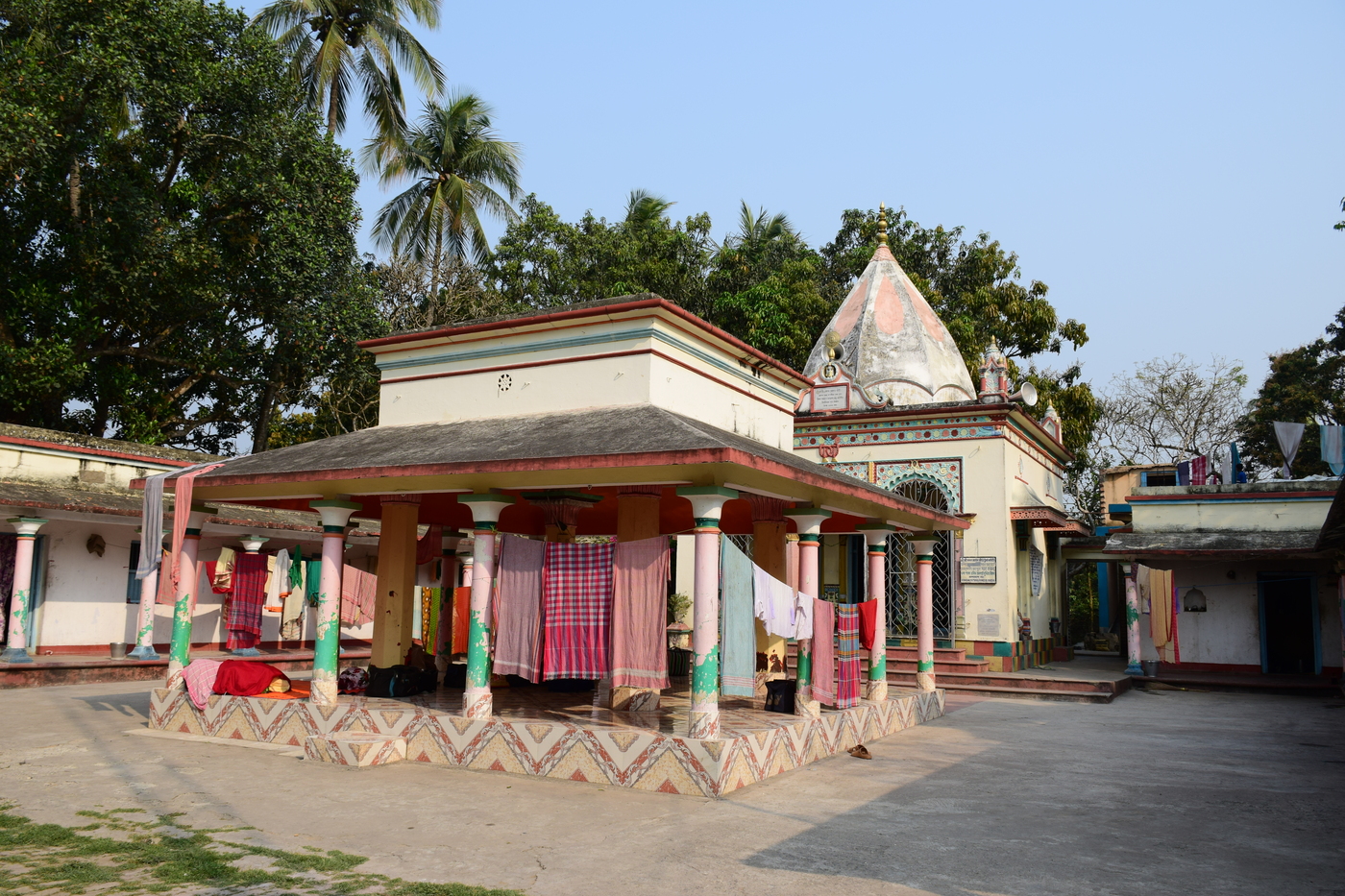
At birth, Sri Anupama Mallika had a simpler name, Sri Vallabha. Chaitanya-charitamrita traces the family back several generations to a Karnataka-brahmana line that later settled in Bengal. But the part of the story that shapes his own life starts with his father, Kumaradeva. Kumaradeva made his home in Bakla-Chandradvipa, near what is now Fateyabad in the Jessore district of Bangladesh. Of Kumaradeva's several sons, three took up Vaishnava life: Sanatana, the eldest; Rupa, the middle brother; and Vallabha, the youngest. Later the three brothers moved from Chandradvipa to a village called Ramakeli, in the Maldah district of Bengal. In time, Srila Jiva Goswami would be born in this village.
All three brothers entered government service under Nawab Hussain Shah, the Muslim ruler of Gauda. Sanatana rose to a senior minister's post, remembered in Chaitanya-charitamrita as Sakara Mallika. Rupa became Dabir Khas, the ruler's chief secretary, and was trusted with writing the Sultanate's official letters. Vallabha, the youngest, is remembered by tradition as having been placed in charge of the royal mint. This tradition is recorded in the Bhaktiratnakara. It was demanding and highly respected work. It placed all three brothers inside the same Muslim court whose politics and royal support shaped so much of sixteenth-century Bengal.
Because the three brothers served the Sultanate's government in this way, the whole family received a title of honor: Mullik, also written Mallika or Malik. Srila Prabhupada explains the title at length in his purport to Chaitanya-charitamrita. He notes that it worked much like the English title "lord." It was given to families of wealth and standing who had close connections with the ruling government, whatever their caste or religion. He even mentions his own family's long-standing connection with another branch of Mulliks in Calcutta. This shows that the title never belonged to one family line only. This detail matters here because it is easy to read "Mallika" as a personal name belonging to one man only. A reader might even mistake it for something else entirely, a different name or a different person. It was neither. It was a shared family title that Sanatana, Rupa and Vallabha all carried for the same reason, at the same time, in the same court.
A particular meeting made "Mallika" part of one man's own name. Srila Prabhupada's purport to Chaitanya-charitamrita records this meeting. When Sri Chaitanya Mahaprabhu passed through Ramakeli on His way toward Vrindavana, He stopped in the village and met Vallabha there directly, along with his brothers. The main narrative gives the result of that meeting a little later, when Rupa and his brother set out to find the Lord again at Prayaga: "Rupa Gosvami's younger brother was a great devotee whose actual name was Sri Vallabha, but he was given the name Anupama Mallika" (CC Madhya 19.36). From then on, the text calls him only by this new name. It does not say simply "Anupama," but "Anupama Mallika" together. It is as if Sri Chaitanya Mahaprabhu Himself had decided that the family title should stay beside the new name for good.
The three brothers did not remain together in government service for long after this. Rupa was the first to break free, and he resigned his own post completely. When he set out to find Sri Chaitanya Mahaprabhu, Vallabha, by then known as Anupama Mallika, chose to travel with him instead of staying behind in Gauda. Sanatana Goswami followed later, through an escape from imprisonment that has become one of the best-known episodes in Gaudiya Vaishnava history. The page The Journey to Vrindavana and a Sudden End tells what happened to him on that journey, and how briefly it lasted.
Scriptural evidence for this chapter (1)
Quoted in the text above:
- Madhya 19.36 Sri Chaitanya-charitamrita
Chapter 2
Tested Between Two Devotions
Rupa and Sanatana Goswami tried for years to turn their youngest brother toward Krishna-bhakti; his answer became one of Chaitanya-charitamrita's most personal episodes
Nearly everything Chaitanya-charitamrita records about Anupama Mallika's inner life comes from a single conversation. Surprisingly, the one who tells it is not Sri Chaitanya Mahaprabhu but Sanatana Goswami, remembering his youngest brother after his death. At Jagannatha Puri, Mahaprabhu had just told Sanatana that Anupama had died in Bengal. He added a few words of His own in Anupama's memory: "Your brother Anupama is now dead. He was a very good devotee who had firm conviction in Raghunatha [Lord Ramacandra]" (CC Antya 4.27). Sanatana's reply, spoken in humility and grief together, gives the fullest picture that has come down to us of who Anupama really was.
Sanatana told Sri Chaitanya Mahaprabhu that Anupama had worshiped Lord Ramachandra "from the very beginning of his childhood... with great determination," chanting Ramachandra's holy name and constantly hearing the Ramayana (CC Antya 4.30-31). Sanatana and Rupa Goswami, as the elder brothers, lived with Anupama all the time. They wanted to make their youngest brother as absorbed in Krishna as they were. So again and again they spoke to him about Krishna's beauty and pastimes: "Engage yourself in devotional service to Krishna with the two of us. We three brothers shall stay together and enjoy discussing the pastimes of Lord Krishna" (CC Antya 4.35). In the end Anupama gave in outwardly. It was love and respect for his brothers that wore him down, not any real change of heart. He said: "My dear brothers, how can I disobey your orders? Initiate me into the Krishna mantra so that I may perform devotional service to Lord Krishna" (CC Antya 4.37).
He did not mean it, and he knew it the moment he had said it. That night he could not sleep. Chaitanya-charitamrita describes him lying awake in tears, turning over a single question: "How shall I give up the lotus feet of Lord Raghunatha?" (CC Antya 4.38). By morning he had his real answer, and he brought it back to his brothers directly. "I have sold my head at the lotus feet of Lord Ramacandra," he told them. "I cannot take it away. That would be too painful for me" (CC Antya 4.40). He begged them instead to bless him so that he could serve Raghunatha's feet life after life, saying that even the thought of giving them up broke his heart (CC Antya 4.41-42).
Rupa and Sanatana did not press him further. Chaitanya-charitamrita records that they embraced him instead, and praised the very quality they had spent so long trying to change: "You are a great saintly devotee, for your determination in devotional service is fixed" (CC Antya 4.43). When Sanatana finished telling this whole episode at Jagannatha Puri, Sri Chaitanya Mahaprabhu compared it with one other case that He considered its equal. This was the case of Murari Gupta, another devotee firmly attached to Lord Ramachandra. Mahaprabhu had personally tested Murari Gupta's attachment and found it just as unshakeable (CC Antya 4.45).
It would be easy to read this as a minor family disagreement, quietly settled. Gaudiya Vaishnava tradition has never read it that way. The episode shows that even inside the family that would go on to give the sampradaya three of its Six Goswamis, devotion did not mean that everyone had to follow the same practice. Anupama Mallika lived among Krishna-bhaktas his entire adult life. He was tested directly by two of the tradition's greatest teachers, and he simply never moved. Sri Chaitanya Mahaprabhu's own judgment was spoken a few verses earlier, at the very start of this account. It was not just a word of comfort offered after the fact. In the Lord's own eyes, that was the whole point: he was a very good devotee.
Scriptural evidence for this chapter (3)
Quoted in the text above:
- Antya 4.27 Sri Chaitanya-charitamrita
Further verses:
‘রঘুনাথের পাদপদ্মে বেচিয়াছোঁ মাথা । কাড়িতে না পারোঁ মাথা, পাঙ বড় ব্যথা ॥ ৪০ ॥
'raghunathera pada-padme veciyachon matha
kadite na paron matha, pana bada vyatha
Word for word
raghunathera: of Lord Ramacandra; pada-padme: at the lotus feet; veciyachon matha: I have sold my head; kadite: to take away; na paron: I am unable; matha: the head; pana: I get; bada vyatha: too much pain.
"'I have sold my head at the lotus feet of Lord Ramacandra. I cannot take it away. That would be too painful for me.'"
Anupama's own recorded words to his brothers Rupa and Sanatana Goswami, given here as the pull-quote, when they urged him to take up the worship of Radha-Govinda.
গোসাঞি কহেন, — “এইমত মুরারি-গুপ্ত । পূর্বে আমি পরীক্ষিলুঁ তার এই রীত ॥ ৪৫ ॥
gosani kahena, - "ei-mata murari-gupta
purve ami pariksilun tara ei rita
Word for word
gosani kahena: Sri Chaitanya Mahaprabhu replied; ei-mata: in this way; murari-gupta: Murari Gupta; purve: formerly; ami: I; pariksilun: examined; tara: of him; ei: this; rita: manner.
Sri Chaitanya Mahaprabhu said, "There was a similar incident concerning Murari Gupta. Formerly I examined him, and his determination was similar."
Sri Chaitanya Mahaprabhu Himself compares Anupama's fixed devotion to Lord Ramachandra with that of Murari Gupta, whom He had tested in a similar way.
Chapter 3
The Journey to Vrindavana and a Sudden End
Anupama followed Rupa Goswami toward Vrindavana, found a guide waiting at Mathura, and died in Bengal soon after turning back
When Rupa Goswami resigned his post as Dabir Khas and set out to find Sri Chaitanya Mahaprabhu, Anupama Mallika went with him. This was not simply two brothers traveling together for company: Sanatana Goswami later explained to Sri Chaitanya Mahaprabhu that Rupa and Anupama had gone toward Vrindavana specifically on the Lord's own instruction.
Their route took them first to Prayaga (Allahabad). There they were overjoyed to learn that Sri Chaitanya Mahaprabhu Himself was in the town, and they met Him there directly (CC Madhya 19.37). At this meeting, in a private room of a Deccan brahmana's house, Sri Chaitanya Mahaprabhu gave Rupa Goswami a long teaching on rasa and devotional service. Gaudiya Vaishnavas remember it as among His most important instructions of all. Anupama Mallika was present beside his brother throughout (CC Madhya 19.45). Sri Chaitanya Mahaprabhu later summed up the Prayaga meeting for Sanatana directly, in a single line: "I met your two brothers, Rupa and Anupama, at Prayaga. They have now gone to Vrindavana" (CC Madhya 20.66).
From Prayaga the two brothers went on to Mathura. There they met a poor but deeply devoted brahmana named Subuddhi Raya, who supported himself by selling dry firewood. Subuddhi Raya was overjoyed to meet the two brothers. He knew the district as few others did, and he personally showed them the twelve forests of Vrindavana. These are the same forests that Rupa and Sanatana would spend the rest of their own lives uncovering and restoring as places of pilgrimage. Anupama and Rupa stayed in the area for about a month. Then they left to search for Sanatana. He had set out separately, by a different road, and had not yet arrived (CC Madhya 25.208). They took the road along the Ganges, while Sanatana came to Vrindavana by the public road, so the brothers missed each other on the way. When Sanatana later reached Mathura himself, Subuddhi Raya told him everything about Rupa and Anupama's travels (CC Madhya 25.211-212).
Rupa and Anupama did not stay long. They went on toward Bengal to settle their remaining affairs with the state. They intended, on the Lord's own order, to go on afterward and see Him again at Jagannatha Puri. Anupama never completed that second journey. Chaitanya-charitamrita tells what happened in one short, plain verse: "In this way the two brothers Rupa and Anupama reached Bengal, but when they arrived there Anupama died" (CC Antya 1.37). The Bengali original does not use the ordinary word for death. It says he "attained the shelter of Mother Ganges." Srila Prabhupada's purport explains that in that era this phrase was used for anyone's death, whether or not the person literally died on the riverbank. Tradition dates the loss to Sakabda 1436, or A.D. 1514, not long after the brothers had left Vrindavana.
Sanatana Goswami learned of his youngest brother's death only later still, at Jagannatha Puri, from Sri Chaitanya Mahaprabhu Himself. The news, and Sanatana's own remembrance of Anupama's steady devotion that followed it, are told in full on Tested Between Two Devotions. Beyond that one conversation, the loss left the family with a fatherless child in Bengal: Anupama's young son, Srila Jiva Goswami. Jiva would grow up under his uncles' care and later travel to Vrindavana himself to join them. Chaitanya-charitamrita records the connection directly: "The son of Sri Vallabha, or Anupama, Srila Rupa Gosvami's younger brother, was the great learned scholar named Srila Jiva Gosvami" (CC Antya 4.227). Anupama Mallika himself never saw Vrindavana again after that one short month with Subuddhi Raya, and never saw his son grow into the scholar he became.
Scriptural evidence for this chapter (2)
Quoted in the text above:
- Antya 1.37 Sri Chaitanya-charitamrita
Further verses:
প্রভু কহে, — “তোমার দুইভাই প্রয়াগে মিলিলা । রূপ, অনুপম — দুঁহে বৃন্দাবন গেলা” ॥ ৬৬ ॥
prabhu kahe, - "tomara dui-bhai prayage mimila
rupa, anupama - dunhe vrndavana gela"
Word for word
prabhu kahe: Sri Caitanya Mahaprabhu said; tomara: your; dui-bhai: two brothers; prayage mimila: met Me at Prayaga; rupa: Rupa Gosvami; anupama: his brother Anupama; dunhe: both of them; vrndavana gela: have gone to Vrndavana.
Sri Chaitanya Mahaprabhu said, "I met your two brothers, Rupa and Anupama, at Prayaga. They have now gone to Vrindavana."
Sri Chaitanya Mahaprabhu's own confirmation to Sanatana Goswami that He met Rupa and Anupama at Prayaga, placing the journey's timeline directly in the Lord's own words.
Closing
Three Brothers, One Family Title #
Chaitanya-charitamrita traces Anupama's family back several generations to a Karnataka-brahmana line that later settled in Bengal. But the part that matters for his own life begins with his father, Kumaradeva. Kumaradeva lived in Bakla-Chandradvipa, near present-day Fateyabad in the Jessore district of Bangladesh. Of Kumaradeva's several sons, three took up Vaishnava life: Sanatana, the eldest; Rupa, the middle brother; and Vallabha, the youngest. All three entered the service of Nawab Hussain Shah's government at Gauda. Sanatana rose to a senior minister's post remembered as Sakara Mallika. Rupa became Dabir Khas, or chief secretary. By tradition, Vallabha was placed in charge of the royal mint. Because all three brothers served the Sultanate in this way, the whole family received the title Mullik. This is an Indo-Persian title roughly equal to "lord," given to families of wealth and standing, whatever their caste or religion. Srila Prabhupada explains this in his purport to this history. The title did not belong to any one brother only. It became fixed to Vallabha's own name because Sri Chaitanya Mahaprabhu later made the title part of the new name He gave him.
Renamed at Ramakeli #
According to Srila Prabhupada's own purport to this history, the renaming happened at Ramakeli. This was the village in the Maldah district where the family had by then settled, and where Jiva Goswami would later be born. When Sri Chaitanya Mahaprabhu passed through on His way toward Vrindavana, He met Vallabha there directly. Chaitanya-charitamrita's main narrative gives the new name a little later, when Rupa and his brother set out to find the Lord again at Prayaga: "Rupa Gosvami's younger brother was a great devotee whose actual name was Sri Vallabha, but he was given the name Anupama Mallika" (CC Madhya 19.36). From that point the text calls him only by this new name. Chaitanya-charitamrita chose to use Anupama Mallika, not his birth name Sri Vallabha, and that is the name that has come down through Gaudiya Vaishnava memory. The text never directly explains why the name "Anupama" ("incomparable" or "without equal") was chosen. But the meaning fits a devotee whose firm determination Sri Chaitanya Mahaprabhu Himself would later specially praise. This Ramakeli meeting is the one clearly recorded meeting that shaped his spiritual life. For this reason Gaudiya Vaishnava tradition counts Sri Chaitanya Mahaprabhu Himself as his guru here, much as it does for Sanatana Goswami. But unlike in Sanatana's case, Chaitanya-charitamrita does not describe a separate, long teaching given to Anupama alone.
A Father His Son Never Knew #
Anupama Mallika is not counted among the Six Goswamis whom his brothers and nephew helped establish in Vrindavana. He left behind no commentary, no compiled work, nothing that carried his own name into later Gaudiya Vaishnava literature. Instead, he left a son, Jiva Goswami. Jiva was still a child in Bengal when his father died. He would grow up under his uncles' care in Vrindavana. In the judgment of Srila Prabhupada and of generations of Gaudiya scholars since, Jiva became the most systematic philosopher among the Six Goswamis. Chaitanya-charitamrita states the connection very plainly: "The son of Sri Vallabha, or Anupama, Srila Rupa Gosvami's younger brother, was the great learned scholar named Srila Jiva Gosvami" (CC Antya 4.227). Anupama Mallika's own place in this history is small compared with that of his brothers or his son, and Gaudiya Vaishnava tradition has never claimed otherwise. Across five centuries it has carefully kept the name Sri Chaitanya Mahaprabhu gave him at Ramakeli and one verse recording his death. It has also kept his own brother's statement that, whatever else changed around him, his devotion to Lord Ramachandra never did.
- Sri Caitanya-caritamrita, Adi 10.84 and purport (Vedabase)
- Sri Caitanya-caritamrita, Madhya 19.36, 19.45 (Vedabase)
- Sri Caitanya-caritamrita, Madhya 20.66 and 25.211 (Vedabase)
- Sri Caitanya-caritamrita, Antya 1.37 (Vedabase)
- Sri Caitanya-caritamrita, Antya 4.26-45, 4.227 (Vedabase)
- Anupama Mallika | Gaudiya History
