Srila Dhananjaya Pandit
Renounced Servant of Nityananda Prabhu at Sitalagrama
The complete life, on one page: The main biography and every pastime page, in order, in one place
Introduction
Srila Dhananjaya Pandit is named only once in Krishnadasa Kaviraja Goswami's Sri Chaitanya-charitamrita. It is a single verse, one line among dozens of devotees. Yet this one mention, read together with what Gaudiya tradition preserved about him afterward, is enough to show clearly who he was. He was a renounced servant of Nityananda Prabhu who gave away his father's fortune and kept only a begging bowl. His Deities are still worshiped today in rural Bengal.
| Detail | Description |
|---|---|
| Also known as | Dhananjaya Pandita |
| Position among Nityananda Prabhu's associates | Named sixteenth in Chaitanya-charitamrita's list of his "chief branches" |
| Identity | Vasudama, Krishna's cowherd friend; one of the twelve gopalas (Gaura-ganoddesha-dipika 127; Chaitanya-charitamrita Adi 11.31 purport) |
| Wife | Haripriya (per secondary sources; not named in Chaitanya-charitamrita itself) |
| Sripat / home | Sitalagrama, Mangalkota, Burdwan district, Bengal |
| Deities established | Sri Gopinatha, Sri Nitai-Gauranga and a Damodara-shalagrama-shila |
| Disappearance | Shukla-ashtami of Kartik; year not recorded |
At a Glance
- Named the sixteenth "dear servant" of Nityananda Prabhu in Chaitanya-charitamrita, and described there as atyanta virakta - extremely renounced.
- On his wedding day, gave his father's entire travel fortune to Sri Chaitanya Mahaprabhu and kept only a kamandalu, a story still remembered in a later devotional verse.
- Traveled twice toward Vrindavana, leaving Deity worship each time in a disciple's care, before finally returning to found the temple at Sitalagrama that still stands.
- Remembered in Gaudiya devotional biographies for converting robbers and non-believers around Sitalagrama. This shows Nityananda Prabhu's own power to save the fallen, working through his devotee.
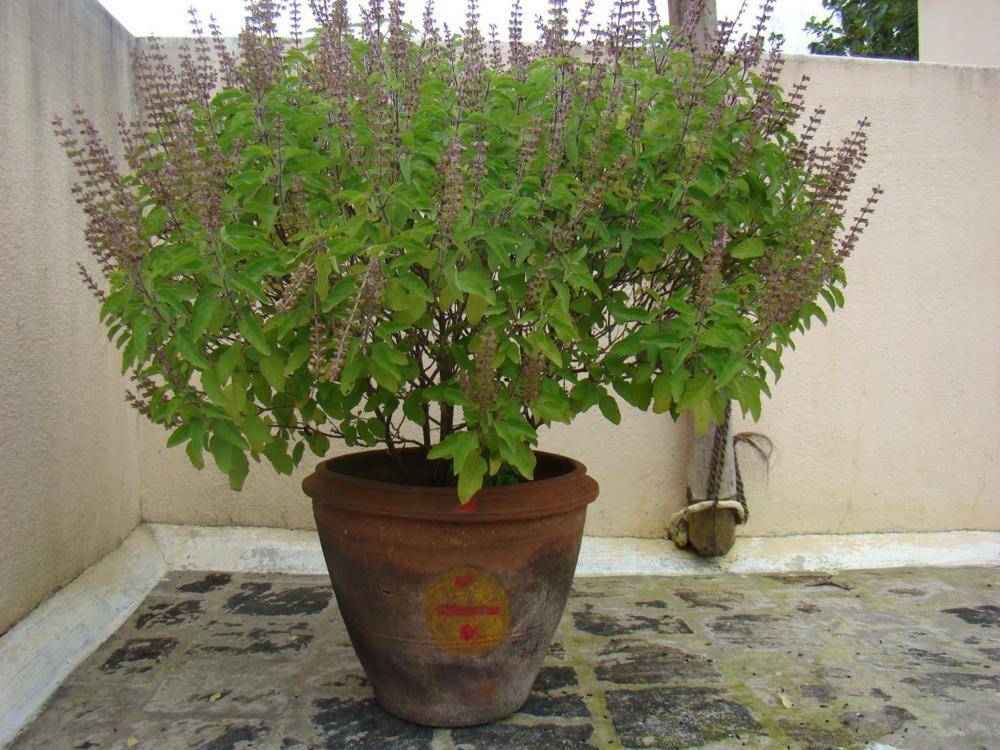
- His samadhi sits today beside a Tulasi altar inside the Sitalagrama temple, where descendants of his disciples still carry on the Deity worship he began.
Scriptural evidence for the introduction (2)
নিত্যানন্দ–প্রিয়ভৃত্য পণ্ডিত ধনঞ্জয় ।
অত্যন্ত বিরক্ত, সদা কৃষ্ণপ্রেমময় ॥ ৩১ ॥
nityānanda-priyabhṛtya paṇḍita dhanañjaya
atyanta virakta, sadā kṛṣṇa-premamaya
Word for word
nityānanda-priya-bhṛtya: another dear servant of Nityānanda Prabhu; paṇḍita dhanañjaya: Paṇḍita Dhanañjaya; atyanta: very much; virakta: renounced; sadā: always; kṛṣṇa-prema-maya: merged in love of Kṛṣṇa.
The sixteenth dear servant of Nityananda Prabhu was Dhananjaya Pandita. He was very much renounced and always merged in love of Krishna.
From the purport: Purport excerpt: "Paṇḍita Dhanañjaya was a resident of the village in Katwa named Śītala. He was one of the twelve gopālas. His former name, according to the Gaura-gaṇoddeśa-dīpikā (127), was Vasudāma."
This is the single verse in Krishnadasa Kaviraja Goswami's list of Nityananda Prabhu's associates that names Dhananjaya Pandit; Bhaktisiddhanta Sarasvati Thakura's Anubhasya commentary on it supplies nearly all the biographical detail used across his biography and its pastime pages.
पुरा सुदामनामासीदद्य सुन्दरठक्कुरः ।
वसुदामसखा यश्च पण्डितः श्रीधनञ्जयः ॥१२७॥
purā sudāma-nāmāsīd adya sundara-ṭhakkuraḥ |
vasudāma-sakhā yaś ca paṇḍitaḥ śrī-dhanañjayaḥ ||127||
Lord Krsna's cowherd friend Sudama appeared in Lord Caitanya's pastimes as Sundara Thakura. Lord Krsna's cowherd friend Vasudama appeared in Lord Caitanya's pastimes as Sri Dhananjaya Pandita.
Kavi Karnapura's verse naming Dhananjaya Pandit as Vasudama, a cowherd friend of Krishna (the same verse names Sundarananda as Sudama); the Anubhashya sentence confirming it is shown under Chaitanya-charitamrita Adi 11.31. Sanskrit: diacritic edition of the Gaura-ganoddesha-dipika; English translation as published at bvmlu.org.
Chapter 1
The Vairagi Pandit's Renunciation
A young bridegroom in Navadvipa gives his father's fortune to Mahaprabhu and keeps only a begging bowl
Married Young, Renounced Almost at Once #
According to the secondary Gaudiya sources, Dhananjaya Pandit was the son of a well-to-do father, though the sources give the father's name differently. He was married while still young to a woman named Haripriya. (See Dhananjaya Pandit's main page for the two different accounts of his birth and parents; neither has been checked against an original text.) Both accounts agree on what happened next. Dhananjaya did not settle into married life. He set out on pilgrimage almost immediately, and his father gave him money for the journey.
He did not keep it. Tradition says he carried the entire sum to Sri Chaitanya Mahaprabhu and gave it away. He then continued his travels with nothing in his hand but a kamandalu, a simple begging bowl. A later devotional verse in the Vaishnava-vandana tradition still remembers him this way. It praises him as a vilasi vairagi, a playful renounced man, who gave his all to the Lord and left carrying only a bowl. The available sources do not establish who wrote the verse or when. So it is treated here as a devotional tribute, not as a dated historical record. But it matches closely how Krishnadasa Kaviraja Goswami himself describes Dhananjaya in a single line of Sri Chaitanya-charitamrita: atyanta virakta, "extremely renounced."
Daily Obeisance to Tulasi Devi #
The same renunciation is remembered in a smaller, daily form. Dhananjaya Pandit is said to have bowed down flat in obeisance before Tulasi Devi three times every day without fail: morning, noon and evening. Gaudiya memory has kept this simple practice alongside the larger story of his wedding-day renunciation. It is a small detail, but it tells us something. The same man who could give away his father's fortune in a single gesture also kept a quiet act of humility, repeated every day, as part of his life. Tulasi worship of this kind is still central to Gaudiya Vaishnava sadhana in general. Dhananjaya's own devotion to her is one of the few personal, day-to-day habits of his that are recorded at all.
A Description from Chaitanya-bhagavata #
Gaudiya memory also preserves a short line about Dhananjaya Pandit that is said to come from Vrindavana dasa Thakura's Chaitanya-bhagavata. But the two secondary sources do not even agree with each other on where in that text it is found. One gives it as Antya-khanda 5.733 and translates it as "Dhananjaya Pandit was a very rare soul. Nityananda Prabhu was always present in his heart." The other cites it as 3.5.773 and renders it "Dhananjaya Pandit was an extraordinarily great Vaishnava. Nityananda took up permanent residence in his heart." Vedabase.io does not have a separate searchable text of the Chaitanya-bhagavata, so neither reference could be checked against an original edition. Both versions agree on the main point, that Nityananda Prabhu's presence in Dhananjaya's heart was total and permanent. So that much is repeated here with confidence. The exact chapter and verse are openly left as an unanswered question.
Sankirtana in Navadvipa #
Before his renunciation carried him away from Bengal completely, Dhananjaya Pandit is remembered as having taken part for a time in Nityananda Prabhu's own sankirtana in Navadvipa. This was the public chanting and dancing that marked Sri Chaitanya Mahaprabhu's early public movement. Sources differ on exactly how this period fits with his marriage, his pilgrimage, and his final departure for Vrindavana. One account says that after his time in the Navadvipa sankirtana he returned to Sitalagrama, before setting out again on pilgrimage. The fuller story of that later journey includes a stay at a village called Sanchara-Panchara and two separate trips toward Vrindavana. It belongs to a different chapter of his story, told on The Deities of Sitalagrama.
An Honest Note on the Record #
Only a little can be said with real confidence. Chaitanya-charitamrita itself confirms only that Dhananjaya Pandit was renounced and devoted. It does not tell the wedding-day story at all. The story of the begging bowl, the daily bows to Tulasi Devi, and even the exact order of his travels all come entirely from later secondary collections. This difference is pointed out clearly here instead of being blurred. In the end, a short account with honest sources is the more faithful tribute to a truly renounced devotee.
Scriptural evidence for this chapter (1)
vilasi vairagi vandon pandita dhananjaya
sarvasva prabhure diya bhanda hate laya
I offer praise to the playful renunciant, Pandita Dhananjaya, who gave everything to the Lord and took up only a bowl in his hand. (A close paraphrase; no word-for-word translation was available.)
Quoted only via a secondary compilation (gaudiyahistory.iskcondesiretree.com); the verse's original text, author and date could not be independently verified, so it is presented as traditional devotional testimony rather than a primary scriptural citation.
Chapter 2
The Deities of Sitalagrama
Two journeys toward Vrindavana, and the founding of a temple that still stands in Bengal
Leaving Worship in a Disciple's Hands #
Bhaktisiddhanta Sarasvati Thakura's Anubhasya commentary on Sri Chaitanya-charitamrita Adi-lila 11.31 gives the fullest surviving account of Dhananjaya Pandit's travels, and it centers on Vrindavana. Before setting out there, he is said to have lived for some time in a village called Sanchara-Panchara, south of the Memari railway station in Bengal. This place is sometimes remembered simply as "Dhananjayera Pata," the place of Dhananjaya. When the time came to travel on, he left the responsibility of Deity worship there with a disciple who had been traveling with him. No trace of that particular temple survives today. The Anubhasya itself says that this was already true when it was written.
The Return and the Deities of Gopinatha, Nitai-Gauranga and Damodara #
After his time in Vrindavana, Dhananjaya Pandit returned to Sitalagrama, his home village near the Kaichara railway station in Burdwan district. There, according to the Anubhasya, he established a Deity of Gaurasundara. A fuller secondary account adds that the temple he founded there came to house three forms of worship together: Sri Gopinatha, Sri Nitai-Gauranga, and a Damodara-shalagrama-shila. All are still served at Sitalagrama today. Each year the Deities are carried out to a nearby field for a festival held in the middle of the month of Magh. This is a separate yearly festival from his Kartik disappearance day. One shorter account also mentions a period of Deity worship at a village called Jalandi. The fuller biographical account does not repeat this detail, and the Anubhasya does not confirm it, so it is only mentioned here and given no further weight.
After Dhananjaya himself was gone, the man who cared for that worship was very likely the same Sanjaya who is remembered elsewhere as either his younger brother or his disciple. The sources truly disagree on which he was. This small unresolved point is noted on Dhananjaya Pandit's main page. The sources agree that Dhananjaya Pandit left no children of his own. They also agree that the families who maintain Deity worship at Sitalagrama today trace their line to his disciples, not to any descendant.
Converting the Fallen at Sitalagrama #
One secondary devotional biography says that it draws on a book called Sri Chaitanya: His Life and Associates. It remembers Dhananjaya Pandit as an instrument of Nityananda Prabhu's own power to deliver the fallen. It credits him with converting robbers and non-believers in the area around Sitalagrama during his years there. Nityananda Prabhu's mercy knows no limit, as the Chaitanya-charitamrita itself says: "He delivers all those who fall down before Him. Therefore He has delivered such a sinful and fallen person as me" (Chaitanya-charitamrita, Adi 5.209). The claim about Dhananjaya Pandit could not be checked against Chaitanya-charitamrita itself, which says nothing about it. So it is presented here as devotional memory from a single named source, not as a historical episode confirmed by other sources.
A Temple Rebuilt More Than Once #
The Anubhasya's own description of the Sitalagrama temple shows that its building history is longer and less simple than the phrase "still worshiped today" suggests. Bhaktisiddhanta Sarasvati Thakura records that the original structure was a thatched house with walls of packed dirt. He also records that at some later point the zamindars of Bajaravana Kabasi, a family called the Malliks, built a larger house there to serve as a temple. By the time the Anubhasya was written, that Mallik-built temple had itself stood abandoned and broken down for some sixty-five years. Only its foundation could still be seen on the ground. A source describing the temple in the twenty-first century speaks instead of active Deity worship, disciples' descendants still in service, and an annual festival. This means that the temple now standing at Sitalagrama must have been rebuilt again at some point after Bhaktisiddhanta Sarasvati Thakura's own time. No single source describes that rebuilding directly, but it is clear enough when the two accounts are read side by side.
Disappearance and What Remains #
Dhananjaya Pandit's disappearance is kept on the bright ashtami of Kartik. The Anubhasya confirms the month, but no available source gives a year. His samadhi is said to lie just inside the Sitalagrama temple, beside a small Tulasi altar. The available sources do not tell us exactly how his two journeys toward Vrindavana, his stay at Sanchara-Panchara, and the disputed episode at Jalandi fit together in time. So they are not forced here into a single neat timeline. The pieces are shown just as they actually stand.
Scriptural evidence for this chapter (1)
Quoted in the text above:
- Adi 5.209 Sri Chaitanya-charitamrita
Closing
Nityananda Prabhu's Renounced Servant #
Chaitanya-charitamrita, Adi-lila chapter 11, is Krishnadasa Kaviraja Goswami's roll call of the "branches" of Nityananda Prabhu - devotees the text compares to bumblebees drawn to the honey of his lotus feet. Most names in that list get one line; a few, like Abhirama Gopala Thakura, get several verses of their own. Dhananjaya Pandit gets exactly one: "The sixteenth dear servant of Nityananda Prabhu was Dhananjaya Pandita. He was very much renounced and always merged in love of Krishna" (Adi 11.31). Bhaktisiddhanta Sarasvati Thakura's Anubhasya commentary on this verse is, in fact, the fullest connected account of him that survives - it names his home village, his two journeys toward Vrindavana, and the Deity he finally installed there. Everything else told about him in later Gaudiya writing fills in around this one verse and its commentary.
The Anubhasya also records that Dhananjaya was "one of the twelve gopalas," and that Kavi Karnapura's Gaura-ganoddesha-dipika (verse 127) names him as Vasudama in Krishna's own Vraja-lila. Vasudama is a cowherd companion of Krishna's. One of the shorter accounts instead says that he was one of Balarama's twelve gopalas, not Krishna's. This is a small disagreement between two secondary sources, and it is not settled here.
Srila Prabhupada gives this Anubhashya note in his purport to Chaitanya-charitamrita Adi 11.31. The line of the verse that names him reads:
vasudāma-sakhā yaś ca paṇḍitaḥ śrī-dhanañjayaḥ
"Lord Krsna's cowherd friend Vasudama appeared in Lord Caitanya's pastimes as Sri Dhananjaya Pandita." (Gaura-ganoddesha-dipika 127)
Two Villages, Two Genealogies #
It is not certain where Dhananjaya Pandit was born, or into which family. One tradition, recorded in the Gaudiya Vaishnava Abhidhana, says he was born in the village of Jariagrama in Chittagong district, the son of Shripati Bandopadhyaya and Kalindi Devi. Another tradition, in the book Gauranga Madhuri, says he was born in Siyan-Muluk near Bolpur in Birbhum district, the son of Adideva Vachaspati and Dayamayi. Secondary sources report that Bhaktisiddhanta Sarasvati Thakura preferred the first account in his own writing. But that claim could not be checked against an original edition of the Anubhasya, so both traditions are given here without choosing between them.
His adult life is better recorded. He married a woman named Haripriya, apparently while still young, and left no children. A man named Sanjaya is remembered at a related sripat near Bolpur. Some accounts call Sanjaya Dhananjaya's younger brother, and others call him his disciple. The families who still look after the Deity worship at Sitalagrama today are described as descendants of Dhananjaya's own disciples, not of Dhananjaya himself.
Disappearance and an Honest Record #
Dhananjaya Pandit's disappearance day is kept on the bright ashtami of Kartik. No year is recorded in any available source. His samadhi is said to stand beside a small Tulasi altar just inside the Sitalagrama temple. Beyond this, we should say plainly what is missing from the record. No lecture or conversation by Srila Prabhupada specifically about Dhananjaya Pandit could be found. The two secondary collections used here both quote the same Chaitanya-bhagavata line about him, but they do not even agree with each other on its exact chapter and verse. What can be said with confidence rests on the single verse of Chaitanya-charitamrita and its commentary. Everything beyond that is devotional memory, and it is clearly marked as such.
- Sri Chaitanya-charitamrita, Adi-lila 11.31, with Bhaktisiddhanta Sarasvati Thakura's Anubhasya commentary
- Sri Chaitanya-charitamrita, Adi-lila 11.1 (introduces the list of Nityananda Prabhu's associates)
- Gaudiya History (ISKCON Desire Tree): Sri Dhananjaya Pandit
- Gaudiya History (ISKCON Desire Tree): Dhananjaya Pandit - Biopraphy
- Gaudiya History (ISKCON Desire Tree): Dhananjaya Pandit (2)
