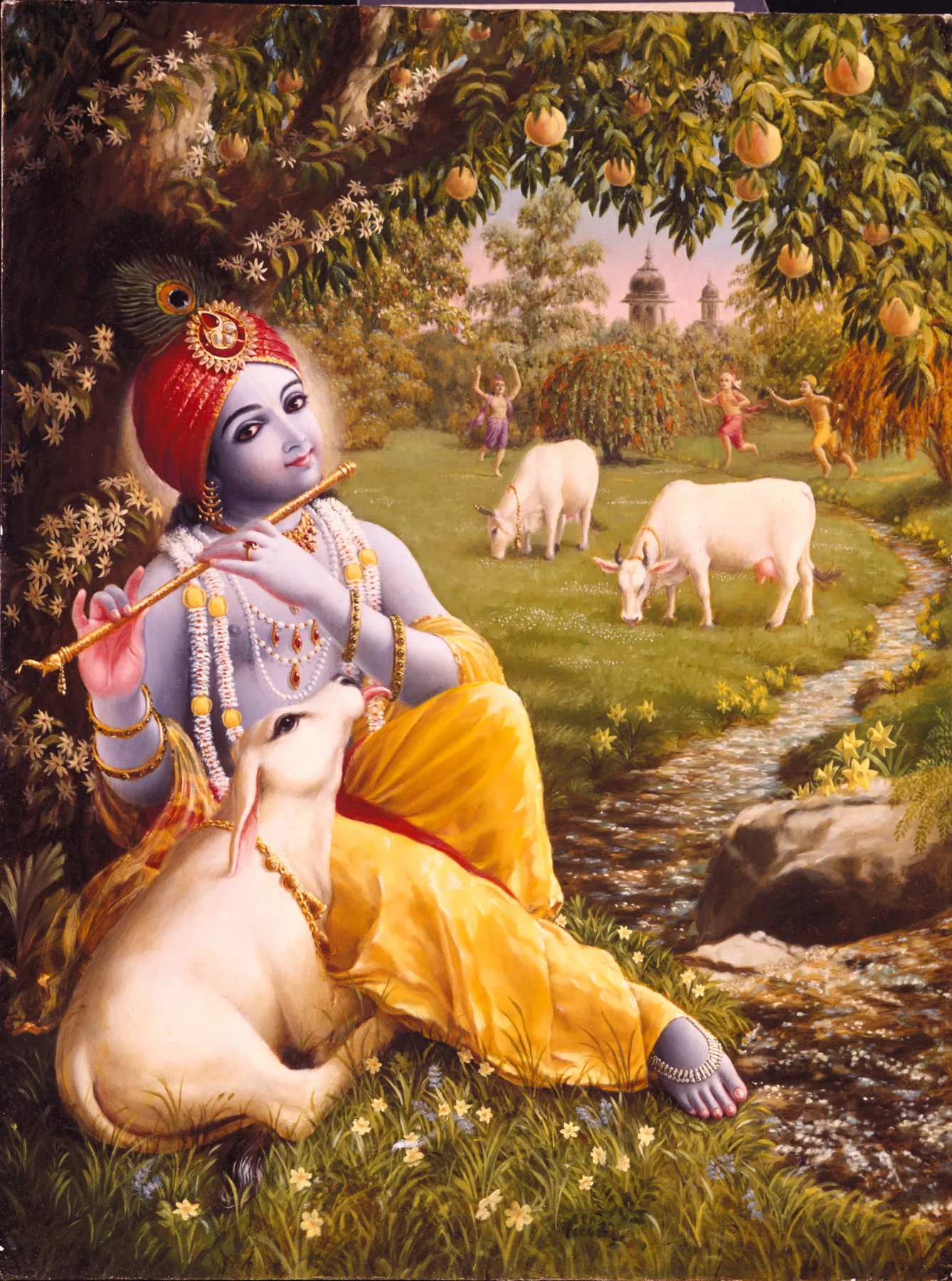
Lord Sri Krishna
Svayam Bhagavan: the Supreme Personality of Godhead, Source of All Avataras
Also known as Govinda, Gopala, Vasudeva, Shyamasundara, Hari, Madana-mohana, Jagadisha, Purushottama, Vrajendra-nandana, Sri Krishna, Lord Krishna
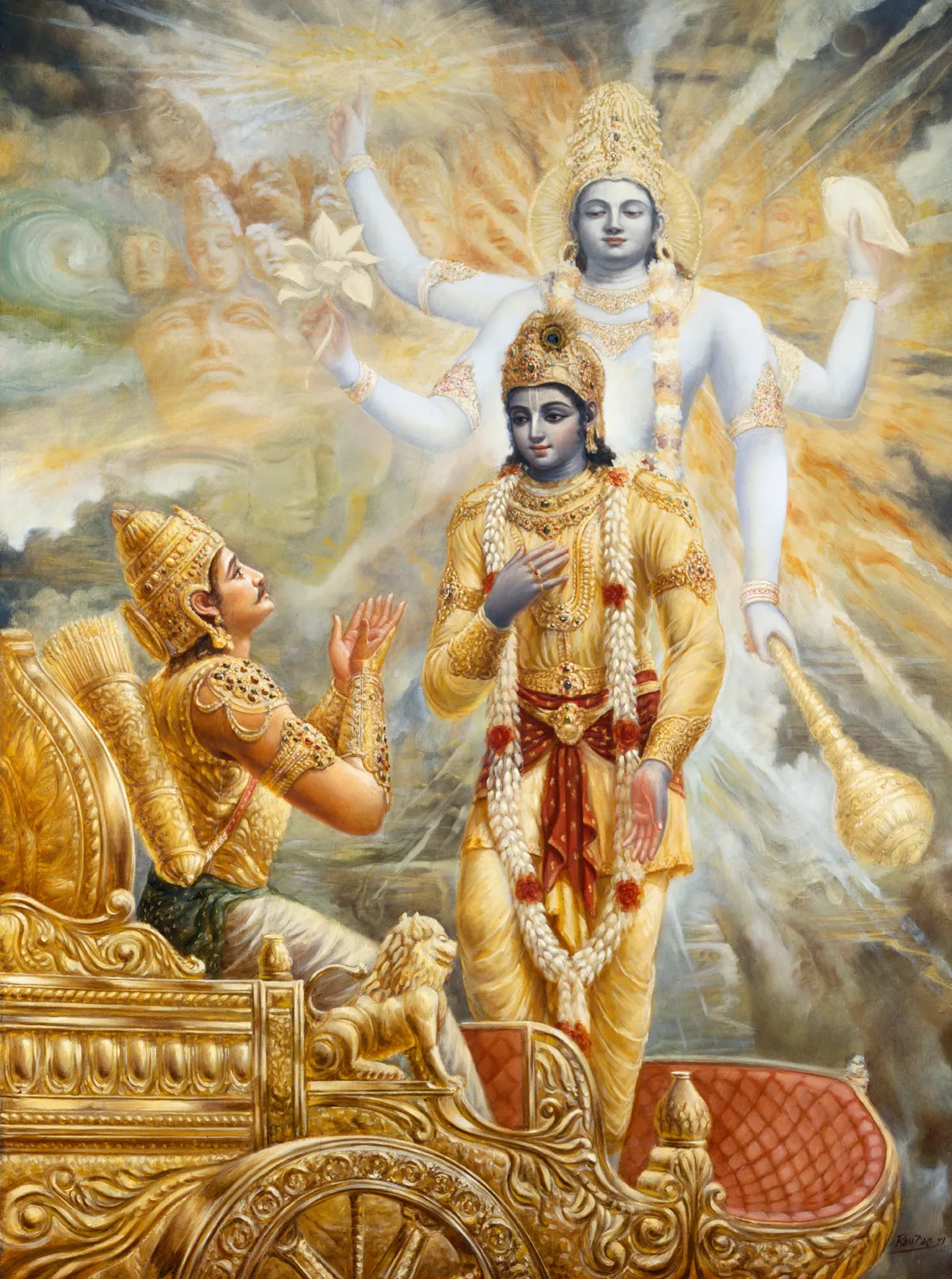
“Abandon all varieties of religion and just surrender unto Me. I shall deliver you from all sinful reactions. Do not fear.”
Bhagavad-gita 18.66: Krishna's final and highest instruction to Arjuna at Kurukshetra, spoken by Him directly as Bhagavan
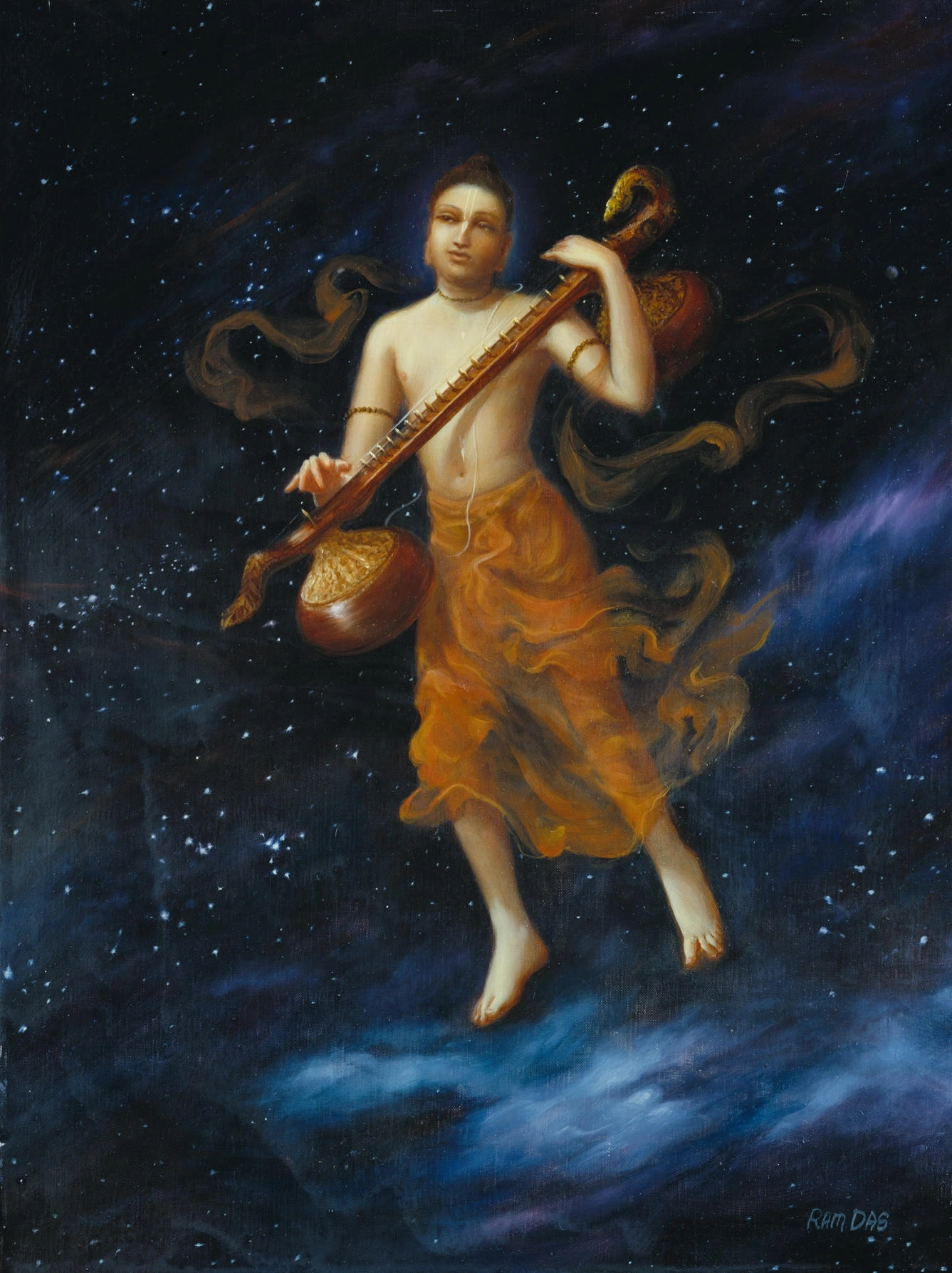
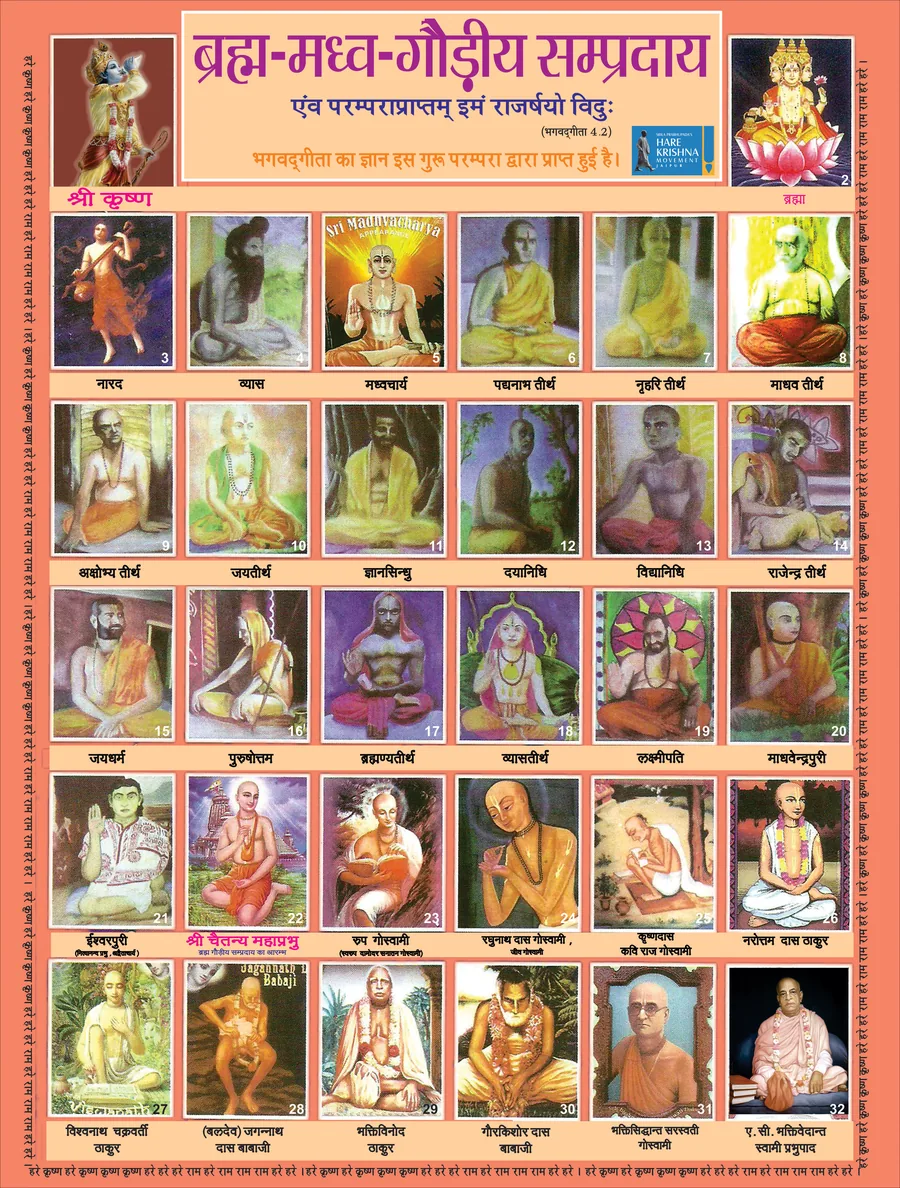
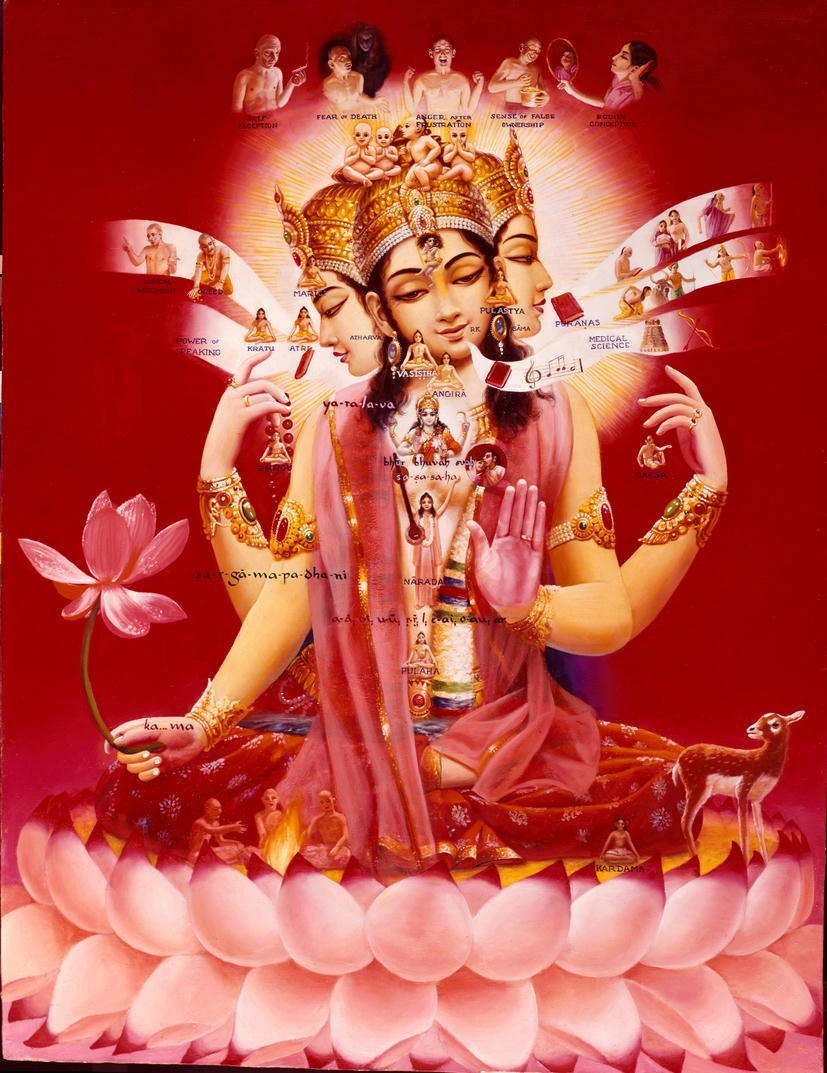
The guru-parampara includes many acharyas: Lord Brahma at the very head of the parampara, then Narada Muni, Vyasadeva, Madhvacharya, and on through Sri Chaitanya Mahaprabhu and the Six Goswamis of Vrindavana to Srila Prabhupada. Every one of them carries knowledge that begins with a single person: Krishna. Gaudiya Vaishnavism does not treat Krishna as one conception of God among several, or as one avatara among the many forms Vedic literature describes. It holds Him to be Svayam Bhagavan, God Himself, in His own original, complete, personal form. Vishnu, Narayana and every other divine expansion and incarnation proceed from Him. This is not a devotional preference stated without evidence. This tradition has always insisted that the claim must be shown from scripture, not just declared. The sections below set out that evidence directly, one point at a time, following the tradition's own way of arguing.
This account is not a life story told in order of events. Krishna's own earthly pastimes in Vrindavana and Dvaraka, and the events of the Bhagavad-gita at Kurukshetra, are told in Srimad-Bhagavatam's Tenth Canto and in the Mahabharata. They are far too vast for any single account to hold. Instead, what follows is the case from scripture and philosophy for who Krishna is. It begins with Brahma's own hymn of praise and Krishna's own words about Himself in the Bhagavad-gita. Then come Srimad-Bhagavatam's direct statement, the Vedic and Upanishadic evidence, and the Six Goswamis' careful, step-by-step proof. Next is the teaching that Vishnu and Narayana are Krishna's own expansions, not His rivals. Then comes the identity of Sri Chaitanya Mahaprabhu, and, finally, the parampara's own place in the chain of knowledge that begins here.
| Detail | Description |
|---|---|
| Also known as | Govinda, Gopala, Vasudeva, Shyamasundara, Hari, Madana-mohana, Jagadisha, Purushottama, Vrajendra-nandana |
| Position in Vaishnava theology | Svayam Bhagavan, the Supreme Personality of Godhead Himself, the source of all avataras and expansions, not one avatara among them |
| Position in the guru-parampara | The origin point of the entire chain: He has no guru; He imparted knowledge directly into the heart of Lord Brahma at the dawn of creation |
| Key scriptural proof | Srimad-Bhagavatam 1.3.28: "Krishna is the original Personality of Godhead Himself" |
| Foundational hymn | Sri Brahma-samhita, Chapter Five, traditionally Brahma's own prayer of praise to Krishna |
| Central philosophical text | Srila Jiva Goswami's Krishna-sandarbha, the fourth of his six Sandarbhas |
Brahma-samhita's Own Testimony #
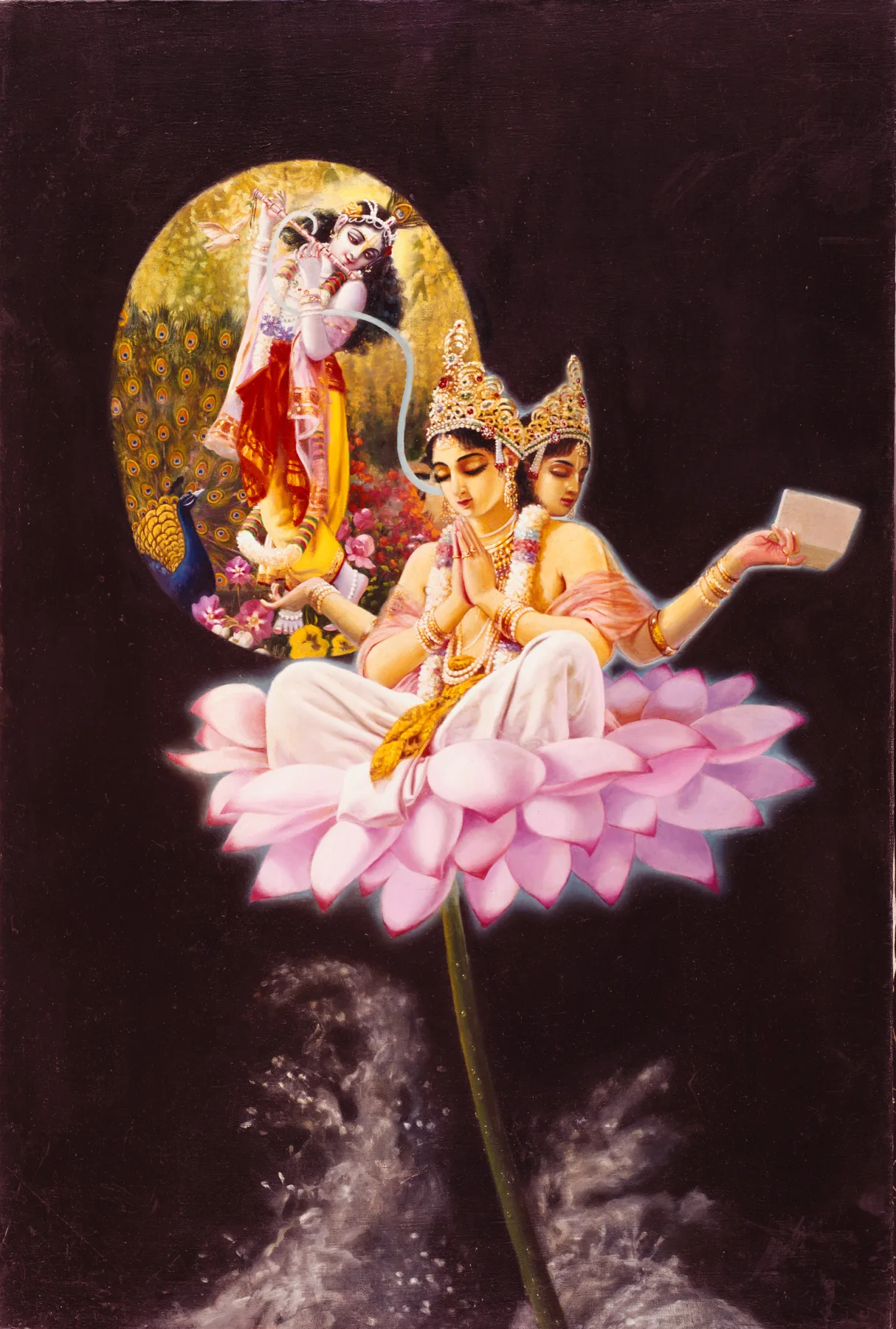
The very first link in the guru-parampara left behind a hymn about the person he considers his own source. Brahma-samhita's opening verse names Krishna, not Brahma and not even Vishnu, as the supreme controller: with no origin of His own, He is the cause of all other causes. Sri Chaitanya Mahaprabhu recovered the surviving chapter of this text in South India. That episode is already told on Lord Brahma's own page and on the South India Tour. What follows here is what the verses themselves actually claim about Krishna's nature, His eternal abode, and His relationship to Vishnu. Read the full account.
Krishna's Words About Himself in the Bhagavad-gita #
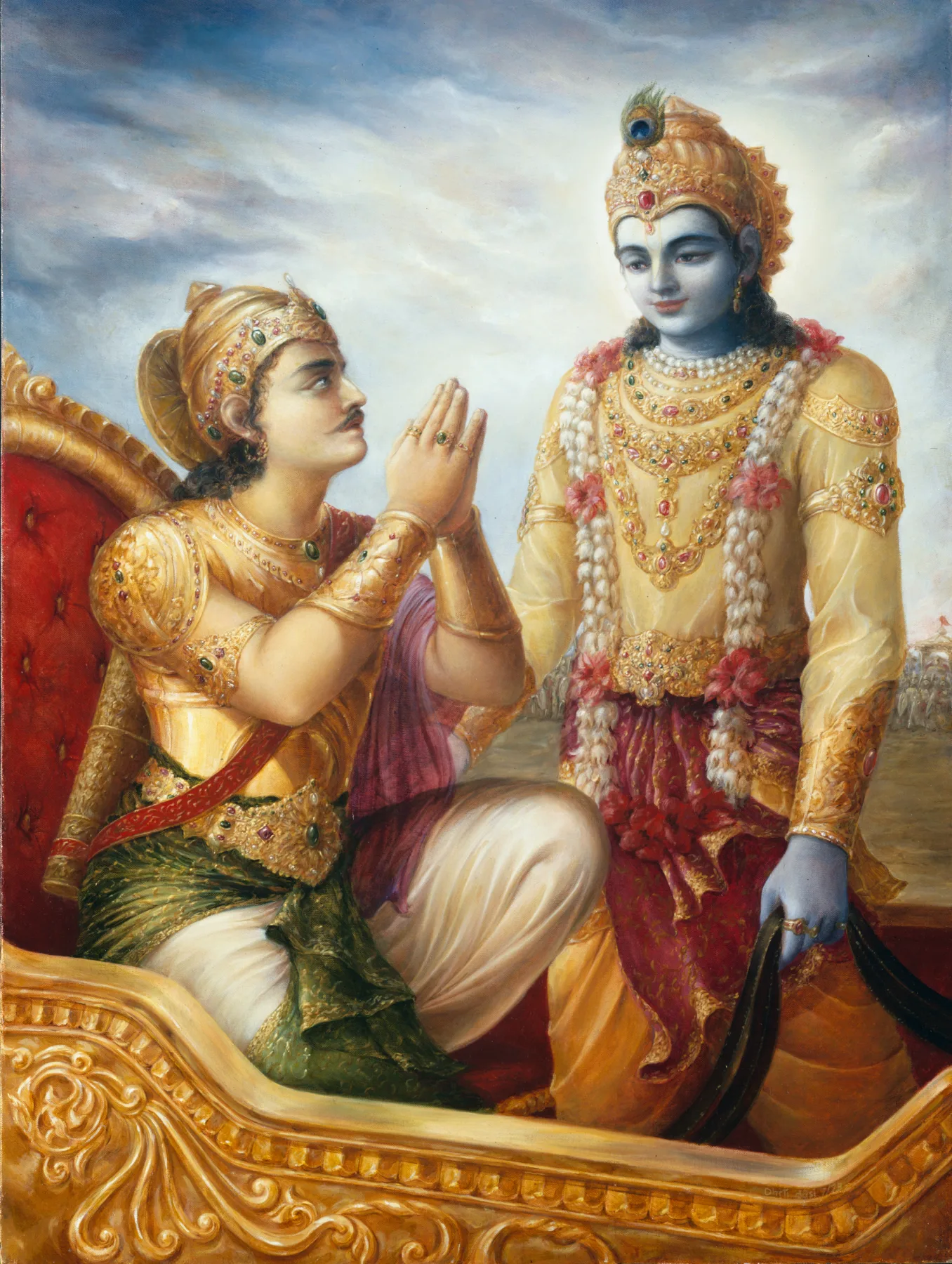
Nothing in this tradition's case rests only on what others say about Krishna. The Bhagavad-gita records what Krishna says about Himself, directly, to Arjuna on the battlefield of Kurukshetra. "There is no truth superior to Me," He states at 7.7. "I am the source of all spiritual and material worlds," He says at 10.8. He names Himself Purushottama, the Supreme Person beyond both the perishable and the imperishable, at 15.18-19. And He closes the entire text's instruction with a single, unqualified demand for surrender to Himself at 18.66. Read the full account.
What Srimad-Bhagavatam States Directly #
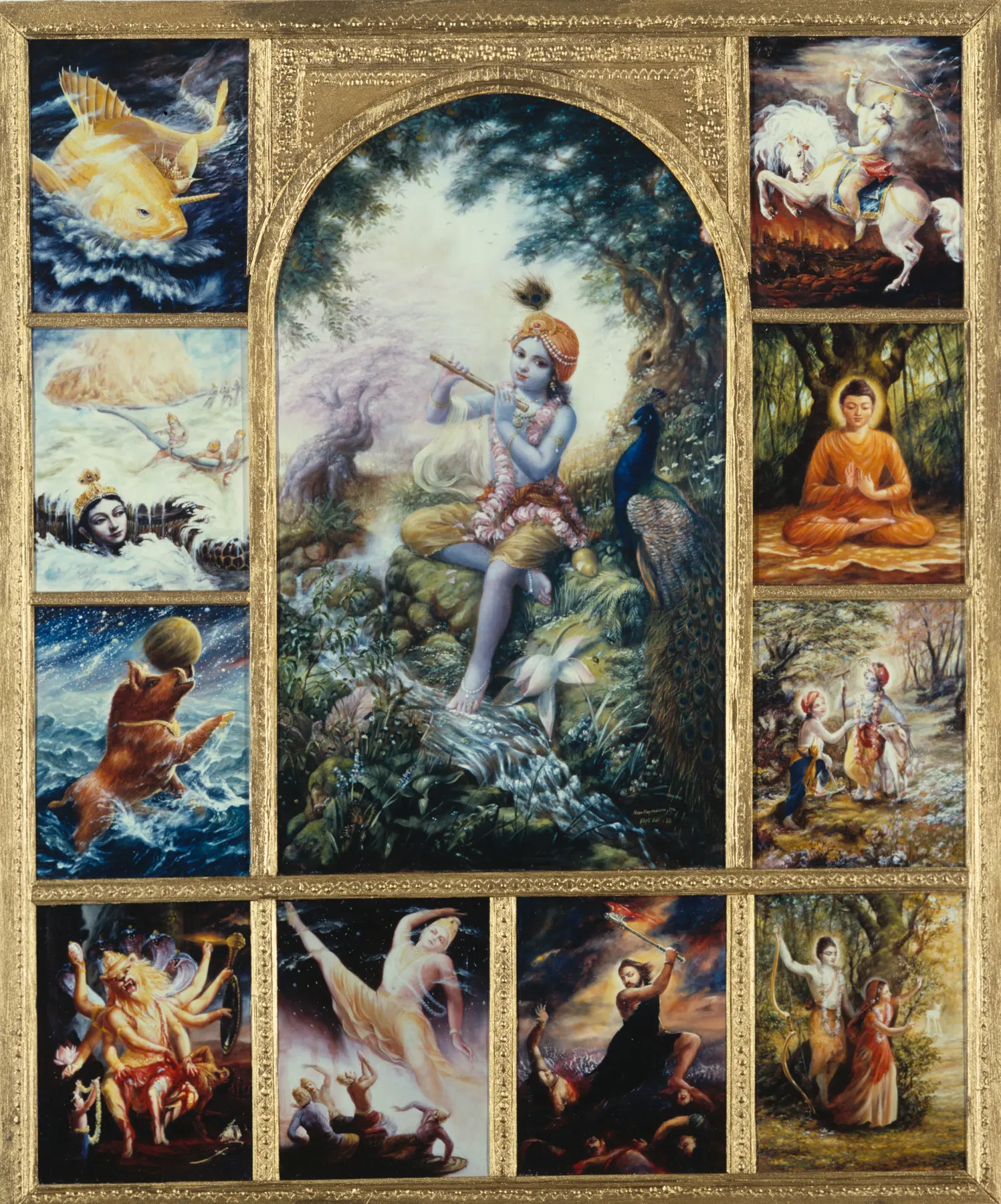
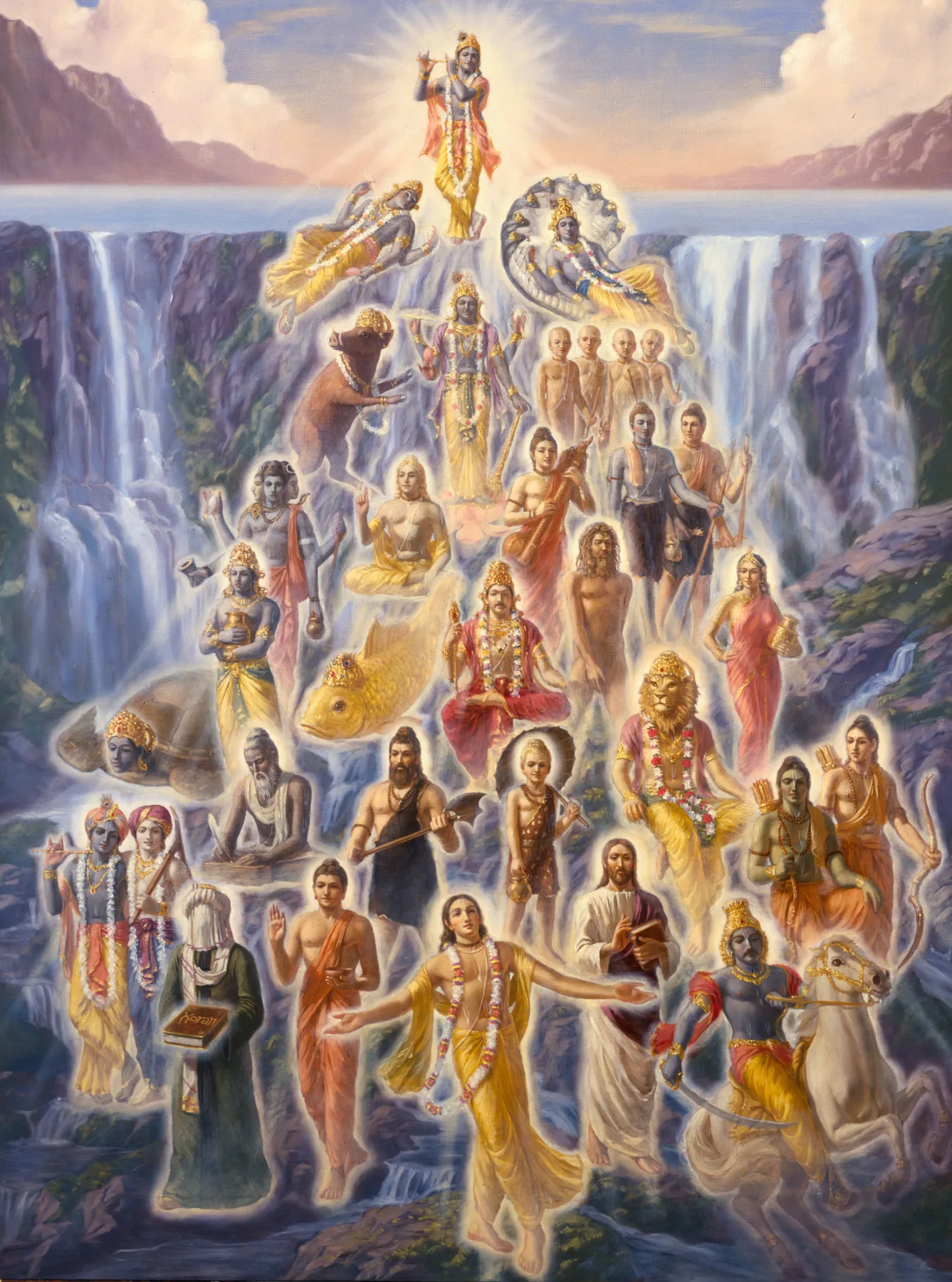
One chapter of Srimad-Bhagavatam lists incarnation after incarnation of Godhead. At the end of that chapter, the Bhagavatam stops and states plainly that all of them are portions or portions of portions. Krishna alone, it says, is bhagavan svayam, the original Personality of Godhead in person. This is the single most quoted verse in Gaudiya Vaishnava literature on this exact question. It is given here with its full context, not cut off from it. Read the full account.
Vedic and Upanishadic Testimony #
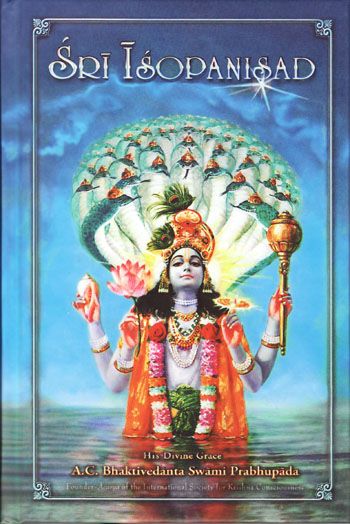
Gaudiya acharyas have never rested this claim on the Bhagavatam alone. The Gopala-tapani Upanishad names Krishna directly as the Supreme Deity, in verses Srila Prabhupada himself quoted and translated from the Vedic literature. What follows gives only what can be checked in that source, and says clearly what cannot be checked. Read the full account.
The Six Goswamis' Systematic Case: Krishna-sandarbha #
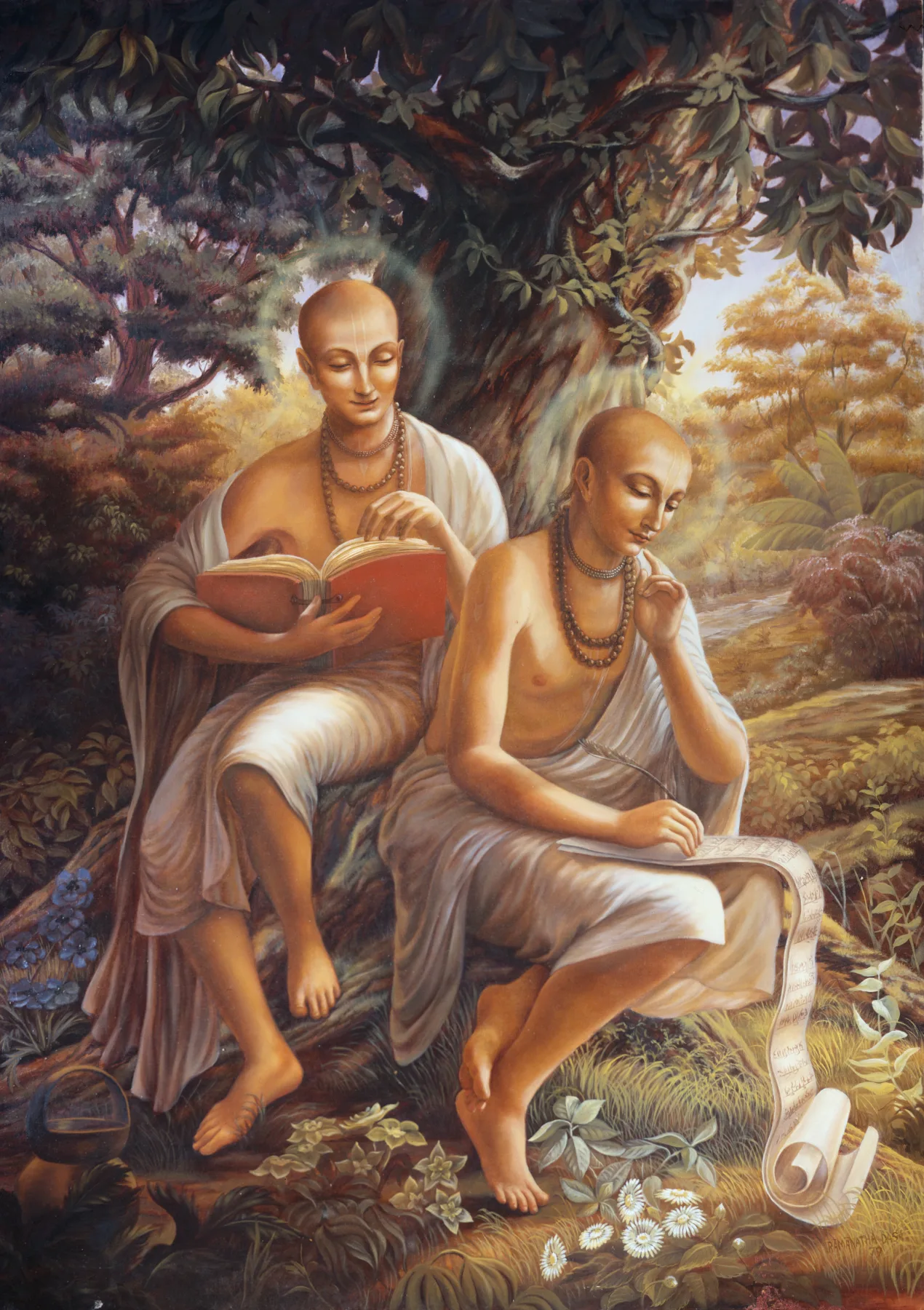
This tradition does not rely only on devotion and on quoting scripture. It also produced formal philosophy. Srila Jiva Goswami's Sat-sandarbha gives its fourth and central volume, Krishna-sandarbha, entirely to proving Krishna's supremacy from the Bhagavatam's own verses. Srila Rupa Goswami's science of bhakti-rasa explains why Krishna in Vrindavana, not in any majestic four-armed form, is worshiped as the fullest revelation of that same Godhead. Read the full account.
Krishna's Expansions: The Vishnu-tattva Doctrine #
None of this is a rejection of the worship of Vishnu or Narayana, and it is not meant to be. Gaudiya theology explains carefully from scripture exactly how Vishnu, Narayana, and every other vishnu-tattva form are Krishna's own plenary expansions. They are fully real and fully worthy of worship, like candles lit from one original candle, each giving the same light (Brahma-samhita 5.46). They are never lesser gods. They are also never identical to Krishna, and never in competition with Him. Read the full account.
Sri Chaitanya Mahaprabhu: Krishna Himself #
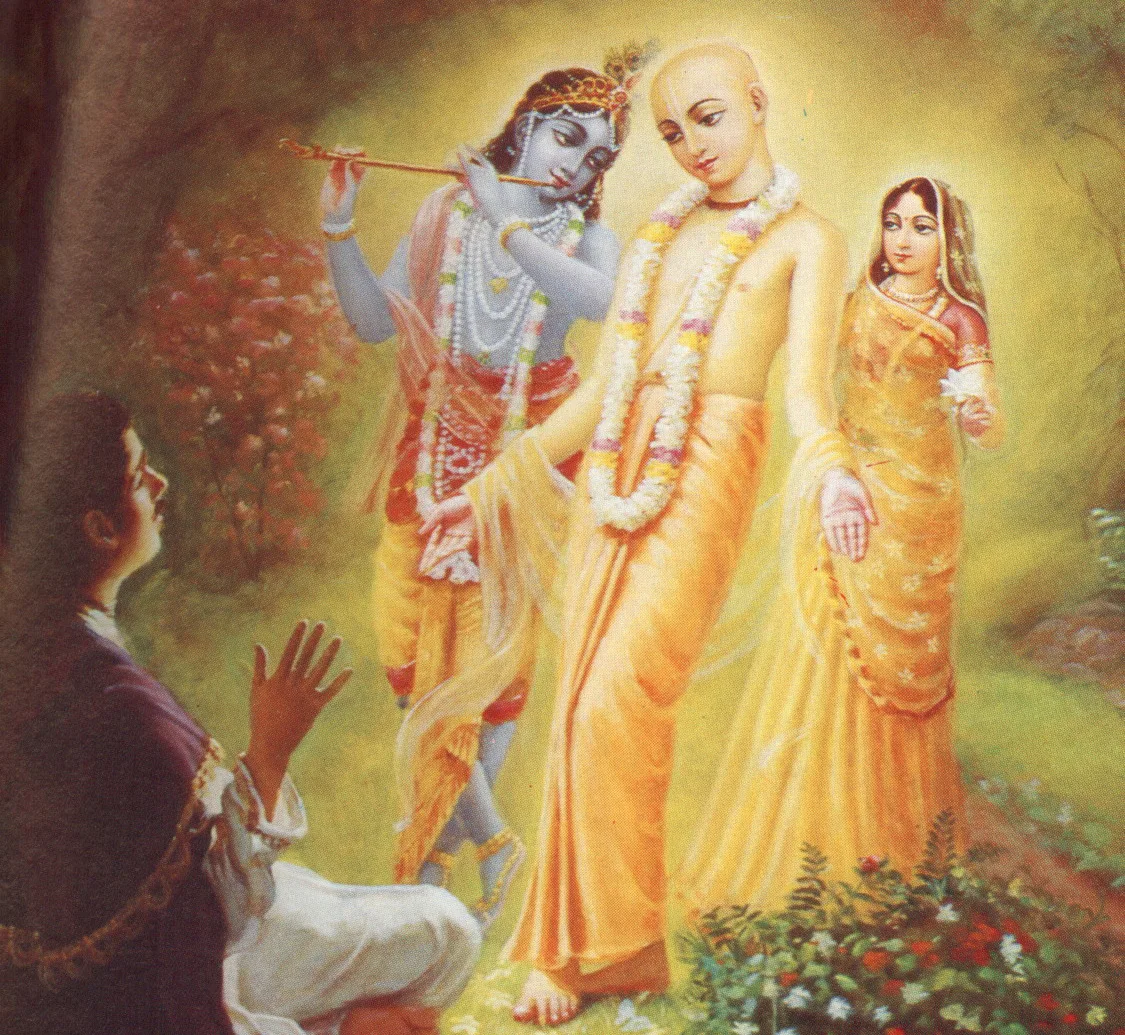
Gaudiya Vaishnavism's understanding of Krishna does not end with Krishna's own historical appearance. Five centuries ago in Bengal, this tradition holds, the same Krishna appeared again. This time He came in the mood and complexion of His own greatest devotee, Srimati Radharani, to taste and freely distribute the very love of God that Vrindavana's residents feel for Him. Sri Chaitanya Mahaprabhu is not a separate incarnation in this account. He is Krishna Himself. The teaching of the Panca-tattva groups His associates and explains exactly who comes with Him when He appears in this way. Read the full account.
The Source of This Parampara #
Other parts of this section make several claims: that Brahma is adi-guru, that Narada instructed Vyasadeva, and that this tradition calls itself the Brahma-Madhva-Gaudiya sampradaya. Every one of these claims rests, in the end, on a single starting point. At the dawn of creation, Krishna imparted knowledge directly into the heart of Lord Brahma, and Krishna Himself had no teacher of His own before Him. That connection is traced step by step in the full account. Read the full account.
Scriptural evidence
īśvaraḥ paramaḥ kṛṣṇaḥ
sac-cid-ānanda-vigrahaḥ
anādir ādir govindaḥ
sarva-kāraṇa-kāraṇam
Word for word
īśvaraḥ: the controller; paramaḥ: supreme; kṛṣṇaḥ: Lord Krishna; sat-cit-ānanda-vigrahaḥ: whose form is eternal existence, absolute knowledge and absolute bliss; anādiḥ: without beginning; ādiḥ: the origin; govindaḥ: Lord Govinda; sarva-kāraṇa-kāraṇam: the cause of all causes.
Krishna who is known as Govinda is the Supreme Godhead. He has an eternal, blissful, spiritual body. He is the origin of all. He has no other origin, and He is the prime cause of all causes.
The single most quoted verse in Gaudiya Vaishnava literature on Krishna's supreme position, Brahma's own testimony, opening his own hymn of praise. One of the two most load-bearing citations on this entire page.
ete cāṁśa-kalāḥ puṁsaḥ
kṛṣṇas tu bhagavān svayam
indrāri-vyākulaṁ lokaṁ
mṛḍayanti yuge yuge
Word for word
ete: all these; ca: and; aṁśa: plenary portions; kalāḥ: portions of the plenary portions; puṁsaḥ: of the Supreme; kṛṣṇaḥ: Lord Krishna; tu: but; bhagavān: the Personality of Godhead; svayam: in person; indra-ari: the enemies of Indra; vyākulam: disturbed; lokam: all the planets; mṛḍayanti: gives protection; yuge yuge: in different ages.
All of the above-mentioned incarnations are either plenary portions or portions of the plenary portions of the Lord, but Lord Sri Krishna is the original Personality of Godhead. All of them appear on planets whenever there is a disturbance created by the atheists. The Lord incarnates to protect the theists.
The Bhagavatam's own direct verdict at the close of its chapter listing the incarnations of Godhead. The second of the two most load-bearing citations here.
- Brahma-samhita 5.1 and surrounding verses, vedabase.io
- Bhagavad-gita 7.7, 10.8, 15.18-19, 18.66, vedabase.io
- Srimad-Bhagavatam 1.3.28, vedabase.io
- Srimad-Bhagavatam 1.1.1, vedabase.io
- Bhagavad-gita 11.54, purport (quoting Gopala-tapani Upanishad), vedabase.io
- Sri Chaitanya-charitamrita, Adi-lila 1.4-5, vedabase.io
- Srimad-Bhagavatam 11.5.32, vedabase.io
- This website's own biography of Lord Brahma
- This website's own biography of Sri Chaitanya Mahaprabhu
- This website's own biography of Jiva Goswami
Disciples
Frequently asked
What are the main pastimes of Lord Sri Krishna?
The pastimes covered here include: Brahma-samhita's Testimony, Krishna's Own Words in the Bhagavad-gita, The Bhagavatam's Direct Statement, Vedic and Upanishadic Testimony, The Six Goswamis and Krishna-sandarbha, The Vishnu-tattva Expansions, Sri Chaitanya Mahaprabhu: Krishna Himself, Srimad-Bhagavatam as Krishna's Own Literary Incarnation, The Holy Name: Krishna's Incarnation for This Age, The Source of This Parampara.