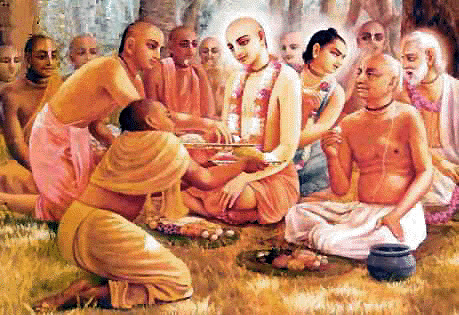
Srila Kavi Karnapura Goswami
The Poet Whose Verses Chaitanya-Charitamrita Itself Quotes
Also known as Paramananda Sena, Paramananda Sen, Paramananda dasa, Puri dasa, Kavikarnapura
“Lord Sri Krishna is just like a bluish lotus flower for the ears; He is ointment for the eyes, a necklace of indranila gems for the chest, and universal ornaments for the gopi damsels of Vrindavana. Let that Lord Sri Hari, Krishna, be glorified.”
The Sanskrit verse Kavi Karnapura composed on the spot at age seven when Sri Chaitanya Mahaprabhu asked him to recite, recorded in Sri Chaitanya-charitamrita, Antya-lila 16.74.
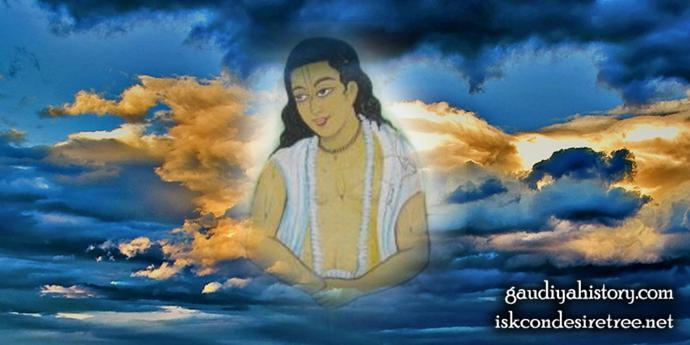
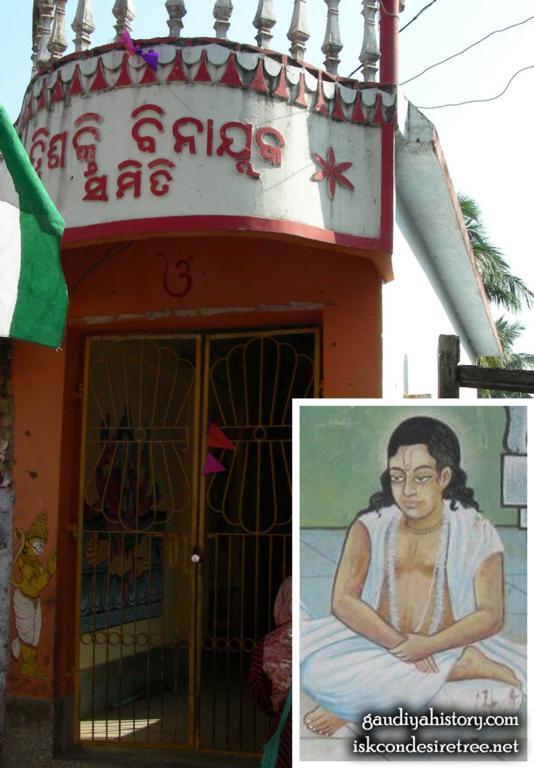
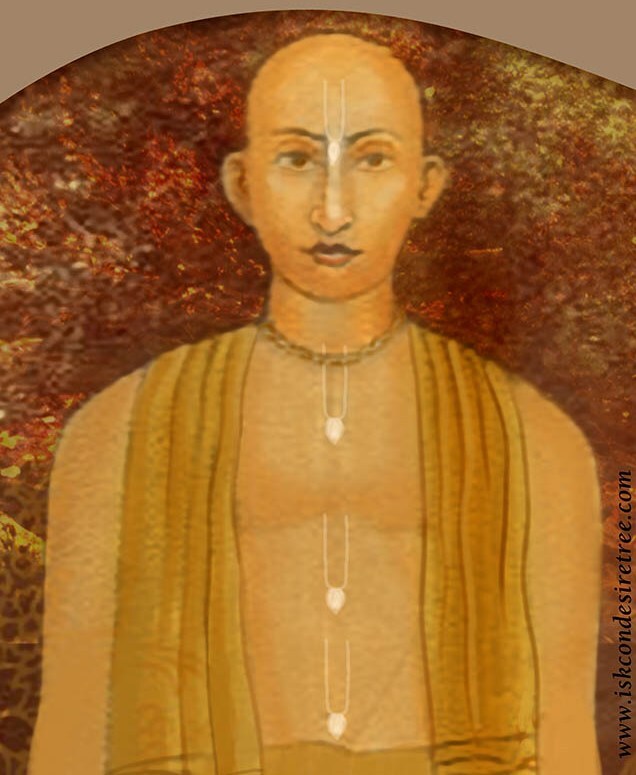
Srila Kavi Karnapura Goswami is remembered less for the pastimes he took part in and more for the words he left behind. By Gaudiya Vaishnava standards, that means a great deal. He was born Paramananda Sena, the youngest son of Shivananda Sena. He was still an infant when Sri Chaitanya Mahaprabhu Himself blessed him at Jagannatha Puri. He was still a child when he composed a Sanskrit verse on the spot that amazed the Lord's most learned associates. He grew up to write several works that the whole Gaudiya Vaishnava tradition still depends on for basic facts about its own history. The most important is Sri Chaitanya-chandrodaya-nataka, a full Sanskrit drama of Mahaprabhu's life. Krishnadasa Kaviraja Goswami quotes it directly in Sri Chaitanya-charitamrita itself. Another is Gaura-ganoddesha-dipika. The pages on Ramananda Raya and Jagadananda Pandit already quote this book to explain who Mahaprabhu's associates really were in Krishna's own Vrindavana pastimes. Madhvacharya's page cites it for a different reason. It uses the book's guru-lineage verse, which traces Mahaprabhu's own spiritual line back through the Madhva sampradaya. The short version of this story appears in His Son, Kavi-karnapura. The full account follows here.
| Detail | Description |
|---|---|
| Birth name | Paramananda Sena, also written Paramananda dasa; nicknamed Puri dasa by Sri Chaitanya Mahaprabhu |
| Father | Shivananda Sena, the householder devotee who organized and funded the annual Bengal-to-Puri pilgrimage |
| Birth | Traditionally dated 1524 or 1527; even the exact place is not fully settled among the available sources |
| Title | Kavi-karnapura, "one whose poetry pours nectar into the ear" (earned after he recited an original Sanskrit verse at age seven) |
| Formal guru | Shrinatha Chakravarti (Shrinatha Pandita), the family priest and a spiritual descendant of Advaita Acharya's line, though he had already received Krishna's name informally from Mahaprabhu as a small child |
| Major works | Sri Chaitanya-chandrodaya-nataka, Gaura-ganoddesha-dipika, Ananda-vrindavana-champu, Alankara-kaustubha, and more |
| Last securely dated work | 1576; no disappearance date survives in any available source |
A Poet Born Into Mahaprabhu's Own Household #
Paramananda Sena was the youngest of three brothers. The two elder brothers were Chaitanya dasa and Ramadasa. They were born into a Bengali Vaidya family. The head of the family, Shivananda Sena, had become one of Sri Chaitanya Mahaprabhu's most trusted householder servants. Sri Chaitanya-charitamrita's account of the boy's birth should be read carefully, because popular retellings do not always get it right. The text says plainly that the child "was in the womb of Shivananda's wife, and when Shivananda returned home the son was born." This means the birth happened after Shivananda came back from Jagannatha Puri. It most likely took place at the family's home near Kumarahatta in Bengal. It did not take place at Puri itself, even though a few shorter summaries suggest it did. Sources also disagree on the year. Wikipedia gives 1524, in Nadia district. The Gaudiya History website gives 1527, in a village it calls Kaichana-palli. Sri Chaitanya-charitamrita itself confirms neither claim. It records the story but not a date. So we simply note the disagreement here instead of forcing an answer.
Named Before He Was Born, Blessed Before He Could Speak #
Sri Chaitanya-charitamrita is clear about the order of the blessings, but not about the dates. Mahaprabhu had personally told Shivananda Sena what to name his next child. When the family next came to Puri, Shivananda introduced all three sons together. He told the Lord that the youngest was called Paramananda dasa. Mahaprabhu Himself then turned this name into an affectionate nickname, "jokingly" calling the boy Puri dasa. When Shivananda brought the infant before Him, Mahaprabhu put His own toe into the child's mouth. The text does not record such a close and loving act toward any other child in the entire biography. Krishnadasa Kaviraja Goswami closes the scene by writing that "no one can cross over the ocean of Shivananda Sena's good fortune, for the Lord considered Shivananda's whole family His own." The full episode, with its exact citation, is told at Childhood and Mahaprabhu's Blessing.
The Verse That Named Him "Kavi-Karnapura" #
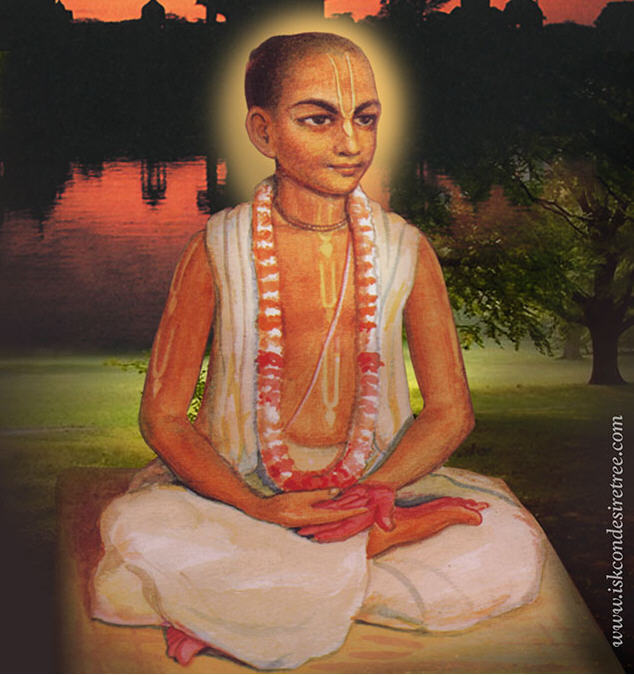
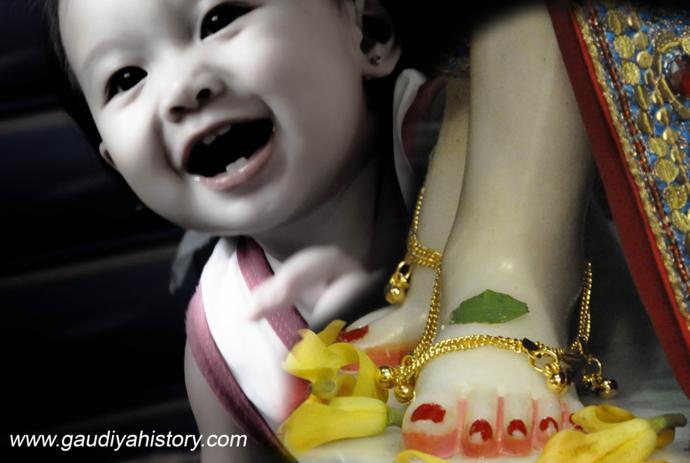
Years later, back at Puri, Mahaprabhu tried again and again to get the boy to say Krishna's name aloud, but He could not. Then Svarupa Damodara Goswami explained why. The child was already initiated, and he was simply following the rule that a disciple does not repeat his own mantra in front of others. Mahaprabhu then asked him to recite something instead. The seven-year-old boy, "with no education," composed and spoke aloud an original Sanskrit verse. It praised Krishna as the ornament of Vrindavana's gopis. Sri Chaitanya-charitamrita records plainly that "everyone was struck with wonder." According to the wider devotional tradition, it was from this moment that the boy earned the name by which history remembers him. The full details are at Childhood and Mahaprabhu's Blessing. That page also looks carefully at which parts of the story come from Krishnadasa Kaviraja Goswami's own verses and which come from later retellings.
Six Major Works, One Extraordinary Career #
Kavi-karnapura grew into one of Gaudiya Vaishnavism's most productive Sanskrit authors. Many devotional writers of his time wrote books that are simply devotional in tone, but his books are more than that. They are still used as working reference books. Sri Chaitanya-chandrodaya-nataka is a ten-act Sanskrit drama of Mahaprabhu's life. Sri Chaitanya-charitamrita itself quotes it by name and by verse. This makes Kavi-karnapura one of the only Gaudiya authors whom Krishnadasa Kaviraja Goswami treats as a source to quote, not simply as a subject to write about. The full story is at Writing Sri Chaitanya-Chandrodaya-Nataka. Gaura-ganoddesha-dipika was completed by 1576. It identifies Mahaprabhu's associates, one by one, with their eternal identities in Krishna's Vrindavana pastimes. Its identifications already appear on the pages of several other acharyas: see The Gaura-Ganoddesha-Dipika. Besides these two, he wrote Ananda-vrindavana-champu, a retelling of Krishna's Vrindavana pastimes in mixed prose and verse. He wrote Alankara-kaustubha, a serious Sanskrit book on the art of poetry and on rasa theory. He also wrote a commentary on the Tenth Canto of Srimad-Bhagavatam, and several shorter works. One of these, a work on Mahaprabhu's life, was once accepted as his. But scholars who study the manuscripts now seriously dispute this. It is discussed at Other Literary Works.
Working From Bengal And Puri, Not Vrindavana #
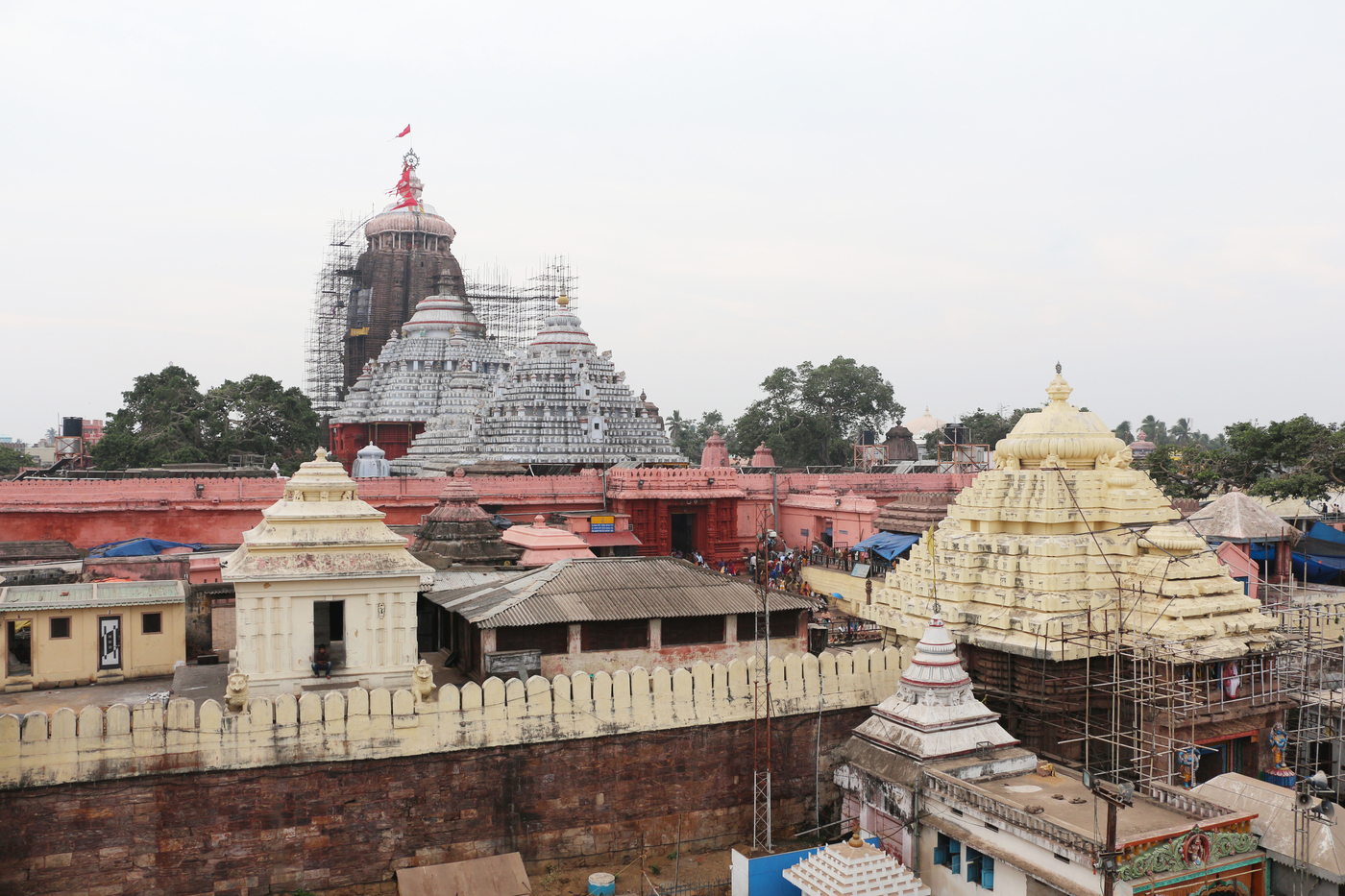
It would be easy to assume that a writer so devoted to Krishna's Vrindavana pastimes and to the Six Goswamis of Vrindavana must have lived and studied there himself, as Narottama Dasa Thakura and Shrinivasa Acharya did. Nothing in the available sources supports that. As far as it can be traced, Kavi-karnapura's life was spent in Bengal near his father's home and at Jagannatha Puri. His books honor Rupa Goswami, Sanatana Goswami and Raghunatha Dasa Goswami by name and draw on their writings. For example, Alankara-kaustubha clearly builds on Rupa Goswami's Ujjvala-nilamani and Bhakti-rasamrita-sindhu. But nothing describes him studying under them personally in Vrindavana itself. Mahaprabhu had already given him Krishna's name directly when he was a small child. Even so, his formal diksha came from Shrinatha Chakravarti, the same family priest connected to his father's household. Legacy in the Gaudiya Tradition covers this detail. It also covers the uncertainty about exactly where his life ended.
A Poet The Tradition Still Reads For Facts, Not Only Feeling #
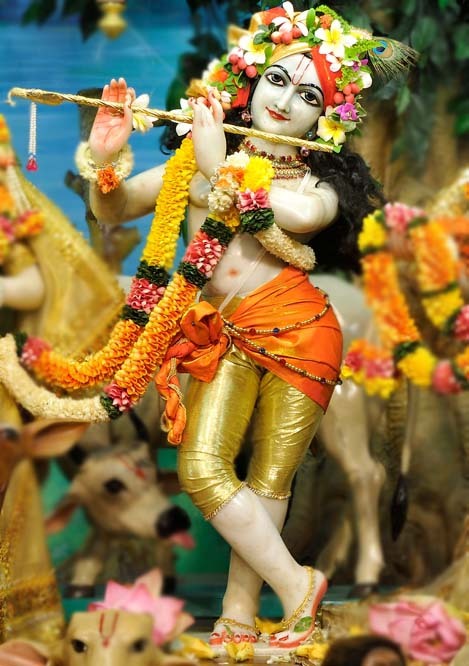
Most of the poets from Sri Chaitanya Mahaprabhu's circle are remembered mainly for the devotional mood of their writing. Kavi-karnapura is remembered for that too. His verses on Krishna's beauty are still quoted for their sweetness. But he is unusual, because he is also treated as a working authority on history and theology. He is quoted inside Sri Chaitanya-charitamrita's own story. He is still consulted today whenever someone needs to know exactly who a person in Mahaprabhu's circle was, or exactly what happened in a given year. His father's page remembers him mainly as a small part of that household's good fortune. But a closer study shows that he is one of the pillars on which the whole tradition's memory of its own history rests.
What Srila Prabhupada said
caitanya-dasa, ramadasa, ara karnapura / tina putra sivanandera prabhura bhakta-sura — The three sons of Sivananda Sena, named Caitanya dasa, Ramadasa and Karnapura, were all heroic devotees of Lord Caitanya.
Srila Prabhupada personally reading aloud the Chaitanya-charitamrita verse that names Kavi-karnapura, under his birth name, as one of Shivananda Sena's three heroic devotee sons.
- Sri Chaitanya-caritamrita, Antya-lila, Chapter 12 (vedabase.io)
- Sri Chaitanya-caritamrita, Antya-lila, Chapter 16 (vedabase.io)
- Sri Chaitanya-caritamrita, Antya-lila 6.262-265 (vedabase.io)
- Sri Chaitanya-caritamrita, Madhya-lila 19.118-119 (vedabase.io)
- Kavi Karnapura Goswami - Biography, Gaudiya History
- Puri Das, Gaudiya History
- Kavi Karnapura (Sri Puri Das), Shyam Das Baba, excerpting Sri Chaitanya: His Life & Associates by Srila Bhakti Ballabh Tirtha Maharaj
- Srila Kavi-karnapura's Works and Life, Back to Godhead
- This site's own page on Shivananda Sena, His Son Kavi-Karnapura
Frequently asked
When was Srila Kavi Karnapura Goswami born?
Srila Kavi Karnapura Goswami appeared Traditionally dated 1524 or 1527 (sources disagree) in Bengal, most likely his father's home near Kumarahatta, according to Sri Chaitanya-charitamrita's own account; some other sources instead say Nadia district or a village called Kaichana-palli.
When and where did Srila Kavi Karnapura Goswami disappear?
Srila Kavi Karnapura Goswami disappeared Not recorded; his last securely dated work is from 1576 at Not recorded. Most sources place his working life in Bengal near Kumarahatta and at Jagannatha Puri. Wikipedia, citing one academic study (Aloka Lahiri's 1993 Chaitanya Movement in Eastern India), says that he spent his final days at Vrindavana, but no other source we checked says this..
What are the main pastimes of Srila Kavi Karnapura Goswami?
The pastimes covered here include: Childhood And Mahaprabhu's Blessing, Writing Sri Chaitanya-Chandrodaya-Nataka, The Gaura-Ganoddesha-Dipika, Other Literary Works, Legacy In The Gaudiya Tradition.