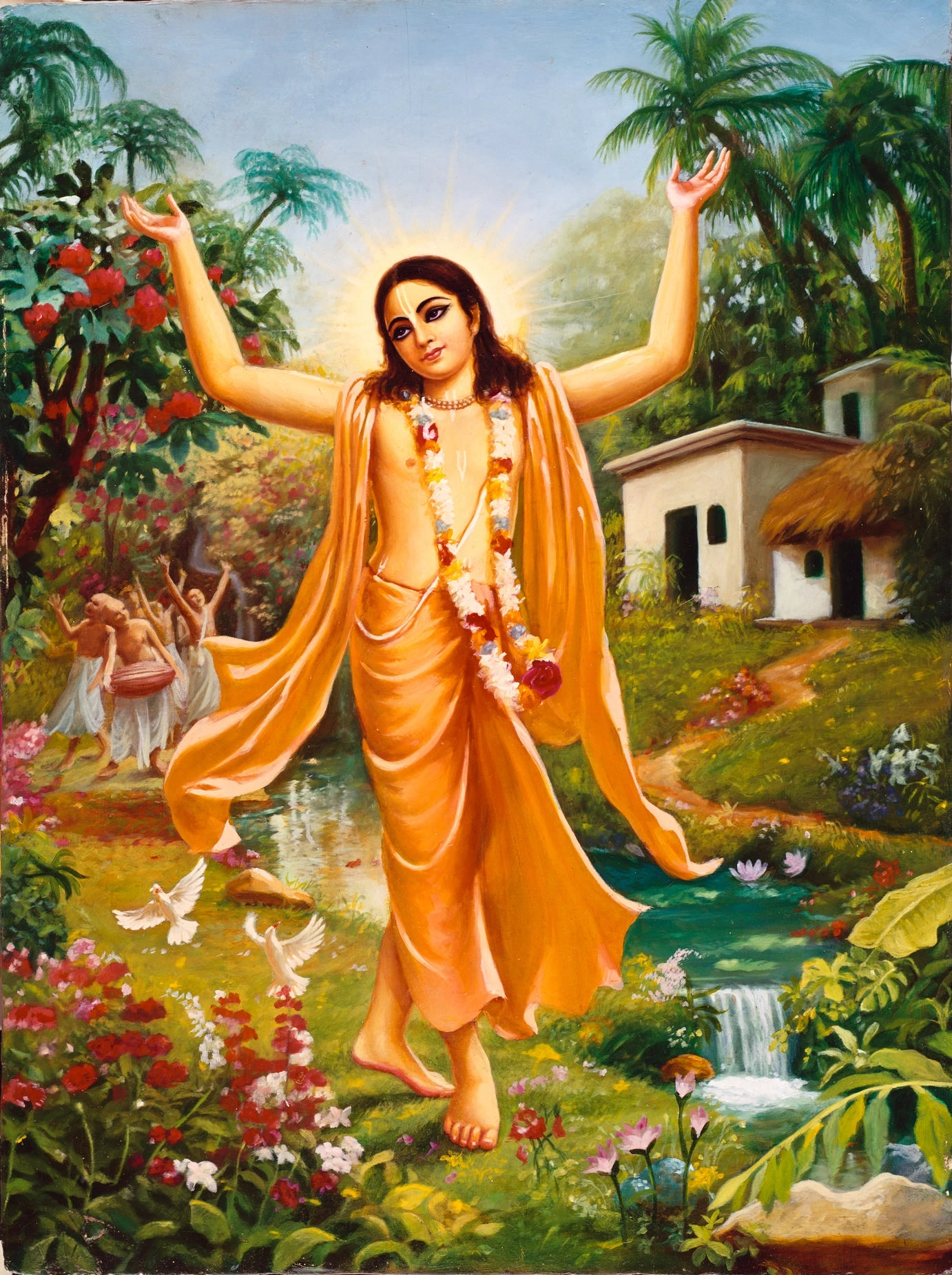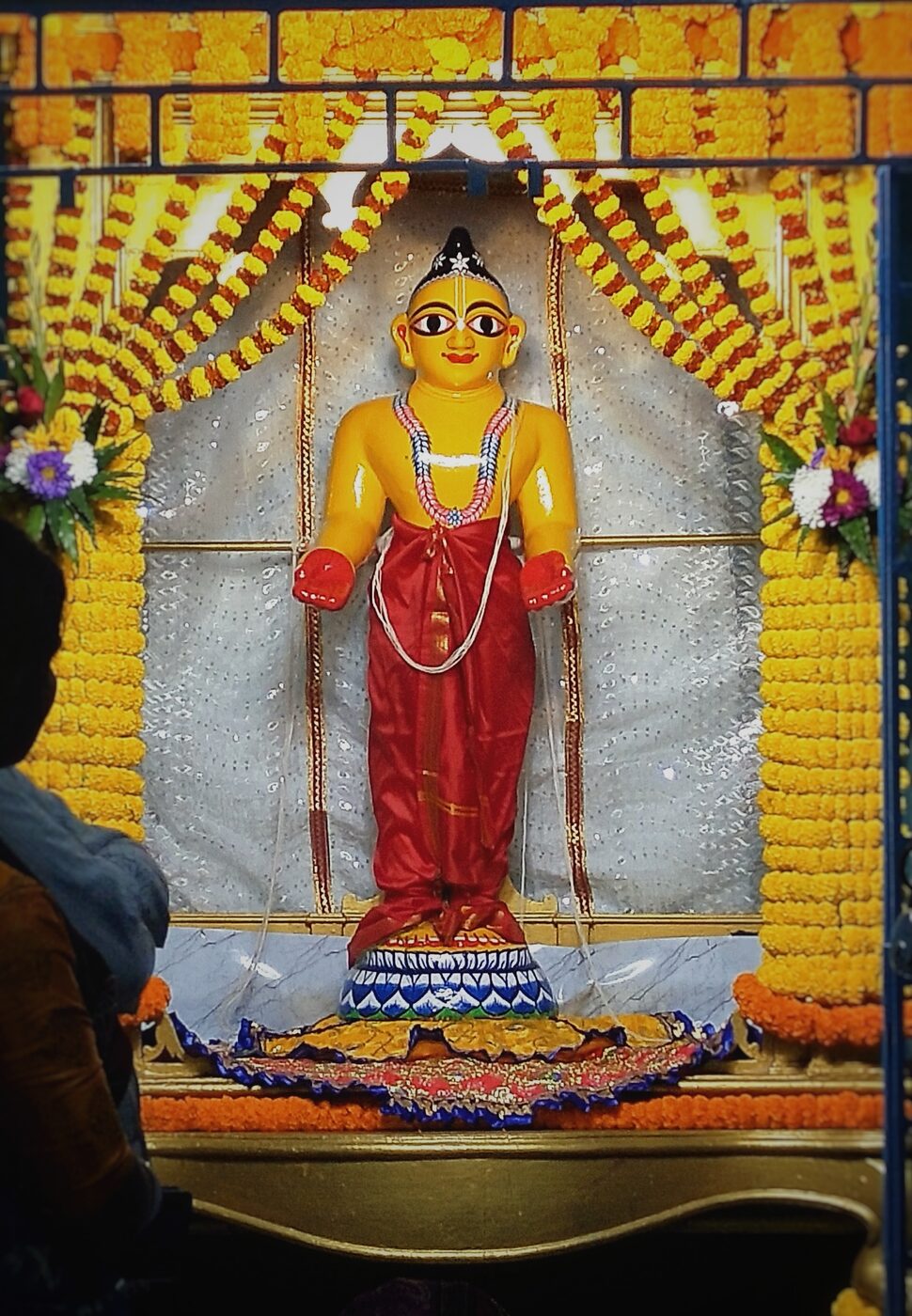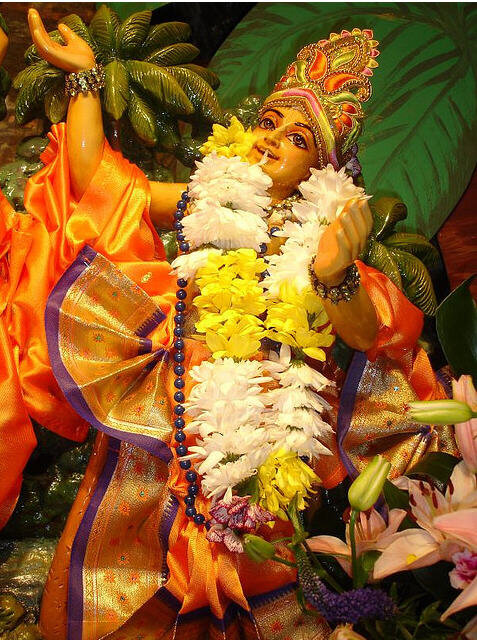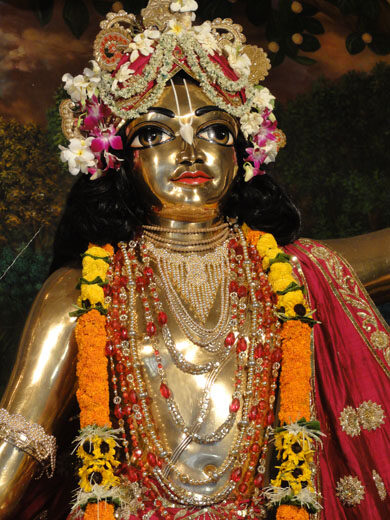
Sri Gadadhara Pandit
The Lord's Own Pleasure Potency
Also known as Gadadhara Goswami, Gadai, Gaura-Gadadhara
“External renunciation is not the measure of a Vaishnava; the devotion concealed beneath it is.”
The lesson Mahaprabhu taught Gadadhara Pandit about Pundarika Vidyanidhi
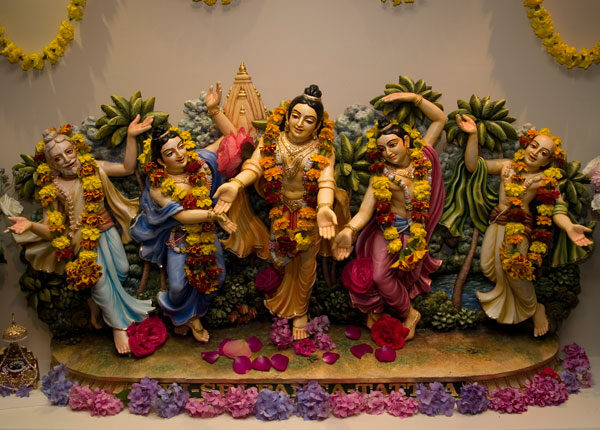
Sri Gadadhara Pandit is the fourth member of the Panca-tattva. In Gaudiya theology He represents the Lord's internal pleasure potency, the shakti-tattva. While Sri Chaitanya Mahaprabhu is Krishna in the mood of Srimati Radharani, Gadadhara Pandit is understood to be Radharani herself, present alongside Him throughout His life. The tradition understands Gadadhara's constant attendance on Mahaprabhu in exactly this light.
| Detail | Description |
|---|---|
| Appearance | Around 1486, the same year as Mahaprabhu, at Nabadwip |
| Parents | Madhava Mishra and Ratnavati Devi |
| Family origin | Chittagong |
| Identity | Krishna's pleasure potency, Srimati Radharani; the bhakta-shakti of the Panca-tattva (Gaura-ganoddesha-dipika 11, 147; Chaitanya-charitamrita Adi 10.15) |
| Spiritual master | Pundarika Vidyanidhi |
| Life's service | The Deity of Tota Gopinatha at Jagannatha Puri |
Advent and Childhood at Nabadwip #
He appeared around 1486 in Nabadwip, the same year as Mahaprabhu. He was the son of Madhava Mishra and Ratnavati Devi, whose family had come from Chittagong. He and Nimai were near neighbours of exactly the same age, and the biographies describe them as playmates and then as fellow students. But from childhood Gadadhara had a very different nature. Nimai was brilliant, loved to argue and was always ready for a fight with words. Gadadhara was gentle, quiet and already devotional. While Nimai was still defeating pandits in the street, Gadadhara was drawn to the company of the older Vaishnavas of the town.
Initiation From Pundarika Vidyanidhi #
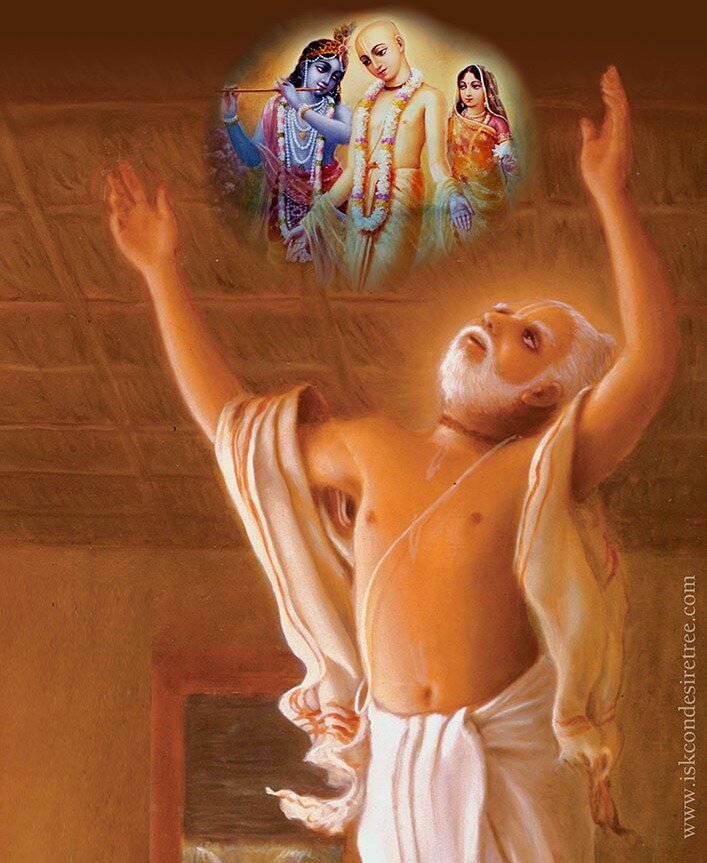
He received initiation from Pundarika Vidyanidhi. The Chaitanya-bhagavata (Madhya-khanda, chapter 7) tells this episode in full, and Srila Prabhupada sums it up in his purport to Chaitanya-charitamrita, Adi-lila 10.14. When Gadadhara first met Pundarika Vidyanidhi, he was disappointed. Pundarika Vidyanidhi lived in great luxury and did not look like a man who had renounced the world. But Mahaprabhu corrected this judgement. He pointed out the deep devotion hidden beneath Pundarika's outward wealth. Gadadhara felt humbled and accepted him as his spiritual master. The tradition often returns to this lesson, that outward renunciation is not the measure of a Vaishnava.
Following the Lord to Jagannatha Puri #
When Mahaprabhu accepted sannyasa and left Nabadwip, Gadadhara Pandit followed Him and did not afterwards leave His side. Gadadhara settled at Jagannatha Puri and remained there for the rest of His own life, serving the Deity of Tota Gopinatha. This constant presence at Puri set Gadadhara apart from the others. Nityananda Prabhu was sent to preach in Bengal. Advaita Acharya kept his household at Shantipura. Srivasa Thakura came and went with the Bengali party each year. But Gadadhara stayed. Vaishnavas understand this as the natural conduct of the Lord's own pleasure potency, which does not go away from Him.
Chaitanya-charitamrita Adi 10.15 states this identity plainly: "Gadādhara Paṇḍita, the fourth branch, is described as an incarnation of the pleasure potency of Śrī Kṛṣṇa. No one, therefore, can equal him." In his purport Srila Prabhupada gives the evidence from Kavi Karnapura's Gaura-ganoddesha-dipika (verse 147):
śrī-rādhā prema-rūpā yā purā vṛndāvaneśvarī
sā śrī-gadādharo gaura-vallabhaḥ paṇḍitākhyakaḥ
"Śrī Kṛṣṇa's pleasure potency, formerly known as Vṛndāvaneśvarī, is now personified in the form of Śrī Gadādhara Paṇḍita in the pastimes of Lord Caitanya Mahāprabhu." (Gaura-ganoddesha-dipika 147, translated by Srila Prabhupada in his Chaitanya-charitamrita Adi 10.15 purport)
The Bhagavatam Worn Away by His Tears #
Gadadhara also shared a special closeness with Mahaprabhu. In the last years at Puri, it was to Gadadhara Pandit that Mahaprabhu would read and speak of Krishna. Gadadhara is also described as weeping with Him through the nights of separation. He is said to have read the Bhagavatam aloud to Mahaprabhu so often that the manuscript's letters were worn away by his tears.
Tota Gopinatha and What He Is Remembered For #
Gadadhara Pandit served the Deity of Tota Gopinatha at Puri. It is traditionally held that Sri Chaitanya Mahaprabhu concluded His manifest pastimes before this Deity. Gadadhara did not live long after Him. Gaudiya Vaishnavas honour him as the model of steady, quiet, lifelong service. He was the devotee who neither preached widely nor wrote learned books. What sets him apart is simply that he never once went away.
Further Reading #
A devotional reflection on his character is also available, titled Sri Gadadhar Pandit: The Tender Heart of Devotion.
Scriptural evidence
Quoted in the text above:
- Verse 147 Gaura-ganoddesha-dipika quoted above ↑
- Adi 10.15 Sri Chaitanya-charitamrita quoted above ↑
Further verses:
अस्यार्थो विवृतस्तैर्यः स सङ्क्षिप्य विलिख्यते ।
भक्तरूपो गौरचन्द्रो यतोऽसौ नन्दनन्दनः ॥
भक्तस्वरूपो नित्यानन्दो व्रजे यः श्रीहलायुधः ।
भक्तावतार आचार्योऽद्वैतो यः श्रीसदाशिवः ॥
भक्ताख्याः श्रीनिवासाद्या यतस्ते भक्तरूपिनः ।
भक्तशक्तिर्द्विजाग्रण्यः श्रीगदाधरपण्डितः ॥११॥
asyārtho vivṛtas tair yaḥ sa saṅkṣipya vilikhyate |
bhakta-rūpo gauracandro yato’sau nanda-nandanaḥ ||
bhakta-svarūpo nityānando vraje yaḥ śrī-halāyudhaḥ |
bhaktāvatāra ācāryo’dvaito yaḥ śrī-sadāśivaḥ ||
bhaktākhyāḥ śrīnivāsādyā yatas te bhakta-rūpinaḥ |
bhakta-śaktir dvijāgraṇyaḥ śrī-gadādhara-paṇḍitaḥ ||11||
I shall now summarily explain the meaning of these words. In this Panca-tattva, the bhakta-rupa (form of a devotee) is Lord Caitanya Mahaprabhu, who formerly appeared as Lord Krsna, the son of Nanda Maharaja. The bhakta-svarupa (devotional incarnation) is Lord Nityananda, who formerly appeared in Vrajabhumi as Lord Balarama. The bhaktavatara (devotional manifestation) is Lord Advaita Acarya, who is not different from Lord Sadasiva. The bhaktakhya (pure devotee) is Srinivasa and the other great devotees as well. The bhakta-sakti (devotional energy) is Gadadhara Pandita, the foremost of brahmanas.
From the purport: All the devotees headed by Śrīvāsa Ṭhākura are His marginal energy, whereas the devotees headed by Gadādhara Paṇḍita are manifestations of His internal potency.
Kavi Karnapura's summary of the Panca-tattva: Gadadhara Pandit is the bhakta-shakti, the devotional energy. Sanskrit: diacritic edition of the Gaura-ganoddesha-dipika; English translation as published at bvmlu.org. Purport excerpt: Srila Prabhupada, Chaitanya-charitamrita Adi 17.301.
Disciples
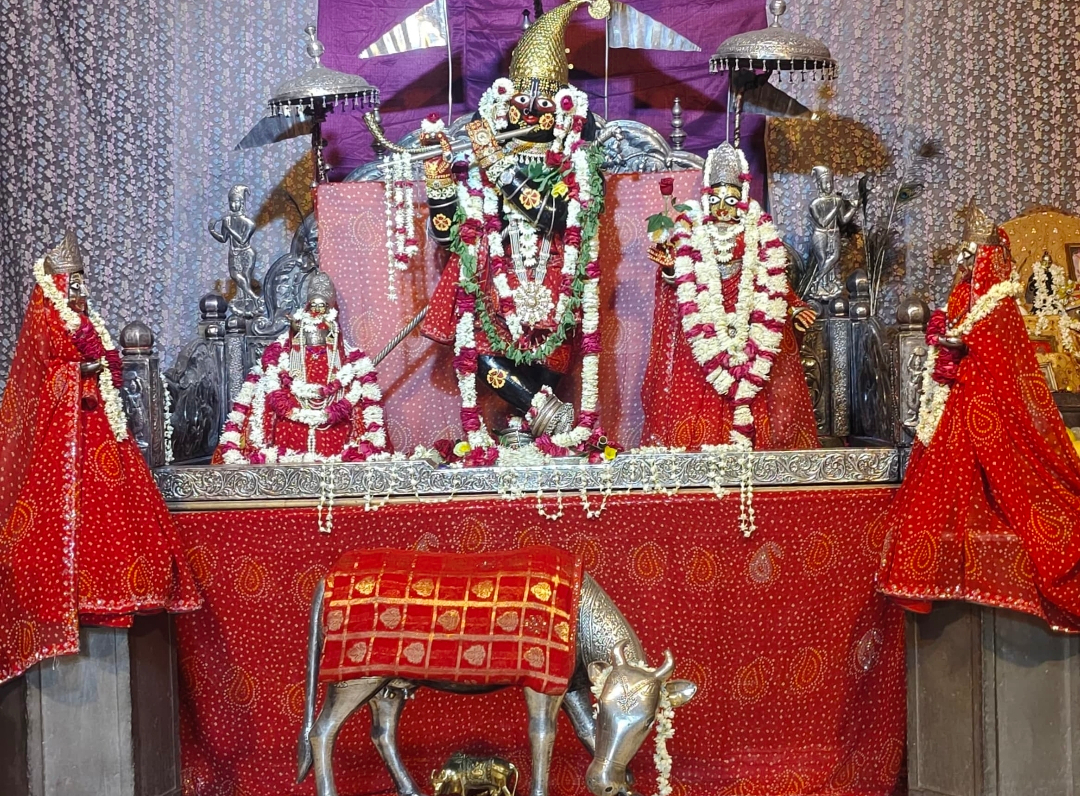
Sri Madhu Pandit Goswami
Priest of Sri Gopinatha at Vamshivata
Not precisely recorded by tradition – Not precisely dated; belonged to the generation of Rupa Goswami and Sanatana Goswami's companions in 16th-century Vrindavana
4 pastime pages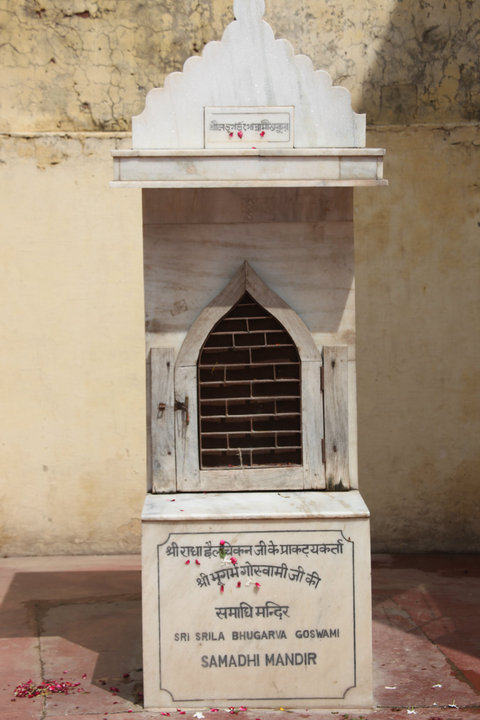
Srila Bhugarbha Goswami
Lokanatha Gosvami's Lifelong Companion in Vrindavana
Not recorded – Chaturdashi (14th day) of the Kartika full-moon fortnight; year not recorded
3 pastime pagesFrequently asked
When was Sri Gadadhara Pandit born?
Sri Gadadhara Pandit appeared c. 1486 in Nabadwip, Nadia, Bengal.
Who was the guru of Sri Gadadhara Pandit?
The spiritual master of Sri Gadadhara Pandit was Srila Pundarika Vidyanidhi.
When and where did Sri Gadadhara Pandit disappear?
Sri Gadadhara Pandit disappeared c. 1534, shortly after Mahaprabhu at Jagannatha Puri, Odisha.
What are the main pastimes of Sri Gadadhara Pandit?
The pastimes covered here include: The Advent and Childhood of Gadadhara Pandit, Friendship with Nimai Pandita, Initiation from Pundarika Vidyanidhi, Service at Tota Gopinatha, The Disappearance of Gadadhara Pandit.