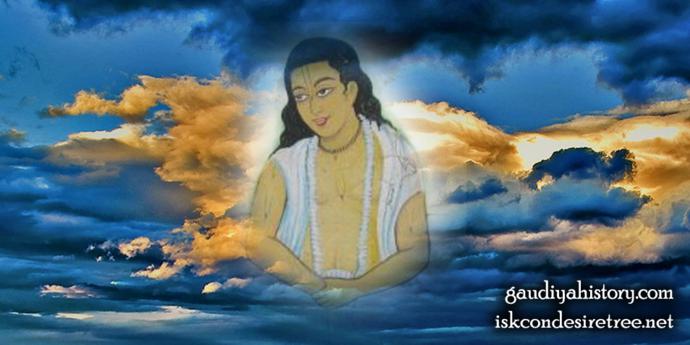
हृदय चैतन्य को नया नाम मिलने के कुछ वर्षों बाद एक बालक अम्बिका कालना आया। इसी बालक का जीवन आगे चलकर उस नाम को बंगाल से बहुत दूर तक ले जाने वाला था। उसका जन्म छह-गोप (शत-गोप) समुदाय के एक ग्वाला-परिवार में धरेन्द बहादुरपुर में हुआ था। आज इस गाँव की पहचान मिदनापुर के निकट कलाईकुण्डा के रूप में की जाती है। उसका नाम दुःखी रखा गया, जिसका अर्थ है "दुखी"। यह नाम कभी-कभी दुखी या दुखिया भी लिखा जाता है। उसके पिता कृष्ण मण्डल और माता दुरिका उसके जन्म से पहले कई सन्तानें खो चुके थे। कहा जाता है कि आगे के दुःख से बचने के लिए उन्होंने उसका नाम दुःखी रखा। यह भी कहा जाता है कि उन्होंने प्रण किया था कि यदि यह सन्तान जीवित रही, तो वे उसे विष्णु की सेवा में अर्पित कर देंगे।
| Detail | Description |
|---|---|
| जन्म का नाम | दुःखी (दुखी, दुखिया) |
| परिवार | छह-गोप वंश के ग्वाले (गोप); पिता कृष्ण मण्डल, माता दुरिका |
| जन्मस्थान | धरेन्द बहादुरपुर, वर्तमान कलाईकुण्डा, मिदनापुर के निकट |
| यात्रा | गंगा-तीर्थयात्रियों के साथ बंगाल के अम्बिका कालना तक यात्रा |
| हृदय चैतन्य द्वारा दिया गया नाम | कृष्णदास (परम्परा में मिलाकर दुःखी कृष्णदास) |
वैराग्य हेतु चिह्नित बालक #
स्रोत सहमत हैं कि बचपन से ही दुःखी में ऐसे लक्षण दिखाई देते थे, जो उसे औरों से अलग करते थे। अपनी प्रारम्भिक शिक्षा पूरी होते ही उसमें असाधारण गम्भीरता आ गई। स्थानीय भक्तों से सुनी गौर और नित्यानन्द की कथाओं की ओर उसका आकर्षण भी बढ़ता गया। जब यह आकर्षण गंगा-स्नान की इच्छा में बदल गया, तो उसके पिता ने, जो स्वयं एक भक्त थे, अपना आशीर्वाद दिया और बालक को गौड़-देश जाने वाले तीर्थयात्रियों के एक दल के साथ जाने दिया। वह फिर कभी घर नहीं लौटा।
उनकी भेंट कैसे हुई, इसके दो विवरण #
यह भेंट पहले से तय थी या संयोग से हुई, इस पर स्रोतों में वास्तव में अन्तर है। यहाँ दोनों विवरणों को एक में मिलाने के बजाय अलग-अलग दिया गया है। एक विवरण बहुत दोहराया जाता है, जो गौड़ीय हिस्ट्री वेबसाइट पर श्यामानन्द प्रभु की जीवनी में मिलता है। यह भेंट को लगभग संयोग जैसा बताता है। इसके अनुसार बालक बस तीर्थयात्रियों के साथ अम्बिका कालना गया, और वहाँ पहुँचकर उसकी हृदय चैतन्य से "संयोगवश भेंट हो गई"। संकलित "श्यामानन्द पण्डित का जीवन" में एक अधिक विस्तृत भक्ति-विवरण मिलता है, जो इसे अलग ढंग से बताता है। इसमें दुःखी घर छोड़ने से पहले ही हृदय चैतन्य को अपना गुरु बता देता है। वह अपने पिता से साफ़ कहता है, "हृदय चैतन्य प्रभु मेरे गुरु हैं, वे अम्बिका कालना में रहते हैं। उनके गुरु गौरीदास पण्डित हैं... यदि आप आज्ञा दें, तो मैं उनके पास जाऊँगा।" उपलब्ध स्रोत इस बात पर सहमत नहीं हैं। हो सकता है कि हृदय चैतन्य की ख्याति कई दिनों की यात्रा दूर एक ग्वाले के घर तक पहले ही पहुँच चुकी हो। या हो सकता है कि बालक के वहाँ पहुँचने पर दोनों की भेंट बस यूँ ही हो गई हो।
जिस बात पर वे सहमत हैं #
दोनों विवरण जिस बात पर सहमत हैं, वह है स्वयं भेंट का सार। अम्बिका कालना पहुँचकर, बालक ने गौरीदास पण्डित के गृह-मन्दिर के बाहर प्रणाम किया और वहाँ हृदय चैतन्य को पाया। पूछे जाने पर कि वह कौन है, दुःखी ने बिना किसी दिखावे के उत्तर दिया: वह दूर से आया है, ग्वालों के एक परिवार से, उसका नाम दुःखी है। परम्परा कहती है कि हृदय चैतन्य बालक के शब्दों की सरल निष्ठा से प्रसन्न हुए। परम्परा यह भी कहती है कि बालक ब्राह्मण कुल में नहीं जन्मा था, फिर भी हृदय चैतन्य ने इसकी परवाह नहीं की और उसमें वह पहचाना, जिसे एक विवरण "वैराग्य के तने पर खिलता भक्ति का कमल" कहता है। उन्होंने वहीं बालक का नया नाम कृष्णदास रखा। फिर समय आने पर, एक शुभ दिन, उन्होंने उसे कृष्ण-मन्त्र से औपचारिक दीक्षा दी।
एक निर्णय जिसकी गूँज परम्परा में सुनाई देती है #
सच्ची भक्ति को पहला और सामाजिक जन्म को दूसरा स्थान देने का यह भाव केवल एक बार की दयालुता नहीं था। दर्ज है कि स्वयं श्री चैतन्य महाप्रभु ने रामानन्द राय को यही सिद्धान्त सिखाया था, कि "ब्राह्मण हो, सन्न्यासी हो अथवा शूद्र... यदि वह कृष्ण-तत्त्व का ज्ञाता है तो वह आध्यात्मिक गुरु बन सकता है" (श्री चैतन्य-चरितामृत, मध्य 8.128)। बाद में, जब कृष्णदास श्यामानन्द पण्डित बन गए, तब उन्होंने यही सिद्धान्त एक स्पष्ट आदेश के रूप में अपने प्रमुख शिष्य रसिकानन्द प्रभु को सौंपा। उन्होंने ऐसा तब किया, जब उन्होंने रसिकानन्द को ओडिशा में हर जाति के लोगों को दीक्षा देने के लिए भेजा। अम्बिका कालना में हृदय चैतन्य द्वारा एक ग्वाले के पुत्र को स्वीकार करना ही वह बिन्दु है, जहाँ से तीन पीढ़ियों की यह धारा आरम्भ होती है। इसके बाद क्या हुआ, यह उसे प्रशिक्षित कर वृन्दावन भेजना में बताया गया है। उसमें हृदय चैतन्य द्वारा इस नए शिष्य को दिए गए प्रशिक्षण और उसे वृन्दावन भेजने के निर्णय का वर्णन है।
