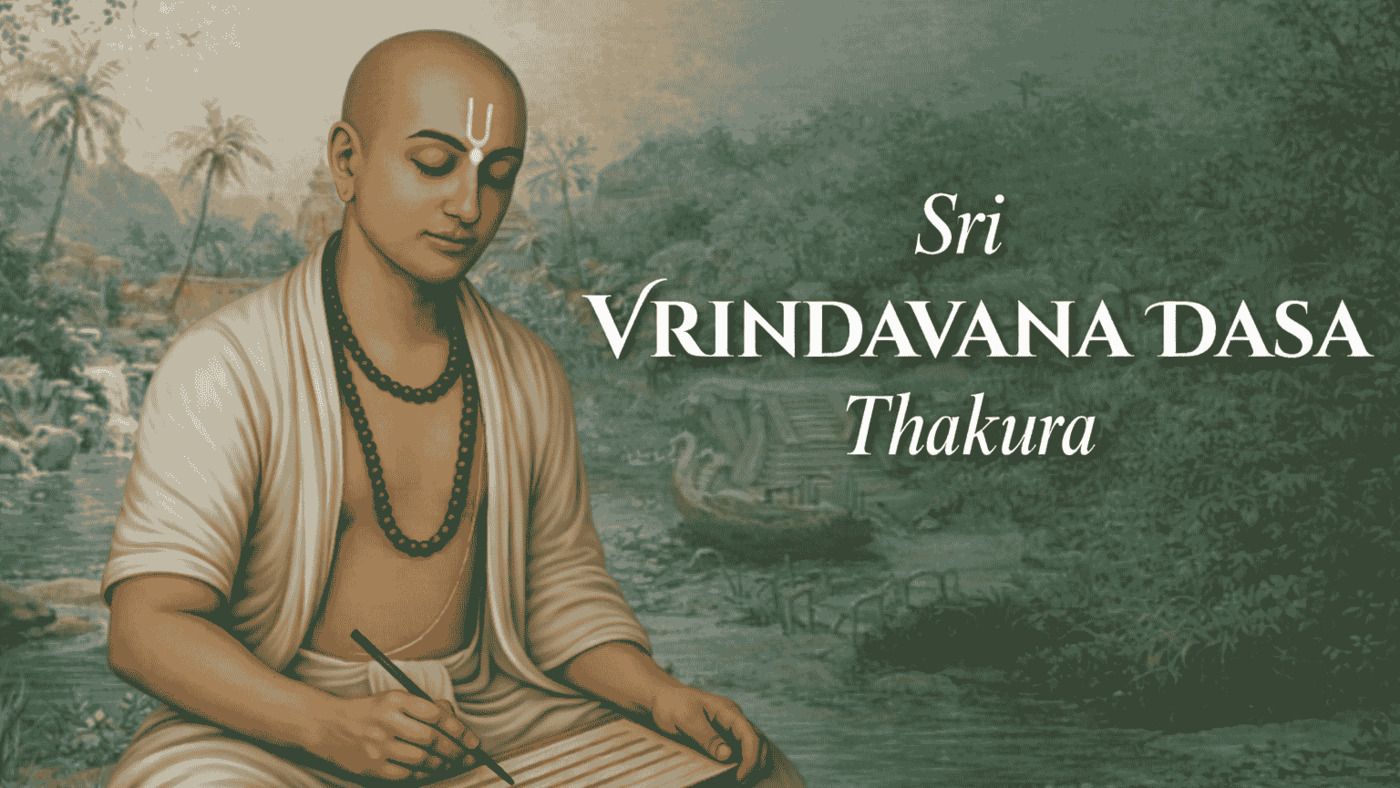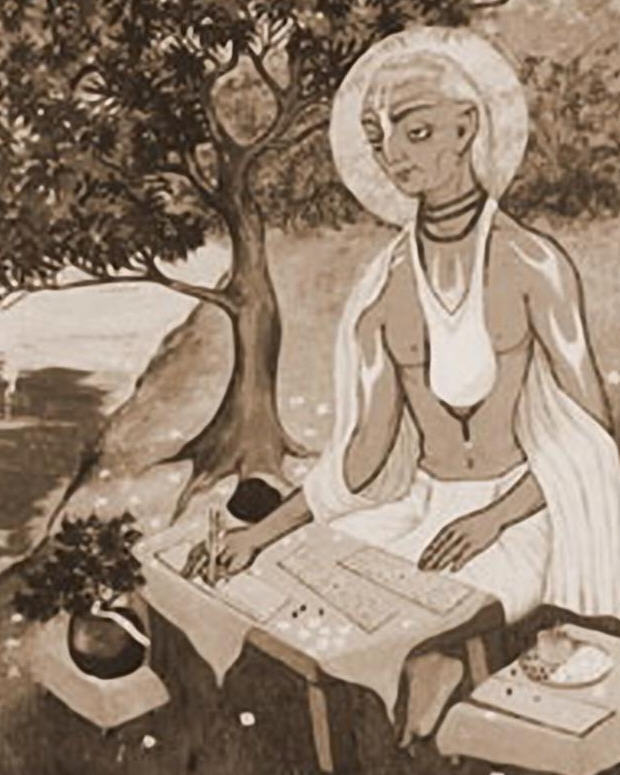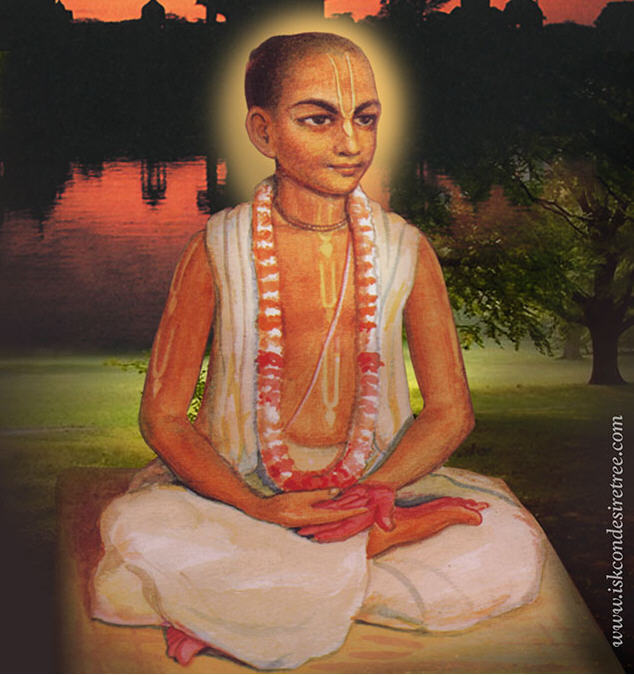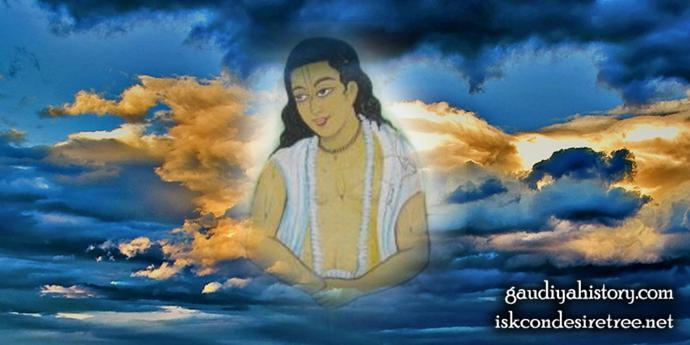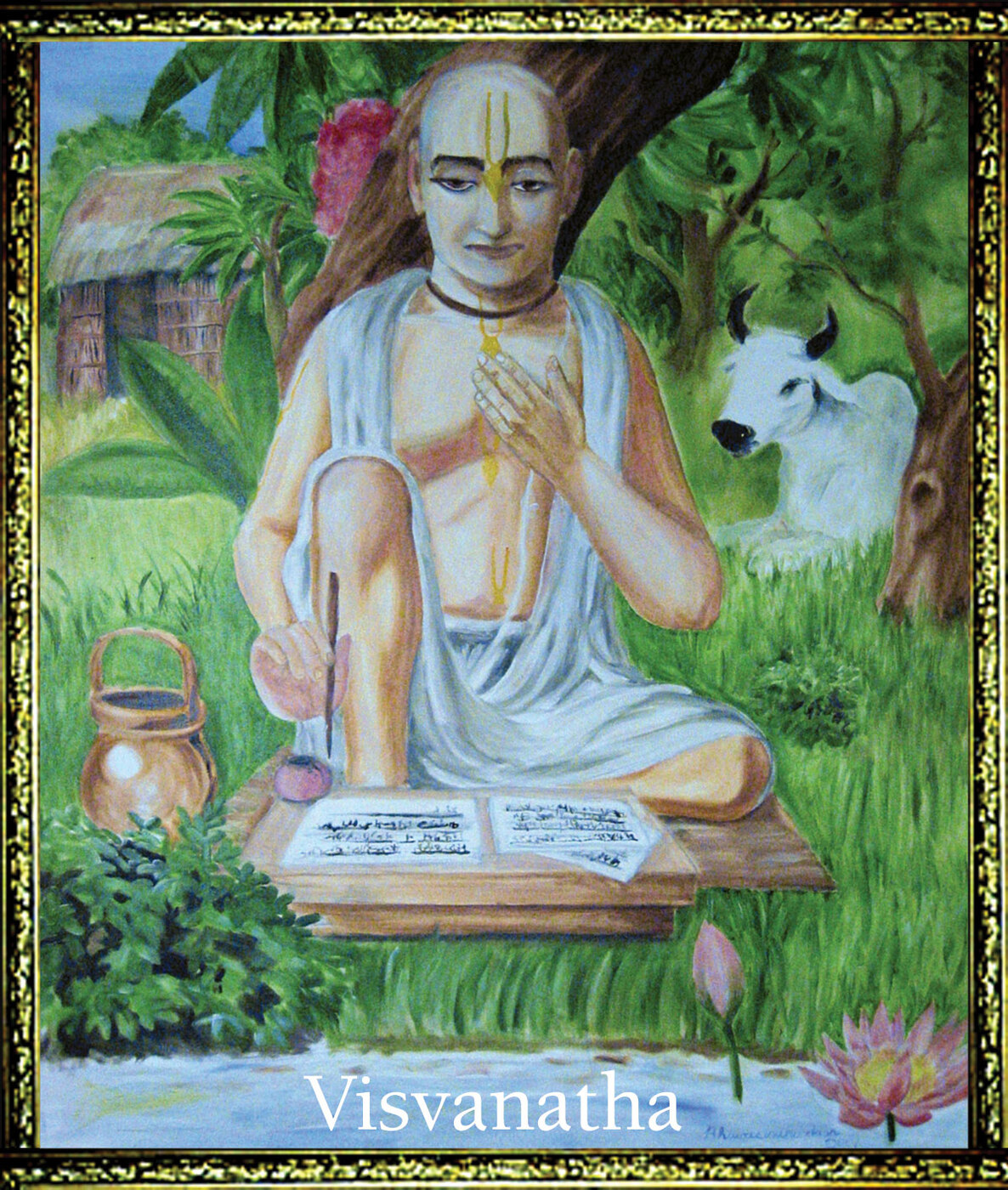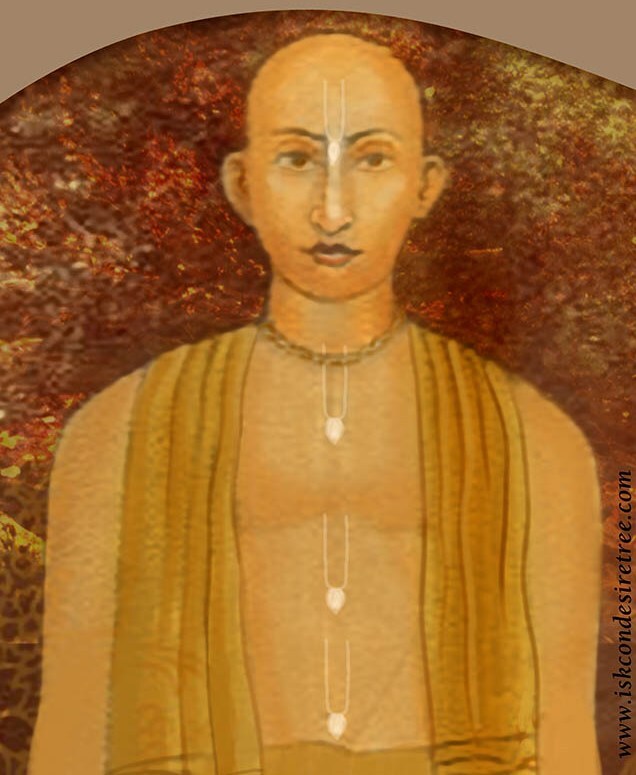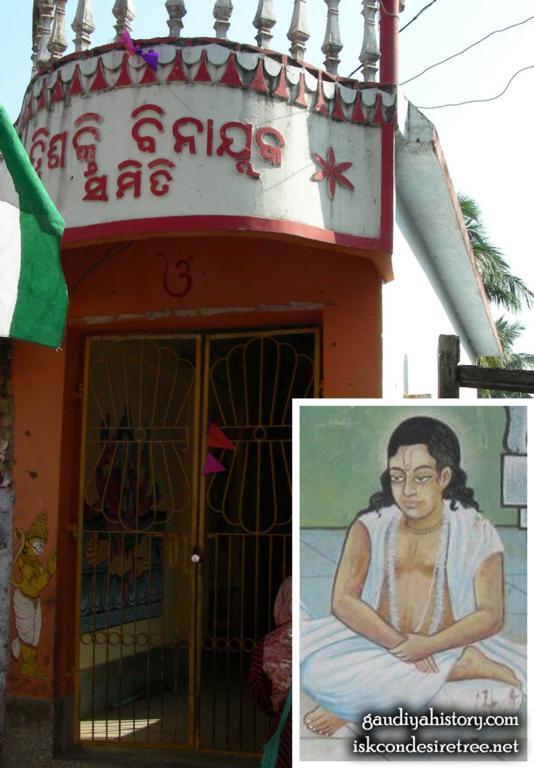
Srila Rasikananda Prabhu
The Preacher Who Crossed Every Caste Line in Odisha
Also known as Rasika Murari, Murari, Rasikananda Deva, Rasikananda Deva Goswami, Rasikananda Dev
“Distribute the Sri Hari-nama maha-mantra to everyone in Utkal, from the brahmanas up to the chandalas, to men and women, kings and paupers, old persons, brahmacaris, grihasthas, vanaprasthas and sannyasis, without any discrimination.”
Shyamananda Pandit's instruction to Rasikananda when sending him out to preach, as recorded in traditional Gaudiya Vaishnava biographies (Prema-vilasa / Bhakti-ratnakara tradition).
Srila Rasikananda Prabhu was the foremost disciple of Shyamananda Pandit. More than anyone else, he carried Gaudiya Vaishnavism deep into Odisha, into the Mayurbhanj and Gopiballabhpur border area where Bengal and Odisha meet along the Subarnarekha River. He founded a temple that still stands. He is said to have converted kings, zamindars, dacoits and Muslims alike. Most special of all, he initiated people across every caste line of his time, from brahmanas to outcastes, on the direct order of his own guru.
| Detail | Description |
|---|---|
| Birth | Kartika, night of Dipamalika (Diwali); Sakabda 1512, c. 1590 AD |
| Birthplace | Rohini (also called Rayni), on the Subarnarekha River, Mallabhumi region |
| Parents | Raja Achyuta Deva (Achyutananda) and Bhavani Devi |
| Guru | Shyamananda Pandit (Duhkhi Krishnadasa) |
| Deity service | Radha-Govinda at Gopiballabhpur; later Radha-Rasika Raya at Kunja Math, Puri |
| Disappearance | First day of the bright fortnight of Phalguna; Sakabda 1574, 1652 AD |
| Disappearance place | Kshira-chora Gopinatha Temple, Remuna, Odisha |
A Prince of Rohini on the Subarnarekha #
Rasikananda's father was Raja Achyuta Deva, a landholding ruler of Rohini village, and his mother was Bhavani Devi. He was born in the Bengali month of Kartika, on the night of Dipamalika, the lamp-lit festival of Diwali. Rohini lay where the Subarnarekha River marks the present-day Bengal-Odisha border, in a territory then known as Mallabhumi. He was also called Murari. Sources describe him as a gifted student who mastered the scriptures while still a boy. His father arranged his marriage early, to a woman later known by her Vaishnava name, Shyamadasi. The sources do not fully agree about his caste. Several traditional biographies describe Achyuta Deva as belonging to the Karana caste. This is an Odia community roughly equal to the Kayasthas of Bengal. But Srila Prabhupada's own purport to Chaitanya-charitamrita Madhya 8.128 describes Rasikananda as "born in a brahmana family." Both traditions agree on the more important point. Whatever his birth, his life showed that birth is not what makes a Vaishnava.
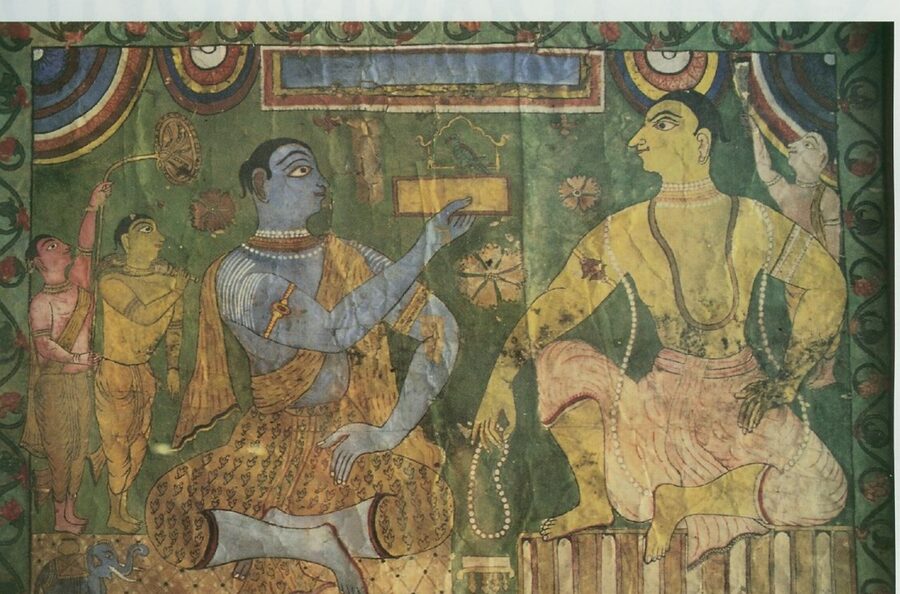
Was Rasika Murari a Different Person from Rasikananda Prabhu? #
This question needs a clear answer, because one source can be misunderstood to mean that they were two different people. Ishana Nagara's Prema-vilasa, an early biography of the Gaudiya Vaishnava acharyas, names two of Shyamananda Pandit's main disciples from the village of Rayni: "one named Rasikananda, the other Murari." Read alone, that line could be taken to mean two separate men.
Narahari Chakravarti's Bhakti-ratnakara settles the question directly:
"In the village of Rayni lived the famous son of Achyutananda. He had two names: Rasikananda and Murari. Thus he was also known as Rasika-Murari." (Bhakti-ratnakara 15.27-8)
Rasikananda and Murari are one and the same person, not two different disciples. Rasika-Murari is simply the combined form of his two names, and it is the form his own biographers use most often.
Called to Shyamananda Pandit #
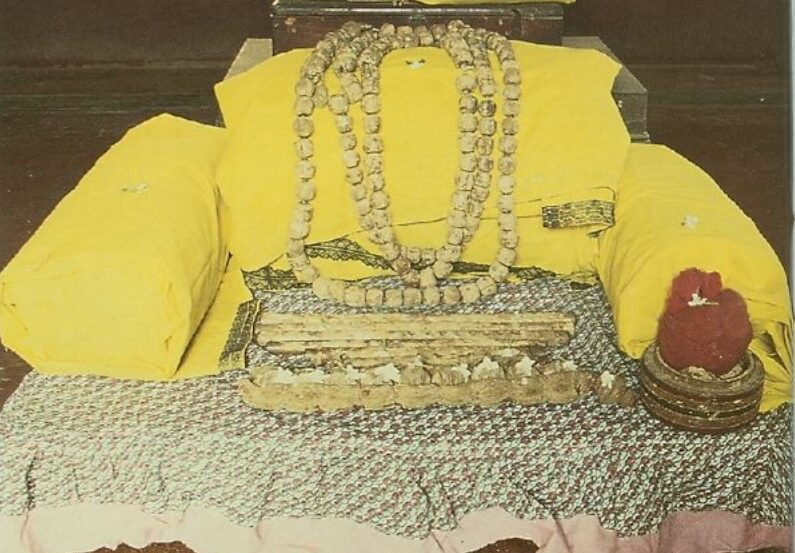
As a young man meditating alone in the village of Ghantashila, Rasikananda heard a voice say that Shyamananda Pandit would become his guru. That night he dreamed of Shyamananda himself. At dawn the two met on the road, where Shyamananda was dancing in kirtana surrounded by his own disciples. Rasikananda fell at his feet. Shyamananda lifted and embraced him, then gave him and his wife initiation into the Radha-Krishna mantra. Shyamananda himself knew well what it meant to cross the limits of birth. He was born Duhkhi Krishnadasa in a family of milkmen. He had studied in Vrindavana under Jiva Goswami together with Narottama Dasa Thakura. Later Jiva Goswami sent the two of them, along with Shrinivasa Acharya, back to preach in Bengal and Odisha. Rasikananda served his new guru so completely that he was soon recognized as Shyamananda's foremost disciple.
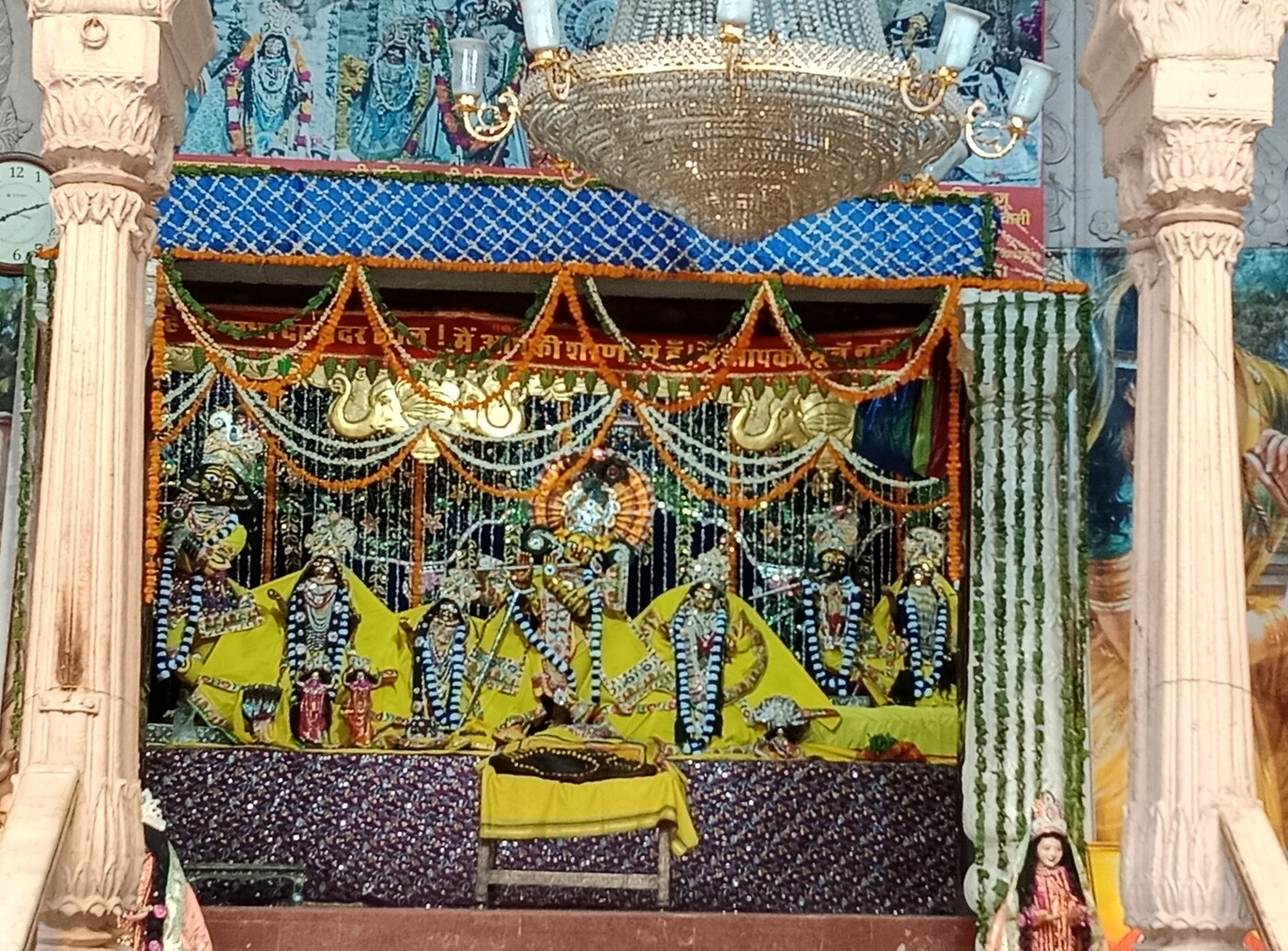
Guardian of the Govinda Deity at Gopiballabhpur #
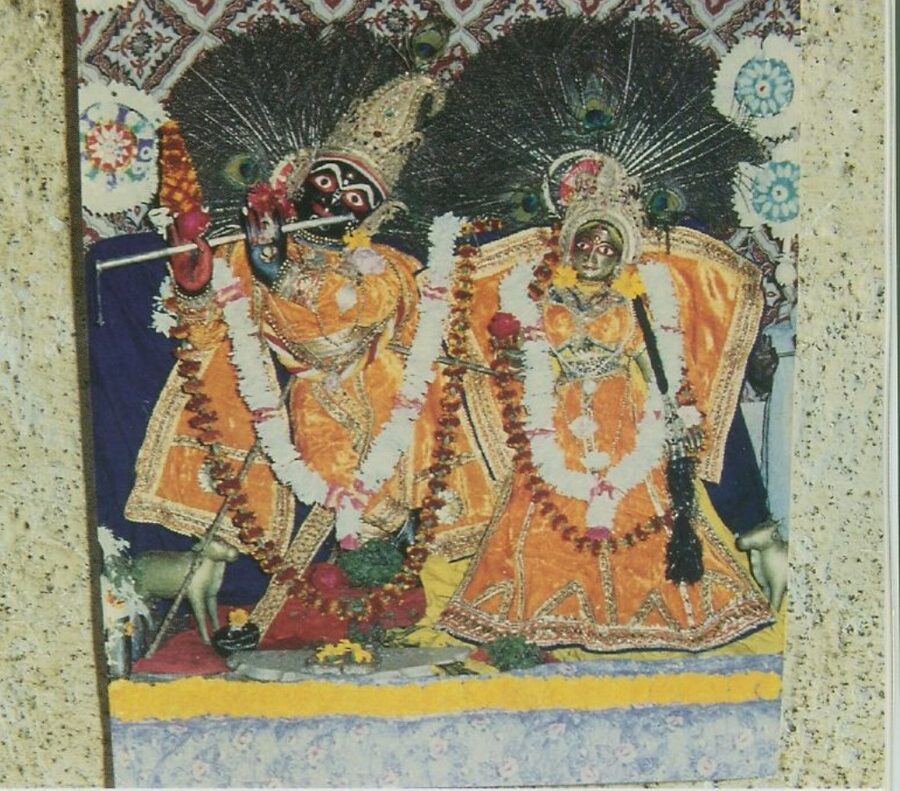
Shyamananda entrusted Rasikananda with the daily worship of his own beloved Govinda Deity. The Deity was installed at the place that became known as Gopiballabhpur. Tradition says this name was formed from the Deity whom Shyamananda himself named Gopi-vallabha Raya. Rasikananda is remembered for serving the Deity with great care and inspiration. Under him, Gopiballabhpur grew into the headquarters from which he preached across Odisha for the rest of his life. By most accounts this was several decades, but the sources disagree on exactly how long. Some describe sixteen years of active preaching, and others closer to forty.
A Preacher Who Crossed Every Caste Line #
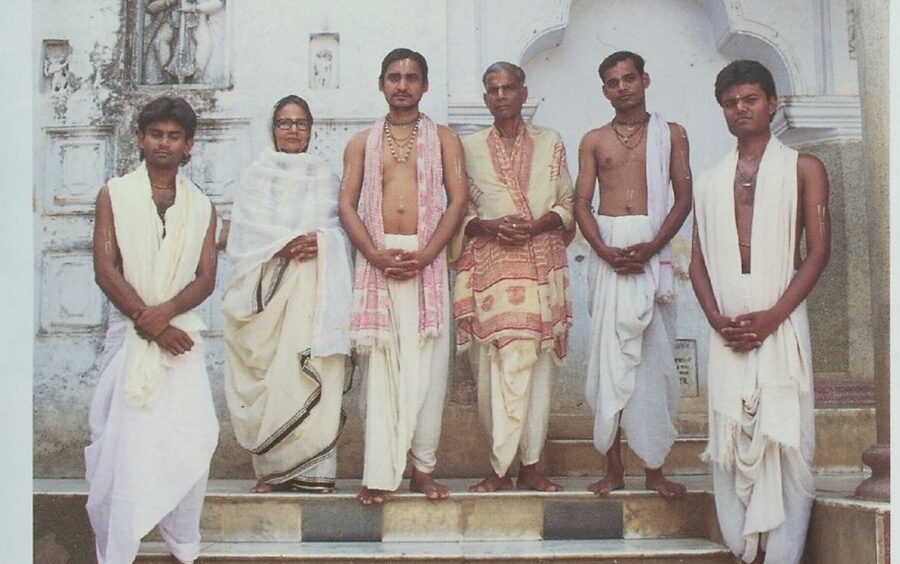
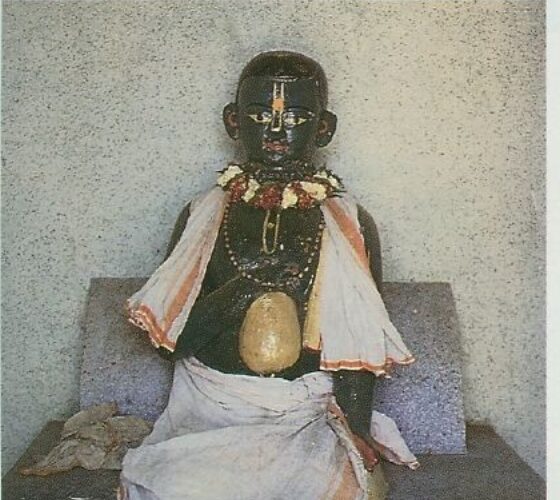
Shyamananda gave his disciple a clear order: carry the holy name to everyone in Utkal, from brahmanas to chandalas, without regard for caste, sex, wealth, or station. Rasikananda's biographers describe him doing exactly that. He initiated rulers such as Vaidyanatha Bhanj, the raja of Mayurbhanj. He also initiated dacoits, atheists, and Muslim officials. One of them was Ahmed Beg, son-in-law of the governor of Odisha, who had at first tried to have Rasikananda killed. At that time and place, it was truly unusual to initiate across every social line. This willingness is the most special feature of Rasikananda's mission, and it did not end with him. Srila Prabhupada's purport to Chaitanya-charitamrita Adi 7.45 records that Rasikananda-deva's own family line continued to initiate brahmana-born disciples for three to four hundred years afterward, though its own members were not born brahmanas. In this way the very principle Rasikananda lived by was carried on by his family line.
Entering the Deity at Remuna #
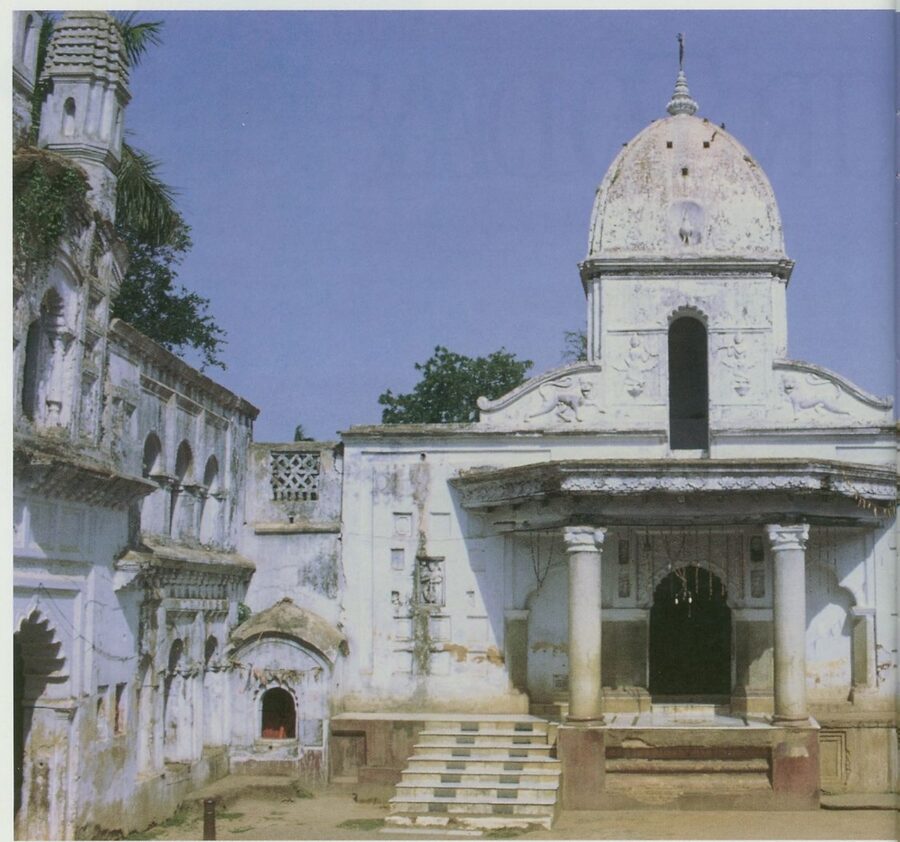
After decades of preaching, Rasikananda quietly left the village of Santa and walked to Remuna. There he entered the Kshira-chora Gopinatha temple. Tradition holds that he merged into the body of the Deity itself. Seven of his disciples are said to have left their own bodies at the same spot. His samadhi still stands in the temple courtyard. Srila Prabhupada notes in his own purports that Rasikananda's descendants still tend it. Three sons continued his line at Gopiballabhpur. Generations later, a spiritual descendant in his disciplic succession, Baladeva Vidyabhusana, would become one of Gaudiya Vaishnavism's most important philosophers.
- Rasikananda Prabhu - Gaudiya History
- Rasikananda Prabhu - Biography 2 - Gaudiya History
- Rasikananda Prabhu - Biography 3 - Gaudiya History
- Shyamananda Prabhu - Biography - Gaudiya History
- Sri Rasikananda Deva Gosvami (from Sri Chaitanya: His Life and Associates, by Srila Bhakti Ballabh Tirtha Goswami Maharaj)
- Rasikananda Dev - Stephen Knapp
- Sri Chaitanya-caritamrita, Madhya-lila 8.128, purport
- Sri Chaitanya-caritamrita, Adi-lila 7.45, purport
- "I Have Found the Future of Vaishnavism": The Story of Rasikananda Prabhu, by Satyaraja Dasa — Back to Godhead, Jan/Feb 1999 (PDF, article begins p. 44)
- Gopiballabhpur Today, by Bhaktivikasa Swami, photos by Maha Vishnu Dasa — Back to Godhead, Jan/Feb 1999 (PDF, article begins p. 47)
Frequently asked
When was Srila Rasikananda Prabhu born?
Srila Rasikananda Prabhu appeared Kartika, night of Dipamalika (Diwali), Sakabda 1512 (c. 1590 AD) in Rohini (Rayni), on the Subarnarekha River, Mallabhumi region (present-day Bengal-Odisha border).
Who was the guru of Srila Rasikananda Prabhu?
The spiritual master of Srila Rasikananda Prabhu was Srila Shyamananda Pandit.
When and where did Srila Rasikananda Prabhu disappear?
Srila Rasikananda Prabhu disappeared First day of the bright fortnight of Phalguna, Sakabda 1574 (1652 AD) at Kshira-chora Gopinatha Temple, Remuna, Odisha.
What are the main pastimes of Srila Rasikananda Prabhu?
The pastimes covered here include: A Prince Born on the Subarnarekha, Discipleship Under Shyamananda Pandit, Spreading the Faith in Odisha, Initiating Across Caste Lines, Final Days and Disappearance.