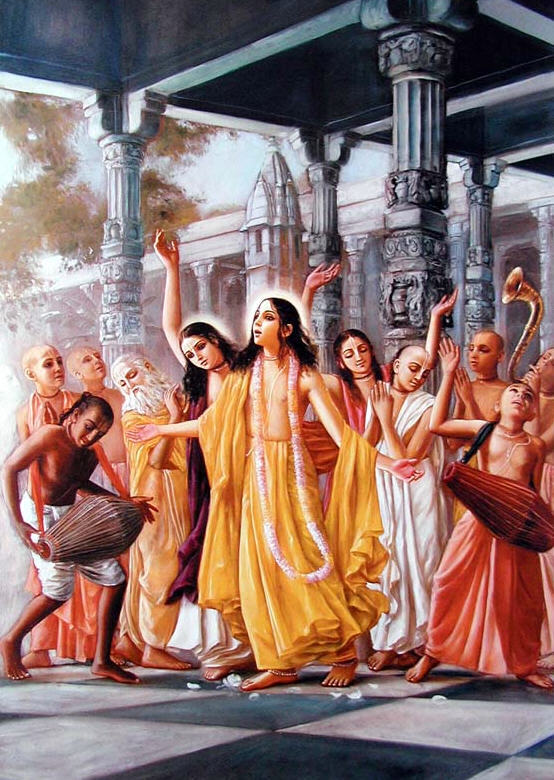
हर वर्ष जगन्नाथ पुरी में भगवान जगन्नाथ का रथ चौड़े रेतीले मार्ग से होकर धीरे-धीरे गुण्डिचा मन्दिर की ओर चलता था। इसे गौड़ नामक मन्दिर-सेवक खींचते थे, और स्वयं महाराज प्रतापरुद्र सुनहरे हत्थे वाली झाड़ू से आगे का मार्ग बुहारते थे। श्री चैतन्य महाप्रभु हर वर्ष उस रथ के आगे नृत्य करने आते थे। कृष्णदास कविराज गोस्वामी ने चैतन्य-चरितामृत की मध्य-लीला के तेरहवें अध्याय में किसी एक वर्ष के इस नृत्य का वर्णन किया है। उसी वर्णन में शुभानन्द द्विज कुछ क्षण के लिए केवल सूची के एक नाम के रूप में नहीं, बल्कि एक वास्तविक दृश्य के भाग के रूप में दिखाई देते हैं।
एक नृत्य के लिए सात मण्डल #
महाप्रभु अकेले नृत्य नहीं करते थे। अध्याय के अपने सारांश के अनुसार, उन्होंने अपने पूरे संकीर्तन-दल को सात अलग-अलग मण्डलों में बाँटा, और हर मण्डल में दो मृदंग रखे। इस तरह मार्ग में एक साथ चौदह मृदंग बजते थे। पहले मण्डल में उन्होंने दामोदर स्वरूप को मुख्य गायक बनाया और अद्वैत आचार्य को नर्तक का स्थान दिया। इसके बाद उन्होंने दूसरा मण्डल बनाया और श्रीवास ठाकुर को उसका मुख्य गायक बनाया (मध्य 13.38)। ग्रन्थ आगे उन गायकों के नाम भी बताता है, जिन्होंने श्रीवास ठाकुर के पीछे प्रत्युत्तर में गाया: "गंगादास, हरिदास, श्रीमान, शुभानन्द और श्री रामपण्डित," और स्वयं नित्यानन्द प्रभु को उसी मण्डल में नर्तक बनाया गया था (मध्य 13.39)। गौड़ीय परम्परा के सभी मान्य ग्रन्थों में यही एकमात्र दृश्य है, जहाँ शुभानन्द का नाम अन्य भक्तों के साथ कुछ करते हुए आता है। वे श्रीवास ठाकुर के अपने दल में गा रहे हैं, और नित्यानन्द प्रभु उनके सामने नृत्य कर रहे हैं।
जब सातों मण्डल गा रहे थे, तब महाप्रभु उन सबके बीच घूमते रहे। परम्परा मानती है कि वे रहस्यमय ढंग से एक ही समय में हर मण्डल में उपस्थित थे। इसलिए हर मण्डल को पक्का लगता था कि प्रभु केवल उन्हीं के साथ नृत्य कर रहे हैं। जैसे-जैसे रथ आगे बढ़ा, अन्त में सभी मण्डल मिलकर एक बहुत बड़ा और ऊँचे स्वर वाला कीर्तन बन गए, जिसके बीच में स्वयं प्रभु नृत्य कर रहे थे। मृदंगों और स्वरों के इसी विशाल घोष के बीच कहीं शुभानन्द से जुड़ा वह विशेष क्षण घटित हुआ।
उनके मुख से गिरा फेन #
जगन्नाथ के रथ के आगे नृत्य करते हुए महाप्रभु ऐसे गहरे आनन्द-भाव में डूब गए कि उनके मुख के कोने पर फेन आ गया। यह दिव्य भाव के जाने-पहचाने शारीरिक चिह्नों में से एक है, और चैतन्य-चरितामृत उनके पूरे जीवन में इसे बार-बार दर्ज करता है। आगे जो हुआ, उसे कृष्णदास कविराज गोस्वामी एक ही पद्य में बताते हैं: "उस फेन को लेकर शुभानन्द ने पी लिया। कृष्ण-प्रेम के रस के एक रसिक, वे परम सौभाग्यशाली थे" (सेइ फेन लञा शुभानन्द कैल पान, कृष्ण-प्रेम-रसिक तेंहो महा-भाग्यवान्, मध्य 13.110)।
कृष्णदास कविराज ने उनका वर्णन करने के लिए जो दो शब्द चुने, उन पर ध्यान देना चाहिए। कृष्ण-प्रेम-रसिक का अर्थ केवल "भक्त" से कहीं अधिक है। रसिक वह होता है, जिसे किसी विशेष रस का अभ्यास से निखरा हुआ, सूक्ष्म स्वाद हो। यहाँ वह रस प्रेम है, अर्थात् कृष्ण के प्रति प्रेम, अपने सबसे तीव्र और आनन्दमय रूप में। महा-भाग्यवान्, अर्थात् "परम सौभाग्यशाली," इस कार्य पर स्वयं लेखक का निर्णय है। एक भक्त ने दूसरे व्यक्ति की लार पी, इस पर लेखक कोई घृणा या आश्चर्य नहीं दिखाते। वे इसका उलटा भाव दिखाते हैं, लगभग ईर्ष्या जैसा। उन्हें लगता है कि भीड़ में केवल शुभानन्द ही इतने निकट थे, और उन्हीं में इतना साहस था, कि वे वह विशेष प्रसाद ग्रहण कर सके। कृष्णदास कविराज गोस्वामी जिस संसार का वर्णन कर रहे हैं, उसमें दिव्य आनन्द की अवस्था में महाप्रभु के अपने शरीर से गिरने वाली कोई भी वस्तु साधारण पदार्थ नहीं होती।
एक श्लोक, जो स्मरण रह गया #
शुभानन्द महाप्रभु के इतने निकट कैसे खड़े थे कि यह कर सके, उस क्षण उन्होंने क्या अनुभव किया, या बाद में उनका क्या हुआ, इसके बारे में और कुछ भी दर्ज नहीं है। उन्हें कहीं बोलते हुए नहीं दिखाया गया, और आगे का कोई अध्याय फिर उनकी चर्चा नहीं करता। जो बचा है, वह यही एक पद्य है। इसके साथ, उसी अध्याय में पहले, उसी उत्सव के नृत्य में उनका स्थान भी बताया गया है। वहाँ वे उन पाँच गायकों में से एक हैं, जो श्रीवास ठाकुर के पीछे प्रत्युत्तर में गाते थे। चैतन्य का अनुसरण करने वाले बहुत-से भक्तों के बारे में इतिहास का अभिलेख प्रायः इतना ही बचाकर रखता है। कोई पूरी जीवनी नहीं होती, केवल एक ऐसा कार्य होता है, जो साफ-साफ याद रखा गया। उसे इसलिए लिखा गया, क्योंकि वहाँ उपस्थित किसी व्यक्ति ने उसे याद रखने योग्य समझा।
