Sri Chaitanya-chandrodaya-nataka and Gaura-ganoddesha-dipika are Kavi-karnapura's two best-known books, but they were not his only ones. He was clearly one of the most productive Sanskrit authors of the Gaudiya Vaishnava tradition. The rest of his writing also deserves a careful and honest look. It includes a champu-kavya on Krishna's own pastimes, a serious book on the theory of poetry, and a Bhagavatam commentary. There is also one more work, and scholars who study the old manuscripts now seriously dispute whether he wrote it.
| Detail | Description |
|---|---|
| Ananda-vrindavana-champu | A long prose-and-verse retelling of Krishna's Vrindavana pastimes, following Srimad-Bhagavatam |
| Alankara-kaustubha | A formal Sanskrit treatise on poetics (alankara-shastra) and rasa theory, in ten chapters called kiranas ("rays") |
| Bhagavatam commentary | An unnamed commentary on the Tenth Canto of Srimad-Bhagavatam |
| Disputed work | Sri Chaitanya-charitamrita-mahakavya (also called Chaitanya-charanamrita); modern scholars who study the manuscripts have challenged the claim that it is a genuine sixteenth-century work |
| Minor works reported in other books | Chaitanya-sahasra-nama, Arya-shataka, and a few others; each is named in only a single source, and we could not check it against other sources |
Ananda-Vrindavana-Champu: Krishna's Pastimes In A Mixed Form #
A champu-kavya is a special Sanskrit literary form. It is neither pure poetry nor pure prose, but a deliberate mixture of both, with verse passages set inside a flowing prose story. Ananda-vrindavana-champu is Kavi-karnapura's own work in this form. It is a long retelling of Krishna's Vrindavana pastimes that follows Srimad-Bhagavatam's own order fairly closely. It describes Krishna's play with the calves, His stealing of butter, His games with the cowherd boys, and finally His intimate pastimes with the gopis and with Srimati Radharani. All this is described with real literary skill, not simply retold. The book is also notable for what it leaves out on purpose. Later summaries of the work note that Kavi-karnapura skips over episodes such as the gopis' songs of separation, Krishna's killing of the demons Arishta and Keshi, Akrura's visit, and Krishna's eventual departure for Mathura. According to these summaries, he leaves them out because these episodes move the mood away from the soft, joyful madhurya-rasa. Keeping that mood is the whole purpose of the book. In other words, it is a Krishna-lila chosen with care, shaped by a clear literary and devotional understanding of mood. The same serious interest in the theory of rasa runs through his other major work that is not a story, Alankara-kaustubha.
Alankara-Kaustubha: A Serious Work Of Sanskrit Poetics #
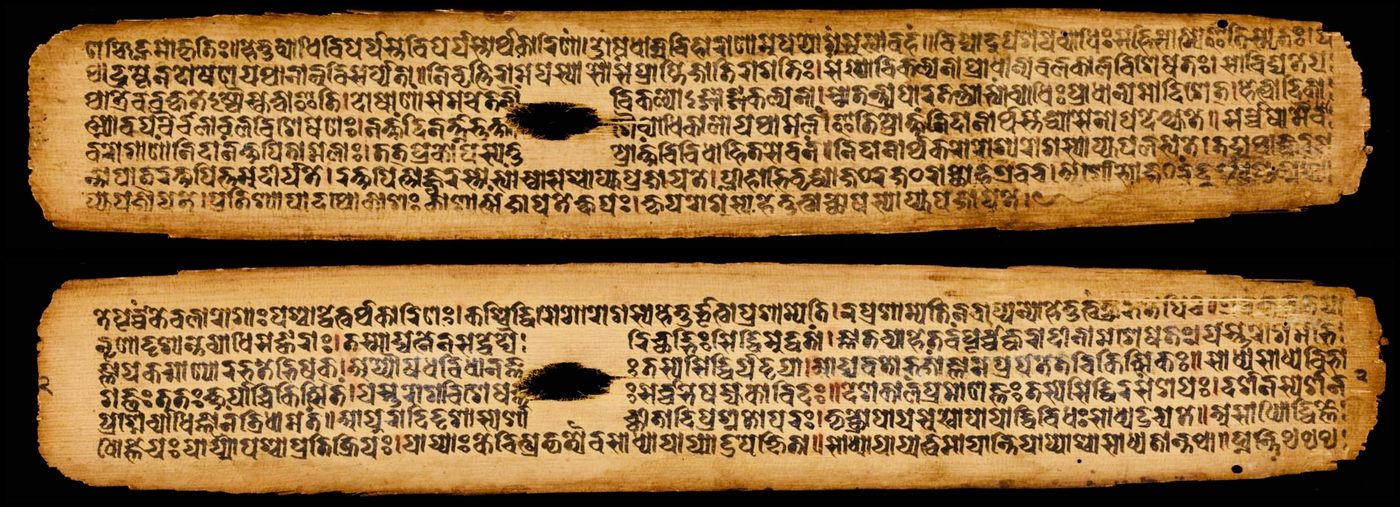
Where Ananda-vrindavana-champu tells a story, Alankara-kaustubha explains the rules for telling one well. Its title literally means "a Kaustubha-jewel for poetics," that is, for the art and theory of poetry. Alankara is the traditional Sanskrit term for the whole study of literary ornament and style. Kaustubha is the name of the famous jewel worn on the Lord's chest. This name was chosen because a jewel gives out light, and the book's ten chapters (kiranas, "rays") are meant to throw light on the ten traditional topics of Sanskrit poetics. Scholars who have studied the work note that Kavi-karnapura draws on earlier standard authorities in the field (Kavya-prakasha, Sahitya-darpana, Dhvanyaloka and Natya-shastra among them). He also takes up and develops the specifically devotional rasa theory laid out by Rupa Goswami in Ujjvala-nilamani and Bhakti-rasamrita-sindhu. In this way, Alankara-kaustubha brings the wider, secular Sanskrit tradition of literary theory into direct contact with Gaudiya Vaishnavism's own theology of devotional emotion. This was not a small task. One recent academic study of the book is Rembert Lutjeharms' 2018 study for Oxford University Press, discussed further on the Legacy page. It treats Alankara-kaustubha as a truly major contribution to Sanskrit literary theory in itself, not merely a devotional footnote to it.
A Commentary On The Tenth Canto #
Kavi-karnapura is also credited with a commentary on the Tenth Canto of Srimad-Bhagavatam. This canto contains Krishna's own life and pastimes, and devotional commentators have traditionally given this part of the Bhagavatam the most attention. Apart from the fact that the commentary existed, no detail that can be checked independently survives about what it says, or about how it relates to other well-known Bhagavatam commentaries of the period. We do not claim to know any more about it than that.
A Genuinely Disputed Work #
This work needs a longer and more careful discussion than the others. Several devotional sources credit Kavi-karnapura with a work usually called Sri Chaitanya-charitamrita-mahakavya (sometimes rendered Chaitanya-charanamrita). It is a Sanskrit epic poem on Mahaprabhu's life. Tradition says it was completed when its author was only about sixteen. A tradition found in the manuscript's closing note (colophon) claims that Rupa Goswami himself copied the manuscript by hand around 1545. Modern scholars who study the manuscripts have directly challenged the claim that Kavi-karnapura wrote it. In a 1985 study written in Bengali, the scholar Tarapada Mukherjee argued that the work is very unlikely to be a genuine sixteenth-century composition at all. He gave three reasons. First, Krishnadasa Kaviraja Goswami's own Sri Chaitanya-charitamrita was written around 1612. It clearly names and quotes Kavi-karnapura's other works, yet it never once mentions this one. Second, almost all surviving manuscripts date only from the eighteenth century onward, with just one possible earlier copy. Third, some verses attributed to a devotee named Vishnudasa were apparently added to show that early first-generation devotees accepted the work as genuine. These verses look designed to make the work seem believable, not to record real history. Mukherjee's own conclusion places the actual writing of the work closer to the 1660s or 1670s. That is more than a century after Kavi-karnapura's lifetime. The traditional view is reported here because most devotional summaries of his life still repeat it. But Mukherjee's challenge is given equal weight, exactly as the sources describe it. The manuscript evidence has not actually settled the question, so we do not pick a side.
A Few Titles Reported More Thinly #
A few more titles appear in some later lists of Kavi-karnapura's works. Among them are Chaitanya-sahasra-nama (a thousand names of Chaitanya) and Arya-shataka (a hundred verses in the arya meter). They can generally be traced to a single source that was consulted, not to several independent ones. They are noted here so that the list is complete. But they are not treated with the same confidence as the works discussed above. Throughout this history, we try to keep what several sources agree on separate from what rests on a single account.
