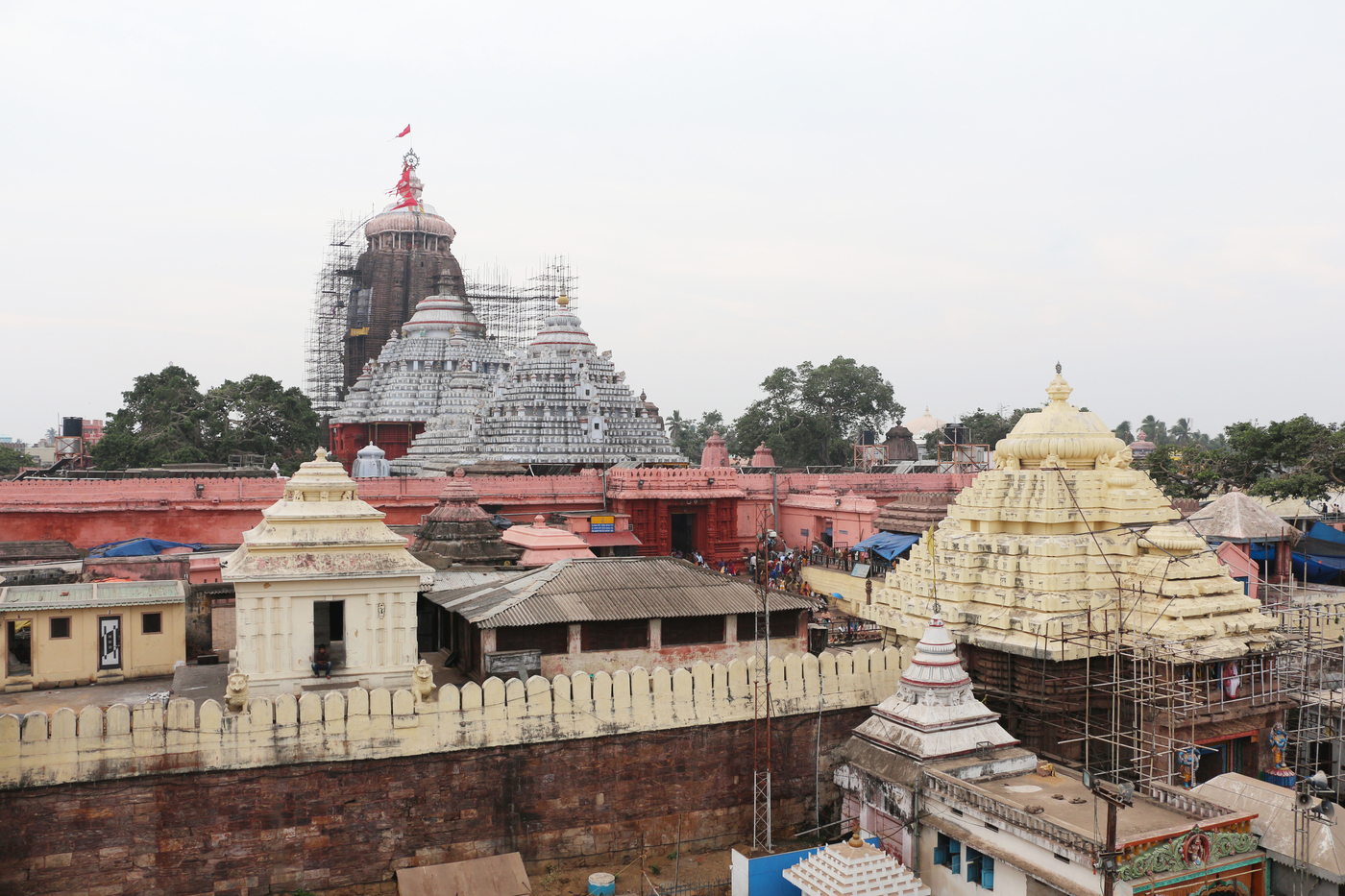
A nataka, in Sanskrit literary theory, is a specific and demanding dramatic form. It is a full play in several acts, built on strict rules about plot, character and mood, and meant to be staged, not simply read. Sri Chaitanya-chandrodaya-nataka, "The Rising Moon of Sri Chaitanya," is Kavi-karnapura's attempt at exactly that kind of play. It is a ten-act Sanskrit drama about the entire life of Sri Chaitanya Mahaprabhu, from His appearance through His years of preaching and renunciation. It is his best-known single work. Unusually for a devotional drama of this period, it is also a work that Sri Chaitanya-charitamrita itself treats as a source worth quoting.
| Detail | Description |
|---|---|
| Full title | Sri Chaitanya-chandrodaya-nataka, "The Rising of the Moon of Sri Chaitanya" |
| Form | Sanskrit nataka (formal drama) in ten acts |
| Modeled on | Prabodha-chandrodaya of Krishna Mishra, an earlier Sanskrit allegorical drama, both in name and in plot structure |
| Content | Mahaprabhu's birth, household life, sannyasa, travels, meetings with His associates, and His teachings |
| Quoted inside | Sri Chaitanya-charitamrita itself, at Antya 6.262-265, Madhya 19.118-119, Madhya 24.347, Madhya 3.28, Madhya 6.142 and Madhya 6.254 |
Modeled On An Older Sanskrit Classic #
Kavi-karnapura did not invent the form he was writing in. Sri Chaitanya-chandrodaya-nataka takes both its title and its basic plot structure from the eleventh-century Prabodha-chandrodaya ("The Rising of the Moon of Awakening") by Krishna Mishra. This is a well-known Sanskrit allegorical drama. In it, abstract qualities like Discrimination and Delusion appear as characters on stage. In Kavi-karnapura's version, those qualities acting as characters are replaced by Mahaprabhu's own real life and associates. But he keeps the same formal structure of a Sanskrit drama. This was a deliberate literary choice. It placed his devotional subject inside one of the most respected existing kinds of Sanskrit literature, instead of inventing a looser or more informal form for it. Later writers on literary history state that the play was first staged at Jagannatha Puri's Chandana-yatra, the sandalwood festival, in the court of the Gajapati king Prataparudra. We could not confirm this detail independently from an original source. So it is reported here as a traditional claim, not an established fact.
Ten Acts Covering A Whole Life #
The play's ten acts follow the whole of Mahaprabhu's life, as the Gaudiya tradition understood it by Kavi-karnapura's own generation. They cover His birth and childhood at Nabadwip, His years as a brilliant young scholar and householder, His sannyasa and departure from Bengal, and His travels through South India. They also show His years of intense devotional practice and teaching at Jagannatha Puri, and His relationships with the devotees who gathered around Him there. These devotees include Ramananda Raya, Svarupa Damodara Goswami, and eventually Rupa Goswami and Sanatana Goswami. The play shows Rupa and Sanatana's own meeting with Mahaprabhu at length. Kavi-karnapura was himself a child during at least some of the later events he describes. He grew up inside the very household, his father's, that hosted many of these devotees when they passed through Bengal. So he could write about these events from close up, in a way that few other Chaitanya-lila writers of the period could claim.
The Charitamrita's Own Debt To This Play #
The most striking fact about Sri Chaitanya-chandrodaya-nataka is how directly Krishnadasa Kaviraja Goswami uses it inside Sri Chaitanya-charitamrita itself. He does not only describe it. He quotes it as a source. When the text tells of an incident involving Raghunatha Dasa Goswami, it says plainly: "Describing this incident, the great poet Sri Kavi-karnapura has written extensively about the glorious activities of Raghunatha dasa in his Sri Chaitanya-chandrodaya-nataka" (Antya 6.262). It then gives two full verses from the play in Kavi-karnapura's own Sanskrit (Antya 6.263-264). After that it notes, "In these verses, the great poet Kavi-karnapura gives the same information that Shivananda Sena conveyed to the messenger from Raghunatha dasa's father" (Antya 6.265). In another place, Chaitanya-charitamrita describes Rupa and Sanatana Goswami's own meeting with Mahaprabhu. There it states outright that "in his book Chaitanya-chandrodaya, Kavi-karnapura, the son of Shivananda Sena, has elaborately described the meeting between Sri Rupa Gosvami and Sri Chaitanya Mahaprabhu" (Madhya 19.118). The following verse is drawn directly from "Act Nine (28-30) of the Chaitanya-chandrodaya," in Srila Prabhupada's own words in his purport there. The same pattern repeats in other places. At Madhya 24.347, Krishnadasa Kaviraja Goswami credits "the authorized poet Kavi-karnapura" with recording how Mahaprabhu blessed Sanatana Goswami. Madhya 3.28 quotes the play's Act 5.13 in praise of the Yamuna river. Madhya 6.142 and 6.254 quote verses of philosophy and prayer from the play's Act 6.
A Devotee's Poetry Doing A Historian's Work #
This is very unusual. Sri Chaitanya-charitamrita is, among other things, an extremely careful work of religious history. Krishnadasa Kaviraja Goswami is generally cautious about which sources he treats as authoritative. Yet he turns to Sri Chaitanya-chandrodaya-nataka again and again. He names it, gives the act and verse number, and even quotes its Sanskrit directly instead of only retelling it in his own words. This says a great deal about how the tradition regarded Kavi-karnapura's reliability, even in his own generation. He was not simply composing devotional poetry about Mahaprabhu from a respectful distance. The very author who wrote the tradition's central biography understood that Kavi-karnapura had preserved real information, worth building into that biography. That same reputation for careful writing, fit to be used as a source, carried over into his other major work. It is the one quoted most often elsewhere in this history: see The Gaura-Ganoddesha-Dipika.
