Srila Kavi Karnapura Goswami
The Poet Whose Verses Chaitanya-Charitamrita Itself Quotes
The complete life, on one page: The main biography and every pastime page, in order, in one place
Introduction
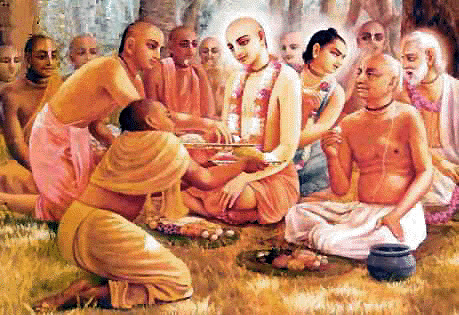
Srila Kavi Karnapura Goswami is remembered less for the pastimes he took part in and more for the words he left behind. By Gaudiya Vaishnava standards, that means a great deal. He was born Paramananda Sena, the youngest son of Shivananda Sena. He was still an infant when Sri Chaitanya Mahaprabhu Himself blessed him at Jagannatha Puri. He was still a child when he composed a Sanskrit verse on the spot that amazed the Lord's most learned associates. He grew up to write several works that the whole Gaudiya Vaishnava tradition still depends on for basic facts about its own history. The most important is Sri Chaitanya-chandrodaya-nataka, a full Sanskrit drama of Mahaprabhu's life. Krishnadasa Kaviraja Goswami quotes it directly in Sri Chaitanya-charitamrita itself. Another is Gaura-ganoddesha-dipika. The pages on Ramananda Raya and Jagadananda Pandit already quote this book to explain who Mahaprabhu's associates really were in Krishna's own Vrindavana pastimes. Madhvacharya's page cites it for a different reason. It uses the book's guru-lineage verse, which traces Mahaprabhu's own spiritual line back through the Madhva sampradaya. The short version of this story appears in His Son, Kavi-karnapura. The full account follows here.
| Detail | Description |
|---|---|
| Birth name | Paramananda Sena, also written Paramananda dasa; nicknamed Puri dasa by Sri Chaitanya Mahaprabhu |
| Father | Shivananda Sena, the householder devotee who organized and funded the annual Bengal-to-Puri pilgrimage |
| Birth | Traditionally dated 1524 or 1527; even the exact place is not fully settled among the available sources |
| Title | Kavi-karnapura, "one whose poetry pours nectar into the ear" (earned after he recited an original Sanskrit verse at age seven) |
| Formal guru | Shrinatha Chakravarti (Shrinatha Pandita), the family priest and a spiritual descendant of Advaita Acharya's line, though he had already received Krishna's name informally from Mahaprabhu as a small child |
| Major works | Sri Chaitanya-chandrodaya-nataka, Gaura-ganoddesha-dipika, Ananda-vrindavana-champu, Alankara-kaustubha, and more |
| Last securely dated work | 1576; no disappearance date survives in any available source |
Chapter 1
Childhood And Mahaprabhu's Blessing
What Sri Chaitanya-charitamrita actually says about the infant blessing and the seven-year-old's verse, verse by verse
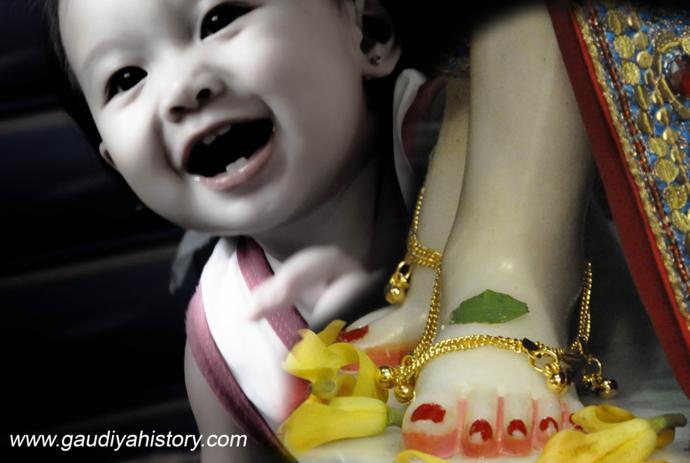
Shivananda Sena's own story already gives the short version of his youngest son's tale: a name chosen in advance, a toe placed in an infant's mouth, a verse recited at age seven. This page follows Sri Chaitanya-charitamrita's own account of those events in full, verse by verse. It also shows carefully which details come directly from Krishnadasa Kaviraja Goswami's text and which come from later retellings.
| Detail | Description |
|---|---|
| Birth name | Paramananda dasa (also written Paramananda Sena) |
| Nickname from Mahaprabhu | Puri dasa |
| Exact primary source | Sri Chaitanya-charitamrita, Antya-lila, Chapter 12, verses 44-51 (naming and blessing) and Chapter 16, verses 68-76 (the verse and title) |
| Where the birth actually happened | At Shivananda Sena's home, most likely near Kumarahatta in Bengal, not at Jagannatha Puri, despite some short summaries |
| Age at the famous verse | Seven, "with no education," per Chaitanya-charitamrita 16.75 |
A Name Chosen Before The Child Existed #
Sri Chaitanya-charitamrita's account of this story begins with a promise, not with a birth. On an earlier visit, Mahaprabhu had told Shivananda Sena, "When this son is born, give him the name Puri dasa" (Antya-lila 12.46-47). The next verse, 12.48, says: "The son was in the womb of Shivananda's wife, and when Shivananda returned home the son was born." Read plainly, this places the birth at the family's own home after Shivananda returned from Puri, not at Jagannatha Puri itself. That home was almost certainly in Kumarahatta in Bengal, the village named elsewhere as Shivananda Sena's real native place. This is a small correction, but it should be made carefully, because more than one short summary of this story says that the boy was born at Puri during the pilgrimage. Chaitanya-charitamrita's own text does not actually say that.
Named By The Lord's Own Order #
The next verse settles the name itself: "The child was named Paramananda dasa in accordance with the Lord's order, and the Lord jokingly called him Puri dasa" (Antya 12.49). So the boy had two names from the very start. One was a formal name, which his father gave him by Mahaprabhu's own instruction. The other was a playful pet name from the Lord Himself. This pet name stayed with him, and it was used again later, in Antya-lila Chapter 16, when Mahaprabhu addresses the seven-year-old boy directly as "Puri dasa."
The Toe In The Infant's Mouth #
Next comes the most quoted detail in this whole story. It should be stated exactly, because popular versions sometimes add to it: "When Shivananda Sena introduced the child to Sri Chaitanya Mahaprabhu, the Lord put His toe in the child's mouth" (Antya 12.50). That is the entire verse. There is no elaborate scene and no dialogue, only this one surprising act of loving closeness. Krishnadasa Kaviraja Goswami does not record such an act for any other child anywhere else in his very long biography of Mahaprabhu. The very next line explains what the act meant for the whole family: "No one can cross over the ocean of Shivananda Sena's good fortune, for the Lord considered Shivananda's whole family His own" (Antya 12.51). Later Vaishnava writers connect this act directly to the boy's later gift for poetry. These writers include the compilers of the traditional biographical literature used by Gaudiya History and Back to Godhead. They treat the toe placed in his infant mouth as the literal seed of everything he would go on to write. This explanation comes from tradition. Chaitanya-charitamrita does not state it outright, and we report it here as tradition.
A Boy Who Would Not Chant Aloud #
Some years later, the boy was old enough to be brought before Mahaprabhu on his own, not carried. He then became the subject of a second, very different episode, recorded in Antya-lila, Chapter 16. Sri Chaitanya-charitamrita says Shivananda Sena "tried with much endeavor to get his boy to speak Krishna's holy name," and the boy simply would not. Mahaprabhu Himself remarked on it directly: "I have induced the whole world to take to the holy name of Krishna. I have induced even the trees and immovable plants to chant the holy name... But I could not induce this boy to chant the holy name of Krishna." Svarupa Damodara Goswami, who was standing nearby, gave the explanation. The boy had already been initiated and given the mantra. A disciple does not repeat his own guru-given mantra aloud in front of others. Following this rule, the boy "chants the mantra within his mind but does not say it aloud." It is a small moment, but it tells us something important. It shows that, even before the boy had spoken a single verse of his own, something unusual was already at work in him.
A Verse At Seven Years Old #
The proof came directly afterward. "Another day," the text says, Mahaprabhu simply asked him to recite, "Recite, My dear Puri dasa," and the boy, without any preparation, composed and spoke aloud an original Sanskrit verse: "Lord Sri Krishna is just like a bluish lotus flower for the ears; He is ointment for the eyes, a necklace of indranila gems for the chest, and universal ornaments for the gopi damsels of Vrindavana. Let that Lord Sri Hari, Krishna, be glorified." Chaitanya-charitamrita stresses how extraordinary this was: "Although the boy was only seven years old and still had no education, he composed such a nice verse. Everyone was struck with wonder" (Antya 16.75). Krishnadasa Kaviraja Goswami then closes the episode with his own reflection. He gives the credit entirely to "the glory of Sri Chaitanya Mahaprabhu's causeless mercy, which even the demigods, headed by Lord Brahma, cannot estimate" (Antya 16.76).
Where The Name "Kavi-Karnapura" Actually Comes From #
Here we must be careful to separate two things. Sri Chaitanya-charitamrita's own surviving verses end this scene at "everyone was struck with wonder." In the text as it survives on vedabase.io, they do not show Svarupa Damodara Goswami giving the title "Kavi-karnapura" on the spot. A widely repeated detail says that Svarupa Damodara remarked the verse had "satiated the ears of the devotees." So he named the boy Karnapura, from karna, "ears," plus pura, "filling" or "satiation." This specific detail comes from later traditional accounts. It is repeated in the same way in Gaudiya History's biography, in the Back to Godhead article on his life, and in a secondary collection of Bhakti-ratnakara material. Several separate Gaudiya sources agree on it. So we report it here as the accepted traditional explanation for the name, not as an invented detail. But we also say clearly that it comes from that later part of the tradition, not directly from Krishnadasa Kaviraja Goswami's own verses. What Chaitanya-charitamrita itself makes certain is that the boy had exactly this kind of poetic gift, and that Mahaprabhu's own closest associates saw it and marveled at it. The rest of this story tells what he went on to build with that gift, starting with Sri Chaitanya-chandrodaya-nataka.
Scriptural evidence for this chapter (9)
Quoted in the text above:
- CC Antya 12.48 Sri Chaitanya-charitamrita
- CC Antya 12.49 Sri Chaitanya-charitamrita
- CC Antya 12.50 Sri Chaitanya-charitamrita
- CC Antya 12.51 Sri Chaitanya-charitamrita
- CC Antya 16.74 Sri Chaitanya-charitamrita
- CC Antya 16.75 Sri Chaitanya-charitamrita
Further verses:
choṭa-putre dekhi' prabhu nāma puchilā 'paramānanda-dāsa'-nāma sena jānāilā
Lord Chaitanya asked the youngest son's name, and Shivananda Sena informed the Lord that his name was Paramananda dasa.
The moment Shivananda Sena first tells Mahaprabhu the child's name, setting up the naming and blessing that follow.
prabhu kahe, — "āmi nāma jagate laoyāiluṅ sthāvare paryanta kṛṣṇa-nāma kahāiluṅ ihāre nāriluṅ kṛṣṇa-nāma kahāite!"
Sri Chaitanya Mahaprabhu said, "I have induced the whole world to take to the holy name of Krishna. I have induced even the trees and immovable plants to chant the holy name. But I could not induce this boy to chant the holy name of Krishna."
Mahaprabhu's own astonished remark, which sets up Svarupa Damodara Goswami's explanation of the boy's silent chanting.
"tumi kṛṣṇa-nāma-mantra kailā upadeśe mantra pāñā kā'ra āge nā kare prakāśe mane mane jape, mukhe nā kare ākhyāna"
"My Lord," Svarupa Damodara said, "You have given him initiation into the name of Krishna, but after receiving the mantra he will not express it in front of everyone. This boy chants the mantra within his mind but does not say it aloud."
Svarupa Damodara Goswami's explanation, showing the boy was already an initiated disciple following the rule against repeating one's own mantra aloud.
Chapter 2
Writing Sri Chaitanya-Chandrodaya-Nataka
A ten-act Sanskrit drama of Mahaprabhu's life that Sri Chaitanya-charitamrita itself quotes as a source
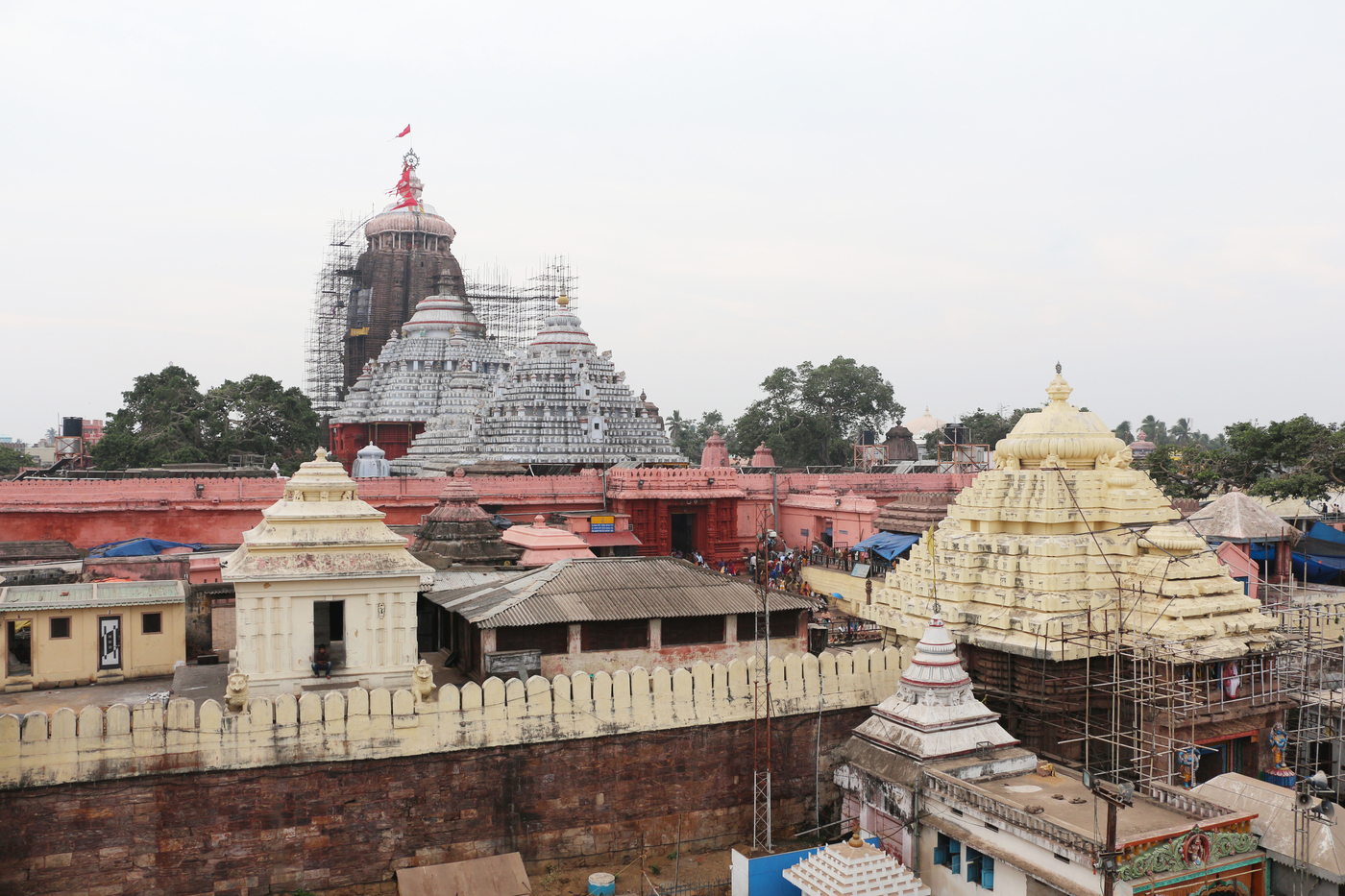
A nataka, in Sanskrit literary theory, is a specific and demanding dramatic form. It is a full play in several acts, built on strict rules about plot, character and mood, and meant to be staged, not simply read. Sri Chaitanya-chandrodaya-nataka, "The Rising Moon of Sri Chaitanya," is Kavi-karnapura's attempt at exactly that kind of play. It is a ten-act Sanskrit drama about the entire life of Sri Chaitanya Mahaprabhu, from His appearance through His years of preaching and renunciation. It is his best-known single work. Unusually for a devotional drama of this period, it is also a work that Sri Chaitanya-charitamrita itself treats as a source worth quoting.
| Detail | Description |
|---|---|
| Full title | Sri Chaitanya-chandrodaya-nataka, "The Rising of the Moon of Sri Chaitanya" |
| Form | Sanskrit nataka (formal drama) in ten acts |
| Modeled on | Prabodha-chandrodaya of Krishna Mishra, an earlier Sanskrit allegorical drama, both in name and in plot structure |
| Content | Mahaprabhu's birth, household life, sannyasa, travels, meetings with His associates, and His teachings |
| Quoted inside | Sri Chaitanya-charitamrita itself, at Antya 6.262-265, Madhya 19.118-119, Madhya 24.347, Madhya 3.28, Madhya 6.142 and Madhya 6.254 |
Modeled On An Older Sanskrit Classic #
Kavi-karnapura did not invent the form he was writing in. Sri Chaitanya-chandrodaya-nataka takes both its title and its basic plot structure from the eleventh-century Prabodha-chandrodaya ("The Rising of the Moon of Awakening") by Krishna Mishra. This is a well-known Sanskrit allegorical drama. In it, abstract qualities like Discrimination and Delusion appear as characters on stage. In Kavi-karnapura's version, those qualities acting as characters are replaced by Mahaprabhu's own real life and associates. But he keeps the same formal structure of a Sanskrit drama. This was a deliberate literary choice. It placed his devotional subject inside one of the most respected existing kinds of Sanskrit literature, instead of inventing a looser or more informal form for it. Later writers on literary history state that the play was first staged at Jagannatha Puri's Chandana-yatra, the sandalwood festival, in the court of the Gajapati king Prataparudra. We could not confirm this detail independently from an original source. So it is reported here as a traditional claim, not an established fact.
Ten Acts Covering A Whole Life #
The play's ten acts follow the whole of Mahaprabhu's life, as the Gaudiya tradition understood it by Kavi-karnapura's own generation. They cover His birth and childhood at Nabadwip, His years as a brilliant young scholar and householder, His sannyasa and departure from Bengal, and His travels through South India. They also show His years of intense devotional practice and teaching at Jagannatha Puri, and His relationships with the devotees who gathered around Him there. These devotees include Ramananda Raya, Svarupa Damodara Goswami, and eventually Rupa Goswami and Sanatana Goswami. The play shows Rupa and Sanatana's own meeting with Mahaprabhu at length. Kavi-karnapura was himself a child during at least some of the later events he describes. He grew up inside the very household, his father's, that hosted many of these devotees when they passed through Bengal. So he could write about these events from close up, in a way that few other Chaitanya-lila writers of the period could claim.
The Charitamrita's Own Debt To This Play #
The most striking fact about Sri Chaitanya-chandrodaya-nataka is how directly Krishnadasa Kaviraja Goswami uses it inside Sri Chaitanya-charitamrita itself. He does not only describe it. He quotes it as a source. When the text tells of an incident involving Raghunatha Dasa Goswami, it says plainly: "Describing this incident, the great poet Sri Kavi-karnapura has written extensively about the glorious activities of Raghunatha dasa in his Sri Chaitanya-chandrodaya-nataka" (Antya 6.262). It then gives two full verses from the play in Kavi-karnapura's own Sanskrit (Antya 6.263-264). After that it notes, "In these verses, the great poet Kavi-karnapura gives the same information that Shivananda Sena conveyed to the messenger from Raghunatha dasa's father" (Antya 6.265). In another place, Chaitanya-charitamrita describes Rupa and Sanatana Goswami's own meeting with Mahaprabhu. There it states outright that "in his book Chaitanya-chandrodaya, Kavi-karnapura, the son of Shivananda Sena, has elaborately described the meeting between Sri Rupa Gosvami and Sri Chaitanya Mahaprabhu" (Madhya 19.118). The following verse is drawn directly from "Act Nine (28-30) of the Chaitanya-chandrodaya," in Srila Prabhupada's own words in his purport there. The same pattern repeats in other places. At Madhya 24.347, Krishnadasa Kaviraja Goswami credits "the authorized poet Kavi-karnapura" with recording how Mahaprabhu blessed Sanatana Goswami. Madhya 3.28 quotes the play's Act 5.13 in praise of the Yamuna river. Madhya 6.142 and 6.254 quote verses of philosophy and prayer from the play's Act 6.
A Devotee's Poetry Doing A Historian's Work #
This is very unusual. Sri Chaitanya-charitamrita is, among other things, an extremely careful work of religious history. Krishnadasa Kaviraja Goswami is generally cautious about which sources he treats as authoritative. Yet he turns to Sri Chaitanya-chandrodaya-nataka again and again. He names it, gives the act and verse number, and even quotes its Sanskrit directly instead of only retelling it in his own words. This says a great deal about how the tradition regarded Kavi-karnapura's reliability, even in his own generation. He was not simply composing devotional poetry about Mahaprabhu from a respectful distance. The very author who wrote the tradition's central biography understood that Kavi-karnapura had preserved real information, worth building into that biography. That same reputation for careful writing, fit to be used as a source, carried over into his other major work. It is the one quoted most often elsewhere in this history: see The Gaura-Ganoddesha-Dipika.
Scriptural evidence for this chapter (7)
Quoted in the text above:
- CC Antya 6.262 Sri Chaitanya-charitamrita
- CC Antya 6.265 Sri Chaitanya-charitamrita
- CC Madhya 19.118 Sri Chaitanya-charitamrita
Further verses:
krame lupta-prāyaṁ gata-gaṇanam idaṁ vṛndaraṇyeṣu rāddhaṁ kṛṣṇasyāślādi-carita-madhurima-vyañjakaṁ divya-vṛttam prakhyātuṁ tac ca bhūyaḥ sphuṭam iha kṛpayā rūpa-sanātanau tvaṁ vidhāya svollāsa-śrī-kṛpābdhiṁ vyatanuta karuṇaḥ śrī-caitanya-candra
"In the course of time, the transcendental news of Krishna's pastimes in Vrindavana was almost lost. To enunciate explicitly those transcendental pastimes, Sri Chaitanya Mahaprabhu empowered Srila Rupa Gosvami and Sanatana Gosvami with the nectar of His mercy to carry out this work in Vrindavana."
From the purport: Purport excerpt: "This verse and the following two verses are from Act Nine (38, 29, 30) of the Chaitanya-chandrodaya, by Sri Kavi-karnapura."
A verse Srila Prabhupada's own purport identifies as drawn from Act Nine of Kavi-karnapura's Chaitanya-chandrodaya-nataka, quoted directly inside Sri Chaitanya-charitamrita.
nija-granthe karṇapūra vistāra kariyā sanātane prabhura prasāda rākhiyāche likhiyā
The authorized poet Kavi-karnapura has written a book named Chaitanya-chandrodaya-nataka. This book tells how Sri Chaitanya Mahaprabhu blessed Sanatana Gosvami with His specific mercy.
Krishnadasa Kaviraja Goswami again crediting Kavi-karnapura's drama as the record of Mahaprabhu's blessing on Sanatana Goswami.
(quoted from Chaitanya-chandrodaya-nataka 5.13, per Srila Prabhupada's purport)
"O river Yamuna, you are the blissful spiritual water that gives love to the son of Nanda Maharaja... O daughter of the sun-god, kindly purify us by your pious activities."
From the purport: Purport excerpt: "This verse is recorded in the Chaitanya-chandrodaya-nataka (5.13), by Kavi-karnapura."
A verse in praise of the Yamuna river, quoted inside Sri Chaitanya-charitamrita's account of Mahaprabhu's South Indian travels and traced by Prabhupada's purport to Act 5 of the play.
(quoted from Chaitanya-chandrodaya-nataka 6.67, per Srila Prabhupada's purport)
"Whatever Vedic mantras describe the Absolute Truth impersonally only prove in the end that the Absolute Truth is a person... he can actually understand the Absolute Truth."
From the purport: Purport excerpt: "This is a quotation from Sri Chaitanya-chandrodaya-nataka (6.67), by Kavi-karnapura."
A philosophical verse on the personal nature of the Absolute Truth, quoted inside Mahaprabhu's own debate with Sarvabhauma Bhattacharya and traced by Prabhupada's purport to Kavi-karnapura's play.
Chapter 3
The Gaura-Ganoddesha-Dipika
What Kavi-karnapura's most-quoted book actually is, and where this website already uses it
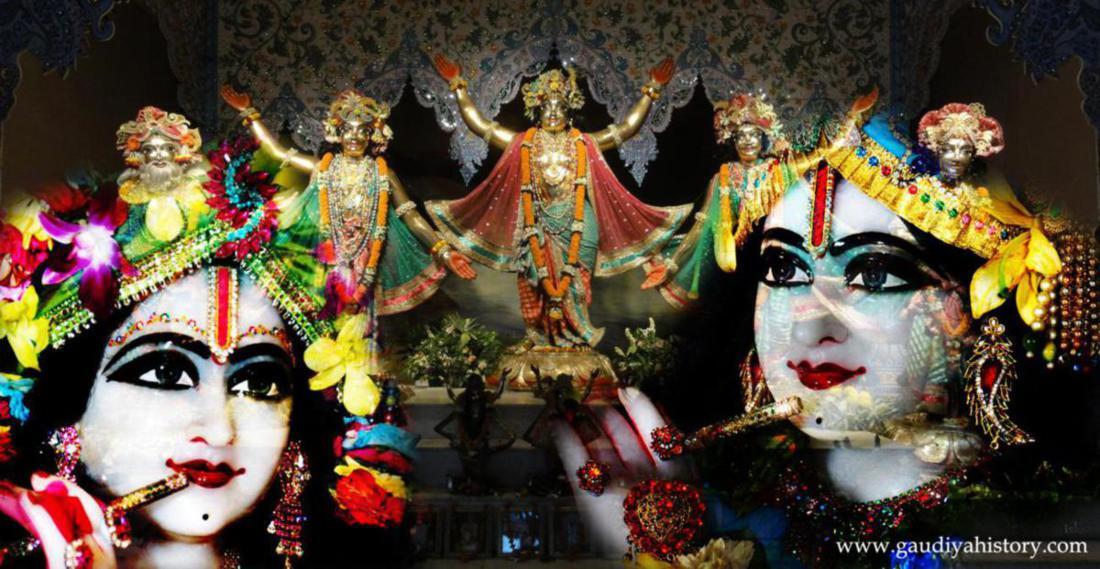
Of everything Kavi-karnapura wrote, no single work gets cited more often than Gaura-ganoddesha-dipika. Most readers who meet it here have never seen a page about the book itself. They have seen only its conclusions, used in someone else's biography. This page fills that gap. It explains what the book actually is, who wrote it and when, how it works, and where else its quiet but essential work already shows up.
| Detail | Description |
|---|---|
| Title meaning | Gaura-gana-uddesha-dipika, "the lamp that reveals the associates of Gaura [Sri Chaitanya Mahaprabhu]" |
| Completed | By 1576, per its own internal evidence |
| Built on the model of | Sri Rupa Gosvami's Radha-Krishna-ganoddesha-dipika, which does the same work for Krishna's own Vraja associates but does not extend to Chaitanya-lila |
| Core claim | Sri Chaitanya Mahaprabhu's associates were not new souls but the same eternal associates of Krishna in Vrindavana, appearing again in Gaura-lila |
| Already cited at | Ramananda Raya, Jagadananda Pandit, and Madhvacharya (for the Brahma-Madhva-Gaudiya lineage claim) |
What The Book Actually Does #
Gaudiya Vaishnavism holds that Sri Chaitanya Mahaprabhu's own pastimes are, at the deepest level, the same eternal pastimes Krishna enjoys in Vrindavana: Krishna Himself appearing in the mood of Radharani, tasting His own sweetness. If that is true, the tradition reasons, then the devotees who surrounded Mahaprabhu in Bengal and Orissa were not meeting Him for the first time either. They were the very same eternal residents of Vrindavana. They had appeared again to take part in this second version of the same pastimes, the Gaura-lila. In Gaura-ganoddesha-dipika, Kavi-karnapura tries to work out this idea carefully and in order, name by name. For each of Mahaprabhu's associates, he states which of Krishna's eternal companions in Vrindavana that person actually is. The book covers the members of the Pancha-tattva (Sri Chaitanya Mahaprabhu, Nityananda Prabhu, Advaita Acharya, Srivasa Thakura and Gadadhara Pandit). Then it goes on to dozens of other devotees, down to Kavi-karnapura's own family. In verse 176, in the numbering followed here, the text states that his father Shivananda Sena was previously the gopi messenger Vira. It also identifies his mother as Bindumati.
Built On Rupa Goswami's Own Model #
Kavi-karnapura was not working from nothing. Rupa Goswami had already written Radha-Krishna-ganoddesha-dipika, an important early work. It names the eternal Vrindavana identities of Krishna's own closest associates: the gopis, the cowherd boys, and Radharani's own dear friends. But that earlier work does not do the same for Chaitanya-lila. The reason given is that Rupa Goswami's life was largely spent before this parallel between the two lilas had become a settled, organized body of devotional literature, as it later did. Kavi-karnapura took Rupa Goswami's method and applied it to the newer, second half of the same theological picture, that is, to Mahaprabhu's pastimes. Verse by verse, in a single reference work, he built the parallel the tradition needed between Krishna's Vrindavana associates and Mahaprabhu's own circle.
Examples Already Relied On #
Two other pages in this history depend directly on Gaura-ganoddesha-dipika for their central claims. They are named here so that this debt is clear. The page on Ramananda Raya's identity in Krishna-lila takes its central claim directly from verses 120 to 124 of Gaura-ganoddesha-dipika. This claim is unusual and has more than one layer. It says that Ramananda Raya combines two separate figures who were both named Arjuna: a close cowherd friend of Krishna, and the Pandava of the Mahabharata. Following the same text, that page also reports that the tradition itself is divided on whether he is also identified with the gopi Lalita or with Vishakha. The page on Jagadananda Pandit's identity in Krishna-lila likewise draws on the book's fifty-first verse. This verse states strongly that "devotees make no inner distinction between Satyabhama and Jagadananda Pandit." That page notes that this identification is unusually strong, because Sri Chaitanya-charitamrita, in its own narrative, says the same thing separately. So Kavi-karnapura's claim is supported by two different texts, which is rare.
Also A Source For Lineage Claims #
Gaura-ganoddesha-dipika's influence is not limited to identifying individual devotees. The page on Madhvacharya, Dvaita Vedanta and Achintya-Bhedabheda names Gaura-ganoddesha-dipika, dated 1576, as one of the two earliest known sources for the traditional Gaudiya name "Brahma-Madhva-Gaudiya sampradaya," which traces its guru-parampara back through Madhvacharya's own line. The other source is Baladeva Vidyabhusana's later Prameya-ratnavali. That same page reports that this exact chain of teachers is not found in the Madhva sampradaya's own surviving records. So it is a claim the Gaudiya tradition makes about itself, not one that both traditions agree on. As far as the sources we checked show, Kavi-karnapura's book stands near the very beginning of the written record of that claim.
How To Read A Book Like This Honestly #
This needs to be said plainly, as part of this history's practice of checking sources carefully. Gaura-ganoddesha-dipika is a work of devotional theology, not modern historical scholarship. Within the Gaudiya tradition, its identifications are accepted as spiritual truths revealed through realization. They are not treated as claims that can be checked against outside evidence. On this page, and wherever else the book is used, we report what the text says. Where the tradition itself records a disagreement, as it does over Ramananda Raya's gopi identity, we report that disagreement instead of resolving it. But the book's importance is not in dispute. Kavi-karnapura completed it before he was sixty, and he wrote it in Bengal, not in Vrindavana itself. It became, and has remained, the single most-cited reference the Gaudiya Vaishnava tradition has on exactly this question. Its continuing use elsewhere in this history shows how directly that four-hundred-and-fifty-year-old book still shapes the way the tradition explains itself today.
Scriptural evidence for this chapter (3)
Quoted in the text above:
- verse 51 (as reported by this site's own Jagadananda Pandit page) Gaura-ganoddesha-dipika (Kavi Karnapura)
Further verses:
(Sanskrit not accessed directly for this page; reported via secondary translation)
"He who was previously known as the gopi Vira and who was the messenger (duti) of Radharani, has now become my father, Shivananda Sena."
Kavi-karnapura's own identification, in his own book, of his father Shivananda Sena's eternal identity in Krishna-lila, the verse was accessed only at second hand, via a devotee-compiled biographical page, and is reported accordingly.
priya-narma-sakha kascid arjunah pandavo 'rjunah milita samabhud ramananda-rayah prabhoh priyah
"There are two Arjunas in Krishna-lila: one is a priya-narma-sakha [confidential friend] in Vraja, the other is one of the Pandavas. These two combined to become Ramananda Raya, the dear associate of Mahaprabhu."
The book's unusually layered identification of Ramananda Raya, already cited on his own dedicated page on his identity in Krishna-lila.
Chapter 4
Other Literary Works
Ananda-vrindavana-champu, Alankara-kaustubha, and a careful look at a book he may not have written
Sri Chaitanya-chandrodaya-nataka and Gaura-ganoddesha-dipika are Kavi-karnapura's two best-known books, but they were not his only ones. He was clearly one of the most productive Sanskrit authors of the Gaudiya Vaishnava tradition. The rest of his writing also deserves a careful and honest look. It includes a champu-kavya on Krishna's own pastimes, a serious book on the theory of poetry, and a Bhagavatam commentary. There is also one more work, and scholars who study the old manuscripts now seriously dispute whether he wrote it.
| Detail | Description |
|---|---|
| Ananda-vrindavana-champu | A long prose-and-verse retelling of Krishna's Vrindavana pastimes, following Srimad-Bhagavatam |
| Alankara-kaustubha | A formal Sanskrit treatise on poetics (alankara-shastra) and rasa theory, in ten chapters called kiranas ("rays") |
| Bhagavatam commentary | An unnamed commentary on the Tenth Canto of Srimad-Bhagavatam |
| Disputed work | Sri Chaitanya-charitamrita-mahakavya (also called Chaitanya-charanamrita); modern scholars who study the manuscripts have challenged the claim that it is a genuine sixteenth-century work |
| Minor works reported in other books | Chaitanya-sahasra-nama, Arya-shataka, and a few others; each is named in only a single source, and we could not check it against other sources |
Ananda-Vrindavana-Champu: Krishna's Pastimes In A Mixed Form #
A champu-kavya is a special Sanskrit literary form. It is neither pure poetry nor pure prose, but a deliberate mixture of both, with verse passages set inside a flowing prose story. Ananda-vrindavana-champu is Kavi-karnapura's own work in this form. It is a long retelling of Krishna's Vrindavana pastimes that follows Srimad-Bhagavatam's own order fairly closely. It describes Krishna's play with the calves, His stealing of butter, His games with the cowherd boys, and finally His intimate pastimes with the gopis and with Srimati Radharani. All this is described with real literary skill, not simply retold. The book is also notable for what it leaves out on purpose. Later summaries of the work note that Kavi-karnapura skips over episodes such as the gopis' songs of separation, Krishna's killing of the demons Arishta and Keshi, Akrura's visit, and Krishna's eventual departure for Mathura. According to these summaries, he leaves them out because these episodes move the mood away from the soft, joyful madhurya-rasa. Keeping that mood is the whole purpose of the book. In other words, it is a Krishna-lila chosen with care, shaped by a clear literary and devotional understanding of mood. The same serious interest in the theory of rasa runs through his other major work that is not a story, Alankara-kaustubha.
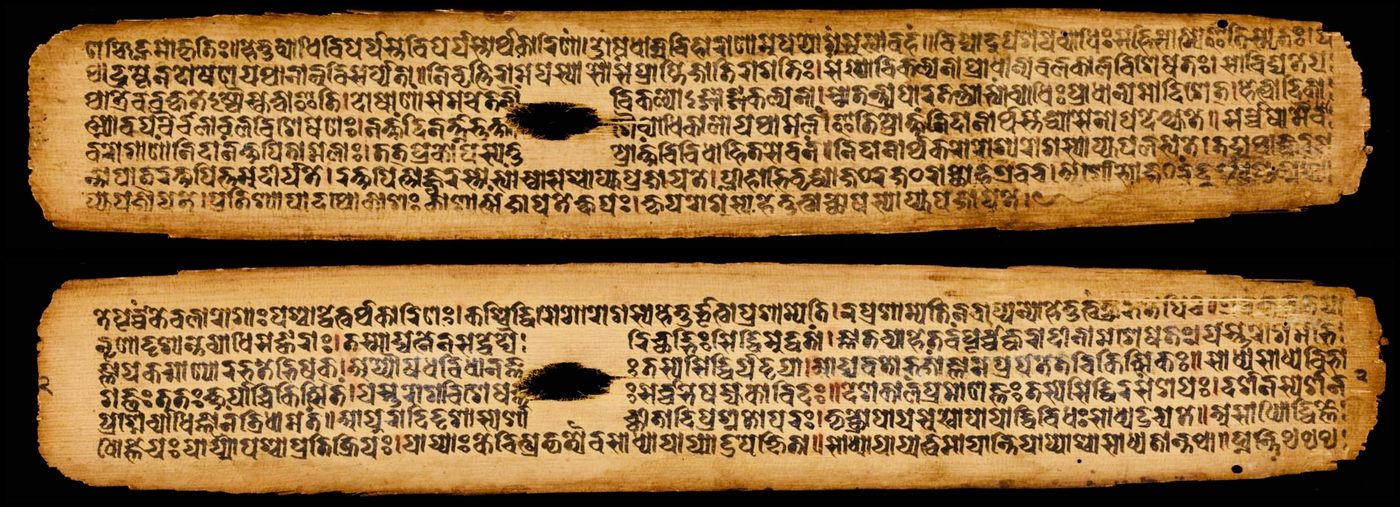
Alankara-Kaustubha: A Serious Work Of Sanskrit Poetics #
Where Ananda-vrindavana-champu tells a story, Alankara-kaustubha explains the rules for telling one well. Its title literally means "a Kaustubha-jewel for poetics," that is, for the art and theory of poetry. Alankara is the traditional Sanskrit term for the whole study of literary ornament and style. Kaustubha is the name of the famous jewel worn on the Lord's chest. This name was chosen because a jewel gives out light, and the book's ten chapters (kiranas, "rays") are meant to throw light on the ten traditional topics of Sanskrit poetics. Scholars who have studied the work note that Kavi-karnapura draws on earlier standard authorities in the field (Kavya-prakasha, Sahitya-darpana, Dhvanyaloka and Natya-shastra among them). He also takes up and develops the specifically devotional rasa theory laid out by Rupa Goswami in Ujjvala-nilamani and Bhakti-rasamrita-sindhu. In this way, Alankara-kaustubha brings the wider, secular Sanskrit tradition of literary theory into direct contact with Gaudiya Vaishnavism's own theology of devotional emotion. This was not a small task. One recent academic study of the book is Rembert Lutjeharms' 2018 study for Oxford University Press, discussed further on the Legacy page. It treats Alankara-kaustubha as a truly major contribution to Sanskrit literary theory in itself, not merely a devotional footnote to it.
A Commentary On The Tenth Canto #
Kavi-karnapura is also credited with a commentary on the Tenth Canto of Srimad-Bhagavatam. This canto contains Krishna's own life and pastimes, and devotional commentators have traditionally given this part of the Bhagavatam the most attention. Apart from the fact that the commentary existed, no detail that can be checked independently survives about what it says, or about how it relates to other well-known Bhagavatam commentaries of the period. We do not claim to know any more about it than that.
A Genuinely Disputed Work #
This work needs a longer and more careful discussion than the others. Several devotional sources credit Kavi-karnapura with a work usually called Sri Chaitanya-charitamrita-mahakavya (sometimes rendered Chaitanya-charanamrita). It is a Sanskrit epic poem on Mahaprabhu's life. Tradition says it was completed when its author was only about sixteen. A tradition found in the manuscript's closing note (colophon) claims that Rupa Goswami himself copied the manuscript by hand around 1545. Modern scholars who study the manuscripts have directly challenged the claim that Kavi-karnapura wrote it. In a 1985 study written in Bengali, the scholar Tarapada Mukherjee argued that the work is very unlikely to be a genuine sixteenth-century composition at all. He gave three reasons. First, Krishnadasa Kaviraja Goswami's own Sri Chaitanya-charitamrita was written around 1612. It clearly names and quotes Kavi-karnapura's other works, yet it never once mentions this one. Second, almost all surviving manuscripts date only from the eighteenth century onward, with just one possible earlier copy. Third, some verses attributed to a devotee named Vishnudasa were apparently added to show that early first-generation devotees accepted the work as genuine. These verses look designed to make the work seem believable, not to record real history. Mukherjee's own conclusion places the actual writing of the work closer to the 1660s or 1670s. That is more than a century after Kavi-karnapura's lifetime. The traditional view is reported here because most devotional summaries of his life still repeat it. But Mukherjee's challenge is given equal weight, exactly as the sources describe it. The manuscript evidence has not actually settled the question, so we do not pick a side.
A Few Titles Reported More Thinly #
A few more titles appear in some later lists of Kavi-karnapura's works. Among them are Chaitanya-sahasra-nama (a thousand names of Chaitanya) and Arya-shataka (a hundred verses in the arya meter). They can generally be traced to a single source that was consulted, not to several independent ones. They are noted here so that the list is complete. But they are not treated with the same confidence as the works discussed above. Throughout this history, we try to keep what several sources agree on separate from what rests on a single account.
Chapter 5
Legacy In The Gaudiya Tradition
His diksha from Shrinatha Pandita, a death the tradition never recorded, and a body of work still in active use
Most of the devotees who surrounded Sri Chaitanya Mahaprabhu are remembered for what they did: a service performed, a pastime witnessed, a place established. Kavi-karnapura is remembered almost entirely for what he wrote. Four and a half centuries later, his writings are still actively used inside the tradition, not simply honored as history.
| Detail | Description |
|---|---|
| Formal guru | Shrinatha Chakravarti (Shrinatha Pandita), family priest and a spiritual descendant of Advaita Acharya's line |
| Last securely dated work | 1576 (Gaura-ganoddesha-dipika) |
| Disappearance | Not recorded in the Gaudiya tradition's own biographical sources. Wikipedia, citing Aloka Lahiri's 1993 study Chaitanya Movement in Eastern India, says that he spent his final days at Vrindavana, but no other source we checked says this |
| Modern academic recognition | Rembert Lutjeharms, A Vaisnava Poet in Early Modern Bengal: Kavikarnapura's Splendour of Speech (Oxford University Press, 2018) |
| Continuing use | Directly quoted, by name, inside Sri Chaitanya-charitamrita itself, and still cited elsewhere in this history's pages about other acharyas |
His Diksha from Shrinatha Pandita #
As a small child, Kavi-karnapura had already received Krishna's holy name directly from Mahaprabhu Himself. Even so, he still went on to take diksha. He took it from Shrinatha Chakravarti, also called Shrinatha Pandita, the same family priest connected to Shivananda Sena's household. By most accounts, Shrinatha Chakravarti was a spiritual descendant of Advaita Acharya's own line. This shows how seriously the family took formal religious practice. Even the family closest to Mahaprabhu never treated His personal blessing as a substitute for the tradition's regular practices. The two went together without any conflict.
A Death The Tradition Simply Did Not Record #
Like his father, Kavi-karnapura has no recorded disappearance date. But unlike his father, he at least leaves a rough outer limit. Details within Gaura-ganoddesha-dipika itself date it to 1576. This means he was still actively writing well into the second half of the sixteenth century, decades after Mahaprabhu's disappearance in 1534. After that, the Gaudiya tradition's own devotional sources (Gaudiya History, Back to Godhead, and the accounts based on Bhakti-ratnakara that both of them draw on) simply stop describing his life. They give no account of its end. Wikipedia's article on him, by contrast, states that he "spent his last days at Vrindavan," citing a single academic study, Aloka Lahiri's 1993 book Chaitanya Movement in Eastern India. This detail does not fit well with everything else known about him. Every other source consulted keeps his working life in Bengal, near his father's home, and at Jagannatha Puri. None of them mentions any move to Vrindavana of the kind Narottama Dasa Thakura or Shrinivasa Acharya made. The claim is reported here because it comes from a specific, named academic source. But it is clearly marked as not confirmed by the tradition's own biographies, and it should not be taken as settled.
Recognized By Modern Scholarship, Not Only By Devotion #
Kavi-karnapura's reputation has not stayed limited to devotional circles. In 2018, Oxford University Press published Rembert Lutjeharms' full-length academic study, A Vaisnava Poet in Early Modern Bengal: Kavikarnapura's Splendour of Speech. It treats him as a major figure in early modern Bengali and Sanskrit literary history on his own merits. This shows that his importance is recognized far beyond the Gaudiya Vaishnava community that first preserved his memory. Such attention from outside scholars is unusual for a Sanskrit author of the devotional era. It stands beside the more traditional, purely devotional view found in Bhakti-ratnakara, which simply calls him a man who "became a writer of books in which he revealed the Lord's blessings." The scholars and the devotional book use very different words, but in their own ways they reach the same basic judgment.
Still Working Inside The Tradition's Own Central Text #
The clearest single measure of Kavi-karnapura's legacy is not a monument or a date. It is a fact already described at length elsewhere in this history. Sri Chaitanya-charitamrita itself, the tradition's own central biography of Mahaprabhu, quotes his Sri Chaitanya-chandrodaya-nataka again and again, by name and by verse (see Writing Sri Chaitanya-Chandrodaya-Nataka). His Gaura-ganoddesha-dipika still supplies the identifications used for Ramananda Raya and Jagadananda Pandit. It is also drawn on for the Gaudiya tradition's own account of its connection to Madhvacharya's line (see The Gaura-Ganoddesha-Dipika). After four hundred and fifty years, the tradition that remembers him still uses his books for its actual research work. This is true of very few devotees anywhere in Sri Chaitanya Mahaprabhu's circle. As a boy, he would not chant a single word aloud in front of anyone. Yet he grew up to leave words that the entire Gaudiya Vaishnava tradition still turns to whenever it needs to know exactly what happened, and exactly who someone really was.
Closing
A Poet Born Into Mahaprabhu's Own Household #
Paramananda Sena was the youngest of three brothers. The two elder brothers were Chaitanya dasa and Ramadasa. They were born into a Bengali Vaidya family. The head of the family, Shivananda Sena, had become one of Sri Chaitanya Mahaprabhu's most trusted householder servants. Sri Chaitanya-charitamrita's account of the boy's birth should be read carefully, because popular retellings do not always get it right. The text says plainly that the child "was in the womb of Shivananda's wife, and when Shivananda returned home the son was born." This means the birth happened after Shivananda came back from Jagannatha Puri. It most likely took place at the family's home near Kumarahatta in Bengal. It did not take place at Puri itself, even though a few shorter summaries suggest it did. Sources also disagree on the year. Wikipedia gives 1524, in Nadia district. The Gaudiya History website gives 1527, in a village it calls Kaichana-palli. Sri Chaitanya-charitamrita itself confirms neither claim. It records the story but not a date. So we simply note the disagreement here instead of forcing an answer.
A Poet The Tradition Still Reads For Facts, Not Only Feeling #
Most of the poets from Sri Chaitanya Mahaprabhu's circle are remembered mainly for the devotional mood of their writing. Kavi-karnapura is remembered for that too. His verses on Krishna's beauty are still quoted for their sweetness. But he is unusual, because he is also treated as a working authority on history and theology. He is quoted inside Sri Chaitanya-charitamrita's own story. He is still consulted today whenever someone needs to know exactly who a person in Mahaprabhu's circle was, or exactly what happened in a given year. His father's page remembers him mainly as a small part of that household's good fortune. But a closer study shows that he is one of the pillars on which the whole tradition's memory of its own history rests.
- Sri Chaitanya-caritamrita, Antya-lila, Chapter 12 (vedabase.io)
- Sri Chaitanya-caritamrita, Antya-lila, Chapter 16 (vedabase.io)
- Sri Chaitanya-caritamrita, Antya-lila 6.262-265 (vedabase.io)
- Sri Chaitanya-caritamrita, Madhya-lila 19.118-119 (vedabase.io)
- Kavi Karnapura Goswami - Biography, Gaudiya History
- Puri Das, Gaudiya History
- Kavi Karnapura (Sri Puri Das), Shyam Das Baba, excerpting Sri Chaitanya: His Life & Associates by Srila Bhakti Ballabh Tirtha Maharaj
- Srila Kavi-karnapura's Works and Life, Back to Godhead
- This site's own page on Shivananda Sena, His Son Kavi-Karnapura
