Sri Purushottama Tirtha
The Matha Head Who Vanished Into a Cave at Abburu
The complete life, on one page: The main biography and every pastime page, in order, in one place
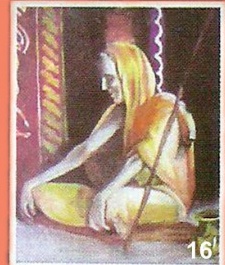
Introduction
Sri Purushottama Tirtha is one of the better recorded names in this section of six names in the Gaudiya guru-parampara list. But the records come almost entirely from the Dvaita Vedanta side, not the Gaudiya side. He was a real head of the succession of monks founded by Madhvacharya's disciples. This line later became known as the Vyasaraja Matha. The matha he headed still keeps his memory alive today. It does this not in Bengal or at Vrindavana, but in a cave near Channapatna in Karnataka. That is over a thousand kilometers from where Sri Chaitanya Mahaprabhu's own pastimes took place.
| Detail | Description |
|---|---|
| Pre-sannyasa name | Srinivasacharya (per the Vyasaraja Matha's own succession record) |
| Guru | Jayadhvaja Tirtha, called Jayadharma in the Gaudiya parampara list |
| Ordained | Tenth pontiff of the succession later called the Vyasaraja Matha, at Puri Jagannatha Kshetra |
| Seat | Channapatna / Abburu, on the Kanva river, Karnataka |
| Disciple and successor | Brahmanya Tirtha (born Narasimha, ordained under that name) |
| Tradition holds | He did not die but disappeared into tapasya at Purushottama Guha, a cave near Abburu |
| Local names | Madi Swami, Huli Swami ("Tiger Swami"), Guhe Swami ("Cave Swami") |
Chapter 1
Ordained at Puri, Vanished at Abburu
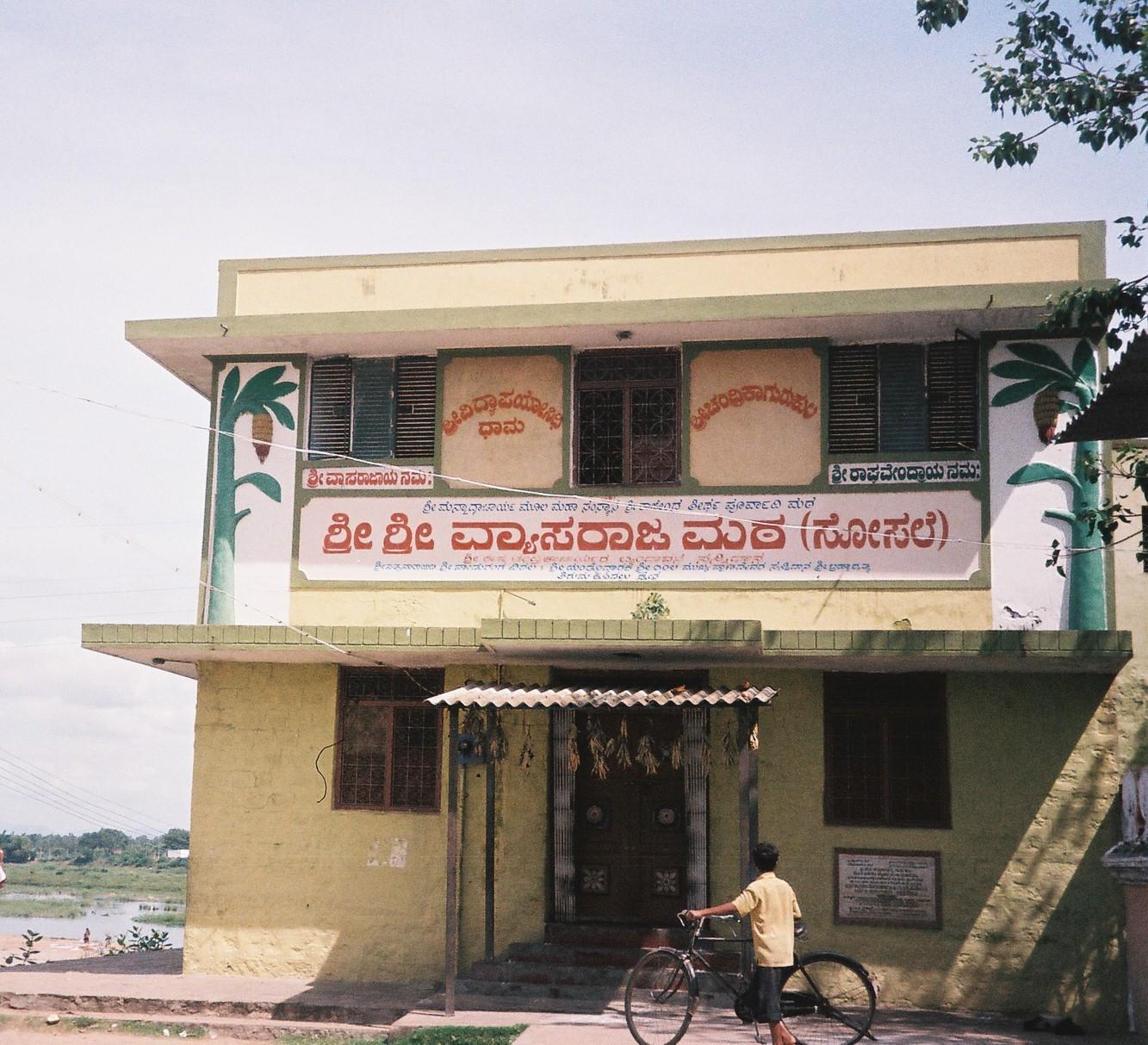
Everything known about Purushottama Tirtha's life comes from the Vyasaraja Matha's own tradition, not from any Gaudiya source. So this account stays close to what that tradition itself records, including the places where its own dates do not quite add up.
A Name Chosen At Puri #
The Vyasaraja Matha remembers that before taking sannyasa, Purushottama Tirtha was called Srinivasacharya. His guru was Jayadhvaja Tirtha, the ninth head of the succession coming down from Rajendra Tirtha. Jayadhvaja Tirtha is the same person the Gaudiya guru-parampara list calls Jayadharma. Tradition places the ordination itself at Puri, in the Jagannatha Kshetra, and it gives a specific reason for the name chosen there. In scripture, Puri is also called Purushottama Kshetra, "the field of the Supreme Person," and the new head's name was meant to link him to that place for ever. By this account, he became the tenth head of a line that had not yet taken the name it is known by today. That name, Vyasaraja Matha, was only given to the matha two heads later, after Vyasa Tirtha.
Settling By The Kanva River #
He was sent south from wherever his early travels had taken him. Purushottama Tirtha then made his base at Channapatna in Karnataka, near a place called Abburu on the banks of the Kanva river. Tradition already linked this site with the sage Kanva's own penance long before. There he is remembered for establishing worship connected to a form of Narasimha still known locally as Kambada Narasimha of Abburu Doddi. Some heads of the line before him are remembered mainly for touring the country and debating rival philosophers. But the record of Purushottama Tirtha shows him staying in one place.
Daily Tapasya In A Cave #
The Vyasaraja Matha's tradition speaks longest not about travel or debate, but about a daily discipline. It is said that Purushottama Tirtha never went out begging for alms, although this was usually expected in a sannyasi's life. Instead, it is said, he spent each day, after temple worship, walking to a nearby cave. There he sat in meditation on Madhvacharya's Brahma-sutra-bhashya, the founding commentary of the whole Dvaita school. That cave still carries his name today, Purushottama Guha. Local memory is also said to have given him three informal titles that reflect this life: Madi Swami, Huli Swami ("Tiger Swami"; the cave's surroundings were said to hold tigers), and Guhe Swami, "the cave swami." None of these appear in any Gaudiya source. They belong entirely to the matha's own local memory.
Ordaining A Successor, Then Disappearing #
Late in his time as head, Purushottama Tirtha ordained a young disciple named Narasimha. He gave him the name Brahmanya Tirtha and handed him charge of the matha. He then returned to his cave at Abburu. Tradition says that he did not die in any ordinary sense, but disappeared from view while still alive in tapasya. This is remembered as the first such disappearance in the succession since Madhvacharya's own. From Brahmanya Tirtha the line continued to Vyasa Tirtha (Vyasaraja). Modern scholars firmly date Vyasa Tirtha's life to roughly 1447 to 1539, since he served for decades as a teacher at the royal court of the Vijayanagara Empire.
A Date That Does Not Quite Fit #
There is one real problem that we must point out honestly. The Vyasaraja Matha's own published succession record says that Purushottama Tirtha was head from 1400 to 1416. Other sources place Brahmanya Tirtha's own time as head at roughly 1460 to 1467, and Vyasa Tirtha's firmly recorded life runs to 1539. That leaves a forty-year gap between Purushottama Tirtha's recorded time as head and that of his own direct disciple. No available source explains it. There may be several reasons. He may have spent a very long time in cave tapasya between formally stepping down and ordaining Brahmanya Tirtha. There may be a copying mistake somewhere along a chain of tradition passed on by word of mouth and in manuscripts. Or the records from this far back in the succession may simply be incomplete. This conflict is reported here, instead of being quietly settled by picking one date and presenting it as certain. But every available source agrees on the order itself: Jayadhvaja Tirtha ordained Purushottama Tirtha, and Purushottama Tirtha ordained Brahmanya Tirtha.
Chapter 2
Place in the Gaudiya Guru-Parampara
Nothing in Sri Chaitanya-charitamrita or in any pastime literature tells a story about Purushottama Tirtha. His place in the Gaudiya tradition rests only on his position in a list. But that list should be looked at closely. There is good reason to be careful about this subject in general. Still, for this one link in the chain, the list holds up better than one might expect.
Two Independent Records, One Order #
Srila Bhaktisiddhanta Sarasvati Thakura's Sri Guru-parampara prayer is the traditional composition that sets out the full succession from Krishna to Chaitanya. It names Purushottama Tirtha directly: "jayadharma-dasye khyati, sri purusottama-jati, ta ha'te brahmanya-tirtha suri". This means: Purushottama Tirtha gained his fame in the service of Jayadharma, and from him came the learned Brahmanya Tirtha. In his purport to Sri Chaitanya-charitamrita, Madhya-lila 9.245, Srila Prabhupada gives a separate list of the same succession while describing the sannyasis of Udupi: "After the sixteenth acharya (Vidyadhiraja Tirtha), there was another disciplic succession, including Rajendra Tirtha, 1254; Vijayadhvaja; Purushottama; Subrahmanya; and Vyasa Raya, 1470-1520." Both Gaudiya sources give the same order: Jayadharma (Vijayadhvaja), then Purushottama, then Brahmanya (called Subrahmanya in the purport), then Vyasa Tirtha (Vyasa Raya). This order matches, name for name, the Vyasaraja Matha's own record of its line of heads, which the matha keeps independently, as told on Ordained at Puri, Vanished at Abburu. As Madhvacharya's own page reports, scholars have real doubts, still not resolved, about whether the Gaudiya parampara list as a whole matches the Madhva sampradaya's own record. But for this one link, at least, an independent Dvaita-tradition source and a Gaudiya-tradition source give the same guru and disciple in the same order. This is a real point of agreement. We report it plainly, but it does not prove anything more about the rest of the chain.
A Second Purushottama Tirtha, A Different Person #
One possible confusion needs a direct answer, so that no gap is left here. Gaudiya literature preserves a second "Sri Purushottama Tirtha," who is named in the Gaura-ganoddesha-dipika as one of nine sannyasis, the nine Jayanteyas. These nine are said to have personally accompanied Sri Chaitanya Mahaprabhu during His own lifetime. The Jagannatha Tirtha page discusses that same list in full, since Jagannatha Tirtha is named in it too. That second Purushottama Tirtha cannot be the Dvaita matha head described here. Sri Chaitanya Mahaprabhu was born in 1486. But the Vyasaraja Matha's own record places this Purushottama Tirtha two full terms of headship before Vyasa Tirtha, and Vyasa Tirtha was already an old and well-established figure by the 1530s. The two men share only a name and a common sannyasa title. This Purushottama Tirtha should also not be confused with the unrelated Purushottama Dasa Thakura, a Bengali devotee and disciple of Nityananda Prabhu.
What Can And Cannot Be Said #
The Gaudiya parampara list and the Vyasaraja Matha's own record agree on who ordained whom. But that is not the same as agreeing on everything else. The dates, for example, clearly still conflict, as Ordained at Puri, Vanished at Abburu discusses. Neither Gaudiya source says anything about Purushottama Tirtha's actual life. No pastime, no teaching and no direct word of his is preserved anywhere in Sri Chaitanya-charitamrita or in Srila Prabhupada's own lectures and conversations. So what we can honestly say is limited, but it should still be said clearly. The one specific claim recorded here for Purushottama Tirtha is that he received teaching from Jayadharma and gave it to Brahmanya Tirtha. This is not only a traditional statement that is repeated on faith. It is also confirmed independently by the Dvaita-tradition matha whose own line of succession it describes. A fuller discussion of how this whole chain of six names relates to the Madhva sampradaya's own understanding of itself is on Madhavendra Puri's page, in the pastime Life in the Madhva Sampradaya.
Scriptural evidence for this chapter (2)
Quoted in the text above:
- Verse naming Jayadharma, Purushottama Tirtha and Brahmanya Tirtha Sri Guru-parampara (traditional prayer by Srila Bhaktisiddhanta Sarasvati Thakura)
Further verses:
From the purport: Purport excerpt: "After the sixteenth acarya (Vidyadhiraja Tirtha), there was another disciplic succession, including Rajendra Tirtha, 1254; Vijayadhvaja; Purushottama; Subrahmanya; and Vyasa Raya, 1470-1520."
The one place Srila Prabhupada's own purport names Purushottama Tirtha directly, in a chronological list of Udupi Madhva sannyasis. Note the purport gives 'Subrahmanya' rather than 'Brahmanya' for the next name in line, and dates that do not match other sources used elsewhere for Rajendra Tirtha or Vyasa Tirtha, a discrepancy reported honestly rather than resolved.
Closing
Ordained At Puri, Settled At Abburu #
According to the succession record kept by the Vyasaraja Matha itself, the man later known as Puruṣottama Tīrtha was originally named Śrīnivāsācārya. His guru, Jayadhvaja Tirtha, the same person the Gaudiya parampara list calls Jayadharma, appointed him as the tenth head of the spiritual lineage. His initiation into the order is said to have taken place at Purī, in Jagannātha Kṣetra. The Vyāsarāja Maṭha tradition says that his new name was connected with this sacred place: Puri is also known in scripture as Purushottama Kshetra, "the field of Purushottama," and the name given him at initiation was chosen as a standing reminder of where it happened. Sent south afterward, he settled at Channapatna, near an old Narasimha shrine on the Kanva river at a place called Abburu, where sage Kanva is said to have once performed penance himself. There he is remembered for establishing worship of a form of Narasimha still known locally as Kambada Narasimha of Abburu Doddi.
A Life Given To A Cave #
Where some of his predecessors are remembered chiefly for travel and public debate, the story of Puruṣottama Tīrtha turns to his spiritual life. Tradition says he never went out begging for alms, and that each day after temple worship he walked to a nearby cave to sit in meditation on Madhvacharya's own Brahma-sutra-bhashya, the founding commentary of the whole Dvaita school. That cave is still called Purushottama Guha today. Villagers of the area are said to have given him the informal names Madi Swami, Huli Swami ("Tiger Swami"), and Guhe Swami ("Cave Swami"). These names describe his simple and peaceful life of austerity in one place, unlike some other Madhva leaders who travelled widely.
Ordaining Brahmanya Tirtha #
Late in his time as head, Purushottama Tirtha initiated a young disciple named Narasimha and made him his successor. He gave him the name Brahmanya Tirtha and handed him charge of the matha's affairs. He then returned to his cave at Abburu. Tradition says that he did not pass away in any ordinary sense, but disappeared from human view. It is said locally that this was the first such disappearance in the line since Madhvacharya's own. From Brahmanya Tirtha the succession continued to the famous Vyasa Tirtha (Vyasaraja). Vyasa Tirtha's dates are known much more clearly from independent historical research than those of the earlier teachers. This gives us a useful point of reference, but it also shows a real problem with the dates. Puruṣottama Tīrtha's period as head of the maṭha is given as 1400-1416. But this does not fit easily with other accounts. They place Brahmaṇya Tīrtha's period around 1460-1467, and Vyāsa Tīrtha's well-documented life around 1447-1539. Whatever the exact years, the matha's own tradition consistently records the same order of succession: Jayadhvaja Tirtha, then Purushottama Tirtha, then Brahmanya Tirtha, then Vyasa Tirtha.
His Place In The Gaudiya Guru-Parampara #
Madhvacharya's own page already notes, from Srila Prabhupada's own purport to Chaitanya-charitamrita, that the Madhva sampradaya's own succession lists, kept separately, do not fully confirm the Gaudiya guru-parampara list. For Purushottama Tirtha, though, the two records agree unusually well. Srila Bhaktisiddhanta Sarasvati Thakura's own Sri Guru-parampara prayer names him directly: "jayadharma-dasye khyati, sri purusottama-jati, ta ha'te brahmanya-tirtha suri". It means: Purushottama Tirtha gained fame in the service of Jayadharma, and from him came the learned Brahmanya Tirtha. Srila Prabhupada's purport to Chaitanya-charitamrita, Madhya 9.245, independently lists the same order: "Rajendra Tirtha... Vijayadhvaja; Purushottama; Subrahmanya; and Vyasa Raya." This is the same order of guru and disciple that the Vyasaraja Matha's own records keep. So this is a real point of agreement, supported by both records, not only a claim handed down within one tradition. One point should be kept in mind: Gauḍīya literature also mentions another, unrelated "Śrī Puruṣottama Tīrtha." The Gaura-gaṇoddeśa-dīpikā names him as one of nine sannyāsīs who are said to have personally accompanied Śrī Caitanya Mahāprabhu. See the Jagannātha Tīrtha page for more details about that list. This Dvaita leader lived several generations before the birth of Śrī Caitanya Mahāprabhu in 1486, so the two cannot be the same person. Purushottama Tirtha should also not be confused with Purushottama Dasa Thakura, a Bengali disciple of Nityananda Prabhu from a completely different generation and lineage. The wider question of how the Gaudiya parampara list relates to the Madhva sampradaya's own records is discussed at length on Madhavendra Puri's page, in the pastime Life in the Madhva Sampradaya.
- Sri Purushottama Tirtha - Sri Vyasaraja Matha (official succession record)
- Shri Brahmanya Teertharu, Shri Vyasaraja Math, Sosale
- I WRITE FOR ME: Sri Brahmanya Tirtharu
- madhwa yati: Brahmanya Teertharu, 1467, Abbur Matha, Vyasaraja Mutt
- Vijayadhvaj Tirtha (Jayadharma Tirtha) - Gaudiya History (ISKCON Desire Tree)
- Jagannatha Tirtha - Gaudiya History (ISKCON Desire Tree)
- Sri Chaitanya-charitamrita, Madhya-lila 9.245, purport
- Sri Guru-parampara, by Srila Bhaktisiddhanta Sarasvati Thakura
