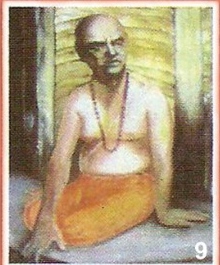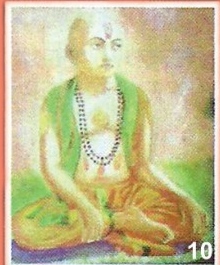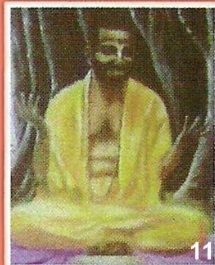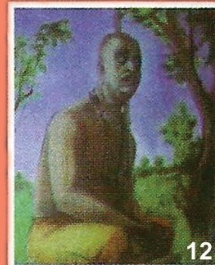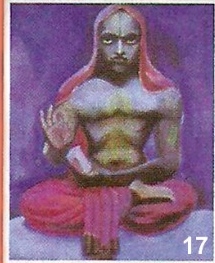
Sri Brahmanya Tirtha
Guardian and Guru of Vyasa Tirtha
Also known as Bramhanya Tirtha, Brahmanyatirtha, Subrahmanya (per Srila Prabhupada's purport), Narasimhacharya (pre-monastic name)
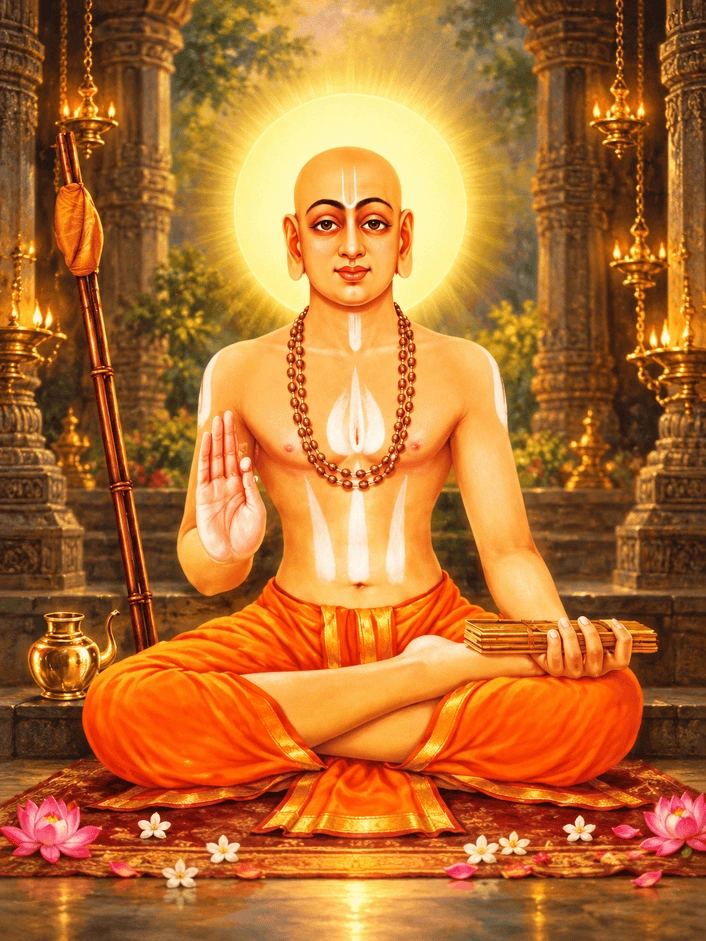
Sri Brahmanya Tirtha was a leader of the Dvaita Vedanta tradition in the fifteenth century. His name might have been known only among scholars, except for one thing. He raised the boy who grew up to become Vyasa Tirtha. Vyasa Tirtha became a great philosopher and later served as rajaguru, the royal guru, at the court of the Vijayanagara Empire. He stood at the center of a golden age for Dvaita learning and for the Haridasa devotional-song movement. Brahmanya Tirtha educated that boy and personally gave him sannyasa.
Matha records, an early Sanskrit biography called the Vyasayogicharita, and modern research on the Madhva sampradaya all describe Brahmanya Tirtha as the eleventh leader of the matha at Abbur in Karnataka, and as the direct disciple of Purushottama Tirtha. Apart from the fact that he raised Vyasa Tirtha, very little about Brahmanya Tirtha's own life has come down to us. This page tells only what is truly known.
| Detail | Description |
|---|---|
| Guru | Purushottama Tirtha |
| Most famous disciple | Vyasa Tirtha, later rajaguru of the Vijayanagara Empire |
| Matha headed | The matha at Abbur, Karnataka, the line later renamed Vyasaraja Matha |
| Pre-monastic name | Narasimhacharya |
| Tenure (approx.) | Mid-15th century CE; demise dated either 1467 or 1475-1476 (sources disagree) |
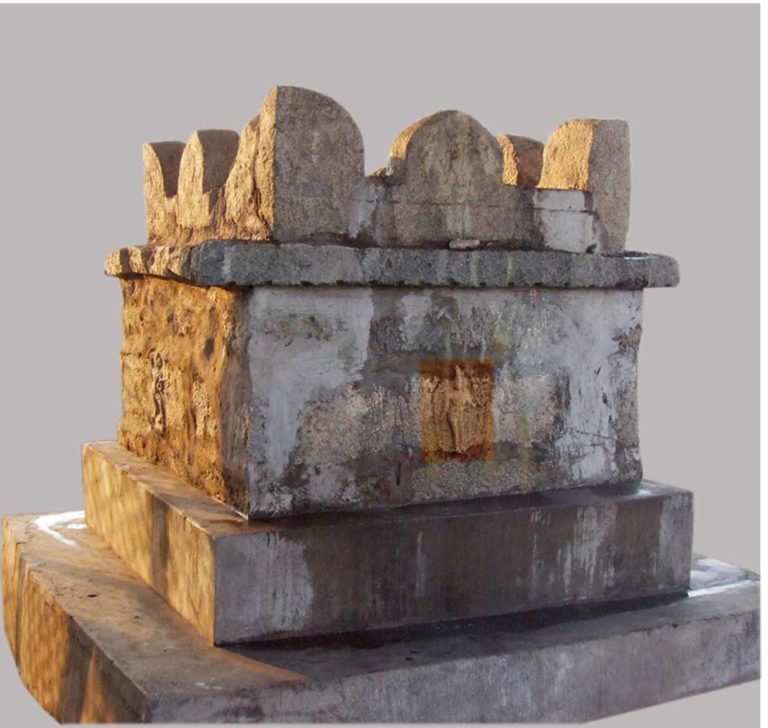
| Samadhi | Abburu, on the banks of the river Kanva, Karnataka |
Eleventh Acharya of the Abbur Matha #
Brahmanya Tirtha's own matha goes back to a split inside the Madhva monastic order, two generations after Jayatirtha, Madhvacharya's most important early successor. The line coming down through Jayatirtha's disciple Vidyadhiraja Tirtha had to choose its next head. The seat went to a monk named Kavindra Tirtha, and his branch became the Uttaradi Matha. Another monk who also claimed the seat, Rajendra Tirtha, set up a separate seat instead. It was first called the Rajendra Tirtha Matha or Poorvadi Matha. Only much later was it renamed the Vyasaraja Matha, after its most famous head. Brahmanya Tirtha stood third in succession from this Rajendra Tirtha. After Rajendra Tirtha came Vijayadhvaja Tirtha, also called Jayadharma, then Purushottama Tirtha, Brahmanya Tirtha's own guru. Before taking sannyasa he was known as Narasimhacharya. Different matha lists give slightly different years for his time as head of the matha, all within the mid-fifteenth century. This difference is discussed further below.
Guardian and Guru to Vyasa Tirtha #
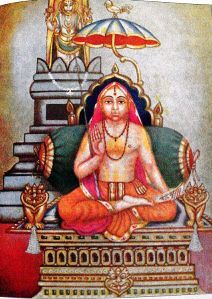
Nearly everything we know about Brahmanya Tirtha personally comes to us through the life of his own disciple. According to the Vyasayogicharita, an early biography of Vyasa Tirtha, a childless brahmana couple in the village of Bannur came to Brahmanya Tirtha for a blessing. He granted them three children, on the condition that their second child be given to him. That child, named Yatiraja at birth, was placed in Brahmanya Tirtha's care after his upanayana, the sacred-thread ceremony. The older sannyasi was struck by the boy's unusual intelligence and decided to give him sannyasa. Tradition says Yatiraja tried to run away from the hermitage instead of accepting this. But he turned back after a vision of Lord Vishnu told him to return. Brahmanya Tirtha then gave him diksha at around sixteen years of age. He named him Vyasatirtha, the name by which history remembers him.
The disciple later became far more famous than his guru. In time he served Krishna Deva Raya of Vijayanagara as rajaguru, and for generations he shaped the course of both Dvaita philosophy and Kannada devotional song. His life is told in full on Vyasa Tirtha's own page.
Writings and Miracle Traditions #
Matha tradition says that Brahmanya Tirtha wrote a commentary on the Tattvaprakashika, which is Jayatirtha's own commentary on Madhvacharya's Anuvyakhyana. But no copy of Brahmanya Tirtha's work is known to survive today. Devotional accounts also describe him founding at least one Deity temple near Abbur. Different sources name different Deities and places, so we do not try to force them into one neat account. Like many Vaishnava saints of this period, he is also remembered for miracle stories. These stories tell of him bringing rain during drought, restoring the dead to life, and once curing a local prince's disability in exchange for a Deity of Vittala from the royal treasury. None of this can be checked in other sources. It belongs to devotional tradition, not recorded history, and we tell it here honestly as the tradition's own account of him.
Death and a Disputed Date #
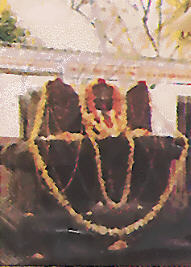
Sources disagree, sometimes sharply, about when Brahmanya Tirtha died. Several matha-tradition lists give 1467 CE as the year of his death. But modern academic study of Vyasa Tirtha's life gives a different date. Drawing on the research of the scholar B. N. K. Sharma, it places his guru's death in the famine of 1475-1476 CE. In this view, Vyasa Tirtha went elsewhere for further study, and only in 1478 did he succeed Brahmanya Tirtha as head of the Abbur matha. The available sources cannot settle this difference. It is still the biggest open question about Brahmanya Tirtha's life. But all sources agree on where he is remembered. His samadhi, or brindavana, stands at Abburu on the banks of the river Kanva in Karnataka, and pilgrims still visit it today.
Brahmanya Tirtha in the Gaudiya Parampara List #
The Gaudiya Vaishnava guru-parampara list handed down by Srila Bhaktisiddhanta Sarasvati Thakura places Brahmanya Tirtha in exactly this position: disciple of Purushottama Tirtha, guru of Vyasa Tirtha. The traditional guru-parampara prayer itself states this plainly:
jayadharma-dasye khyati, sri purusottama-jati, ta ha'te brahmanya-tirtha suri
"Purushottama Tirtha gained his fame in the service of Jayadharma; from him came the learned Brahmanya Tirtha."
For this link, independent sources from the Dvaita tradition really do agree. For several other links in the same list, they do not. In his purport to Chaitanya-charitamrita, Madhya 9.245, Srila Prabhupada quotes the South Kanara Manual and the Bombay Gazette. The purport records a succession beginning "after the sixteenth acharya (Vidyadhiraja Tirtha)" that runs through Rajendra Tirtha, Vijayadhvaja, Purushottama, Subrahmanya, and "Vyasa Raya, 1470-1520". These are the same five names, in the same order, that appear in this guru chain. In the purport, Brahmanya Tirtha appears under a different spelling, Subrahmanya.
This is quite different from the wider question about the lineage discussed on Madhvacharya's own page and on Madhavendra Puri's Life in the Madhva Sampradaya. Those pages honestly explain that historians have not found any independent Dvaita source that confirms a place for Lakshmipati Tirtha and Madhavendra Puri in the Madhva sampradaya's own lists of successors. Brahmanya Tirtha's own two links in the chain do not have that problem. Matha records, an early Sanskrit biography, and Srila Prabhupada's own purport all agree on them, independently of one another.
Scriptural evidence
Quoted in the text above:
- Verse naming Jayadharma, Purushottama Tirtha and Brahmanya Tirtha Sri Guru-parampara (traditional prayer by Srila Bhaktisiddhanta Sarasvati Thakura)
- Shri Brahmanya Teertharu - Shri Vyasaraja Math, Sosale (Madhwa Sakha)
- Shri Vyasa Teertharu - Shri Vyasaraja Math, Sosale (Madhwa Sakha)
- Brahmanya Tirtha - Gaudiya History (ISKCON Desire Tree)
- Vyasaraya, the visionary Madhva scholar, logician, and musician - The South First
- ABBUR - Sri Sri 1008 Brahmanya Theertharu (Slokas, Stories and Information Regarding Madhwa Philosophy)
- Sri Chaitanya-charitamrita, Madhya-lila 9.245, purport
Disciples
Frequently asked
When was Sri Brahmanya Tirtha born?
Sri Brahmanya Tirtha appeared Not recorded; he headed the matha in the mid-15th century CE in Not recorded.
Who was the guru of Sri Brahmanya Tirtha?
The spiritual master of Sri Brahmanya Tirtha was Sri Purushottama Tirtha.
When and where did Sri Brahmanya Tirtha disappear?
Sri Brahmanya Tirtha disappeared 1467 CE according to most matha-tradition lists; modern research on Vyasa Tirtha's life places it in the famine of 1475-1476 CE instead. Sources disagree. at Abburu, on the banks of the river Kanva, Karnataka (samadhi/brindavana site).
What are the main pastimes of Sri Brahmanya Tirtha?
The pastimes covered here include: Eleventh Pontiff of the Abbur Matha, Raising the Boy Who Became Vyasa Tirtha, Writings, Miracles and a Disputed Death Date, Brahmanya Tirtha in the Gaudiya Parampara.