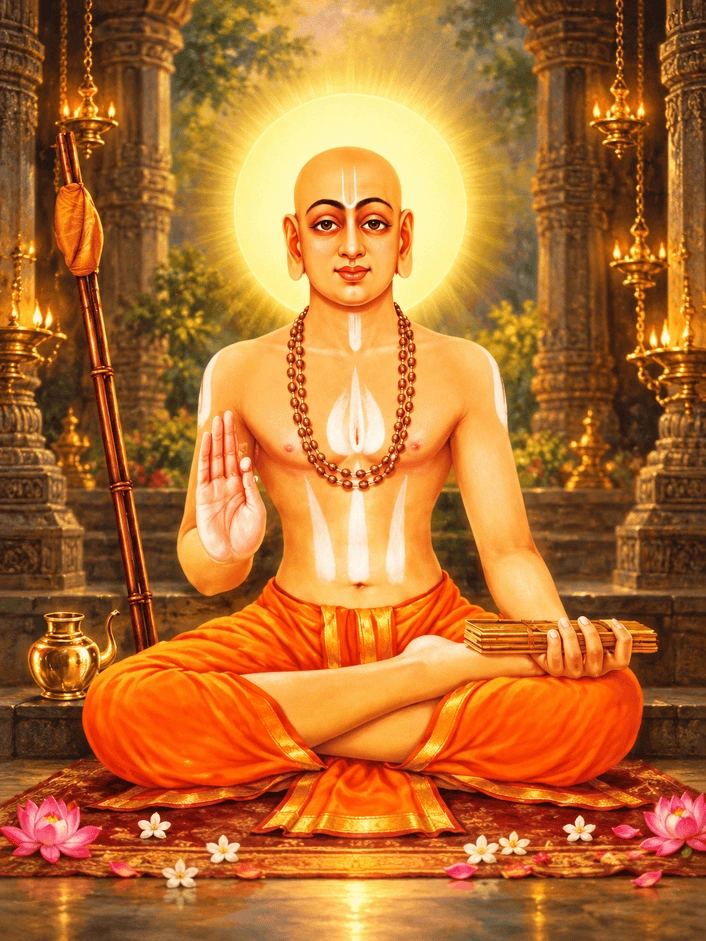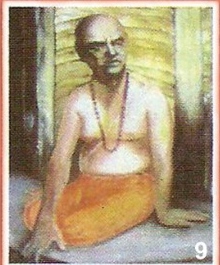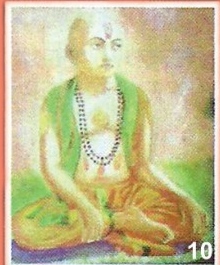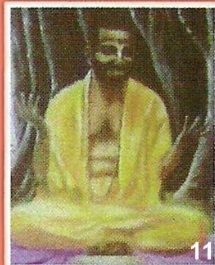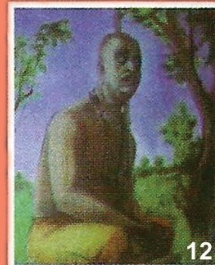
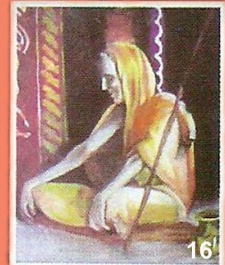
Srila Vijayadhvaja Tirtha
Author of the Padaratnavali, a Major Dvaita Commentary on Srimad-Bhagavatam
Also known as Jayadharma Tirtha, Jayadhvaja Tirtha, Vijayadhwaja Tirtha
“Dear Lord Krishna, I have written this commentary on Srimad-Bhagavatam out of love, just to please You. If You are pleased, please grant me three boons: that I remain a poor man in this life and any future life, that I always have the opportunity to study Madhvacharya's devotional works, and that by this I may always remain Your servant.”
Translated from the closing Sanskrit verses that tradition credits to the author of the Padaratnavali, as preserved by Gaudiya devotional tradition. No scholarly (critical) edition of the text was available to us for checking the verse. So it is offered here as tradition, not as a quotation that has been independently confirmed.
The Śrī Caitanya-caritāmṛta guru-paramparā list, followed by Śrīla Bhaktisiddhānta Sarasvatī Ṭhākura and repeated by Śrīla Prabhupāda in his purport to CC Madhya 9.245, names this ācārya as "Vijayadhvaja." He is placed after Rājendra Tīrtha in a branch of disciplic succession coming from Śrīla Madhvācārya. Later Gauḍīya writings also refer to him as Jayadharma Tīrtha or Jayadhvaja Tīrtha. In the independent records of the Dvaita, or Madhva-sampradāya, and in modern studies of Dvaita Vedānta, he is usually known as Vijayadhvaja Tīrtha. Under this name, he is remembered for writing the Padaratnāvalī, a complete word-by-word commentary on Śrīmad-Bhāgavatam that Madhva scholars still study today. For this reason, Vijayadhvaja Tīrtha is used here as his main name, while Jayadharma is also kept as the name by which he is known in the Gauḍīya tradition.
| Detail | Description |
|---|---|
| Best known as | Author of the Padaratnavali, a major Dvaita-school commentary on Srimad-Bhagavatam |
| Approximate era | Late 14th to mid-15th century CE; his Pejawar Matha pontificate is usually dated 1381-1410, with other sources extending his life to about 1448-1450 |
| Names | Vijayadhvaja Tirtha in independent Dvaita-tradition and academic sources; Jayadharma Tirtha or Jayadhvaja Tirtha in Gaudiya guru-parampara sources |
| Guru | Independent Pejawar Matha records name Mahendra Tirtha; the Gaudiya guru-parampara list instead names Rajendra Tirtha |
| Disciples | Vishnu Puri, per devotional tradition; Uttama Tirtha succeeded him as Pejawar Matha pontiff |
| Chief work | Padaratnavali, also called Bhakti-ratnavali or, popularly, Vijayadhvajeeyam |
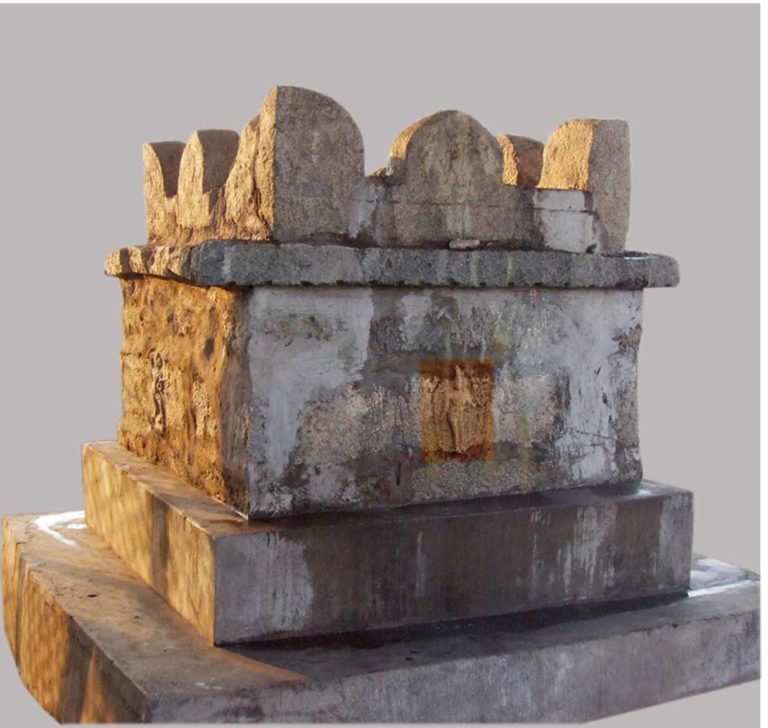
| Samadhi | Kanva Tirtha, near present-day Kasaragod, Kerala |
A Pontiff Whose Own Lineage Is Disputed #
Independent Madhva-tradition lineage records place this ācārya as the sixth or seventh head of the Pejawar Maṭha. This is one of the eight aṣṭa-maṭhas of Udupi that trace their succession to Madhvācārya's own sannyāsa disciples. The Pejawar Maṭha traces its line through Akṣobhya Tīrtha. According to these records, his guru was Mahendra Tīrtha. His period as head of the maṭha is usually dated from 1381 to 1410, though a few sources give the later dates 1434 to 1448. His successor was Uttama Tīrtha, not Puruṣottama Tīrtha. This creates the same difficulty already noted on Madhvācārya's own page: the Gauḍīya guru-paramparā list is not fully confirmed by the independent succession records of the Madhva-sampradāya. At the same time, the Vyāsarāja Maṭha of Sosale keeps a separate succession list that names Rājendra Tīrtha, followed by Jayadhvaja Tīrtha, and then Puruṣottama Tīrtha. This closely matches the Gauḍīya list. However, the records of the two maṭhas do not make it clear whether the Jayadhvaja Tīrtha of the Vyāsarāja Maṭha and the author of the Padaratnāvalī from the Pejawar Maṭha were the same person or two different ācāryas with similar sannyāsa names. More details about both claimed lineages, as well as the devotional accounts of his early life, are given on the page Life and Place in the Madhva Lineage.
The Padaratnavali #
Whichever lineage is accepted, the author of the Padaratnāvalī left behind a clear and important work: a complete verse-by-verse Dvaita commentary on Śrīmad-Bhāgavatam. It is still printed, read, and cited by scholars of the Madhva-sampradāya centuries later. The work develops the teachings found in Madhvācārya's Bhāgavata-tātparya-nirṇaya, which is a shorter summary rather than a full commentary. Vijayadhvaja Tīrtha gives a continuous explanation of the text and often uses grammar and word meanings to present Dvaita interpretations. He also records many different readings of the Bhāgavatam text, especially in the Tenth Canto. Śrīla Jīva Gosvāmī, writing generations later in his Tattva-sandarbha, directly names Vijayadhvaja Tīrtha as one of Madhvācārya's grand-disciples. He describes Vijayadhvaja Tīrtha and Vyāsa Tīrtha as "most eminent scholars of the Vedic literature and its interpretation" who had become "very famous in the South." This shows a clear Gauḍīya respect for his scholarship, apart from his place in the guru-paramparā list. More details about the commentary, its discussion of Śrīla Śrīdhara Svāmī's earlier Bhāvārtha-dīpikā, and its lasting importance in Dvaita study of Śrīmad-Bhāgavatam are given on the page Writing the Padaratnāvalī.
Legacy #
Devotional tradition remembers a disciple named Vishnu Puri, who was said to be deeply shaped by this commentary. According to the Gaudiya guru-parampara list, this acharya is also the guru of Purushottama Tirtha. The chain then continues toward Brahmanya Tirtha and the famous Vyasa Tirtha. Legacy gathers what can and cannot be said about that succession, and about how Vaishnavas remember this acharya more broadly. Srila Madhavendra Puri's own page discusses this exact lineage question from the other end of the same chain. Readers who want to see how this whole guru-parampara question has already been examined should read that page too.
Scriptural evidence
মধ্বাচার্য-স্থানে আইলা যাঁহা ‘তত্ত্ববাদী’ ।
উড়ুপীতে ‘কৃষ্ণ’ দেখি, তাহাঁ হৈল প্রেমোন্মাদী ॥
madhvācārya-sthāne āilā yāṅhā ‘tattvavādī’
uḍupīte ‘kṛṣṇa’ dekhi, tāhāṅ haila premonmādī
Word for word
madhva-ācārya-sthāne: at the place of Madhvācārya; āilā: arrived; yāṅhā: where; tattva-vādī: philosophers known as Tattvavādīs; uḍupīte: at the place known as Uḍupī; kṛṣṇa: the Deity of Lord Kṛṣṇa; dekhi: seeing; tāhāṅ: there; haila: became; prema-unmādī: mad in ecstasy.
Caitanya Mahaprabhu next arrived at Udupi, the place of Madhvacharya, where the philosophers known as Tattvavadis resided. There He saw the Deity of Lord Krishna and became mad with ecstasy.
From the purport: Purport excerpt: "After the sixteenth ācārya (Vidyādhirāja Tīrtha), there was another disciplic succession, including Rājendra Tīrtha, 1254; Vijayadhvaja; Puruṣottama; Subrahmaṇya; and Vyāsa Rāya, 1470-1520."
This is the single passage in which Srila Prabhupada's own purport names Vijayadhvaja directly, placing him in a disciplic branch between Rajendra Tirtha and Vyasa Raya (Vyasatirtha). The purport spells the fourth name in this branch "Subrahmanya" rather than "Brahmanya Tirtha," and gives Rajendra Tirtha's date as 1254 - over two centuries before Vyasa Raya's 1470-1520 - a gap not reconciled here with independent Vyasaraja Matha or Pejawar Matha dating, which places these same names within a much narrower fifteenth-century window. Prabhupada's purport credits its information to the South Kanara Manual and the Bombay Gazette.
- Sri Chaitanya-charitamrita, Madhya-lila 9.245, Purport (vedabase.io)
- Vijayadhvaj Tirtha (Jayadharma Tirtha) - Gaudiya History (ISKCON Desire Tree)
- Shri Vijayadhvaja Teertharu, Shri Pejavar Matha - Madhwa Sakha
- Commentators on the Bhagavata Purana [Part 5] - Wisdomlib (summarizing B.N.K. Sharma and other Dvaita scholarship)
- I Write For Me: Sri Vijayadhvaja Tirtha (1450) - citing B.N.K. Sharma, History of the Dvaita School of Vedanta and Its Literature
- Madhva Parampare: Sri Jayadharma (Vijayadhvaja) Theertharu (Vyasaraja Mutt)
- Guru-parampara biographies of Jayadharma (Vijayadhvaja) Tirtha and Brahmanya Tirtha - The Hindu Portal
- Madhva's Pramanas and Jiva Goswami (on Tattva-sandarbha's citation of Vijayadhvaja Tirtha)
- Srimad Bhagavatam with Padaratnavali Tika (1892 edition) - Internet Archive
Disciples
Frequently asked
When was Srila Vijayadhvaja Tirtha born?
Srila Vijayadhvaja Tirtha appeared Not recorded; independent Dvaita-tradition sources place his active life in the late fourteenth to mid-fifteenth century in Not recorded.
Who was the guru of Srila Vijayadhvaja Tirtha?
The spiritual master of Srila Vijayadhvaja Tirtha was Sri Rajendra Tirtha.
When and where did Srila Vijayadhvaja Tirtha disappear?
Srila Vijayadhvaja Tirtha disappeared Traditionally observed on Akshaya Tritiya (the third day of the bright half of Vaishakha); commonly dated 1410, though some sources place his death as late as 1448 at Samadhi (brindavana) at Kanva Tirtha, near present-day Kasaragod, Kerala.
What are the main pastimes of Srila Vijayadhvaja Tirtha?
The pastimes covered here include: Life and Place in the Madhva Lineage, Writing the Padaratnavali, Legacy.