Srila Ramachandra Puri
The Godbrother Whose Criticism Chaitanya-charitamrita Turns Into a Warning
The complete life, on one page: The main biography and every pastime page, in order, in one place
Introduction
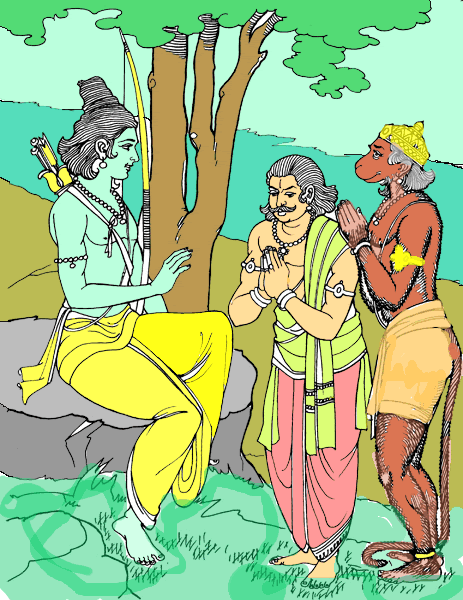
Srila Ramachandra Puri holds an unusual place among the associates of Sri Chaitanya Mahaprabhu. An entire chapter of Sri Chaitanya-charitamrita's Antya-lila is devoted to him, and Krishnadasa Kaviraja Goswami plainly titles it "Ramachandra Puri Criticizes the Lord." He was an initiated disciple of Srila Madhavendra Puri. Through that shared guru, he was a godbrother of Srila Ishvara Puri, the sannyasi who would later give Sri Chaitanya Mahaprabhu His own diksha. Ishvara Puri is remembered for how completely he served a dying guru. Ramachandra Puri is remembered for the opposite. He had a habit of fault-finding that was fixed deep in him. Chaitanya-charitamrita tells his life deliberately and at some length, to warn readers what happens when that habit is turned even on the Supreme Lord Himself.
| Detail | Description |
|---|---|
| Guru | Srila Madhavendra Puri |
| Godbrother | Srila Ishvara Puri, who later gave diksha to Sri Chaitanya Mahaprabhu |
| Best known for | Criticizing Sri Chaitanya Mahaprabhu's eating at Jagannatha Puri, which led the Lord to cut His meals to a quarter, later raised to half at the devotees' request |
| Primary source | Sri Chaitanya-charitamrita, Antya-lila, Chapter Eight, titled "Ramachandra Puri Criticizes the Lord" |
| Identity | Remembered as Vibhishana; Jatila, Srimati Radharani's mother-in-law, entered him for a purpose (Gaura-ganoddesha-dipika 92) |
| Birth / disappearance | Not recorded in any source |
Scriptural evidence for the introduction (2)
taṁ vande kṛṣṇa-caitanyaṁ
rāmacandra-purī-bhayāt
laukikāhārataḥ svaṁ yo
bhikṣānnaṁ samakocayat
Word for word
tam: to Him; vande: I offer my respectful obeisances; kṛṣṇa-caitanyam: Lord Sri Caitanya Mahaprabhu; rāmacandra-purī-bhayāt: due to fear of Rāmacandra Purī; laukika: ordinary; āhārataḥ: from eating; svam: His own; yaḥ: who; bhikṣā-annam: quantity of food; samakocayat: reduced.
Let me offer my respectful obeisances to Sri Chaitanya Mahaprabhu, who reduced His eating due to fear of the criticism of Ramachandra Puri.
Krishnadasa Kaviraja Goswami's own opening verse for the chapter of Chaitanya-charitamrita devoted entirely to Ramachandra Puri, naming him in its very first line.
विभीषणो यः प्रागासीद्रामचन्द्रपुरी स्मृतः ।
उवाचातो गौरहरिर्नैतद्रामस्य कारणम् ॥
जटिला राधिकाश्वश्रूः कार्यतोऽविशदेव तम् ।
अतो महाप्रभुर्भिक्षासङ्कोचादि ततोऽकरोत् ॥
vibhīṣaṇo yaḥ prāg āsīd rāmacandra-purī smṛtaḥ
uvācāto gaura-harir naitad rāmasya kāraṇam
jaṭilā rādhikā-śvaśrūḥ kāryato’viśad eva tam
ato mahāprabhur bhikṣā-saṅkocādi tato’karot
The devotee named Ramacandra Puri in Lord Caitanya's pastimes had previously been Vibhisana. ... Lord Caitanya Himself did not accept that Ramacandra Puri was the incarnation of Vibhisana, but the Lord himself said that Ramacandra Puri was the empowered incarnation of Srimati Radharani's mother-in-law Jatila. This Ramacandra Puri restricted Lord Caitanya in His acceptance of alms.
Kavi Karnapura records that Ramachandra Puri was remembered as Vibhishana, and that Jatila, Srimati Radharani's mother-in-law, entered him, which is why Sri Chaitanya Mahaprabhu cut down His eating. Sanskrit: diacritic edition of the Gaura-ganoddesha-dipika; English translation as published at bvmlu.org.
Chapter 1
Discipleship Under Madhavendra Puri
A dying guru's ecstatic longing for Krishna, advice from a disciple who did not understand it, and the rebuke that Chaitanya-charitamrita treats as the beginning of everything that followed.
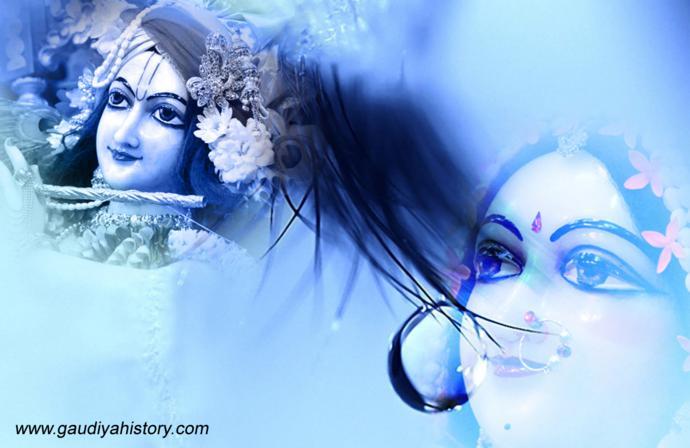
Sri Chaitanya-charitamrita introduces Ramachandra Puri the same way it introduces his godbrother Ishvara Puri: as a disciple of Srila Madhavendra Puri, without a word about family, birthplace, or the name he carried before taking sannyasa. Both men are Madhavendra Puri's initiated disciples. Only one of them is remembered for how he behaved at his guru's deathbed, and Krishnadasa Kaviraja Goswami makes sure a reader cannot miss which one, or why.
A Guru Absorbed in Longing for Mathura #
By the end of his life, Madhavendra Puri had become very weak. He could not move his own body, and Ishvara Puri served him constantly as he grew weaker. Ishvara Puri personally cleaned him and recited Krishna's name and pastimes so that his guru's mind stayed fixed on the Lord. Through all of it, Madhavendra Puri remained absorbed in a single longing. He chanted Krishna's holy name, and at times he cried out, "O my Lord, I did not get shelter at Mathura" (Antya-lila 8.19). It was not ordinary grief. Chaitanya-charitamrita and the purports written on it clearly say that this was the highest stage of ecstatic love for Krishna, felt in the form of separation. This is the same mood that Srila Madhavendra Puri is remembered for throughout his life.
Instruction Where None Was Wanted #
Ramachandra Puri came to that same bedside, heard the same weeping, and understood none of it. He took his guru's cries to be the ordinary unhappiness of a man who believed himself already liberated, and he told him so: "If you are in full transcendental bliss, you should now remember only Brahman. Why are you crying?" (Antya-lila 8.21). This was more than simple bad manners. No one had asked Ramachandra Puri for advice, and his spiritual master was at the hour of his death. Yet he advised his guru to stop feeling what Chaitanya-charitamrita treats as the deepest devotion a soul can have. He told him to replace it with an impersonal, Brahman-centered detachment. Srila Prabhupada's purport to this verse states plainly that Ramachandra Puri "was not sufficiently expert to understand the feelings of Madhavendra Puri," and that his own thinking ran, "latently," toward impersonalism. This is the very way of thinking that Gaudiya Vaishnavas call Mayavada.
Get Out, You Sinful Rascal #
Madhavendra Puri's reply came without delay. "Hearing this instruction, Madhavendra Puri, greatly angry, rebuked him by saying, 'Get out, you sinful rascal! ... I am dying without achieving the shelter of Krishna, and therefore I am greatly unhappy. Now this condemned foolish rascal has come to instruct me about Brahman'" (Antya-lila 8.22, 25). He told Ramachandra Puri plainly that his unasked-for advice was only adding to his pain, warned him not to show his face again, and said that seeing him at the moment of death would cost him the fruit of his whole life. Krishnadasa Kaviraja Goswami does not soften what this meant for the disciple being addressed: "Ramachandra Puri was thus denounced by Madhavendra Puri. Due to his offense, gradually material desire appeared within him" (Antya-lila 8.26).
Two Examples, One Lesson #
Chaitanya-charitamrita then makes the comparison it has been building toward from the start. "Ishvara Puri received the blessing of Madhavendra Puri, whereas Ramachandra Puri received a rebuke from him. Therefore these two persons... are examples of the objects of a great personality's benediction and punishment. Madhavendra Puri instructed the entire world by presenting these two examples" (Antya-lila 8.32). Ishvara Puri went on, the text says, to become "an ocean of ecstatic love" for Krishna, and in time the guru of Sri Chaitanya Mahaprabhu Himself. In the same passage, Ramachandra Puri is described as becoming "a dry speculator and a critic of everyone else" (Antya-lila 8.31). Chaitanya-charitamrita turns this into a general rule about anyone attached to dry speculative knowledge. Such a person "has no relationship with Krishna. His occupation is criticizing Vaishnavas. Thus he is situated in criticism" (Antya-lila 8.27).
Not long afterward, still reciting the same verse of longing for Mathura, Madhavendra Puri passed from this world. The fault-finding way of thinking that his rebuke could not undo did not end with him. It appeared again years later, in front of many more people. The same Ramachandra Puri came to Jagannatha Puri and found himself in the company of Sri Chaitanya Mahaprabhu, the disciple of Madhavendra Puri's own disciple. That meeting is told in full in The Criticism of Mahaprabhu's Eating.
Scriptural evidence for this chapter (2)
Quoted in the text above:
- Antya 8.22 Sri Chaitanya-charitamrita
- Antya 8.32 Sri Chaitanya-charitamrita
Chapter 2
The Criticism of Mahaprabhu's Eating
How one godbrother's fault-finding led Sri Chaitanya Mahaprabhu to cut His own meals in half, out of concern for how His conduct might appear.
Some years after Madhavendra Puri's disappearance, Ramachandra Puri travelled to Jagannatha Puri, where Sri Chaitanya Mahaprabhu was by then living as a sannyasi among His closest devotees. He arrived as a guest with a real claim on respect: a direct disciple of Madhavendra Puri, and so a godbrother of the Lord's own guru, Srila Ishvara Puri. Sri Chaitanya Mahaprabhu and the elder devotee Paramananda Puri both received him warmly, with obeisances and embraces, "and thus remembered Krishna" (Antya-lila 8.9). It is the last entirely happy moment in his stay.
Testing Jagadananda Pandit #
Jagadananda Pandit invited the three of them to share a meal of Jagannatha's prasadam. Ramachandra Puri ate well, then turned to Jagadananda, urged him again and again to keep eating, and personally served him more. Only once Jagadananda had finished and washed his hands did Ramachandra Puri deliver the point of the exercise: "I have heard that the followers of Chaitanya Mahaprabhu eat more than necessary. Now I have directly seen that this is true... a sannyasi who eats this much, his renunciation is destroyed" (Antya-lila 8.15-16). Krishnadasa Kaviraja Goswami names the pattern outright: "first he would induce someone to eat more than necessary and then he would criticize him" (Antya-lila 8.17).

The Ants in the Room #
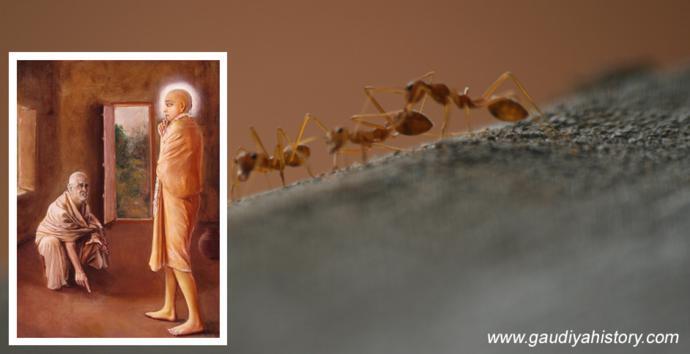
After testing a disciple, Ramachandra Puri turned his attention to the Lord Himself. He quietly gathered information about His meals, sleep, and daily movements, "interested only in finding faults," but for some time he could not find any (Antya-lila 8.43). Then, one morning, he visited Sri Chaitanya Mahaprabhu's room and saw ants on the floor. "Last night there was sugar candy here," he announced. "Therefore ants are wandering about. Alas, this renounced sannyasi is attached to such sense gratification!" (Antya-lila 8.49). He said this in front of others and left. Ants, as Krishnadasa Kaviraja Goswami dryly notes, crawl about everywhere. Nothing in the text suggests that his accusation was true.
Cutting the Meals in Half #
Sri Chaitanya Mahaprabhu had already heard rumors of Ramachandra Puri's criticism. Now He heard it directly, from a godbrother of His own guru. He became worried about how His conduct might be seen, and He acted at once. He called His servant Govinda and fixed a new rule. He would accept only a quarter-pot of Lord Jagannatha's prasadam and a small portion of vegetables each day. He warned that Govinda would not see Him again in Puri if he brought more (Antya-lila 8.53-54). The devotees were, in the text's own words, "as if their heads had been struck by thunderbolts" (Antya-lila 8.55). A host brahmana had prepared a full invitation, and when only a quarter-portion was accepted, he struck his own head in despair (Antya-lila 8.57-58). Sri Chaitanya Mahaprabhu and Govinda ate only half the food they needed, and out of love for Him the other devotees stopped eating properly as well.
An Unrepentant Return #
Ramachandra Puri learned what his single remark had led to, and he came back. Sri Chaitanya Mahaprabhu still offered him obeisances. Ramachandra Puri saw that the Lord had clearly become thinner, but he did not take back his position. Instead, he said more. He quoted the Bhagavad-gita's verse on regulated yoga practice (Gita 6.16-17) to argue that a sannyasi should eat neither too much nor too little. Sri Chaitanya Mahaprabhu's answer was simple submission: "I am just like an ignorant boy and am like your disciple. It is My great fortune that you are instructing Me" (Antya-lila 8.69). Only after Ramachandra Puri left satisfied did Paramananda Puri and the other devotees approach the Lord. They said plainly what Ramachandra Puri's method really was: he urged people to overeat and then condemned them for it. Sri Chaitanya Mahaprabhu was pressed to eat properly again, but He would not fully change His decision. He agreed to eat half His original amount, "the cost for the food fixed at two panas of cowries" (Antya-lila 8.87), and He kept to that measure for the rest of Ramachandra Puri's stay.
Departure and Relief #
Ramachandra Puri eventually left Jagannatha Puri to continue his pilgrimage. Chaitanya-charitamrita records the devotees' reaction without any pretense of politeness: they felt, "as if a great load of stones had suddenly fallen from their heads to the ground" (Antya-lila 8.97). Sri Chaitanya Mahaprabhu resumed accepting invitations as He had before. What this whole episode meant, both as a caution about criticism and as an example of restraint even toward a flawed senior, is drawn out in The Lesson and Its Legacy.
Scriptural evidence for this chapter (3)
"kāla rātre iṅhāra ghare guḍa-mīṭhāi chila
sei lāgi' pipīlikā ei bhramite lāgila"
Word for word
kāla rātre: last night; iṅhāra ghare: in His room; guḍa-mīṭhāi: sugar candy; chila: there was; sei lāgi': for that reason; pipīlikā: ants; ei: these; bhramite lāgila: began to wander.
"Last night there was sugar candy here," he said. "Therefore ants are wandering about. Alas, this renounced sannyasi is attached to such sense gratification!"
The specific, almost trivial accusation, ants in the room, taken as proof of a hidden sweet, that triggered Sri Chaitanya Mahaprabhu's decision to cut His own meals in half.
"From today on it will be a rule that I shall accept only one-fourth of a pot of Lord Jagannatha's prasadam and five gandas' worth of vegetables. If you bring any more than this, you will not see Me here anymore."
Sri Chaitanya Mahaprabhu's own instruction to His servant Govinda, fixing the drastically reduced quantity of food He would accept after Ramachandra Puri's criticism.
There is no possibility of one's becoming a yogi, O Arjuna, if one eats too much or eats too little, sleeps too much or does not sleep enough. He who is regulated in his habits of eating, sleeping, recreation and work can mitigate all material pains by practicing the yoga system.
The verse Ramachandra Puri himself quoted back at Sri Chaitanya Mahaprabhu to defend his position that a sannyasi should eat neither too much nor too little.
Chapter 3
The Lesson and Its Legacy
Why Chaitanya-charitamrita treats a godbrother's fault-finding as a teaching on vaishnava-aparadha, not as gossip about a fallen sannyasi.
Sri Chaitanya-charitamrita does not simply tell Ramachandra Puri's story and leave it there. Krishnadasa Kaviraja Goswami ends the chapter by explaining in his own words what it means. Srila Prabhupada's purports make the same point in several different ways. This is a chapter about vaishnava-aparadha, offense against a devotee. It is also about how such an offense, once committed, does not stay limited to the person who committed it.
Two Disciples, One Verdict #
At the head of the chapter is a summary by Srila Bhaktivinoda Thakura, from his Amrita-pravaha-bhashya. It gives the lesson before the story even begins. Ramachandra Puri, "influenced by dry Mayavadis," criticized his own guru Madhavendra Puri and was rejected by him. The summary adds that "because Ramachandra Puri had been rejected by his spiritual master, he became concerned only with finding faults in others," and in the end he turned that habit even on Sri Chaitanya Mahaprabhu. Srila Ishvara Puri's life is placed beside his on purpose, as the opposite example. Both had the same guru and the same opportunity, but the outcome was entirely different.
The Elephant in the Garden of Devotion #
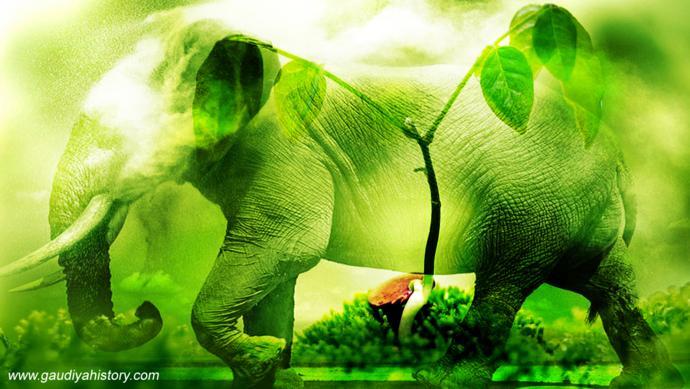
In another part of Chaitanya-charitamrita, Sri Chaitanya Mahaprabhu gives instructions to Srila Rupa Goswami. There, the danger that this chapter shows is described in its most famous image: "If an offense at the feet of a Vaishnava arises like a mad elephant, it uproots the creeper of devotional service and breaks it, so that its leaves shrivel and dry" (Chaitanya-charitamrita, Madhya-lila 19.156). Srila Prabhupada's purport to that verse adds the detail that matters most here: "such an offense is especially created when one disobeys the instructions of the spiritual master. This is called guru-avajna." Ramachandra Puri's story is that verse acted out from beginning to end. It began with an offense at his own guru's feet. That offense was never set right, and it grew into criticism of Vaishnavas in general, and finally of the Lord Himself.
What Prabhupada Draws From This #
Srila Prabhupada's purports do not simply condemn Ramachandra Puri. They carefully explain how his fault-finding came about. Ramachandra Puri, he explains, could not recognize Madhavendra Puri's weeping for Krishna as genuine ecstatic love. This was because he had "no relationship with Krishna" himself. He had only "dry speculative knowledge" that treats devotional service as just another form of fruitive activity, something to rise above (purport to Antya-lila 8.27). Once he was blind in this way, he could not tell the difference between a sannyasi's ordinary conduct and self-indulgence. He only knew how to look for faults. Krishnadasa Kaviraja Goswami's own closing verses clearly show how one step leads to the next: "if one's spiritual master rejects him, one becomes so fallen that he... commits offenses even to the Supreme Personality of Godhead" (Antya-lila 8.99).
Honored as a Godbrother Regardless #
The other half of the chapter's lesson is easy to miss. Sri Chaitanya Mahaprabhu never stopped showing Ramachandra Puri ordinary respect, even though He did not accept his criticism at all. For the whole of his stay, He continued to offer him obeisances "considering him a godbrother of His spiritual master" (Antya-lila 8.46), "sometimes... like a servant... at other times... like straw" (Antya-lila 8.94). Krishnadasa Kaviraja Goswami makes it clear that this was done on purpose. Because Sri Chaitanya Mahaprabhu treated him with the honor due His own guru, the text says, "Sri Chaitanya Mahaprabhu did not consider the offenses of Ramachandra Puri... however, his character instructed everyone about the result of offending the spiritual master" (Antya-lila 8.100). So the lesson works in two ways. First, do not become a fault-finder. Second, someone may stand in a guru's place because of his relationship to the guru. Even if he is a fault-finder, his error does not excuse disrespect toward him.
An Unresolved Coda, and What Remains Unknown #
There is one more detail, and it should be reported honestly, not smoothed over. Vrindavana Dasa Thakura's Chaitanya-bhagavata states that Sri Chaitanya Mahaprabhu stayed for two months in "Ramachandra Puri's matha" while passing through Benares. But Srila Bhaktisiddhanta Sarasvati Thakura's Gaudiya-bhashya commentary does not accept this at face value. It argues that the Lord actually stayed with Chandrashekhara Acharya. He let it be known publicly that He was with Ramachandra Puri instead, to avoid inviting criticism from the Mayavadi scholars of that city. Both views cannot be true at once, and no source settles the disagreement. So it is given here as an open question, not a settled fact. Some other things are also unknown. Ramachandra Puri's birth and disappearance dates, his birthplace, and his name before sannyasa are not preserved anywhere in the record. Apart from Prabhupada's purports to this very chapter, no Prabhupada lecture or conversation specially about him turned up in the sources searched. What Chaitanya-charitamrita chose to preserve about him, on purpose and in detail, is not his life story but this one chapter of warning.
Scriptural evidence for this chapter (2)
yadi vaiṣṇava-aparādha uṭhe hātī mātā
upāḍe vā chiṇḍe, tāra śukhi' yāya pātā
Word for word
yadi: if; vaiṣṇava-aparādha: an offense at the feet of a Vaiṣṇava; uṭhe: arises; hātī mātā: a mad elephant; upāḍe: uproots; vā: or; chiṇḍe: breaks; tāra: of the creeper; śukhi' yāya: shrivels up; pātā: the leaf.
If the devotee commits an offense at the feet of a Vaishnava while cultivating the creeper of devotional service, his offense is compared to a mad elephant that uproots the creeper and breaks it. In this way the leaves of the creeper are dried up.
From the purport: Purport excerpt: "Such an offense is especially created when one disobeys the instructions of the spiritual master. This is called guru-avajna."
Sri Chaitanya Mahaprabhu's own teaching to Srila Rupa Goswami on vaishnava-aparadha, cited here because Ramachandra Puri's whole story reads as this verse acted out from beginning to end.
If one's spiritual master rejects him, one becomes so fallen that he, like Ramachandra Puri, commits offenses even to the Supreme Personality of Godhead. Sri Chaitanya Mahaprabhu did not consider the offenses of Ramachandra Puri, for the Lord considered him His spiritual master. However, his character instructed everyone about the result of offending the spiritual master.
Krishnadasa Kaviraja Goswami's own closing verdict on the whole episode, stated as a general principle rather than left as a specific criticism of one man.
Closing
A Godbrother Under the Same Guru #
Srila Madhavendra Puri accepted a number of disciples in his life. But Sri Chaitanya-charitamrita speaks in detail about only two of them, and it does this by setting them directly against each other. Ishvara Puri is introduced as the disciple who served. Right alongside him, Ramachandra Puri is introduced as the disciple who did not. Krishnadasa Kaviraja Goswami says openly that Madhavendra Puri kept both men close to him for a reason: "these two persons, Ishvara Puri and Ramachandra Puri, are examples of the objects of a great personality's benediction and punishment. Madhavendra Puri instructed the entire world by presenting these two examples" (Chaitanya-charitamrita, Antya-lila 8.32). Nothing about Ramachandra Puri's family, his birthplace, or the name he had before he accepted sannyasa survives in any source. He appears in the historical record only as Madhavendra Puri's disciple, and in effect only as a contrast to Ishvara Puri.
There is one more detail that belongs here, and it should be read with care. The Gaura-ganoddesha-dipika is a traditional Gaudiya work that identifies the earlier spiritual identities of Sri Chaitanya Mahaprabhu's associates. It states that the soul who became Ramachandra Puri was, in an earlier appearance, Vibhishana, the brother of Ravana who was a great devotee of Lord Ramachandra. It also states that Jatila, the disapproving mother-in-law of Srimati Radharani in Krishna's pastimes, entered him for a purpose, and the text explains that this was so that Sri Chaitanya Mahaprabhu would be led to reduce His eating. This is a theological explanation, not a historical one. It shows how the tradition itself understood why such a severe nature appeared in a genuine disciple of Madhavendra Puri. It is not a claim that can be checked by any other means.
This is the verse itself, Gaura-ganoddesha-dipika 92. In its published English translation, Sri Chaitanya Mahaprabhu Himself sets the Vibhishana connection aside and points instead to Jatila's influence:
vibhīṣaṇo yaḥ prāg āsīd rāmacandra-purī smṛtaḥ
uvācāto gaura-harir naitad rāmasya kāraṇam
jaṭilā rādhikā-śvaśrūḥ kāryato’viśad eva tam
ato mahāprabhur bhikṣā-saṅkocādi tato’karot
"The devotee named Ramacandra Puri in Lord Caitanya's pastimes had previously been Vibhisana. ... Lord Caitanya Himself did not accept that Ramacandra Puri was the incarnation of Vibhisana, but the Lord himself said that Ramacandra Puri was the empowered incarnation of Srimati Radharani's mother-in-law Jatila. This Ramacandra Puri restricted Lord Caitanya in His acceptance of alms." (Gaura-ganoddesha-dipika 92)
What the Record Leaves Unanswered #
Outside that one central episode, very little is recorded about him. No source gives Ramachandra Puri's birth year, birthplace, or disappearance. No source records the name he held before taking sannyasa. There is not even an English-language Wikipedia article about him. Most of his contemporaries in this section have one, so this is a real gap. The sources also disagree on one point, and this disagreement is reported here without trying to settle it. Vrindavana Dasa Thakura's Chaitanya-bhagavata states that Sri Chaitanya Mahaprabhu stayed for two months in "Ramachandra Puri's matha" while in Benares. But Srila Bhaktisiddhanta Sarasvati Thakura's Gaudiya-bhashya commentary on that passage holds that this should not be taken literally. It says that the Lord actually stayed with Chandrashekhara Acharya. He only let it be known publicly that He was with Ramachandra Puri, a sannyasi of a Shankarite order. He did this to avoid drawing criticism from non-devotees in a city known for its Mayavadi scholarship. What is not in dispute, in either account, is the reputation Ramachandra Puri carried by then. He was a genuine disciple of a genuine guru, whose name Chaitanya-charitamrita preserves chiefly as a warning.
- Sri Chaitanya-caritamrta, Antya-lila, Chapter Eight: "Ramachandra Puri Criticizes the Lord" (full chapter)
- Sri Chaitanya-caritamrta, Antya-lila 8.1 (Krishnadasa Kaviraja Goswami's invocation verse)
- Sri Chaitanya-caritamrta, Antya-lila 8.22-32 (Madhavendra Puri's rebuke; the two examples)
- Sri Chaitanya-caritamrta, Antya-lila 8.99-100 (Krishnadasa Kaviraja Goswami's summary teaching)
- Sri Chaitanya-caritamrta, Madhya-lila 19.156 (the mad-elephant verse on vaishnava-aparadha)
- Gaudiya History (ISKCON Desire Tree): Ramachandra Puri
- Gaudiya History (ISKCON Desire Tree): Sri Isvara Puri
- Krishna.org: Ramacandra Puri Visits Jagannatha Puri
