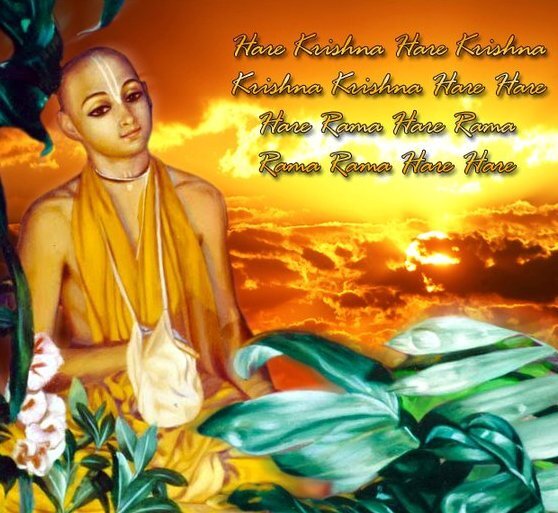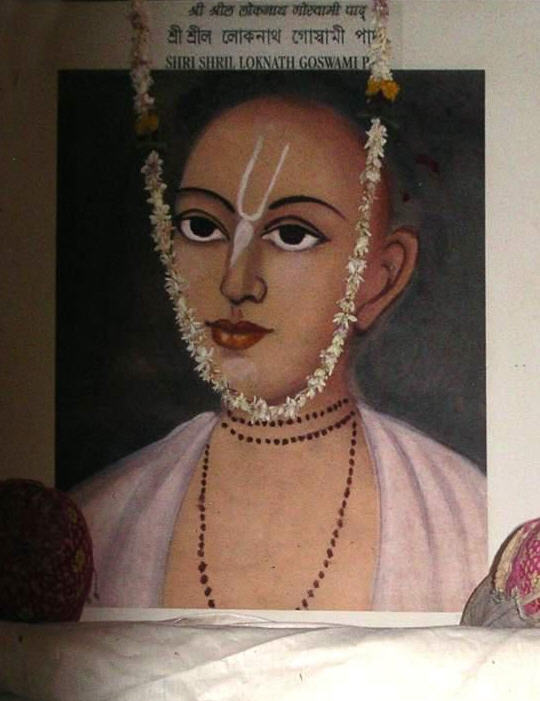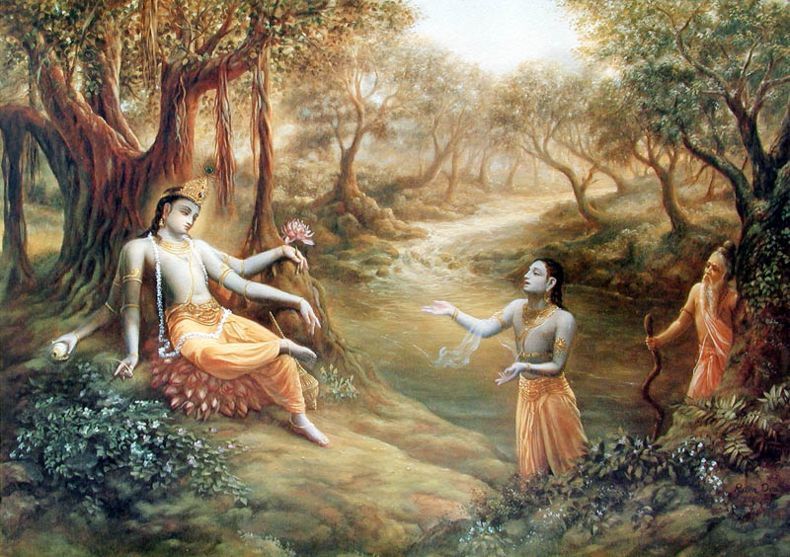
Srila Paramananda Puri
Godbrother and Constant Companion of Sri Chaitanya Mahaprabhu at Jagannatha Puri
Also known as Paramananda Puri Gosani, Puri Gosvami, Puri Goswami
“I am living in this world only on account of the excellent behavior of Sri Paramananda Puri. I belong to him alone.”
Sri Chaitanya Mahaprabhu, after Lord Jagannatha sweetened the water of Paramananda Puri's well at Puri (Chaitanya-bhagavata, Antya-khanda 3.255-257).
Long before Sri Chaitanya Mahaprabhu ever reached Jagannatha Puri, a wandering sannyasi named Paramananda Puri was already living the kind of life that the Gaudiya Vaishnava tradition mostly says little about. He was a brahmana of Trihut who had taken sannyasa. He had sat for years at the feet of Srila Madhavendra Puri, and then walked the length of India as one more unknown sannyasi. Nothing in that description would make him stand out from dozens of other wandering sannyasis of his time. What changed this was a single meeting on a hill in the far south. After that meeting, for the rest of both their lives, Sri Chaitanya Mahaprabhu treated him almost as a second father. Mahaprabhu said openly that Paramananda Puri was the living presence of Madhavendra Puri himself.
| Detail | Description |
|---|---|
| Birthplace | Trihut (Tirhut), a brahmana family, in what is now north Bihar |
| Guru (diksha) | Srila Madhavendra Puri |
| Sannyasi godbrothers | Isvara Puri, Ramachandra Puri, Brahmananda Bharati, Keshava Bharati, and five others |
| Best known for | One of Sri Chaitanya Mahaprabhu's closest sannyasi companions at Jagannatha Puri |
| Identity | Uddhava, Krishna's friend and cousin (Gaura-ganoddesha-dipika 118; Chaitanya-charitamrita Adi 9.13-15 purport) |
| Residence at Puri | A room in Kashi Mishra's house, and his own small matha and well near the Jagannatha temple |
| Disappearance | Not recorded |
A Brahmana of Trihut #
Srila Prabhupada's purport to Sri Chaitanya-charitamrita states the one fact about Paramananda Puri's origins that every source agrees on. He belonged to a brahmana family of the Trihut district, the region around modern Muzaffarpur and Darbhanga in north Bihar. Nothing else about his birth has come down to us. There is no year, no father's name, and no account of his boyhood or of what led him to renunciation. His godbrother Isvara Puri, a disciple of the same guru, at least has a known birthplace, a father's name and a devotional poem written by him. Paramananda Puri has none of these. This gap is reported here as it is, not filled in with guesses, because Chaitanya-charitamrita, Chaitanya-bhagavata and the later Gaudiya histories give nothing more specific.
Among Madhavendra Puri's Nine Sannyasi Roots #
What is recorded, clearly and many times, is his discipleship. Paramananda Puri took initiation from Srila Madhavendra Puri. Krishnadasa Kaviraja Goswami names him first among nine sannyasi disciples of Madhavendra Puri. The Chaitanya-charitamrita describes these nine together as the roots that held the entire "desire tree of devotional service" steady, once the tree had grown into Sri Chaitanya Mahaprabhu Himself (Adi 9.13-15). Tradition remembers Paramananda Puri as the central and most prominent of those nine roots. Chaitanya-bhagavata states plainly that among Madhavendra Puri's sannyasi disciples, only he and Isvara Puri were counted as truly dear to their guru. Discipleship Under Madhavendra Puri tells about that closeness to Madhavendra Puri, and what it meant once the guru was gone.
Meeting Mahaprabhu at Rishabha Hill #
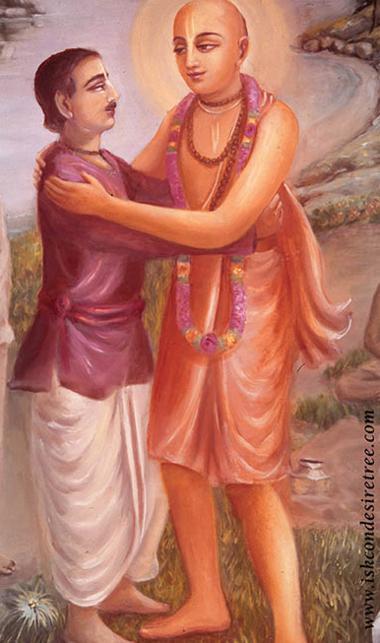
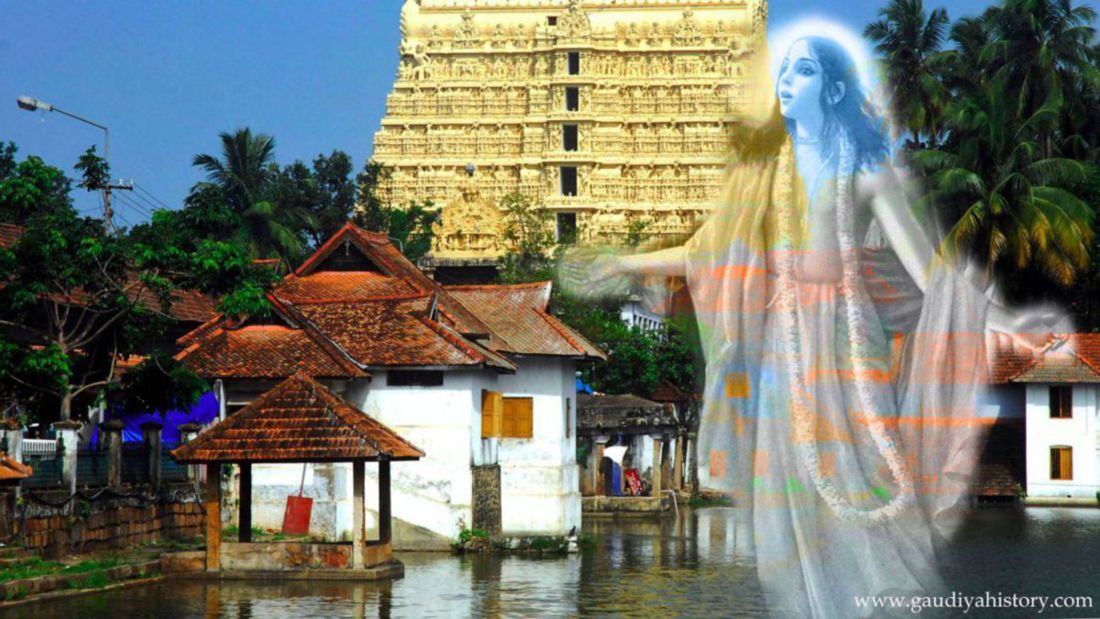
The two men who would become so important to each other did not actually meet until years after Sri Chaitanya Mahaprabhu had already taken sannyasa at Katwa. Chaitanya-charitamrita places their first meeting far into the Lord's tour of South India. It was at Rishabha Hill in what is now Tamil Nadu, where the elderly Paramananda Puri was staying for the rainy season (Madhya 9.167-168). When Mahaprabhu heard that he was nearby, He went to him at once and touched his feet, and Paramananda Puri embraced Him in return. The two spent days together speaking only of Krishna. The account of Sri Chaitanya Mahaprabhu's South India tour also touches on what exactly was said, and how this single meeting changed the rest of both their lives. A separate question is whether Paramananda Puri had in fact already played a role in Mahaprabhu's life years earlier, at the sannyasa ceremony itself. This point is truly disputed. A Name Attached to the Sannyasa-Danda examines it honestly, without forcing it to a conclusion.
The Most Honored Guest in the Gambhira #
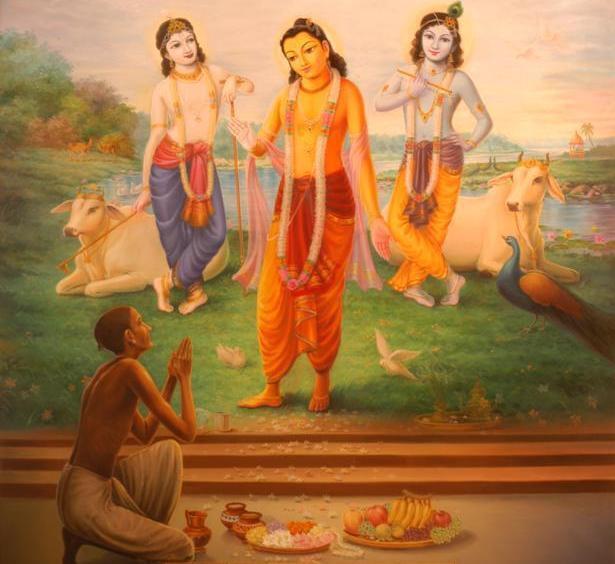
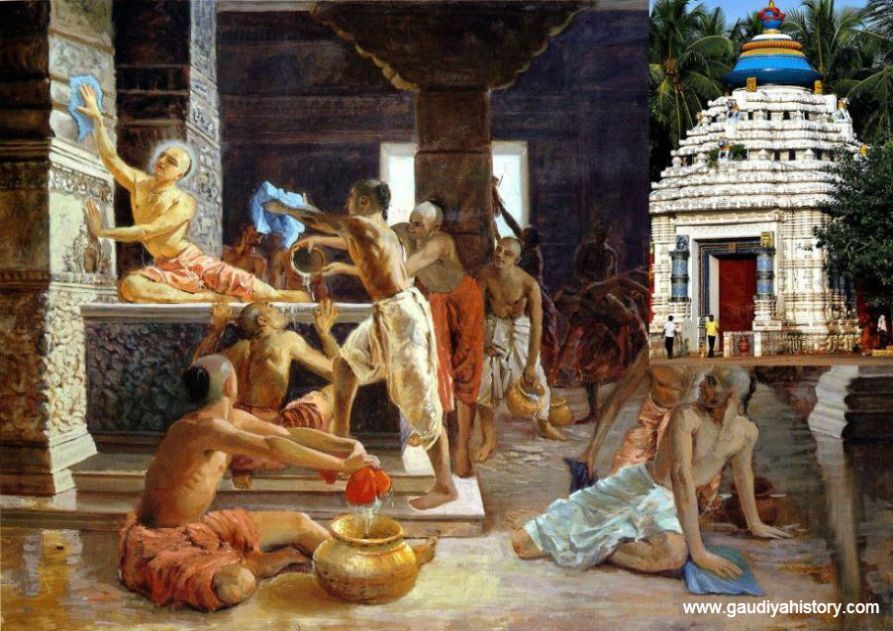
After they met again, Paramananda Puri did not return to a wandering life. He settled at Jagannatha Puri and was given a room in Kashi Mishra's house, beside the Lord's own quarters. He remained there for the rest of his years. He was one of a small handful of associates who never left the Lord's side, with Svarupa Damodara Goswami, Ramananda Raya, Jagadananda Pandit and a few others. Chaitanya-charitamrita records him receiving honors given to almost no one else. At the Ratha-yatra he received sandalwood pulp and garlands from Mahaprabhu's own hand. He was excused from the physical work of the Gundicha temple cleaning. And on at least one occasion, he was respected enough to walk alone into the Lord's private quarters and make an appeal that no one else dared to make. Life at Jagannatha Puri gives the fullest account of those years. It includes the well whose water Lord Jagannatha Himself is said to have sweetened for his sake.
Uddhava Come Again #
Gaudiya Vaishnava tradition does not see this closeness as a coincidence. The Gaura-ganoddesha-dipika is the traditional key to the spiritual identities behind Sri Chaitanya Mahaprabhu's associates. It states that Paramananda Puri is Uddhava, come again. Uddhava was Krishna's dearest friend and cousin in Vrindavana and Dvaraka, and he was now present again at the side of Krishna appearing as Gaura. Srila Prabhupada's own purport takes the identification a step further. It notes that the relationship carries into this life too. Paramananda Puri was a godbrother of Mahaprabhu's own guru, Isvara Puri. So Mahaprabhu gave him the respect owed to an elder relative, almost an uncle, even while their hearts were as close and easy as the hearts of friends. The tradition holds that Uddhava, the trusted friend of Krishna, and Paramananda Puri, the trusted friend of Gaura, are quite literally the same soul.
Srila Prabhupada quotes the line of Srila Kavi Karnapura's Gaura-ganoddesha-dipika (verse 118) that gives this identity:
purī paramānando ya āsīd uddhavaḥ purā
"Paramānanda Purī is none other than Uddhava." (Gaura-ganoddesha-dipika 118, as translated in Srila Prabhupada's purport to Chaitanya-charitamrita Adi 9.13-15)
He then explains: "Uddhava was Lord Kṛṣṇa’s friend and cousin, and in caitanya-līlā the same Uddhava became the friend of Śrī Caitanya Mahāprabhu and His uncle in terms of their relationship in the disciplic succession."
A Life the Record Leaves Unfinished #
No source names a year, a place or even a season for Paramananda Puri's disappearance. Only a few things can be said. He stayed on at Jagannatha Puri for as long as the records mention him. Centuries later, Srila Bhaktivinoda Thakura and Srila Bhaktisiddhanta Sarasvati Thakura were still pointing out his own small well near the Jagannatha temple to pilgrims. And in Chaitanya-bhagavata, Sri Chaitanya Mahaprabhu Himself left behind a statement of what He owed to another human being that is about as direct as any the tradition records. He said that He remained in this world only because of Paramananda Puri. Judged by these words, a brahmana from Trihut, whose birth year no one thought to write down, became one of the people Sri Chaitanya Mahaprabhu Himself considered most necessary to His own presence on earth.
Scriptural evidence
Quoted in the text above:
- Verse 118 Gaura-ganoddesha-dipika
Further verses:
paramananda puri, ara kesava bharati / brahmananda puri, ara brahmananda bharati / visnu-puri, kesava-puri, puri krsnananda / sri-nrsimhatirtha, ara puri sukhananda / ei nava mula nikasila vrksa-mule / ei nava mule vrksa karila niscale
Paramananda Puri, Keshava Bharati, Brahmananda Puri and Brahmananda Bharati, Sri Vishnu Puri, Keshava Puri, Krishnananda Puri, Sri Nrisimha Tirtha and Sukhananda Puri -- these nine sannyasi roots all sprouted from the trunk of the tree. Thus the tree stood steadfastly on the strength of these nine roots.
From the purport: Purport excerpt: "Paramananda Puri belonged to a brahmana family of the Trihut district... Madhavendra Puri was his spiritual master... Paramananda Puri was very dear to Sri Caitanya Mahaprabhu."
The founding verse naming Paramananda Puri as one of Madhavendra Puri's nine sannyasi disciples, and the source of nearly everything known about his origins.
Frequently asked
When was Srila Paramananda Puri born?
Srila Paramananda Puri appeared Not recorded (a contemporary of Sri Chaitanya Mahaprabhu, active c. late 15th - early 16th century) in Trihut (Tirhut), a brahmana family, in what is now north Bihar.
Who was the guru of Srila Paramananda Puri?
The spiritual master of Srila Paramananda Puri was Srila Madhavendra Puri.
When and where did Srila Paramananda Puri disappear?
Srila Paramananda Puri disappeared Not recorded at Not recorded; last placed at Jagannatha Puri.
What are the main pastimes of Srila Paramananda Puri?
The pastimes covered here include: Birth and Early Life in Trihut, Discipleship Under Madhavendra Puri, A Name Attached to the Sannyasa-Danda, Life at Jagannatha Puri, Disappearance and Legacy.