Sridhara Swami called his commentary the Bhavartha-dipika, "the lamp that shows the intended meaning." The title describes his method. It is not there just for decoration. He was not offering a clever new reading of Srimad-Bhagavatam, or building a separate philosophy on top of it, as a commentator sometimes does. He was trying to show what the text itself already says, verse by verse, canto by canto. No one had attempted this before for the entire eighteen-thousand-verse work. This plain purpose is a large part of why it became the commentary every later reader had to study.
The First Complete Commentary #
Fragments of earlier Bhagavatam commentary existed before Sridhara Swami. He himself refers to writers from the impersonalist school such as Citsukhacharya and one Punyaranya, whose works no longer survive. He also clearly knew Madhvacharya's Bhagavata-tatparya-nirnaya, an earlier commentary on selected verses. But nothing before Sridhara Swami covered the whole Bhagavatam, from start to finish, in one continuous commentary. This alone would have earned him a place in the history of the text. Srila Prabhupada's own purport to Srimad-Bhagavatam 1.3.15 calls him simply "the original commentator on the Bhagavatam", meaning the first, not the best or the most famous. That purport's only purpose was to settle a factual point about the order in which the Manus of the universe follow one another. It uses Sridhara Swami's own reading as the standard against which every later commentator would be measured, including Jiva Goswami and Vishvanatha Chakravarti Thakura.
Reading the Bhagavatam's Own Opening Claim #
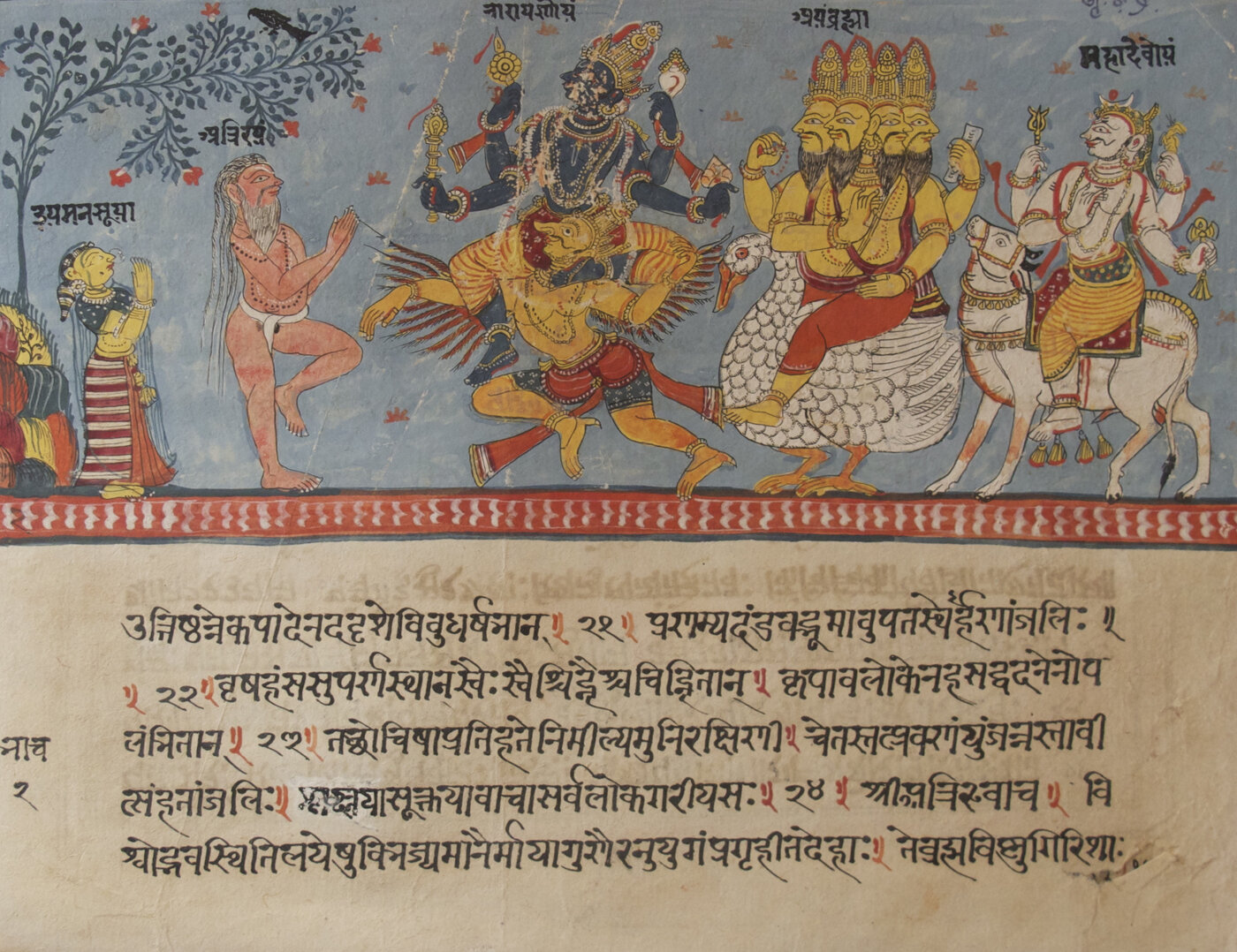
One small example shows how carefully Sridhara Swami worked. The Bhagavatam's own second verse describes itself as dharmah projjhita-kaitavo 'tra. This means a Purana that has completely thrown out, projjhita, all religion practiced as a cover for some other motive. Sridhara Swami noticed something in the grammar. The prefix pra attached to ujjhita has an important meaning. He commented on it directly. He argued that this prefix rules out even the desire for liberation, moksha, as a proper reason to approach the Bhagavatam, and not only the more obvious motives of economic gain or sense pleasure. Sri Chaitanya-charitamrita records this exact point of Sridhara Swami's grammar in Madhya-lila 24.101. Srila Prabhupada discussed the same verse in a 1971 lecture in Delhi, and he explained Sridhara Swami's reasoning on this same line in detail. He noted that "Sridhara Swami is so respected by all the acharyas" precisely because of this kind of close, careful reading. It is a small moment, but it shows his whole method. He did not create new meanings. He paid exact attention to what the text is actually saying.
Supplying the Vocabulary of Hladini and Samvit #
Sridhara Swami's commentary did something else that mattered greatly for later Gaudiya theology. It happened almost as a side effect of how thorough he was. Commenting on Srimad-Bhagavatam 1.7.6, he preserved and quoted a verse from an earlier teacher, Vishnu Swami. The verse describes the Supreme Lord as hladinya samvid-ashlishtah, accompanied by His hladini (bliss-giving) and samvit (knowledge) potencies, while the conditioned soul remains covered by ignorance. Sri Chaitanya-charitamrita quotes this exact verse directly from Sridhara Swami's Bhavartha-dipika, in both Madhya-lila 18.114 and Antya-lila 5.127. In each place, Srila Prabhupada's purport names the source exactly. Later Gaudiya theology draws directly on this verse. This includes the technical terms hladini-shakti and samvit-shakti, which run through Srila Jiva Goswami's Sandarbhas and every later Gaudiya explanation of Krishna's internal potency. The verse survives today only because Sridhara Swami thought it worth preserving in his commentary, a century before Mahaprabhu appeared.
A Shankarite Abbot's Vaishnava Heart #
The most debated feature of the Bhavartha-dipika is also the one that needs the most honest treatment, because sources truly disagree about how to read it. Sridhara Swami spent much of his life as abbot of the Govardhana Matha, a monastery in Adi Shankaracharya's own line. His commentary does contain passages that sound, on the surface, like standard Advaita Vedanta. He consistently refers to Shankaracharya with real respect, calling him simply bhashyakara, "the commentator," and some of his invocation verses also use language that later readers with a strict dualist view found troubling.
Srila Jiva Goswami, writing his Tattva-sandarbha roughly two centuries later, dealt with this directly and did not ignore it. In that work's twenty-seventh section, he argued that Sridhara Swami was a genuine Vaishnava who used Advaita-sounding language on purpose. It was a way to draw readers already committed to Shankara's system toward bhakti, without pushing them away outright. Generations afterward, Srila Baladeva Vidyabhusana commented on that same passage and put it vividly. In his words, Sridhara Swami's occasional Advaita-sounding phrases were "the meat on the end of a hook, meant to lure fish," that is, bait toward a devotional conclusion. They were not the conclusion itself. Baladeva supported this reading with evidence from the text. He pointed to passages where Sridhara Swami affirms that the form, qualities, incarnations and abode of Bhagavan are eternal, and that His devotees belong to the highest class of souls destined for liberation. No consistent Mayavadi commentator could make claims like these.
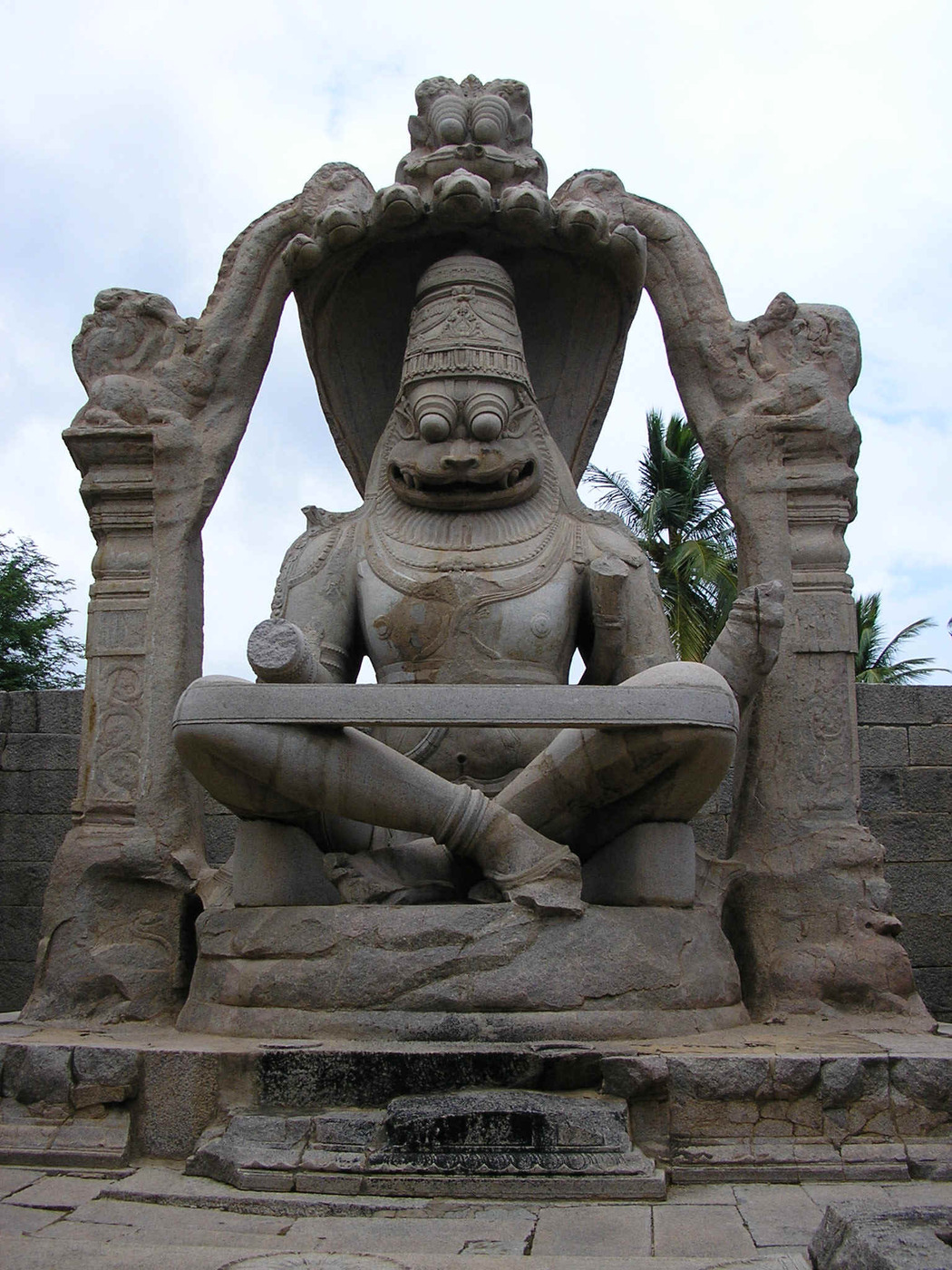
Srila Bhaktisiddhanta Sarasvati Thakura, in a 1925 lecture on this exact question, went further. He identified Sridhara Swami's actual philosophical home as Shuddhadvaita, "purified nondualism." This view is different from Shankara's strict Mayavada. In it, souls and matter are understood as real expansions of the Absolute Truth's own energy, not illusory coverings over an impersonal Brahman. In this view, Sridhara Swami's official position and his personal faith simply did not match. He held one of Shankaracharya's own monastic seats. But privately he remained a worshiper of Krishna and of Lord Nrisimha, and this is quite visible in his own writing. Sridhara Swami's devotion shows through in the invocation verses of his commentary.
It would not be honest to claim that every scholar reads this the same way, or that the question is fully closed. But what the Gaudiya tradition itself concluded, again and again, can be said without any doubt. Some passages have an Advaita coloring on the surface. Even so, the main substance of the Bhavartha-dipika supports a personal and devotional reading of the Bhagavatam. It does not weaken that reading. For this reason Sri Chaitanya Mahaprabhu accepted it so completely, as told in full on Sri Chaitanya Mahaprabhu's Own Reliance on Him.
Two Further Commentaries #
Sridhara Swami wrote at least two other important commentaries: the Subodhini-tika on the Bhagavad-gita, and the Atma-prakashika on the Vishnu Purana. Both are still in print and still read today, though neither became as highly respected as the Bhavartha-dipika. Both use the same method as his Bhagavatam commentary. They give plain and careful explanation, and do not try to build a separate system. Both are cited with respect by later Vaishnava commentators. But only the Bhagavatam commentary became, in Srila Prabhupada's words, the text that comes first whenever Srimad-Bhagavatam is presented, with every other commentary following after it.
