Srila Sridhara Swami
Jagad-guru & Bhavartha-dipika Author
The complete life, on one page: The main biography and every pastime page, in order, in one place
Introduction
Almost every serious student of Srimad-Bhagavatam, in any Vaishnava line, comes across the same name in the footnotes sooner or later: Sridhara Swami. He wrote the oldest surviving commentary that covers the whole Bhagavatam from beginning to end. It is called the Bhavartha-dipika, and he finished it roughly a century before Sri Chaitanya Mahaprabhu was even born. His importance is not only that his commentary came first. Mahaprabhu Himself studied it and depended on it. On one recorded occasion He grew truly angry when a proud scholar tried to set it aside. We know very little about Sridhara Swami's own life, because history has kept very little about him as a person. But his role in how this whole tradition understands its own central scripture is very great, and it is well documented.
| Detail | Description |
|---|---|
| Best known as | Author of the Bhavartha-dipika, the first complete commentary on Srimad-Bhagavatam |
| Approximate dates | Roughly 1350-1450 CE (most scholars place him nearer 1400 CE), about a century before Sri Chaitanya Mahaprabhu |
| Probable birthplace | A village near Remuna, in the Baleshwar (Balasore) district of present-day Odisha (other, less favored ideas point to Gujarat, South India or Varanasi) |
| Guru | Paramananda Puri, named in the opening invocation of the Bhavartha-dipika itself; not well documented beyond that |
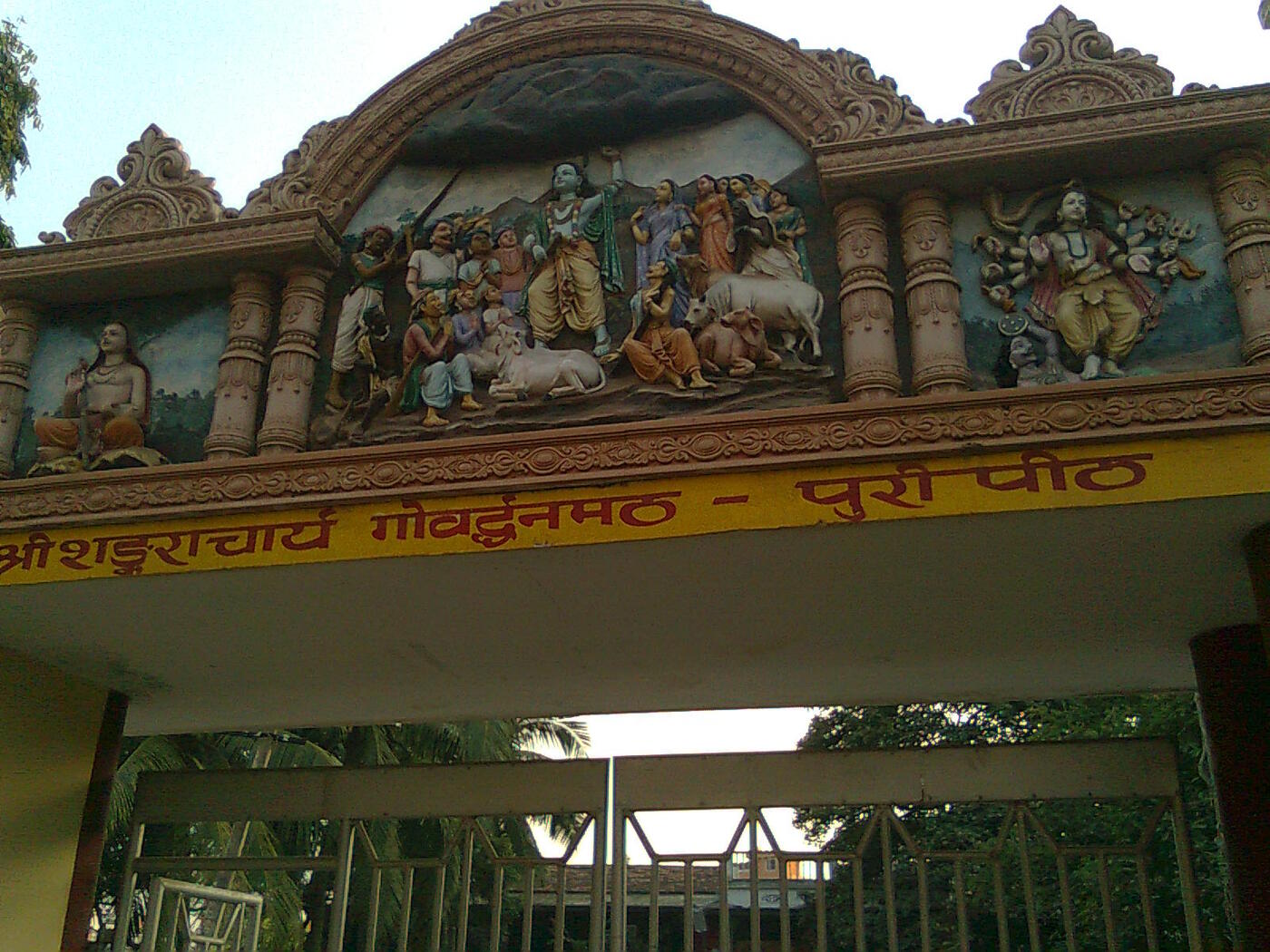
| Institutional position | Abbot (mahant) of the Govardhana Matha at Jagannatha Puri, one of the four mathas traditionally founded by Adi Shankaracharya |
| Sampradaya | Identified by Srila Bhaktisiddhanta Sarasvati Thakura and Srila Prabhupada as a tridandi-sannyasi of the Vishnu Svami (Rudra) sampradaya, not the Mayavadi ekadanda order his matha post might suggest |
| Chief works | Bhavartha-dipika (on Srimad-Bhagavatam), Subodhini-tika (on Bhagavad-gita), Atma-prakashika (on Vishnu Purana) |
At a Glance
- Almost nothing is recorded about his personal life. Even his birthplace is disputed, with four different regions proposed.
- He served for years as abbot of the Govardhana Matha in Jagannatha Puri, a monastery in the line of Adi Shankaracharya's Advaita Vedanta.
- His Bhagavatam commentary, the Bhavartha-dipika, became the standard that every later commentator, Gaudiya and non-Gaudiya alike, had to take into account.
- Sri Chaitanya Mahaprabhu called him "the spiritual master of the entire world," and reacted sharply when the scholar Vallabha Bhatta tried to set his commentary aside.
- Centuries later, Srila Prabhupada still called him simply "the original commentator" on the Bhagavatam.
Scriptural evidence for the introduction (1)
śrīdhara-svāmi-prasāde ‘bhāgavata’ jāni
jagad-guru śrīdhara-svāmī ‘guru’ kari’ māni
Word for word
śrīdhara-svāmi-prasāde: by the mercy of Sridhara Svami; bhāgavata jāni: I understand Srimad-Bhagavatam; jagad-guru: the spiritual master of the entire world; śrīdhara-svāmī: Sridhara Svami; guru kari’ māni: I accept as spiritual master.
“Sridhara Svami is the spiritual master of the entire world because by his mercy we can understand Srimad-Bhagavatam. I therefore accept him as a spiritual master.
The single most important verse here: Sri Chaitanya Mahaprabhu's own direct statement of Sridhara Swami's universal authority, using the word jagad-guru.
Chapter 1
Life and Uncertain Dates
His writing shaped six centuries of Bhagavatam reading, but history has kept very little about his personal life.
No devotee tradition and no modern scholar can give a confident, detailed account of Sridhara Swami's life. It is better to say this plainly at the start than to cover it up with confidence we do not have. His writing has shaped how millions of people have read Srimad-Bhagavatam for over six hundred years. Yet very little is recorded about his personal life. What follows is what can honestly be put together, with the real uncertainties left in, not smoothed away.
When Did He Live #
The most careful attempt to date Sridhara Swami is a 1949 study by the researcher P. K. Gode, published in the Annals of the Bhandarkar Oriental Research Institute. It looks at the question from both sides. On the early side, Sridhara Swami's own writing refers to Vopadeva, a grammarian and Bhagavatam scholar active after 1300 CE. He also draws on Citsukhacharya's commentary on the Vishnu Purana (Citsukhacharya lived 1220-1284 CE). So Sridhara Swami cannot be earlier than roughly 1300. On the late side, Srila Rupa Goswami (1489-1564 CE) already quotes Sridhara Swami's verses as an established authority. Gode's study also says that Sri Chaitanya Mahaprabhu Himself (1486-1534 CE) held his commentary in the highest veneration, or deepest respect, during His own pastimes. So Sridhara Swami must have finished his major work well before Mahaprabhu's own lifetime. Manuscripts of his commentary survive from as early as 1511 CE. Putting the two sides together, scholars accept a range of roughly 1350 to 1450 CE. Most sources, including the scholar J. N. Farquhar, settle on about 1400 CE as a working midpoint. This places him about a century after Madhvacharya (traditionally 1238-1317 CE) and roughly a century before Sri Chaitanya Mahaprabhu. Sridhara Swami clearly knew Madhvacharya's Bhagavata-tatparya-nirnaya. A common loose assumption needs correcting here. Sridhara Swami did not live close to the time of Madhvacharya, nor of Jayadeva Goswami, the author of Gita-govinda. Jayadeva's work is generally dated a full two centuries earlier, in the twelfth century. Sridhara Swami belongs to a separate, later generation, closer in time to the world Mahaprabhu Himself would be born into.
Where He Was Born #
Four different regions have each been proposed as Sridhara Swami's birthplace in one source or another: Odisha, Gujarat, South India, and Varanasi. Most scholars who have studied the evidence prefer Odisha, and specifically a village just outside Remuna in what is today the Baleshwar (Balasore) district. But no source treats the question as fully settled. The Bhaktamala is a seventeenth-century devotional collection by Nabhaji, with an important eighteenth-century Hindi commentary by Priyadasa. According to the Bhaktamala, Sridhara Swami married young and had one child, who later became a well-known local scholar. After this, Sridhara Swami himself turned toward renunciation and accepted sannyasa. None of this can be confirmed from any earlier source, or from any source closer to his own time, and it should be read as tradition, not settled fact.
Guru: Paramananda Puri #
Sridhara Swami names his own guru directly in the opening invocation verse of the Bhavartha-dipika itself. His guru was a sadhu called Paramananda. Sridhara Swami addresses him with the words yat kripaya tam aham vande paramananda-madhavam, "by whose mercy [I have understood the Bhagavatam], I bow to that Paramananda-Madhava." Almost nothing else is recorded about this Paramananda Puri. His name is always mentioned wherever Sridhara Swami's own commentary is discussed, but no fuller life story of him has come down to us. He does not appear to be the same person as any other guru or disciple already covered here. (A different, unrelated Paramananda Puri, a godbrother of Ishvara Puri who met Chaitanya Mahaprabhu on His South India tour more than a century later, appears elsewhere in this history. The two only share a name. They are not the same person, and for that reason no link is given here.) His name is given here in full, without a link, just as the sources give it. He is a teacher known only through what his student wrote about him.
Abbot of the Govardhana Matha at Jagannatha Puri #
For a large part of his adult life, Sridhara Swami was abbot, or mahant, of the Govardhana Matha at Jagannatha Puri. This was one of the most respected posts in the Vedanta world of his day. Tradition holds that the Govardhana Matha is one of the four mathas founded by Adi Shankaracharya himself in the eighth century CE. The other three are at Sringeri, Dwaraka and Jyotirmath. Here the story of his life and the story of his philosophy begin to meet. He was a monk holding one of Advaita Vedanta's own senior posts. Yet he wrote a commentary so full of devotion that Sri Chaitanya Mahaprabhu Himself would later call him, without any reservation, His own guide to the Bhagavatam. This is examined in full on Writing the Bhavartha-dipika.
A Life Known Only Through Its Fruit #
Sridhara Swami is unlike most of the acharyas covered in this history. He has no set of pastime stories, no collection of miracle stories, and no detailed account of his final days. This says something about how the Gaudiya Vaishnava tradition remembers people. What survives instead is almost entirely his written work, and how later acharyas reacted to it. Sri Chaitanya Mahaprabhu's direct testimony is examined on Sri Chaitanya Mahaprabhu's Own Reliance on Him. The sharp episode defending his honor against a proud rival commentator is told on Defending Sridhara Swami's Honor. Srila Prabhupada's own repeated statements are gathered on Srila Prabhupada's Testimony. Very little is recorded about his personal life, while his commentary shaped six centuries of how the Bhagavatam has been read. This is not a contradiction. It may be closer to the real point. What the tradition chose to remember about Sridhara Swami is not who he was, but what he wrote.
Chapter 2
Writing the Bhavartha-dipika
The first commentary to cover the whole of Srimad-Bhagavatam, written by a Shankarite abbot whose heart, later acharyas insisted, belonged to Krishna.
Sridhara Swami called his commentary the Bhavartha-dipika, "the lamp that shows the intended meaning." The title describes his method. It is not there just for decoration. He was not offering a clever new reading of Srimad-Bhagavatam, or building a separate philosophy on top of it, as a commentator sometimes does. He was trying to show what the text itself already says, verse by verse, canto by canto. No one had attempted this before for the entire eighteen-thousand-verse work. This plain purpose is a large part of why it became the commentary every later reader had to study.
The First Complete Commentary #
Fragments of earlier Bhagavatam commentary existed before Sridhara Swami. He himself refers to writers from the impersonalist school such as Citsukhacharya and one Punyaranya, whose works no longer survive. He also clearly knew Madhvacharya's Bhagavata-tatparya-nirnaya, an earlier commentary on selected verses. But nothing before Sridhara Swami covered the whole Bhagavatam, from start to finish, in one continuous commentary. This alone would have earned him a place in the history of the text. Srila Prabhupada's own purport to Srimad-Bhagavatam 1.3.15 calls him simply "the original commentator on the Bhagavatam", meaning the first, not the best or the most famous. That purport's only purpose was to settle a factual point about the order in which the Manus of the universe follow one another. It uses Sridhara Swami's own reading as the standard against which every later commentator would be measured, including Jiva Goswami and Vishvanatha Chakravarti Thakura.
Reading the Bhagavatam's Own Opening Claim #
One small example shows how carefully Sridhara Swami worked. The Bhagavatam's own second verse describes itself as dharmah projjhita-kaitavo 'tra. This means a Purana that has completely thrown out, projjhita, all religion practiced as a cover for some other motive. Sridhara Swami noticed something in the grammar. The prefix pra attached to ujjhita has an important meaning. He commented on it directly. He argued that this prefix rules out even the desire for liberation, moksha, as a proper reason to approach the Bhagavatam, and not only the more obvious motives of economic gain or sense pleasure. Sri Chaitanya-charitamrita records this exact point of Sridhara Swami's grammar in Madhya-lila 24.101. Srila Prabhupada discussed the same verse in a 1971 lecture in Delhi, and he explained Sridhara Swami's reasoning on this same line in detail. He noted that "Sridhara Swami is so respected by all the acharyas" precisely because of this kind of close, careful reading. It is a small moment, but it shows his whole method. He did not create new meanings. He paid exact attention to what the text is actually saying.
Supplying the Vocabulary of Hladini and Samvit #
Sridhara Swami's commentary did something else that mattered greatly for later Gaudiya theology. It happened almost as a side effect of how thorough he was. Commenting on Srimad-Bhagavatam 1.7.6, he preserved and quoted a verse from an earlier teacher, Vishnu Swami. The verse describes the Supreme Lord as hladinya samvid-ashlishtah, accompanied by His hladini (bliss-giving) and samvit (knowledge) potencies, while the conditioned soul remains covered by ignorance. Sri Chaitanya-charitamrita quotes this exact verse directly from Sridhara Swami's Bhavartha-dipika, in both Madhya-lila 18.114 and Antya-lila 5.127. In each place, Srila Prabhupada's purport names the source exactly. Later Gaudiya theology draws directly on this verse. This includes the technical terms hladini-shakti and samvit-shakti, which run through Srila Jiva Goswami's Sandarbhas and every later Gaudiya explanation of Krishna's internal potency. The verse survives today only because Sridhara Swami thought it worth preserving in his commentary, a century before Mahaprabhu appeared.
A Shankarite Abbot's Vaishnava Heart #
The most debated feature of the Bhavartha-dipika is also the one that needs the most honest treatment, because sources truly disagree about how to read it. Sridhara Swami spent much of his life as abbot of the Govardhana Matha, a monastery in Adi Shankaracharya's own line. His commentary does contain passages that sound, on the surface, like standard Advaita Vedanta. He consistently refers to Shankaracharya with real respect, calling him simply bhashyakara, "the commentator," and some of his invocation verses also use language that later readers with a strict dualist view found troubling.
Srila Jiva Goswami, writing his Tattva-sandarbha roughly two centuries later, dealt with this directly and did not ignore it. In that work's twenty-seventh section, he argued that Sridhara Swami was a genuine Vaishnava who used Advaita-sounding language on purpose. It was a way to draw readers already committed to Shankara's system toward bhakti, without pushing them away outright. Generations afterward, Srila Baladeva Vidyabhusana commented on that same passage and put it vividly. In his words, Sridhara Swami's occasional Advaita-sounding phrases were "the meat on the end of a hook, meant to lure fish," that is, bait toward a devotional conclusion. They were not the conclusion itself. Baladeva supported this reading with evidence from the text. He pointed to passages where Sridhara Swami affirms that the form, qualities, incarnations and abode of Bhagavan are eternal, and that His devotees belong to the highest class of souls destined for liberation. No consistent Mayavadi commentator could make claims like these.
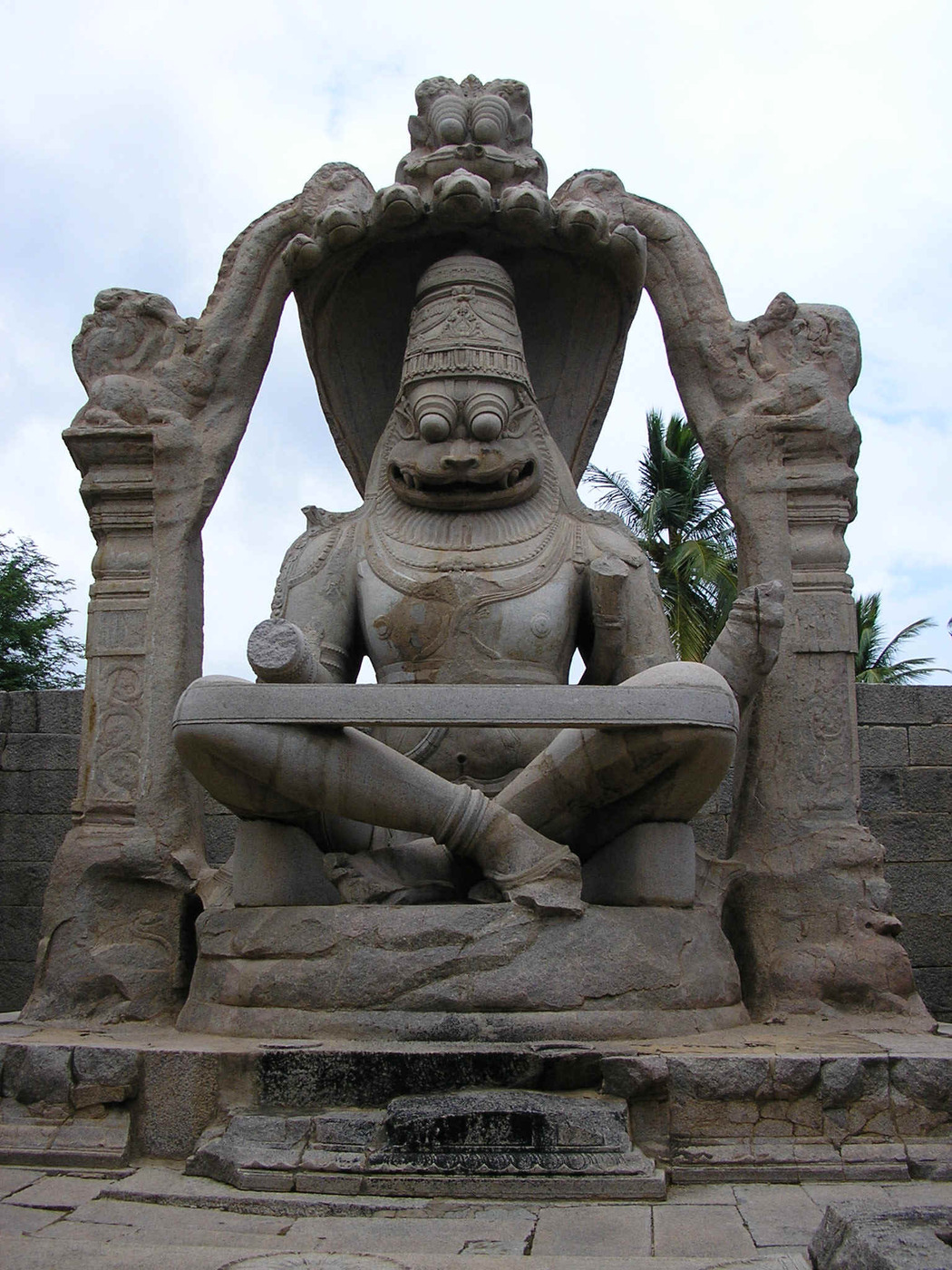
Srila Bhaktisiddhanta Sarasvati Thakura, in a 1925 lecture on this exact question, went further. He identified Sridhara Swami's actual philosophical home as Shuddhadvaita, "purified nondualism." This view is different from Shankara's strict Mayavada. In it, souls and matter are understood as real expansions of the Absolute Truth's own energy, not illusory coverings over an impersonal Brahman. In this view, Sridhara Swami's official position and his personal faith simply did not match. He held one of Shankaracharya's own monastic seats. But privately he remained a worshiper of Krishna and of Lord Nrisimha, and this is quite visible in his own writing. Sridhara Swami's devotion shows through in the invocation verses of his commentary.
It would not be honest to claim that every scholar reads this the same way, or that the question is fully closed. But what the Gaudiya tradition itself concluded, again and again, can be said without any doubt. Some passages have an Advaita coloring on the surface. Even so, the main substance of the Bhavartha-dipika supports a personal and devotional reading of the Bhagavatam. It does not weaken that reading. For this reason Sri Chaitanya Mahaprabhu accepted it so completely, as told in full on Sri Chaitanya Mahaprabhu's Own Reliance on Him.
Two Further Commentaries #
Sridhara Swami wrote at least two other important commentaries: the Subodhini-tika on the Bhagavad-gita, and the Atma-prakashika on the Vishnu Purana. Both are still in print and still read today, though neither became as highly respected as the Bhavartha-dipika. Both use the same method as his Bhagavatam commentary. They give plain and careful explanation, and do not try to build a separate system. Both are cited with respect by later Vaishnava commentators. But only the Bhagavatam commentary became, in Srila Prabhupada's words, the text that comes first whenever Srimad-Bhagavatam is presented, with every other commentary following after it.
Scriptural evidence for this chapter (3)
hlādinyā saṁvid-āśliṣṭaḥ
sac-cid-ānanda īśvaraḥ
svāvidyā-saṁvṛto jīvaḥ
saṅkleśa-nikarākaraḥ
Word for word
hlādinyā: by the potency of pleasure; saṁvid: by the potency of knowledge; āśliṣṭaḥ: embraced; sac-cid-ānandaḥ: full of eternity, knowledge and bliss; īśvaraḥ: the supreme controller; sva-avidyā: by his own ignorance; saṁvṛtaḥ: covered; jīvaḥ: the conditioned soul; saṅkleśa-nikara-ākaraḥ: a treasure-house of tribulations.
“The Supreme Personality of Godhead, the supreme controller, is always full of transcendental bliss and is accompanied by the potencies known as hladini and samvit. The conditioned soul, however, is always covered by ignorance and embarrassed by the threefold miseries of life. Thus he is a treasure-house of all kinds of tribulations.”
From the purport: Purport excerpt: “This quotation of Vishnu Svami is cited in Sridhara Svami's Bhavartha-dipika commentary on Srimad-Bhagavatam (1.7.6).”
A verse of Vishnu Swami that survives today only because Sridhara Swami preserved and quoted it in the Bhavartha-dipika, supplying core vocabulary for later Gaudiya theology of Krishna's internal potencies.
“hlādinyā samvidāśliṣṭaḥ
sac-cid-ānanda-īśvaraḥ
svāvidyā saṁvṛto jīvaḥ
saṅkleśa-nikarākaraḥ”
Word for word
(as above): the same verse of Vishnu Swami quoted a second time in a different context within Sri Chaitanya-charitamrita.
“The Supreme Personality of Godhead, the supreme controller, is always full of transcendental bliss and is accompanied by the potencies known as hladini and samvit. The conditioned soul, however, is always covered by ignorance and embarrassed by the threefold miseries of life. Thus he is a treasure house of all kinds of tribulations.”
From the purport: Purport excerpt: “This verse is found in Sridhara Svami's Bhavartha-dipika (1.7.6), wherein he quotes Sri Vishnu Svami.”
A second, independent citation of the same Vishnu Swami verse from the Bhavartha-dipika, confirming how frequently later Gaudiya writing returns to Sridhara Swami's preserved text.
rūpaṁ sa jagṛhe mātsyaṁ
cākṣuṣodadhi-samplave
nāvy āropya mahī-mayyām
apād vaivasvataṁ manum
Word for word
rūpam: form; saḥ: He; jagṛhe: accepted; mātsyam: of a fish; cākṣuṣa-udadhi-samplave: in the inundation after the period of Cakshusha Manu; nāvi āropya: keeping on the boat; mahī-mayyām: drowned in the earth; apāt: protected; vaivasvatam manum: Vaivasvata Manu.
When there was a complete inundation after the period of the Cakshusha Manu and the whole world was deep within water, the Lord accepted the form of a fish and protected Vaivasvata Manu, keeping him up on a boat.
From the purport: Purport excerpt: “According to Sripada Sridhara Svami, the original commentator on the Bhagavatam, there is not always a devastation after the change of every Manu.”
The purport where Srila Prabhupada names Sridhara Swami “the original commentator on the Bhagavatam,” cited to settle a technical point about the succession of Manus.
Chapter 3
Sri Chaitanya Mahaprabhu's Own Reliance on Him
The exact verses that support the claim that Mahaprabhu treated Sridhara Swami's commentary as His own guide to reading Srimad-Bhagavatam.
It would be easy to assume that a figure as central as Sri Chaitanya Mahaprabhu simply understood Srimad-Bhagavatam directly, without needing anyone else's help to read it. But Sri Chaitanya-charitamrita records something more specific, which in a way teaches us more. Mahaprabhu Himself named one particular commentator as the one whose explanation He relied on. And He said this in words that leave no doubt that He meant it completely.
A Commentary Mahaprabhu Studied and Taught From #
Krishnadasa Kaviraja Goswami's Sri Chaitanya-charitamrita refers to Sridhara Swami's commentary again and again. It does so not only in the one dramatic episode that is told in full in the account that follows. In Madhya-lila 24.101, Mahaprabhu Himself discusses the Bhagavatam's own opening verse. The text records Him explaining Sridhara Swami's grammatical point about the prefix pra in projjhita-kaitavah. The point is that even the desire for liberation is ruled out as a proper reason to approach the Bhagavatam. This is not a passing mention. It shows that Mahaprabhu treated Sridhara Swami's explanation as the correct basic one, and thought it worth teaching to His own associates in detail, verse by verse.
This pattern continues elsewhere. Sri Chaitanya-charitamrita's Adi-lila 1.93 gives a direct quotation attributed to Sridhara Swami on the same grammatical question. There Srila Prabhupada's own description calls him "the great commentator on Srimad-Bhagavatam." The quotation is cited as settled authority, not as one opinion among others. And in the passages discussed on Writing the Bhavartha-dipika, Mahaprabhu's own understanding of Krishna's hladini and samvit potencies draws on a verse that Sridhara Swami preserved from the earlier teacher Vishnu Swami. This means that some of the most technical terms that later Gaudiya theology would build on had already passed through Sridhara Swami's hands before they ever reached Mahaprabhu.
"The Spiritual Master of the Entire World" #
The clearest and most often quoted statement comes from the episode with the scholar Vallabha Bhatta. That episode is told in full on Defending Sridhara Swami's Honor, but the words themselves belong here too. Vallabha Bhatta claimed to have written a Bhagavatam commentary that was better than Sridhara Swami's. Sri Chaitanya-charitamrita, Antya-lila 7.133, records Mahaprabhu's plain and direct reply: "Sridhara Swami is the spiritual master of the entire world because by his mercy we can understand Srimad-Bhagavatam. I therefore accept him as a spiritual master." The Sanskrit itself uses the word jagad-guru, guru of the whole world. The verse just before it, Antya 7.132, makes clear that this was said specifically to someone who had "not accepted his authority."
This is a striking thing for Sri Chaitanya Mahaprabhu to say about anyone. Throughout Gaudiya Vaishnava theology He is accepted as Krishna Himself, with no need of any human teacher. In a smaller way, this is like the principle described on Srila Ishvara Puri's page about Mahaprabhu's formal diksha guru. When the Supreme Lord descends, He still shows by His outward example how an ordinary soul should relate to a spiritual guide. Here He even uses the exact word guru, not some softer word of praise. Sridhara Swami never gave Mahaprabhu formal initiation, and no direct personal meeting between them is recorded at all. His commentary alone, read across a distance of roughly a century, earned him words that Mahaprabhu otherwise kept for His own diksha and shiksha gurus.
Reliance Shown Through Method, Not Only Words #
A public lecture Srila Prabhupada gave in Delhi on 14 November 1971 also shows what this reliance looked like in practice, beyond a single dramatic verse. At its opening, the Bhagavatam describes itself as meant for the paramo nirmatsaranam, those who are completely free of envy. Srila Prabhupada went step by step through Sridhara Swami's own explanation of this phrase, matsarata para utkarshanam asahanam, "envy is the inability to tolerate another's advancement," and he used it to explain why ordinary, competitive human society cannot easily approach the Bhagavatam at all. This is Mahaprabhu's own pattern, which His followers repeated afterward. They did not simply quote Sridhara Swami's conclusions. They worked through his exact wording on a specific verse, phrase by phrase, as the correct way into the text. In the same lecture, Srila Prabhupada added a detail that shows how firmly this reliance was a settled principle, not something personal to Mahaprabhu alone: "I have studied so many commentaries, at least eight principal commentators like Sridhara Svami, Jiva Gosvami, Visvanatha Cakravarti, Bir Raghava Acharya, Subodhini... but nowhere I find the Bhagavata-saptaha." Sridhara Swami is named first, without needing any introduction, in a list of the Bhagavatam's principal commentators that runs down through Jiva Goswami and Vishvanatha Chakravarti Thakura.
A Rule for the Whole Tradition, Not Only a Compliment #
In the text, the verses that come right after this turn personal praise into an instruction meant for everyone. In Antya-lila 7.135-136, Mahaprabhu states directly that "one who comments on Srimad-Bhagavatam following in the footsteps of Sridhara Swami will be honored and accepted by everyone," and He tells Vallabha Bhatta to "put forth your explanation of Srimad-Bhagavatam following in the footsteps of Sridhara Swami" instead of trying to improve on him. When we read these verses together with the earlier ones, the teaching is clear. Mahaprabhu was not simply praising a scholar He happened to admire. He was making Sridhara Swami's commentary the fixed standard. Every future Bhagavatam commentary should be measured against it. By implication, this includes every commentary His own followers would ever write. Srila Jiva Goswami took this instruction seriously enough to build directly on Sridhara Swami's readings in his own Sandarbhas, and Srila Sanatana Goswami's Vaishnava-toshani assumes the same foundation. How far that instruction reached, in later Gaudiya and non-Gaudiya scholarship alike, is described on Legacy Across the Vaishnava Tradition.
Scriptural evidence for this chapter (2)
‘pra’-śabde — mokṣa-vāñchā kaitava-pradhāna
ei śloke śrīdhara-svāmī kariyāchena vyākhyāna
Word for word
pra-śabde: by the prefix pra; mokṣa-vāñchā: the desire for liberation; kaitava-pradhāna: the foremost cheating propensity; ei śloke: in this verse; śrīdhara-svāmī: Sridhara Svami; kariyāchena vyākhyāna: has given the explanation.
“The prefix ‘pra’ in the word ‘projjhita’ specifically refers to those desiring liberation or oneness with the Supreme. Such a desire should be understood to be the foremost cheating propensity. The great commentator Sridhara Svami has explained this verse in that way.
Shows Mahaprabhu Himself teaching Sridhara Swami's specific grammatical point on the Bhagavatam's own opening verse as settled, authoritative reading.
“pra-śabdena mokṣābhisandhir api nirastaḥ” iti
Word for word
pra-śabdena: by the word pra; mokṣa-abhisandhiḥ: the desire for liberation; api: even; nirastaḥ: rejected; iti: thus.
“The prefix ‘pra’ [in the verse from Srimad-Bhagavatam] indicates that the desire for liberation is completely rejected.”
From the purport: Purport excerpt: “This is an annotation by Sridhara Svami, the great commentator on Srimad-Bhagavatam.”
Srila Prabhupada's purport says this line is a note by Sridhara Swami, "the great commentator on Srimad-Bhagavatam." It shows the Chaitanya-charitamrita quoting his point on the prefix pra as settled authority.
Chapter 4
Defending Sridhara Swami's Honor
The exact verses of Sri Chaitanya-charitamrita recording Mahaprabhu's sharp rebuke of the scholar Vallabha Bhatta for claiming to surpass Sridhara Swami's commentary.
Krishnadasa Kaviraja Goswami gave chapter seven of the Antya-lila of Sri Chaitanya-charitamrita this title: "The Meeting of Sri Chaitanya Mahaprabhu and Vallabha Bhatta." The chapter tells in exact detail about the only time in the written record when Mahaprabhu, who had quietly relied on Sridhara Swami, openly and sharply defended him.
A Proud Scholar's Daily Arguments #
Vallabha Bhatta was a very powerful scholar. He would later found the Pushti-marga and become known as Vallabhacharya. There is an irony here that the sources themselves do not point out. Vallabha Bhatta belonged to the very same Vishnu Svami lineage that later acharyas identify as Sridhara Swami's own. He came to Jagannatha Puri already well known for his learning. Antya 7.100-102 describes how he came every day to Mahaprabhu's residence to argue with Advaita Acharya and Svarupa Damodara Goswami. He was "like a duck in a society of white swans." Every position he put forward was refuted, one after another, by the Vaishnavas gathered there. Their first exchange was about whether chanting Krishna's name breaks a wife's duty not to speak her husband's name aloud. It ended with Mahaprabhu Himself correcting him directly (Antya 7.103-108). The text says plainly that it left Vallabha Bhatta speechless and unhappy.
"I Have Refuted the Explanations of Sridhara Swami" #
Still not discouraged, Vallabha Bhatta returned the next day. Antya 7.112 records that he spoke "with great pride." What he said is recorded word for word: "In my commentary on Srimad-Bhagavatam, I have refuted the explanations of Sridhara Swami. I cannot accept his explanations. Whatever Sridhara Swami reads he explains according to the circumstances. Therefore he is inconsistent in his explanations and cannot be accepted as an authority" (Antya 7.113-114). This was not a small scholarly disagreement over one verse. It was a direct claim to have completely replaced the standard commentary on the whole Bhagavatam.
"One Who Does Not Accept the Svami I Consider a Prostitute" #
Sri Chaitanya-charitamrita records that Mahaprabhu answered with one sharp play on words. In Antya 7.115 He replies with a smile: "One who does not accept the svami [husband] as an authority I consider a prostitute." The wordplay depends on the two meanings of the word svami. One meaning is "husband." It has a second meaning, "the authoritative commentator," as part of Sridhara Swami's own name. Right afterward the text says that "Sri Chaitanya Mahaprabhu became very grave" and that "all the devotees present derived great satisfaction from hearing this statement" (Antya 7.116). Srila Prabhupada retold this episode in a 1973 London lecture. He explained the force of the remark plainly for an English-speaking audience: "You do not recognize Sridhara Swami, then you are a prostitute. How can I hear from a prostitute?" Mahaprabhu refused even to hear Vallabha Bhatta's commentary read aloud.
Correction, Not Cruelty #
Sri Chaitanya-charitamrita takes care to show that what follows was instruction, not simple anger. Antya 7.117-118 states that Mahaprabhu, "descended as an incarnation for the benefit of the entire world," knew Vallabha Bhatta's mind completely. He corrected his false pride "exactly as Krishna had cut down the false pride of Indra." This recalls the Puranic story in which Krishna humbled Indra's pride. Krishna did this for Indra's own highest good, not out of ill will. Vallabha Bhatta went home troubled. That same night he thought through this same reasoning for himself (Antya 7.120-124). He understood that Mahaprabhu's harsh words, like Krishna's treatment of Indra, were meant to purify him, not to punish him. The next morning he came to Mahaprabhu again, this time "in great humility, offering many prayers," and sought shelter at His feet (Antya 7.125).
Full, Specific Words of Surrender and Instruction #
What follows is one of the more detailed exchanges of confession and teaching anywhere in Sri Chaitanya-charitamrita. Here the exact words are what matter, so they are given closely here. Vallabha Bhatta admits, "I am a great fool, and indeed I have acted like a fool by trying to demonstrate my learning to You" (Antya 7.126). Mahaprabhu first answers with real respect, "You are both a greatly learned scholar and a great devotee" (Antya 7.131). Then He speaks the verses for which this whole episode is remembered. "You have dared criticize Sridhara Swami, and you have begun your own commentary on Srimad-Bhagavatam, not accepting his authority. That is your false pride" (Antya 7.132). Then, right away: "Sridhara Swami is the spiritual master of the entire world because by his mercy we can understand Srimad-Bhagavatam. I therefore accept him as a spiritual master" (Antya 7.133). Finally, Mahaprabhu gives the rule that follows from this for every future commentator, including Vallabha Bhatta: "Whatever you might write due to false pride, trying to surpass Sridhara Swami, would carry a contrary purport. Therefore no one would pay attention to it. One who comments on Srimad-Bhagavatam following in the footsteps of Sridhara Swami will be honored and accepted by everyone... Giving up your false pride, worship the Supreme Personality of Godhead, Krishna" (Antya 7.134-136).
Why the Episode Mattered #
Srila Prabhupada discussed this same story on a morning walk in Los Angeles in 1973, and he explained the theological point directly. Vallabha Bhatta was, in Prabhupada's own words, "Vaishnava, acharya," a genuine devotee, not a rival tradition to be dismissed, "but that very deviation, that 'I have done something better than Sridhara,' that is not our parampara system... We should always remain servant of the servant. Never we shall think that 'I am better than my Guru Maharaja.' That is falldown." In other words, Mahaprabhu did not react so sharply because of a disagreement over a point of Sanskrit grammar. He reacted to the proud idea that one's own personal brilliance gives one the right to set aside the long-standing authority of the disciplic succession. When this pride was aimed at Sridhara Swami, Sri Chaitanya Mahaprabhu thought it worth stopping right there, in front of the whole assembly at Jagannatha Puri. Vallabha Bhatta accepted the correction. Sri Chaitanya-charitamrita's own account ends with him surrendered, not resentful. Later Vaishnava tradition remembers that he went on to found his own respected line of devotion to Krishna, the Pushti-marga, and that he had learned this lesson at its very foundation.
Scriptural evidence for this chapter (9)
“bhāgavate svāmīra vyākhyāna kairāchi khaṇḍana
la-ite nā pāri tāṅra vyākhyāna-vacana
Word for word
bhāgavate: in my commentary on Śrīmad-Bhāgavatam; svāmīra: of Śrīdhara Svāmī; vyākhyāna: explanation; kairāchi khaṇḍana: I have refuted; la-ite nā pāri: I cannot accept; tāṅra: his; vyākhyāna-vacana: words of explanation.
“In my commentary on Srimad-Bhagavatam,” he said, “I have refuted the explanations of Sridhara Svami. I cannot accept his explanations.
Vallabha Bhatta's opening boast to Sri Chaitanya Mahaprabhu, the spark for the entire episode told here in full.
yāhā paḍi tāhā vyākhyā kare avicāre
sei artha lañā kare vyākhyā anusāre
Word for word
yāhā paḍi: whatever he reads; tāhā vyākhyā: that explanation; kare avicāre: does without deliberation; sei artha lañā: taking that meaning; kare vyākhyā anusāre: makes explanation according to.
“Whatever Sridhara Svami reads he explains according to the circumstances. Therefore he is inconsistent in his explanations and cannot be accepted as an authority.”
Vallabha Bhatta's specific charge against Sridhara Swami's method, immediately preceding Mahaprabhu's sharp reply.
prabhu hāsi’ kahe, — “yei svāmī nāhi māne
‘veśyā’ baliyā tāre karoṅ āmi jñāne
Word for word
prabhu: Lord Chaitanya Mahāprabhu; hāsi’ kahe: smilingly said; yei: anyone who; svāmī: the husband; nāhi māne: does not accept; veśyā: prostitute; baliyā: as; tāre: him or her; karoṅ āmi jñāne: I consider in knowledge.
Sri Chaitanya Mahaprabhu smilingly replied, “One who does not accept the svami [husband] as an authority I consider a prostitute.”
The famous pun on svami (“husband” and Sridhara Swami's own name) that the whole tradition remembers this episode by.
eta bali’ mahāprabhu ha-ilā gambhīra
sakala vaiṣṇava tāhā mānila susthira
Word for word
eta bali’: saying this; mahāprabhu: Sri Chaitanya Mahaprabhu; ha-ilā gambhīra: became very grave; sakala vaiṣṇava: all the devotees; tāhā mānila susthira: accepted this with great satisfaction.
After saying this, Sri Chaitanya Mahaprabhu became very grave. All the devotees present derived great satisfaction from hearing this statement.
Confirms the reaction was deliberate and grave, not a passing joke, and that the assembled Vaishnavas approved of the rebuke.
śrīdhara-svāmī nindi’ nija-ṭīkā kara!
śrīdhara-svāmī nāhi māna’, — eta ‘garva’ dhara!
Word for word
śrīdhara-svāmī: Sridhara Svami; nindi’: criticizing; nija-ṭīkā kara: you write your own commentary; nāhi māna’: you do not accept; eta garva dhara: you hold so much false pride.
“You have dared criticize Sridhara Svami, and you have begun your own commentary on Srimad-Bhagavatam, not accepting his authority. That is your false pride.
Mahaprabhu names Vallabha Bhatta's real offense directly: not disagreement, but false pride in setting aside an accepted authority.
śrīdhara-upare garve ye kichu likhibe
‘artha-vyasta’ likhana sei, loke nā mānibe
Word for word
śrīdhara-upare: over Sridhara Svami; garve: out of false pride; ye kichu likhibe: whatever you write; artha-vyasta: of contrary purport; likhana sei: that writing; loke nā mānibe: people will not accept.
“Whatever you might write due to false pride, trying to surpass Sridhara Svami, would carry a contrary purport. Therefore no one would pay attention to it.
Mahaprabhu predicts, in effect, that Vallabha Bhatta's proposed replacement commentary would fail on its own terms.
śrīdharera anugata ye kare likhana
saba loka mānya kari’ karibe grahaṇa
Word for word
śrīdharera anugata: following Sridhara Svami; ye kare likhana: one who writes; saba loka: all people; mānya kari’: with honor; karibe grahaṇa: will accept.
“One who comments on Srimad-Bhagavatam following in the footsteps of Sridhara Svami will be honored and accepted by everyone.
States, as a general rule for every future Bhagavatam commentator, the principle this whole episode is remembered for.
śrīdharānugata kara bhāgavata-vyākhyāna
abhimāna chāḍi’ bhaja kṛṣṇa bhagavān
Word for word
śrīdhara-anugata: following Sridhara Svami; kara: do; bhāgavata-vyākhyāna: explanation of Srimad-Bhagavatam; abhimāna chāḍi’: giving up false pride; bhaja: worship; kṛṣṇa bhagavān: the Supreme Personality of Godhead Krishna.
“Put forth your explanation of Srimad-Bhagavatam following in the footsteps of Sridhara Svami. Giving up your false pride, worship the Supreme Personality of Godhead, Krishna.”
Mahaprabhu's closing instruction to Vallabha Bhatta, and the last word of the whole episode's central teaching.
ei-mata cintiyā bhaṭṭa āra dina āsi’
mahā-dainye kaila bahu stuti namaskāra
Word for word
ei-mata cintiyā: thinking in this way; bhaṭṭa: Vallabha Bhatta; āra dina āsi’: coming the next day; mahā-dainye: in great humility; kaila bahu stuti namaskāra: offered many prayers and obeisances.
Thinking in this way, Vallabha Bhatta approached Sri Chaitanya Mahaprabhu the next morning, and in great humility, offering many prayers, he sought shelter and surrendered at the lotus feet of the Lord.
The episode's resolution: Vallabha Bhatta accepts the correction rather than resenting it, a detail essential to the story's real point.
Chapter 5
Srila Prabhupada's Testimony
Purports and lectures spanning five years and six cities, all making the same point in Srila Prabhupada's own words: Sridhara Swami is the original, and still unrivaled, Bhagavatam commentator.
The reverence Sri Chaitanya Mahaprabhu showed toward Sridhara Swami did not fade with the centuries between them. Srila Prabhupada, founder-acharya of ISKCON and the most recent link in the Gaudiya guru-parampara traced in this history, returns to Sridhara Swami again and again across his published purports and recorded lectures. Sometimes he settles a technical point of Bhagavatam interpretation, and sometimes he corrects a real misunderstanding among other sannyasis of his own day. He always speaks with the same deep respect that Mahaprabhu Himself had shown.
"The Original Commentator on the Bhagavatam" #
Srila Prabhupada's view of Sridhara Swami's position is summed up most briefly in his purport to Srimad-Bhagavatam 1.3.15. The purport discusses a technical question about the timing of universal devastations between different Manus. Prabhupada writes: "According to Sripada Sridhara Svami, the original commentator on the Bhagavatam, there is not always a devastation after the change of every Manu," and he then notes that Jiva Goswami and Vishvanatha Chakravarti Thakura explain the same point in more detail. The passage is a small, technical note. But Prabhupada calls Sridhara Swami "the original commentator," and he adds no further explanation. This shows how settled Sridhara Swami's position was in Prabhupada's mind. He was not a name that needed introduction or defense. He was simply the starting point.
Correcting a Real Misunderstanding #
Srila Prabhupada's purport to Sri Chaitanya-charitamrita, Madhya-lila 3.6, deals directly with one particular confusion. He writes that some Mayavadi sannyasis, "not understanding Sridhara Svami, sometimes think that Sridhara Svami belonged to the Mayavada ekadanda-sannyasa community. Actually this was not the case." The purport continues that Sri Chaitanya Mahaprabhu "accepted Sridhara Svami, who was a tridandi-sannyasi." This means Sridhara Swami was a member of the Vaishnava sannyasa order, not the impersonalist one that his position at the Govardhana Matha might suggest. This is not an isolated remark. In a 1970 evening class in Surat, Prabhupada had quoted him in passing, and a devotee in the audience asked "Who is Sridhara Svami?" Prabhupada answered at length: "The commentator of Srimad-Bhagavatam. In our book, Srimad-Bhagavatam, we have mentioned several times Sridhara Svami. Sridhara Svami is one of the acharyas. He happens to be in the Vishnu Svami sampradaya... Sridhara Svami belongs to the Sambhu, from Lord Shiva, the party... these four parties, although they are called parties, but their aim is how to satisfy Vishnu." In a 1974 room conversation in Paris with the French philosopher Olivier Lacombe, Prabhupada named him again together with Ramanujacharya: "Also Sridhara Svami. Sridhara Svami, he has written. He belongs to Vishnu Svami-sampradaya. And our Gaudiya-Vaishnava, Vishvanatha Chakravarti, he has written comments. And Baladeva Vidyabhushana, Bhaktivinoda Thakura," and so Prabhupada clearly placed Sridhara Swami at the head of a line of commentary running down through Vishvanatha Chakravarti Thakura, Baladeva Vidyabhusana and Bhaktivinoda Thakura.
Retelling the Vallabha Bhatta Story, Again and Again #
Prabhupada returned to the Vallabha Bhatta episode on several separate occasions over several years. This is a strong sign of how central he considered it. (The full story is told on Defending Sridhara Swami's Honor.) In a 1971 lecture in Delhi he used it to make a point about respecting predecessor acharyas: "Sridhara Svami, the great commentator on the Srimad-Bhagavatam, accepted by all the acharyas; and you know when Srimad-Bhagavatam is presented, Sridhara Svami's commentary comes first, then all others. Sridhara Svami is so respected by all the acharyas." In a 1973 lecture in London titled "What Is a Guru?" he retold the whole episode as a teaching on surrender to authority. He put Mahaprabhu's sarcastic pun into plain words for an English-speaking audience: "You do not recognize Sridhara Svami, then you are a prostitute. How can I hear from a prostitute?" In 1975, during a morning walk conversation in Bombay, Dr. Patel suggested that Vallabha Bhatta's commentary might genuinely have improved on some points. Prabhupada did not change his position: "Whatever it may be, you cannot reject. You cannot say that 'I have done better than Sridhara Svami.' If you simply following the footprints of Sridhara Svami, that is [proper] not that 'I have done better than him.'"
Placing Him Among the Four Sampradayas #
Prabhupada's Surat answer, quoted above, places Sridhara Swami within a wider picture of the Vaishnava tradition that Prabhupada returned to often. This is the teaching that there are four bona fide disciplic lines, each traced to a different original teacher. They are Sri (through Ramanujacharya), Brahma (through Madhvacharya), Rudra (through Vishnu Swami), and Kumara (through Nimbarka). In Prabhupada's own repeated description, Sridhara Swami belongs to the Rudra sampradaya, "from Lord Shiva, the party." This name draws on Srimad-Bhagavatam 12.13.16, which says that Shiva is vaishnavanam yatha shambhuh, the greatest of Vaishnavas. To an unfamiliar reader the name might suggest some connection to Shiva-worship in place of worship of Krishna, but it does not mean that. Whenever Prabhupada raised this, in the Surat exchange and elsewhere, he made the same point. The four sampradayas have their own histories, and their specific philosophical positions differ. But all four share a common aim, "how to satisfy Vishnu." Sridhara Swami's own visible devotion to Lord Nrisimha, seen in the invocation verses of his commentary, fits naturally within that picture.
A Consistent Voice Across Five Years of Recorded Talks #
Taken together, these statements span at least six separate recorded lectures and conversations between 1970 and 1975, in cities as far apart as Surat, Delhi, Los Angeles, Paris, London and Bombay. They show a settled conviction that Prabhupada carried with him and taught wherever he went. It was not a position taken up for one particular audience. This consistency matters. It shows that Prabhupada did not treat Sridhara Swami's authority as a pious detail to mention now and then. He treated it as a working principle of Gaudiya Vaishnava scholarship itself. The whole tradition, beginning with Sri Chaitanya Mahaprabhu Himself, agreed to build on this commentator. No acharya, however learned, has the right to set him aside.
Scriptural evidence for this chapter (1)
etāṁ sa āsthāya parātma-niṣṭhām
adhyāsitāṁ pūrvatamair mahadbhiḥ
ahaṁ tariṣyāmi duranta-pāraṁ
tamo mukundāṅghri-niṣevayaiva
Word for word
etām: this; saḥ āsthāya: being fixed in; para-ātma-niṣṭhām: devotion to the Supreme Person; pūrva-tamaiḥ mahadbhiḥ: by previous great acharyas; aham tariṣyāmi: I shall cross over; duranta-pāram tamaḥ: the insurmountable ocean of nescience; mukunda-aṅghri-niṣevayā: by service to the lotus feet of Mukunda; eva: certainly.
“[As a brahmana from Avanti-desha said:] ‘I shall cross over the insurmountable ocean of nescience by being firmly fixed in the service of the lotus feet of Krishna. This was approved by the previous acharyas, who were fixed in firm devotion to the Lord.’”
From the purport: Purport excerpt: “Sri Chaitanya Mahaprabhu accepted Sridhara Svami, who was a tridandi-sannyasi, but the Mayavadi sannyasis, not understanding Sridhara Svami, sometimes think that Sridhara Svami belonged to the Mayavada ekadanda-sannyasa community. Actually this was not the case.”
The verse Sri Chaitanya Mahaprabhu recited on accepting sannyasa; Srila Prabhupada's purport to it is where he explicitly clarifies that Sridhara Swami was a tridandi-sannyasi, not a Mayavadi ekadandi.
Chapter 6
Legacy Across the Vaishnava Tradition
How a Bhagavatam commentary written a century before Sri Chaitanya Mahaprabhu became the standard that every later commentator, Gaudiya and non-Gaudiya alike, had to take into account.
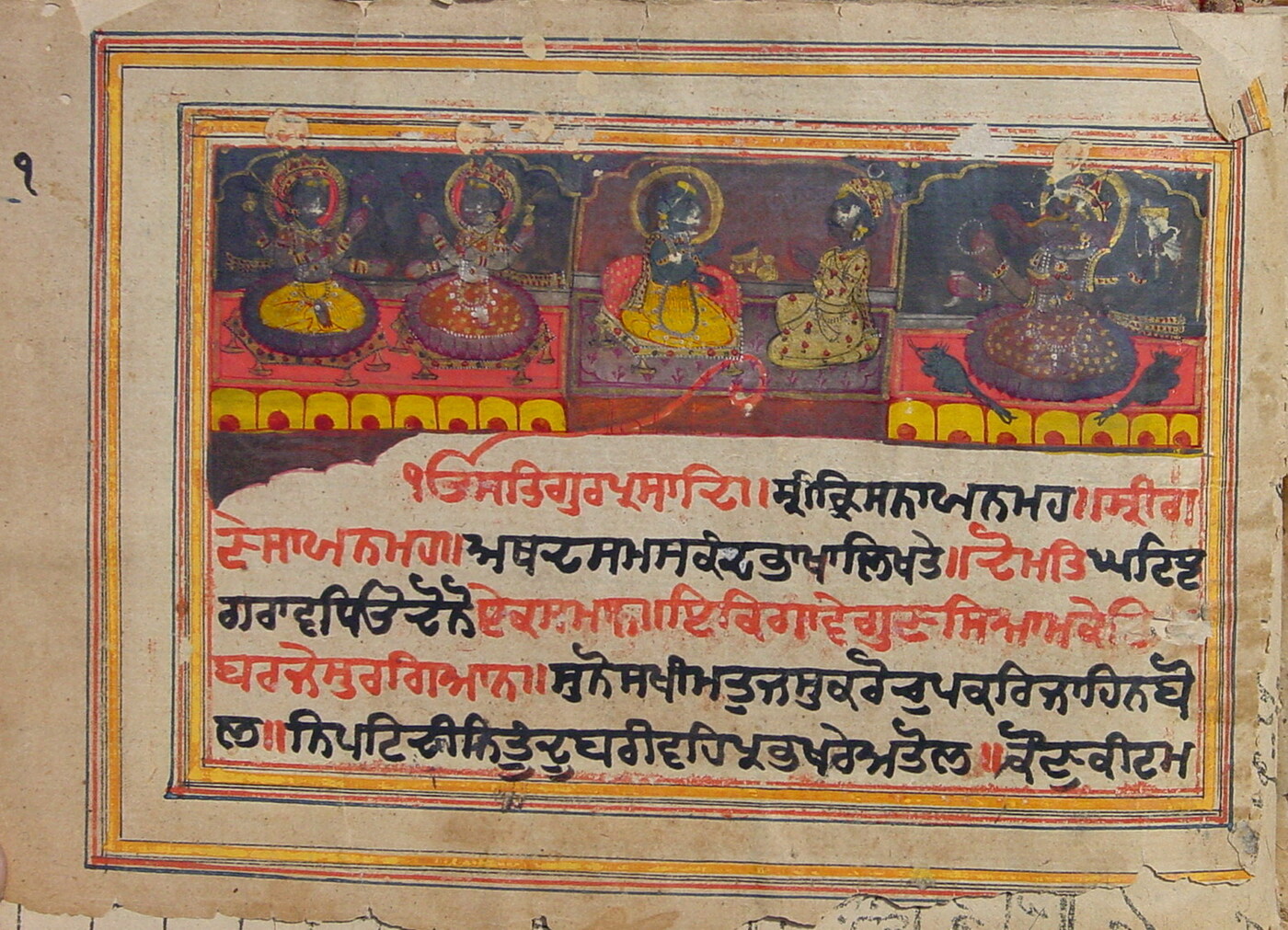
By the time the Gaudiya Vaishnava tradition had produced its own full library of Bhagavatam scholarship, Sridhara Swami's Bhavartha-dipika was no longer simply one respected predecessor's work among several. It had become the fixed standard. Every later commentator, inside the Gaudiya line and well beyond it, had to compare his own reading with it.
The Commentary Every Gaudiya Acharya Built On #
Srila Jiva Goswami relied on Sridhara Swami directly and by name throughout his Sat-sandarbha, especially in the fourth of the six Sandarbhas, Bhagavata-sandarbha. There Jiva Goswami shows that Krishna, and not any other form of Godhead, is svayam bhagavan, the original Personality. He works through scripture after scripture and, as the account on that page puts it, "backs up earlier commentators including Sridhara Svami." Srila Sanatana Goswami's Vaishnava-toshani is his own long Bhagavatam commentary, discussed on Hari-bhakti-vilasa and Other Works. It too assumes a reader who already knows Sridhara Swami's reading, and it builds on that reading instead of repeating it. Vishvanatha Chakravarti Thakura and Baladeva Vidyabhusana wrote their own respected commentaries generations later still. Both openly discuss Sridhara Swami's readings verse by verse, instead of starting fresh. In the twentieth century, Bhaktivinoda Thakura and Bhaktisiddhanta Sarasvati Thakura continued exactly the same practice. Srila Prabhupada's own Bhaktivedanta purports are the most recent link in that chain. They cite Sridhara Swami by name at many points across his translation of Srimad-Bhagavatam. The pages on Writing the Bhavartha-dipika and Srila Prabhupada's Testimony both show this directly.
Respected Outside the Gaudiya Line as Well #
Sridhara Swami's authority was never limited to the Gaudiya Vaishnava tradition alone. This needs to be said carefully, without overstating it. The Bhakti scholar Ravi M. Gupta, writing on Jiva Goswami's Vedanta, sums up the wider picture directly: Sridhara Swami, "although a renunciate of a Sankarite order, he was (and is) revered by Vaishnavas as commentator par excellence on the Bhagavata Purana. So great was Sridhara's influence that his commentary became the measuring stick for those that followed him." Perhaps the most striking independent confirmation comes from outside the Gaudiya line, from a separate Vaishnava school. B. N. K. Sharma was a twentieth-century historian and one of the most respected modern scholars of Madhvacharya's own Dvaita school. He judged Sridhara Swami's interpretations by what they actually say, and concluded that Sridhara Swami is "frankly dualistic in his interpretations, even where a monistic one could be thought of... He is even anti-monistic at times." Sharma had no devotional reason to defend Sridhara Swami's standing as a Vaishnava. Yet his judgment agrees closely with what Srila Jiva Goswami and Srila Bhaktisiddhanta Sarasvati Thakura argued from within the tradition. Whatever institutional position Sridhara Swami held, his actual explanations of the Bhagavatam read as the words of a devotee, not of an impersonalist.
A Devotional Legend Worth Reporting as Legend #
One more story about Sridhara Swami's reputation should be mentioned here, but it is clearly marked as tradition, not history. It comes from the Bhaktamala (the same seventeenth-century compilation that preserves what little is known of his early life) and its eighteenth-century commentary, the Bhaktirasabodhini. According to these works, the Advaitin community of Varanasi was troubled by how devotional Sridhara Swami's commentary sounded. They are said to have placed his manuscript before the ancient Vishnu deity Bindu-Madhava, so that the Lord Himself could judge whether its teaching was sound. The deity is said to have replied with a verse: "I [Shiva] know, Shukadeva knows, and Vyasadeva may or may not know: Sridhara knows all, through the mercy of Nrisimha alone." This account is preserved only in a devotional compilation written two to three centuries after Sridhara Swami's own lifetime. No earlier record of it appears in the available sources. So it should be read exactly as the tradition itself presents it, as a legend that shows how completely later Vaishnavas came to trust his commentary, and not as a verified historical event. A related verse, which can be checked independently, appears in Sri Chaitanya-charitamrita itself (Madhya-lila 24.313). There Mahaprabhu quotes Lord Shiva teaching a similar point about the Bhagavatam in general: that it "can be learned only through devotional service, not by material intelligence, speculative methods or imaginary commentaries." The two verses have the same structure and make the same basic claim. But only the second can be directly verified in the earliest surviving text.
Why the Commentary Still Comes First #
Some things can be verified again and again, from several independent directions. There are Sri Chaitanya Mahaprabhu's own recorded words. There are generations of Gaudiya acharyas who built directly on his readings. And there is even a scholar from an entirely separate Vaishnava school who reached the same conclusion about the devotional character of his work. What these show is simple enough to say without any doubt. Sridhara Swami wrote the first commentary to cover the whole of Srimad-Bhagavatam. He wrote it with such care that Mahaprabhu Himself relied on his specific readings about a century later. He left behind a text that every later commentator in this tradition, including the guru-parampara traced here, has treated as the foundation of the whole discussion, not as one option among many. Six hundred years on, when Srimad-Bhagavatam is presented in the Gaudiya Vaishnava tradition, Sridhara Swami's commentary still comes first.
Scriptural evidence for this chapter (1)
ahaṁ vedmi śuko vetti
vyāso vetti na vetti vā
bhaktyā bhāgavataṁ grāhyaṁ
na buddhyā na ca ṭīkayā
Word for word
aham: I (Lord Shiva); vedmi: know; śukaḥ: Sukadeva Gosvami; vetti: knows; vyāsaḥ: Vyasadeva; vetti na vetti vā: knows or may not know; bhaktyā: by devotional service; bhāgavatam grāhyam: Srimad-Bhagavatam is to be understood; na buddhyā: not by intelligence; na ca ṭīkayā: nor by imaginary commentary.
“[Lord Shiva said:] ‘I may know; Sukadeva Gosvami, the son of Vyasadeva, may know; and Vyasadeva may know or may not know Srimad-Bhagavatam. On the whole, Srimad-Bhagavatam, the spotless Purana, can be learned only through devotional service, not by material intelligence, speculative methods or imaginary commentaries.’”
A verse Mahaprabhu Himself quotes about the Bhagavatam generally; it shares its structure with a later devotional legend naming Sridhara Swami specifically, discussed honestly as legend on the legacy page.
- Sri Chaitanya-charitamrita, Antya-lila 7 (vedabase.io)
- Srimad-Bhagavatam 1.3.15, Purport
- Sri Chaitanya-charitamrita, Madhya-lila 3.6, Purport
- The Glories of Sridhara Swami: A Quick Comment on a Crafty Commentator, by Satyaraja Dasa — Back to Godhead
- P. K. Gode, "Date of Sridharasvamin... Between c. A.D. 1350 and 1450," Annals of the Bhandarkar Oriental Research Institute 30 (1949)
- Wisdomlib: Shridhara Svami — definitions and bibliographic notes
- Ravi M. Gupta, The Chaitanya Vaishnava Vedanta of Jiva Goswami: When Knowledge Meets Devotion
- Stuart Mark Elkman, Jiva Gosvamin's Tattva-sandarbha
