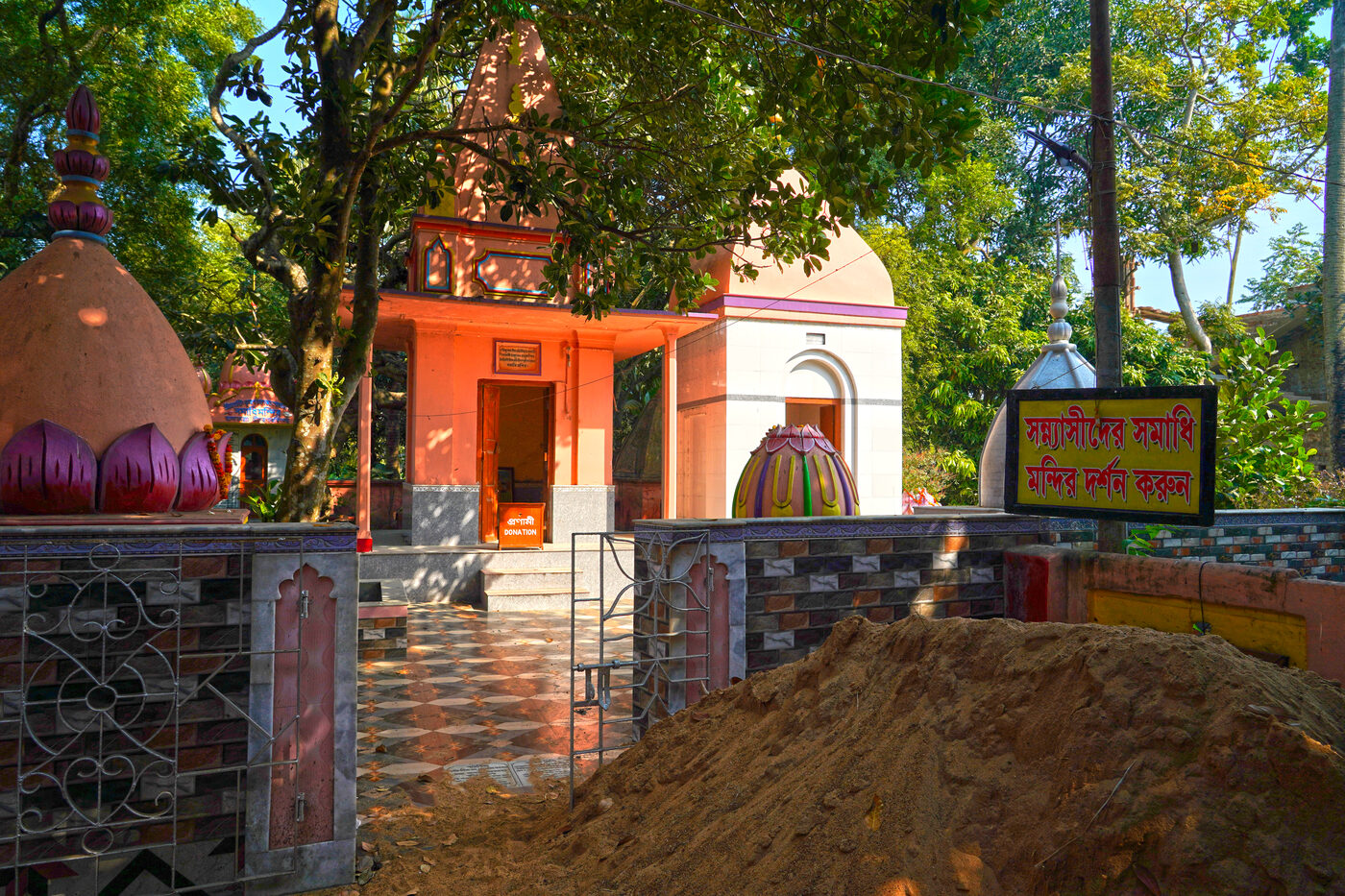
In January 1510 Chaitanya Mahaprabhu took sannyasa at Katwa and went to Jagannatha Puri. For two years, life in Nabadwip had been organised around His presence, and now He had left it behind. For those who had been part of that life, Nabadwip was unbearable afterwards. Vrindavana Dasa Thakura's account, as summarised by Srila Prabhupada, is that Srivasa Thakura left Nabadwip after the Lord's sannyasa, in all likelihood because of the feelings of separation. He settled at Kumarahatta, the town on the Ganges now called Halisahar. This was also the birthplace of Isvara Puri, Mahaprabhu's own spiritual master. Srivasa took his brothers with him. He continued to visit Sachi Devi at Nabadwip and to stay with her for a few days at a time. When Mahaprabhu came up from Puri to see His mother and the Ganges, He stopped at Kumarahatta to see Srivasa.
| Detail | Description |
|---|---|
| Left Nabadwip | After the Lord's sannyasa at Katwa in January 1510 |
| Later home | Kumarahatta on the Ganges, the town now called Halisahar |
| Also the birthplace of | Isvara Puri, Mahaprabhu's own spiritual master |
| Yearly practice | Travelled to Jagannatha Puri and stayed the four months of the rains |
| Deities | A temple of Nitai-Gauranga at Chuchura, across the Ganges from Halisahar |
| Samadhi | More than one place is claimed for it |
The Yearly Journey to Jagannatha Puri #
The pattern for the remaining twenty-four years was set almost at once. Every year, in the season of the chariot festival, the Bengali devotees travelled together to Jagannatha Puri, spent the four months of the rainy season there, and went home. Krishnadasa Kaviraja names the party again and again: Acharyaratna, Vidyanidhi, Srivasa, Ramai, Vasudeva, Murari, Govinda and his brothers, Raghava Pandit with his bags of prepared food, and the men of Kulina-grama with their silk ropes. Srivasa's name is never missing from the list. When Sarvabhauma Bhattacharya was being introduced to the Bengali devotees, the Lord pointed them out to him one by one. Srivasa Pandit is named in that list beside Vakresvara Pandit, Vidyanidhi Acharya and Gadadhara Pandit.
Purchased by the Four Brothers #
There is a short exchange from one of those visits that shows their relationship as clearly as any longer story could. Mahaprabhu spoke to Srivasa and his brothers with great affection. He told them that He was so much in their debt that He had been purchased by the four of them. Srivasa answered that it was the other way round: it was the four brothers who had been purchased by His mercy.
Leading a Kirtana Party at the Ratha-yatra #
At the Ratha-yatra itself Srivasa had a fixed duty. The Lord divided the singers into groups around the chariot, and Krishnadasa Kaviraja names the two chief performers of the sankirtana as Svarupa Damodara Goswami and Srivasa Thakura. Advaita Acharya was told to dance in the first party. The second party was formed with Srivasa Thakura at its head. Gangadasa, Haridasa, Sriman, Shubhananda and Srirama Pandit responded to his singing, and Nityananda Prabhu was appointed as its dancer. This was not just a title of honour. It means that for many of the pilgrims crowding the road from the Jagannatha temple to the Gundicha, the voice they were following was his.
Haricandana and Maharaja Prataparudra #
One incident from a chariot festival is told here in full, because it shows how highly these Bengali householders had come to be regarded. Maharaja Prataparudra, the king of Orissa, was watching Mahaprabhu dance. Srivasa Thakura had come to a stop directly in front of him, completely absorbed. One of the king's officers, Haricandana, touched Srivasa and asked him to move aside. Srivasa had not noticed being touched. Haricandana pushed him again and again, and at last Srivasa became angry and slapped him. The officer turned to speak, but Prataparudra Maharaja stopped him. The king told him that he was a fortunate man to have been touched by Srivasa Thakura, that the king himself was not so fortunate, and that he ought to feel obliged. A Bengali brahmana had struck a court officer in front of the ruler of the province, and the ruler took the brahmana's side. It gives a fair picture of what the movement had become in twenty years, and of who people understood Srivasa to be.
The Last Years at Kumarahatta #
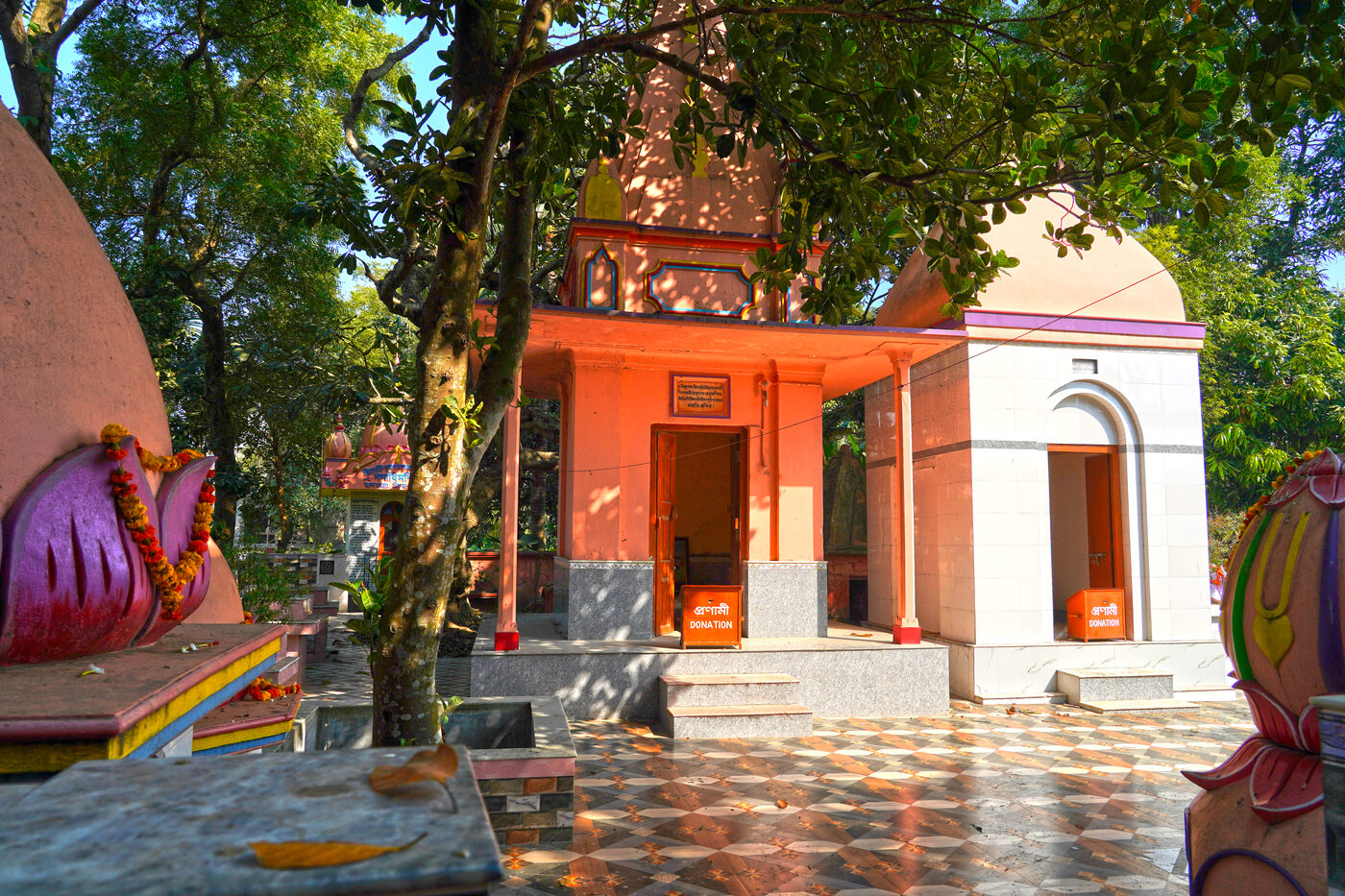
By contrast, the sources say very little about the end of his life. We say this plainly instead of filling in the gap. The Chaitanya-charitamrita gives an entire chapter to the passing of Haridasa Thakura, with the day, the manner, the procession and the tomb by the sea. It gives Srivasa Thakura nothing of the kind. Instead, the tradition has kept the place. He spent his later years at Kumarahatta. There, Mahaprabhu is said to have given him a blessing: his house would never know poverty, and whatever he needed for his worship would come to his door if he never went out to look for it. Across the Ganges from Halisahar, at Chuchura, there is a temple of Nitai-Gauranga. Local tradition identifies its Deities as the ones Srivasa Pandit himself worshipped, and the temple was formerly named after him. His samadhi is shown among the sites associated with the Chaitanya movement, and readers will find more than one place claimed for it.
The Fifth Place as Bhakta #
Gaudiya teachers explain very carefully what he stands for in the Panca-tattva, and that careful distinction is the whole point. Chaitanya Mahaprabhu is the Lord in the form of a devotee. Nityananda Prabhu is His expansion in that form. Advaita Acharya is an incarnation of the Lord who takes the devotee's part. Gadadhara Pandit is the Lord's internal potency. Srivasa Thakura is none of these. He is the bhakta, the pure devotee. He stands for the countless pure devotees who are said to be headed by him. Bhaktisiddhanta Sarasvati Thakura's Anubhasya notes that, in a broad sense, all pure devotees are potencies of the Lord. So these groups are not completely separate from one another. But the difference the Panca-tattva makes is real and intended. Four of the five are the Absolute Truth in one aspect or another. The fifth is a man.
For that reason, his place in the mantra is not a minor addition. Gaudiya Vaishnavas chant the names of the Panca-tattva before the maha-mantra. The fifth item is not simply Srivasa, but Srivasa together with all the devotees. The phrase is deliberately left open at the end, so that anyone who chants it is included in it. The movement's own understanding of itself is that the Lord descends with His expansion, His incarnation and His potency, and then needs one more thing: somebody willing to have Him in the house.
What He Gave the Movement #
Srivasa Thakura provided that, and the record shows what it cost him. He gave the movement his courtyard for a year of nightly chanting. He gave it his good name in a town where a whispered charge of tantric worship could have ruined him, and he stood in front of his neighbours and let the charge be laughed away. He gave it the night his son died, and did not stop the kirtana to grieve. And after 1510 he gave it a quarter of a century of long journeys, made by a man growing older every year, to spend four months a year near the Lord. He could not live with the Lord, and he would not live without Him. He founded no school and wrote no book. His niece's son wrote the first biography. His house is a place of pilgrimage. And his name is chanted, every day, by people who have never heard any of this.
