Sri Srivasa Thakura
In Whose Courtyard the Sankirtana Movement Began
The complete life, on one page: The main biography and every pastime page, in order, in one place
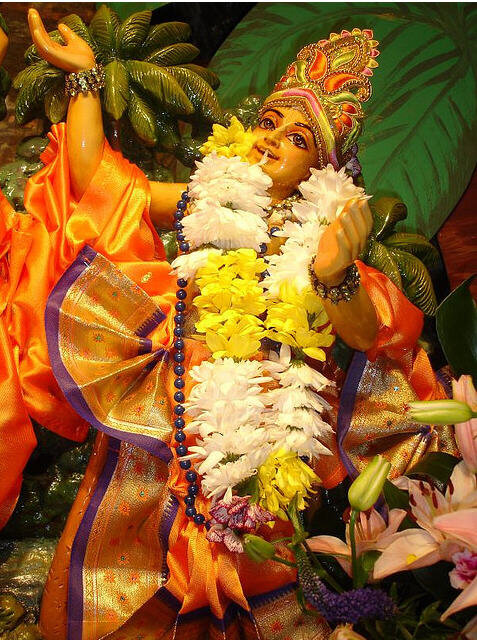
Introduction
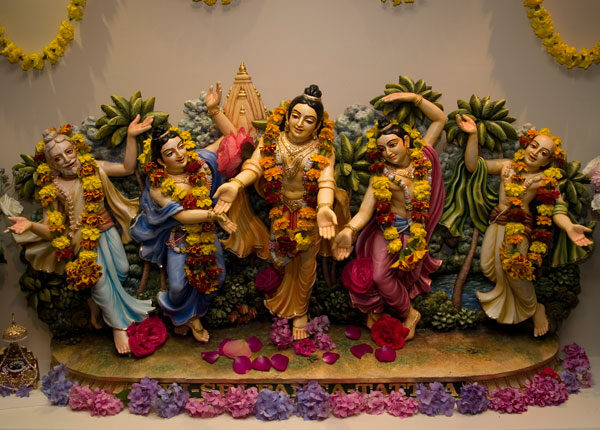
Sri Srivasa Thakura, also called Srivasa Pandit, is the fifth member of the Panca-tattva. In the Panca-tattva he represents the pure devotee (bhakta-tattva). He is regarded in the tradition as an incarnation of Narada Muni, who in the Puranas is the model travelling devotee and kirtana performer. This is fitting, because the sankirtana movement began in Srivasa Thakura's courtyard.
| Detail | Description |
|---|---|
| Place in the Panca-tattva | The pure devotee, bhakta-tattva |
| Identity | An incarnation of Narada Muni (Gaura-ganoddesha-dipika 90; Chaitanya-charitamrita Adi 10.8 purport) |
| Born | Srihatta |
| Settled | Nabadwip, on the bank of the Ganges near Mahaprabhu's home |
| Wife | Malini Devi |
| Brothers | Sripati, Srirama and Srikanta |
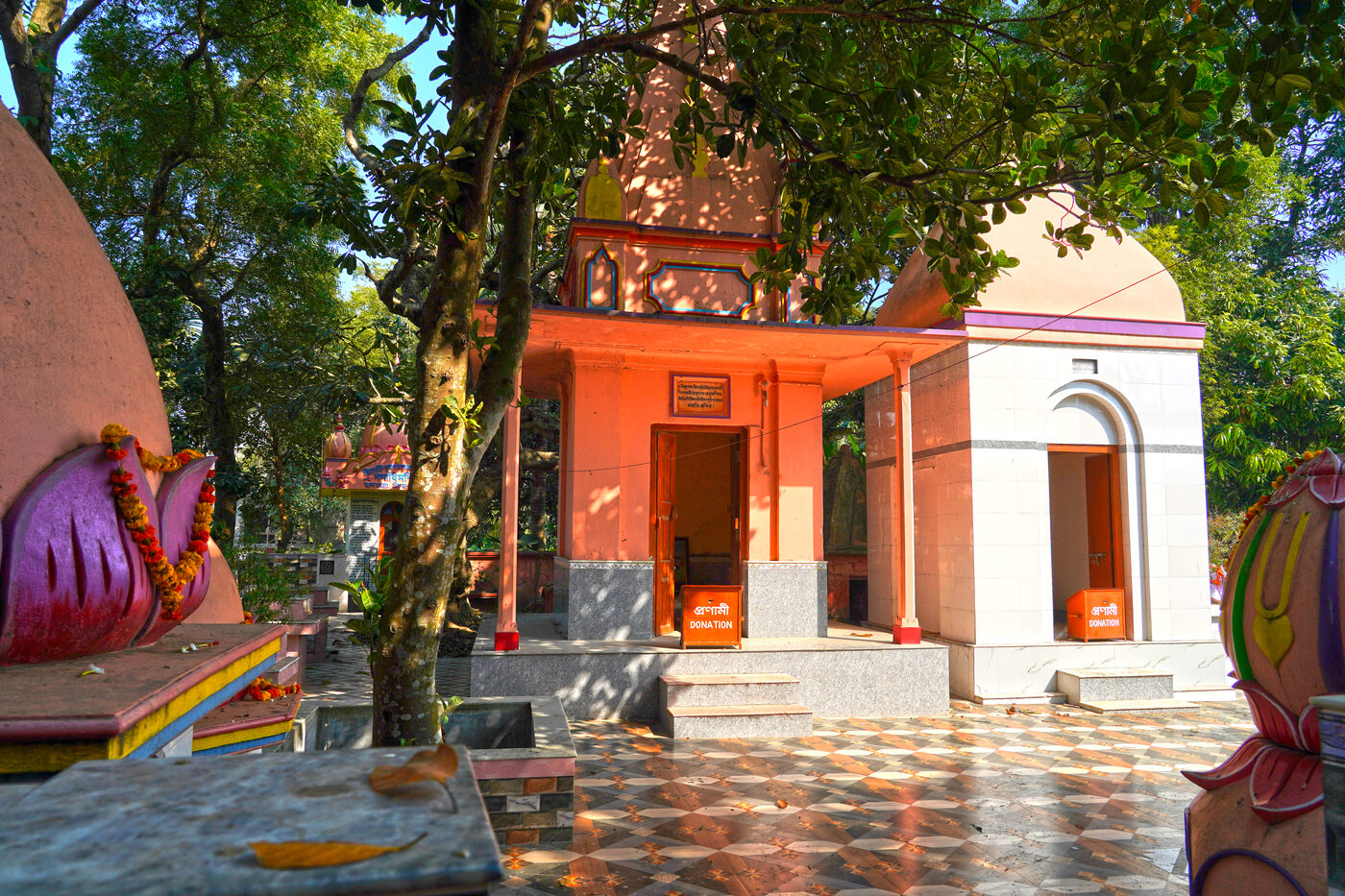
| Courtyard | Srivasa Angan, still shown at Mayapur |
Scriptural evidence for the introduction (1)
श्रीवासपण्डितो धीमान्यः पुरा नारदो मुनिः ।
पर्वताख्यो मुनिवरो य आसीन्नारदप्रियः ।
स रामपण्डितः श्रीमान्स्तत्कनिष्ठसहोदरः ॥९०॥
śrīvāsa-paṇḍito dhīmān yaḥ purā nārado muniḥ |
parvatākhyo muni-varo ya āsīn nārada-priyaḥ |
sa rāma-paṇḍitaḥ śrīmāns tat-kaniṣṭha-sahodaraḥ ||90||
Intelligent Srivasa Pandita had previously been Narada Muni, the best of the sages. Srivasa's younger brother, Sriman Rama Pandita, had previously been Narada's close friend Parvata Muni.
From the purport: In the Gaura-gaṇoddeśa-dīpikā (90), Śrīvāsa Paṇḍita (Śrīvāsa Ṭhākura) is described as an incarnation of Nārada Muni, and Śrī Rāma Paṇḍita, his younger brother, is said to be an incarnation of Parvata Muni, a great friend of Nārada's.
Identifies Srivasa Pandit as Narada Muni and his younger brother Rama Pandit as Parvata Muni. Sanskrit: diacritic edition of the Gaura-ganoddesha-dipika; English translation as published at bvmlu.org. Purport excerpt: Srila Prabhupada, Chaitanya-charitamrita Adi 10.8.
Chapter 1
The Advent and Family of Srivasa Thakura
A brahmana family from Srihatta, a house on the Ganges bank, and four brothers who knew what they were waiting for
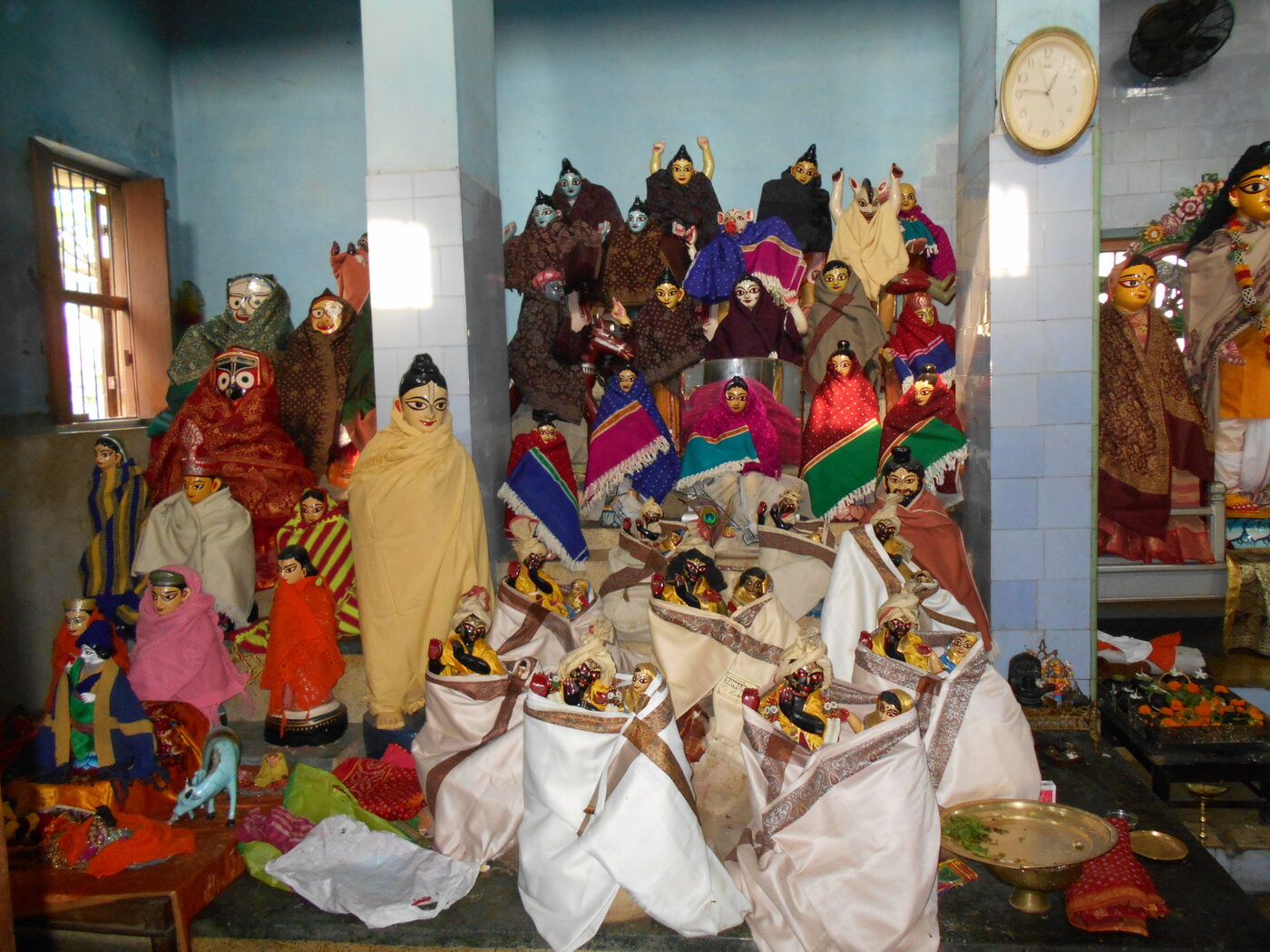
Srivasa Thakura came from Srihatta, the district of eastern Bengal known today as Sylhet. The family of Chaitanya Mahaprabhu also came from this district. Upendra Mishra, the Lord's paternal grandfather, was a Srihatta brahmana, and it was his son Jagannatha Mishra who moved west to Nabadwip to study. Srivasa and his brothers made the same journey for a different reason. The accounts say they moved to the Ganges bank because they wanted the company of devotees. Nabadwip was publicly known for its logicians. But it also had a small Vaishnava circle, and that circle was worth crossing a whole province to join.
| Detail | Description |
|---|---|
| Native district | Srihatta, known today as Sylhet |
| Father | Jaladhara Pandit, a Vedic brahmana |
| Place among sons | The second of five |
| Brothers at Nabadwip | Srirama Pandit, Sripati Pandit, and Srinidhi or Srikanta |
| Wife | Malini Devi, an intimate friend of Sachi Devi |
| Niece | Narayani, later the mother of Vrindavana Dasa Thakura |
| Identity | Narada Muni |
His Father, Brothers and Household #
The Gaudiya Vaishnava Abhidhana, citing the Prema-vilasa, names his father as a Vedic brahmana called Jaladhara Pandit, and makes Srivasa the second of five sons. The brothers who lived with him at Nabadwip and shared his life in the movement were Srirama Pandit, Sripati Pandit, and a fourth whom the sources call either Srinidhi or Srikanta. This is an ordinary difference between manuscripts, and we note both names instead of choosing one. Krishnadasa Kaviraja treats the four of them as a single unit of the Chaitanya tree. Srivasa Pandit and Srirama Pandit are two celebrated branches, and Sripati and Srinidhi are with them. The four brothers, together with their servants and maidservants, are counted as one great branch, whose sub-branches cannot be numbered. Beyond the brothers, two people in the household matter to the story. Srivasa's wife was Malini Devi, a close friend of Sachi Devi. Malini was constantly visiting the Mishra house, and she helped to nurse the infant Nimai. And his niece Narayani, a small girl during the sankirtana years, would grow up to be the mother of Vrindavana Dasa Thakura, the author of the Chaitanya-bhagavata. So the earliest full biography of Mahaprabhu was written by a man whose own family held this household's memories.
Srivasa was much older than Mahaprabhu. He was old enough to have been a settled and practising Vaishnava before the Lord was born, and old enough to give Him advice as a boy and be listened to. He and his brothers sang the names of Krishna, worshipped Krishna, and bathed in the Ganges three times a day. Krishnadasa Kaviraja says that the family engaged fully in the Lord's service and knew no other god or goddess. In the Bengal of that period, this was not a mild, ordinary piety. It was a definite social position, and a slightly awkward one.
A Vaishnava Circle in a Town of Logicians #
Here it helps to be clear about how the town saw them. In the 1480s Nabadwip was a great centre of Sanskrit learning. It was dominated by Nyaya, the school of formal logic, and by smarta ritualism. In such a place, a man's standing came from his ability to hold a position in debate, or to perform the prescribed rituals correctly. A group of brahmanas met at Advaita Acharya's house to read the Bhagavatam and chant the holy names aloud. They were not really persecuted. They were simply not taken seriously. The little circle was made up of Advaita Acharya, Srivasa and his brothers, Haridasa Thakura, Mukunda Datta, Murari Gupta, Shuklambara Brahmachari and a few others. They met, read and chanted. According to the biographies, they also prayed with real urgency for the Lord to descend. They could not see how anything less than that was going to change the age they lived in.
Knowing That the Lord Would Appear #
Srivasa is one of those whom the tradition credits with sensing what was coming. Vrindavana Dasa Thakura records that, by the strength of his devotion, Srivasa understood that Krishna was going to appear in the house of Jagannatha Mishra. He also records that when the child was born, the Vaishnavas of Nabadwip knew it, just as Advaita Acharya knew it at Shantipura. But the biographies are careful to add that this knowledge faded once they were with the child. The Lord's own concealing potency made sure that the devotees who had recognised Him could not hold on to that recognition. Instead, their hearts were filled with ordinary parental affection, without a trace of awe. In practice, Srivasa and Malini were like a second father and mother to Him.
Asking Nimai What Learning Is For #
He also scolded Him. One exchange has been preserved from the years when Nimai was a young scholar with a reputation, and rather proud of it. In it, Srivasa asked Him what learning was for. Why do people study, he said: so that they may come to know what devotion to Krishna is. If a man's scholarship does not produce that, what has it done for him but consume his time. If You have really learned anything, begin worshipping Krishna now; that is what a life is for. Nimai laughed and answered that by their mercy it would certainly come about. It is the sort of conversation a self-assured young man has with an elderly neighbour, and the biographies keep it because of what happened next.
Recognising Prema After the Journey to Gaya #
What happened next was Gaya. Mahaprabhu went west in about 1508, took initiation from Isvara Puri, and came back a different person. Bhaktivinoda Thakura's summary is that He was no longer a contending logician, a wrangling ritualist or a criticising rhetorician; He fainted at the name of Krishna and behaved like a man possessed by something. The people of Nabadwip came to the obvious conclusion. A brilliant young man had broken down, whether from grief for his dead father or from something worse, and the town said so. Srivasa understood it the other way. He had spent thirty years in the company of the Bhagavatam. He knew what the symptoms of prema were supposed to look like when they were real, and he recognised them. He made that judgement as an older man with something to lose, and it was the first thing the movement owed him.
The Four-Armed Form in His Deity Room #
The Chaitanya-bhagavata places the confirmation in his own house. One day Mahaprabhu came in, in ecstasy. He asked Srivasa whom he worshipped and meditated upon, and told him to look now with his own eyes. Then He went into the little Deity room of the household, sat on the seat of Vishnu, and showed a four-armed form with conch, disc, club and lotus. What He said then is the reason the house is remembered as it is. He said that their chanting and the roaring of Advaita Acharya had called Him, and so He had left Vaikuntha and come down, with His eternal associates. He also said that Srivasa could now chant His glories without fear. Vaishnava readers take this as the founding statement of the sankirtana movement. In any case, after this moment Srivasa Angan was no longer a private house.
Bhakta-tattva and the Fifth Place #
Gaudiya theology gives Srivasa Thakura the fifth place in the Panca-tattva and defines it as bhakta, the pure devotee. This place is distinct from the Lord Himself, His expansion, His incarnation and His potency. Krishnadasa Kaviraja writes that the innumerable unalloyed devotees are headed by Srivasa Thakura. Kavi Karnapura identifies him as Narada Muni, his brother Srirama as Narada's friend Parvata Muni, and Malini Devi as Ambika, the nurse who suckled Krishna in Vraja. Why does the Panca-tattva keep one place for a plain householder? The pages that follow take up this question, beginning with what happened in his courtyard.
Scriptural evidence for this chapter (5)
শ্রীবাস পণ্ডিত, আর শ্রীরাম পণ্ডিত ।
দুই ভাই—দুই শাখা, জগতে বিদিত ॥ ৮ ॥
śrīvāsa paṇḍita, āra śrī-rāma paṇḍita
dui bhāi — dui śākhā, jagate vidita
Word for word
śrīvāsa paṇḍita: Śrīvāsa Paṇḍita; āra: and; śrī-rāma paṇḍita: Śrī Rāma Paṇḍita; dui bhāi: two brothers; dui śākhā: two branches; jagate: in the world; vidita: well known.
The two brothers Śrīvāsa Paṇḍita and Śrī Rāma Paṇḍita started two branches that are well known in the world.
Srivasa Pandit and Srirama Pandit as two celebrated branches of the Chaitanya tree; the purport identifies Srivasa as an incarnation of Narada Muni and Malini as Ambika.
শ্রীপতি, শ্রীনিধি—তাঁর দুই সহোদর ।
চারি ভাইর দাস–দাসী, গৃহ–পরিকর ॥ ৯ ॥
śrīpati, śrīnidhi — tāṅra dui sahodara
cāri bhāira dāsa-dāsī, gṛha-parikara
Word for word
śrīpati: Śrīpati; śrīnidhi: Śrīnidhi; tāṅra: their; dui: two; sahodara: own brothers; cāri: four; bhāira: brothers; dāsa-dāsī: family members, menservants and maidservants; gṛha-parikara: all counted in one family.
Their two brothers were named Śrīpati and Śrīnidhi. These four brothers and their servants and maidservants are considered one big branch.
The other two brothers, Sripati and Srinidhi, and the four of them with their household counted as one branch.
চারি ভাই সবংশে করে চৈতন্যের সেবা ।
গৌরচন্দ্র বিনা নাহি জানে দেবী–দেবা ॥ ১১ ॥
cāri bhāi sa-vaṁśe kare caitanyera sevā
gauracandra vinā nāhi jāne devī-devā
Word for word
cāri bhāi: four brothers; sa-vaṁśe: with all family members; kare: do; caitanyera: of Lord Śrī Caitanya Mahāprabhu; sevā: service; gauracandra: Gaurasundara (Lord Caitanya Mahāprabhu); vinā: except; nāhi jāne: they do not know; devī: goddess; devā: or god.
These four brothers and their family members fully engaged in the service of Lord Caitanya. They knew no other god or goddess.
The four brothers and their family engaged fully in the Lord's service and knew no other god or goddess.
শ্রীবাসাদি যত কোটি কোটি ভক্তগণ ।
শুদ্ধভক্ত’–তত্ত্বমধ্যে তাঁ–সবার গণন ॥ ১৬ ॥
śrīvāsādi yata koṭi koṭi bhakta-gaṇa
‘śuddha-bhakta’-tattva-madhye tāṅ-sabāra gaṇana
Word for word
śrīvāsa-ādi: devotees headed by Śrīvāsa Ṭhākura; yata: all others; koṭi koṭi: innumerable; bhakta-gaṇa: devotees; śuddha-bhakta: pure devotees; tattva-madhye: in the truth; tāṅ-sabāra: all of them; gaṇana: counted.
There are innumerable pure devotees of the Lord, headed by Śrīvāsa Ṭhākura, who are known as unalloyed devotees.
The innumerable pure devotees headed by Srivasa Thakura, the bhakta-tattva place in the Panca-tattva.
শ্রীচৈতন্য, নিত্যানন্দ, অদ্বৈত,—তিন জন ।
শ্রীবাস–গদাধর–আদি যত ভক্তগণ ॥ ১৬৯ ॥
śrī-caitanya, nityānanda, advaita, — tina jana
śrīvāsa-gadādhara-ādi yata bhakta-gaṇa
Word for word
śrī-caitanya, nityānanda, advaita: Śrī Caitanya Mahāprabhu, Nityānanda Prabhu and Advaita Prabhu; tina: these three; jana: personalities; śrīvāsa-gadādhara: Śrīvāsa and Gadādhara; ādi: etc.; yata: all; bhakta-gaṇa: the devotees.
While chanting the Pañca-tattva mahā-mantra, one must chant the names of Śrī Caitanya, Nityānanda, Advaita, Gadādhara and Śrīvāsa with their many devotees. This is the process.
The Panca-tattva mantra, which ends on Srivasa's name and on all the devotees along with him.
Chapter 2
Srivasa Angan, the Birthplace of Sankirtana
A full year of chanting behind closed doors, and the neighbour who left wine at the door to have it stopped
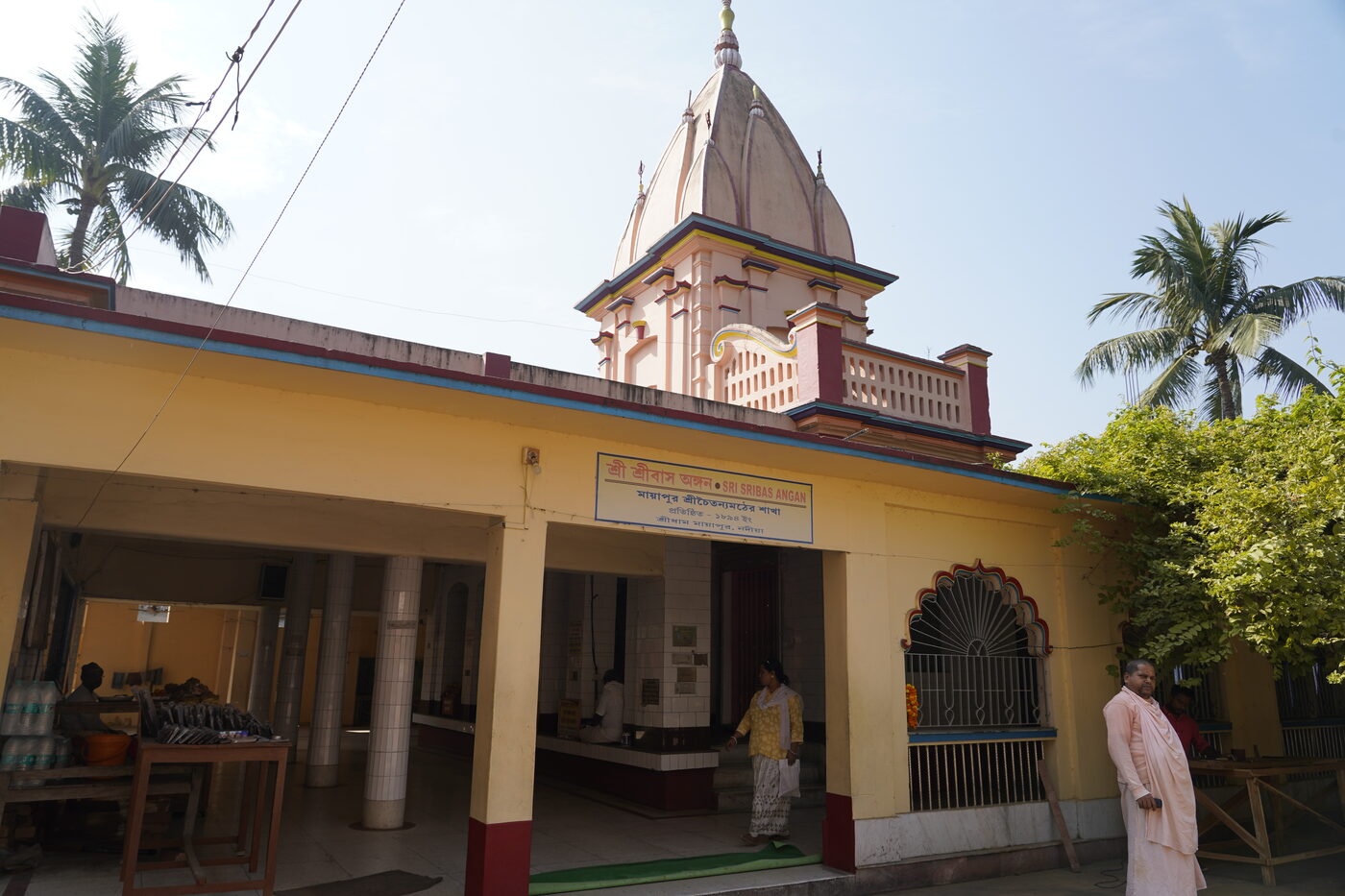
The house stood about two hundred yards north of Jagannatha Mishra's, on the same bank of the Ganges. By the standards of that neighbourhood it was a big property. It had large rooms, a wall high enough to give privacy, and gardens and groves. The wall and the door are what matter in the story that follows. The Bengali word angan means courtyard, and Srivasa Angan, Srivasa's courtyard, is the name by which Gaudiya Vaishnavas know the place where their movement began.
A Year of Chanting Behind Closed Doors #
Krishnadasa Kaviraja states the essential fact in a single line: Chaitanya Mahaprabhu led congregational chanting of the maha-mantra at the house of Srivasa Thakura every night for one full year. Not occasionally, and not in public. Every night, for twelve months, before a word of it went into the streets.
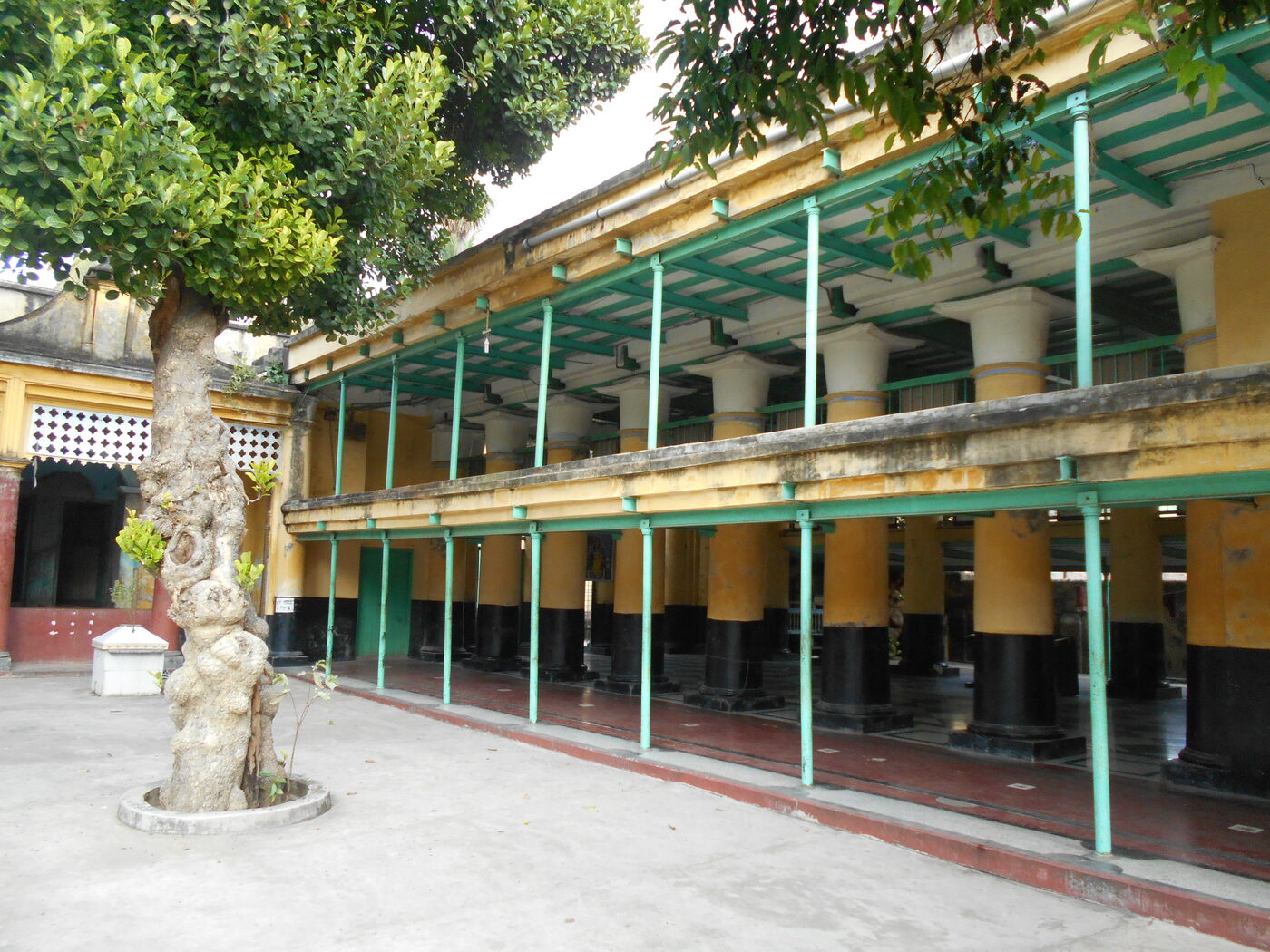
The doors were shut. The Chaitanya-charitamrita says why, without embarrassment. The chanting was done behind closed doors so that unbelievers who came to make fun could not get in. This is worth thinking about, because religious movements do not usually like to remember their beginnings in this way. The most influential devotional movement in the history of eastern India spent its entire first year as a private gathering in a walled compound. It kept the public out, because the public thought it was ridiculous.
The Abhiseka of Sri Chaitanya Mahaprabhu #
What went on inside is described at length. Srivasa Thakura performed abhiseka upon Chaitanya Mahaprabhu Himself. Abhiseka is the ceremonial bathing by which a Deity is installed. Mahaprabhu sat on a cot and showed His transcendental opulence. So here was a householder brahmana formally worshipping his young neighbour as the Supreme Lord, in his own courtyard, with his own family watching.
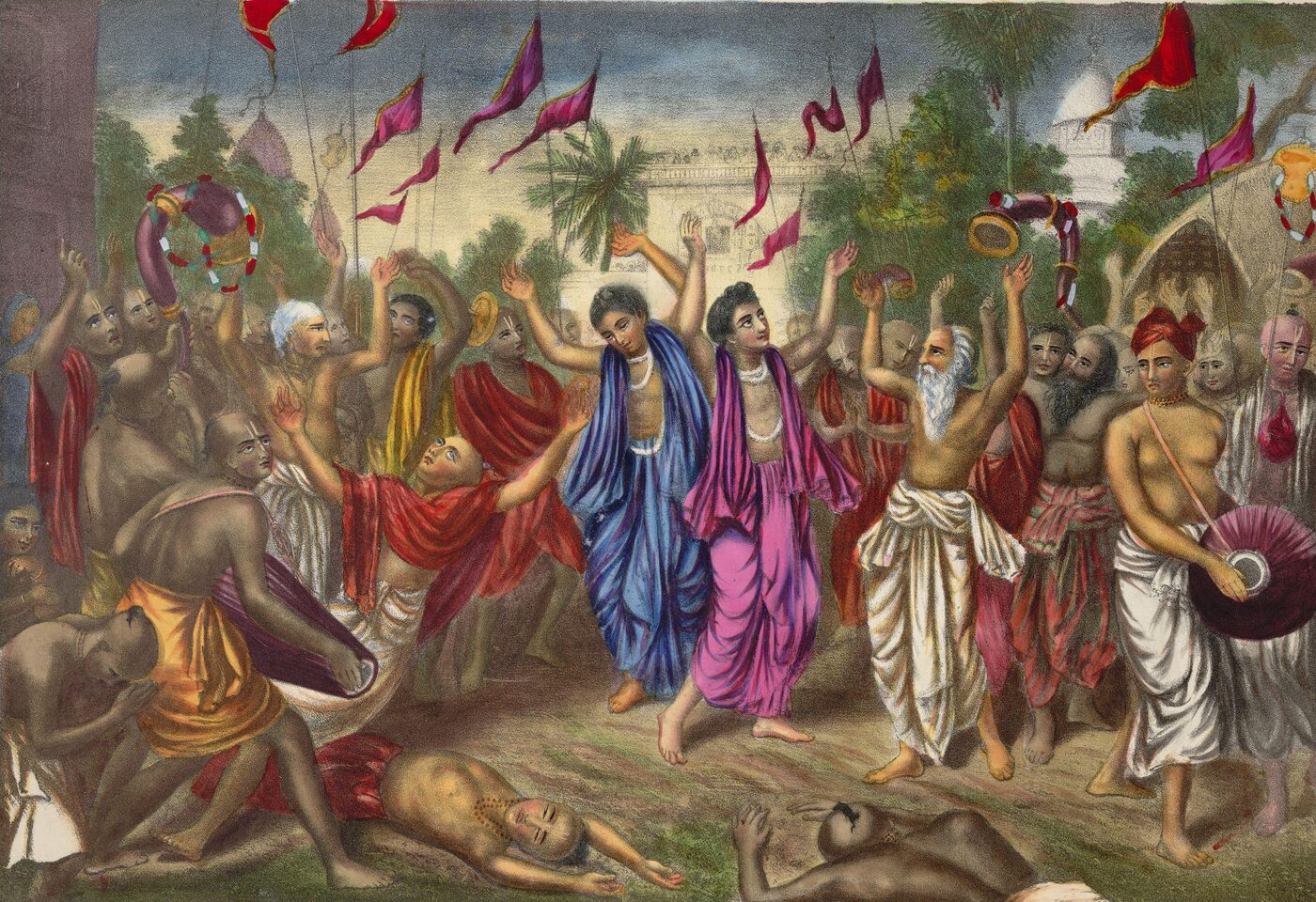
The Six-Armed and Two-Armed Forms #
Shortly after that ceremony Nityananda Prabhu arrived. Mahaprabhu showed Him first a six-armed form and then, at the end, the two-armed cowherd of Vrindavana in yellow cloth with the flute.
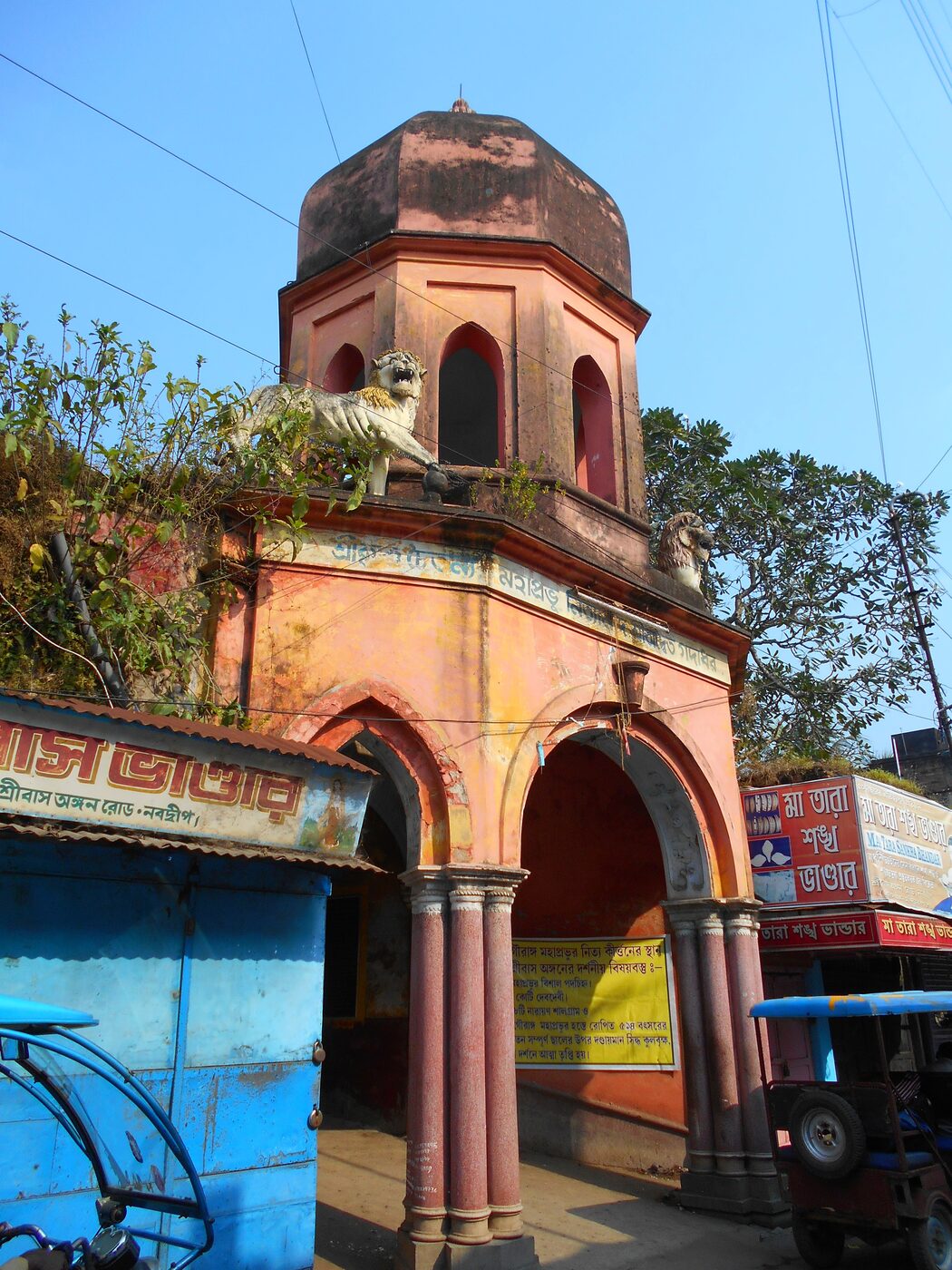
Twenty-One Hours of Continuous Ecstasy #
On another occasion the Lord remained in an unbroken ecstatic condition for twenty-one hours while the devotees watched.
The Mood of Lord Nrsimha #
On another, He asked Srivasa to read out the thousand names of Vishnu. At a particular verse He took on the mood of Lord Nrsimha, and went out into the road with a club, terrifying the passers-by. He then came back, threw the club away and sat down, very unhappy. He said that He had frightened people, and that frightening people is an offence. Srivasa had to console Him.
Talk of Vrindavana and the Mango Festival #
There were nights when He asked Srivasa simply to keep talking about Vrindavana: the gopis drawn out of their houses by the flute, the seasons of the forest, the rasa dance. He asked him to go on talking, and go on, until it was morning. And there was, for twelve months, a mango festival at the end of the chanting every single night.
Nityananda Prabhu in the Household #
Nityananda Prabhu lived in that house during this period, and Malini Devi looked after Him as she would a son. On one of these nights, while the chanting went on in the courtyard, a child of the household died in the inner rooms. The family kept it silent until the kirtana had finished. That night is told here.
Wine and Tantric Paraphernalia at His Door #
The hostility this drew was serious. The Chaitanya-charitamrita says that the scoffers of Nabadwip, unable to get in, were burning up with envy. They began to plan ways of making trouble for Srivasa Thakura in particular. They did not aim at Mahaprabhu, who was too well known and too well connected. They aimed at the householder in whose compound the chanting was happening.
Their plan was carefully aimed. A brahmana named Gopala Chapala is described as the chief of the scoffers, and as a talkative man rough in his speech. One night, while the kirtana was going on, he went and laid out on Srivasa Thakura's doorstep the complete set of items for the worship of the goddess Durga. He set a pot of wine beside it. Anyone passing in the morning would come to the conclusion he intended. They would think that the great Vaishnava who would not eat or associate outside his own circle was really conducting tantric worship of Bhavani by night, even with wine. In the Nabadwip of that day, the charge would have ruined him socially. It would also have brought shame on everything that went on behind his wall.
How Srivasa Thakura Answered the Charge #
In the morning Srivasa Thakura opened his door and saw it. Then he did the one thing that made the accusation useless. He sent for the respectable gentlemen of the neighbourhood: the brahmanas and the men of the higher castes, the very people whose opinion the slander was meant to poison. When they had gathered, he told them, smiling, that he worshipped the goddess Bhavani every night. He told them that the items of worship were there in front of them, and that now they could all understand his position. Nobody believed a word of it. The slander died right there, in the courtyard where it was meant to begin.
The Leprosy of Gopala Chapala #
Three days later Gopala Chapala was struck with leprosy. Sores broke out over his whole body and bled. The accounts describe him tormented by insects and in continuous pain. At last he was driven out of the village, and he sat under a tree on the bank of the Ganges. There, one day, he saw Chaitanya Mahaprabhu passing and appealed to Him as a relative. By the way relationships were counted in the village, he was the Lord's maternal uncle and the Lord was his nephew. Look, he said, at what has come upon me.
The Lord's answer is one of the hardest passages in the book. He refused. He addressed the man as sinful and envious of pure devotees, and said He would not deliver him. He told Gopala Chapala that he would be bitten by those germs for millions of years. He also told him that for the single offence of making Srivasa Thakura appear to be a worshipper of Bhavani, he would fall into hellish life for ten million births. Only afterwards, in the same conversation, did the Lord give the remedy, and the remedy was not His to give. Gopala Chapala had committed his offence at the feet of Srivasa Thakura. So he must go to Srivasa Thakura and beg his mercy. If Srivasa granted it, and if he did not repeat the sin, he would be freed. He went. Srivasa Thakura gave his mercy, and the man was released.
Offence at the Feet of a Devotee #
This is the episode the tradition points to when it teaches that an offence against a devotee is in a separate category from other sins. It is the one fault that the Lord will not forgive on His own authority. Instead, He sends the offender back to the person he offended. Gopala Chapala is not the only case in the chapter. Another brahmana came to see the kirtana, found the door shut and could not get in. In his frustration he cursed the Lord. Krishnadasa Kaviraja records that anyone who hears of that curse is delivered from brahminical curses.
Chand Kazi and the Broken Mridanga #
There was official trouble as well, and it came to the same courtyard. Later the chanting moved into the streets, and the whole of Nabadwip could be heard chanting the holy names to the sound of mridanga and hand cymbals. Then the smarta brahmanas complained to Chand Kazi, the local magistrate. They said that a new religion, hostile to Sanatana Dharma, was being introduced. The Kazi came in person to Srivasa Thakura's house and broke a mridanga there. He issued an order forbidding street sankirtana. Anyone who disobeyed would have his property seized and be forcibly converted. The site kept the name Khol Bhanga Danga, the place where the drum was broken. The town panicked; the accounts say Srivasa laughed at the order. What followed belongs to the story of Mahaprabhu himself, not to this account of Srivasa Thakura. It includes the evening of ten thousand torches, the procession through every quarter of the city, and the Kazi's own promise that none of his descendants would ever stop the sankirtana movement.
Why the Year Behind the Wall Mattered #
This is the main lesson Gaudiya Vaishnavas take from Srivasa Angan. The sankirtana movement did not begin as a public campaign that later found a headquarters. It began as a year of nightly chanting among perhaps a few dozen people in a locked courtyard. The house belonged to a private householder who had a family, a reputation and neighbours, and he put all three at risk. When the doors were finally opened, what came out into the streets of Nabadwip had already been going for twelve months. The year behind the wall is why there was anything to bring out.
Scriptural evidence for this chapter (6)
তবে প্রভু শ্রীবাসের গৃহে নিরন্তর ।
রাত্রে সংকীর্তন কৈল এক সম্বৎসর ॥ ৩৪ ॥
tabe prabhu śrīvāsera gṛhe nirantara
rātre saṅkīrtana kaila eka saṁvatsara
Word for word
tabe: thereafter; prabhu: the Lord, Śrī Caitanya Mahāprabhu; śrīvāsera: of Śrīvāsa Ṭhākura; gṛhe: in the home; nirantara: always; rātre: at night; saṅkīrtana: congregational chanting of the Hare Kṛṣṇa mahā-mantra; kaila: performed; eka saṁvatsara: one full year.
Śrī Caitanya Mahāprabhu regularly led congregational chanting of the Hare Kṛṣṇa mahā-mantra in the house of Śrīvāsa Ṭhākura every night for one full year.
Congregational chanting led by Mahaprabhu at the house of Srivasa Thakura every night for one full year.
কপাট দিয়া কীর্তন করে পরম আবেশে ।
পাষণ্ডী হাসিতে আইসে, না পায় প্রবেশে ॥ ৩৫ ॥
kapāṭa diyā kīrtana kare parama āveśe
pāṣaṇḍī hāsite āise, nā pāya praveśe
Word for word
kapāṭa: door; diyā: closing; kīrtana: chanting; kare: performed; parama: very high; āveśe: in an ecstatic condition; pāṣaṇḍī: nonbelievers; hāsite: to laugh; āise: come; nā: does not; pāya: get; praveśe: entrance.
This ecstatic chanting was performed with the doors closed so that nonbelievers who came to make fun could not gain entrance.
The chanting performed with the doors closed so that scoffers could not gain entrance.
প্রভুর অভিষেক তবে করিল শ্রীবাস ।
খাটে বসি’ প্রভু কৈলা ঐশ্বর্য প্রকাশ ॥ ১১ ॥
prabhura abhiṣeka tabe karila śrīvāsa
khāṭe vasi’ prabhu kailā aiśvarya prakāśa
Word for word
prabhura: of the Lord; abhiṣeka: worship; tabe: after that; karila: did; śrīvāsa: Śrīvāsa; khāṭe: on the cot; vasi’: sitting; prabhu: Lord Śrī Caitanya Mahāprabhu; kailā: did; aiśvarya: opulence; prakāśa: manifestation.
Śrīvāsa Ṭhākura then worshiped Lord Caitanya Mahāprabhu by the process of abhiṣeka. Sitting on a cot, the Lord exhibited transcendental opulence.
Srivasa Thakura worshipping Mahaprabhu by the process of abhiseka, with the Lord seated on a cot exhibiting opulence.
তবে সপ্তপ্রহর ছিলা প্রভু ভাবাবেশে ।
যথা তথা ভক্তগণ দেখিল বিশেষে ॥ ১৮ ॥
tabe sapta-prahara chilā prabhu bhāvāveśe
yathā tathā bhakta-gaṇa dekhila viśeṣe
Word for word
tabe: thereafter; sapta-prahara: twenty-one hours; chilā: remained; prabhu: the Lord; bhāva-āveśe: in ecstasy; yathā: anywhere; tathā: everywhere; bhakta-gaṇa: the devotees; dekhila: saw; viśeṣe: specifically.
After this incident, the Lord remained in an ecstatic position for twenty-one hours, and all the devotees saw His specific pastimes.
The Lord remaining in an ecstatic condition for twenty-one hours while the devotees watched.
একদিন বিপ্র, নাম—‘গোপাল চাপাল’ ।
পাষণ্ডি–প্রধান সেই দুর্মুখ, বাচাল ॥ ৩৭ ॥
ভবানী–পূজার সব সামগ্রী লঞা ।
রাত্রে শ্রীবাসের দ্বারে স্থান লেপাঞা ॥ ৩৮ ॥
eka-dina vipra, nāma — ‘gopāla cāpāla’
pāṣaṇḍi-pradhāna sei durmukha, vācāla
bhavānī-pūjāra saba sāmagrī lañā
rātre śrīvāsera dvāre sthāna lepāñā
Word for word
eka-dina: one day; vipra: one brāhmaṇa; nāma: named; gopāla cāpāla: Gopāla Cāpāla; pāṣaṇdi-pradhāna: the chief of the non-believers; sei: he; durmukha: ferocious, using strong words; vācāla: talkative; bhavānī-pūjāra: for worshiping the goddess Bhavānī; saba: all; sāmagrī: ingredients, paraphernalia; lañā: taking; rātre: at night; śrīvāsera: of Śrīvāsa Ṭhākura; dvāre: on the door; sthāna: the place; lepāñā: smearing.
One night while kīrtana was going on inside Śrīvāsa Ṭhākura’s house, a brāhmaṇa named Gopāla Cāpāla, the chief of the nonbelievers, who was talkative and very rough in his speech, placed all the paraphernalia for worshiping the goddess Durgā outside Śrīvāsa Ṭhākura’s door.
Gopala Chapala placing the paraphernalia for the worship of Durga outside Srivasa Thakura's door during the night kirtana.
মদ্যভাণ্ড–পাশে ধরি’ নিজ–ঘরে গেল ।
প্রাতঃকালে শ্রীবাস তাহা ত’ দেখিল ॥ ৪০ ॥
madya-bhāṇḍa-pāśe dhari’ nija-ghare gela
prātaḥ-kāle śrīvāsa tāhā ta’ dekhila
Word for word
madya-bhāṇḍa: a pot of wine; pāśe: by the side of; dhari’: placing; nija-ghare: to his own home; gela: went; prātaḥ-kāle: in the morning; śrīvāsa: Śrīvāsa Ṭhākura; tāhā: all those things; ta’: certainly; dekhila: saw.
He placed a pot of wine beside all this, and in the morning when Śrīvāsa Ṭhākura opened his door he saw this paraphernalia.
The pot of wine set beside it, and Srivasa Thakura finding it on opening his door in the morning.
Chapter 3
The Night His Son Died
A child died in the inner rooms while the chanting went on outside, and his father would not let the chanting stop
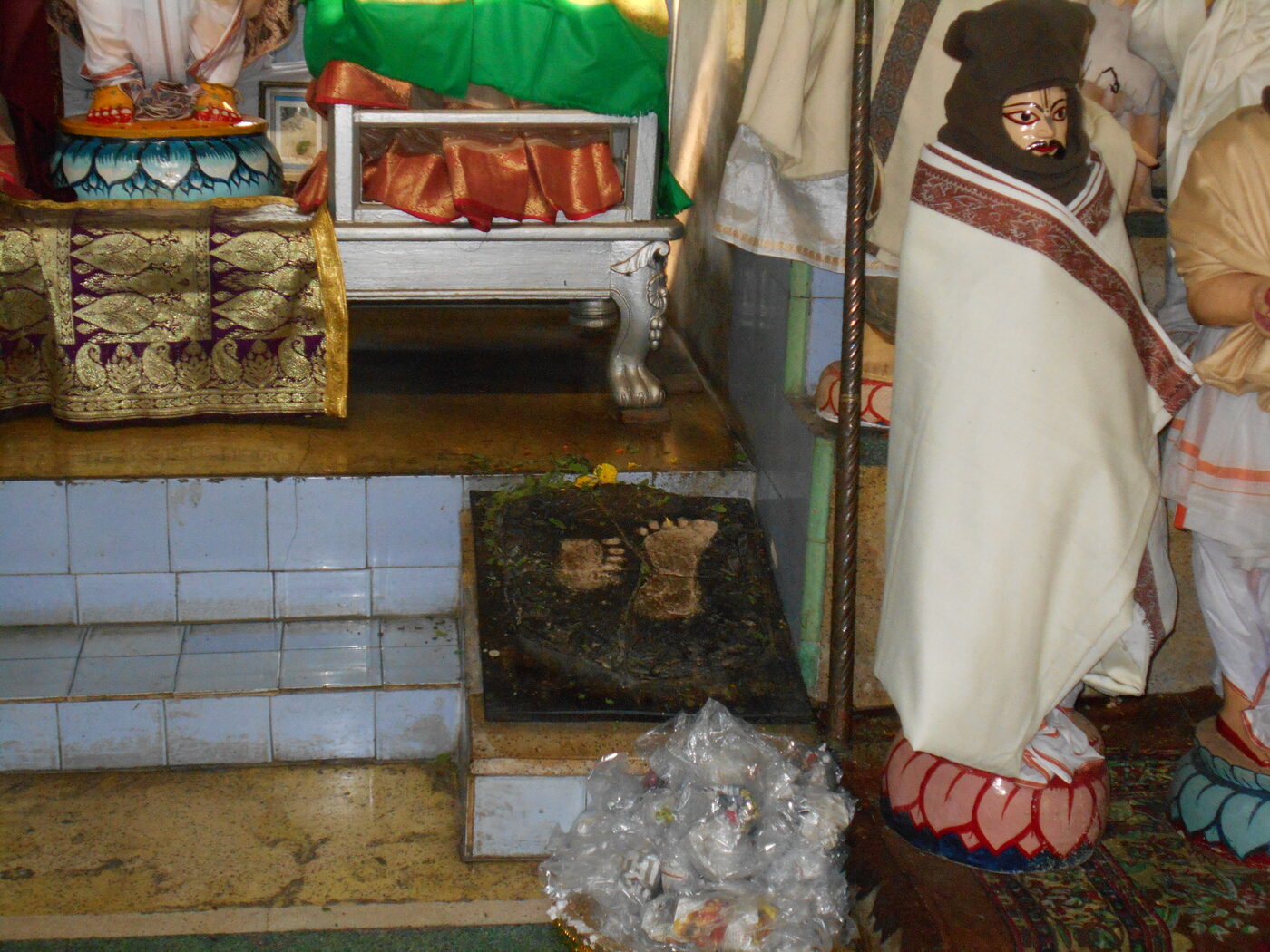
This happened on one of the ordinary nights of that extraordinary year. For twelve months Chaitanya Mahaprabhu led congregational chanting at Srivasa Thakura's house behind closed doors, as described in full here. He and Nityananda Prabhu were dancing in the courtyard, as they had done every night for months. In the inner rooms of the same house, a boy of Srivasa Thakura's family died. He had been ill for some time.
What the Sources Record #
The sources differ on a detail that matters to a father. Most of them, including the Chaitanya-bhagavata and the biographies that follow it, say the boy was Srivasa Thakura's only son; Srila Bhaktivinoda Thakura's summary says one of his sons. Krishnadasa Kaviraja records only the fact, in a line: at that time a calamity took place, Srivasa Thakura's son died, and Srivasa Thakura was not at all sorry.
Srivasa Thakura Learns of the Death #
The last words of that line, that he was not at all sorry, must be read carefully, because in English they say something the tradition does not mean. They do not mean that Srivasa did not care, as what happened next shows. The women of the household began to wail, as anyone would. The sound would have reached the courtyard within a few seconds. Srivasa understood at once what had happened. He went in and found his son dead.
Asking the Household Not to Weep #
Then he told the women to stop crying. First he tried to reason with them. They knew the glories of Krishna, he said. A person who hears the holy name at the moment of death goes to Krishna, whatever else is true of him. And this boy had died in a house where the Lord Himself was dancing and chanting. So, whatever else could be said, his son had left the world in the best way that anyone can. When reasoning did not work, he stopped reasoning. Bhaktivinoda Thakura's account says simply that Srivasa Thakura was so patient that he allowed no one to express sorrow by crying, because he did not want the kirtana in his house disturbed. The Chaitanya-bhagavata gives a sharper version. In it, Srivasa told them that if their weeping broke the Lord's ecstasy in the chanting, he would go straight down to the Ganges and drown himself. It worked. The women stopped, left the body, and came out to hear.
We should be clear about what this meant. A man stood over the body of his child and decided that his own grief, and his family's grief, must wait a few hours. Something was happening in his courtyard that he judged more important than both. The tradition does not soften this, and a retelling should not soften it either. It records this as the hardest thing Srivasa Thakura ever did.
The Kirtana Continues to Its End #
Not a sound of it reached the courtyard. The chanting went on until the middle of the night. When it ended and the devotees were leaving to rest, Mahaprabhu said that His mind was troubled. He thought some sad event had happened in Srivasa's house. Srivasa turned the question aside completely: what unhappiness could there be in a house where Your face is being seen? The Lord asked again. Why had He not felt the usual joy in the chanting that night? What had happened? Srivasa said again that where the Lord is present no sorrow can be found. In the end, the other devotees told Him that Srivasa's son had died about an hour after sunset.
Mahaprabhu Is Told What Happened #
Mahaprabhu's reaction was not admiration. He asked why nobody had told Him before, and He wept. He was told that Srivasa had forbidden it, because Srivasa could not bear to interrupt the Lord's pleasure in the kirtana. Then the Lord said that He could never abandon devotees who loved Him to that extent, and that He did not know how He would ever leave such company. These words are preserved in more than one version of the text. When Srivasa was asked directly, he said that if one of his sons died, it was nothing. If the whole household died while looking at the Lord, it would be a matter of happiness. But if the Lord's dancing had stopped, that might have killed him.
The Lord Speaks to the Child #
Then Mahaprabhu went in to where the body was lying, and sat down beside it, and touched it, and spoke to the child. The question He asked has stayed in the tradition as He asked it: my dear boy, why are you leaving the house of Srivasa Thakura?
The Child's Reply #
The dead child answered. He said that he had lived in that house for exactly the number of days he had been given to live there. His time was now over, and he was going elsewhere at the Lord's direction. He was an eternal servant and a dependent living being. He could not act against the Lord's desire and had no power to do anything else. The Chaitanya-bhagavata's version adds that he had been born and had died many times, but that this time he had died happily, because he had seen the Lord's face. In Bhaktivinoda Thakura's version, he asks only that he might never forget the Lord's feet wherever he went. Then the child was silent again, and the funeral rites were performed.
The Soul's Passage From Body to Body #
In those few sentences the family received the teaching of the Bhagavad-gita on the soul's passage from body to body. But it did not come to them as a philosophical idea. It came from the person to whom it had just happened. The teaching is that the embodied soul passes from childhood to youth to age, and at death into another body, and that a sober person is not bewildered by the change. The accounts say that when they heard this, the members of Srivasa Thakura's family stopped grieving. It was not because they had been told to stop. It was because the cause of their grief had been removed.
Mahaprabhu and Nityananda as His Sons #
The last thing that happened that night is the reason the Chaitanya-charitamrita tells this episode at this point. Mahaprabhu told Srivasa Thakura that he had lost one son, and that from that day He and Nityananda Prabhu were his sons. They would never be able to give up his company. Krishnadasa Kaviraja presents this not as words of comfort but as a fact. The two brothers personally became the sons of Srivasa Thakura.
Why the Episode Is Cited #
Gaudiya literature cites this episode again and again, so we should be clear about why it is cited. It is not held up as proof of Mahaprabhu's power over death. The tradition is comfortable with such accounts, but it does not build its teaching on them. It is also not held up to show that grief is a fault. The one person in the house who wept that night was the Lord Himself, when He heard what Srivasa had done. It is held up as the measure of devotional determination. Every ordinary reason for setting service aside is quietly compared with the reason Srivasa Thakura had and did not use. Each such reason is found to be smaller. Secondly, it is held up for what the Lord said at the end of it. The relationships of this world come to an end. The boy said as much himself, about his own case. The relationship with Krishna does not end. A father who had lost a son was told he had gained two. The tradition does not take that exchange as payment for the loss. It takes it as a statement of which of the two kinds of sonship is the real one.
Scriptural evidence for this chapter (4)
এক দিন শ্রীবাসের মন্দিরে গোসাঞি ।
নিত্যানন্দ–সঙ্গে নৃত্য করে দুই ভাই ॥ ২২৭ ॥
eka dina śrīvāsera mandire gosāñi
nityānanda-saṅge nṛtya kare dui bhāi
Word for word
eka dina: one day; śrīvāsera: of Śrīvāsa Ṭhākura; mandire: in the house; gosāñi: Lord Caitanya Mahāprabhu; nityānanda: Lord Nityānanda; saṅge: accompanied by; nṛtya: dancing; kare: performed; dui: two; bhāi: brothers.
One day the two brothers Lord Nityānanda Prabhu and Śrī Caitanya Mahāprabhu were dancing in the holy house of Śrīvāsa Ṭhākura.
The setting: Nityananda Prabhu and Mahaprabhu dancing in the holy house of Srivasa Thakura.
শ্রীবাস–পুত্রের তাহাঁ হৈল পরলোক ।
তবু শ্রীবাসের চিত্তে না জন্মিল শোক ॥ ২২৮ ॥
śrīvāsa-putrera tāhāṅ haila paraloka
tabu śrīvāsera citte nā janmila śoka
Word for word
śrīvāsa: of Śrīvāsa Ṭhākura; putrera: of the son; tāhāṅ: there; haila: took place; paraloka: death; tabu: still; śrīvāsera: of Śrīvāsa Ṭhākura; citte: in the mind; nā: not; janmila: there was; śoka: lamentation.
At that time a calamity took place — Śrīvāsa Ṭhākura’s son died. Yet Śrīvāsa Ṭhākura was not at all sorry.
The bare statement of the calamity, Srivasa Thakura's son died, and he was not at all sorry.
মৃতপুত্র–মুখে কৈল জ্ঞানের কথন ।
আপনে দুই ভাই হৈলা শ্রীবাস–নন্দন ॥ ২২৯ ॥
mṛta-putra-mukhe kaila jñānera kathana
āpane dui bhāi hailā śrīvāsa-nandana
Word for word
mṛta-putra: of the dead son; mukhe: in the mouth; kaila: did; jñānera: of knowledge; kathana: conversation; āpane: personally; dui: the two; bhāi: brothers; hailā: became; śrīvāsa-nandana: sons of Śrīvāsa Ṭhākura.
Śrī Caitanya Mahāprabhu caused the dead son to speak about knowledge, and then the two brothers personally became the sons of Śrīvāsa Ṭhākura.
Mahaprabhu causing the dead son to speak, and the two brothers becoming Srivasa Thakura's sons; the purport gives Bhaktivinoda Thakura's full narrative of the night.
দুই শাখার উপশাখায় তাঁ–সবার গণন ।
যাঁর গৃহে মহাপ্রভুর সদা সংকীর্তন ॥ ১০ ॥
dui śākhāra upaśākhāya tāṅ-sabāra gaṇana
yāṅra gṛhe mahāprabhura sadā saṅkīrtana
Word for word
dui śākhāra: of the two branches; upaśākhāya: on the subbranches; tāṅ-sabāra: of all of them; gaṇana: counting; yāṅra gṛhe: in whose house; mahāprabhura: of Lord Caitanya Mahāprabhu; sadā: always; saṅkīrtana: congregational chanting.
There is no counting the subbranches of these two branches. Śrī Caitanya Mahāprabhu held congregational chanting daily at the house of Śrīvāsa Paṇḍita.
That Mahaprabhu held congregational chanting daily at the house of Srivasa Pandit, the routine this night interrupted and did not break.
Chapter 4
The Later Years and Disappearance of Srivasa Thakura
Kumarahatta, and twenty-four years of yearly journeys south for the chariot festival
In January 1510 Chaitanya Mahaprabhu took sannyasa at Katwa and went to Jagannatha Puri. For two years, life in Nabadwip had been organised around His presence, and now He had left it behind. For those who had been part of that life, Nabadwip was unbearable afterwards. Vrindavana Dasa Thakura's account, as summarised by Srila Prabhupada, is that Srivasa Thakura left Nabadwip after the Lord's sannyasa, in all likelihood because of the feelings of separation. He settled at Kumarahatta, the town on the Ganges now called Halisahar. This was also the birthplace of Isvara Puri, Mahaprabhu's own spiritual master. Srivasa took his brothers with him. He continued to visit Sachi Devi at Nabadwip and to stay with her for a few days at a time. When Mahaprabhu came up from Puri to see His mother and the Ganges, He stopped at Kumarahatta to see Srivasa.
| Detail | Description |
|---|---|
| Left Nabadwip | After the Lord's sannyasa at Katwa in January 1510 |
| Later home | Kumarahatta on the Ganges, the town now called Halisahar |
| Also the birthplace of | Isvara Puri, Mahaprabhu's own spiritual master |
| Yearly practice | Travelled to Jagannatha Puri and stayed the four months of the rains |
| Deities | A temple of Nitai-Gauranga at Chuchura, across the Ganges from Halisahar |
| Samadhi | More than one place is claimed for it |
The Yearly Journey to Jagannatha Puri #
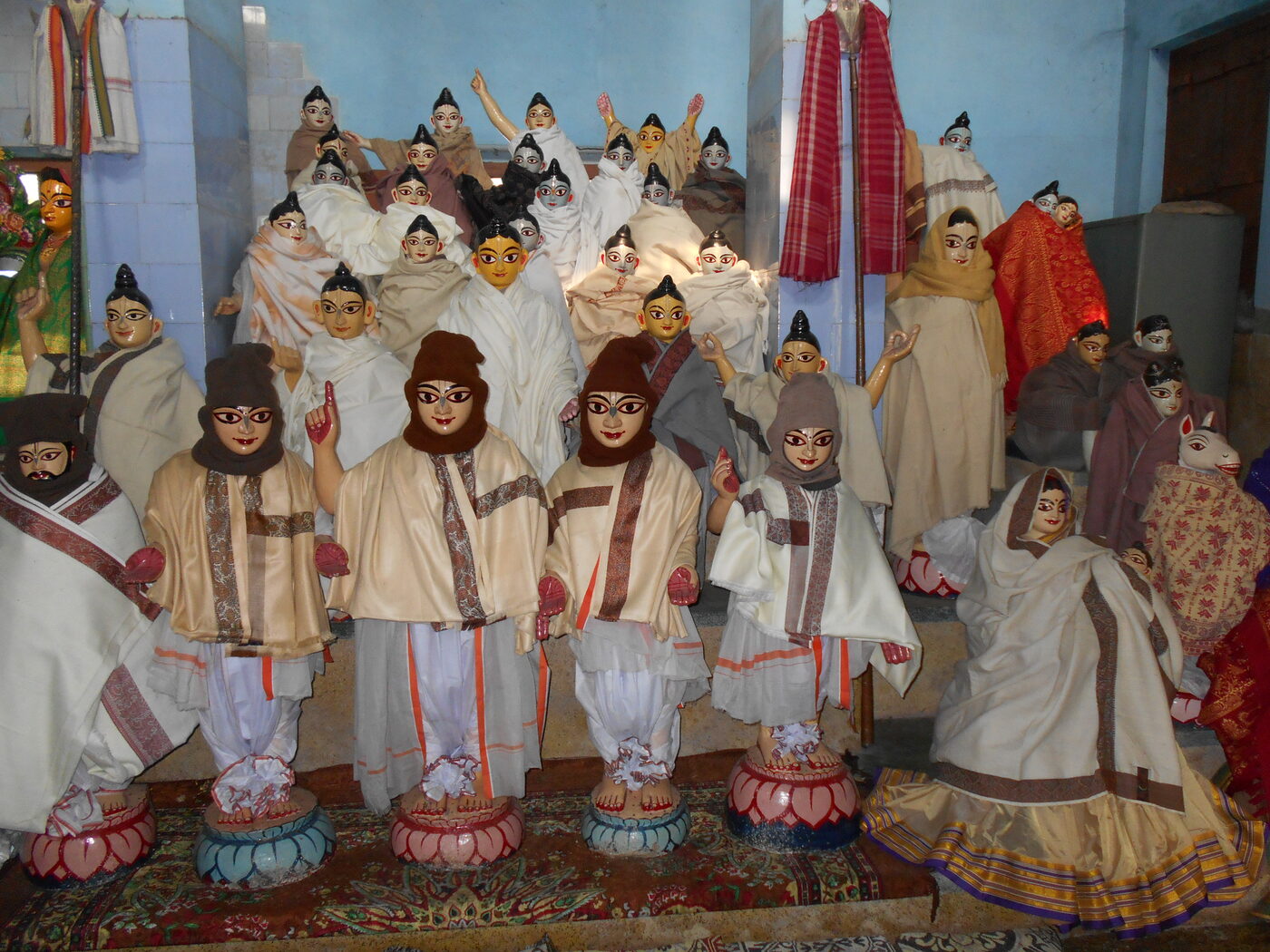
The pattern for the remaining twenty-four years was set almost at once. Every year, in the season of the chariot festival, the Bengali devotees travelled together to Jagannatha Puri, spent the four months of the rainy season there, and went home. Krishnadasa Kaviraja names the party again and again: Acharyaratna, Vidyanidhi, Srivasa, Ramai, Vasudeva, Murari, Govinda and his brothers, Raghava Pandit with his bags of prepared food, and the men of Kulina-grama with their silk ropes. Srivasa's name is never missing from the list. When Sarvabhauma Bhattacharya was being introduced to the Bengali devotees, the Lord pointed them out to him one by one. Srivasa Pandit is named in that list beside Vakresvara Pandit, Vidyanidhi Acharya and Gadadhara Pandit.
Purchased by the Four Brothers #
There is a short exchange from one of those visits that shows their relationship as clearly as any longer story could. Mahaprabhu spoke to Srivasa and his brothers with great affection. He told them that He was so much in their debt that He had been purchased by the four of them. Srivasa answered that it was the other way round: it was the four brothers who had been purchased by His mercy.
Leading a Kirtana Party at the Ratha-yatra #
At the Ratha-yatra itself Srivasa had a fixed duty. The Lord divided the singers into groups around the chariot, and Krishnadasa Kaviraja names the two chief performers of the sankirtana as Svarupa Damodara Goswami and Srivasa Thakura. Advaita Acharya was told to dance in the first party. The second party was formed with Srivasa Thakura at its head. Gangadasa, Haridasa, Sriman, Shubhananda and Srirama Pandit responded to his singing, and Nityananda Prabhu was appointed as its dancer. This was not just a title of honour. It means that for many of the pilgrims crowding the road from the Jagannatha temple to the Gundicha, the voice they were following was his.
Haricandana and Maharaja Prataparudra #
One incident from a chariot festival is told here in full, because it shows how highly these Bengali householders had come to be regarded. Maharaja Prataparudra, the king of Orissa, was watching Mahaprabhu dance. Srivasa Thakura had come to a stop directly in front of him, completely absorbed. One of the king's officers, Haricandana, touched Srivasa and asked him to move aside. Srivasa had not noticed being touched. Haricandana pushed him again and again, and at last Srivasa became angry and slapped him. The officer turned to speak, but Prataparudra Maharaja stopped him. The king told him that he was a fortunate man to have been touched by Srivasa Thakura, that the king himself was not so fortunate, and that he ought to feel obliged. A Bengali brahmana had struck a court officer in front of the ruler of the province, and the ruler took the brahmana's side. It gives a fair picture of what the movement had become in twenty years, and of who people understood Srivasa to be.
The Last Years at Kumarahatta #
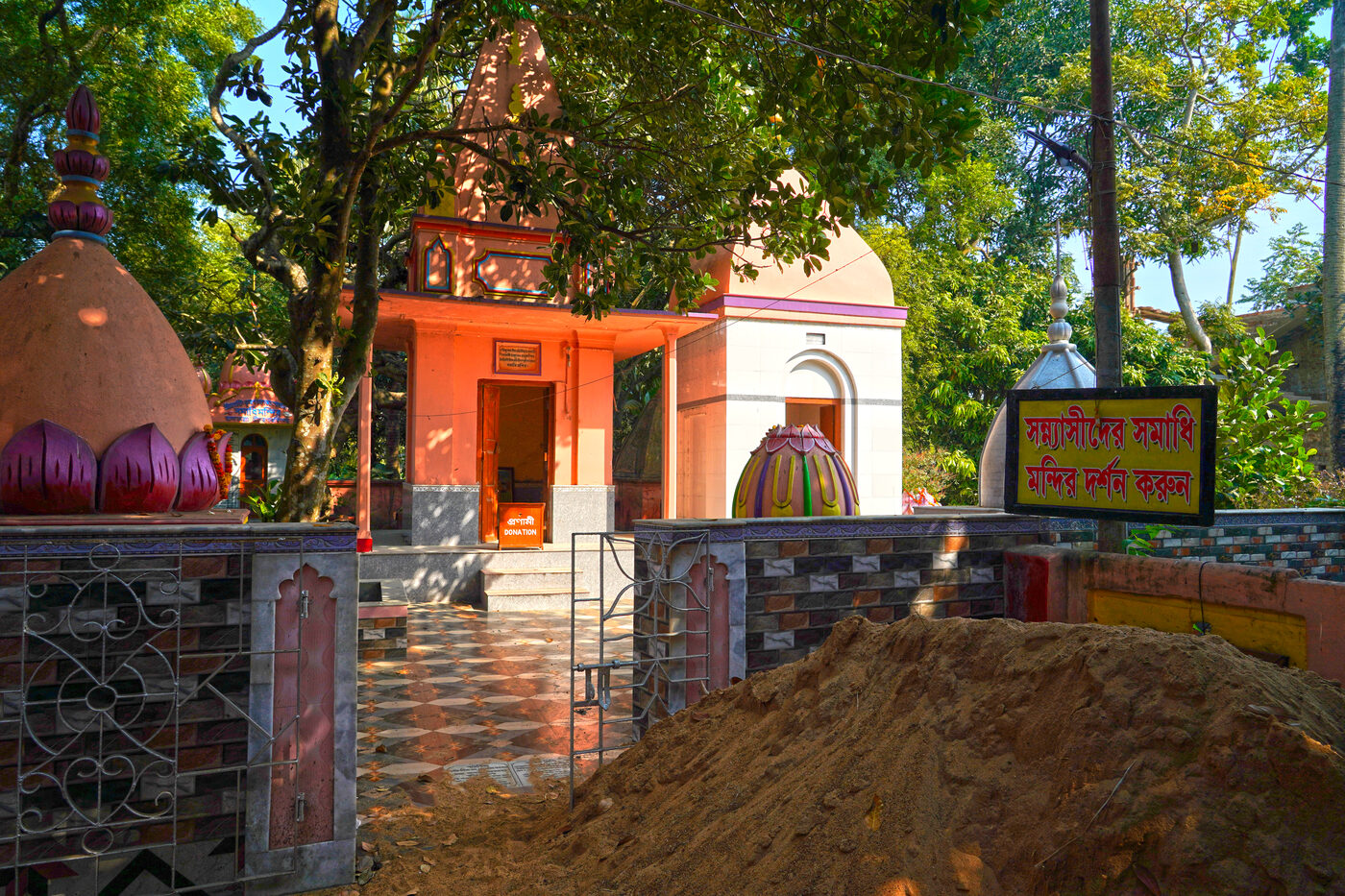
By contrast, the sources say very little about the end of his life. We say this plainly instead of filling in the gap. The Chaitanya-charitamrita gives an entire chapter to the passing of Haridasa Thakura, with the day, the manner, the procession and the tomb by the sea. It gives Srivasa Thakura nothing of the kind. Instead, the tradition has kept the place. He spent his later years at Kumarahatta. There, Mahaprabhu is said to have given him a blessing: his house would never know poverty, and whatever he needed for his worship would come to his door if he never went out to look for it. Across the Ganges from Halisahar, at Chuchura, there is a temple of Nitai-Gauranga. Local tradition identifies its Deities as the ones Srivasa Pandit himself worshipped, and the temple was formerly named after him. His samadhi is shown among the sites associated with the Chaitanya movement, and readers will find more than one place claimed for it.
The Fifth Place as Bhakta #
Gaudiya teachers explain very carefully what he stands for in the Panca-tattva, and that careful distinction is the whole point. Chaitanya Mahaprabhu is the Lord in the form of a devotee. Nityananda Prabhu is His expansion in that form. Advaita Acharya is an incarnation of the Lord who takes the devotee's part. Gadadhara Pandit is the Lord's internal potency. Srivasa Thakura is none of these. He is the bhakta, the pure devotee. He stands for the countless pure devotees who are said to be headed by him. Bhaktisiddhanta Sarasvati Thakura's Anubhasya notes that, in a broad sense, all pure devotees are potencies of the Lord. So these groups are not completely separate from one another. But the difference the Panca-tattva makes is real and intended. Four of the five are the Absolute Truth in one aspect or another. The fifth is a man.
For that reason, his place in the mantra is not a minor addition. Gaudiya Vaishnavas chant the names of the Panca-tattva before the maha-mantra. The fifth item is not simply Srivasa, but Srivasa together with all the devotees. The phrase is deliberately left open at the end, so that anyone who chants it is included in it. The movement's own understanding of itself is that the Lord descends with His expansion, His incarnation and His potency, and then needs one more thing: somebody willing to have Him in the house.
What He Gave the Movement #
Srivasa Thakura provided that, and the record shows what it cost him. He gave the movement his courtyard for a year of nightly chanting. He gave it his good name in a town where a whispered charge of tantric worship could have ruined him, and he stood in front of his neighbours and let the charge be laughed away. He gave it the night his son died, and did not stop the kirtana to grieve. And after 1510 he gave it a quarter of a century of long journeys, made by a man growing older every year, to spend four months a year near the Lord. He could not live with the Lord, and he would not live without Him. He founded no school and wrote no book. His niece's son wrote the first biography. His house is a place of pilgrimage. And his name is chanted, every day, by people who have never heard any of this.
Scriptural evidence for this chapter (6)
শ্রীবাস পণ্ডিত, আর শ্রীরাম পণ্ডিত ।
দুই ভাই—দুই শাখা, জগতে বিদিত ॥ ৮ ॥
śrīvāsa paṇḍita, āra śrī-rāma paṇḍita
dui bhāi — dui śākhā, jagate vidita
Word for word
śrīvāsa paṇḍita: Śrīvāsa Paṇḍita; āra: and; śrī-rāma paṇḍita: Śrī Rāma Paṇḍita; dui bhāi: two brothers; dui śākhā: two branches; jagate: in the world; vidita: well known.
The two brothers Śrīvāsa Paṇḍita and Śrī Rāma Paṇḍita started two branches that are well known in the world.
The purport records that Srivasa Pandit left Nabadwip after the Lord's sannyasa, apparently from feelings of separation, and settled at Kumarahatta.
শ্রীবাস-পণ্ডিত ইঁহ, পণ্ডিত-বক্রেশ্বর ।
বিদ্যানিধি-আচার্য, ইঁহ পণ্ডিত-গদাধর ॥ ৮৪ ॥
śrīvāsa-paṇḍita iṅha, paṇḍita-vakreśvara
vidyānidhi-ācārya, iṅha paṇḍita-gadādhara
Word for word
śrīvāsa-paṇḍita: Śrīvāsa Paṇḍita; iṅha: here; paṇḍita-vakreśvara: Vakreśvara Paṇḍita; vidyānidhi-ācārya: Vidyānidhi Ācārya; iṅha: here; paṇḍita-gadādhara: Gadādhara Paṇḍita.
“Here are Śrīvāsa Paṇḍita, Vakreśvara Paṇḍita, Vidyānidhi Ācārya and Gadādhara Paṇḍita.
Mahaprabhu naming Srivasa Pandit among the Bengali devotees being introduced at Jagannatha Puri.
কীর্তনীয়াগণে দিল মাল্য-চন্দন ।
স্বরূপ, শ্রীবাস, — যাহাঁ মুখ্য দুইজন ॥ ৩২ ॥
kīrtanīyā-gaṇe dila mālya-candana
svarūpa, śrīvāsa, — yāhāṅ mukhya dui-jana
Word for word
kīrtanīyā-gaṇe: unto the performers of saṅkīrtana; dila: gave; mālya-candana: garlands and sandalwood pulp; svarūpa: Svarūpa; śrīvāsa: Śrīvāsa; yāhāṅ: where; mukhya: principal; dui-jana: two persons.
The Lord also gave garlands and sandalwood pulp to the performers of saṅkīrtana. The two chief performers were Svarūpa Dāmodara and Śrīvāsa Ṭhākura.
Svarupa Damodara and Srivasa Thakura named as the two chief performers of the Ratha-yatra sankirtana.
আচার্যরত্ন, বিদ্যানিধি, শ্রীবাস, রামাই ।
বাসুদেব, মুরারি, গোবিন্দাদি তিন ভাই ॥ ১৬ ॥
রাঘব পণ্ডিত নিজ-ঝালি সাজাঞা ।
কুলীন-গ্ৰামবাসী চলে পট্টডোরী লঞা ॥ ১৭ ॥
ācāryaratna, vidyānidhi, śrīvāsa, rāmāi
vāsudeva, murāri, govindādi tina bhāi
rāghava paṇḍita nija-jhāli sājāñā
kulīna-grāma-vāsī cale paṭṭa-ḍorī lañā
Word for word
ācāryaratna: Ācāryaratna; vidyānidhi: Vidyānidhi; śrīvāsa: Śrīvāsa; rāmāi: Rāmāi; vāsudeva: Vāsudeva; murāri: Murāri; govinda-ādi tina bhāi: Govinda and his two brothers; rāghava paṇḍita: Rāghava Paṇḍita; nija-jhāli: his own bags; sājāñā: assorting; kulīna-grāma-vāsī: the inhabitants of Kulīna-grāma; cale: went; paṭṭa-ḍorī lañā: taking silken ropes.
All the devotees of Navadvīpa departed, including Ācāryaratna, Vidyānidhi, Śrīvāsa, Rāmāi, Vāsudeva, Murāri, Govinda and his two brothers and Rāghava Paṇḍita, who took bags of assorted foods. The inhabitants of Kulīna-grāma, carrying silken ropes, also departed.
The annual departure of the Nabadwip devotees for Jagannatha Puri, with Srivasa named among them.
শ্রীবাসাদি যত কোটি কোটি ভক্তগণ ।
শুদ্ধভক্ত’–তত্ত্বমধ্যে তাঁ–সবার গণন ॥ ১৬ ॥
śrīvāsādi yata koṭi koṭi bhakta-gaṇa
‘śuddha-bhakta’-tattva-madhye tāṅ-sabāra gaṇana
Word for word
śrīvāsa-ādi: devotees headed by Śrīvāsa Ṭhākura; yata: all others; koṭi koṭi: innumerable; bhakta-gaṇa: devotees; śuddha-bhakta: pure devotees; tattva-madhye: in the truth; tāṅ-sabāra: all of them; gaṇana: counted.
There are innumerable pure devotees of the Lord, headed by Śrīvāsa Ṭhākura, who are known as unalloyed devotees.
The innumerable pure devotees headed by Srivasa Thakura, known as unalloyed devotees, his place in the Panca-tattva.
শ্রীচৈতন্য, নিত্যানন্দ, অদ্বৈত,—তিন জন ।
শ্রীবাস–গদাধর–আদি যত ভক্তগণ ॥ ১৬৯ ॥
śrī-caitanya, nityānanda, advaita, — tina jana
śrīvāsa-gadādhara-ādi yata bhakta-gaṇa
Word for word
śrī-caitanya, nityānanda, advaita: Śrī Caitanya Mahāprabhu, Nityānanda Prabhu and Advaita Prabhu; tina: these three; jana: personalities; śrīvāsa-gadādhara: Śrīvāsa and Gadādhara; ādi: etc.; yata: all; bhakta-gaṇa: the devotees.
While chanting the Pañca-tattva mahā-mantra, one must chant the names of Śrī Caitanya, Nityānanda, Advaita, Gadādhara and Śrīvāsa with their many devotees. This is the process.
The Panca-tattva mantra, whose fifth item is Srivasa together with all the devotees.
Closing
Family and Life at Nabadwip #
He was born in Srihatta and settled in Nabadwip, on the bank of the Ganges near Mahaprabhu's own home, with his wife Malini Devi and his brothers Sripati, Srirama and Srikanta. He was much older than Nimai and was already a practising Vaishnava, quietly worshipping Krishna and chanting the holy names. At that time the town's religious life was dominated by ritual and by scholarship in logic. Vaishnava accounts describe him as one of the very few people in Nabadwip who recognised what had happened to Nimai Pandita after His return from Gaya. It was not a breakdown. It was pure love of God appearing in Him.
Kavi Karnapura's Gaura-ganoddesha-dipika (verse 90) gives the earlier identity of both Srivasa and his younger brother Srirama:
śrīvāsa-paṇḍito dhīmān yaḥ purā nārado muniḥ
parvatākhyo muni-varo ya āsīn nārada-priyaḥ
sa rāma-paṇḍitaḥ śrīmāns tat-kaniṣṭha-sahodaraḥ
"Intelligent Srivasa Pandita had previously been Narada Muni, the best of the sages. Srivasa's younger brother, Sriman Rama Pandita, had previously been Narada's close friend Parvata Muni." (Gaura-ganoddesha-dipika 90)
Srila Prabhupada confirms this in his purport to Chaitanya-charitamrita Adi 10.8: "In the Gaura-gaṇoddeśa-dīpikā (90), Śrīvāsa Paṇḍita (Śrīvāsa Ṭhākura) is described as an incarnation of Nārada Muni, and Śrī Rāma Paṇḍita, his younger brother, is said to be an incarnation of Parvata Muni, a great friend of Nārada's."
Srivasa Angan and the First Kirtanas #
His house became the birthplace of the movement. For a full year, before the chanting went out into the streets, Mahaprabhu held nightly kirtana at Srivasa Thakura's home with the doors closed. This was so that people who mocked the devotees could not come in and make fun of what they saw. It was there that the ecstatic pastimes of that first period took place: the Lord's manifestation of divine forms, the twenty-one hours of continuous ecstasy, the abhiseka in which Srivasa worshipped Him formally as the Supreme Lord. That courtyard, Srivasa Angan, is still shown at Mayapur and is among the most visited sites in the Gaudiya world.
The Slander of Gopala Chapala #
Association with the Lord cost him. The orthodox brahmana community of Nabadwip resented the nightly chanting, and Srivasa Thakura, as its host, faced much of their anger. The Chaitanya-charitamrita records how a brahmana named Gopala Chapala tried to have him publicly disgraced as a worshipper of the goddess Bhavani. Overnight, he laid out wine and the items used in tantric worship on Srivasa's doorstep. The slander failed. Afterwards the man got leprosy, and in the end he had to take shelter of the very devotee he had tried to ruin.
The Death of His Son #
The episode for which he is most honoured, however, is the death of his son. During one of the nightly kirtanas at his house, a child of his family died. The household knew what the news would do to the assembled devotees and to the Lord. So they kept it silent and let the chanting continue until it ended naturally. When Mahaprabhu learned of it He is described as deeply moved. He caused the dead boy to speak. The child himself explained to his grieving relatives how the soul passes from one body to another, and that his time with them had simply ended. Throughout Gaudiya literature, Srivasa Thakura's calm on that night is held up as the model of a devotee's steady faith, even under the worst pressure a householder can face.
The Puri Years and His Place in the Panca-tattva #
When Mahaprabhu took sannyasa and moved to Puri, Srivasa Thakura remained in Bengal. But each year he travelled with the party of Bengali devotees for the Ratha-yatra festival. The Chaitanya-charitamrita names him again and again among those closest to the Lord in the Puri years. In the Panca-tattva he stands for the ordinary devotee. He is not an incarnation of the Lord, and not a potency of the Lord. He was a householder brahmana who gave his house, his reputation and his peace to the movement, and his courtyard is where it all started.
