Dāūjī Mandira (Dāūjī-gaon)
दाऊजी मन्दिर (दाऊजी-गाँव) Hindi name proposed
Also called Daujī
In short
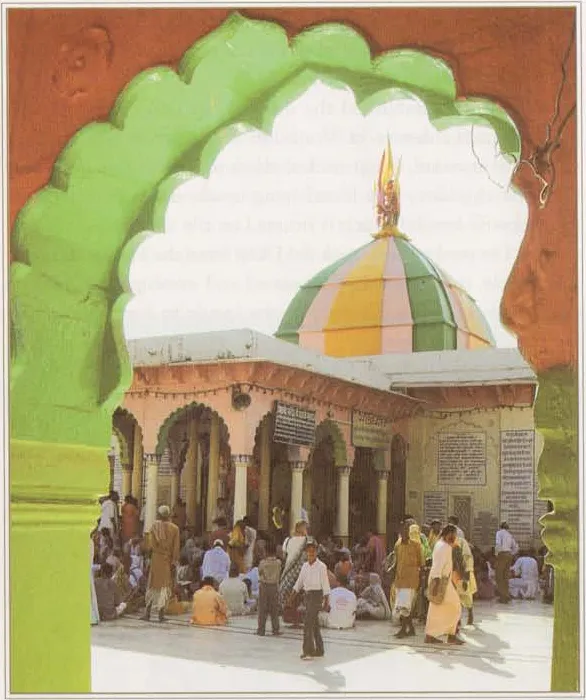
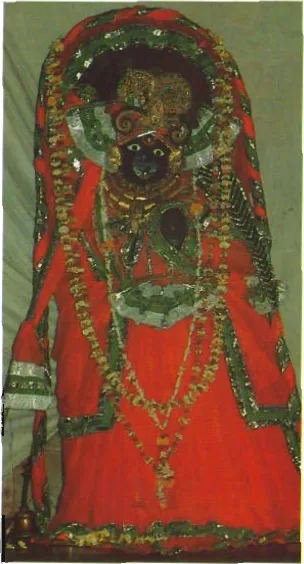
The Dāūjī temple stands in the village of Dāūjī (Baldeo), the old Rīḍhā. Its Deity is Balarāma, called Dāūjī in Vraja, with a smaller image of His consort Revatī set apart and facing Him.[1 +4] The guidebooks say that Vajranābha established the Deity, and the historian A. W. Entwistle (1987) judges the image to be very old, perhaps of the Kushana period.[4 +7] Śrīla Nārāyaṇa Bhaṭṭa Gosvāmī's Vraja-bhakti-vilāsa describes a place of Baladeva beside Mahāvana with a pair of images facing each other and a triangular temple.[5 +3] According to F. S. Growse (1883) and A. W. Entwistle (1987), the temple building was put up towards the end of the eighteenth century.[15 +1]
Key facts
| Kind | temple |
|---|---|
| Region · area | Mahāvana · Dāūjī (village) |
| Ācāryas | Śrīla Nārāyaṇa Bhaṭṭa Gosvāmī, Śrīla A.C. Bhaktivedanta Swami Prabhupāda |
Why it is glorified
In the Vraja-bhakti-vilāsa (about 1552, as Entwistle dates it) the pilgrim at Baladeva-sthala sees the pond that Nanda and the …
In the Vraja-bhakti-vilāsa (about 1552, as Entwistle dates it) the pilgrim at Baladeva-sthala sees the pond that Nanda and the gopas filled with milk, the place where Baladeva and the Yadu princes ate sweet rice, and the pair of Deities, and walks around a triangular temple that Nanda and the gopas built. Its prayer to the pair bows to Balarāma as the delight of Revatī, who grants the gopas' wishes, for the joy of Their gazing at each other (summarised here, not translated).[5 +3] This is the earliest description of the place found; Entwistle identifies it with this temple.[5 +3]
आदिपुराणे— यत्रव बलदेवस्तु यदुपुत्रैः समन्वितः । भोजनं क्रियते स्वेच्छं कृतदुग्धाढ्यपायसम् ॥ … ततो बलदेवयुगलप्रार्थनमन्त्रः— रेवतीरमणायैव गोपानां वरदायिने । अन्योन्यसन्मुखालोकप्रीतये च नमस्तु ते ॥
ādipurāṇe— yatrava baladevastu yaduputraiḥ samanvitaḥ
bhojanaṁ kriyate svecchaṁ kṛtadugdhāḍhyapāyasam
… tato baladevayugalaprārthanamantraḥ— revatīramaṇāyaiva gopānāṁ varadāyine
anyonyasanmukhālokaprītaye ca namastu te ||
The guidebook Vṛndāvana-Dhāma Ki Jaya! (c. 1986) quotes, in its entry on Dāūjī, a verse of Śrīla Raghunātha dāsa Gosvāmī's Vraja-vilāsa-stava (104): neither Brahmā, Nārada nor Śiva can know the sweetness of Vraja, but only Baladeva with His mother knows it, and Uddhava knows it by love (summarised here, not translated). The verse does not speak of the temple.[18 +1]
Divine pastimes
Balarāma's names
At the name-giving in Nanda's cowshed, Garga Muni named Rohiṇī's son Rāma, Bala and Saṅkarṣaṇa. In Vraja He is called Dāūjī; Vṛndāvana-Dhāma Ki Jaya! gives the meaning "elder brother".[1 +2]
śrī-garga uvāca ayaṃ hi rohiṇī-putro ramayan suhṛdo guṇaiḥ / ākhyāsyate rāma iti balādhikyād balaṃ viduḥ / yadūnām apṛthag-bhāvāt saṅkarṣaṇam uśanty api
Garga Muni said: This child, the son of Rohiṇī, will give all happiness to His relatives and friends by His transcendental qualities. Therefore He will be known as Rāma. And because He will manifest extraordinary bodily strength, He will also be known as Bala. Moreover, because He unites two families — Vasudeva’s family and the family of Nanda Mahārāja — He will be known as Saṅkarṣaṇa.
Translation: Śrīla A.C. Bhaktivedanta Swami PrabhupādaŚrīmad-Bhāgavatam tells how Yogamāyā moved Saṅkarṣaṇa into the womb of Rohiṇī, who lived in Nanda's Gokula, but it describes no scene of His birth.[20 +2] No source found places His birth at Rīḍhā; the sources that name a place set it in Gokula and Mahāvana, and their accounts are set side by side on the page of Nanda-bhavana in Mahāvana.[20 +2]
Balarāma and Revatī
The Bhāgavatam tells that King Raivata gave his daughter Revatī to Balarāma on Brahmā's advice, and places the marriage after Kṛṣṇa and Balarāma had returned to Dvārakā; it does not say where the wedding was held.[6 +4]
ānartādhipatiḥ śrīmān raivato raivatīṃ sutām / brahmaṇā coditaḥ prādād balāyeti puroditam
As ordered by Lord Brahmā, Raivata, the opulent ruler of Ānarta, gave Lord Balarāma his daughter Raivatī in marriage. This has already been discussed.
Translation: Śrīla Prabhupāda's disciples (BBT)Traditional accounts
According to Śrī Vraja-maṇḍala Parikramā (2007) and other guidebooks, Vajranābha established the Deity of Dāūjī; the undated …
According to Śrī Vraja-maṇḍala Parikramā (2007) and other guidebooks, Vajranābha established the Deity of Dāūjī; the undated parikramā notes Mahāvana say this happened about 4,900 years ago and call Him the largest Deity in Vraja. The Bengali Vṛndāvana-kathā (1920) already speaks of the image as established by Vajranābha and of its Ahivāsī priests.[6 +5] No scripture found says that Vajranābha installed Deities: the Bhāgavata-māhātmya of the Skanda Purāṇa tells only that, on the sage Śāṇḍilya's advice, he settled villages in Vraja and set up seats of rule, among them Mahāvana.[27]
Śrī Vraja-maṇḍala Parikramā and the notes Mahāvana say that Revatī stands half hidden beside Dāūjī, behind the door, for a confidential reason: their marriage took place in Dvārakā, not in Vraja.[6 +1] Vṛndāvana-Dhāma Ki Jaya! and the notes say that the Vrajavāsīs made the tank behind the temple, Kṣīrsāgara, by filling it with the milk of a hundred thousand cows as an offering to Balarāma, as the Vraja-bhakti-vilāsa tells of its milk pond.[3 +2]
How the Deity was hidden and found again is told in several ways: in the guidebooks, by the historians and in a common account that Entwistle reports, in which the Deity, found in Kṣīrsāgara, would not be taken away to Gokula.
Accounts differ How the Dāūjī Deity was hidden and found.
- Vṛndāvana-Dhāma Ki Jaya! (c. 1986)Placed in the Khīrsāgara during the Muslim invasions.
- the undated parikramā notes MahāvanaLost and probably hidden during the invasions from about 150 BC.
- the undated parikramā notes Mahāvana; Growse (1883, p. 292)"It is said" that Gosāīṁ Gokulnāth learned in a dream (Growse: a vision) that the Deity lay in the tank; the carts that tried to take Him to Gokul broke down and a shrine was built.
- Mītal (1966, p. 77)In the 17th century the image was found in an old kuṇḍa of Rīḍhā; Gokulnāth wanted to take it to Gokul but installed it at Rīḍhā at the villagers' request.
Śrīla Prabhupāda
On 29 November 1971 Śrīla Prabhupāda's party visited a temple of Balarāma on the way to Gokula, most probably this temple, though …
On 29 November 1971 Śrīla Prabhupāda's party visited a temple of Balarāma on the way to Gokula, most probably this temple, though the transcript does not name it. Asked whether Balarāma was born there, Śrīla Prabhupāda answered no, that it was a temple of Balarāma; the local guide then called it Balarāma's birthplace.[2 +1]
Names this place“Go to Daujī or Gokula? … Daujī is Lord Krsna…, Balarāma. … No, it is a temple of Balarāma. … Birthplace of Balarāma. You are our paṇḍā.”
Śrīla Prabhupāda, Parikramā on the Way to Gokula, Vṛndāvana, 29 November 1971 · vedabase.io
In January 1974 he asked that the devotees' tour of Vraja include a day at Dāūjī.[2 +1]
Location
| Where it is | Dāūjī[32] |
|---|
Nearby places
Kṣīrsāgara (Dāūjī)
Pictures
1 pictures
History
Entwistle (1987) dates the large image of Balarāma, by its stone and style, to the Kushana period, and the smaller image of Revatī to the medieval period. He thinks Revatī's image was probably in place before the middle of the sixteenth century, since Śrīla Nārāyaṇa Bhaṭṭa Gosvāmī speaks of two images. These are art-historical judgements, not documents.[4 +1]
F. S. Growse (1883) and Entwistle say that the present temple was built towards the end of the eighteenth century by Seth Shyam Das of Delhi, opposite a small older temple, and Growse found the names of their founders, with dates from 1768 to 1868, on the eleven courtyards around it. Neither names a document or inscription.[15 +1] The town took the Deity's name, and the temple's Paṇḍās later bought the old village of Rīḍhā from the Jāṭs.[4 +4]
Where the sources differ
How old the Dāūjī image is.
Accounts differ How old the Dāūjī image is.
- the undated parikramā notes Mahāvana; Śrī Vraja-maṇḍala Parikramā (2007); Vṛndāvana-Dhāma Ki Jaya! (c. 1986)Installed by Vajranābha, "about 4,900 years ago" (the undated parikramā notes Mahāvana).
- Vṛndāvana-kathā (1920, p. 171)The Śeṣa image of Baladeva near Kṣīrasāgara was established by Vajranābha; the author compares it with the Nāga images that Buddhists also worshipped.
- A. W. Entwistle (1987), a historianJudging by its stone and style, Entwistle holds that the large image is without doubt very old and may go back to the Kushana period.
The wording of these accounts is our summary of the sources, not a published translation.
Accounts differ Why Revatī's image stands apart from Dāūjī's.
- Śrī Vraja-maṇḍala Parikramā (2007); the undated parikramā notes MahāvanaA "confidential reason": the marriage took place in Dvārakā, not in Vraja.
- Vraja-bhakti-vilāsa 2.49, 4.88-89The images of the pair are set apart and face each other; the prayer is to the delight of Revatī, for the pleasure of Their gazing at each other.
- Entwistle (1987, p. 421)The smaller Revatī image is medieval and was probably installed before the mid-sixteenth century, since Śrīla Nārāyaṇa Bhaṭṭa refers to two images.
- F. S. Growse, Mathurá (1883), a historianGrowse thought the image was added later, since it stands in a corner, away from the dais.
Accounts differ Which petal of the Vraja lotus Dāūjī presides over.
- Vṛndāvana-Dhāma Ki Jaya! (c. 1986); the undated parikramā notes MahāvanaThe southern petal.
- the undated parikramā notes MahāvanaVajranābha made Him presiding Deity of the eastern petal; the southern petal is also credited to Varāha at Saukar-Vateshwara.
- Padma Purāṇa, Pātāla-khaṇḍa 69.51-54Mahāvana is the sixteenth petal and its presiding Deity is the child Dāmodara; no petal of Baladeva is named.
References
32 references
- Śrīmad-Bhāgavatam 10.8.12, GRETIL
- Śrīla Prabhupāda, Parikramā on the Way to Gokula, Vṛndāvana, 29 November 1971 · vedabase.io
- Vṛndāvana-Dhāma Ki Jaya! (c. 1986), by Dhruva Mahārāja dāsa, PDF p. 83
- A. W. Entwistle, §70 "Baldeo", printed p. 421, Egbert Forsten, Groningen, 1987
- Śrīla Nārāyaṇa Bhaṭṭa Gosvāmī, Vraja-bhakti-vilāsa, chapter 4 vv.88-89, printed p. 110; Grantha Mandira text (4) v.88-89, 1st ed., publ. Bābā Kṛṣṇadāsa, Kusuma-sarovara, Saṁvat 2008
- Śrī Vraja-maṇḍala Parikramā (2007), PDF p. 266
- the undated parikramā notes Mahāvana, ¶14
- Vṛndāvana-Dhāma Ki Jaya! (c. 1986), by Dhruva Mahārāja dāsa, PDF p. 84
- The Colour Guide to Rādhā-kuṇḍa (1999), Rājaśekhara dāsa Brahmacārī, PDF p. 35
- the undated parikramā notes Govardhana, ¶53
- Vṛndāvana-kathā, end of chapter 14, printed p. 171
- Śrīla Nārāyaṇa Bhaṭṭa, Vraja-bhakti-vilāsa, chapter 4 (caturtho 'dhyāyaḥ) v.87, printed p. 106; the verses are introduced as 'pādme' (from the Padma Purāṇa), 1st ed., publ. Bābā Kṛṣṇadāsa, Kusuma-sarovara, Saṁvat 2008
- Śrīla Nārāyaṇa Bhaṭṭa Gosvāmī, Vraja-bhakti-vilāsa, chapter 4 v.90, printed p. 111; Grantha Mandira text (4) v.90, 1st ed., publ. Bābā Kṛṣṇadāsa, Kusuma-sarovara, Saṁvat 2008
- Śrīla Nārāyaṇa Bhaṭṭa, Vraja-bhakti-vilāsa, chapter 2, v.49 in the Grantha Mandira numbering (dvitīya adhyāyaḥ [part 12]), printed p. 47; introduced as 'bhaviṣyottare', 1st ed., publ. Bābā Kṛṣṇadāsa, Kusuma-sarovara, Saṁvat 2008
- A. W. Entwistle, §70 "Baldeo", printed p. 422, Egbert Forsten, Groningen, 1987
- Mathurá (1883), F. S. Growse, B.C.S., M.A. Oxon., C.I.E. (as the title page gives him, p. 293
- Śrīla Nārāyaṇa Bhaṭṭa Gosvāmī, Vraja-bhakti-vilāsa, chapter 4 vv.88-89, printed p. 110; Grantha Mandira text (4) v.88-89, 1st ed., publ. Bābā Kṛṣṇadāsa, Kusuma-sarovara, Saṁvat 2008
- Śrīla Raghunātha dāsa Gosvāmī, Vraja-vilāsa-stava, Stavāvalī (9) Vraja-vilāsa-stava v.104
- Vṛndāvana-Dhāma Ki Jaya! (c. 1986), by Dhruva Mahārāja dāsa, PDF p. 85
- Śrīmad-Bhāgavatam 10.2.7, GRETIL
Show all 32 references
- Śrīmad-Bhāgavatam 10.2.8, GRETIL
- Śrīla Prabhupāda, Kṛṣṇa, the Supreme Personality of Godhead, ch. 2 "Prayers by the Demigods for Lord Kṛṣṇa in the Womb" · vedabase.io
- Śrīmad-Bhāgavatam 9.3.36, GRETIL
- Śrīmad-Bhāgavatam 10.52.15, GRETIL
- Śrīla Prabhupāda, Kṛṣṇa, the Supreme Personality of Godhead, ch. 52 "Kṛṣṇa, the Raṇacora" · vedabase.io
- the undated parikramā notes Mahāvana, ¶16
- Śrīmad-Bhāgavata-māhātmya, Bhāgavata-māhātmya (Skanda) adhyāya 1 v.36-38, Sanskrit Wikisource
- the undated parikramā notes Mahāvana, ¶20
- Prabhudayāl Mītal, printed p. 77
- Mathurá (1883), F. S. Growse, B.C.S., M.A. Oxon., C.I.E. (as the title page gives him, p. 292
- Śrīla Prabhupāda, Letter to Gurudasa, letter 74-01-17, 17 January 1974 · vedabase.io
- Śrī Vraja-maṇḍala Parikramā (2007), p. 506-507