Dāūjī (village)
दाऊजी (गाँव)
Also called Dāūjī-gaon, Baladeva
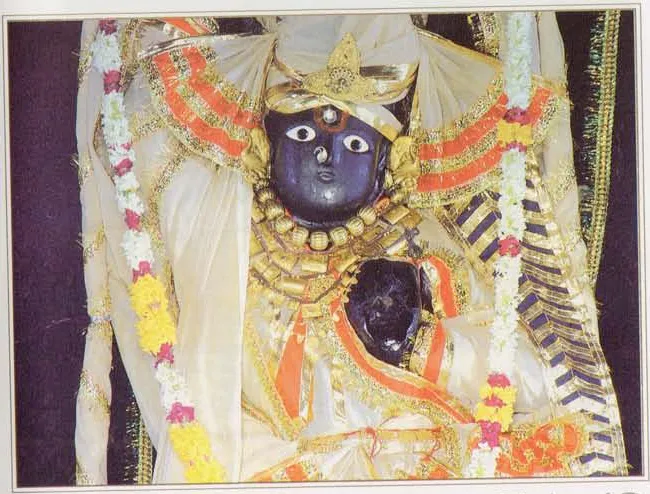
- What it is
- Dāūjī, also called Baldeo or Baladeva, is the village of the Deity of Balarāma known in Vraja as Dāūjī.
- Visiting
- Śrī Vraja-maṇḍala Parikramā (2007) places the village ten miles south of Rāyā and fifteen miles from Mathurā.
- Places here
- Kṣīrsāgara (Dāūjī), Hātaurā, Dāūjī Mandira (Dāūjī-gaon)
In short
Dāūjī, also called Baldeo or Baladeva, is the village of the Deity of Balarāma known in Vraja as Dāūjī. Its old name was Rīḍhā.[1 +3] According to the historian A. W. Entwistle (1987), the township grew up around the Dāūjī temple and took the Deity's name.[4] According to the guidebook Śrī Vraja-maṇḍala Parikramā (2007), this was once a forest where Śrī Baladeva's cows grazed.[2 +1] Śrīla Nārāyaṇa Bhaṭṭa Gosvāmī's Vraja-bhakti-vilāsa describes a Baladeva-sthala, a place of Baladeva, beside Mahāvana, which the editor of its Hindi edition identifies with Dāūjī.[6] In 1974 Śrīla Prabhupāda asked that the devotees' tour of Vraja include a day at Dāūjī.[7]
Key facts
| Kind | village |
|---|---|
| Region · area | Mahāvana |
| Also part of | Vidrumavana |
| Ācāryas | Śrīla Nārāyaṇa Bhaṭṭa Gosvāmī |
Why it is glorified
The Vraja-bhakti-vilāsa names Baladeva-sthala in several lists.
The Vraja-bhakti-vilāsa names Baladeva-sthala in several lists. Quoting a tantra, it counts it among the forty-two forests on the northern bank of the Yamunā, and it places it among the forests in the charge of Campakalatā, one of Śrī Rādhā's sakhīs, Her intimate friends.[8 +1] It sets the pilgrimage there at dawn on the tenth day of the bright fortnight of Bhādra, the day after Mahāvana: a walk of two and a half krośas around the place and a night's stay, which, it says, grants all desires.[6 +5]
In verses that it gives as from the Padma Purāṇa, the same book tells how the place began: Nanda and the other gopas poured the milk of a hundred thousand cows into a pond, which was called Dugdha-kuṇḍa, the milk pond, and made sweet rice for Baladeva; by Balarāma's blessing its water turns into milk (summarised here, not translated).[12] The editor of the Hindi edition identifies this Dugdha-kuṇḍa with Kṣīrsāgara, the tank behind the temple.[6] The book also gives the signs by which the place is known: the milk pond, the place where Baladeva was fed, a pair of images facing each other and a triangular temple.[11]
Divine pastimes
Śrīmad-Bhāgavatam tells of Balarāma's childhood in Vraja without naming this village. By the Lord's order Yogamāyā moved Him from Devakī's womb to that of Rohiṇī, who lived at Nanda's home in Vraja, and so He is called Saṅkarṣaṇa, "the one who was drawn out".[13 +1]
devakyā jaṭhare garbhaṃ śeṣākhyaṃ dhāma māmakam / tat sannikṛṣya rohiṇyā udare sanniveśaya
Within the womb of Devakī is My partial plenary expansion known as Saṅkarṣaṇa or Śeṣa. Without difficulty, transfer Him into the womb of Rohiṇī.
Translation: Śrīla A.C. Bhaktivedanta Swami PrabhupādaAt the name-giving Garga Muni called Rohiṇī's son Rāma and Bala, and soon the two brothers crawled about together in Gokula.[15 +2] Śrī Vraja-maṇḍala Parikramā (2007) mentions these childhood rites and games in its section on Dāūjī, while setting them in Gokula and Mahāvana.[1 +1] When Rāma and Kṛṣṇa were old enough, the cowherd men let them tend the cows; the Bhāgavatam names no pasture, and it is the guidebook that places Baladeva's pasture at Rīḍhā.[2 +3]
tataś ca paugaṇḍa-vayaḥ-śrītau vraje babhūvatus tau paśu-pāla-sammatau / gāś cārayantau sakhibhiḥ samaṃ padair vṛndāvanaṃ puṇyam atīva cakratuḥ
Śukadeva Gosvāmī said: When Lord Rāma and Lord Kṛṣṇa attained the age of paugaṇḍa [six to ten] while living in Vṛndāvana, the cowherd men allowed Them to take up the task of tending the cows. Engaging thus in the company of Their friends, the two boys rendered the land of Vṛndāvana most auspicious by imprinting upon it the marks of Their lotus feet.
Translation: Śrīla Prabhupāda's disciples (BBT)The sources do not agree on the day of Balarāma's birth. The Garga-saṁhitā gives the sixth day of the bright fortnight of Bhādra, at midday, in Nanda's home.[20] The Padma Purāṇa says that Rohiṇī bore Him on the eighth day of the dark fortnight of Bhādrapada, before Devakī conceived Kṛṣṇa.[21] Śrīla Jīva Gosvāmī's Gopāla-campū says that Rohiṇī gave birth in the fourteenth month, and gives the date by the month of Śrāvaṇa and the Śravaṇa star.[22] The guidebook's "eight days before Kṛṣṇa" is shown with the others below.
Accounts differ When Balarāma was born, compared with Kṛṣṇa's birth (Śrī Vraja-maṇḍala Parikramā (2007), in its Dāūjī section: eight days before)
- Śrī Vraja-maṇḍala Parikramā (2007) (Dāūjī section)Dāūjī was born of Rohiṇī eight days before Śrī Kṛṣṇa, in Gokula-Mahāvana.
- Garga-saṁhitā, Goloka-khaṇḍa 10.25-31 (= Balabhadra-khaṇḍa 5.8-10)Born of Rohiṇī in Nanda's home in Vraja five days after Yogamāyā placed Devakī's seventh embryo in her, on the sixth of the bright fortnight of Bhādra, at midday; Kṛṣṇa's birth (1.11.23) is on the eighth of the dark fortnight of Bhādra.
- Padma Purāṇa, Uttara-khaṇḍa 245.31-35Rohiṇī bore Saṅkarṣaṇa on the dark eighth of Prauṣṭhapada; after that Devakī conceived Hari, who was born in the tenth month on the dark eighth of Nabhas (Śrāvaṇa).
- Śrīla Jīva Gosvāmī, Gopāla-campū, Pūrva-campū 3After the exchange of the seven-month embryos, Rohiṇī gave birth in the fourteenth month, on a date given by Śrāvaṇa and the Śravaṇa constellation; no count of days before Kṛṣṇa's birth.
The wording of these accounts is our summary of the sources, not a published translation.
Traditional accounts
According to Śrī Vraja-maṇḍala Parikramā (2007) and the undated parikramā notes Mahāvana, the Deity of Dāūjī was established by …
According to Śrī Vraja-maṇḍala Parikramā (2007) and the undated parikramā notes Mahāvana, the Deity of Dāūjī was established by Vajranābha.[1 +1] The notes add a local tradition for which no older source has been found, so it is not certain: Balarāma, herding the cows here, showed the cowherd boys His original form as the Supreme Lord, and for that reason Vajranābha installed Him here.[24]
Vidrumavana
Vidrumavana is "the coral forest". Śrīla Nārāyaṇa Bhaṭṭa Gosvāmī's Vraja-bhakti-vilāsa counts it among the forests on the northern bank of the Yamunā, names Gokuleśa as its presiding Deity, and gives as its signs Rohiṇī-kuṇḍa with an image of Śiva, Vajreśvara Mahādeva, beside it.[25 +3] In a passage that it gives from the Matsya Purāṇa, the book says that the forest is named after the coral that arose there, that its prayer calls it arranged by Tālāṅka, whom the edition's Hindi explains as Balarāma, and that Rohiṇī bathed in the kuṇḍa and installed the image of Śiva (summarised here, not translated).[28] According to Śrī Vraja-maṇḍala Parikramā (2007), the village of Dāūjī, where Baladeva's cows grazed, lies within Vidrumavana; whether it does is set out in the accounts below.[5]
Śrīla Prabhupāda
On his Vraja parikramā of 29 November 1971, travelling by bus towards Gokula, Śrīla Prabhupāda asked whether the party should go …
On his Vraja parikramā of 29 November 1971, travelling by bus towards Gokula, Śrīla Prabhupāda asked whether the party should go to Dāūjī or to Gokula, and explained that Dāūjī is Balarāma.[30]
Names this place“Prabhupāda: Go to Daujī or Gokula? [break] Hindi. Śyāmasundara: What is Daujī? Prabhupāda: Daujī is Lord Krsna…, Balarāma.”
Śrīla Prabhupāda, Parikramā on the Way to Gokula, Vṛndāvana, 29 November 1971 · vedabase.io
In January 1974 he wrote that the devotees coming to Vṛndāvana should be taken by bus to the holy places, and named Dāūjī for one day:[7]
Names this place“Buses should be engaged to take the devotees one day to Govardhana and Radhakunda, Nandagram and Barsana. The other day, Dauji and another day to some other places.”
Śrīla Prabhupāda, Letter to Gurudasa, letter 74-01-17, 17 January 1974 · vedabase.io
Visiting today
Śrī Vraja-maṇḍala Parikramā (2007) places the village ten miles south of Rāyā and fifteen miles from Mathurā.[1]
Location
| Where it is | 10 miles south of Rāyā; 15 miles from Mathurā; within Vidrumavana[31] |
|---|
Places at Dāūjī (village)
4 places
Also described on this page
- Vidrumavana forest
Nearby places
Rāyā · Mathurā · Cintāharaṇa-ghāṭa · Devanagara
Pictures
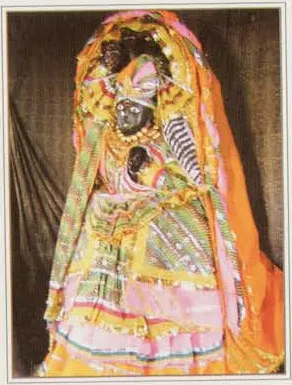
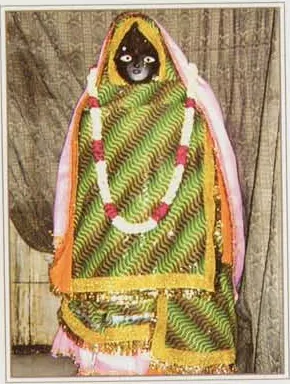
2 pictures
History
The historians Prabhudayāl Mītal (1966) and A. W. Entwistle (1987) give the same old name, Rīḍhā, as the guidebooks.[1 +3] Mītal writes that after the Deity was found in the village's kuṇḍa and installed, a temple and rest-houses (dharmaśālās) were built and a settlement grew, so that Rīḍhā became a well-known holy place of Vraja under the name Baladeva or Dāūjī. He gives no dates.[3]
Entwistle writes that the Ahivāsī Paṇḍās of the temple, descendants of the brothers of its first priest, in time bought Rīḍhā from the Jāṭs and came to own other villages, some given by the Sindhiyā family. He names no year or document.[29] From the middle of the eighteenth to the middle of the nineteenth century, he says, merchant devotees from Agra, Hathras, Mathurā and other towns paid for the dharmaśālās built around courtyards beside the temple.[29] The finding of the Deity and the building of the temple are told on the page of the Dāūjī temple.
Where the sources differ
Whether Dāūjī (Baladeva-sthala, Rīḍhā) lies within Vidrumavana.
Accounts differ Whether Dāūjī (Baladeva-sthala, Rīḍhā) lies within Vidrumavana.
- Śrī Vraja-maṇḍala Parikramā (2007) (printed p. 508)Rīḍhā or Dāūjī-gaon 'is within Vidrumavana'.
- Vraja-bhakti-vilāsa, Hindi edition, table of contentsLists 'Vidrumavana — (Dāūjī)', identifying the forest with Dāūjī.
- Vraja-bhakti-vilāsa, Sanskrit text, ch. 2 vv.19 and 46-52Lists Vidrumavana (eighth of the forty-two northern forests; signs Rohiṇī-kuṇḍa and Vajreśvara) and Baladeva-sthala (forty-first; signs Dugdha-kuṇḍa and Baladeva's eating place) as separate entries, without saying that one lies within the other.
Accounts differ Where the Vraja-bhakti-vilāsa's Baladeva-sthala stands in relation to Mahāvana and Vidrumavana
- Vraja-bhakti-vilāsa 4.87 (Sanskrit text)Baladeva-sthala is 'beside Mahāvana' (mahāvana-pārśve).
- Vraja-bhakti-vilāsa 2.19 (Sanskrit text)Baladeva-sthala is a separate entry (41st) among the forty-two forests north of the Yamunā; Vidrumavana is the 8th.
- Śrī Vraja-maṇḍala Parikramā (2007)Rīḍhā or Dāūjī-gaon 'is within Vidrumavana'.
- The Hindi edition's editor, table of contentsGlosses chapter 4's 'Baladeva-sthala near Mahāvana' as '(Dāūjī)' and chapter 5's 'Vidrumavana' also as '(Dāūjī)'.
References
31 references
- Śrī Vraja-maṇḍala Parikramā (2007), PDF p. 266
- the undated parikramā notes Mahāvana, ¶11
- Prabhudayāl Mītal, Braj-yātrā, 22nd halt (Baladeva), printed p. 142
- A. W. Entwistle, ch. 8 §70 'Baldeo', printed p. 421, Egbert Forsten, Groningen, 1987
- Śrī Vraja-maṇḍala Parikramā (2007), PDF p. 267
- Vraja-bhakti-vilāsa, अध्याय सूची (table of contents), chapter 4 entry, 1st ed., publ. Bābā Kṛṣṇadāsa, Kusuma-sarovara, Saṁvat 2008
- Śrīla Prabhupāda, Letter to Gurudasa, letter 74-01-17, 17 January 1974 · vedabase.io
- Śrīla Nārāyaṇa Bhaṭṭa Gosvāmī, Vraja-bhakti-vilāsa, chapter 2, v.19 in the Grantha Mandira numbering: the forty-two forests on the northern bank of the Yamunā (quoted 'sanmohanītantre'), printed p. 36, 1st ed., publ. Bābā Kṛṣṇadāsa, Kusuma-sarovara, Saṁvat 2008
- Śrīla Nārāyaṇa Bhaṭṭa Gosvāmī, Vraja-bhakti-vilāsa, chapter 2, v.24 in the Grantha Mandira numbering: the 'kingdom' (adhikāra-rājya) of Campakalatā (quoted 'sammohanīye'), printed p. 37, 1st ed., publ. Bābā Kṛṣṇadāsa, Kusuma-sarovara, Saṁvat 2008
- Śrīla Nārāyaṇa Bhaṭṭa Gosvāmī, Vraja-bhakti-vilāsa, chapter 7 v.11 in the Grantha Mandira numbering: the order of the forest pilgrimage north of the Yamunā (Bhādra śukla 9-10), printed p. 179, 1st ed., publ. Bābā Kṛṣṇadāsa, Kusuma-sarovara, Saṁvat 2008
- Śrīla Nārāyaṇa Bhaṭṭa, Vraja-bhakti-vilāsa, chapter 2, v.49 in the Grantha Mandira numbering (dvitīya adhyāyaḥ [part 12]), printed p. 47; introduced as 'bhaviṣyottare', 1st ed., publ. Bābā Kṛṣṇadāsa, Kusuma-sarovara, Saṁvat 2008
- Śrīla Nārāyaṇa Bhaṭṭa, Vraja-bhakti-vilāsa, chapter 4 (caturtho 'dhyāyaḥ) v.87, printed p. 106; the verses are introduced as 'pādme' (from the Padma Purāṇa), 1st ed., publ. Bābā Kṛṣṇadāsa, Kusuma-sarovara, Saṁvat 2008
- Śrīmad-Bhāgavatam 10.2.8, GRETIL
- Śrīla Prabhupāda, Kṛṣṇa, the Supreme Personality of Godhead, ch. 2, 'Prayers by the Demigods for Lord Kṛṣṇa in the Womb' · vedabase.io
- Śrīmad-Bhāgavatam 10.8.12, GRETIL
- Śrīmad-Bhāgavatam 10.8.21, GRETIL
- Śrīla Prabhupāda, Kṛṣṇa, the Supreme Personality of Godhead, ch. 8, 'Vision of the Universal Form' · vedabase.io
- Śrīmad-Bhāgavatam 10.15.1, GRETIL
- Śrīla Prabhupāda, Kṛṣṇa, the Supreme Personality of Godhead, ch. 15 'Killing of Dhenukāsura' · vedabase.io
- Garga-saṁhitā, Goloka-khaṇḍa (1), adhyāya 10 ('balabhadra-janma-varṇanam'), vv.25-28, Sanskrit Wikisource
Show all 31 references
- Padma Purāṇa, Uttara-khaṇḍa (6), adhyāya 245, vv.31-35, Sanskrit Wikisource
- Gopāla-campū, Pūrva-campū, pūraṇa 3, ¶[86]
- the undated parikramā notes Mahāvana, ¶18
- the undated parikramā notes Mahāvana, ¶21
- Śrīla Nārāyaṇa Bhaṭṭa Gosvāmī, Vraja-bhakti-vilāsa, chapter 2, v.19: the forty-two forests on the northern bank of the Yamunā (quoted 'sanmohanītantre'), printed p. 36, 1st ed., publ. Bābā Kṛṣṇadāsa, Kusuma-sarovara, Saṁvat 2008
- Śrīla Nārāyaṇa Bhaṭṭa Gosvāmī, Vraja-bhakti-vilāsa, chapter 2, v.14: the presiding Deities of the twelve siddhavanas (quoted 'viṣṇuyāmale'), printed p. 34, 1st ed., publ. Bābā Kṛṣṇadāsa, Kusuma-sarovara, Saṁvat 2008
- Śrīla Nārāyaṇa Bhaṭṭa Gosvāmī, Vraja-bhakti-vilāsa, chapter 2, the signs of the forests: Baladeva-sthala (v.49, quoted 'bhaviṣyottare') and the twelve siddhavanas (quoted 'kulārṇave'), printed p. 47, 1st ed., publ. Bābā Kṛṣṇadāsa, Kusuma-sarovara, Saṁvat 2008
- Śrīla Nārāyaṇa Bhaṭṭa Gosvāmī, Vraja-bhakti-vilāsa, chapter 5, 'the description of the origin and glory of Vidrumavana' (quoted 'mātsye'), vv.33-35, printed p. 123, 1st ed., publ. Bābā Kṛṣṇadāsa, Kusuma-sarovara, Saṁvat 2008
- A. W. Entwistle, ch. 8 §70 'Baldeo', printed p. 422, Egbert Forsten, Groningen, 1987
- Śrīla Prabhupāda, Parikramā on the Way to Gokula, Vṛndāvana, 29 November 1971 · vedabase.io
- Śrī Vraja-maṇḍala Parikramā (2007), p. 506-507