Mahāvana
महावन Hindi name proposed
Also called Bṛhadvana, Gokula
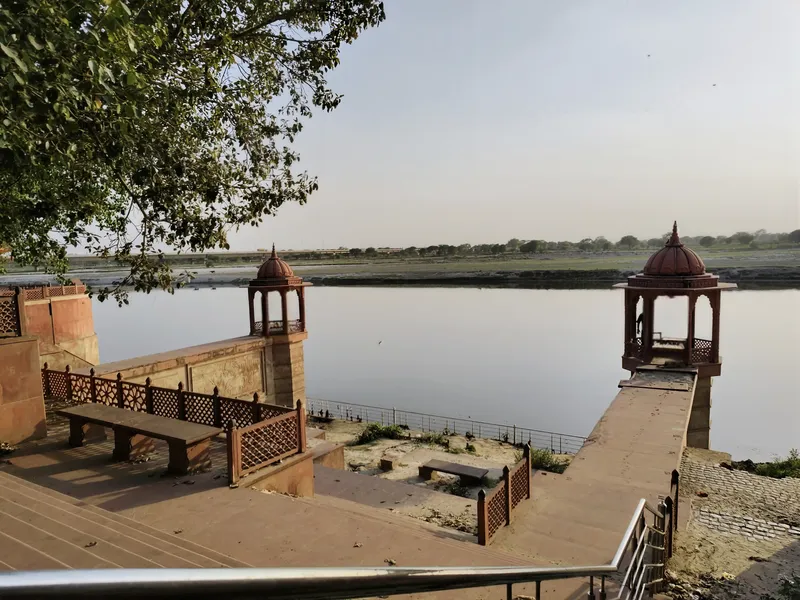
- What it is
- Mahāvana, "the great forest", also called Bṛhadvana, is the forest on the eastern bank of the Yamunā where Kṛṣṇa spent His infancy.
- Visiting
- The guidebook Śrī Vraja-maṇḍala Parikramā (2007) lists the places that the Bhakti-ratnākara shows at Mahāvana.
- Places here
- Mahāvana (village), Gokula (present village), Rāval, Dāūjī (village), Renuka-grāma +15 more
In short
Mahāvana, "the great forest", also called Bṛhadvana, is the forest on the eastern bank of the Yamunā where Kṛṣṇa spent His infancy.[1 +8] The Varāha and Nārada Purāṇas count it the eighth of the twelve forests of Mathurā-maṇḍala, always dear to the Lord.[10 +3] Śrīmad-Bhāgavatam calls Nanda's settlement of those years both Gokula and Bṛhadvana. Following Śrīla Prabhupāda, who quotes the Bhakti-ratnākara's words that Gokula and Mahāvana are one, this website presents Mahāvana as the original Gokula, apart from the later village of Gokula.[4 +8] Śrī Caitanya Mahāprabhu and Śrīla Sanātana Gosvāmī came here, and the region includes Rāval, which the Bhakti-ratnākara calls Śrī Rādhā's birthplace.[17 +10]
Key facts
| Kind | forest |
|---|---|
| Ācāryas | Śrī Caitanya Mahāprabhu, Śrīla Sanātana Gosvāmī, Jagadānanda Paṇḍita, Śrīla Rāghava Paṇḍita Gosvāmī of Govardhana, Śrīla Śrīnivāsa Ācārya |
Why it is glorified
The Varāha Purāṇa gives the twelve forests of Mathurā-maṇḍala twice, and the Nārada Purāṇa once.
The Varāha Purāṇa gives the twelve forests of Mathurā-maṇḍala twice, and the Nārada Purāṇa once. In each list Mahāvana is the eighth, always dear to the Lord, and one who goes there, or sees it with devotion, is honoured in the world of Indra (summarised here, not translated). Śrīla Rūpa Gosvāmī quotes the same verse from the Ādi-varāha in his Mathurā-māhātmya. An overview of all the lists is on the Vraja-maṇḍala page.[10 +3]
Under his heading for Mahāvana, Śrīla Rūpa Gosvāmī's quotation goes on to name the forest's holy places: the tīrtha of the Yamalārjuna trees with its kuṇḍa, the place where the cart was overturned, Gopīśvara, who destroys great sins, and the Sapta-sāmudrika kuṇḍa before him, where offerings to the forefathers on a new-moon Monday equal those made at Gayā. The printed Varāha Purāṇa gives the same places among those across the Yamunā, and the Bhakti-ratnākara repeats them at Mahāvana.[13 +4] The guidebook Śrī Vraja-maṇḍala Parikramā (2007) gives the name Sapta-sāmudrika, the well of the seven oceans, to the well it calls Nanda-kūpa.[13 +4]
The Padma Purāṇa counts Mahāvana among the five forests east of the Yamunā and speaks of "the great forest called Gokula" as a secret place of Kṛṣṇa's pastimes. In its picture of Vraja as a lotus, Mahāvana is the sixteenth petal, equal in glory to the whorl, and its presiding Deity is the five-year-old child Dāmodara:[2 +1]
कथितं षोडशदलं माहात्म्यं कर्णिकासमम् ॥ 51 ॥ महावनं तत्र गीतं तत्रास्ति गुह्यमुत्तमम् । बालक्रीडारतस्तत्र वत्सपालैः समावृतः ॥ 52 ॥ पूतनादिवधस्तत्र यमलार्जुनभंजनम् । अधिष्ठाता तत्र बालगोपालः पंचमाब्दिकः ॥ 53 ॥ नाम्ना दामोदरः प्रोक्तः प्रेमानंदरसार्णवः । दलं प्रसिद्धमाख्यातं सर्वश्रेष्ठदलोत्तमम् ॥ 54 ॥
kathitaṁ ṣoḍaśadalaṁ māhātmyaṁ karṇikāsamam
51
mahāvanaṁ tatra gītaṁ tatrāsti guhyamuttamam
bālakrīḍāratastatra vatsapālaiḥ samāvṛtaḥ
52
pūtanādivadhastatra yamalārjunabhaṁjanam
adhiṣṭhātā tatra bālagopālaḥ paṁcamābdikaḥ
53
nāmnā dāmodaraḥ proktaḥ premānaṁdarasārṇavaḥ
dalaṁ prasiddhamākhyātaṁ sarvaśreṣṭhadalottamam || 54 ||
The Vraja-bhakti-vilāsa of Śrīla Nārāyaṇa Bhaṭṭa Gosvāmī, quoting the Bṛhan-nāradīya, names Halāyudha, Balarāma who bears the plough, as the presiding Deity of Mahāvana instead. The two accounts are set side by side:[2 +2]
Accounts differ Who is the presiding Deity of Mahāvana.
- Padma Purāṇa, Pātāla-khaṇḍa 69.52-54The five-year-old Bāla-gopāla named Dāmodara presides over Mahāvana, the sixteenth petal.
- Vraja-bhakti-vilāsa 2.1, quoting the Bṛhan-nāradīyaHalāyudha (Balarāma) is the presiding Deity of Mahāvana.
In the Bhāgavata-māhātmya of the Skanda Purāṇa the sage Śāṇḍilya tells Vajranābha to found villages in Vraja named after Kṛṣṇa's pastimes and to set up the seats of his rule at Govardhana, Dīrghapura, Mathurā, Mahāvana, Nandigrāma and Bṛhatsānu. It says nothing about Deities.[35] In the thousand names of Rādhā and Kṛṣṇa in the Nārada Purāṇa, Kṛṣṇa is called bṛhadvana-mahā-līlaḥ, He whose great pastimes are in Bṛhadvana.[36] The Garga-saṁhitā calls Nanda's settlement Mahāvana in several places, and among Balarāma's thousand names it gives "the resident of Mahāvana".[37 +5]
In the Gauḍīya understanding the Gokula manifest on earth is one with Goloka, Kṛṣṇa's eternal abode; Śrīla Murāri Gupta gives Gokula the name Goloka. The Caitanya-caritāmṛta says, in Śrīla Prabhupāda's translation:[31 +3]
General teaching (does not name the place)“That abode is manifested within the material world by the will of Lord Kṛṣṇa. It is identical to that original Gokula; they are not two different bodies.”
Śrīla Prabhupāda, Śrī Caitanya-caritāmṛta, Ādi-līlā 5.19, translation · vedabase.io
Divine pastimes
Kṛṣṇa's infancy in Gokula
Śrīmad-Bhāgavatam calls the place of Kṛṣṇa's infancy Nanda's Gokula (10.2.7, 10.5.31, 10.7.21, 10.8.21, 10.11.23) and Bṛhadvana, the great forest (10.5.26, 10.7.33, 10.11.21). There it tells the pastimes of chapters 5 to 11: the birth festival, Pūtanā, the cart, Tṛṇāvarta, the name-giving, the crawling, the butter and the clay, the binding to the mortar and the twin arjuna trees. The commentator Vaṁśīdhara explains Nanda's Gokula as the place called Bṛhadvana, and Bṛhadvana as Mahāvana.[4 +5] Read more: The original Gokula: Mahāvana and the later village of Gokula →
dṛṣṭvādbhutāni bahuśo nanda-gopo bṛhadvane / vasudeva-vaco bhūyo mānayām āsa vismitaḥ
Having seen all these incidents in Bṛhadvana, Nanda Mahārāja became more and more astonished, and he remembered the words spoken to him by Vasudeva in Mathurā.
Translation: Śrīla A.C. Bhaktivedanta Swami PrabhupādaThe Canto 10 commentators name the place Mahāvana or Bṛhadvana (summarised here, not translated). Śrīla Viśvanātha Cakravartī Ṭhākura says that Kṛṣṇa went from Vasudeva's house to Vraja, that is, to Mahāvana, and Śrīla Jīva Gosvāmī that the Yamunā gave way to Vasudeva as he came from Mathurā to Mahāvana. Śrīla Sanātana Gosvāmī places the twin arjuna trees near Nanda's residence in Bṛhadvana, and Śrīla Jīva Gosvāmī lists the Bṛhadvana pastimes in order, from the killing of Pūtanā to the binding and the move to Vṛndāvana.[46 +5]
The Bhāgavatam tells Kṛṣṇa's birth from Devakī in Kaṁsa's prison at Mathurā. Vasudeva crossed the river with his newborn son, laid Him on Yaśodā's bed in Nanda's house and took her daughter back to Kaṁsa's prison; the Garga-saṁhitā says that he came to Mahāvana.[52 +5] The daughter was Yogamāyā, born of Yaśodā; the Bhāgavatam names no room for her birth (Yogamāyā-janma-sthala).[54 +3] Śrīla Prabhupāda writes in his purport to ŚB 10.3.47:[61 +3]
General teaching (does not name the place)“Śrīla Viśvanātha Cakravartī Ṭhākura discusses that Kṛṣṇa appeared simultaneously as the son of Devakī and as the son of Yaśodā, along with the spiritual energy Yoga-māyā.”
Śrīla Prabhupāda, Śrīmad-Bhāgavatam, 10.3.47, purport · vedabase.io
Śrīla Rūpa Gosvāmī records a related view of some ancient devotees and calls it very secret (Laghu-bhāgavatāmṛta 1.5.456).[61] The house itself, the place of the birth festival and the spots of the infant pastimes are told on their own pages: Nanda-bhavana, Yaśodā-bhavana, the place of Pūtanā's deliverance, Tṛṇāvarta-badha-sthala, Nanda Bābā's cowshed, Brahmāṇḍa-ghāṭa and Yamalārjuna-uddhāra-sthala.[14 +8] Read more: The deliverance of Pūtanā: the Bhāgavatam and the other accounts → “Dāmodara and the twin arjuna trees”
At the festival of Kṛṣṇa's birth, the Bhāgavatam says, Nanda gave the brāhmaṇas two million cows and seven hills of grain.[68 +1] Śrīla Raghunātha dāsa Gosvāmī bows to Bṛhat-kānana, the great forest, as the place of that gift, and the Bhakti-ratnākara quotes his verse at Mahāvana.[14 +1]
Why Nanda's people lived in Mahāvana
Śrīla Prabhupāda writes that the cowherd men had earlier shifted to Mahāvana.[71] According to Śrīla Rūpa Gosvāmī, Kṛṣṇa's grandfather Parjanya first lived at Nandīśvara and went with his whole family to Bṛhadvana for fear of the demon Keśī; Śrīla Jīva Gosvāmī says only that Parjanya made his home in Bṛhadvana.[72 +1] The accounts differ:
Accounts differ Where Nanda's family lived before Mahāvana (Bṛhadvana) and why they came there.
- Śrīla Rūpa Gosvāmī, Rādhā-Kṛṣṇa-gaṇoddeśa-dīpikā (part 1 vv.17-21)Parjanya, after his austerities at Nandīśvara, lived there; seeing Keśī come, he went in fear with all his family to Bṛhadvana.
- Ṭīkā on Śrīla Kavi-karṇapūra's Ānanda-vṛndāvana-campū 2.4 (stavaka 2)Nanda and the others were in Bṛhadvana because Parjanya could not stay at Nandīśvara out of fear of Keśī.
- Śrīla Viśvanātha Cakravartī Ṭhākura on ŚB 10.11.28The cowherds had fled their old capital Nandīśvara for fear of Ariṣṭa, who still stayed there.
- Śrīla Jīva Gosvāmī, Gopāla-campū, Pūrva 3.[19]Parjanya took up the cowherd's life and made his residence in Bṛhadvana itself; no earlier home is mentioned.
The move to Vṛndāvana
After the twin arjuna trees fell, the elder cowherds, headed by Nanda, met to consider the great disturbances in Bṛhadvana, and on Upananda's advice they left for Vṛndāvana with all their carts and cows.[71 +8] The Sanskrit verse does not name Mahāvana; Śrīla Prabhupāda's translation, following Śrīla Viśvanātha Cakravartī Ṭhākura, places Vṛndāvana between Nandeśvara and Mahāvana:[71 +5]
vanaṃ vṛndāvanaṃ nāma paśavyaṃ nava-kānanam / gopa-gopī-gavāṃ sevyaṃ puṇyādri-tṛṇa-vīrudham
Between Nandeśvara and Mahāvana is a place named Vṛndāvana. This place is very suitable because it is lush with grass, plants and creepers for the cows and other animals. It has nice gardens and tall mountains and is full of facilities for the happiness of all the gopas and gopīs and our animals.
Translation: Śrīla A.C. Bhaktivedanta Swami PrabhupādaŚrīla Jīva Gosvāmī adds a second reason: the forest near Bṛhadvana had been worn out by long use, and he reads the verse's "new groves" as a hint of it. In the Harivaṁśa, the used-up forest is Kṛṣṇa's own reason, and He sends wolves from His body to make the cowherds leave.[78 +2] According to the Bhakti-ratnākara, the cowherds of Gokula, Rāval and other places went to Vṛndāvana by the same path, crossing the Yamunā beside Bhāṇḍīravana.[14 +6] The sources tell the way and the first camp differently (see below). Read more: Nanda's family at Nandagrāma →
Rāval and Śrī Rādhā's appearance
The Bhakti-ratnākara tells that Śrīla Vīracandra Prabhu, touring Vraja, saw Kṛṣṇa's birthplace at Gokula-Mahāvana and then Śrī Rādhikā's birthplace at Rāval.[27] The Aiśvarya-kādambinī, attributed to Śrīla Baladeva Vidyābhūṣaṇa, places the palace of King Vṛṣabhānu, where Rādhikā appeared, near Nanda's city in Bṛhadvana, and does not name Rāval.[85] Another tradition gives Varṣāṇā, where Śrīla Prabhupāda said in 1971 that She was born.[86] This website gives each tradition with its source and does not decide between them; the accounts are set side by side on the page of Rāval. Read more: The appearance of Śrī Rādhā: the traditions of Rāvala and Varṣāṇā →
Traditional accounts
According to the guidebook Śrī Vraja-maṇḍala Parikramā (2007), Nanda Mahārāja used to sit on a small hill in Mahāvana, the …
According to the guidebook Śrī Vraja-maṇḍala Parikramā (2007), Nanda Mahārāja used to sit on a small hill in Mahāvana, the Danta-dhāvana-ṭīlā, and clean his teeth with a twig; the homes of Nanda, his brothers and his relatives stood around its foot, and their ruins can still be seen.[87]
The Vraja-bhakti-vilāsa, quoting a Bṛhad-gautamīya, derives the name Mahāvana from the great sage Mahān, who performed austerities here for five thousand years at the end of Dvāpara, longing to see Kṛṣṇa. It gives a prayer to Mahāvana as the seat of austerity and sets its forest pilgrimage on the ninth day of the bright fortnight of Bhādra.[88] For Gokula the same book gives the pilgrimage on the following day, and a prayer to be said with twenty-two obeisances on entering it: Gokula, whose form is Goloka.[45 +2] The books explain the name differently (see below).
According to Śrī Vraja-maṇḍala Parikramā (2007), Devanagara, about ten miles north of Dāūjī, is where Devaspati Gopa lived, and the govardhana-śilā he worshipped is seen there.[91] The undated parikramā notes Mahāvana record a local tradition, which is not certain, that as Pūtanā fell her body stretched for twelve miles, with her head reaching the village of Kaccheri across the Yamunā near Bahulāvana; the Bhāgavatam says only that her falling body crushed the trees for twelve miles around, and names no village.[92 +4]
The Gosvāmīs and ācāryas
The Caitanya-caritāmṛta tells that after Śrīvana and Lohavana Śrī Caitanya Mahāprabhu went to Mahāvana and saw the birth-site …
Śrī Caitanya Mahāprabhu
The Caitanya-caritāmṛta tells that after Śrīvana and Lohavana Śrī Caitanya Mahāprabhu went to Mahāvana and saw the birth-site:[17 +5]
‘śrīvana’ dekhi’ punaḥ gelā ‘loha-vana’
‘mahāvana’ giyā kailā janma-sthāna-daraśana
Śrī Caitanya Mahāprabhu then visited Śrīvana and Lohavana. He then went to Mahāvana and saw Gokula, the place of Lord Kṛṣṇa’s early childhood pastimes.
Translation: Śrīla A.C. Bhaktivedanta Swami PrabhupādaAccording to the Bhakti-ratnākara, He danced and sang in ecstasy at the place of the birth festival, people ran from all sides, and He became restless with love on seeing Madana-gopāla.[17 +7] On the morning He left Vṛndāvana, Balabhadra Bhaṭṭācārya took Him to Mahāvana and across the river.[17 +5]
Śrīla Murāri Gupta tells two visits: on His way to Mathurā He saw Gokula and the great forest, and later His guide Kṛṣṇadāsa took Him across the Yamunā, showed Him Nanda's house in Mahāvana, and pointed out, one by one, the places of Pūtanā, the cart, Tṛṇāvarta, the name-giving, the clay, the binding and the arjuna trees. Śrīla Locana dāsa Ṭhākura gives the same list.[17 +6] Both place a Gokula to the south of Mahāvana: Śrīla Murāri Gupta puts it south of the place shown as Nanda's house and calls it Goloka.[31 +1] The books differ on when and how often He came (see below). Read more: Śrī Caitanya Mahāprabhu in Gokula-Mahāvana →
Śrīla Sanātana Gosvāmī
The Caitanya-caritāmṛta tells that Śrīla Sanātana Gosvāmī took Śrīla Jagadānanda Paṇḍita through the twelve forests, ending at Mahāvana, that the two stayed in his cave at Gokula, and that he begged food around Mahāvana for his guest:[23 +3]
sanātana karāilā tāṅre dvādaśa vana daraśana
gokule rahilā duṅhe dekhi’ mahāvana
After Sanātana Gosvāmī had taken Jagadānanda to see all twelve forests of Vṛndāvana, concluding with Mahāvana, the two of them remained in Gokula.
Translation: Śrīla A.C. Bhaktivedanta Swami PrabhupādaAccording to the Bhakti-ratnākara he stayed in Mahāvana seeing Madana-gopāla. One day he followed a cowherd boy who had been playing on the Ramaṇaka sands by the Yamunā into the temple, and saw there not the boy but Madana-mohana.[26 +2] The temple, his bhajana-kuṭī and the sands have their own pages: Madana-gopāla Mandira and Ramaṇa-reti.[23 +3]
Śrīla Śrīnivāsa Ācārya and Śrīla Narottama dāsa Ṭhākura
In the Fifth Wave of the Bhakti-ratnākara, Śrīla Rāghava Paṇḍita Gosvāmī of Govardhana shows Śrīla Śrīnivāsa Ācārya and Śrīla Narottama dāsa Ṭhākura the places of Gokula-Mahāvana one by one: the home of Nanda and Yaśodā and the birthplace, the Yamalārjuna tīrtha, Gopīśvara, the Sapta-sāmudrika well, Gopa-kūpa, the homes of Upananda and the other gopas, the old tree where Śrī Caitanya sat, and the path to Vṛndāvana.[14 +7] The smaller places of this tour are listed below. Read more: Rāghava Paṇḍita's tour of Gokula-Mahāvana in the Bhakti-ratnākara →
Other ācāryas
- Śrīla Vīracandra Prabhu came with his party to Gokula-Mahāvana and saw Kṛṣṇa's birthplace with joy, according to the Bhakti-ratnākara, which gives no year.[27]
- Śrīla Rūpa Gosvāmī collects the Ādi-varāha verses on Mahāvana in his Mathurā-māhātmya; his song on Nanda's festival is quoted by the Bhakti-ratnākara at Mahāvana.[13 +2]
- Śrīla Jīva Gosvāmī writes of Mahāvana in the Gopāla-campū, in his commentaries and in the Kṛṣṇa-sandarbha, which speaks of "the Vraja of Mahāvana".[48 +5]
- Śrīla Raghunātha dāsa Gosvāmī bows to Mahāvana in the Vraja-vilāsa-stava; in his Muktā-carita Lalitā calls Mahāvana the ancestral home of Kṛṣṇa's family.[70 +2]
- Śrīla Viśvanātha Cakravartī Ṭhākura names Mahāvana in his commentary as the Vraja to which Kṛṣṇa went and as His home for His first years.[46 +3]
- Śrīla Kavi-karṇapūra Gosvāmī writes that Nanda and the others had appeared in Bṛhadvana before the Lord appeared.[111]
- Śrīla Nārāyaṇa Bhaṭṭa Gosvāmī's Vraja-bhakti-vilāsa gives the pilgrimage, the prayer and the holy places of Gokula, among them Nanda's temple and Rohiṇī's house.[45 +2]
- Śrīla Narahari Cakravartī Ṭhākura describes Mahāvana-Gokula in the Bhakti-ratnākara through Śrīla Rāghava Paṇḍita's words.[14 +3]
Śrīla Prabhupāda
Śrīla Prabhupāda writes that five of the twelve forests lie on the eastern bank of the Yamunā, Mahāvana among them, and he lists …
Śrīla Prabhupāda writes that five of the twelve forests lie on the eastern bank of the Yamunā, Mahāvana among them, and he lists "Gokulamahāvana" among the twelve forests that pilgrims visit today.[1 +1] Explaining Śrī Caitanya Mahāprabhu's visit, he quotes and translates the Bhakti-ratnākara:[14 +2]
Names this place“Behold the house of Nanda and Yaśodā in Mahāvana. See the birthplace of Lord Kṛṣṇa. Mahāvana and the birthplace of Lord Kṛṣṇa, Gokula, are one and the same.”
Śrīla Prabhupāda, Śrī Caitanya-caritāmṛta, Madhya-līlā 18.67, purport (quoting the Bhakti-ratnākara, Fifth Wave) · vedabase.io
He also renders Balabhadra Bhaṭṭācārya's words "Let us go to Mahāvana [Gokula]" in the Caitanya-caritāmṛta, and in the Kṛṣṇa book he places the great disturbances that made the cowherds leave in Mahāvana.[81 +1]
On his parikramā of Vraja in November 1971 he spoke of this place twice. On 28 November, at Nandagrāma, he said that Nanda Mahārāja left Gokula because the demons were disturbing Kṛṣṇa:[86]
Names this place“Nanda, Nanda Mahārāja left Gokula and came here because the demons were disturbing Kṛṣṇa. They decided to change. … Not here; on the other side. … Gokula. And when He was three, four years old, then He was brought to Nanda-grāma.”
Śrīla Prabhupāda, Parikramā on the Way to Gokula, Vṛndāvana, 28 November 1971 · vedabase.io
The next day the party stopped at the bathing ghāṭa that Dr. Kapoor called Brahmāṇḍa-ghāṭa, where the devotees bathed, and at a later stop on the road to Gokula he said that it was not the original Gokula and that they wanted to see the original Gokula.[86 +1] In 1972 he sang Kṛṣṇa dāsa's song with the line jaya jaya mahāvan.[114]
Songs
Śrīla Rūpa Gosvāmī's song on Nanda's festival, which the Bhakti-ratnākara quotes at Mahāvana before it shows the place of Kṛṣṇa's …
Śrīla Rūpa Gosvāmī's song on Nanda's festival, which the Bhakti-ratnākara quotes at Mahāvana before it shows the place of Kṛṣṇa's birth rites.[13 +6]
putram udāram asūta yaśodā
samajani ballava-tati-rati-modā
Śrīla Prabhupāda sang the song Jaya Rādhe Jaya Kṛṣṇa Jaya Vṛndāvana in 1972; the song book credits it to Kṛṣṇa dāsa, and its second verse hails the Yamunā and Mahāvana.[114 +1]
Visiting today
The pastime places of the Bhakti-ratnākara
The guidebook Śrī Vraja-maṇḍala Parikramā (2007) lists the places that the Bhakti-ratnākara shows at Mahāvana. Those that have no page of their own are given here.[14 +6]
- Yaśodā's courtyard, where, according to the Bhakti-ratnākara, Yaśodā sat with the gopīs watching her son's beauty; Śrīla Jīva Gosvāmī's Gopāla-campū makes the courtyard of Nanda's house the stage of the boys' crawling.[119 +3]
- Janma-saṁskāra-sthāna and the place of Kṛṣṇa's birth-ceremony, where, according to the Bhakti-ratnākara, all the customary rites of Kṛṣṇa's birth were done and Śrī Caitanya Mahāprabhu came with many people chanting the Name. The guidebook puts these rites at Nanda-bhavana itself; the sources differ.[70 +6]
Accounts differ Whether the place of Kṛṣṇa's birth rites and birth festival is His birthplace in Nanda-bhavana itself or a separate place, and how many places the list names for them.
- Śrī Vraja-maṇḍala Parikramā (2007), list of the Bhakti-ratnākara's places, pp. 517-518Three items: Kṛṣṇa's birthplace (Janma-sthāna); 'the place where the sanctifying ceremonies took place at the time of Kṛṣṇa's birth (Janma-saṁskāra-sthāna)'; and, near the end, after the homes of Upananda and the other gopas, 'the place of Śrī Kṛṣṇa's birth-ceremony and other ceremonies'.
- Śrī Vraja-maṇḍala Parikramā (2007), text, pp. 516 and 518The birth was in the delivery room at Nanda-bhavana, where 'the umbilical cord was cut and other Vedic purificatory rituals were performed here' (p. 516); under 'Nanda-bhavana (Kṛṣṇa's birthplace)' Nanda called the brāhmaṇas to perform the rites of childbirth (p. 518). No separate place.
- the undated parikramā notes Mahāvana'the Chaurasi Khambha, also called Nanda Bhavan, where Krishna's birth celebrations took place'.
- Bhakti-ratnākara, Fifth Wave v.1715-1717, 1727, 1801-1803Shows Kṛṣṇa's birthplace and this courtyard, where the birth festival took place right here; the couplet 'here were performed all the customary rites of Kṛṣṇa's birth' follows the birthplace both times (after the quoted verses at v.1727; right after Śrī Caitanya 'went to Kṛṣṇa's birthplace' at v.1802). It does not say whether these are one spot.
The wording of these accounts is our summary of the sources, not a published translation.
- Nāma-karaṇa-sthāna: the Bhāgavatam has Garga name the boys secretly in Nanda's cow-pen, and the Bhakti-ratnākara shows the place at Nanda's cowshed.[124 +3]
- Agni-saṁskāra-sthala, probably the place that the Bhakti-ratnākara shows, at that point of its tour, as where Pūtanā was killed and burned; the Bhāgavatam tells that the Vrajavāsīs burned her body, and the smoke smelled of aguru.[96 +5]
- Stanya-pāna-sthala, where, according to the Bhakti-ratnākara, Kṛṣṇa drank Yaśodā's milk on her lap.[121 +3]
- The place where Kṛṣṇa and Balarāma crawled, which the Bhakti-ratnākara shows; the Bhāgavatam tells that the two brothers crawled in Gokula and names no spot.[121 +5]
- Navanīta-corī-sthala, where, according to the Bhakti-ratnākara, Kṛṣṇa, expert at stealing butter, feared His mother.[141 +1]
- Dāmodara-līlā-sthala, where, according to the Bhakti-ratnākara, Yaśodā bound Kṛṣṇa to the mortar; Śrīla Murāri Gupta sets the binding and the breaking of the trees at one place.[143 +2]
- Gopa-kūpa, a well that the Bhakti-ratnākara shows without connecting a pastime with it.[146]
- The homes of Upananda and the other gopas, which stood in Gokula-Mahāvana one after another, according to the Bhakti-ratnākara; Upananda was Nanda's elder brother.[87 +5]
- Gopa-baiṭhaka, where, according to the Bhakti-ratnākara, Nanda and the gopas sat in council and decided to leave for Vṛndāvana; in Śrīla Murāri Gupta's account, too, the guide shows the spot where Upananda took counsel with Nanda and the gopas, though he does not name a Gopa-baiṭhaka.[152 +1]
- The path to Vṛndāvana by which, according to the same book, the cowherds left, and the village of Sakraulī, named, it says, after the gathering of the herds there for the journey. The sources differ on the way and the first camp.[87 +2]
Accounts differ By what way the cowherds went from Gokula-Mahāvana to Vṛndāvana, and where they first camped.
- Śrīmad-Bhāgavatam 10.11.28-35They went to Vṛndāvana with carts and cows and camped there with the carts in a half-moon; no route.
- Bhakti-ratnākara 5.1806-1807By this path shown at Gokula-Mahāvana; on the way they crossed the Yamunā beside Bhāṇḍīravana.
- Śrīla Jīva Gosvāmī, Gopāla-campū Pūrva 9.[61]-[65]They crossed the Yamunā on raft-bridges into the forest between Mathurā and Kāliya's lake and came from the Vatsa-krīḍana ghāṭa to Saṭṭīkarā, where they camped in a half-moon.
- Śrī Vraja-maṇḍala Parikramā (2007)Nanda came with all the Vrajavāsīs to Śakaṭīkarā (Chaṭṭīkarā) and camped there with the carts in a crescent; from there Kṛṣṇa and Balarāma would go to Vṛndāvana and nearby places to graze the calves and cows (the residence was outside Vṛndāvana).
The wording of these accounts is our summary of the sources, not a published translation.
- The place of Madana-mohanajī, the temple of Śrīla Sanātana Gosvāmī's vision told above; the parikramā notes Mahāvana say that where it stood is not clear today, and that the only temple of a similar name they know in the area is the Gopāla Mandira at Gopāla-ghāṭa, which may or may not be the same; they give no position for the ghāṭa.[26 +3]
The holy places of Gokula in the Vraja-bhakti-vilāsa
Śrīla Nārāyaṇa Bhaṭṭa Gosvāmī's Vraja-bhakti-vilāsa lists the holy places of Gokula with a prayer for each.[45 +2]
- The Nanda Mandira, first in its list; according to the book, the prayer there honours Nanda's abode as the cause of the festival of love for his son Kṛṣṇa.[89 +1]
- Yaśodā-śayana-sthala, Yaśodā's resting-place in the house, according to the book; the Bhāgavatam tells that Vasudeva laid his son on Yaśodā's bed.[52 +5]
- Okhala-sthala, the place of the grain mortar that Yaśodā had made for herself; the guidebooks connect it with the binding instead, and the sources differ on what it recalls.[121 +5]
Accounts differ What the Okhala-sthala (ulūkhala-sthala, place of the mortar) commemorates.
- Vraja-bhakti-vilāsa 4.75 (and 2.48)The mortar Yaśodā had made for herself, of fifty maṇas, for grain; the prayer asks for plenty of grain; no pastime of Kṛṣṇa is named.
- Śrī Vraja-maṇḍala Parikramā (2007), pp. 517 and 525Renders the item 'the place of the grinding mortar' and prints a photograph of 'The grinding mortar' with its account of the binding in Nanda-bhavana.
- the undated parikramā notes Mahāvana'UTKAL' is the heading of the Yamala Arjuna bhanjana tirtha; the 'Utakhal' is the mortar of the Dāmodara pastime.
- Bāla Gokuleśvara, Kṛṣṇa as Gokuleśa in a child's form, seen, according to the book, beside the temple of the Gokula-candramā image.[156 +1]
- The Rohiṇī Mandira, Rohiṇī's house, with a prayer to Baladeva's birthplace inside it; the Bhāgavatam says only that Rohiṇī lived in Nanda's Gokula, and the sources differ on where Balarāma was born; their accounts are set side by side on the page of Nanda-bhavana.[60 +6]
Names in a verse on the twenty-one tīrthas
Śrī Vraja-maṇḍala Parikramā (2007) gives a verse on the twenty-one tīrthas of Mahāvana, which it ascribes to the Brahmāṇḍa Purāṇa. Some of its places are known only as names in that verse: Karṇa-kūpa, Kṛṣṇa-kuṇḍa, Ramaṇa-ghāṭa, Sārasvata-kuṇḍa, Sarasvatī-śilā, Viṣṇu-kuṇḍa and Mathurā-kṣetra.[121 +2] Kṛṣṇa-kuṇḍa here is not the Kṛṣṇa-kuṇḍa of Rādhā-kuṇḍa.[121 +2]
The same verse names Nanda's palace beside Nanda's house; the sources differ on whether it is a place apart from Nanda-bhavana:
Accounts differ Whether 'Nanda's palace' is a place apart from Nanda-bhavana.
- Twenty-one-tīrtha verse (Śrī Vraja-maṇḍala Parikramā (2007) endnote 2; Mītal 1966; Growse 1883)Names 'nanda-harmya' and 'nanda-geha' side by side; Mītal counts them as two places, 'Nanda's inner apartments' (no. 16) and 'Nandālaya' (no. 17); Śrī Vraja-maṇḍala Parikramā (2007)'s English: 'Nanda's palace, Nanda-bhavana'.
- Śrī Vraja-maṇḍala Parikramā (2007), p. 518Under the heading 'Nanda-bhavana (Kṛṣṇa's birthplace)': born 'in her room in Nanda's palace'.
- the undated parikramā notes MahāvanaSpeaks of 'the courtyard of Nanda's palace' (Pūtanā) and of 'king Nanda's palatial compound' that contained Nanda Bhavan and Yashoda Bhavan.
The pillared temple
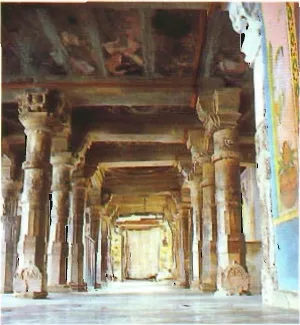
The guidebook Vṛndāvana-Dhāma Ki Jaya! (c. 1986) shows the main temple of Mahāvana, a long pillared hall whose pillars, it says, came from Nanda Mahārāja's house. The historians describe the hall differently:
Accounts differ What the pillars of the pillared temple of Mahāvana (Assī- or Caurāsī-khambhā) are and where they come from.
- Vṛndāvana-Dhāma Ki Jaya! (c. 1986)The pillars are said to be from the original house of Nanda Mahārāja.
- F. S. Growse, Mathurá (1883), a historianGrowse describes a mosque put together in Aurangzeb's time from older, Buddhist pillars after a Hindu temple of about 1500 had been pulled down; he holds that the building's link with Kṛṣṇa is invented, though the site was long held sacred.
- Entwistle (1987), p. 423Medieval pillars rearranged in the form of a mosque in Aurangzeb's reign.
- Mītal (1966), p. 143A pavilion temple assembled from the remains of a large Balarāma temple destroyed by Muslim invaders.
The present village of Gokula
Śrī Vraja-maṇḍala Parikramā (2007) lists the places of darśana of the present village of Gokula, most of them of the Vallabha gosvāmīs; it does not describe them.[91 +4]
- The temples of Mathurānātha, Viṭṭhalanātha, Dvārakānātha, Gokula-candramā, Madana-mohana and Navanītapriya. The guidebook says that the Deities Mathureśa, Viṭṭhalanātha, Dvārakādhīśa, Gokula-candramā and Madana-mohana, which the gosvāmīs established at Gokula, later went to Koṭā, Nāthadvārā, Kāṅkraulī and Kāmyavana, without relating them to the temples it lists.[91 +1]
- The Gokulanātha temple, which Mītal (1966) calls the principal temple of Gokula, and whose Deity alone came back after the removal of about 1669.[102 +4]
- The Mādhavarāya temple, which the guidebook also lists, as it lists a Mādhavarāya Deity at Karṇāvala; the sources differ on where these temples are.[91 +1]
Accounts differ Where the Mādhavarāya and Madana-mohana temples are: in Gokula, at Karṇāvala across the river, or both.
- Śrī Vraja-maṇḍala Parikramā (2007), pp. 532 and 534Lists the deities of Madana-mohana and Mādhavarāya at Karṇāvala and, separately, a Madana-mohana temple and a Mādhavarāya temple among Gokula's places of darśana.
- Growse (1883), p. 88Names Madan Mohan and Mādhava Rāe among the titles of the temples at Gokul.
- Mītal (1966), pp. 147-148Places the temples of Madana-mohana and Mādhavarāya at Karṇāvala; in Gokula only a Mora-vālā temple with the svarūpas of Navanīta-priya and Madana-mohana; no Mādhavarāya temple in Gokula.
- Yaśodā-ghāṭa, named among the sixteen old ghāṭas of Braj by the seventeenth-century poet Jagatānanda, as Mītal (1966) reports, and Siṁhapauḍī.[171 +1]
- Bājana-ṭīlā, the Brahmachokra tree and the garden of Gokulanātha, known only as names.[171]
- The place where Nanda Mahārāja kept his cart, for which the guidebook tells no pastime; the Vraja-bhakti-vilāsa describes the cart-places of the nine Nandas in Gokula.[171 +1]
Other villages
Across the Yamunā, facing Gokula, lies Nauraṅgabāda, with the temple of Śrī Gaṅgājī, on the way back to Mathurā, according to Śrī Vraja-maṇḍala Parikramā (2007). The same book lists at Devanagara the Rāmasāgara-kuṇḍa and an ancient kadamba tree.[91 +2]
Location
| Where it is | 'this forest has three names: Mahāvana, Gokula and Bṛhadvana'[182] |
|---|
Places at Mahāvana
73 places
Areas (7)
Mahāvana (village)
महावन (गाँव)Mahāvana, the great forest, is the village where, according to the Gauḍīya tradition, Nanda and Yaśodā lived and Kṛṣṇa spent His infancy: the Gokula of Śrīmad-Bhāgavatam' …
Gokula (present village)
गोकुल (वर्तमान गाँव)Gokula is a village on the bank of the Yamunā near Mahāvana, the seat of the gosvāmīs of the Vallabha-sampradāya, called the Gokula gosvāmīs according to the guidebook Śr …
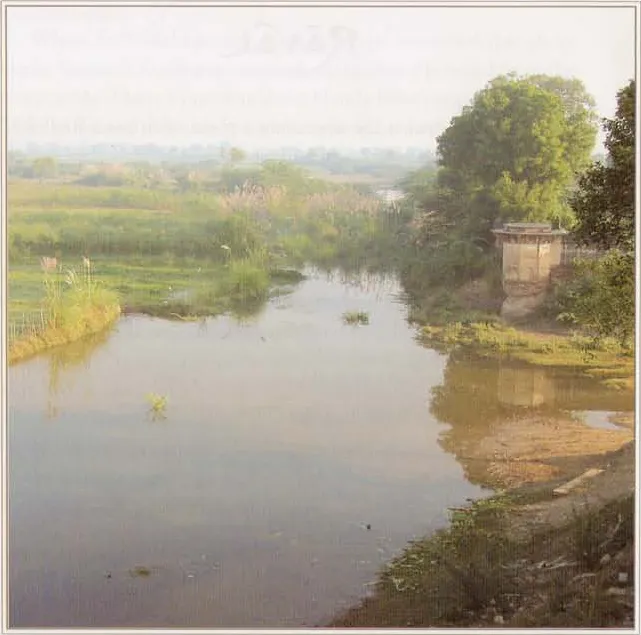
Rāval
रावलRāval (Rāvala) is a village of the Mahāvana region, across the Yamunā from Mathurā.
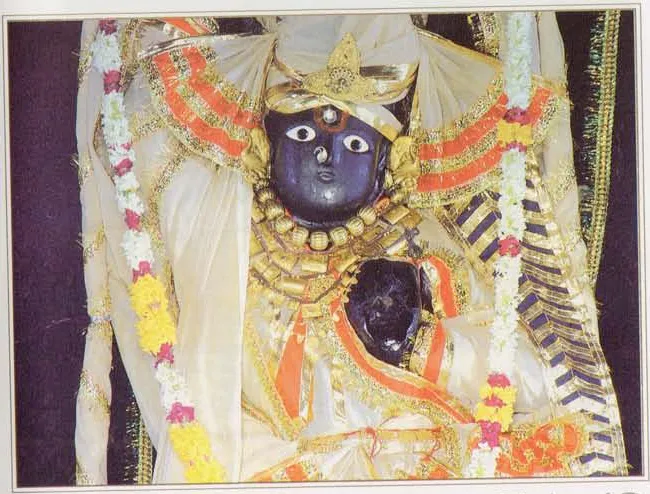
Dāūjī (village)
दाऊजी (गाँव)Dāūjī, also called Baldeo or Baladeva, is the village of the Deity of Balarāma known in Vraja as Dāūjī.
Renuka-grāma
रेणुका-ग्रामReṇukā is a village by the Yamunā near Agra, named Reṇukā, like the mother of Paraśurāma.
Karṇāvala
कर्णावलKarṇāvala is a village of the Mahāvana area, on the west bank of the Yamunā opposite Brahmāṇḍa-ghāṭa, according to the historian A. W. Entwistle (1987).
Show all (7)
Places of the ācāryas
1 placeTemples and shrines
3 placesOther places
4 placesAlso listed here
- Agni-saṁskāra-sthala pastime site
- Brahmachokra tree (Gokula) tree
- Bājana-ṭīlā hill
- Bāla Gokuleśvara
- Danta-dhāvana-ṭīlā hill
- Devanagara village
- Dvārakānātha Mandira (Gokula) temple
- Dāmodara-līlā-sthala pastime site
- Garden of Gokulanātha (Gokula) garden
- Gokula-candramā Mandira (Gokula) temple
- Gokulanātha Mandira (Gokula) temple
- Gopa-baiṭhaka baiṭhaka
- Gopa-kūpa (Mahāvana) well
- Gopāla-ghāṭa (Mahāvana) ghāṭa
- Janma-saṁskāra-sthāna pastime site
- Kaccheri village
- Karṇa-kūpa well
- Kṛṣṇa-kuṇḍa (Mahāvana) kuṇḍa
- Madana-mohana Mandira (Gokula) temple
- Mathurā-kṣetra (Mahāvana) tīrtha
- Mathurānātha Mandira (Gokula) temple
- Mādhavarāya Mandira (Gokula) temple
- Nanda Mandira (Mahāvana) temple
- Nanda's palace (Mahāvana) pastime site
- Nauraṅgabāda village
- Nāma-karaṇa-sthāna pastime site
- Okhala-sthala pastime site
- Place of Kṛṣṇa's birth-ceremony and other ceremonies pastime site
- Place of Madana-mohanajī (Mahāvana)
- Place where Kṛṣṇa and Balarāma crawled on Their knees pastime site
- Place where Nanda Mahārāja kept his cart (Gokula) pastime site
- Ramaṇa-ghāṭa ghāṭa
- Residences of Upānanda and the other gopas (Mahāvana) pastime site
- Rohiṇī Mandira (Mahāvana) temple
- Sakraulī
- Sarasvatī-śilā śilā
- Siṁhapauḍī
- Stanya-pāna-sthala pastime site
- Sārasvata-kuṇḍa kuṇḍa
- Temple in Mahāvana with original pillars temple
- Viṣṇu-kuṇḍa kuṇḍa
- Viṭṭhalanātha Mandira (Gokula) temple
- Vṛndāvana-gamana-patha path
- Yaśodā-ghāṭa ghāṭa
- Yaśodā-śayana-sthala pastime site
- Yaśodājī's courtyard (Mahāvana) pastime site
- Yogamāyā-janma-sthala pastime site
- Gaṅgājī Mandira (Nauraṅgabāda) temple
- Gopāla Mandira (Gopāla-ghāṭa, Mahāvana) temple
- Kadamba tree (Devanagara) tree
- Rāmasāgara-kuṇḍa kuṇḍa
Nearby places
Mathurā · Yamunā
Pictures
2 pictures
History
The historian A. W. Entwistle (1987) reports that the name Mahāban has been in use since at least the eleventh century, when local Hindu rulers held a fort here; he cites no document for it.[97]
The present village of Gokula is a later settlement of the Vallabha-sampradāya. A Vallabha family chronicle, the Vaṁśāvalī of Madhusūdana Bhaṭṭa, says that the family asked the king for a pleasant place near Mahāvana on the bank of the Yamunā and settled there a village named Gokula, in saṁvat 1628 (about 1571) (summarised here, not translated).[98 +2] Śrīla Prabhupāda gives the years of Śrī Viṭṭhalanātha, the son of Śrī Vallabhācārya, as A.D. 1515 to 1585, and names his seven sons.[101] The Mughal farmans issued for the village are dated and summarised on the Gokula page. According to Entwistle, the Deities of the seven sons were worshipped in their own havelī temples at Gokula until the later seventeenth century, and in his day only Gokulanātha was still in His original temple; Prabhudayāl Mītal (1966) writes that all of them were taken away after Aurangzeb's order of about 1669, and only Gokulanātha came back.[102 +2]
Where the sources differ
Whether Gokula and Mahāvana are one place, and where "the original Gokula" is.
Accounts differ Whether Gokula and Mahāvana are one place, and where "the original Gokula" is.
- Bhakti-ratnākara, Fifth Wave (printed p. 284), quoted by Śrīla Prabhupāda (CC Madhya 18.67, purport)"Śrī Gokula and Mahāvana are one."
- Śrī Vraja-maṇḍala Parikramā (2007); the undated parikramā notes MahāvanaMahāvana and Gokula are one and the same; the present village of Gokula is a recent settlement founded by Viṭṭhalācārya (Śrī Vraja-maṇḍala Parikramā (2007)); the ancient village of Gokula, now called Mahāvana, is the original Gokula (the undated parikramā notes Mahāvana).
- Śrīla Murāri Gupta 4.6.11On the southern side of (the place shown as Nanda's house in Mahāvana) is Gokula, called Goloka.
- Śrīla Locana dāsa, Caitanya-maṅgala (Śeṣa-khaṇḍa, printed p. 172)The town of Gokula lies south of Mahāvana.
The wording of these accounts is our summary of the sources, not a published translation.
Accounts differ How long Kṛṣṇa lived in Mahāvana before the move.
- Śrīla Sanātana Gosvāmī, Bṛhad-vaiṣṇava-toṣaṇī on ŚB 10.11.37Three years in Bṛhadvana; to Vṛndāvana in the fourth year.
- Śrīla Jīva Gosvāmī, Laghu-vaiṣṇava-toṣaṇī on ŚB 10.11.37Two years and three months; they came to Vṛndāvana in the third year. He reads the Harivaṁśa's "seven years old" as as if seven, or (some say) as a difference of kalpas.
- Śrīla Viśvanātha Cakravartī on ŚB 10.45.3 (purport in the disciples' translation); the undated parikramā notes KumudavanaThree years and four months, His kaumāra age.
- Harivaṁśa 52.1 (critical edition; = 2.8.1 in the vulgate)Kṛṣṇa and Saṅkarṣaṇa became seven years old in that same Vraja place.
The wording of these accounts is our summary of the sources, not a published translation.
Accounts differ Where the cowherds went when they left Mahāvana, by what way, and why.
- Śrīmad-Bhāgavatam 10.11.21-35After the disturbances, on Upananda's advice, they went to Vṛndāvana and made their camp there with the carts in a half-moon.
- Śrīla Murāri Gupta 4.6.21-22 and 4.7.1; Śrīla Locana dāsa, Caitanya-maṅgala p. 172After Upananda's counsel they went on carts to Bhadra(ka) and Bhāṇḍīra and stayed two months, then settled in Vṛndāvana across the Yamunā.
- Harivaṁśa 52.9-31Kṛṣṇa, seeing the forest used up, wished to go to Vṛndāvana and sent wolves from His body to make the cowherds leave.
- Śrīla Jīva Gosvāmī, Gopāla-campū 9.[30] and on ŚB 10.11.28Besides the disturbances, the forest near Bṛhadvana had been exhausted by long residence.
Accounts differ When, and how many times, Śrī Caitanya came to Gokula-Mahāvana.
- Caitanya-caritāmṛta, Madhya 18.67-69After Śrīvana and Lohavana He went to Mahāvana and saw the birth-site; having seen Gokula He came to Mathurā.
- Caitanya-caritāmṛta, Madhya 18.155-157On the day He left Vṛndāvana Balabhadra took Him "to Mahāvana" and across the river.
- Śrīla Murāri Gupta 4.2.4-6 and 4.6.1Coming from Prayāga by Reṇukā and Rāja-grāma He saw Gokula and the great forest before Mathurā; later Kṛṣṇadāsa took Him across the Yamunā to Nanda's house in Mahāvana.
- Bhakti-ratnākara, Fifth Wave (printed pp. 284-285, quoting Murāri)He came from Prayāga by Agravana, Reṇukā and Rāja-grāma to Gokula, before Mathurā.
Accounts differ Why the forest is called Mahāvana (Bṛhadvana).
- Śrī Vraja-maṇḍala Parikramā (2007)Because it is the largest (bṛhad) of all the forests.
- Vraja-bhakti-vilāsa 5.83, quoting the Bṛhad-gautamīyaBecause the great sage Mahān performed austerities there for five thousand years at the end of Dvāpara.
Accounts differ The size of Mahāvana among the forests.
- Śrī Vraja-maṇḍala Parikramā (2007)The largest (bṛhad) of all the forests, hence the name Bṛhadvana.
- the undated parikramā notes MahāvanaThe second largest forest, after Kāmyavana.
Who was born to Yaśodā on the night of Kṛṣṇa's birth is told differently; the accounts are set side by side on the page of Nanda-bhavana.[59 +5]
More on this place
The original Gokula: Mahāvana and the later village of Gokula · Śrī Caitanya Mahāprabhu in Gokula-Mahāvana · Nanda's family at Nandagrāma · The deliverance of Pūtanā: the Bhāgavatam and the other accounts
- →The original Gokula: Mahāvana and the later village of Gokulaarticle›
- →Śrī Caitanya Mahāprabhu in Gokula-Mahāvanaarticle›
- →Nanda's family at Nandagrāmaarticle›
- →The deliverance of Pūtanā: the Bhāgavatam and the other accountsarticle›
- →Dāmodara and the twin arjuna treesarticle›
- →The appearance of Śrī Rādhā: the traditions of Rāvala and Varṣāṇāarticle›
- →Rāghava Paṇḍita's tour of Gokula-Mahāvana in the Bhakti-ratnākaraarticle›
References
182 references
- Śrīla Prabhupāda, Śrīmad-Bhāgavatam, 4.8.42, purport · vedabase.io
- Padma Purāṇa, Pātāla-khaṇḍa 69.16-18; = Vṛndāvana-māhātmya (1) vv.16-18, Sanskrit Wikisource
- Śrīla Prabhupāda, Śrī Caitanya-caritāmṛta, Madhya-līlā 1.239, purport · vedabase.io
- Śrīmad-Bhāgavatam 10.2.7, GRETIL
- Śrīmad-Bhāgavatam 10.5.26, GRETIL
- Śrīmad-Bhāgavatam 10.5.31, GRETIL
- Śrīmad-Bhāgavatam 10.7.21, GRETIL
- Śrīmad-Bhāgavatam 10.7.33, GRETIL
- Śrīmad-Bhāgavatam 10.8.21, GRETIL
- Varāha Purāṇa, adhyāya 153 v.43, Sanskrit Wikisource
- Varāha Purāṇa, adhyāya 161, verse 8, Sanskrit Wikisource
- Nārada Purāṇa, Uttarārdha, adhyāya 79 v.14
- Śrīla Rūpa Gosvāmī, Mathurā-māhātmya v.347-351, quoting the Ādi-vārāha
- Śrīla Narahari Cakravartī, Bhakti-ratnākara, Fifth Wave, 1912 ed. pp. 277-278; Grantha Mandira text v.1713-1717, 2nd ed., 1912
- Śrīla Narahari Cakravartī, Bhakti-ratnākara, Fifth Wave, 1912 ed. p. 284; Grantha Mandira text v.1787-1789, 2nd ed., 1912
- Śrīla Prabhupāda, Śrī Caitanya-caritāmṛta, Madhya-līlā 18.67, purport (quoting the Bhakti-ratnākara, Fifth Wave) · vedabase.io
- Śrīla Kṛṣṇadāsa Kavirāja Gosvāmī, Śrī Caitanya-caritāmṛta, Madhya-līlā 18.67, online edition · vedabase.io
- Kṛṣṇa-caitanya-caritāmṛta, prakrama 4, sarga 2, vv.5-6
- Kṛṣṇa-caitanya-caritāmṛta, prakrama 4, sarga 6, v.1
- Caitanya-maṅgala, Śeṣa-khaṇḍa, 1903 ed. printed p. 172, left column
Show all 182 references
- Śrīla Narahari Cakravartī, Bhakti-ratnākara, Fifth Wave, 1912 ed. p. 283; Grantha Mandira text v.1770-1776, 2nd ed., 1912
- Śrīla Narahari Cakravartī, Bhakti-ratnākara, Fifth Wave, 1912 ed. p. 285; Grantha Mandira text v.1800-1802 (the Sanskrit verse is the end of the quotation headed "Śrī-caitanya-carite caturtha-prakrame dvitīya-sarge"), 2nd ed., 1912
- Śrīla Narahari Cakravartī, Bhakti-ratnākara, Fifth Wave, 1912 ed. p. 283; Grantha Mandira text v.1777-1779, 2nd ed., 1912
- Śrīla Kṛṣṇadāsa Kavirāja Gosvāmī, Śrī Caitanya-caritāmṛta, Antya-līlā 13.45, online edition · vedabase.io
- Śrīla Kṛṣṇadāsa Kavirāja Gosvāmī, Śrī Caitanya-caritāmṛta, Antya-līlā 13.47 (with 13.48 in the notes), online edition · vedabase.io
- Śrī Vraja-maṇḍala Parikramā (2007), PDF p. 276
- Śrīla Narahari Cakravartī, Bhakti-ratnākara, Thirteenth Wave (trayodaśa taraṅga), 1912 ed. p. 1025; verses 381-384 in the Grantha Mandira text numbering, 2nd ed., 1912
- Varāha Purāṇa, adhyāya 157, verses 21-23, Sanskrit Wikisource
- Varāha Purāṇa, chapter 157, verses 1-2, Sanskrit Wikisource
- Śrīla Narahari Cakravartī, Bhakti-ratnākara, Fifth Wave (pañcama taraṅga), at Mahāvana, 1912 ed. p. 282, 2nd ed., 1912
- Kṛṣṇa-caitanya-caritāmṛta, prakrama 4, sarga 6, vv.11-12
- Padma Purāṇa, Pātāla-khaṇḍa 69.51b-54; = Vṛndāvana-māhātmya (1) vv.51-54, Sanskrit Wikisource
- Padma Purāṇa, Pātāla-khaṇḍa 69.51b-54; = Vṛndāvana-māhātmya (1) vv.51-54, Sanskrit Wikisource
- Śrīla Nārāyaṇa Bhaṭṭa Gosvāmī, Vraja-bhakti-vilāsa, introductory part 2 v.1, printed p. 5, 1st ed., publ. Bābā Kṛṣṇadāsa, Kusuma-sarovara, Saṁvat 2008
- Śrīmad-Bhāgavata-māhātmya, Bhāgavata-māhātmya (Skanda) adhyāya 1 v.36-38, Sanskrit Wikisource
- Nārada Purāṇa, पूर्वार्धः/अध्यायः 82 v.82-44: Pūrva-bhāga, chapter 82 (rādhā-kṛṣṇa-sahasranāma-kathana), verse 44
- Garga-saṁhitā, Balabhadra-khaṇḍa (8) 5.12 (prose), Sanskrit Wikisource
- Garga-saṁhitā, Goloka-khaṇḍa (1) 19.31-32, Sanskrit Wikisource
- Garga-saṁhitā, Vṛndāvana-khaṇḍa (2) 1.3-4, Sanskrit Wikisource
- Garga-saṁhitā, Vṛndāvana-khaṇḍa (2) 6.20, Sanskrit Wikisource
- Garga-saṁhitā, Viśvajit-khaṇḍa (7) 26.6, Sanskrit Wikisource
- Garga-saṁhitā, Balabhadra-khaṇḍa (8), adhyāya 13 (Balabhadra's thousand names), verse 105, Sanskrit Wikisource
- Śrīla Prabhupāda, Śrī Caitanya-caritāmṛta, Ādi-līlā 5.19, translation · vedabase.io
- Śrī Brahma-saṁhitā, 5.2, online edition · vedabase.io
- Śrīla Nārāyaṇa Bhaṭṭa Gosvāmī, Vraja-bhakti-vilāsa, chapter 4 vv.71-72, printed p. 104; Grantha Mandira text (4) v.71-72, 1st ed., publ. Bābā Kṛṣṇadāsa, Kusuma-sarovara, Saṁvat 2008
- Śrīla Viśvanātha Cakravartī Ṭhākura: commentary on ŚB 10.1.9, Bhagavata Vidya Pith edition, ed. Bhagavata Rishi and Krishna Shankar Shastri, 1996
- Śrīla Viśvanātha Cakravartī Ṭhākura: commentary on ŚB 10.11.21 (opening verse of the comment), Bhagavata Vidya Pith edition, ed. Bhagavata Rishi and Krishna Shankar Shastri, 1996
- Śrīla Jīva Gosvāmī: commentary on ŚB 10.3.51-53, Bhagavata Vidya Pith edition, ed. Bhagavata Rishi and Krishna Shankar Shastri, 1996
- Śrīla Jīva Gosvāmī: commentary on ŚB 10.11.37, Bhagavata Vidya Pith edition, ed. Bhagavata Rishi and Krishna Shankar Shastri, 1996
- Śrīla Sanātana Gosvāmī: commentary on ŚB 10.10.22, Bhagavata Vidya Pith edition, ed. Bhagavata Rishi and Krishna Shankar Shastri, 1996
- Śrīla Jīva Gosvāmī, Kṛṣṇa-sandarbha, anuccheda 182, GRETIL
- Śrīmad-Bhāgavatam 10.3.51, Bhagavata Vidya Pith edition, ed. Bhagavata Rishi and Krishna Shankar Shastri, 1996
- Śrīmad-Bhāgavatam 10.3.53, Bhagavata Vidya Pith edition, ed. Bhagavata Rishi and Krishna Shankar Shastri, 1996
- Śrīla Prabhupāda, Kṛṣṇa, the Supreme Personality of Godhead, ch. 3 "The Birth of Lord Kṛṣṇa" · vedabase.io
- Garga-saṁhitā, Balabhadra-khaṇḍa (8), adhyāya 5, prose v.12, Sanskrit Wikisource
- Garga-saṁhitā, Goloka-khaṇḍa (1) 11.48-50, Sanskrit Wikisource
- Viṣṇu Purāṇa, 5.3.21, GRETIL
- Śrīmad-Bhāgavatam 10.2.9, Bhagavata Vidya Pith edition, ed. Bhagavata Rishi and Krishna Shankar Shastri, 1996
- Śrīmad-Bhāgavatam 10.3.47, Bhagavata Vidya Pith edition, ed. Bhagavata Rishi and Krishna Shankar Shastri, 1996
- Śrīla Prabhupāda, Kṛṣṇa, the Supreme Personality of Godhead, ch. 2 "Prayers by the Demigods for Lord Kṛṣṇa in the Womb" · vedabase.io
- Śrīla Rūpa Gosvāmī, Laghu-bhāgavatāmṛta, 1.5.454-456, GRETIL
- Aiśvarya-kādambinī, Fifth Shower (pañcamī vṛṣṭiḥ) vv.4-6, after Haridas Shastri's undated edition
- Śrī Viśvanātha Cakravartī Ṭhākura: commentary on ŚB 10.3.47, Bhagavata Vidya Pith edition, ed. Bhagavata Rishi and Krishna Shankar Shastri, 1996
- Śrīla Prabhupāda, Śrīmad-Bhāgavatam, 10.3.47, purport · vedabase.io
- Kṛṣṇa-caitanya-caritāmṛta, prakrama 4, sarga 6, vv.2-4
- Śrīla Narahari Cakravartī, Bhakti-ratnākara, Fifth Wave, 1912 ed. p. 280; Grantha Mandira text v.1746-1747, 2nd ed., 1912
- Śrīla Narahari Cakravartī, Bhakti-ratnākara, Fifth Wave, 1912 ed. p. 284; Grantha Mandira text v.1790-1793, 2nd ed., 1912
- Śrīmad-Bhāgavatam 10.5.3, Bhagavata Vidya Pith edition, ed. Bhagavata Rishi and Krishna Shankar Shastri, 1996
- Śrīla Prabhupāda, Kṛṣṇa, the Supreme Personality of Godhead, ch. 5 "The Meeting of Nanda and Vasudeva" · vedabase.io
- Śrīla Raghunātha dāsa Gosvāmī, Vraja-vilāsa-stava, Stavāvalī (9) Vraja-vilāsa-stava v.89
- Śrīla Prabhupāda, Śrīmad-Bhāgavatam, Canto 10, chapter 11, verse 28, purport · vedabase.io
- Śrīla Rūpa Gosvāmī, Rādhā-Kṛṣṇa-gaṇoddeśa-dīpikā, part 1 vv.17-21
- Gopāla-campū, Pūrva-campū 3.[19]
- Śrīmad-Bhāgavatam 10.11.21, GRETIL
- Śrīmad-Bhāgavatam 10.11.23, GRETIL
- Śrīmad-Bhāgavatam 10.11.28, GRETIL
- Śrīmad-Bhāgavatam 10.11.35, GRETIL
- Śrīla Viśvanātha Cakravartī Ṭhākura: commentary on ŚB 10.11.28, Bhagavata Vidya Pith edition, ed. Bhagavata Rishi and Krishna Shankar Shastri, 1996
- Śrīmad-Bhāgavatam 10.11.21, Bhagavata Vidya Pith edition, ed. Bhagavata Rishi and Krishna Shankar Shastri, 1996
- Śrīmad-Bhāgavatam 10.11.22, Bhagavata Vidya Pith edition, ed. Bhagavata Rishi and Krishna Shankar Shastri, 1996
- Śrīla Prabhupāda, Kṛṣṇa, the Supreme Personality of Godhead, ch. 11 'Killing the Demons Vatsāsura and Bakāsura' · vedabase.io
- Gopāla-campū, Pūrva-campū 9.[30]
- Harivaṁśa, HV 52.1, GRETIL
- Śrīla Narahari Cakravartī, Bhakti-ratnākara, Fifth Wave, printed p. 285: the cowherds' move from Gokula to Vṛndāvana, 2nd ed., 1912
- Aiśvarya-kādambinī, Fourth Shower (caturthī vṛṣṭiḥ) vv.1-3, after Haridas Shastri's undated edition
- Śrīla Prabhupāda, Parikramā on the Way to Gokula, Vṛndāvana, 28 November 1971 · vedabase.io
- Śrī Vraja-maṇḍala Parikramā (2007), PDF p. 272
- Śrīla Nārāyaṇa Bhaṭṭa Gosvāmī, Vraja-bhakti-vilāsa, chapter 5 v.83 (print's number), printed p. 141) v.84, 1st ed., publ. Bābā Kṛṣṇadāsa, Kusuma-sarovara, Saṁvat 2008
- Śrīla Nārāyaṇa Bhaṭṭa Gosvāmī, Vraja-bhakti-vilāsa, chapter 4 v.73, printed p. 104; Grantha Mandira text (4) v.73, 1st ed., publ. Bābā Kṛṣṇadāsa, Kusuma-sarovara, Saṁvat 2008
- Śrīla Nārāyaṇa Bhaṭṭa Gosvāmī, Vraja-bhakti-vilāsa, chapter 4 vv.82-84, printed p. 108; Grantha Mandira text (4) v.82 (second of that number) and v.84, 1st ed., publ. Bābā Kṛṣṇadāsa, Kusuma-sarovara, Saṁvat 2008
- Śrī Vraja-maṇḍala Parikramā (2007), PDF p. 279
- the undated parikramā notes Mahāvana, ¶75
- Śrīmad-Bhāgavatam 10.6.13, Bhagavata Vidya Pith edition, ed. Bhagavata Rishi and Krishna Shankar Shastri, 1996
- Śrīmad-Bhāgavatam 10.6.14, Bhagavata Vidya Pith edition, ed. Bhagavata Rishi and Krishna Shankar Shastri, 1996
- Śrīla Prabhupāda, Kṛṣṇa, the Supreme Personality of Godhead (Kṛṣṇa book), Chapter 6, 'Pūtanā Killed' · vedabase.io
- Śrīla Prabhupāda, Morning Walk, Bombay, 12 April 1974 · vedabase.io
- A. W. Entwistle, §71 "Mahaban", printed p. 423, Egbert Forsten, Groningen, 1987
- Vaṁśāvalī of Madhusūdana Bhaṭṭa, Appendix (Telivala's sketch),: vv. 4-6 of the ten Sanskrit verses quoted below the prose and signed '( वंशावली—मधुसूदनभट्टकृता )'
- M. T. Telivala, Appendix (Telivala's sketch)
- M. T. Telivala, Appendix (Telivala's sketch),, with the Sanskrit verses it quotes
- Śrīla Prabhupāda, Śrī Caitanya-caritāmṛta, Madhya-līlā 18.47, purport · vedabase.io
- A. W. Entwistle, ch. 8 §72 'Gokul', printed p. 427, Egbert Forsten, Groningen, 1987
- A. W. Entwistle, ch. 6, the seven svarūpas, printed p. 164, with note 155, Egbert Forsten, Groningen, 1987
- Prabhudayāl Mītal, printed p. 147, 'Gokula'
- Śrīla Narahari Cakravartī, Bhakti-ratnākara, Fifth Wave, 1912 ed. p. 283; Grantha Mandira text v.1776, 2nd ed., 1912
- Caitanya-maṅgala, Śeṣa-khaṇḍa, 1903 ed. printed p. 172, right column, first couplet
- Śrīla Narahari Cakravartī, Bhakti-ratnākara, Fifth Wave, 1912 ed. pp. 283-284; Grantha Mandira text v.1779-1785, 2nd ed., 1912
- Śrīla Raghunātha dāsa Gosvāmī, Muktā-carita, para 407, GRETIL
- Śrīla Raghunātha dāsa Gosvāmī, Muktā-carita, para 419, GRETIL
- Śrīla Viśvanātha Cakravartī Ṭhākura: commentary on ŚB 10.45.3, Bhagavata Vidya Pith edition, ed. Bhagavata Rishi and Krishna Shankar Shastri, 1996
- Ānanda-vṛndāvana-campū, stavaka 2 v.4 with the ṭīkā
- Śrīla Kṛṣṇadāsa Kavirāja Gosvāmī, Śrī Caitanya-caritāmṛta, CC Madhya-līlā 18.156, online edition · vedabase.io
- Śrīla Prabhupāda, Parikramā on the Way to Gokula, Vṛndāvana, 29 November 1971 · vedabase.io
- Śrīla Prabhupāda, Jaya Rādhe Jaya Kṛṣṇa (recording), Los Angeles, 25 September 1972 · vedabase.io
- Śrīla Narahari Cakravartī, Bhakti-ratnākara, Fifth Wave, 1912 ed. p. 278; Grantha Mandira text v.1727, 2nd ed., 1912
- Śrīla Narahari Cakravartī, Bhakti-ratnākara, Fifth Wave, 1912 ed. p. 285; Grantha Mandira text v.1801-1803, 2nd ed., 1912
- Śrīla Rūpa Gosvāmī, Gītāvalī, Stava-mālā, Gītāvalī, first song 'nandotsavādi' (rāga Bhairava), after the edition of Bhakti Saranga Goswami and Purushottam Das, Vrindavan, 1959
- Govardhana Hill: India's Most Sacred Mountain (2001), Rajasekhara dasa Brahmacari, PDF p. 18
- Śrīla Narahari Cakravartī, Bhakti-ratnākara, Fifth Wave, 1912 ed. p. 280; Grantha Mandira text v.1748, 2nd ed., 1912
- Śrīla Rūpa Gosvāmī, Padyāvalī 134; quoted in the Bhakti-ratnākara 5.1749 as "135", GRETIL
- Śrī Vraja-maṇḍala Parikramā (2007), PDF p. 271
- Gopāla-campū, Pūrva-campū 6.[56] v.54 and 6.[57]
- the undated parikramā notes Mahāvana, ¶5
- Śrīmad-Bhāgavatam 10.8.10, Bhagavata Vidya Pith edition, ed. Bhagavata Rishi and Krishna Shankar Shastri, 1996
- Śrīmad-Bhāgavatam 10.8.11, Bhagavata Vidya Pith edition, ed. Bhagavata Rishi and Krishna Shankar Shastri, 1996
- Śrīla Prabhupāda, Kṛṣṇa, the Supreme Personality of Godhead, ch. 8 "Vision of the Universal Form" · vedabase.io
- Śrīla Narahari Cakravartī, Bhakti-ratnākara, Fifth Wave, 1912 ed. p. 278; Grantha Mandira text v.1728-1729, 2nd ed., 1912
- Śrīla Narahari Cakravartī, Bhakti-ratnākara, Fifth Wave, 1912 ed. pp. 278-279; Grantha Mandira text v.1730, 2nd ed., 1912
- Śrīmad-Bhāgavatam 10.6.33, Bhagavata Vidya Pith edition, ed. Bhagavata Rishi and Krishna Shankar Shastri, 1996
- Śrīmad-Bhāgavatam 10.6.34, Bhagavata Vidya Pith edition, ed. Bhagavata Rishi and Krishna Shankar Shastri, 1996
- Śrīmad-Bhāgavatam 10.6.41, Bhagavata Vidya Pith edition, ed. Bhagavata Rishi and Krishna Shankar Shastri, 1996
- Śrīla Prabhupāda, Kṛṣṇa, the Supreme Personality of Godhead, ch. 6 "Pūtanā Killed" · vedabase.io
- Śrīla Narahari Cakravartī, Bhakti-ratnākara, Fifth Wave, 1912 ed. p. 279; Grantha Mandira text v.1734-1735, 2nd ed., 1912
- Śrīla Narahari Cakravartī, Bhakti-ratnākara, Fifth Wave, 1912 ed. p. 280; Grantha Mandira text v.1743, 2nd ed., 1912
- Śrīla Rūpa Gosvāmī, Padyāvalī 130; quoted in the Bhakti-ratnākara 5.1736 as "131", GRETIL
- Śrīla Narahari Cakravartī, Bhakti-ratnākara, Fifth Wave, 1912 ed. p. 279; Grantha Mandira text v.1737, 2nd ed., 1912
- Śrīla Rūpa Gosvāmī, Padyāvalī 131; quoted in the Bhakti-ratnākara 5.1738 as "132", GRETIL
- Śrīmad-Bhāgavatam 10.8.21, Bhagavata Vidya Pith edition, ed. Bhagavata Rishi and Krishna Shankar Shastri, 1996
- Śrīmad-Bhāgavatam 10.8.22, Bhagavata Vidya Pith edition, ed. Bhagavata Rishi and Krishna Shankar Shastri, 1996
- Śrīla Prabhupāda, Kṛṣṇa, the Supreme Personality of Godhead, ch. 8 'Vision of the Universal Form' · vedabase.io
- Śrīla Narahari Cakravartī, Bhakti-ratnākara, Fifth Wave, 1912 ed. p. 281; Grantha Mandira text v.1755-1756, 2nd ed., 1912
- Śrīla Rūpa Gosvāmī, Padyāvalī 140, GRETIL
- Śrīla Narahari Cakravartī, Bhakti-ratnākara, Fifth Wave, 1912 ed. p. 282; Grantha Mandira text v.1762, 2nd ed., 1912
- Kṛṣṇa-caitanya-caritāmṛta, 4.6.8-9
- Kṛṣṇa-caitanya-caritāmṛta, 4.6.10
- Śrīla Narahari Cakravartī, Bhakti-ratnākara, Fifth Wave, 1912 ed. p. 284; Grantha Mandira text v.1787-1788, 2nd ed., 1912
- Śrīla Narahari Cakravartī, Bhakti-ratnākara, Fifth Wave, 1912 ed. p. 284; Grantha Mandira text v.1788-1789, 2nd ed., 1912
- Śrīla Prabhupāda, Śrīmad-Bhāgavatam, 10.11.22, synonyms · vedabase.io
- Śrīla Prabhupāda, Kṛṣṇa, the Supreme Personality of Godhead, ch. 11 "Killing the Demons Vatsāsura and Bakāsura" · vedabase.io
- Gopāla-campū, Pūrva-campū 3.[24] vv.14-15
- Śrī Vraja-maṇḍala Parikramā (2007), PDF p. 270
- Śrīla Narahari Cakravartī, Bhakti-ratnākara, Fifth Wave, 1912 ed. p. 285; Grantha Mandira text v.1804-1806, 2nd ed., 1912
- Kṛṣṇa-caitanya-caritāmṛta, prakrama 4, sarga 6, vv.21-22
- Śrīla Narahari Cakravartī, Bhakti-ratnākara, Fifth Wave, 1912 ed. p. 285; Grantha Mandira text v.1808, 2nd ed., 1912
- the undated parikramā notes Mahāvana, ¶59
- Śrīla Nārāyaṇa Bhaṭṭa, Vraja-bhakti-vilāsa, Chapter 2, v.48 ('atha gokulaliṅgāni', quoting the Viṣṇu Purāṇa), printed p. 46, 1st ed., publ. Bābā Kṛṣṇadāsa, Kusuma-sarovara, Saṁvat 2008
- Śrīla Nārāyaṇa Bhaṭṭa Gosvāmī, Vraja-bhakti-vilāsa, chapter 2 v.48 ('atha gokulaliṅgāni', under the name of the Viṣṇu Purāṇa), printed p. 46; Grantha Mandira text (2) [part 12] v.48, 1st ed., publ. Bābā Kṛṣṇadāsa, Kusuma-sarovara, Saṁvat 2008
- Śrīla Nārāyaṇa Bhaṭṭa Gosvāmī, Vraja-bhakti-vilāsa, chapter 4 v.74, printed p. 105; Grantha Mandira text (4) v.74, 1st ed., publ. Bābā Kṛṣṇadāsa, Kusuma-sarovara, Saṁvat 2008
- Śrīla Nārāyaṇa Bhaṭṭa Gosvāmī, Vraja-bhakti-vilāsa, chapter 4 v.75, printed p. 105; Grantha Mandira text (4) v.75, 1st ed., publ. Bābā Kṛṣṇadāsa, Kusuma-sarovara, Saṁvat 2008
- Śrī Vraja-maṇḍala Parikramā (2007), PDF p. 275
- the undated parikramā notes Mahāvana, ¶87
- the undated parikramā notes Mahāvana, ¶93
- Śrīla Nārāyaṇa Bhaṭṭa Gosvāmī, Vraja-bhakti-vilāsa, chapter 4 v.82 (the first of two verses numbered 82), printed p. 108; Grantha Mandira text (4) v.82, 1st ed., publ. Bābā Kṛṣṇadāsa, Kusuma-sarovara, Saṁvat 2008
- Śrīla Nārāyaṇa Bhaṭṭa Gosvāmī, Vraja-bhakti-vilāsa, chapter 4 vv.83-84 as printed (the Rohiṇī-house verse ends '॥८३॥', the Baladeva verse '॥८४॥'), printed p. 108; Grantha Mandira text (4) v.82 (a second verse of that number) and v.84, 1st ed., publ. Bābā Kṛṣṇadāsa, Kusuma-sarovara, Saṁvat 2008
- Śrīmad-Bhāgavatam 10.2.7, Bhagavata Vidya Pith edition, ed. Bhagavata Rishi and Krishna Shankar Shastri, 1996
- Śrīmad-Bhāgavatam 10.2.8, Bhagavata Vidya Pith edition, ed. Bhagavata Rishi and Krishna Shankar Shastri, 1996
- Śrīmad-Bhāgavatam 10.5.17, Bhagavata Vidya Pith edition, ed. Bhagavata Rishi and Krishna Shankar Shastri, 1996
- Śrīla Prabhupāda, Śrīmad-Bhāgavatam, 10.5.17, purport · vedabase.io
- Śrī Vraja-maṇḍala Parikramā (2007), PDF p. 282
- Prabhudayāl Mītal, printed p. 143, footnote 2 to the list of Mahāvana's 21 places (pp. 142-143)
- Śrī Vraja-maṇḍala Parikramā (2007), PDF p. 280
- K. M. Jhaveri, Farman no. I (Akbar), English translation
- Prabhudayāl Mītal, printed p. 147, Gokula's principal places
- Mathurá (1883), F. S. Growse, B.C.S., M.A. Oxon., C.I.E. (as the title page gives him, p. 130
- K. M. Jhaveri, Order no. XIII (seals of Shāh Jahān's farman and of Prince Dārā Shikoh), English translation, scan pages 63-64 (no page numbers printed)
- Prabhudayāl Mītal, printed p. 38, footnote 3
- Śrīla Nārāyaṇa Bhaṭṭa Gosvāmī, Vraja-bhakti-vilāsa, chapter 4 v.76 (first lines), printed p. 105; Grantha Mandira text (4) v.76, 1st ed., publ. Bābā Kṛṣṇadāsa, Kusuma-sarovara, Saṁvat 2008
- Śrī Vraja-maṇḍala Parikramā (2007), PDF p. 25
- Harivaṁśa, 48.11-12, GRETIL
- Garga-saṁhitā, Goloka-khaṇḍa (1) 11.43, Sanskrit Wikisource
- Sārārtha-darśinī of Śrīla Viśvanātha Cakravartī Ṭhākura on Śrīmad-Bhāgavatam 10.3.47: commentary v.10.3.47, viśvanātha-cakravartī (sārārtha-darśiṇī), Bhagavata Vidya Pith edition, ed. Bhagavata Rishi and Krishna Shankar Shastri, 1996
- Śrī Vraja-maṇḍala Parikramā (2007), p. 515