Gaurīdāsa Paṇḍita's samādhi
गौरीदास पण्डित की समाधि Hindi name proposed
Also called Samādhi of Gauridasa Paṇḍita
- What it is
- The samādhi (tomb) of Śrīla Gaurīdāsa Paṇḍita, an associate of Śrī Caitanya Mahāprabhu and Śrī Nityānanda Prabhu, stands in the courtyard of the Rādhā-Śyāmarāya temple at Dhīra-samīra in Vṛndāvana …
- Visiting
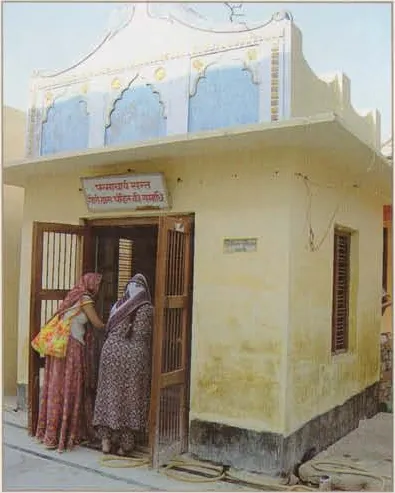
- In the photograph of Śrī Vraja-maṇḍala Parikramā (2007) the samādhi appears as a small, square, whitewashed shrine with painted arches on its parapet.
In short
The samādhi (tomb) of Śrīla Gaurīdāsa Paṇḍita, an associate of Śrī Caitanya Mahāprabhu and Śrī Nityānanda Prabhu, stands in the courtyard of the Rādhā-Śyāmarāya temple at Dhīra-samīra in Vṛndāvana, according to the guidebooks.[1 +5] The Gaura-gaṇoddeśa-dīpikā, as Śrīla Prabhupāda cites it, says that he was Subala, one of Kṛṣṇa's cowherd friends.[7 +2] The Bhakti-ratnākara tells that Śrīla Jāhnavā-devī wept at his samādhi in Vṛndāvana, but it does not say where in the town it was.[10] The oldest report found that places it here is the Bengali Vṛndāvana-kathā of 1920.[1 +5]
Key facts
| Kind | samādhi |
|---|---|
| Region · area | Vṛndāvana · Rādhā-Śyāmarāya Mandira |
| Ācāryas | Śrīla Gaurīdāsa Paṇḍita, Jāhnavā-devī (Jāhnavā Mātā) |
Traditional accounts
The Vṛndāvana-kathā (1920) says that Śrīla Gaurīdāsa Paṇḍita came to Vṛndāvana late in life, founded the Deity named Śyāmarāya and the Dhīra-samīra kuñja (grove), and that "his samādhi is here". It adds that the Caitanya-caritāmṛta does not mention this temple.[1 +5]
Śrī Vraja-maṇḍala Parikramā (2007) says that he served his Deity, Śrī Śyāmarāya, here and that his place of bhajana (chanting and prayer) and his samādhi are also here. The Color Guide to Vṛndāvana (2000) says that he did his bhajana here and founded the temple of Rādhā-Śyāmarāya.[1 +2] The Color Guide says that his body is entombed here, and Vṛndāvana, the Playground of God (2010) calls it a full samādhi.[1 +5] No older text found says that he lived in Vṛndāvana or founded a temple there, so these reports are not certain; Vṛndāvana, the Playground of God adds that he seems to have lived most of his life in Bengal.[1 +3]
The Color Guide also marks a separate memorial of Śrīla Gaurīdāsa Paṇḍita in the garden of the 64 Samādhis.[7 +2]
The Gosvāmīs and ācāryas
Śrīla Prabhupāda's purports say that Śrīla Gaurīdāsa Paṇḍita was the younger brother of Sūryadāsa Sarakhela, whose daughters were …
Śrīla Gaurīdāsa Paṇḍita
Śrīla Prabhupāda's purports say that Śrīla Gaurīdāsa Paṇḍita was the younger brother of Sūryadāsa Sarakhela, whose daughters were Vasudhā and Jāhnavā; he was thus Śrīla Jāhnavā-devī's uncle.[1 +4] The purport on his family, quoting Śrīla Bhaktisiddhānta Sarasvatī Ṭhākura's Anubhāṣya, names his homes in Bengal and says nothing of Vṛndāvana:[7]
General teaching (does not name the place)“Gaurīdāsa Paṇḍita lived in the village of Śāligrāma, which is situated a few miles from the railway station Muḍāgāchā, and later he came to reside in Ambikā-kālanā. It is stated in the Gaura-gaṇoddeśa-dīpikā (128) that formerly he was Subala, one of the cowherd boyfriends of Kṛṣṇa and Balarāma in Vṛndāvana.”
Śrīla Prabhupāda, Śrī Caitanya-caritāmṛta, Ādi-līlā 11.26, purport (quoting Śrīla Bhaktisiddhānta Sarasvatī's Anubhāṣya) · vedabase.io
Śrīla Kavi-karṇapūra's Gaura-gaṇoddeśa-dīpikā (verse 128) gives the same identity in its list of Kṛṣṇa's companions in Vraja: Subala, the dearest of the friends, is Śrīla Gaurīdāsa Paṇḍita.[7 +2]
Śrīla Jāhnavā-devī at the samādhi
The Bhakti-ratnākara tells (summarised here, not translated) that Śrīla Jāhnavā-devī took leave of Vṛndāvana before returning to Bengal. She saw the Deities and wept at the samādhis of Śrīla Raghunātha Bhaṭṭa Gosvāmī, Śrī Kāśīśvara Paṇḍita, Śrīla Sanātana Gosvāmī and Śrīla Rūpa Gosvāmī. At the samādhi of Śrīla Gaurīdāsa Paṇḍita her tears would not stop, and only the words of Baḍu Gaṅgādāsa calmed her.[7 +2] The book does not name the spot, and it does not say whether his body lies there.[10]
Baḍu Gaṅgādāsa
According to the same book, Baḍu Gaṅgādāsa, a loving disciple of Śrīla Gaurīdāsa Paṇḍita, came to Vṛndāvana after his master's passing, at his master's order in a dream. He lived alone at Śrī Dhīra-samīra, serving the Lord "near his own master" (summarised here, not translated).[12] The book does not say whether this means his master's samādhi, a Deity or something else; the Dhīra-samīra page tells how another account of the same episode differs.[12]
Visiting today
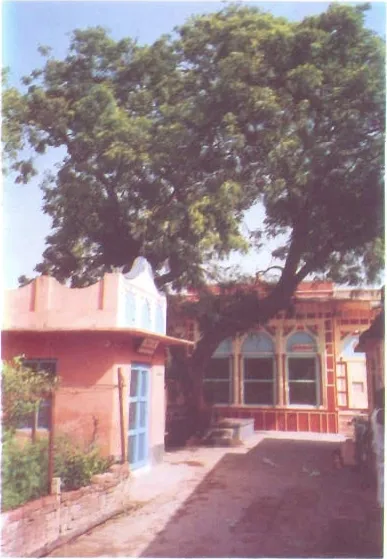
In the photograph of Śrī Vraja-maṇḍala Parikramā (2007) the samādhi appears as a small, square, whitewashed shrine with painted arches on its parapet. The Color Guide (2000) shows it under a large tree in the temple courtyard, and Vṛndāvana, the Playground of God (2010) shows a low stone platform inside, with a structure draped in cloth.[1 +2]
Nearby places
Dhīra-samīra
Pictures
1 pictures
References
- The Color Guide to Vṛndāvana (2000), Written and Photographed by Rājaśekhara dāsa Brahmacārī, PDF p. 129
- Vṛndāvana, the Playground of God (2010), Bhakti Caitanya Svāmī, PDF p. 214
- Vṛndāvana, the Playground of God (2010), Bhakti Caitanya Svāmī, PDF p. 219
- Śrī Vraja-maṇḍala Parikramā (2007), PDF p. 317
- the undated parikramā notes Vṛndāvana, ¶135
- Pulinbihārī Datta, ch. 17 (saptadaśa pariccheda), section 1 'Dhīrasamīra', printed pp. 193–194
- Śrīla Prabhupāda, Śrī Caitanya-caritāmṛta, Ādi-līlā 11.26, purport (quoting Śrīla Bhaktisiddhānta Sarasvatī's Anubhāṣya) · vedabase.io
- The Color Guide to Vṛndāvana (2000), Written and Photographed by Rājaśekhara dāsa Brahmacārī, PDF p. 130
- Gaura-gaṇoddeśa-dīpikā, v.128
- Śrīla Narahari Cakravartī, Bhakti-ratnākara, taraṅga 11, printed p. 673, 2nd ed., 1912
- Śrī Vraja-maṇḍala Parikramā (2007), PDF p. 316
- Śrīla Narahari Cakravartī, Bhakti-ratnākara, Eleventh Wave (ekādaśa taraṅga), printed p. 674 (1912 edition), 2nd ed., 1912
- Śrīla Prabhupāda, Śrī Caitanya-caritāmṛta, Ādi-līlā 11.25, purport · vedabase.io
- The Color Guide to Vṛndāvana (2000), Written and Photographed by Rājaśekhara dāsa Brahmacārī, p. 115
- Śrī Vraja-maṇḍala Parikramā (2007), p. 608-609