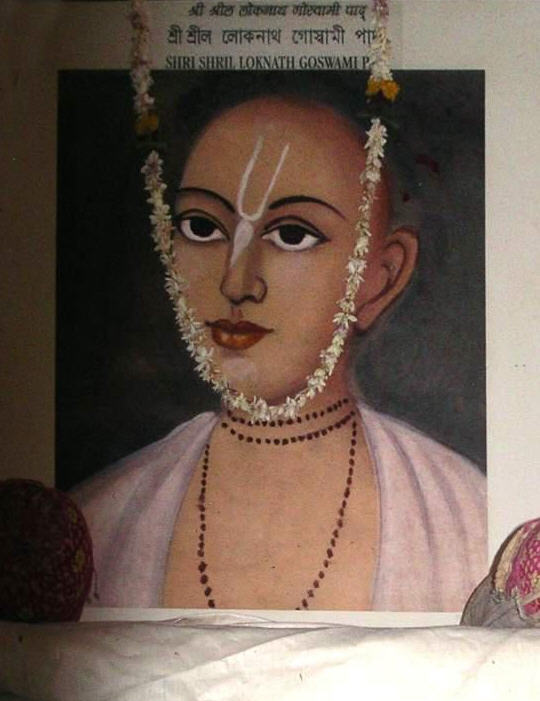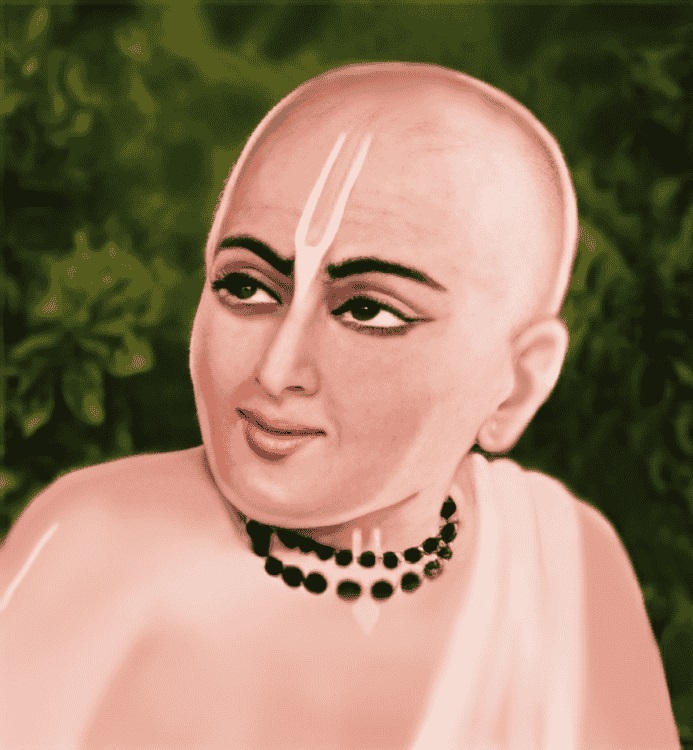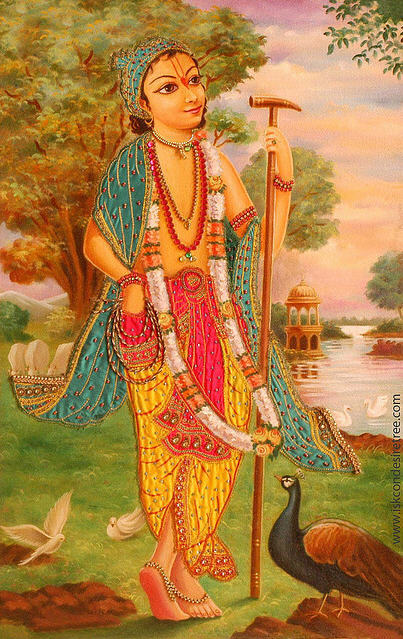
Srila Gauridasa Pandit
Householder Devotee Who Installed the Gaura-Nitai Deities of Ambika Kalna
Also known as Gauridas Pandit, Gauri Das Pandit, Gaudidasa Pandita
“Gauridasa Pandita, the emblem of the most elevated devotional service in love of Godhead, had the greatest potency to receive and deliver such love.”
Sri Chaitanya-charitamrita, Adi-lila 11.26, Krishnadasa Kaviraja Goswami's own description of Gauridasa Pandit
Gauridasa Pandit belonged to the first generation of householder devotees who gathered around Sri Chaitanya Mahaprabhu and Nityananda Prabhu in the closing years of the fifteenth century. He lived at Ambika Kalna, a town on the Ganges directly across from Shantipur. Krishnadasa Kaviraja Goswami praises him in Sri Chaitanya-charitamrita as a devotee unusually gifted at both receiving and giving krishna-prema. But what later tradition remembers most about him is not scholarship or renunciation. It is the great boldness of his love for Nityananda Prabhu. His love was so direct that, by the account his own temple still tells, he once spoke plainly to the Lord and His newly carved Deity form. He said that if the Deity really was as good as the Lord claimed, the Lord was free to stay home with him and send the Deity out to preach instead.
| Detail | Description |
|---|---|
| Also known as | Gauridas Pandit, Gauri Das Pandit, Gaudidasa Pandita |
| Birth | Not recorded; first lived at Saligrama, Bengal |
| Residence | Ambika Kalna, on the Ganges opposite Shantipur |
| Family | Younger brother of Suryadasa Sarakhela, whose daughters Vasudha and Jahnava Devi married Nityananda Prabhu |
| Disappearance | Shukla Ekadashi of Shravana (year not recorded) |
| Deities installed | Sri Sri Gaura-Nitai, still worshiped at Ambika Kalna |
| Identity | Subala, Krishna's dearest cowherd friend in Vraja (Gaura-ganoddesha-dipika 128; Chaitanya-charitamrita Adi 11.26 purport) |
At a Glance
- A Bengali householder brahmana, not a renunciant, whose devotion Krishnadasa Kaviraja Goswami calls unmatched in both receiving and giving divine love.
- Moved from the village of Saligrama to Ambika Kalna, where his own brother's two daughters later married Nityananda Prabhu.
- Installed the neem-wood Deities of Gaura-Nitai that Ambika Kalna still worships today, after demanding that the two Lords never leave him.
- Identified in the Gaura-ganoddesha-dipika as Subala, one of Krishna's closest cowherd friends in Vrindavana.
- Left no surviving writings of his own; almost everything known about him comes through a handful of verses in Sri Chaitanya-charitamrita and later temple tradition.
Family, Saligrama, and the Move to Ambika Kalna #
Bhaktisiddhanta Sarasvati Thakura's Anubhasya commentary on Chaitanya-charitamrita records that Gauridasa Pandit first lived in the village of Saligrama, a few miles from the Mudagachha railway station. For a time he was patronized by a King Krishnadasa, son of Harihoda. He later moved to the bank of the Ganges at Ambika Kalna. The Anubhasya is specific about one detail of that move. He went with the permission of his elder brother, Suryadasa Sarakhela. That permission mattered, because Suryadasa Sarakhela's household would soon be joined directly to Nityananda Prabhu's own family. His two daughters, Vasudha and Jahnava Devi, were given in marriage to Nityananda Prabhu. As her father's younger brother, Gauridasa Pandit was the uncle of Nityananda Prabhu's wife Jahnava Devi, who would later preside over Gaudiya Vaishnavism's largest gathering at Kheturi. The full story of that family connection, and of the household Gauridasa Pandit himself raised at Kalna, is told on Birth and Early Life at Ambika Kalna.
The Tamarind Tree and the Deities of Gaura-Nitai #
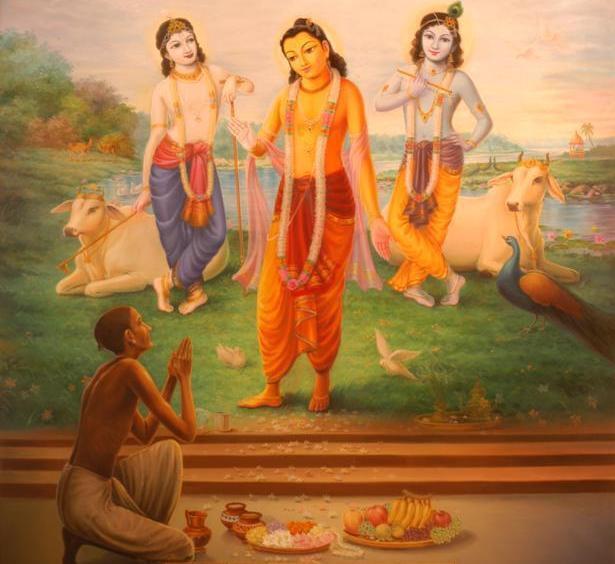
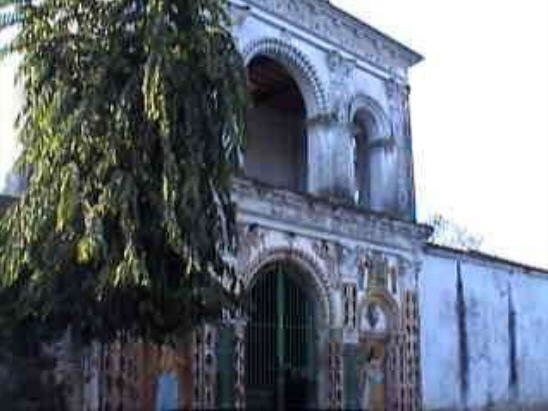
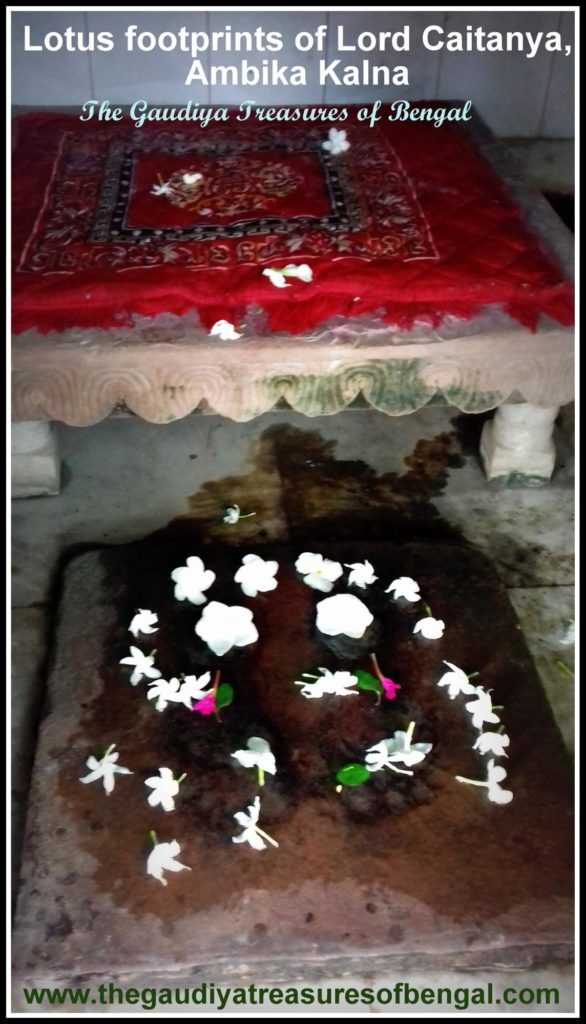
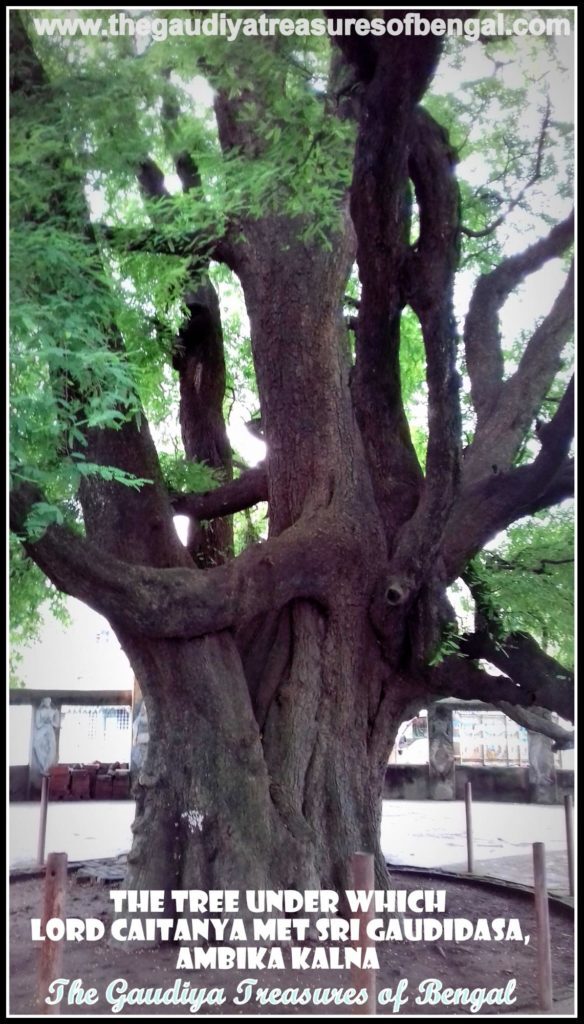
Ambika Kalna's own temple tradition remembers a particular spot that can still be seen. It is a tamarind tree, standing to this day, under which Chaitanya Mahaprabhu and Gauridasa Pandit are said to have met. Mahaprabhu was then preparing to accept sannyasa and leave Bengal for good. Here Gauridasa Pandit's love went beyond devotion and became demanding. The two Lords did not simply bless him and depart. They answered that demand by staying behind in the form of Deities carved from neem wood. Two other pages tell this story in more depth. The Intimate Love of Nityananda Prabhu looks at the boldness of that exchange itself. Establishing Deity Worship at Kalna follows what became of the Deities and the temple built around them.
Subala of Vrindavana #
Sri Kavi Karnapura's Gaura-ganoddesha-dipika is the traditional key to who Chaitanya Mahaprabhu's associates were in Krishna's own Vraja pastimes. It identifies Gauridasa Pandit as Subala, one of the twelve principal gopa companions of Krishna and Balarama in Vrindavana. The sources do not treat this identity as disputed. Every account of his life that we found gives the same answer. It also fits well with what is recorded of his life. In Krishna-lila, Subala is remembered for a closeness to Krishna that could be playful, urgent, even a little insistent. Later devotees saw exactly that same quality in Gauridasa Pandit's relationship with Nityananda Prabhu at Kalna.
Kavi Karnapura's verse is short and direct:
subalo yaḥ priya-śreṣṭhaḥ sa gaurīdāsa-paṇḍitaḥ
"Lord Krsna's dearest friend Subala appeared in Lord Caitanya's pastimes as Gauridasa Pandita." (Gaura-ganoddesha-dipika 128)
Srila Prabhupada cites it in his purport to Chaitanya-charitamrita Adi 11.26, the verse that praises Gauridasa Pandit's love: "It is stated in the Gaura-gaṇoddeśa-dīpikā (128) that formerly he was Subala, one of the cowherd boyfriends of Kṛṣṇa and Balarāma in Vṛndāvana."
Krishnadasa Kaviraja Goswami and the Wider Vaishnava Network #
Almost everything that can be said about Gauridasa Pandit with real confidence comes from a pair of verses in Chaitanya-charitamrita. There Krishnadasa Kaviraja Goswami calls him "the emblem of the most elevated devotional service in love of Godhead". He also records that Gauridasa Pandit gave up caste, family, and fellowship for Nityananda Prabhu's service. Whether the two men ever actually met is a separate question. It is discussed honestly on Connection to Krishnadasa Kaviraja Goswami. But it is clear that Ambika Kalna remained a real place of pilgrimage in Bengali Vaishnavism long after Gauridasa Pandit's own lifetime. Narottama Dasa Thakura, on his own pilgrimage back from Vrindavana, stayed a night at Gauridasa Pandit's house with his disciple Hridaya Chaitanya Prabhu. Then he continued on toward the great festival at Kheturi.
Disappearance and Legacy #
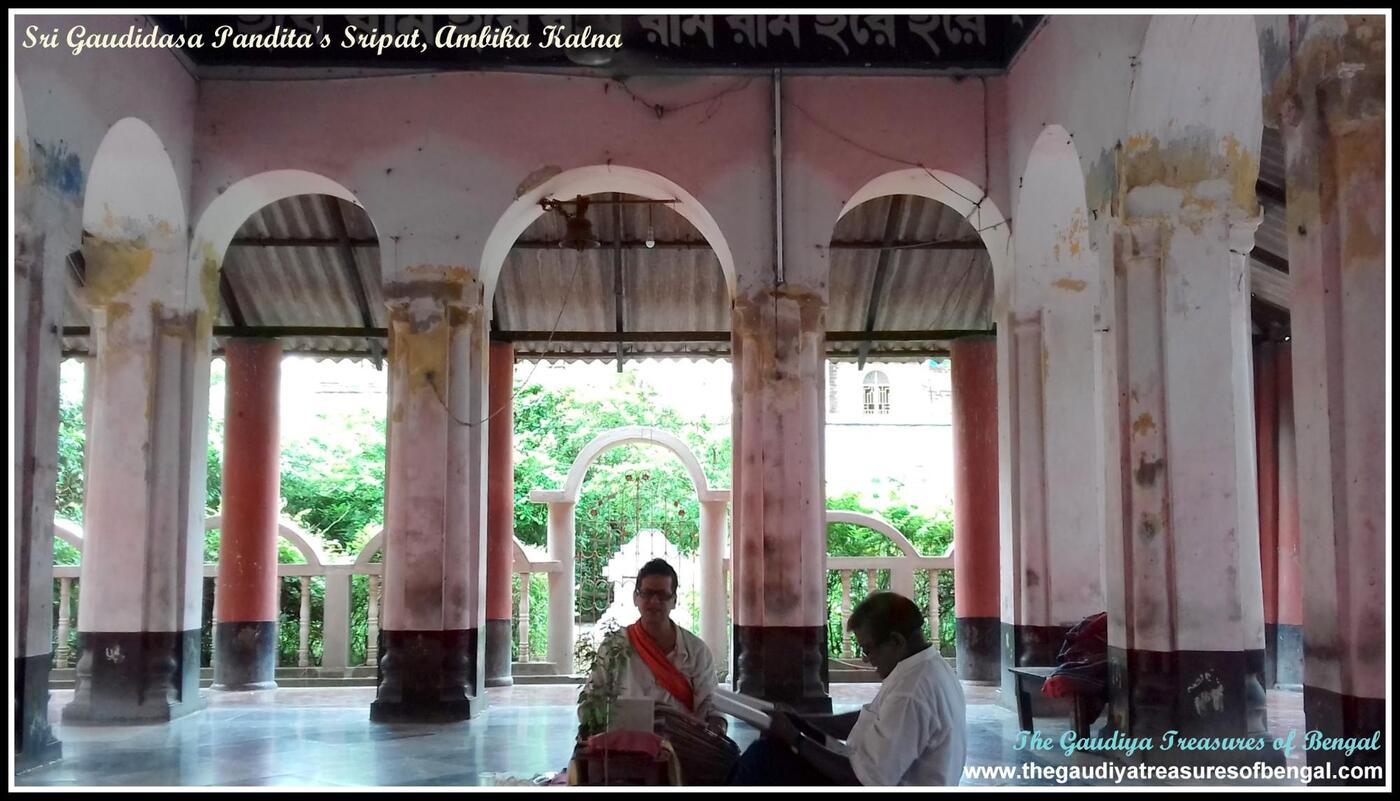
Tradition places Gauridasa Pandit's disappearance on Shukla Ekadashi in the month of Shravana. No source gives a year. His descendants are listed by name in Bhaktisiddhanta Sarasvati Thakura's Anubhasya. There are more than twenty of them, headed by an eldest son called Bada Balarama and a youngest named Raghunatha, with a daughter, Annapurna, among them. It is the record of an ordinary Bengali brahmana household that also happened to be a spiritual dynasty. The fuller story of what remains at Ambika Kalna today, and of the disciples who carried his seva forward, is told on Disappearance and Legacy.
A popular saying is sometimes attributed to Nityananda Prabhu. It says that whoever wants His favor should take shelter of Gauridasa Pandit. The saying circulates widely among devotees. But we could not find a source for it in a specific line of Chaitanya-charitamrita, Chaitanya-bhagavata, or a dated Srila Prabhupada lecture. So it is reported here only as a saying devotees repeat, not as a verified quotation.
Scriptural evidence
Quoted in the text above:
- Verse 128 Gaura-ganoddesha-dipika
Further verses:
গৌরীদাস পণ্ডিত যাঁর প্রেমোদ্দণ্ডভক্তি ।
কৃষ্ণপ্রেমা দিতে, নিতে, ধরে মহাশক্তি ॥ ২৬ ॥
gauridasa pandita yanra premoddanda-bhakti
krsna-prema dite, nite, dhare mahasakti
Word for word
gauridasa pandita: Gauridasa Pandita; yanra: whose; prema-uddanda-bhakti: the most elevated in love of Godhead and devotional service; krsna-prema: love of Krishna; dite: to deliver; nite: and to receive; dhare: empowered; mahasakti: great potency.
Gauridasa Pandita, the emblem of the most elevated devotional service in love of Godhead, had the greatest potency to receive and deliver such love.
From the purport: Purport excerpt: "Gauridasa Pandita lived in the village of Saligrama, which is situated a few miles from the railway station Mudagacha, and later he came to reside in Ambika-kalana."
This is the single verse in which Krishnadasa Kaviraja Goswami himself describes Gauridasa Pandit's spiritual stature; it is the source of the pull-quote used above.
- Sri Chaitanya-charitamrita, Adi-lila 11.26-27, with Bhaktisiddhanta Sarasvati Thakura's Anubhasya commentary
- Sri Chaitanya-charitamrita, Antya-lila 6.62
- Gaudiya History (ISKCON Desire Tree): Gauridasa Pandit
- Gaudiya History (ISKCON Desire Tree): Gauridasa Pandit - Biography
- The Gaudiya Treasures of Bengal: Worshipable Deities of Gaudidasa Pandita, Ambika Kalna
- Stephen Knapp: Gauri Dasa Pandita
- ISVARA.org Vedic Library: Gauridas Pandita
- Ramai Swami: Gauri Das Pandit Disappearance
- ISKCON Bangalore: Sri Gauridasa Pandita
Disciples
Frequently asked
When was Srila Gauridasa Pandit born?
Srila Gauridasa Pandit appeared Not recorded (late 15th century); first lived at Saligrama, Bengal in Saligrama, Bengal (later moved to Ambika Kalna).
When and where did Srila Gauridasa Pandit disappear?
Srila Gauridasa Pandit disappeared Shukla Ekadashi, Shravana (year not recorded) at Ambika Kalna by long-standing local tradition; one biographical source instead places his final bhajana and samadhi at Dhira Samira, Vrindavana.
What are the main pastimes of Srila Gauridasa Pandit?
The pastimes covered here include: Birth and Early Life at Ambika Kalna, The Intimate Love of Nityananda Prabhu, Establishing Deity Worship at Kalna, Connection to Krishnadasa Kaviraja Goswami, Disappearance and Legacy.