Rādhā-Śyāmarāya Mandira
राधा-श्यामराय मन्दिर Hindi name proposed
Also called Radha Syama-raya Temple (Dhira Samira Mandira), Rādhā Syāmā-rāya
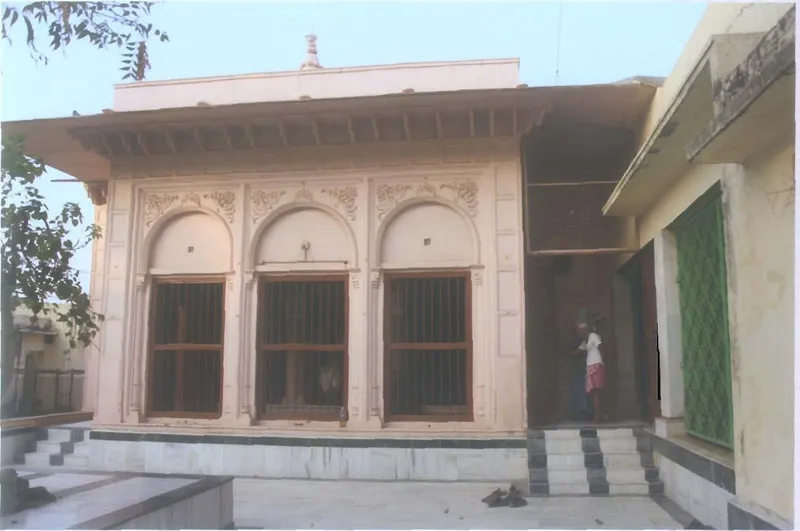
- What it is
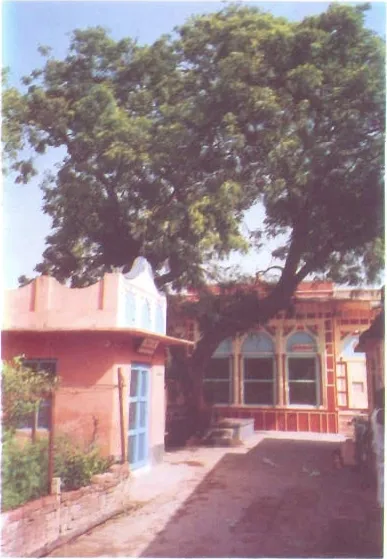
- The Rādhā-Śyāmarāya Mandira stands in Dhīra-samīra, an area of Vṛndāvana by the old bank of the Yamunā.
- Visiting
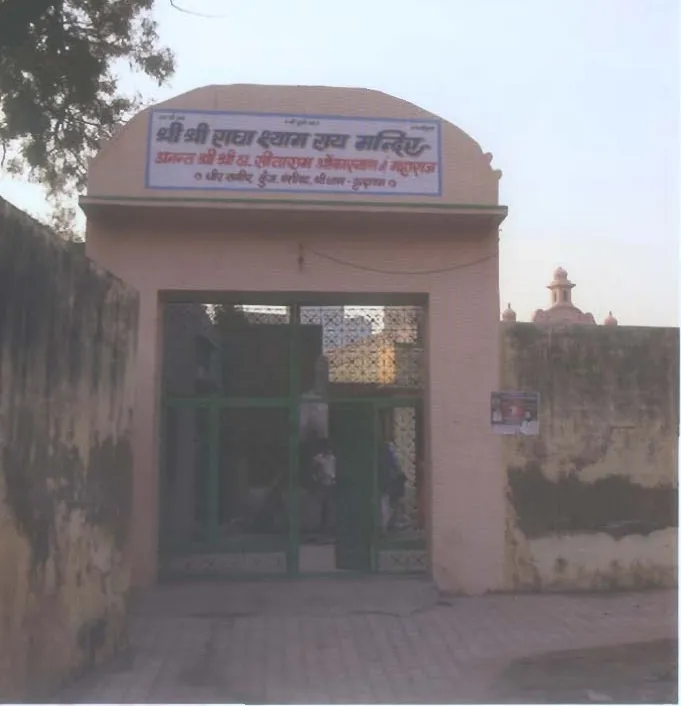
- The area around the temple and its grounds is called Dhīra Samīra-ghāṭa, and the signboard over the entrance reads श्री श्री राधा श्याम राय मन्दिर; The Color Guide to Vṛndāvana (2000) calls the …
- Places here
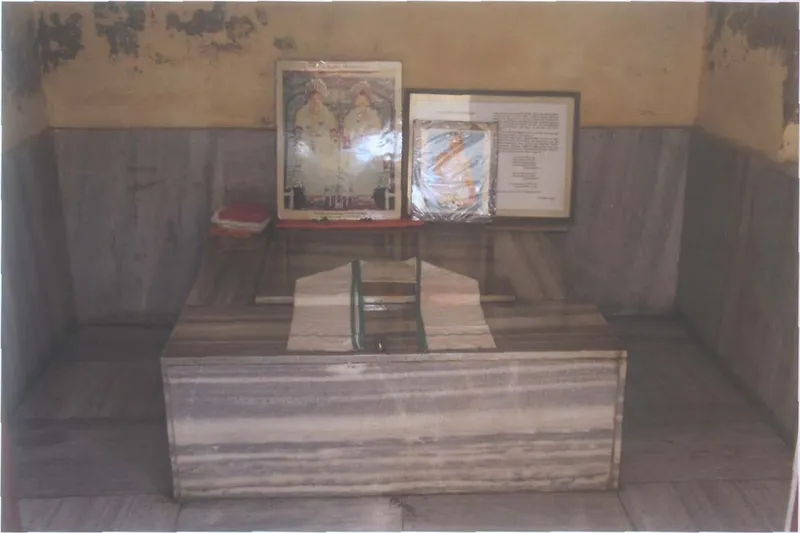
- Gaurīdāsa Paṇḍita's samādhi
In short
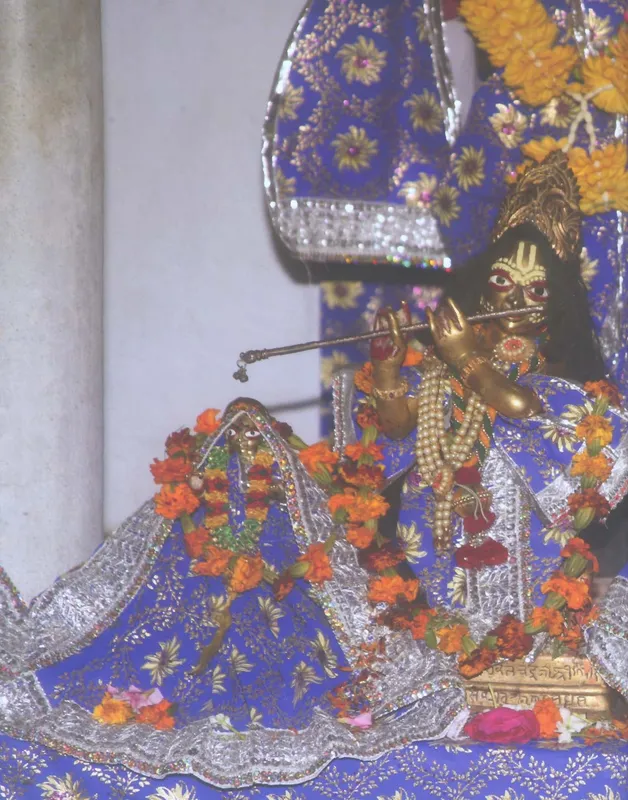
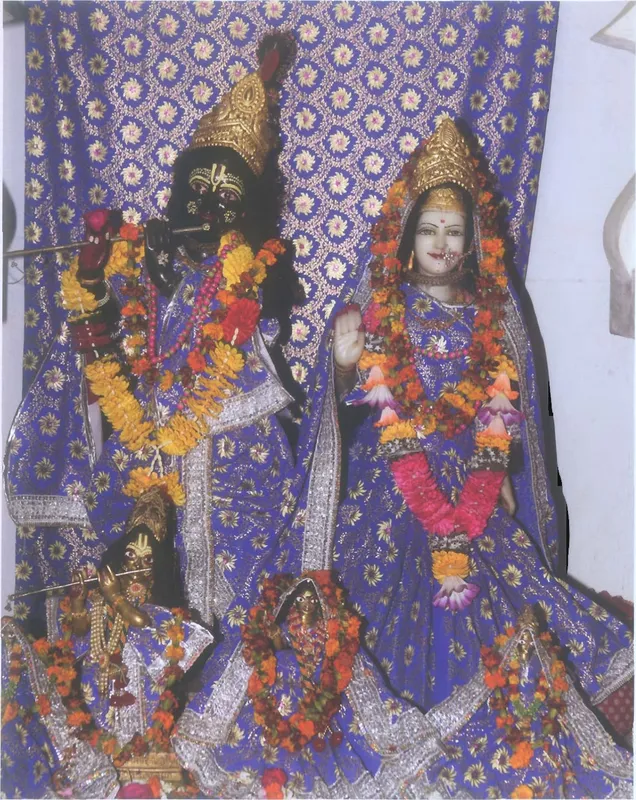
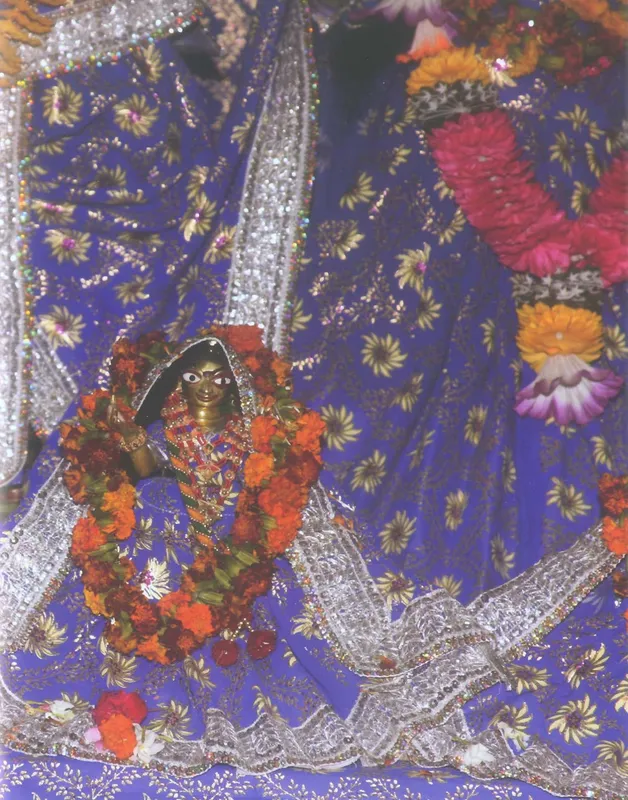
The Rādhā-Śyāmarāya Mandira stands in Dhīra-samīra, an area of Vṛndāvana by the old bank of the Yamunā. According to three guidebooks, Śrīla Gaurīdāsa Paṇḍita, a close associate of Śrī Caitanya Mahāprabhu and Śrī Nityānanda Prabhu, founded it and worshipped its Deities, Rādhā-Śyāmarāya.[1 +5] According to the local tradition recorded in the guidebooks, his samādhi is in the temple grounds, which is not certain.[1 +5] The Bengali Bhaktamāla of Kṛṣṇadāsa Bābājī (1905) is the oldest book found that puts his tomb and a Deity Śyāmarāya at Dhīra-samīra; no older document dates the temple, and a historian names another builder (see below).[1 +4]
Key facts
| Kind | temple |
|---|---|
| Region · area | Vṛndāvana · Dhīra-samīra |
| Ācāryas | Śrīla Gaurīdāsa Paṇḍita |
Divine pastimes
The rāsa on the Yamunā's bank
The guidebooks describe Dhīra-samīra as the place of a gentle breeze, with gardens by the river where Rādhā and Kṛṣṇa enjoyed Their pastimes; Śrī Vraja-maṇḍala Parikramā (2007) calls it the place of the rāsa dance.[2 +4] Śrīmad-Bhāgavatam tells that on the night of the rāsa Kṛṣṇa took the gopīs to the cool, sandy bank of the Yamunā, where a breeze carried the fragrance of flowers, and that after the dance and the play in the water He strolled with them through a garden on the river's bank. None of these verses names Dhīra-samīra or any other place on the bank.[11 +5]
tataś ca kṛṣṇopavane jala-sthala prasūna-gandhānila-juṣṭa-dik-taṭe / cacāra bhṛṅga-pramadā-gaṇāvṛto yathā mada-cyud dviradaḥ kareṇubhiḥ
Then the Lord strolled through a small forest on the bank of the Yamunā. This forest was filled to its limits with breezes carrying the fragrances of all the flowers growing on the land and in the water. Followed by His entourage of bees and beautiful women, Lord Kṛṣṇa appeared like an intoxicated elephant with his she-elephants.
Translation: Śrīla Prabhupāda's disciples (BBT)Commenting on this verse, Śrīla Sanātana Gosvāmī says that the breeze in the garden was cool, fragrant and gentle, and that Kṛṣṇa wandered there picking flowers and hiding in the groves; Śrīla Viśvanātha Cakravartī Ṭhākura says that the garden had many thousands of groves (summarised here, not translated). They do not name Dhīra-samīra either.[14 +1] The 2007 guidebook also identifies the grove here with the one in Śrī Jayadeva's Gīta-govinda where Kṛṣṇa stays in the forest on the Yamunā's bank in a gentle breeze.[2 +4] Where the rāsa took place is told differently (see below).
The Gosvāmīs and ācāryas
Śrīla Prabhupāda writes, from Śrīla Bhaktisiddhānta Sarasvatī Ṭhākura's commentary, that Śrīla Gaurīdāsa Paṇḍita was the younger …
Śrīla Gaurīdāsa Paṇḍita
Śrīla Prabhupāda writes, from Śrīla Bhaktisiddhānta Sarasvatī Ṭhākura's commentary, that Śrīla Gaurīdāsa Paṇḍita was the younger brother of Sūryadāsa Sarakhela, whose daughters were Vasudhā and Jāhnavā, and that he lived at Śāligrāma and later at Ambikā-kālanā on the Ganges.[1 +4]
General teaching (does not name the place)“Gaurīdāsa Paṇḍita lived in the village of Śāligrāma, which is situated a few miles from the railway station Muḍāgāchā, and later he came to reside in Ambikā-kālanā.”
Śrīla Prabhupāda, Śrī Caitanya-caritāmṛta, Ādi-līlā 11.26, purport (quoting Bhaktisiddhānta Sarasvatī's Anubhāṣya) · vedabase.io
According to the Bhakti-ratnākara, Śrī Caitanya Mahāprabhu once crossed the Ganges by boat and came to him at Ambikā. He gave him the oar and told him to carry the living beings across the river of material existence.[1 +2] The same work tells that, on the Lord's order, Śrīla Gaurīdāsa Paṇḍita had Deities of Śrī Caitanya and Śrī Nityānanda carved from a neem tree; other books tell differently how these Deities came to be (see below).[21]
When he came to Vṛndāvana is not certain. Śrī Vraja-maṇḍala Parikramā (2007) says that he came at the end of his life and then founded the grove and temple at Dhīra-samīra, and Vṛndāvana, the Playground of God (2010) that he seems to have lived most of his life in Bengal.[1 +3] The Bengali Vṛndāvana-kathā (1920) also says that he came at the end of his life and installed the Deity Śyāmarāya here.[22]
His disciple Baḍu Gaṅgādāsa
According to the Bhakti-ratnākara, his disciple Gaṅgādāsa, a nephew of Śrīla Jāhnavā-devī's mother, nearly died of grief when Śrīla Gaurīdāsa Paṇḍita passed away. On the Paṇḍita's order in a dream he came to Vṛndāvana and lived alone at Śrī Dhīra-samīra, serving the Lord.[6 +1] The same work tells that Śrīla Jāhnavā-devī was given a Deity in Vṛndāvana and entrusted His service to Baḍu Gaṅgādāsa, and that a Deity named Śyāmarāya, brought from Vṛndāvana, was later served by him in Bengal. It does not say that this Deity came from this temple.[6 +3]
Visiting today
The area around the temple and its grounds is called Dhīra Samīra-ghāṭa, and the signboard over the entrance reads श्री श्री राधा श्याम राय मन्दिर; The Color Guide to Vṛndāvana (2000) calls the temple Dhīra-samīra Mandira and says that the gardens and the ghāṭa have gone and the river has moved away.[1 +2] Vṛndāvana, the Playground of God (2010) says that Śrīla Gaurīdāsa Paṇḍita's samādhi, with his body, is in the centre of the grounds and shows the samādhi room; no source says where he left this world, so this may not be certain.[1 +5]
Places at Rādhā-Śyāmarāya Mandira
1 places
Nearby places
Dhīra-samīra
Pictures
6 pictures
Where the sources differ
Who founded the grove and temple called Dhīra-samīra: the sources are set side by side on the page of Dhīra-samīra.[1 +4]
Accounts differ How Śrīla Gaurīdāsa Paṇḍita's Deities of Śrī Caitanya and Śrī Nityānanda came into being
- Bhakti-ratnākara, Seventh Wave (1912 ed. p. 509)the Lord told Gaurīdāsa to have a neem tree brought from Navadvīpa and to make Him with His brother; Gaurīdāsa had the wooden Deities made; the next couplet says that the one who made them was the object of the Lord's mercy: the Lord manifests Himself, the other is only a pretext
- Vṛndāvana, the Playground of God (2010), entry on this templeŚrī Caitanya personally ordered Gaurīdāsa to carve Deities of Himself and Lord Nityānanda from a neem tree, which he did
- The Color Guide to Vṛndāvana (2000), entry 62B (Gaurīdāsa's samādhi)when Śrī Caitanya was going to take sannyāsa and Gaurīdāsa begged the two Lords never to leave, They manifested Themselves as two Deities, exact replicas of Gaura-Nityānanda, and left them with him
- Śrīla Murāri Gupta, Kṛṣṇa-caitanya-caritāmṛta 4.14.12–13 (Kṛṣṇa-caitanya-caritāmṛta (Śrīla Murāri Gupta), complete (2003); restored reading)bound by Gaurīdāsa's love, the two Lords (Gaura and Nityānanda) revealed their own forms (mūrti) in his house and lived there; no neem wood or sannyāsa is mentioned
Accounts differ Where the rāsa of the Tenth Canto took place, and whether at Dhīra-samīra, where the guidebooks put this temple
- Śrīmad-Bhāgavatam 10.29.45, 10.32.11–12, 10.33.2, 10.33.24On the river's bank of cool sand (10.29.45); after Kṛṣṇa's return, on the bank of the Kālindī (Yamunā), with a breeze fragrant with kunda and mandāra flowers (10.32.11–12); 'there' the rāsa dance began (10.33.2); afterwards Kṛṣṇa strolled with the gopīs through a small forest on the Yamunā's bank (10.33.24). No place is named.
- Śrī Vraja-maṇḍala Parikramā (2007), entry on Dhīra-samīraDhīra-samīra, on the bank of the Yamunā just near Vaṁśīvaṭa, 'is the place of rāsa-līlā, where the Divine Couple perform Their eternal, sportive pastimes in the nikuñjas'; Śrīla Gaurīdāsa Paṇḍita established the kuñja and temple there.
- Śrī Vraja-maṇḍala Parikramā (2007), entry on VaṁśīvaṭaVaṁśīvaṭa is the place where Rādhā-Kṛṣṇa and the sakhīs performed the rāsa 'as described in Śrīmad-Bhāgavatam'; Kṛṣṇa's autumnal rāsa (śāradīya-rāsa) with countless gopīs 'took place here'.
- Śrī Vraja-maṇḍala Parikramā (2007), entry on RasaulīThe village Rasaulī, which lies between Caraṇa-pahāḍī and Koṭvana, is where 'Kṛṣṇa and the gopīs' famous autumnal (śāradīya) rāsa took place'.
References
27 references
- Vṛndāvana, the Playground of God (2010), Bhakti Caitanya Svāmī, PDF p. 214
- The Color Guide to Vṛndāvana (2000), Written and Photographed by Rājaśekhara dāsa Brahmacārī, PDF p. 129
- Śrī Vraja-maṇḍala Parikramā (2007), PDF p. 316
- Śrī Vraja-maṇḍala Parikramā (2007), PDF p. 317
- Śrī Śrī Bhaktamāla grantha of Kṛṣṇadāsa, verse survey of Vṛndāvana's places (26th mālā), left-hand column, middle; printed page 349, misprinted '৩৩৯'
- Śrīla Narahari Cakravartī, Bhakti-ratnākara, Eleventh Wave (ekādaśa taraṅga), printed p. 674 (1912 edition), 2nd ed., 1912
- Vṛndāvana, the Playground of God (2010), Bhakti Caitanya Svāmī, PDF p. 219
- the undated parikramā notes Vṛndāvana, ¶135
- Vṛndāvana, the Playground of God (2010), Bhakti Caitanya Svāmī, PDF p. 220
- The Color Guide to Vṛndāvana (2000), Written and Photographed by Rājaśekhara dāsa Brahmacārī, PDF p. 130
- Śrīmad-Bhāgavatam 10.29.45, GRETIL
- Śrīmad-Bhāgavatam 10.32.11–12
- Śrīmad-Bhāgavatam 10.33.2, GRETIL
- Śrīmad-Bhāgavatam 10.33.24, GRETIL
- Śrīla Prabhupāda, Kṛṣṇa, the Supreme Personality of Godhead (Kṛṣṇa book), Chapter 29, 'The Rāsa Dance: Introduction' · vedabase.io
- Śrīla Prabhupāda, Kṛṣṇa, the Supreme Personality of Godhead (Kṛṣṇa book), Chapter 32, 'Kṛṣṇa Returns to the Gopīs' · vedabase.io
- Śrīla Sanātana Gosvāmī: commentary on ŚB 10.33.24
- Śrīla Prabhupāda, Śrī Caitanya-caritāmṛta, Ādi-līlā 11.26, purport (quoting Bhaktisiddhānta Sarasvatī's Anubhāṣya) · vedabase.io
- Śrīla Prabhupāda, Śrī Caitanya-caritāmṛta, Ādi-līlā 11.25, purport · vedabase.io
- Śrīla Narahari Cakravartī, Bhakti-ratnākara, Seventh Wave (saptama taraṅga), 1912 ed. p. 508, 2nd ed., 1912
Show all 27 references
- Śrīla Narahari Cakravartī, Bhakti-ratnākara, Seventh Wave (saptama taraṅga), 1912 ed. p. 509, 2nd ed., 1912
- Pulinbihārī Datta, ch. 17 (saptadaśa pariccheda), section 1 'Dhīrasamīra', printed pp. 193–194
- Śrīla Narahari Cakravartī, Bhakti-ratnākara, Eleventh Wave (ekādaśa taraṅga), 1912 ed. p. 677, last two lines, 2nd ed., 1912
- Śrīla Narahari Cakravartī, Bhakti-ratnākara, Eleventh Wave (ekādaśa taraṅga), 1912 ed. p. 678, first four lines, 2nd ed., 1912
- Śrīla Narahari Cakravartī, Bhakti-ratnākara, Eleventh Wave (ekādaśa taraṅga), 1912 ed. p. 681, 2nd ed., 1912
- Vṛndāvana, the Playground of God (2010), Bhakti Caitanya Svāmī, p. 214
- The Color Guide to Vṛndāvana (2000), Written and Photographed by Rājaśekhara dāsa Brahmacārī, p. 115