Jñāna-vāpī
ज्ञान-वापी Hindi name proposed
Also called Jñāna-bāvaḍī
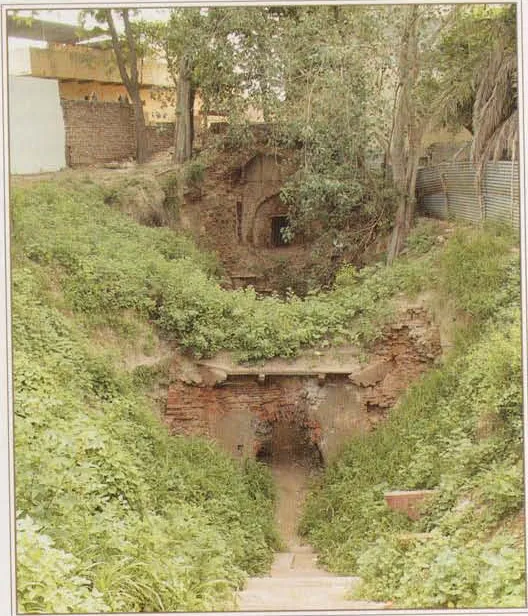
- What it is
- Jñāna-vāpī, also called Jñāna-bāvaḍī, is a bāvaḍī, a deep well with steps going down to the water, on the western side of Mathurā.
- Visiting
- Śrī Vraja-maṇḍala Parikramā (2007) describes the well as hidden within the earth, on the ten-mile parikramā between Bhūteśvara Mahādeva and the Kaṭarā Keśavadeva.
In short
Jñāna-vāpī, also called Jñāna-bāvaḍī, is a bāvaḍī, a deep well with steps going down to the water, on the western side of Mathurā. The guidebook Śrī Vraja-maṇḍala Parikramā (2007) calls it an important old tīrtha (holy bathing place) and places it on the Mathurā parikramā path between Bhūteśvara Mahādeva and the Kaṭarā Keśavadeva, the birthplace of Śrī Kṛṣṇa.[1 +1] In 1883 the step-well near the Kaṭarā was one of the stations of a pilgrims' festival.[3] What the same guidebook says about its origin and about a visit of Śrī Caitanya Mahāprabhu could not be found in the older texts it names; the sources differ, as shown below.
Key facts
| Kind | well |
|---|---|
| Region · area | Mathurā |
| Ācāryas | Śrī Caitanya Mahāprabhu |
Traditional accounts
The guidebook quotes a Braj poem, Harilāl Kakora's Mathurā Parikramā. According to that poem the well has been a holy place since Satya-yuga, the first age, filled with knowledge (jñāna) and devotion (bhakti), and bathing in it washes away sins and gives great merit.[1] The guidebook also records, without naming a source, a local tradition that Śrī Kṛṣṇa met Mahārāja Yudhiṣṭhira here to consult with him; it is not certain.[1]
Visiting today
Śrī Vraja-maṇḍala Parikramā (2007) describes the well as hidden within the earth, on the ten-mile parikramā between Bhūteśvara Mahādeva and the Kaṭarā Keśavadeva. This has not been checked on the spot.[1 +1]
Location
| Where it is | between Bhūteśvara Mahādeva and Kaṭarā Keśavadeva on the ten-mile path; 'western Mathurā' (verse rendering)[7] |
|---|
Nearby places
Bhūteśvara Mahādeva · Kṛṣṇa Janma-sthāna
History
Growse (1883) records that in that year, on the second day of the Pañca-tīrtha festival (the fifth day of the bright half of Śrāvaṇa), pilgrims went to Śāntanu-kuṇḍa at Satohā and to the step-well near the Kaṭarā. No date of building has been found.[3]
Where the sources differ
The guidebook names two older sources for the well's beginning, which could not be checked.
The guidebook names two older sources for the well's beginning, which could not be checked.
Accounts differ Who made Jñāna-vāpī, and when.
- Harilāl Kakora, Mathurā Parikramā, as quoted in Śrī Vraja-maṇḍala Parikramā (2007)A holy place from Satya-yuga in the form of a well.
- 'Vāyu Purāṇa', as reported by Śrī Vraja-maṇḍala Parikramā (2007)Dharmarāja Yudhiṣṭhira built this bāvaḍī.
The guidebook quotes a verse of the Varāha Purāṇa for this well, but the verse reads differently in the text that could be checked: it speaks of the stream of Dharmarāja in western Mathurā, frees bathers from the bad influence of the planets, and does not name Jñāna-vāpī.[1 +1]
Accounts differ How the Varāha Purāṇa verse that Śrī Vraja-maṇḍala Parikramā (2007) cites for Jñāna-vāpī reads, and what it promises.
- Śrī Vraja-maṇḍala Parikramā (2007)'yo vāpyāṁ dharmarājasya, mathurāyāstu paścimai / sthānaṁ karoti tasyāṁ tu, grahadorṣarna lipyate': bathing in 'Īśavāpī-bāvaḍī of Dharmarāja' removes evil planetary influences 'and they attain bhakti'.
- Varāha Purāṇa 169.39-40'yā dhārā dharmarājasya mathurāyāś ca paścime / snānaṁ karoti tasyāṁ tu grahadāṣair na lipyate': the stream (dhārā), not a step-well, of Dharmarāja; bathing frees from planetary faults; nothing about bhakti.
The Caitanya-caritāmṛta tells that Śrī Caitanya Mahāprabhu stayed twice at the house of a Sanoḍiyā brāhmaṇa in Mathurā, but it does not say where the house was.[5 +1] The guidebook says that the brāhmaṇa lived near this well and that Mahāprabhu bathed in it; the sources differ.
Accounts differ Whether the Caitanya-caritāmṛta connects Mahāprabhu with Jñāna-bāvaḍī.
- Śrī Vraja-maṇḍala Parikramā (2007)Mahāprabhu performed ācamana and bathed in Jñāna-bāvaḍī; 'Śrī Caitanya-caritāmṛta mentions' that He stayed with a Sanoḍiyā brāhmaṇa 'who lived near Jñāna-bāvaḍī'.
- Śrī Caitanya-caritāmṛta, Madhya 17.154-196 and 18.66-71 (vedabase)He bathed at Viśrāma-ghāṭa and in the twenty-four ghāṭas, saw Keśava, stayed and ate at the Sanoḍiyā brāhmaṇa's home (17.175) and stayed there again on His return from Gokula (18.69); neither Jñāna-bāvaḍī nor the house's location is mentioned.
References
7 references
- Śrī Vraja-maṇḍala Parikramā (2007), PDF p. 49
- Śrī Vraja-maṇḍala Parikramā (2007), PDF p. 31
- Mathurá (1883), F. S. Growse, B.C.S., M.A. Oxon., C.I.E. (as the title page gives him, p. 180
- Varāha Purāṇa, adhyāya 169, vv. 39-40, Sanskrit Wikisource
- Śrīla Kṛṣṇadāsa Kavirāja Gosvāmī, Śrī Caitanya-caritāmṛta, Madhya-līlā 17.175, online edition · vedabase.io
- Śrīla Kṛṣṇadāsa Kavirāja Gosvāmī, Śrī Caitanya-caritāmṛta, Madhya-līlā 18.69, online edition · vedabase.io
- Śrī Vraja-maṇḍala Parikramā (2007), p. 72-73