Madhuvana
मधुवन Hindi name proposed
Also called Maholī-grāma, Maholī
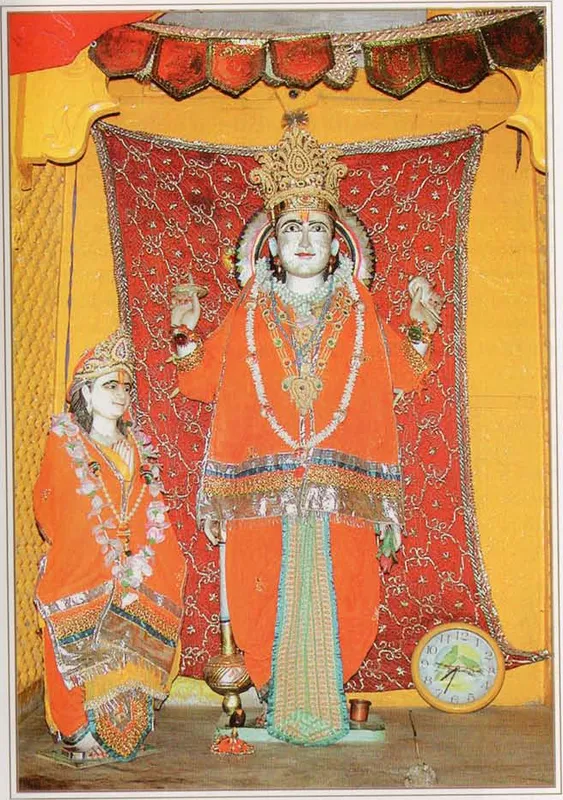
- What it is
- Madhuvana, the forest of the demon Madhu, is one of the twelve forests of Vraja.
- Visiting
- According to Śrī Vraja-maṇḍala Parikramā (2007), Madhuvana is today the village of Maholī (Maholī-grāma), south-west of Mathurā and about two and a half miles from Bhūteśvara Mahādeva.
- Places here
- Tālavana, Bahulāvana, Kumudavana, Śakaṭīkarā, Datihā +20 more
In short
Madhuvana, the forest of the demon Madhu, is one of the twelve forests of Vraja. In the lists of the Varāha Purāṇa and Śrīla Rūpa Gosvāmī it is the first of them, and Śrīla Prabhupāda counts it among the seven on the western side of the Yamunā.[1 +8] Śrīmad-Bhāgavatam tells that the sage Nārada sent the boy Dhruva to worship the Lord in Madhuvana, and that Śatrughna, Lord Rāma's brother, founded the town of Mathurā in Madhuvana.[10 +10] Śrīla Prabhupāda writes that Madhuvana still exists in the district of Mathurā, and the guidebooks place it at the village of Maholī, south-west of the city.[21 +4] Śrī Caitanya Mahāprabhu bathed here in ecstatic love.[23 +3]
Key facts
| Kind | forest |
|---|---|
| Ācāryas | Śrī Caitanya Mahāprabhu, Śrīla Rāghava Paṇḍita Gosvāmī of Govardhana, Śrīla Narottama dāsa Ṭhākura, Śrīla Śrīnivāsa Ācārya, Śrīla Narahari Cakravartī Ṭhākura |
Why it is glorified
In his purport to Śrīmad-Bhāgavatam 4.8.42 Śrīla Prabhupāda writes that the Madhuvana of which Nārada spoke still exists …
In his purport to Śrīmad-Bhāgavatam 4.8.42 Śrīla Prabhupāda writes that the Madhuvana of which Nārada spoke still exists:[21]
Names this place“According to the statement of Nārada Muni, Madhuvana, which is still existing in the Vṛndāvana area, in the district of Mathurā, is a most sacred place. Many saintly persons still live there and engage in the devotional service of the Lord.”
Śrīla Prabhupāda, Śrīmad-Bhāgavatam, 4.8.42, purport · vedabase.io
In that verse Nārada calls Madhuvana a holy forest on the bank of the Yamunā where the Lord is always present. A few verses later the Bhāgavatam tells that Dhruva set out for it:[10 +5]
ity uktas taṃ parikramya praṇamya ca nṛpārbhakaḥ / yayau madhuvanaṃ puṇyaṃ hareś caraṇa-carcitam
When Dhruva Mahārāja, the son of the King, was thus advised by the great sage Nārada, he circumambulated Nārada, his spiritual master, and offered him respectful obeisances. Then he started for Madhuvana, which is always imprinted with the lotus footprints of Lord Kṛṣṇa and which is therefore especially auspicious.
Translation: Śrīla A.C. Bhaktivedanta Swami PrabhupādaIn the Ādi-varāha verses that Śrīla Rūpa Gosvāmī quotes in his Mathurā-māhātmya, Madhuvana comes first among the twelve forests: it is the charming forest named Madhuvana, the unsurpassed place of Viṣṇu, and seeing it fulfils every desire. The Varāha Purāṇa has the same first line and says that whoever sees the forest becomes fulfilled (both summarised here, not translated).[2 +5] The Skanda Purāṇa (Kāśī-khaṇḍa 20) calls Madhuvana on the Yamunā's bank the first place of the Lord, where even a sinful creature becomes free from sin (summarised here, not translated).[14]
Śrīla Prabhupāda names Madhuvana among the twelve forests that pilgrims from all over India visit:[21 +5]
Names this place“There are twelve forests in the area of Vṛndāvana, and Madhuvana is one of them. Pilgrims from all parts of India assemble together and visit all twelve of these forests. … On the western side of the bank there are seven: Madhuvana, Tālavana, Kumudavana, Bahulāvana, Kāmyavana, Khadiravana and Vṛndāvana.”
Śrīla Prabhupāda, Śrīmad-Bhāgavatam, 4.8.42, purport · vedabase.io
The Padma Purāṇa, the Ādi-purāṇa, the Bhakti-ratnākara and other works also count Madhuvana among the twelve, but their lists differ in names and order; the lists are compared on the page of Bahulāvana. An overview of all the lists is on the Vraja-maṇḍala page.[1 +5] Read more: The twelve forests of Vraja: the lists side by side →
Madhuvana and the city of Mathurā
The name is used in two ways. Several texts use it for the forest in which the city of Mathurā stands. In Śrīmad-Bhāgavatam 1.10.26 the land where the Lord was born and wandered as a child is called madhor vanam, the forest of Madhu, which Śrīla Prabhupāda translates as "the land of Mathurā".[35 +1] A verse that Śrīla Rūpa Gosvāmī and the Bhakti-ratnākara quote from the Skanda Purāṇa says that the forest of Madhu comes first, and that the city of Mathurā stands in it. The Bhakti-ratnākara adds that Mathurā-purī lies within Madhuvana, and the Garga-saṁhitā bows to Śrī Mathurā in Madhuvana (all summarised here, not translated).[29 +2] Śrīla Murāri Gupta's Kṛṣṇa-caitanya-caritāmṛta says that at Gayā Śrī Caitanya Mahāprabhu longed to go to "Madhu's forest", without saying which place is meant (summarised here, not translated).[39 +1]
In his purport to the Dhruva verse, on the other hand, Śrīla Prabhupāda speaks of Madhuvana as a forest that still exists in the Vṛndāvana area, one of the twelve, and the guidebooks identify it with Maholī, south-west of the city.[21 +4] Which of the two the verses about Dhruva and Śatrughna mean is left open here; the readings are set side by side below. Read more: Madhuvana, Dhruva and the founding of Mathurā →
Divine pastimes
Dhruva
Śrīmad-Bhāgavatam (Canto 4) tells that Dhruva, having arrived at Madhuvana, bathed in the Yamunā, fasted that night and worshipped the Lord as Nārada had advised, and that the Lord came on Garuḍa to Madhuvana to see His servant.[10 +6] Śrīla Prabhupāda explains, after Śrīla Rūpa Gosvāmī's Laghu-bhāgavatāmṛta, that the Lord who appeared to Dhruva was the avatāra Pṛśnigarbha.[25 +3]
The Viṣṇu Purāṇa, the Skanda Purāṇa's Kāśī-khaṇḍa and the Garga-saṁhitā also set Dhruva's austerities in Madhuvana.[10 +5] Where in the forest he worshipped, at the hill Dhruva-ṭīlā in Maholī or at Dhruva-tīrtha in Mathurā, is told on the page of Dhruva-ṭīlā.[10 +5] Read more: Madhuvana, Dhruva and the founding of Mathurā →
Mahārāja Ambarīṣa
Śrīmad-Bhāgavatam tells that King Ambarīṣa ended his year-long vow by worshipping Hari in Madhuvana:[15 +3]
vratānte kārtike māsi trirātraṃ samupoṣitaḥ / snātaḥ kadācit kālindyāṃ hariṃ madhuvane 'rcayat
In the month of Kārtika, after observing that vow for one year, after observing a fast for three nights and after bathing in the Yamunā, Mahārāja Ambarīṣa worshiped the Supreme Personality of Godhead, Hari, in Madhuvana.
Translation: Śrīla A.C. Bhaktivedanta Swami PrabhupādaThe Garga-saṁhitā says that Ambarīṣa attained liberation by austerities in Madhuvana. In the same passage it names Dhruva, Indra and others who reached their goals by austerities here (summarised here, not translated).[15 +3]
Madhu, Lavaṇa and Śatrughna
Śrīmad-Bhāgavatam (9.11), the Viṣṇu Purāṇa, the Harivaṁśa and the Brahmāṇḍa Purāṇa agree that Madhuvana was the forest of the demon Madhu, that Śatrughna killed Madhu's son Lavaṇa, and that he founded the city of Mathurā in Madhuvana.[13 +5] The fight, and the cave that the guidebooks connect with it, are told on the page of Lavaṇāsura's cave; the Deity of Śatrughna is described on the page of the Śatrughna Mandira.[13 +5]
Other texts say that the Lord Himself killed a demon Madhu here. The Skanda verse that Śrīla Rūpa Gosvāmī and the Bhakti-ratnākara quote says that Hari killed Madhu in this forest. The Garga-saṁhitā tells that Madhu, made strong by austerities in Madhuvana, fought Madhusūdana, and a "Skānda" passage in the Vraja-bhakti-vilāsa that Viṣṇu killed Madhu at the end of a Kṛta-yuga after ten years of fighting (all summarised here, not translated).[15 +5] The texts tell the two accounts separately, and they explain the name Madhuvana in different ways; they are set side by side below.[13 +11]
Kṛṣṇa and Balarāma
The Garga-saṁhitā names Madhuvana among the forests where Kṛṣṇa herded the cows, played His flute and delighted the gopīs. In its account of a rāsa dance that moves from forest to forest, Kṛṣṇa comes last to Madhuvana with the gopīs and dances the rāsa there with Śrī Rādhā (summarised here, not translated).[49 +1] Śrīmad-Bhāgavatam tells the autumn rāsa without naming Madhuvana, and the guidebooks set an autumn rāsa on the bank of Kṛṣṇa-kuṇḍa; where and when the rāsa took place is shown on that page.[51 +4] Read more: Where the autumn rāsa took place →
According to Śrī Vraja-maṇḍala Parikramā (2007), Kṛṣṇa and Balarāma herded the cows in Madhuvana, Kṛṣṇa calling them by their names, and the gopīs honoured Him with their glances as He came home. Śrīmad-Bhāgavatam (10.15) tells both scenes without naming the forest.[23 +4]
The Brahma-vaivarta Purāṇa sets two more of Kṛṣṇa's pastimes in Madhuvana: the crane-demon Baka swallowing Kṛṣṇa, Balarāma and the boys after Kṛṣṇa had brought the cows here, and the hungry boys' errand to the wives of the brāhmaṇas, while Rāma and Keśava waited at the root of a banyan (summarised here, not translated). Śrīmad-Bhāgavatam tells both without naming a place.[59 +5] The sources place the killing of Bakāsura in many different spots; they are compared on the page of Baktharā. Read more: Where Kṛṣṇa killed Bakāsura →
The guidebooks also connect Madhuvana with honey. The Bengali Vṛndāvana-kathā (1920) records that Baladeva drank madhu here, and a song in the site's song book, Jaya Jaya Madana Gopāla Baṁśī Dhārī, calls Madhuvana the place where Balarāma drank honey. Śrīmad-Bhāgavatam (10.65) tells Balarāma's drinking of the Vāruṇī that flowed from a tree in a garden by the Yamunā, without naming Madhuvana; the accounts are set side by side below.[65 +2] The black Dāūjī of Madhuvana is described on the page of the Dāūjī Mandira.
Traditional accounts
Śrīla Nārāyaṇa Bhaṭṭa Gosvāmī's Vraja-bhakti-vilāsa does not count Madhuvana among the twelve forests.
The Vraja-bhakti-vilāsa
Śrīla Nārāyaṇa Bhaṭṭa Gosvāmī's Vraja-bhakti-vilāsa does not count Madhuvana among the twelve forests. It makes it one of two resting places, with Mṛdvana, and names the Lord Mādhava as the ruler of Madhuvana, with a mantra addressed to Him.[22 +5] In its picture of Vraja as the Lord's body, which it quotes from a "Viṣṇu-rahasya", Mathurā is the heart and Madhuvana the navel.[71]
The same book sets the pilgrimage to Madhuvana on the Ekādaśī of the dark fortnight of Bhādrapada. The pilgrim walks round the forest, a circuit of one and a half krośas (a traditional measure of distance), and gives a brāhmaṇa honey in a bell-metal vessel; on the same day he walks round Tālavana and Kumudavana and comes back to Madhuvana, and Bahulāvana follows the next day.[22 +5] The available text of the Varāha Purāṇa names the bright fortnight of Bhādrapada for the bath at Madhuvana instead, in a verse that may belong to Tālavana in other editions; the days are compared on the page of Kṛṣṇa-kuṇḍa.[2 +3]
The four ages
According to the undated parikramā notes Madhuvana and Vṛndāvana-Dhāma Ki Jaya! (c. 1986), the Lord has had pastimes in Madhuvana in all four ages: as Madhusūdana and as Dhruva's Lord in the Satya-yuga, with Śatrughna in the Tretā-yuga, as Kṛṣṇa in the Dvāpara-yuga and as Śrī Caitanya in the Kali-yuga.[51 +1]
The Gosvāmīs and ācāryas
The Caitanya-caritāmṛta tells that Śrī Caitanya Mahāprabhu visited Madhuvana, Tālavana, Kumudavana and Bahulāvana and bathed at …
The Caitanya-caritāmṛta tells that Śrī Caitanya Mahāprabhu visited Madhuvana, Tālavana, Kumudavana and Bahulāvana and bathed at each place in great ecstatic love. Śrī Vraja-maṇḍala Parikramā (2007) adds that at Madhuvana a sudden vision of Kṛṣṇa's pastimes overwhelmed Him. The verse is shown on the page of Kṛṣṇa-kuṇḍa.[23 +3]
In the Bhakti-ratnākara of Śrīla Narahari Cakravartī Ṭhākura, Śrīla Rāghava Paṇḍita Gosvāmī brings Śrīla Śrīnivāsa Ācārya and Śrīla Narottama dāsa Ṭhākura first to Madhuvana, tells Śrīnivāsa that seeing it fulfils every desire, and recites the Ādi-varāha verse in its praise. He then recites a verse on a kuṇḍa of clear water adorned with blue lotuses, which other works give for Tālavana; that question is discussed on the page of Balabhadra-kuṇḍa.[4 +3]
The same book tells that Śrīla Jāhnavā Mātā later toured the twelve forests with her companions, Madhuvana among them, and that the fortunate saw the love she showed there.[84 +2]
Śrīla Prabhupāda
Śrīla Prabhupāda also spoke of Madhuvana as the forest of Dhruva's austerities in a lecture in Bombay on 24 March 1971 …
Śrīla Prabhupāda also spoke of Madhuvana as the forest of Dhruva's austerities in a lecture in Bombay on 24 March 1971:[87]
Names this place“Just like Dhruva Mahārāja. Dhruva Mahārāja went to practice yoga in the forest, Madhuvana. The idea was to get the kingdom of his father.”
Śrīla Prabhupāda, Lecture on Śrī Caitanya-caritāmṛta, Madhya-līlā 20.137-146, Bombay, 24 March 1971 · vedabase.io
In his purport to The Nectar of Instruction (Text 9) he names Madhuvana with Tālavana and Bahulāvana as forests known for the Lord's pastimes, and in his purport to Caitanya-caritāmṛta Madhya 1.239 he names it among the forests that pilgrims visit today.[32 +1]
Visiting today
According to Śrī Vraja-maṇḍala Parikramā (2007), Madhuvana is today the village of Maholī (Maholī-grāma), south-west of Mathurā and about two and a half miles from Bhūteśvara Mahādeva. The undated notes Madhuvana give a parikramā of about 5 km through its main places. The guidebooks name Dhruva-ṭīlā with the Dhruva-Nārāyaṇa temple, Madhu-kuṇḍa or Kṛṣṇa-kuṇḍa, Lavaṇāsura's cave, the temple of Śrī Śatrughna and the black Dāūjī of the Dāūjī Mandira.[22 +3]
Growse (1883) recorded an annual fair at Madhuvana on the eleventh day of the dark fortnight of Bhādon (Bhādrapada). In 1966 Mītal recorded a fair and the parikramā of Madhuvana, one and a half kos, on that day, while the great Braj-yātrā made its first halt at Madhuvana on the thirteenth of the bright fortnight. These are records of their time and may not describe the present.[70 +5]
Satohā
Satohā is the village beside Śāntanu-kuṇḍa, on the Govardhana road about three miles from Mathurā; Śrī Vraja-maṇḍala Parikramā (2007) gives Satohā as the present name of the place of Śāntanu-kuṇḍa.[91 +5]
Location
| Where it is | 'On the western side of the bank' [of the Yamunā] (forest no. 6 of the twelve)[34] |
|---|
Places at Madhuvana
26 places
Areas (17)
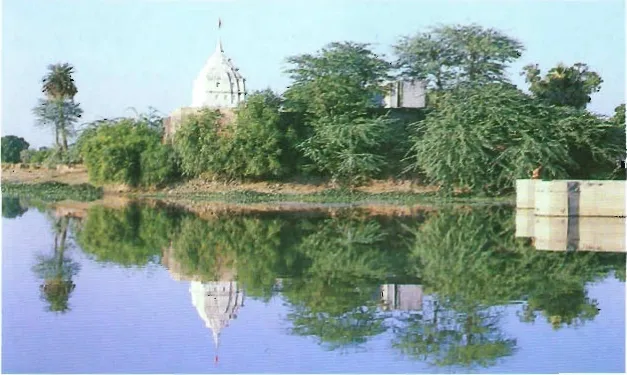
Tālavana
तालवनTālavana, the forest of tāla (palm) trees, is one of the twelve forests of Vraja and one of the seven on the western side of the Yamunā.
Bahulāvana
बहुलावनBahulāvana is one of the twelve forests of Vraja and one of the seven on the western side of the Yamunā.
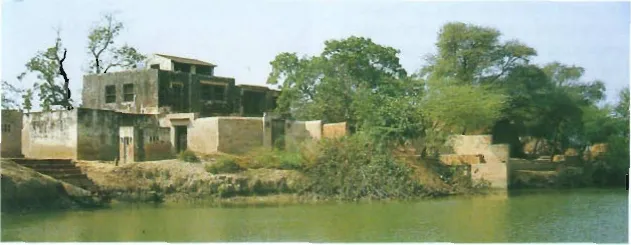
Kumudavana
कुमुदवनKumudavana, the forest of the kumuda, the white water lily, is one of the twelve forests of Vraja and one of the seven on the western side of the Yamunā.
Śakaṭīkarā
शकटीकराŚakaṭīkarā, now called Chaṭṭīkarā, is a village on the Delhi–Mathurā highway, about four miles from Mathurā and two miles from Vṛndāvana, according to the guidebook Śrī V …
Datihā
दतिहाDatihā, also called Datīya, is a village west of Mathurā.
Magerā (Datihā)
मगेरा (दतिहा)Magerā, also written Magherā, is a village that the guidebook Śrī Vraja-maṇḍala Parikramā (2007) connects with the people of Vraja after their meeting with Kṛṣṇa at Kuruk …
Show all (17)
Kuṇḍas
3 placesTemples and shrines
3 placesOther places
2 placesAlso described on this page
- Satohā village
Nearby places
Bhūteśvara Mahādeva · Śiva-tāla · Dhruva-tīrtha
Pictures
1 pictures
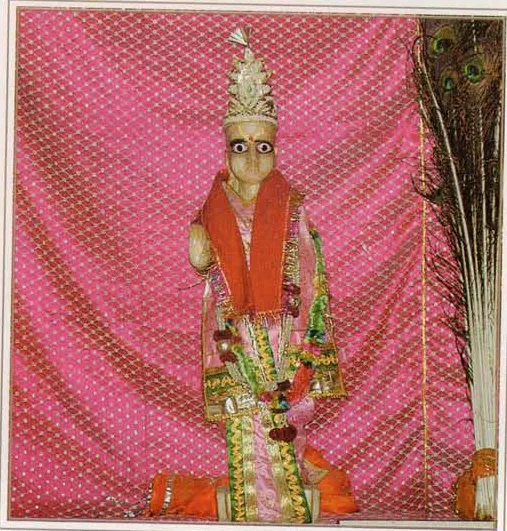
History
The historian A. W. Entwistle (1987) reports that the Jain Vividha-tīrtha-kalpa of Jinaprabha Sūri, completed in 1332, lists twelve forests at Mathurā, Madhuvana among them; he calls it the only source of that period that can be dated with certainty.[74]
F. S. Growse (1883) and Entwistle (1987) record that from Akbar's time Maholī, the village at Madhuvana, was for many years the headquarters of a local division, and Entwistle reports archaeological evidence of Buddhist and brahminical establishments there in the Kuṣāṇa period.[75 +2] The 1911 Muttra gazetteer gives the area, revenue and troops of the pargana named after Maholī in Akbar's day, and Entwistle (1987), citing the Āʾīn-i-Akbarī, says that under the Mughal arrangement of 1580 a smaller garrison was kept at Maholī, besides the brick fort at Mahāvana.[78 +1]
Growse (1883) counts Maholī among the villages bought by the Bengali devotee known as the Lālā Bābū (Kṛṣṇacandra Siṁha), and Entwistle (1987) names it among the lands he bought in Braj before his death in 1820.[80 +2] In 1966 the historian Prabhudayāl Mītal described Madhuvana as about five miles south-west of Mathurā, with only a small kadamba grove left in place of the forest, beside the village of Maholī.[75 +2]
Where the sources differ
What 'Madhuvana' denotes: the forest in which Mathurā city stands (a name of Mathurā), or the separate forest at Maholī …
Accounts differ What 'Madhuvana' denotes: the forest in which Mathurā city stands (a name of Mathurā), or the separate forest at Maholī south-west of Mathurā.
- Śrīmad-Bhāgavatam 9.11.14; Viṣṇu Purāṇa 1.12.4; Harivaṁśa 44.53; Brahmāṇḍa 2.63.186Śatrughna built the city of Mathurā in Madhuvana
- Śrīmad-Bhāgavatam 1.10.26 with Śrīla Prabhupāda's translation'madhor vanam' = the land of Mathurā
- Skanda 'Mathurā-khaṇḍa' as quoted by Śrīla Rūpa Gosvāmī (v.194) and the Bhakti-ratnākara (printed p.164)first is the forest of Madhu, where the city of Mathurā is; the Bhakti-ratnākara: Mathurā-purī lies within Madhuvana, and the Madhu-killing gives the name
- Śrīla Śrīdhara Svāmī on ŚB 10.1.1 and Vaṁśīdhara's sub-commentarythe Mathurā chapters tell the pastimes done in Madhuvana ('līlā madhuvane kṛtā') in the text's reading; Vaṁśīdhara read 'madhupure' and explains Madhupura, Mathurā, as the city founded in Madhu's forest
Accounts differ Who Madhu was and who killed him: the demon killed by the Lord (Madhusūdana) in Madhuvana, and the father of Lavaṇa — one person or two?
- Skanda 'Mathurā-khaṇḍa' as quoted (MM v.194; BR p.164)the demon Madhu was killed here by Hari
- Garga-saṁhitā, Mathurā-khaṇḍa 25.20the asura Madhu, strengthened by austerities in Madhuvana, fought Madhusūdana in the month of Mādhava
- Vraja-bhakti-vilāsa, 'Skānda' (printed p.54)at the end of a Kṛta-yuga Viṣṇu killed Madhu, the asura king of Madhupurī, after ten years' fighting
- Bhāgavatam 9.11.14; Viṣṇu Purāṇa 1.12.3-4; Harivaṁśa 44.22-23Madhu was the father of Lavaṇa, whom Śatrughna killed; no one is said to have killed Madhu
Where the verse on the forest of Madhu comes from.
Accounts differ The source of the verse 'madhor vanaṁ prathamato yatra vai mathurā-purī …'.
- Śrī Vraja-maṇḍala Parikramā (2007)Ādi-varāha Purāṇa
- Śrīla Rūpa Gosvāmī, Mathurā-māhātmya v.194Skanda Purāṇa, Mathurā-khaṇḍa
- Bhakti-ratnākara, Fifth Wave (printed p.164)Skanda Purāṇa, Mathurā-khaṇḍa
Accounts differ The honey-drinking (madhu-pāna) pastime connected with Madhuvana.
- Śrīmad-Bhāgavatam 10.65.18-20Balarāma alone, with the gopīs, drank the vāruṇī (madhu-dhārā, a stream of madhu) in a garden by the Yamunā during His visit from Dvārakā; no place named
- Śrī Vraja-maṇḍala Parikramā (2007)Dāūjī and the sakhās danced in Madhuvana relishing its sweet nectar ('well known')
- Vṛndāvana-kathā (1920), printed p.120Baladeva drank madhu (madhu-pāna) at Madhuvana; no companions named
More on this place
Madhuvana, Dhruva and the founding of Mathurā · The twelve forests of Vraja: the lists side by side · Where the autumn rāsa took place · Where Kṛṣṇa killed Bakāsura
References
96 references
- Padma Purāṇa, Vṛndāvana-māhātmya (1) vv.16-17 (= Padma Pātāla-khaṇḍa 69.16-17)
- Varāha Purāṇa, adhyāya 161, verses 6-10, Sanskrit Wikisource
- Śrīla Rūpa Gosvāmī, Mathurā-māhātmya v.330 with its introductory line, and the heading 'atha dvādaśa-vanānāṁ māhātmyam'
- Śrīla Narahari Cakravartī, Bhakti-ratnākara, Fifth Wave, printed p.185 (1912 ed.), the list of the twelve forests with the Padma and Skanda verses, 2nd ed., 1912
- Ādi-purāṇa, chapter (9) 'navamo'dhyāyaḥ', vv.17-20 (v.21 summarised in notes), Śrī Veṅkaṭeśvara Press, Mumbai, 1929
- Śrīla Nārāyaṇa Bhaṭṭa, Vraja-bhakti-vilāsa, printed p.12: 'the two divisions of the twelve forests, north and south of the Yamunā', 1st ed., publ. Bābā Kṛṣṇadāsa, Kusuma-sarovara, Saṁvat 2008
- Varāha Purāṇa, adhyāya 153, vv.33-34, Sanskrit Wikisource
- Śrīla Rūpa Gosvāmī, Mathurā-māhātmya v.331 (end: 'tatra madhu-vanasya')
- Śrīla Narahari Cakravartī, Bhakti-ratnākara, Fifth Wave, printed p.185 (1912 ed.): 'the first' forest, Madhuvana, 2nd ed., 1912
- Śrīmad-Bhāgavatam 4.8.42, GRETIL
- Śrīmad-Bhāgavatam 4.8.62, GRETIL
- Śrīmad-Bhāgavatam 4.9.1, GRETIL
- Viṣṇu Purāṇa, 1.12.2-5, GRETIL
- Skanda Purāṇa, Kāśī-khaṇḍa, adhyāya 20, vv.1-2, Sanskrit Wikisource
- Garga-saṁhitā, Mathurā-khaṇḍa (5) 25.18-20 ('śrī-mathurā-māhātmya-varṇana'), Sanskrit Wikisource
- Śrīmad-Bhāgavatam 9.11.13-14, GRETIL
- Harivaṁśa, 44.22-23, GRETIL
- Harivaṁśa, 44.51-53, GRETIL
- Brahmāṇḍa Purāṇa, 2.63.186, GRETIL
- Śrīla Prabhupāda, Śrīmad-Bhāgavatam, 9.11.13-14, translation · vedabase.io
Show all 96 references
- Śrīla Prabhupāda, Śrīmad-Bhāgavatam, 4.8.42, purport · vedabase.io
- Śrī Vraja-maṇḍala Parikramā (2007), PDF p. 61
- Śrī Vraja-maṇḍala Parikramā (2007), PDF p. 63
- the undated parikramā notes Madhuvana, ¶8-¶9
- Vṛndāvana-Dhāma Ki Jaya! (c. 1986), by Dhruva Mahārāja dāsa, PDF p. 27
- Śrīla Kṛṣṇadāsa Kavirāja Gosvāmī, Śrī Caitanya-caritāmṛta, CC Madhya-līlā 17.193, online edition · vedabase.io
- Śrīla Prabhupāda, Śrī Caitanya-caritāmṛta, Madhya-līlā 17.193, purport · vedabase.io
- the undated parikramā notes Kumudavana, ¶3
- Śrīla Rūpa Gosvāmī, Mathurā-māhātmya v.194 ('atha mathurā-vanāntargata-madhupurī-māhātmyam')
- Śrīla Rūpa Gosvāmī, Laghu-bhāgavatāmṛta, 1.3.53-54: 'śrī-dhruva-priyaḥ', GRETIL
- Śrīla Prabhupāda, Śrī Caitanya-caritāmṛta, Madhya-līlā 5.12, purport · vedabase.io
- Śrīla Prabhupāda, The Nectar of Instruction, Text 9, purport · vedabase.io
- Śrīla Prabhupāda, Śrī Caitanya-caritāmṛta, Madhya-līlā 1.239, purport · vedabase.io
- Śrīla Prabhupāda, Śrīmad-Bhāgavatam 4.8.42, purport (the list, as reprinted with numbers)
- Śrīmad-Bhāgavatam 1.10.26, GRETIL
- Śrīla Prabhupāda, Śrīmad-Bhāgavatam, 1.10.26, translation · vedabase.io
- Śrīla Narahari Cakravartī, Bhakti-ratnākara, Fifth Wave, printed p.164 (1912 ed.): Mathurā-purī and the name Madhuvana, 2nd ed., 1912
- Garga-saṁhitā, Mathurā-khaṇḍa (5) 25.34, Sanskrit Wikisource
- Kṛṣṇa-caitanya-caritāmṛta of Śrī Murāri Gupta, prakrama 4, sarga 3, vv.5-8
- Kṛṣṇa-caitanya-caritāmṛta of Śrī Murāri Gupta, prakrama 1, sarga 16, vv.8-9
- Śrīla Prabhupāda, Śrīmad-Bhāgavatam, 4.8.71, translation · vedabase.io
- Śrīla Prabhupāda, Śrīmad-Bhāgavatam, 4.9.1, purport · vedabase.io
- the undated parikramā notes Madhuvana, ¶18
- Śrīmad-Bhāgavatam 9.4.30, GRETIL
- Śrīla Prabhupāda, Śrīmad-Bhāgavatam, 9.4.30, translation · vedabase.io
- the undated parikramā notes Madhuvana, ¶29
- Śrīla Nārāyaṇa Bhaṭṭa, Vraja-bhakti-vilāsa, chapter 3 (tṛtīyo 'dhyāyaḥ), beginning; printed p. 54, 1st ed., publ. Bābā Kṛṣṇadāsa, Kusuma-sarovara, Saṁvat 2008
- the undated parikramā notes Madhuvana, ¶4
- Garga-saṁhitā, Vṛndāvana-khaṇḍa (2) 20.38-39 (chapter 'rāsa-krīḍā'), Sanskrit Wikisource
- Garga-saṁhitā, Vṛndāvana-khaṇḍa (2) 10.18, Sanskrit Wikisource
- Vṛndāvana-Dhāma Ki Jaya! (c. 1986), by Dhruva Mahārāja dāsa, PDF p. 28
- the undated parikramā notes Madhuvana, ¶5
- Śrīmad-Bhāgavatam 10.29.1, GRETIL
- Śrīmad-Bhāgavatam 10.29.45, GRETIL
- Śrīla Prabhupāda, Kṛṣṇa, the Supreme Personality of Godhead (Kṛṣṇa book), Chapter 29, 'The Rāsa Dance: Introduction' · vedabase.io
- Śrīmad-Bhāgavatam 10.15.12, GRETIL
- Śrīla Prabhupāda, Kṛṣṇa, the Supreme Personality of Godhead (Kṛṣṇa book), Chapter 15, 'The Killing of Dhenukāsura' · vedabase.io
- Śrīmad-Bhāgavatam 10.15.43, Bhagavata Vidya Pith edition, ed. Bhagavata Rishi and Krishna Shankar Shastri, 1996
- Brahma-vaivarta Purāṇa, Śrī-kṛṣṇa-janma-khaṇḍa (4) 16.1-5, Sanskrit Wikisource
- Brahma-vaivarta Purāṇa, Śrī-kṛṣṇa-janma-khaṇḍa (4) 18.5-6, Sanskrit Wikisource
- Brahma-vaivarta Purāṇa, Śrīkṛṣṇa-janma-khaṇḍa (4) 18.20-22, Sanskrit Wikisource
- Śrīmad-Bhāgavatam 10.11.47, GRETIL
- Śrīmad-Bhāgavatam 10.11.48, GRETIL
- Śrīmad-Bhāgavatam 10.11.51, GRETIL
- Vṛndāvana-kathā, chapter 8 (aṣṭama pariccheda), the twelve forests: Madhuvana, printed p.120
- Jaya Jaya Madana Gopāla Baṁśī Dhārī (Narottama dāsa Ṭhākura (as the song book credits it)) · song book
- Śrīmad-Bhāgavatam 10.65.20, GRETIL
- Śrīla Nārāyaṇa Bhaṭṭa, Vraja-bhakti-vilāsa, printed p.13: the two resting places; the lord of Madhuvana and his mantra ('Mādhavīya'), 1st ed., publ. Bābā Kṛṣṇadāsa, Kusuma-sarovara, Saṁvat 2008
- Śrīla Nārāyaṇa Bhaṭṭa, Vraja-bhakti-vilāsa, chapter 10, v.17: 'madhuvana-pradakṣiṇā', 1st ed., publ. Bābā Kṛṣṇadāsa, Kusuma-sarovara, Saṁvat 2008
- Śrīla Nārāyaṇa Bhaṭṭa, Vraja-bhakti-vilāsa, printed p.178, within the verse the print numbers 6 (finding aid Vraja-bhakti-vilāsa chapter (7) v.7): the pilgrimage of the dark Ekādaśī and Dvādaśī of Bhādrapada, 1st ed., publ. Bābā Kṛṣṇadāsa, Kusuma-sarovara, Saṁvat 2008
- Śrīla Nārāyaṇa Bhaṭṭa, Vraja-bhakti-vilāsa, first chapter, v.93 (the print closes the passage '॥ ९३ ॥'): Vraja-maṇḍala and its forests as the limbs of the Lord, quoted under the label 'viṣṇu-rahasye'; printed p. 14, 1st ed., publ. Bābā Kṛṣṇadāsa, Kusuma-sarovara, Saṁvat 2008
- Śrīla Nārāyaṇa Bhaṭṭa, Vraja-bhakti-vilāsa, printed p.2, list of the twelve forests ('pādme', vv.13-17), 1st ed., publ. Bābā Kṛṣṇadāsa, Kusuma-sarovara, Saṁvat 2008
- the undated parikramā notes Madhuvana, ¶10-¶27
- A. W. Entwistle, ch. 6 §3 'Jinaprabha Suri (VTK)', printed p.231, Egbert Forsten, Groningen, 1987
- A. W. Entwistle, ch. 8 §2 'Madhuban (Maholi)', printed p.332, Egbert Forsten, Groningen, 1987
- Mathurá (1883), F. S. Growse, B.C.S., M.A. Oxon., C.I.E. (as the title page gives him, p. 82
- Prabhudayāl Mītal, 'Braj-yātrā', 1 Madhuvana (the first halt, Bhādrapada śukla 13), printed pp.101-102
- Muttra (1911), D. L. Drake-Brockman, I.C.S. (edited and compiled), p. 192
- A. W. Entwistle, ch. 5 'Braj since the thirteenth century', section 'Akbar and his Hindu associates', printed p.159, Egbert Forsten, Groningen, 1987
- Mathurá (1883), F. S. Growse, B.C.S., M.A. Oxon., C.I.E. (as the title page gives him, p. 259
- Muttra (1911), D. L. Drake-Brockman, I.C.S. (edited and compiled), p. 123
- A. W. Entwistle, ch. 5 'Braj since the thirteenth century', section 'Patronage in the nineteenth century', printed p.216, Egbert Forsten, Groningen, 1987
- Śrīla Narahari Cakravartī, Bhakti-ratnākara, Fifth Wave, printed p.189 (1912 ed.): Bahulāvana and Śrī Caitanya's visit, 2nd ed., 1912
- Śrīla Narahari Cakravartī, Bhakti-ratnākara, Eleventh Wave, printed p.670 (1912 ed.): Jāhnavā Īśvarī's tour of the twelve forests, 2nd ed., 1912
- Vṛndāvana-Dhāma Ki Jaya! (c. 1986), by Dhruva Mahārāja dāsa, PDF p. 30
- the undated parikramā notes Bahulāvana, ¶34
- Śrīla Prabhupāda, Lecture on Śrī Caitanya-caritāmṛta, Madhya-līlā 20.137-146, Bombay, 24 March 1971 · vedabase.io
- Mathurá (1883), F. S. Growse, B.C.S., M.A. Oxon., C.I.E. (as the title page gives him, p. 181
- Prabhudayāl Mītal, 'Braj-yātrā', Tālavana (visited from the first halt), printed p.102
- Prabhudayāl Mītal, 'Braj-yātrā', Kumudavana (visited from the first halt), printed p.102
- Śrī Vraja-maṇḍala Parikramā (2007), PDF p. 72
- Śrī Vraja-maṇḍala Parikramā (2007), PDF p. 71
- Vṛndāvana-Dhāma Ki Jaya! (c. 1986), by Dhruva Mahārāja dāsa, PDF p. 29
- the undated parikramā notes Kumudavana, ¶42
- Śrīla Narahari Cakravartī, Bhakti-ratnākara, Fifth Wave (pañcama taraṅga), 1912 ed. pp. 188-189, 2nd ed., 1912
- Pulinbihārī Datta, ch. 8 (aṣṭama paricheda), printed p. 121