Kiśorī-kuṇḍa (Āñjanauka)
किशोरी-कुण्ड (आँजनौक) Hindi name proposed
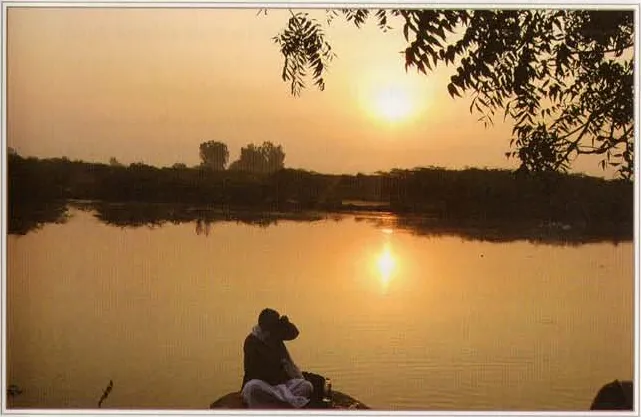
- What it is
- Kiśorī-kuṇḍa lies to the south of the village of Āñjanauka, with the stone called Añjanī-śīlā on its western bank, according to the guidebook Śrī Vraja-maṇḍala Parikramā (2007).
- Visiting
- Śrī Vraja-maṇḍala Parikramā (2007) places Āñjanauka five miles south-east of Nandagrāma, with a rāsa-maṇḍala, the kuṇḍa in the south of the village and the Añjanī-śīlā on its western bank.
- Places here
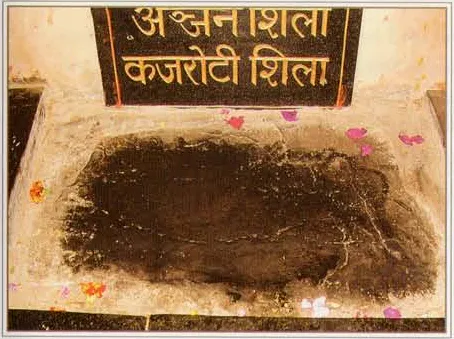
- Añjanī-śīlā
In short
Kiśorī-kuṇḍa lies to the south of the village of Āñjanauka, with the stone called Añjanī-śīlā on its western bank, according to the guidebook Śrī Vraja-maṇḍala Parikramā (2007).[1] Śrīla Nārāyaṇa Bhaṭṭa Gosvāmī's Vraja-bhakti-vilāsa names a Kiśorī-kuṇḍa in Añjanapura-vana, gives a prayer for bathing in it and then the darśana of Kiśorī, Śrī Rādhā, with Kṛṣṇa.[2 +2] The Bhakti-ratnākara tells how the village got its name from a pastime of Rādhā and Kṛṣṇa with añjana, the black ointment for the eyes, but names no kuṇḍa.[1 +4]
Key facts
| Kind | kuṇḍa |
|---|---|
| Region · area | Jāvaṭa · Āñjanauka |
| Ācāryas | Śrīla Nārāyaṇa Bhaṭṭa Gosvāmī |
Traditional accounts
The names of the place
The village appears under several names: Āñjanauka in the 2007 guidebook, Ām̐janaka in the Bhakti-ratnākara and Añjanapura in the Vraja-bhakti-vilāsa; the guidebook and the Vraja-bhakti-vilāsa both give it a Kiśorī-kuṇḍa. No source says in so many words that these names mean one village; the identification rests on the names and the shared kuṇḍa.[1 +4]
The añjana pastime
According to the Bhakti-ratnākara (Fifth Wave), Śrīla Rāghava Paṇḍita Gosvāmī showed Śrīla Śrīnivāsa Ācārya the village of Ām̐janaka as a place of Rādhā and Kṛṣṇa's pastimes. Śrī Rādhikā was dressing when She heard Kṛṣṇa's flute, and She came here at once with Her sakhīs, before She had put on añjana. Kṛṣṇa seated Her on a seat of flowers made by Vṛndā and put the añjana on Her eyes Himself; for this reason, the book says, the place is called Ām̐janaka (summarised here, not translated).[1 +4]
Śrī Vraja-maṇḍala Parikramā (2007) tells the same pastime at Āñjanauka, quoting the Bhakti-ratnākara, and adds that Kṛṣṇa then held up a mirror for Rādhā. It says that the Añjanī-śīlā on the western bank of the kuṇḍa is the stone on which Kṛṣṇa seated Her. The Bhakti-ratnākara has neither the mirror nor the stone, and the source of these details was not found.[1 +1]
The visit in the month of Bhādra
The Vraja-bhakti-vilāsa (11.17-19), quoting a verse that it ascribes to the Kūrma Purāṇa, sets the visit to Añjanapura-vana on the fourth day of the bright half of Bhādra, with a prayer to the forest, a bath in Kiśorī-kuṇḍa and the darśana of Kiśorī with Kṛṣṇa. Its bath prayer, said thirteen times while bathing and sipping the water, calls the kuṇḍa charming through Kiśorī's bathing and the maker of Kṛṣṇa's play (summarised here, not translated). The book's list of the forests (2.56) also gives Añjanapura with Kiśorī-kuṇḍa and the darśana of Kṛṣṇa and Kiśorī.[2 +2]
Visiting today
Śrī Vraja-maṇḍala Parikramā (2007) places Āñjanauka five miles south-east of Nandagrāma, with a rāsa-maṇḍala, the kuṇḍa in the south of the village and the Añjanī-śīlā on its western bank. Its photographs show the kuṇḍa and a low stone platform with a signboard that names the stone Kajaroṭī Śilā.[1]
Location
| Where it is | south of Āñjanauka village[7] |
|---|
Places at Kiśorī-kuṇḍa (Āñjanauka)
1 places
Pictures
1 pictures
References
- Śrī Vraja-maṇḍala Parikramā (2007), PDF p. 225
- Śrīla Nārāyaṇa Bhaṭṭa, Vraja-bhakti-vilāsa, ch. 11 (vana-yātrā), v.17 as numbered in the print, printed p. 233, 1st ed., publ. Bābā Kṛṣṇadāsa, Kusuma-sarovara, Saṁvat 2008
- Śrīla Nārāyaṇa Bhaṭṭa, Vraja-bhakti-vilāsa, ch. 11 (vana-yātrā), vv.18-19 as numbered in the print, printed p. 233, 1st ed., publ. Bābā Kṛṣṇadāsa, Kusuma-sarovara, Saṁvat 2008
- Śrīla Nārāyaṇa Bhaṭṭa, Vraja-bhakti-vilāsa, ch. 2 v.56 (the 'signs', liṅga, of the forests), printed p. 52, 1st ed., publ. Bābā Kṛṣṇadāsa, Kusuma-sarovara, Saṁvat 2008
- Śrīla Narahari Cakravartī, Bhakti-ratnākara, Fifth Wave (pañcama taraṅga), printed p. 242, vv.1169-1176 in the Grantha Mandira numbering, 2nd ed., 1912
- Śrī Vraja-maṇḍala Parikramā (2007), PDF p. 249
- Śrī Vraja-maṇḍala Parikramā (2007), p. 424-425