Mathurā-devī Mandira
मथुरा-देवी मन्दिर Hindi name proposed
On this page
In short
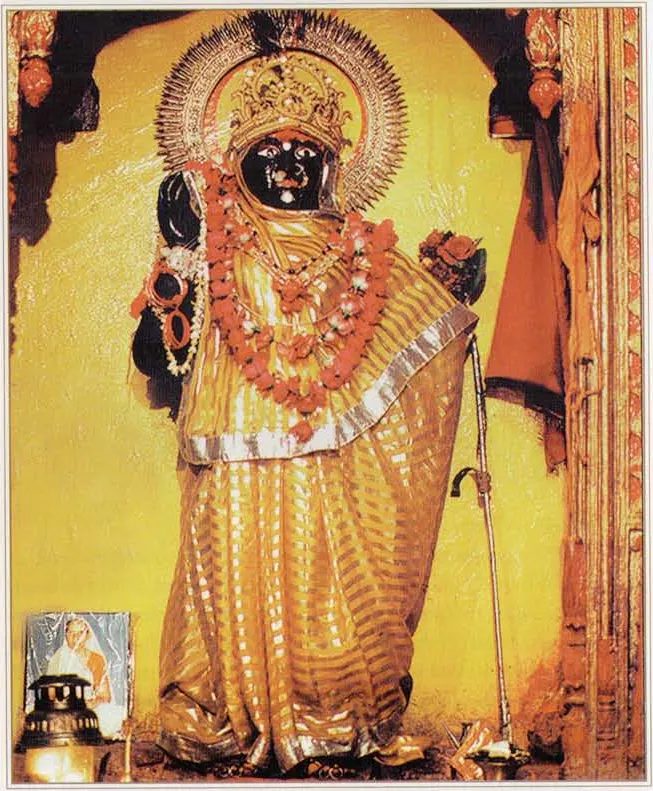
The Mathurā-devī Mandira is a small temple of Mathurā-devī, whom the guidebook Śrī Vraja-maṇḍala Parikramā (2007) calls the presiding deity of Mathurā. It stands in a lane just east of the Dīrgha-Viṣṇu Mandira.[1 +1] The Garga-saṁhitā speaks of the goddess Mathurā in the middle of the city, who gives food to all who are hungry, and Śrīla Rūpa Gosvāmī addresses the city itself as this goddess Mathurā, whom the other holy cities serve.[3 +3] No source mentions the temple itself or gives its date; the sources describe the goddess differently (see below).
Key facts
| Kind | temple |
|---|---|
| Region · area | Mathurā |
| Ācāryas | Śrīla Rūpa Gosvāmī, Śrīla Baladeva Vidyābhūṣaṇa |
Why it is glorified
In the Garga-saṁhitā Nārada names the divine guardians of Mathurā, and among them the goddess Mathurā: in the middle of the city, auspicious and full of mercy, she gives food to all who are hungry. The verse names no temple.[3]
मध्ये वै मथुरा देवी शुभदा करुणामयी । बुभुक्षितेभ्यः सर्वेभ्यो ददात्यन्नं विदेहराट् ॥ 12 ॥
madhye vai mathurā devī śubhadā karuṇāmayī
bubhukṣitebhyaḥ sarvebhyo dadātyannaṁ videharāṭ
In his Śrī Mathurā-stava Śrīla Rūpa Gosvāmī tells the other holy cities, Avantī, Māyā, Kāñcī, Kāśī, Ayodhyā and Dvārakā, to serve this goddess Mathurā like maidservants, holding her spittoon, fan, parasol and sandals. In his commentary Śrīla Baladeva Vidyābhūṣaṇa explains her as the gentle, merciful goddess consecrated as the wife of Hari (summarised here, not translated). The verse speaks of the city as a person, not of the temple.[4 +2]
Traditional accounts
According to the local tradition recorded in the guidebook Śrī Vraja-maṇḍala Parikramā (2007), Mathurā-devī, as a sakhī (a girl companion), loves Śrī Yamunā, and together they serve Śrī Kṛṣṇa. No older source for this has been found, so it is not certain.[1]
Visiting today
The same guidebook places the temple close to Dīrgha-Viṣṇu, towards the east, inside a lane; the temple of Padmanābha lies further east in the same lane, in Caubeyā-pāḍā. This has not been checked on the spot.[1 +2]
Where the sources differ
Who Mathurā-devī is in relation to Kṛṣṇa, according to the Garga-saṁhitā and to Śrīla Rūpa Gosvāmī with Śrīla Baladeva Vidyābhūṣaṇa's commentary.
Accounts differ Who Mathurā-devī is in relation to Kṛṣṇa.
- Śrīla Rūpa Gosvāmī, Mathurā-stava 4, with Śrīla Baladeva Vidyābhūṣaṇa's ṭīkā; Śrī Vraja-maṇḍala Parikramā (2007)The personified city, consecrated as Hari's wife (Śrī Vraja-maṇḍala Parikramā (2007): 'the chief queen of Śrī Kṛṣṇa'), served by the other holy cities.
- Garga-saṁhitā, Mathurā-khaṇḍa 25.12The auspicious, merciful goddess Mathurā in the middle of the city, who feeds the hungry (no relation to Kṛṣṇa stated).
Location
| Where it is | 'close to Dīrgha-Viṣṇu, towards the east and inside a lane'[8] |
|---|
Nearby places
References
- Śrī Vraja-maṇḍala Parikramā (2007), PDF p. 55
- Śrī Vraja-maṇḍala Parikramā (2007), PDF p. 31
- Garga-saṁhitā, Mathurā-khaṇḍa (5) 25.12 ('śrī-mathurā-māhātmya-varṇana'), Sanskrit Wikisource
- Śrīla Rūpa Gosvāmī, Stava-mālā, Śrī Mathurā-stava v.4, after the edition of Bhakti Saranga Goswami and Purushottam Das, Vrindavan, 1959
- Śrī Vraja-maṇḍala Parikramā (2007), PDF p. 32
- Śrī Vraja-maṇḍala Parikramā (2007), PDF p. 58
- Śrī Vraja-maṇḍala Parikramā (2007), PDF p. 54
- Śrī Vraja-maṇḍala Parikramā (2007), p. 84-85