Dīrgha-Viṣṇu Mandira
दीर्घ-विष्णु मन्दिर Hindi name proposed
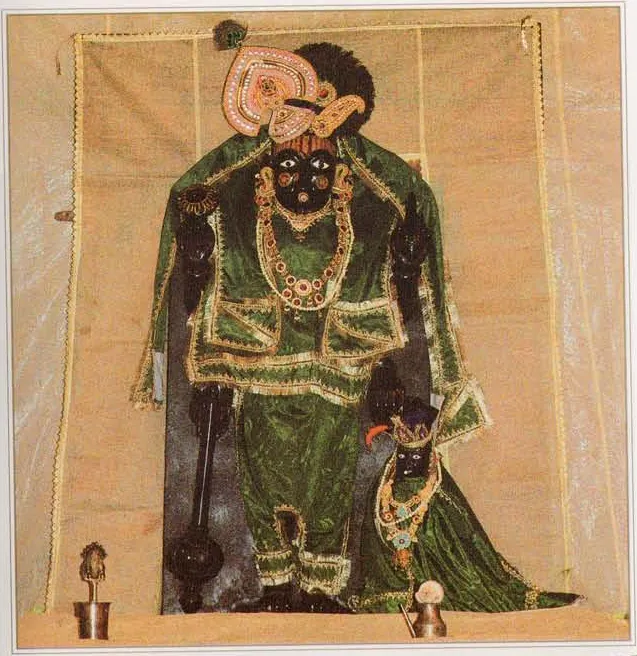
- What it is
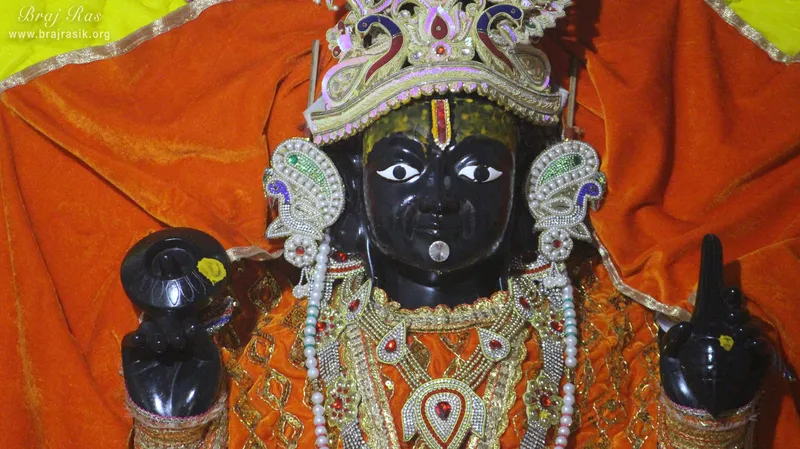
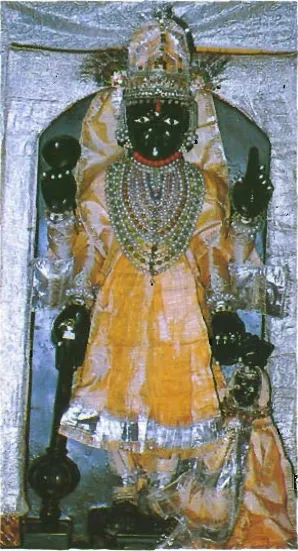
- The Dīrgha-Viṣṇu Mandira is a temple of Viṣṇu as Dīrgha-viṣṇu near the Bharatpur Gate of Mathurā.
- Visiting
- The guidebook Śrī Vraja-maṇḍala Parikramā (2007) places the temple close to the Bharatpur Gate, with the temple of Mathurā-devī near it to the east, inside a lane.
In short
The Dīrgha-Viṣṇu Mandira is a temple of Viṣṇu as Dīrgha-viṣṇu near the Bharatpur Gate of Mathurā.[1 +2] The Garga-saṁhitā says that Vajranābha installed Dīrgha-viṣṇu in Mathurā. The Varāha Purāṇa begins the walk around Mathurā with His darśana and says that the Lord's splendour rests in Him at midday.[4 +4] The Caitanya-caritāmṛta says that Śrī Caitanya Mahāprabhu saw Dīrgha-viṣṇu among the holy places of Mathurā.[9 +1] The historian A. W. Entwistle (1987) dates the present temple to 1807.[11 +1]
Key facts
| Kind | temple |
|---|---|
| Region · area | Mathurā |
| Ācāryas | Śrī Caitanya Mahāprabhu, Śrīla Rūpa Gosvāmī, Śrīla Narahari Cakravartī Ṭhākura, Śrīla Nārāyaṇa Bhaṭṭa Gosvāmī, Śrīla Rāghava Paṇḍita Gosvāmī of Govardhana |
Why it is glorified
The Varāha Purāṇa opens its account of the parikramā, the walk around Mathurā, with this promise: one who reaches Mathurā on the …
The Deity of the parikramā
The Varāha Purāṇa opens its account of the parikramā, the walk around Mathurā, with this promise: one who reaches Mathurā on the eighth day of the dark fortnight of Kārttika, bathes at Viśrānti-tīrtha, worships the forefathers and the gods, and sees Viśrānti, Dīrgha-viṣṇu and Keśava, gets the full fruit of the parikramā (summarised here, not translated). Before setting out, the pilgrim takes leave of Padmanābha and of Dīrgha-viṣṇu, "remover of fear".[5 +2]
अष्टम्यां मथुरां प्राप्य कार्त्तिकस्यासिते नरः ।। स्नात्वा विश्रांतितीर्थे तु पितृदेवार्च्चने रतः ॥ 1 ॥
विश्रांतिदर्शनं कृत्वा दीर्घविष्णुं च केशवम् ।। प्रदक्षिणायाः सम्यग्वै फलमाप्नोति मानवः
aṣṭamyāṁ mathurāṁ prāpya kārttikasyāsite naraḥ
snātvā viśrāṁtitīrthe tu pitṛdevārccane rataḥ
viśrāṁtidarśanaṁ kṛtvā dīrghaviṣṇuṁ ca keśavam
pradakṣiṇāyāḥ samyagvai phalamāpnoti mānavaḥ
In another chapter the Lord says that seeing Dīrgha-viṣṇu gives the same fruit as seeing the Deity of Kapila-varāha, and that His splendour is at Viśrānti at sunrise and rests in Dīrgha-viṣṇu at midday.[8]
In the Gosvāmīs' books
Śrīla Rūpa Gosvāmī opens the section of his Mathurā-māhātmya on the Lord's Deities with verses of the Ādi-varāha on Dīrgha-viṣṇu. Whoever sees Dīrgha-viṣṇu, Padmanābha and Svāyambhuva (or, as the words can also be read, the self-born Padmanābha) in Mathurā even once gets every desire, and at midday the Lord's splendour rests in Dīrgha-viṣṇu (summarised here, not translated).[14 +1]
Near the end of the book he names Dīrgha-viṣṇu among the chief Deities of Mathurā, with Keśava, Svayambhū, Padmanābha, Gataśrama, Govinda, Hari and Varāha.[15] Śrīla Nārāyaṇa Bhaṭṭa Gosvāmī's Vraja-bhakti-vilāsa lists the Dīrgha-viṣṇu image among the first five Deities of Mathurā's southern group, at the Vasumatī pond, and gives a prayer to Him that explains the name: Hari took a long (dīrgha) form to protect all of Vraja (summarised here, not translated).[16 +1]
ततो दीर्घविष्णु प्रार्थन मन्त्रः ।— अखण्डव्रजरक्षार्थे दीर्घमूर्त्तिधरो हरिः । सर्वदा वरदो नाथ नमस्ते दीर्घविष्णवे ॥
tato dīrghaviṣṇu prārthana mantraḥ |— akhaṇḍavrajarakṣārthe dīrghamūrttidharo hariḥ
sarvadā varado nātha namaste dīrghaviṣṇave ||
Who installed Him
The Garga-saṁhitā (Aśvamedha-khaṇḍa) says that on Garga Muni's word Vajra, also called Vajranābha, performed a horse sacrifice in Mathurā and then installed six images of Hari: Dīrgha-viṣṇu and Keśava in Mathurā, Govinda in Vṛndāvana, Harideva at Govardhana, Gokuleśa in Gokula, and Bala (summarised here, not translated).[4]
गर्गवाक्यात्ततो वज्रो मथुरायां मुनीश्वरैः । चकार हयमेधं वै यथा नागपुरेश्वरः ॥ 25 ॥
ततः स मथुरायां च दीर्घविष्णुं च केशवम् । वृन्दावने च गोविंदं हरिदेवं गिरीश्वरे ॥ 26 ॥
गोकुले गोकुलेशं च गोकुलाद्योजने बलम् । स्थापयामास वज्रस्तु हरेश्च प्रतिमाश्च षट्
gargavākyāttato vajro mathurāyāṁ munīśvaraiḥ
cakāra hayamedhaṁ vai yathā nāgapureśvaraḥ
tataḥ sa mathurāyāṁ ca dīrghaviṣṇuṁ ca keśavam
vṛndāvane ca goviṁdaṁ haridevaṁ girīśvare
gokule gokuleśaṁ ca gokulādyojane balam
sthāpayāmāsa vajrastu hareśca pratimāśca ṣaṭ
Divine pastimes
Śrīmad-Bhāgavatam (10.41-10.43) tells how Kṛṣṇa and Balarāma, with the cowherd boys, entered Mathurā toward evening to see the city, broke Kaṁsa's bow in the arena of the bow sacrifice, and the next morning went to the wrestling arena. No mention of Dīrgha-viṣṇu, or of a huge form shown to the friends, has been found in these chapters or their commentaries.[19 +5]
athāparāhne bhagavān kṛṣṇaḥ saṅkarṣaṇānvitaḥ / mathurāṃ prāviśad gopair didṛkṣuḥ parivāritaḥ
Lord Kṛṣṇa desired to see Mathurā, so toward evening He took Lord Balarāma and the cowherd boys with Him and entered the city.
Translation: Śrīla Prabhupāda's disciples (BBT)Traditional accounts
According to the local tradition recorded in the guidebook Śrī Vraja-maṇḍala Parikramā (2007), on the way to Kaṁsa's wrestling …
According to the local tradition recorded in the guidebook Śrī Vraja-maṇḍala Parikramā (2007), on the way to Kaṁsa's wrestling arena Śrīdāmā and the other sakhās, Kṛṣṇa's friends, asked how He, so small and tender, could kill Kaṁsa, and Kṛṣṇa showed them a huge (dīrgha) form with conch, disc, club and lotus. Vṛndāvana-Dhāma Ki Jaya! (c. 1986) sets the showing of the form at the breaking of the bow. No scripture or Gosvāmī text found so far tells this pastime, so it is not certain.[1 +1]
Accounts differ When Kṛṣṇa showed the huge (dīrgha) form that the guidebooks connect with Dīrgha-viṣṇu, and whether a scripture tells it.
- Śrī Vraja-maṇḍala Parikramā (2007) (printed p. 83), 2nd ed. 2007While Kṛṣṇa, Baladeva and their cowherd friends were going to Kaṁsa's wrestling arena, Śrīdāma and the other sakhās asked how He could kill Kaṁsa; Kṛṣṇa showed them His huge (dīrgha) form with conch, disc, club and lotus.
- Vṛndāvana-Dhāma Ki Jaya! (c. 1986)After the washerman, Sudāmā and Kubjā, Kṛṣṇa and Balarāma went to Kaṁsa's sacrificial arena and broke the bow; 'at that time' Kṛṣṇa showed the immense Dīrgha Viṣṇu form, like Vāmana's, to assure His friends.
- Śrīmad-Bhāgavatam 10.41-10.43, with Śrīla Prabhupāda's Kṛṣṇa book chs. 41-43Tell the entry into Mathurā with Balarāma and the cowherd boys, the breaking of the bow and the walk to the wrestling arena; no huge form shown to the friends was found in these chapters or their commentaries.
The Gosvāmīs and ācāryas
The Caitanya-caritāmṛta (Madhya 17.191) names Dīrgha-viṣṇu among the holy places of Mathurā that Śrī Caitanya Mahāprabhu visited.
The Caitanya-caritāmṛta (Madhya 17.191) names Dīrgha-viṣṇu among the holy places of Mathurā that Śrī Caitanya Mahāprabhu visited.[9 +1]
স্বয়ম্ভু, বিশ্রাম, দীর্ঘবিষ্ণু, ভূতেশ্বর ।
মহাবিদ্যা, গোকর্ণাদি দেখিলা বিস্তর ॥ ১৯১ ॥
svayambhu, viśrāma, dīrgha-viṣṇu, bhūteśvara
mahāvidyā, gokarṇādi dekhilā vistara
Śrī Caitanya Mahāprabhu visited all the holy places on the banks of the Yamunā, including Svayambhu, Viśrāma-ghāṭa, Dīrgha Viṣṇu, Bhūteśvara, Mahāvidyā and Gokarṇa.
Translation: Śrīla A.C. Bhaktivedanta Swami PrabhupādaAccording to the Bhakti-ratnākara of Śrīla Narahari Cakravartī Ṭhākura, Śrīla Rāghava Paṇḍita Gosvāmī of Govardhana, taking Śrīla Śrīnivāsa Ācārya and Śrīla Narottama dāsa Ṭhākura round Mathurā, told them to see Dīrgha-viṣṇu, Padmanābha and Svayambhu, the wonderful Deities of the town, whose sight fulfils every desire (summarised here, not translated).[14 +2]
দেখ দেখ কি আশ্চর্য্য মথুরানগরে। শ্রীভগবানের মূর্ত্তি সদা শোভা করে ॥ দীর্ঘবিষ্ণু পদ্মনাভ স্বায়ম্ভুব নাম। যে দেখে সকৃৎ তার পূরে সর্ব্ব কাম ॥ তথাহি আদিবারাহে ॥ দীর্ঘবিষ্ণুং সমালোক্য পদ্মনাভং স্বয়ম্ভুবং । মথুরায়াং সকৃদ্দেবি সর্ব্বাভীষ্টমবাপ্নুয়াৎ ॥
dekha dekha ki āścaryya mathurānagare| śrībhagabānera mūrtti sadā śobhā kare
dīrghabiṣṇu padmanābha sbāẏambhuba nāma| ye dekhe sakṛt tāra pūre sarbba kāma
tathāhi ādibārāhe
dīrghabiṣṇuṁ samālokya padmanābhaṁ sbaẏambhubaṁ
mathurāẏāṁ sakṛddebi sarbbābhīṣṭamabāpnuẏāt ||
Visiting today
The guidebook Śrī Vraja-maṇḍala Parikramā (2007) places the temple close to the Bharatpur Gate, with the temple of Mathurā-devī near it to the east, inside a lane.[1 +2]
Nearby places
Mathurā-devī Mandira
Pictures
2 pictures
History
Two British district books, F. S. Growse's Mathurá (1883) and the district gazetteer of 1911, say that the large Dīrgha-Viṣṇu temple in the Manoharpur quarter, by the street to the Bharatpur gate, was founded by Rājā Paṭnīmal of Banaras, who built the Śiva-tāla in 1807; they give no date for the temple.[26 +1] The historian A. W. Entwistle (1987) dates the temple to 1807, the same year.[11 +1] No source says whether the Deity in today's temple is the Dīrgha-viṣṇu that the Garga-saṁhitā ascribes to Vajra.[4 +2]
Accounts differ Who established Dīrgha-viṣṇu in Mathurā.
- Garga-saṁhitā, Aśvamedha-khaṇḍa 62.26-27Vajra (Vajranābha) installed the image of Dīrgha-viṣṇu in Mathurā, with five other images of Hari.
- Growse (1883), printed pp. 137, 179; 1911 gazetteer, printed p. 299The present large temple of Dīrgha Viṣṇu was founded by Raja Patni Mal of Banaras (no date is given for the temple; he built the Śiva Tāl in 1807).
- A. W. Entwistle (1987), a historianEntwistle says that the temple which now bears the name, near the Bharatpur Darwāzā in Manoharpur, is a new one, built by Rājā Paṭnīmal in 1807.
References
31 references
- Śrī Vraja-maṇḍala Parikramā (2007), PDF p. 54
- Śrī Vraja-maṇḍala Parikramā (2007), PDF p. 31
- Śrī Vraja-maṇḍala Parikramā (2007), PDF p. 55
- Garga-saṁhitā, Aśvamedha-khaṇḍa (10) 62.25-27 ('sumeru-saṁpūrti'), Sanskrit Wikisource
- Varāha Purāṇa, adhyāya 160, vv. 1-2, Sanskrit Wikisource
- Varāha Purāṇa, adhyāya 160, 'mathurā-parikrama-prādurbhāva', vv. 14-17, Sanskrit Wikisource
- Varāha Purāṇa, adhyāya 169, v. 41, Sanskrit Wikisource
- Varāha Purāṇa, adhyāya 163, 'kapila-varāha-māhātmya', vv. 67-68, Sanskrit Wikisource
- Śrīla Kṛṣṇadāsa Kavirāja Gosvāmī, Śrī Caitanya-caritāmṛta, Madhya-līlā 17.191, online edition · vedabase.io
- Śrīla Prabhupāda, Śrī Caitanya-caritāmṛta, Madhya-līlā 17.191, translation · vedabase.io
- A. W. Entwistle, ch. 8 ('The pilgrimage itinerary'), §1.1 'Vishranti-/Vishrantatirtha/Vishram Ghat', printed p. 311, Egbert Forsten, Groningen, 1987
- A. W. Entwistle, ch. 5, the paragraph on Rājā Paṭnīmal (nineteenth century), printed p. 217, Egbert Forsten, Groningen, 1987
- Varāha Purāṇa, adhyāya 160, vv. 1-2, Sanskrit Wikisource
- Śrīla Rūpa Gosvāmī, Mathurā-māhātmya, vv. 217-219, quoting the Ādi-varāha
- Śrīla Rūpa Gosvāmī, Mathurā-māhātmya v.444
- Śrīla Nārāyaṇa Bhaṭṭa, Vraja-bhakti-vilāsa, list of Mathurā's tīrtha-deities, southern group, items 1-5, 1st ed., publ. Bābā Kṛṣṇadāsa, Kusuma-sarovara, Saṁvat 2008
- Śrīla Nārāyaṇa Bhaṭṭa, Vraja-bhakti-vilāsa, Mathurā circuit, verse numbered 6, 1st ed., publ. Bābā Kṛṣṇadāsa, Kusuma-sarovara, Saṁvat 2008
- Śrīla Nārāyaṇa Bhaṭṭa, Vraja-bhakti-vilāsa, Mathurā circuit, verse numbered 6, 1st ed., publ. Bābā Kṛṣṇadāsa, Kusuma-sarovara, Saṁvat 2008
- Śrīmad-Bhāgavatam 10.41.19, GRETIL
- Śrīmad-Bhāgavatam 10.42.17, GRETIL
Show all 31 references
- Śrīmad-Bhāgavatam 10.43.1, GRETIL
- Śrīla Prabhupāda, Kṛṣṇa, the Supreme Personality of Godhead (Kṛṣṇa book), Chapter 41, 'Kṛṣṇa Enters Mathurā' · vedabase.io
- Śrīla Prabhupāda, Kṛṣṇa, the Supreme Personality of Godhead, chapter 42 · vedabase.io
- Śrīla Prabhupāda, Kṛṣṇa, the Supreme Personality of Godhead, Chapter 43 · vedabase.io
- Vṛndāvana-Dhāma Ki Jaya! (c. 1986), by Dhruva Mahārāja dāsa, PDF p. 24
- Mathurá (1883), F. S. Growse, B.C.S., M.A. Oxon., C.I.E. (as the title page gives him, p. 137
- Muttra (1911), D. L. Drake-Brockman, I.C.S. (edited and compiled), p. 299
- Śrīla Narahari Cakravartī, Bhakti-ratnākara, Fifth Wave (pañcama taraṅga), printed p. 169 (1912 ed.), 2nd ed., 1912
- Śrīla Narahari Cakravartī, Bhakti-ratnākara, Fifth Wave (pañcama taraṅga), printed p. 165 (1912 ed.), 2nd ed., 1912
- Śrī Vraja-maṇḍala Parikramā (2007), p. 82-83
- Vṛndāvana-Dhāma Ki Jaya! (c. 1986), by Dhruva Mahārāja dāsa, p. 6