Padmanābha Mandira
पद्मनाभ मन्दिर Hindi name proposed
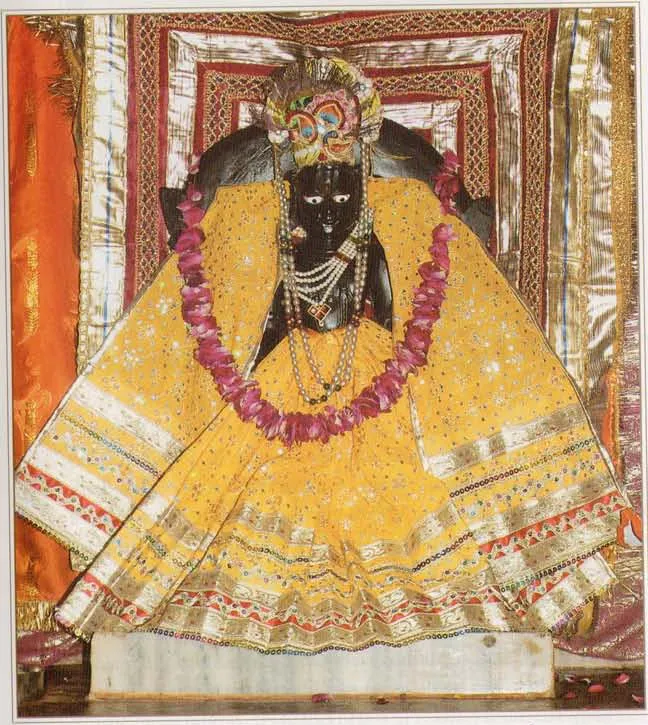
- What it is
- The Padmanābha Mandira is a temple of the Lord as Padmanābha in the Caubeyā-pāḍā quarter of Mathurā, in the same lane as the temple of Mathurā-devī.
- Visiting
- The guidebook Śrī Vraja-maṇḍala Parikramā (2007) places the temple of Bhagavān Śrī Padmanābha in Caubeyā-pāḍā, further east down the same lane as the Mathurā-devī temple, which lies east of the …
In short
The Padmanābha Mandira is a temple of the Lord as Padmanābha in the Caubeyā-pāḍā quarter of Mathurā, in the same lane as the temple of Mathurā-devī.[1 +2] Padmanābha, "He whose navel bears the lotus", is Garbhodakaśāyī Viṣṇu, from whose navel-lotus Brahmā was born.[1 +3] The Varāha Purāṇa tells the pilgrim to take leave of Padmanābha before walking around Mathurā, and Śrīla Rūpa Gosvāmī names Him among the chief Deities of the city.[7 +1] Whether He is also the "Svayambhu" whom Śrī Caitanya Mahāprabhu saw in Mathurā, the sources do not agree (see below).
Key facts
| Kind | temple |
|---|---|
| Region · area | Mathurā |
| Ācāryas | Śrīla Rūpa Gosvāmī, Śrīla Narahari Cakravartī Ṭhākura, Śrīla Rāghava Paṇḍita Gosvāmī of Govardhana, Śrīla Nārāyaṇa Bhaṭṭa Gosvāmī, Śrī Caitanya Mahāprabhu |
Why it is glorified
In the Varāha Purāṇa's rules for the parikramā, the walk around Mathurā, the pilgrim bathes in the morning and takes leave of …
The Deity of the parikramā
In the Varāha Purāṇa's rules for the parikramā, the walk around Mathurā, the pilgrim bathes in the morning and takes leave of Hanumān. "Likewise" he informs Padmanābha and Dīrgha-viṣṇu, "the remover of fear", that he is setting out, and asks them for success (summarised here, not translated).[7]
The same Purāṇa says that whoever fasts on the ekādaśī of the month of Āśvina, bathes in the Yamunā and sees Padmanābha in Mathurā on the next day, the dvādaśī, is freed from the pain of birth in a womb.[9 +1]
यः पश्येत्पद्मनाभं तु द्वादश्यामाश्विनस्य तु ।। एकदेहधरौ देवौ शिवकेशवरूपिणौ ॥ 35 ॥
एकादश्यां चोपवासी कृतशौचः समाहितः ।। कालिन्द्यां तु नरः स्नातो मुंचते योनिसंकटात्
yaḥ paśyetpadmanābhaṁ tu dvādaśyāmāśvinasya tu
ekadehadharau devau śivakeśavarūpiṇau
ekādaśyāṁ copavāsī kṛtaśaucaḥ samāhitaḥ
kālindyāṁ tu naraḥ snāto muṁcate yonisaṁkaṭāt
In the Gosvāmīs' books
Śrīla Rūpa Gosvāmī opens the section of his Mathurā-māhātmya on the Lord's Deities with a verse that he quotes from the Ādi-varāha: whoever sees Dīrgha-viṣṇu and Padmanābha svāyambhuva (svayambhuva in the printed edition of his work and in the Bhakti-ratnākara) in Mathurā even once obtains every desire. The Bhakti-ratnākara quotes the same verse. The words can be read as two Deities, Padmanābha and Svāyambhuva, or as one, "the self-born Padmanābha" (summarised here, not translated).[8 +3]
Near the end of the book Śrīla Rūpa Gosvāmī names Padmanābha among the chief Deities of Mathurā, with Keśava, Svayambhū, Dīrgha-viṣṇu, Gataśrama, Govinda, Hari and Varāha.[8]
Śrīla Nārāyaṇa Bhaṭṭa Gosvāmī's Vraja-bhakti-vilāsa counts Padmanābha among five Deity images at the Vasumatī pond on Mathurā's southern bank. For the circuit of Mathurā it gives a prayer to Him, ascribed to the Viṣṇu-yāmala, to be said five times with five obeisances: O Padmanābha, beloved of Kamalā (Lakṣmī), protect Mathurā-maṇḍala (summarised here, not translated).[16 +1]
ततो पद्मनाभ प्रार्थनमन्त्रः । विष्णुयामले— नमस्ते कमलाकान्त पद्मनाभ नमोऽस्तु दे । मथुरमण्डलं रक्ष प्रदक्षिणावरप्रद ॥ इति पञ्चभिः पठन् पञ्च नमस्कारान् कुर्य्यात् ।
tato padmanābha prārthanamantraḥ
viṣṇuyāmale— namaste kamalākānta padmanābha namo'stu de
mathuramaṇḍalaṁ rakṣa pradakṣiṇāvaraprada
iti pañcabhiḥ paṭhan pañca namaskārān kuryyāt |
The Gosvāmīs and ācāryas
According to the Bhakti-ratnākara of Śrīla Narahari Cakravartī Ṭhākura, Śrīla Rāghava Paṇḍita Gosvāmī of Govardhana took Śrīla Śrīnivāsa Ācārya and Śrīla Narottama dāsa Ṭhākura round Mathurā. He told them that the Lord's images in the town are always resplendent, and that whoever sees Dīrgha-viṣṇu and Padmanābha Svāyambhuva (or Padmanābha and Svāyambhuva) even once has every desire fulfilled.[13 +1]
দেখ দেখ কি আশ্চর্য্য মথুরানগরে। শ্রীভগবানের মূর্ত্তি সদা শোভা করে ॥ দীর্ঘবিষ্ণু পদ্মনাভ স্বায়ম্ভুব নাম। যে দেখে সকৃৎ তার পূরে সর্ব্ব কাম ॥ তথাহি আদিবারাহে ॥ দীর্ঘবিষ্ণুং সমালোক্য পদ্মনাভং স্বয়ম্ভুবং । মথুরায়াং সকৃদ্দেবি সর্ব্বাভীষ্টমবাপ্নুয়াৎ ॥
dekha dekha ki āścaryya mathurānagare| śrībhagabānera mūrtti sadā śobhā kare
dīrghabiṣṇu padmanābha sbāẏambhuba nāma| ye dekhe sakṛt tāra pūre sarbba kāma
tathāhi ādibārāhe
dīrghabiṣṇuṁ samālokya padmanābhaṁ sbaẏambhubaṁ
mathurāẏāṁ sakṛddebi sarbbābhīṣṭamabāpnuẏāt ||
The Caitanya-caritāmṛta names "Svayambhu" among the holy places of Mathurā that Śrī Caitanya Mahāprabhu visited; it does not name Padmanābha. One guidebook takes that Svayambhu to be this Deity and gives a year for His visit; other sources name Svayambhū as a separate Deity (see below).[20]
স্বয়ম্ভু, বিশ্রাম, দীর্ঘবিষ্ণু, ভূতেশ্বর ।
মহাবিদ্যা, গোকর্ণাদি দেখিলা বিস্তর ॥ ১৯১ ॥
svayambhu, viśrāma, dīrgha-viṣṇu, bhūteśvara
mahāvidyā, gokarṇādi dekhilā vistara
Śrī Caitanya Mahāprabhu visited all the holy places on the banks of the Yamunā, including Svayambhu, Viśrāma-ghāṭa, Dīrgha Viṣṇu, Bhūteśvara, Mahāvidyā and Gokarṇa.
Translation: Śrīla A.C. Bhaktivedanta Swami PrabhupādaŚrīla Prabhupāda
Śrīla Prabhupāda does not speak of this temple by name.
Śrīla Prabhupāda does not speak of this temple by name. In general teachings he explains who Padmanābha is, and he names Padmanābha as the Deity of the month of Āśvina (CC Madhya 20.201).[5 +1]
General teaching (does not name the place)“padmanābha — Padmanābha (Garbhodakaśāyī Viṣṇu) … Garbhodakaśāyī Viṣṇu, from whose lotus navel Brahmā was created, is also called Hiraṇyagarbha and is the total Supersoul and the subtle Supersoul.”
Śrīla Prabhupāda, Śrī Caitanya-caritāmṛta, Madhya-līlā 21.39, synonyms and purport · vedabase.io
Visiting today
The guidebook Śrī Vraja-maṇḍala Parikramā (2007) places the temple of Bhagavān Śrī Padmanābha in Caubeyā-pāḍā, further east down the same lane as the Mathurā-devī temple, which lies east of the Dīrgha-viṣṇu temple. The town plan of Vṛndāvana-Dhāma Ki Jaya! (c. 1986) marks a site "Svayambhū" next to Dīrgha-viṣṇu.[1 +2] No source checked says whether the present temple stands where the Vraja-bhakti-vilāsa puts its Padmanābha image, at the Vasumatī pond.[1 +4]
Location
| Where it is | 'heading east down the same lane' as Mathurā-devī, in Caubeyā-pāḍā[22] Mathurā City[23] |
|---|
Nearby places
Mathurā-devī Mandira
Pictures
1 pictures
Where the sources differ
Accounts differ Whether 'Svayambhu' is another name of this Padmanābha deity or a separate deity of Mathurā.
- Vṛndāvana-Dhāma Ki Jaya! (c. 1986) (printed p. 5)'Padmanābha Svayambhū': this Padmanābha deity is self-manifested; Mahāprabhu had darśana of it. The map label is 'Svayambhū'.
- Śrī Vraja-maṇḍala Parikramā (2007) (printed p. 85)'Śrī Padmanābha', 'Śrī Padmanābhajī'; the name Svayambhū is not used.
- Śrīla Rūpa Gosvāmī, Mathurā-māhātmya vv. 217 and 444Names Padmanābha together with Svāyambhuva or Svayambhū in two verses: in the Ādi-varāha verse with Dīrgha-viṣṇu (v.217), and among the chief deities (v.444).
- Bhakti-ratnākara, printed p. 169Prints the names Dīrgha-viṣṇu, Padmanābha and Svāyambhuva without punctuation: they can be read as three Deities, or as Dīrgha-viṣṇu and Padmanābha Svāyambhuva.
The wording of these accounts is our summary of the sources, not a published translation.
In which year Śrī Caitanya Mahāprabhu was in Mathurā: the same guidebook gives 1515.
Accounts differ In which year Śrī Caitanya Mahāprabhu was in Mathurā (and so saw this deity, if Vṛndāvana-Dhāma Ki Jaya! (c. 1986) is right).
- Vṛndāvana-Dhāma Ki Jaya! (c. 1986)'in A.D. 1515 while visiting Mathurā City'.
- The Harmonist (1932), quoted in Śrīla Prabhupāda-līlāmṛta vol. 1 ch. 4Mahāprabhu performed the circumambulation of Vraja-maṇḍala 'during the winter of 1514 A.D.'.
- Śrīla Prabhupāda, CC Madhya 19.108 purport and 18.47 purportMahāprabhu visited Prayāga in Śakābda 1434 or 1435 (A.D. 1512 or 1513), and He went to Vṛndāvana before the birth of Viṭhṭhaleśvara (A.D. 1515). (In the Caitanya-caritāmṛta's narrative He goes to Prayāga on leaving Vraja, Madhya 18-19.)
References
23 references
- Śrī Vraja-maṇḍala Parikramā (2007), PDF p. 55
- Śrī Vraja-maṇḍala Parikramā (2007), PDF p. 31
- Vṛndāvana-Dhāma Ki Jaya! (c. 1986), by Dhruva Mahārāja dāsa, PDF p. 99
- Śrīmad-Bhāgavatam 3.8.15, GRETIL
- Śrīla Prabhupāda, Śrī Caitanya-caritāmṛta, Madhya-līlā 21.39, synonyms and purport · vedabase.io
- Śrīla Prabhupāda, Śrīmad-Bhāgavatam, 3.8.15, purport · vedabase.io
- Varāha Purāṇa, adhyāya 160, 'mathurā-parikrama-prādurbhāva', vv. 13-14, Sanskrit Wikisource
- Śrīla Rūpa Gosvāmī, Mathurā-māhātmya v.444
- Varāha Purāṇa, adhyāya 169, 'mathurā-māhātmya', vv. 35-36, Sanskrit Wikisource
- Śrīla Prabhupāda, Śrī Caitanya-caritāmṛta, Madhya-līlā 20.201, translation · vedabase.io
- Varāha Purāṇa, adhyāya 169, 'mathurā-māhātmya', vv. 35-36, Sanskrit Wikisource
- Śrīla Rūpa Gosvāmī, Mathurā-māhātmya v.217
- Śrīla Narahari Cakravartī, Bhakti-ratnākara, Fifth Wave (pañcama taraṅga), printed p. 169 (1912 ed.), 2nd ed., 1912
- Śrīla Rūpa Gosvāmī, Mathurā-māhātmya v.206
- Śrīla Rūpa Gosvāmī, Mathurā-māhātmya v.217
- Śrīla Nārāyaṇa Bhaṭṭa, Vraja-bhakti-vilāsa, second chapter, §42, list of Mathurā's tīrtha-deities, southern group, items 1-6, 1st ed., publ. Bābā Kṛṣṇadāsa, Kusuma-sarovara, Saṁvat 2008
- Śrīla Nārāyaṇa Bhaṭṭa, Vraja-bhakti-vilāsa, Mathurā circuit, verse numbered 5, 1st ed., publ. Bābā Kṛṣṇadāsa, Kusuma-sarovara, Saṁvat 2008
- Śrīla Nārāyaṇa Bhaṭṭa, Vraja-bhakti-vilāsa, Mathurā circuit, verse numbered 5, 1st ed., publ. Bābā Kṛṣṇadāsa, Kusuma-sarovara, Saṁvat 2008
- Śrīla Narahari Cakravartī, Bhakti-ratnākara, Fifth Wave (pañcama taraṅga), printed p. 165 (1912 ed.), 2nd ed., 1912
- Śrīla Prabhupāda, Śrī Caitanya-caritāmṛta, Madhya-līlā 17.191, translation · vedabase.io
- Śrīla Kṛṣṇadāsa Kavirāja Gosvāmī, Śrī Caitanya-caritāmṛta, Madhya-līlā 17.191, online edition
- Śrī Vraja-maṇḍala Parikramā (2007), p. 84-85
- Vṛndāvana-Dhāma Ki Jaya! (c. 1986), by Dhruva Mahārāja dāsa, p. 5