Yamunā
यमुना
Also called Yamunā River, Kālindī River
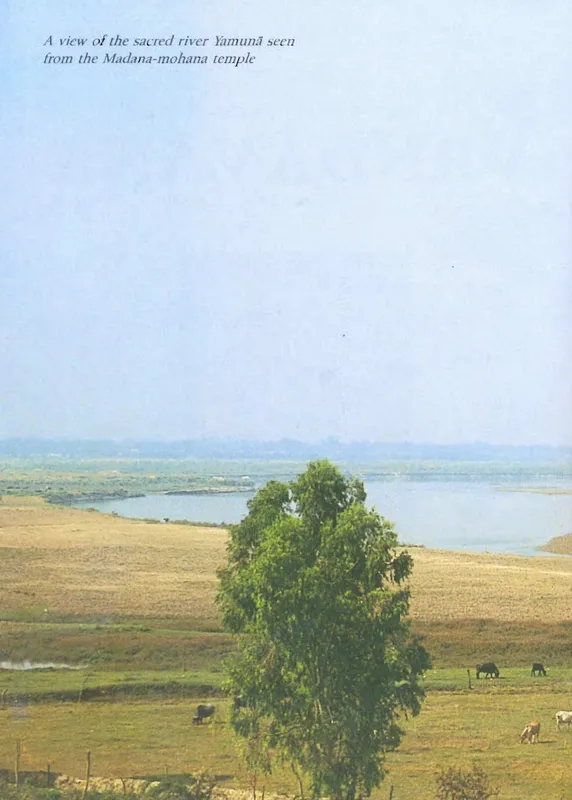
- What it is
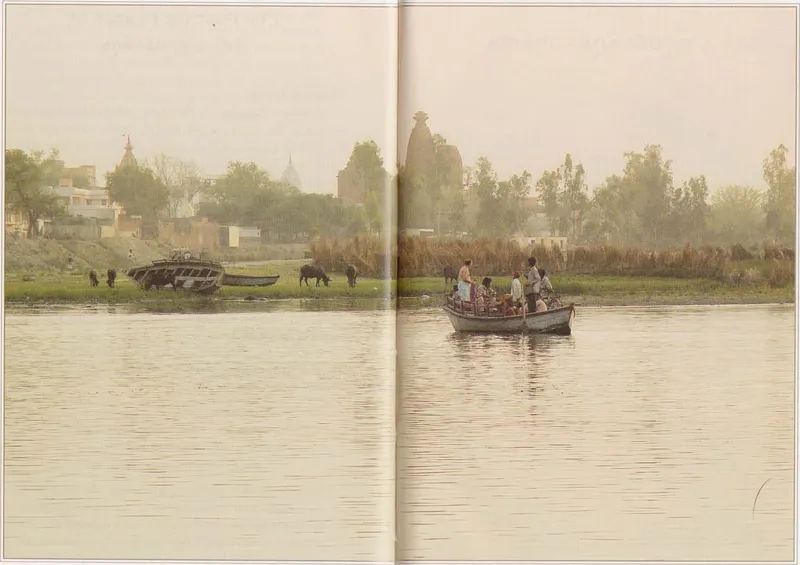
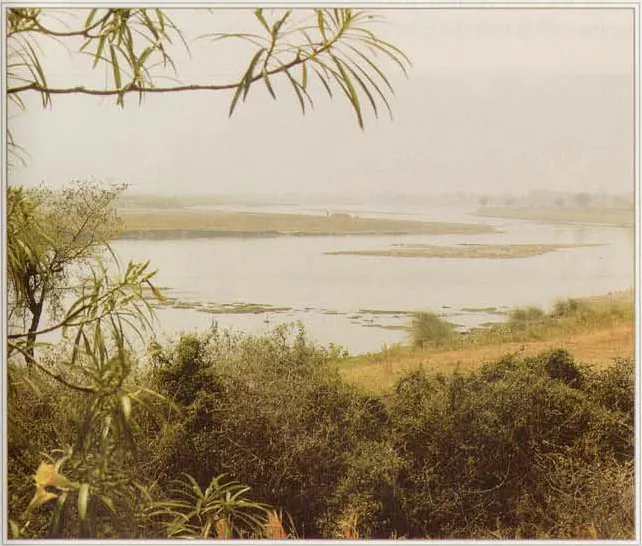
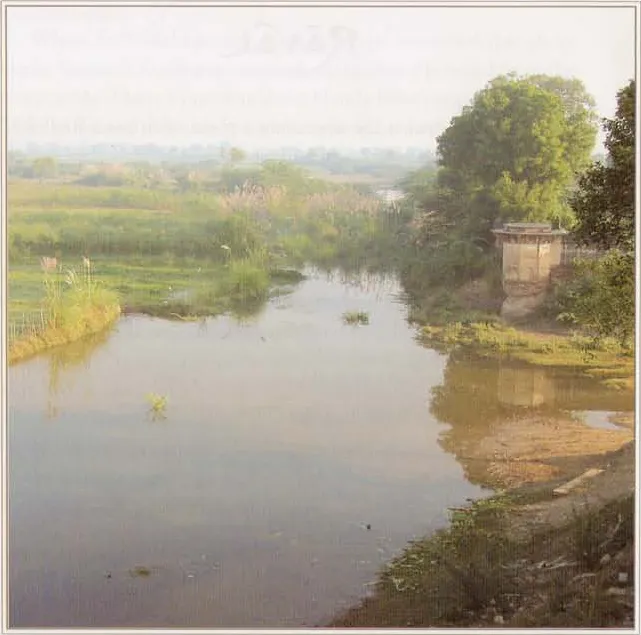
- The Yamunā, also called the Kālindī, is the river that runs through Vraja-maṇḍala.
- Visiting
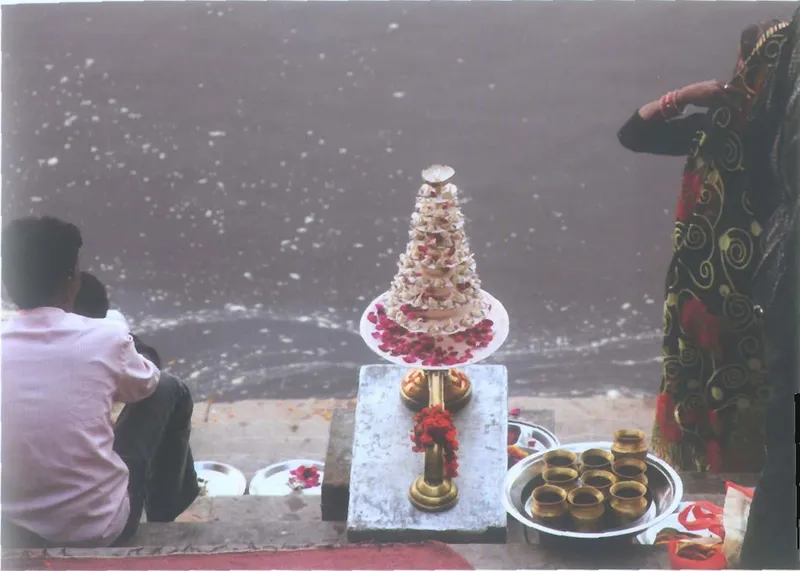
- The Color Guide to Vṛndāvana (2000) says that most pilgrims bathe at Keśī-ghāṭa, where the river has flowed since ancient times, and that at the ghāṭas the river has left, touching the head to the …
In short
The Yamunā, also called the Kālindī, is the river that runs through Vraja-maṇḍala. Śrīmad-Bhāgavatam calls her the younger sister of Yama and sets many of Kṛṣṇa's pastimes in her water or on her banks, from Vasudeva's crossing on the night of His birth to the subduing of Kāliya, the rāsa dance and Akrūra's vision.[1 +20] The Varāha Purāṇa calls her a hundred times holier than the Gaṅgā within the Māthura-maṇḍala.[3 +2] According to the Garga-saṁhitā, she came down from Kṛṣṇa's own abode and entered Vraja near Vṛndāvana, Mathurā and Mahāvana.[24 +5] Śrī Caitanya Mahāprabhu jumped into her whenever He saw her on the way to Mathurā.[30 +5]
Key facts
| Kind | river |
|---|---|
| Ācāryas | Śrī Caitanya Mahāprabhu, Śrīla Rūpa Gosvāmī, Śrīla Raghunātha dāsa Gosvāmī, Śrīla Kavi-karṇapūra Gosvāmī, Śrīla Sanātana Gosvāmī |
Why it is glorified
Śrīmad-Bhāgavatam (6.6.40) tells that Saṁjñā, the wife of the sun-god Vivasvān, gave birth to the twins Yamarāja and the river …
Śrīmad-Bhāgavatam (6.6.40) tells that Saṁjñā, the wife of the sun-god Vivasvān, gave birth to the twins Yamarāja and the river Yamunā; so the river is called Yama's younger sister and the daughter of the sun.[1 +3]
The Varāha Purāṇa says that within the Lord's Māthura-maṇḍala she is a hundred times holier than the Gaṅgā, and the Ādi-varāha verses gathered in the Mathurā-māhātmya printed under Śrīla Rūpa Gosvāmī's name promise the supreme goal to one who bathes in her with a controlled mind and worships Acyuta (both summarised here, not translated). Śrīla Prabhupāda writes:[3 +4]
Names this place“Simply by taking a bath in the Yamunā, anyone can diminish the reactions of his sinful activities.”
Śrīla Prabhupāda, Kṛṣṇa, the Supreme Personality of Godhead, ch. 39 "Akrūra’s Return Journey and His Vision of Viṣṇuloka Within the Yamunā River" · vedabase.io
Śrīla Jīva Gosvāmī quotes the Lord's words from the Padma Purāṇa that Mathurā, Vṛndāvana, the Yamunā and the cowherd girls and boys are eternal, like His descent there (summarised here, not translated).[37] The Mathurā-māhātmya quotes two more verses as the Padma's: the Yamunā is the rasa that the Upaniṣads call Brahman, become a river to purify the world, and Kṛṣṇa always plays in her waves. These verses have not been found in the available texts of the Padma Purāṇa (summarised here, not translated).[38 +1]
The Padma Purāṇa (Uttara-khaṇḍa 208) speaks of twelve forests on the Yamunā's two banks.[36] Śrīla Prabhupāda names seven on the western side, Madhuvana, Tālavana, Kumudavana, Bahulāvana, Kāmyavana, Khadiravana and Vṛndāvana, and five on the eastern bank, Bhadravana, Bilvavana, Lauhavana, Bhāṇḍīravana and Mahāvana; other books list them differently.[40 +3] Read more: The twelve forests of Vraja: the lists side by side →
The Skanda Purāṇa's Kārttika-māhātmya makes Yama-dvitīyā, the day on which she fed her brother Yama, sacred for bathing in her; how the day is kept at Viśrāma-ghāṭa is told on that page.[44 +2]
Divine pastimes
Her coming to Vraja
The Garga-saṁhitā tells that Śrī Rādhā would not descend where there was no Vṛndāvana, no Yamunā and no Govardhana, so Hari sent them to the earth from His own abode.[47 +5] Ordered by Kṛṣṇa, the river came down with the Gaṅgā, took the name Kālindī from Mount Kalinda and entered Vraja-maṇḍala; when she had to leave it, she bowed three times to the land before going on to Prayāga (summarised here, not translated).[24 +5] Read more: How the Yamunā came to Vraja →
In Śrīmad-Bhāgavatam
On the night of Kṛṣṇa's birth the flooded Yamunā gave way to Vasudeva as he carried the child to Gokula.[2 +1]
maghoni varṣaty asakṛd yamānujā gambhīra-toyaugha-javormi-phenilā / bhayānakāvarta-śatākulā nadī mārgaṃ dadau sindhur iva śriyaḥ pateḥ
Because of constant rain sent by the demigod Indra, the river Yamunā was filled with deep water, foaming about with fiercely whirling waves. But as the great Indian Ocean had formerly given way to Lord Rāmacandra by allowing Him to construct a bridge, the river Yamunā gave way to Vasudeva and allowed him to cross.
Translation: Śrīla A.C. Bhaktivedanta Swami PrabhupādaKāliya's poison spoiled her water until Kṛṣṇa subdued the serpent and sent him away to the sea; the pastime is told on the page of Kāliya-ghāṭa.[6 +5] Read more: How Kṛṣṇa subdued the serpent Kāliya →
sa-kalatra-suhṛt-putro dvīpam abdher jagāma ha / tadaiva sāmṛta-jalā yamunā nirviṣābhavat / anugrahād bhagavataḥ krīḍā-mānuṣa-rūpiṇaḥ
Then, taking his wives, friends and children, he went to his island in the sea. The very moment Kāliya left, the Yamunā was immediately restored to her original condition, free from poison and full of nectarean water. This happened by the mercy of the Supreme Personality of Godhead, who was manifesting a humanlike form to enjoy His pastimes.
Translation: Śrīla Prabhupāda's disciples (BBT)Hearing Kṛṣṇa's flute, the rivers break their currents and hold His feet with their waves (10.21.15); Śrīla Sanātana Gosvāmī explains the rivers as Śrī Kālindī and others, or Śrī Kālindī alone (summarised here, not translated).[53 +4]
During their month's vow the unmarried gopīs bathed every day in the Kālindī and worshipped the goddess Kātyāyanī with an image of sand from her bank (10.22). The taking of their clothes that follows is told on the pages of the Cīra-ghāṭa of Vṛndāvana and the Cīra-ghāṭa near Śergarh.[58 +1] Read more: The Kātyāyanī vow and the gopīs' clothes: the pastime and its places →
The wives of the brāhmaṇas who were performing a sacrifice found Kṛṣṇa, Balarāma and the cowherd boys in a garden by the Yamunā (10.23.20–21).[60 +2] Read more: Kṛṣṇa and the wives of the brāhmaṇas: the pastime and its places →
Bathing in the Kālindī on Dvādaśī, Nanda Mahārāja was carried off by a servant of Varuṇa, the lord of the waters, and Kṛṣṇa freed him (10.28); the Bhakti-ratnākara places this at Nanda-ghāṭa.[63 +2]
The rāsa dance of the autumn nights began on the river's cool sandy bank; when Kṛṣṇa disappeared, the gopīs sang of Him on the Kālindī's bank, and the night ended with play in her water and a walk in the grove on her bank (10.29–10.33).[12 +5] Read more: Where the autumn rāsa took place →
Bathing in a pool of the Kālindī on the way to Mathurā, Akrūra saw Rāma and Kṛṣṇa, and then Viṣṇuloka, within the water (10.39.40–41); the Caitanya-caritāmṛta names the place as Akrūra-ghāṭa.[18 +6] Read more: Akrūra's vision in the Yamunā →
When the Yamunā ignored Balarāma's call to water play, He dragged her with the tip of His plough, and the Bhāgavatam says that she still flows along the channels He made (10.65). The pastime and the commentators' explanation of which Yamunā He dragged are told on the page of Rāma-ghāṭa.[69 +5] Read more: Balarāma's visit to Vraja →
Śrī Caitanya Mahāprabhu and the Yamunā
The Caitanya-caritāmṛta tells that after His sannyāsa, longing for Vṛndāvana, Śrī Caitanya Mahāprabhu was shown the Gaṅgā by Śrī Nityānanda Prabhu as the Yamunā, and that He recited Śrīla Kavi-karṇapūra's prayer to her.[75 +4]
cid-ānanda-bhānoḥ sadā nanda-sūnoḥ
para-prema-pātrī drava-brahma-gātrī
aghānāṁ lavitrī jagat-kṣema-dhātrī
pavitrī-kriyān no vapur mitra-putrī
“O river Yamunā, you are the blissful spiritual water that gives love to the son of Nanda Mahārāja. You are the same as the water of the spiritual world, for you can vanquish all our offenses and the sinful reactions incurred in life. You are the creator of all auspicious things for the world. O daughter of the sun-god, kindly purify us by your pious activities.”
Translation: Śrīla A.C. Bhaktivedanta Swami PrabhupādaOn the forest path to Vṛndāvana He took every river for the Yamunā; on the way to Mathurā He jumped into her whenever He saw her; and at Mathurā He bathed at her twenty-four ghāṭas. Which they are, and where Viśrāma-ghāṭa stands among them, is set out on its page. At Purī He once took the sea for the Yamunā and jumped into it.[30 +6] Read more: The twenty-four ghāṭas of Mathurā →
pathe yāhāṅ yāhāṅ haya yamunā-darśana
tāhāṅ jhāṅpa diyā paḍe preme acetana
While the Lord was going to Mathurā, He came across the river Yamunā several times, and as soon as He saw the river Yamunā, He would immediately jump in, falling unconscious in the water in the ecstasy of love of Kṛṣṇa.
Translation: Śrīla A.C. Bhaktivedanta Swami PrabhupādaAccording to Śrīla Murāri Gupta's account of His journey, His guide Kṛṣṇadāsa told Him that in the land of Mathurā the Yamunā is above all else, because Kṛṣṇa played there in the rāsa and the water sports (summarised here, not translated).[80 +1]
Traditional accounts
According to Śrī Vraja-maṇḍala Parikramā (2007), the river serves the pastimes of Śrī Rādhā and Kṛṣṇa in every way, with groves …
According to Śrī Vraja-maṇḍala Parikramā (2007), the river serves the pastimes of Śrī Rādhā and Kṛṣṇa in every way, with groves on both her banks and the Divine Couple's water and boat pastimes with the sakhīs.[34 +1] Songs of Śrīla Narottama dāsa Ṭhākura and Śrīla Bhaktivinoda Ṭhākura, as the song book credits them, set Their eternal pastimes on her bank and on a golden lotus in her water.[82]
The Gosvāmīs and ācāryas
Śrīla Rūpa Gosvāmī's Yamunāṣṭaka, in his Stava-mālā, praises the sun's daughter, who saves those who take shelter of her from the …
Śrīla Rūpa Gosvāmī's Yamunāṣṭaka, in his Stava-mālā, praises the sun's daughter, who saves those who take shelter of her from the city of her brother Yama and is adorned by the Māthura-maṇḍala; Śrīla Baladeva Vidyābhūṣaṇa's commentary also calls it the Viśākhā-stotra.[4 +3]
Śrīla Raghunātha dāsa Gosvāmī bows in his Vraja-vilāsa-stava to Rāma-ghaṭṭa, where the dragged Yamunā is still seen; the verse is given on the page of Rāma-ghāṭa.[74]
Śrīla Jayadeva Gosvāmī's Gīta-govinda (1.12) likens Balarāma's cloth to the Yamunā who came to Him in fear of His plough (summarised here, not translated); explaining it in 1970, Śrīla Prabhupāda said that Balarāma tried to dry her up.[87 +1]
Śrīla Prabhupāda
Commenting on Śrīla Rūpa Gosvāmī's verse on the Mathurā-maṇḍala, Śrīla Prabhupāda writes in The Nectar of Devotion …
Commenting on Śrīla Rūpa Gosvāmī's verse on the Mathurā-maṇḍala, Śrīla Prabhupāda writes in The Nectar of Devotion:
Names this place“The places in the eighty-four-square-mile district of Mathurā are so beautifully situated on the banks of the river Yamunā that anyone who goes there will never want to return to this material world. … Such transcendental feelings are aroused immediately and without fail after one arrives in Mathurā or Vṛndāvana.”
Śrīla Prabhupāda, The Nectar of Devotion, Chapter 13 · vedabase.io
In his purport to Śrīmad-Bhāgavatam 3.2.27, where Uddhava remembers the boy Kṛṣṇa with the calves in the gardens by the Yamunā, he describes those forests:
Names this place“The forests on the shore of the Yamunā are all beautiful gardens full of trees of mango, jackfruit, apples, guava, oranges, grapes, berries, palmfruit and so many other plants and fragrant flowers. And because the forest was on the bank of the Yamunā, naturally there were ducks, cranes and peacocks on the branches of the trees.”
Śrīla Prabhupāda, Śrīmad-Bhāgavatam, 3.2.27, purport · vedabase.io
In a lecture of 1972 he spoke of the river and Kṛṣṇa's flute:
Names this place“It is described that Yamuna River is flowing with her waves, but when Kṛṣṇa comes on the bank of the Yamuna, the waves stop to hear Kṛṣṇa’s flute. These are the description.”
Śrīla Prabhupāda, Bhagavad-gītā 7.6 lecture, Bombay, 25 March 1972 · vedabase.io
On 15 October 1972, walking at Imlītalā in Vṛndāvana, he said that the water there was a branch of the Yamunā and that the place had formerly been a ghāṭa.[89]
Songs
Śrīla Rūpa Gosvāmī's Yamunāṣṭaka, with the verse on the Māthura-maṇḍala …
Śrīla Rūpa Gosvāmī's Yamunāṣṭaka, with the verse on the Māthura-maṇḍala:
bhrātur antakasya pattane ’bhipatti-hāriṇī
prekṣayāti-pāpino ’pi pāpa-sindhu-tāriṇī
nīra-mādhurībhir apy aśeṣa-citta-bandhinī
māṁ punātu sarvadāravinda-bandhu-nandinī
In Śrīla Bhaktivinoda Ṭhākura's Jaya Rādhā-Mādhava Kṛṣṇa wanders in the forests on the Yamunā's bank; Śrīla Prabhupāda explains that He wanders there to please the gopīs, the cowherd boys, the birds, the bees, the cows and the calves.[90]
(jaya) rādhā-mādhava (jaya) kuñja-bihārī
(jaya) gopī-jana-vallabha (jaya) giri-vara-dhārī
(jaya) jaśodā-nandana, (jaya) braja-jana-rañjana,
(jaya) jāmuna-tīra-vana-cārī
Visiting today
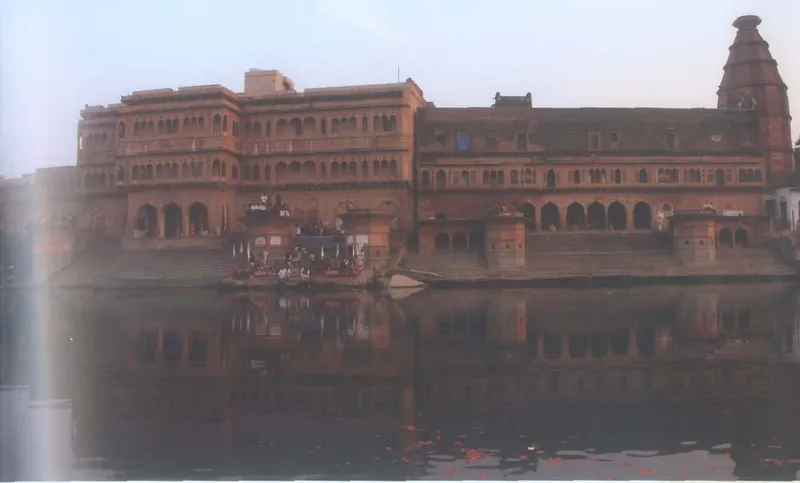
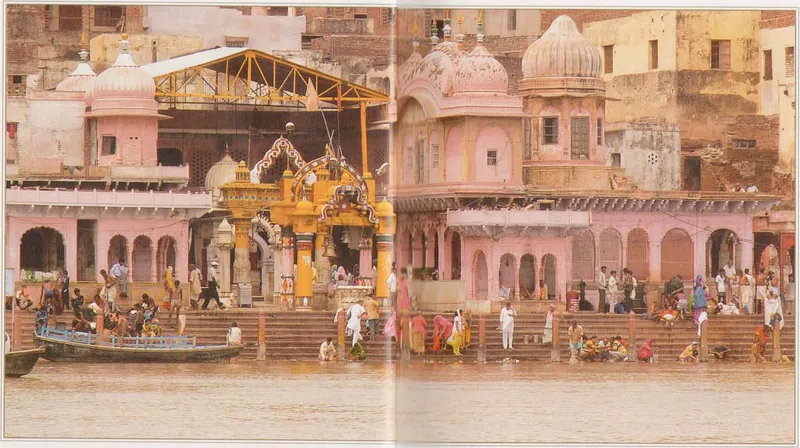
The Color Guide to Vṛndāvana (2000) says that most pilgrims bathe at Keśī-ghāṭa, where the river has flowed since ancient times, and that at the ghāṭas the river has left, touching the head to the sand is accepted as equal to bathing.[23]
Upstream of Vṛndāvana, near Śergarh
- Rāma-ghāṭa, where Balarāma dragged the river
- Akṣayavaṭa, with the question of the two banks
- Cīra-ghāṭa (near Śergarh)
- Kātyāyanī-devī Mandira at that Cīra-ghāṭa
- Tapovana, a place of the gopīs' vow
- Gopī-ghāṭa at Tapovana
- Nanda-ghāṭa, where the Bhakti-ratnākara places Nanda's capture by Varuṇa's servant[65]
- Śrīla Jīva Gosvāmī's cave at Nanda-ghāṭa
Across the river from Vṛndāvana
- Pānī-gaon, in Māṭavana
Vṛndāvana
- Keśī-ghāṭa
- Kāliya-ghāṭa
- Cīra-ghāṭa (Vṛndāvana)
- Cīra-kadamba
- Vaṁśīvaṭa
- Dhīra-samīra
- Imlītalā
- Jñāna-gudri
- Śṛṅgāravaṭa
- Rādhāvana
- Āndhera-ghāṭa
- Bhīma-ghāṭa
- Bhramara-ghāṭa
- Go-ghāṭa
- Gopāla-ghāṭa
- Govinda-ghāṭa
- Jagannātha-ghāṭa
- Mohana Ter-ghāṭa
- Pānī-ghāṭa
- Rāja-ghāṭa
- Śṛṅgāra-ghāṭa
- Sūrya-ghāṭa
- Vihāra-ghāṭa
- Yugala-ghāṭa
- Bardwan-ghāṭa
- Barwara-ghāṭa
- Bihar-ghāṭa
- Dhurawara-ghāṭa
- Dhūsara-ghāṭa
- Gaṅgā-mohana-ghāṭa
- Hanumāna-ghāṭa
- Himmata-bahādura-ghāṭa
- Imli-ghāṭa
- Kaḍiyā-ghāṭa
- Kiśor Rānī's Ghāṭa
- Koriya-ghāṭa
- Mahāntajī-ghāṭa
- Nabhawala-ghāṭa
- Nagari Dās Ghāṭa
- Nāgarī-ghāṭa
- Nāmāovālā-ghāṭa
- Nayā-ghāṭa
- Pandawara-ghāṭa
- Rādhā-bāga-ghāṭa
- Ranawat-ghāṭa
- Śrījī-ghāṭa
- Tehriwara-ghāṭa
- Tekari-ghāṭa
- Varāha-ghāṭa
- Vihārījī-ghāṭa
From Vṛndāvana to Mathurā
- Akrūra-ghāṭa, which the Caitanya-caritāmṛta names as the place of Akrūra's vision[66 +2]
- Batharan-bihārī Mandira
Mathurā
- Viśrāma-ghāṭa, the principal ghāṭa of Mathurā
- Avimukta-tīrtha
- Guhya-tīrtha
- Prayāga-tīrtha
- Kankhala-tīrtha
- Tinduka-tīrtha
- Daṇḍī-ghāṭa
- Sūrya-tīrtha
- Vaṭa-svāmī-tīrtha
- Dhruva-tīrtha
- Ṛṣi-tīrtha
- Mokṣa-tīrtha
- Koṭi-tīrtha (southern)
- Bodhi-tīrtha
- Nava-tīrtha
- Asi-kuṇḍa
- Saṁyamana-tīrtha
- Dhārāpatana-tīrtha
- Nāga-tīrtha
- Ghaṇṭā-bharaṇaka-tīrtha
- Brahma-tīrtha
- Soma-tīrtha
- Sarasvatī-patana-tīrtha
- the island near Kṛṣṇa-gaṅgā-ghāṭa
- Cakra-tīrtha
- Daśāśvamedha-tīrtha
- Vighna-rāja-tīrtha
- Koṭi-tīrtha (northern)
- Vaikuṇṭha-ghāṭa
- Vasudeva-ghāṭa
- Maṇikarṇikā-ghāṭa
- Brahma-ghāṭa
- Sūrya-ghāṭa (Mathurā)
Across the river from Mathurā
Gokula and Mahāvana
- Kole-ghāṭa, on the Mathurā side
- Brahmāṇḍa-ghāṭa
- Cintāharaṇa-ghāṭa
- Ramaṇa-reti (Mahāvana)
- Ṭhākurānī-ghāṭa, in Gokula
- Govinda-ghāṭa (Gokula)
Downstream, towards Agra
- Reṇukā, on Śrī Caitanya's way from Prayāga
Location
| Where it is | unlabelled river on the Vraja map; labelled on the Mathurā and Vṛndāvana maps[98] Vraja map: unlabelled meandering double line from the top edge down the east side past Shergarh, Vṛndāvana and Mathurā to the lower right corner; '//' bridge marks near Shergarh, Vṛndāvana and Mathurā[99] |
|---|
Nearby places
Lohavana · Mahāvana · Kolegaon
Pictures
8 pictures
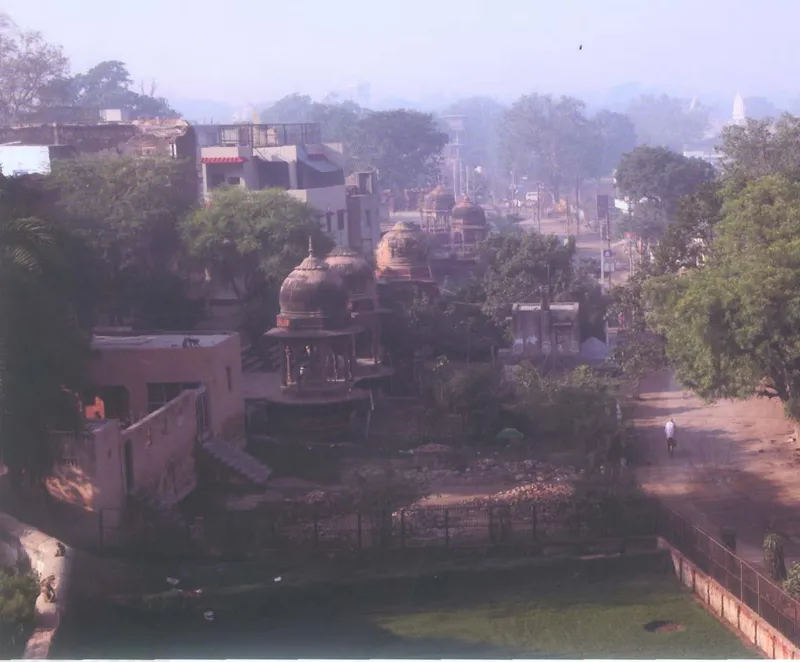
History
The Color Guide to Vṛndāvana (2000) dates Vṛndāvana's sandstone ghāṭas, built under Rājput patronage, from about 1580 to before 1870; no document has been checked, so the dates are not certain.[83]
On a morning walk in Vṛndāvana in 1975, asked whether the Yamunā once flowed by an old wall there, Śrīla Prabhupāda said that he did not know, and added that the Yamunā is said to have been a navigable river. The guidebooks differ on how the river runs at Vṛndāvana now and how it ran formerly.[84]
Accounts differ How the Yamunā runs at Vṛndāvana, now and formerly.
- The Color Guide to Vṛndāvana (2000)The river formerly encircled Vṛndāvana but now touches the town on two sides only, leaving ancient ghāṭas dry.
- Śrī Vraja-maṇḍala Parikramā (2007)The Yamunā flows on three sides of Vṛndāvana.
- Śrīla Prabhupāda, morning walk of 28 August 1975Asked whether the Yamunā used to flow at that spot: "I do not know"; "it is said that Yamunā was navigable river".
- Harivaṁśa 83.39-40, as quoted by Śrīla Jīva GosvāmīBalarāma drew the river through the middle of the Vṛndāvana forest.
Where the sources differ
Śrīla Prabhupāda calls Kṛṣṇa's queen Kālindī of Śrīmad-Bhāgavatam 10.58 the river Yamunā personified, and the Garga-saṁhitā calls …
Śrīla Prabhupāda calls Kṛṣṇa's queen Kālindī of Śrīmad-Bhāgavatam 10.58 the river Yamunā personified, and the Garga-saṁhitā calls the river Kṛṣṇa's chief queen.[27 +5] Śrīla Sanātana Gosvāmī, Śrīla Jīva Gosvāmī and Śrīla Viśvanātha Cakravartī Ṭhākura explain the Yamunā who came to Balarāma (10.65) as a manifestation or shadow of Śrī Kālindī, Kṛṣṇa's queen (summarised here, not translated). The accounts are set side by side below.[57 +2]
Accounts differ Whether the river Yamunā and Kṛṣṇa's queen Kālindī are one and the same.
- Śrīmad-Bhāgavatam 10.58.20-22Kālindī, daughter of the sun-god, doing austerities for Viṣṇu, lives in a house her father built in the Yamunā's water; the verses do not call her the river.
- Śrīla Prabhupāda, Kṛṣṇa book ch. 58"The beautiful girl was the river Yamunā personified."
- Garga-saṁhitā 2.3.3, 2.3.14-15, 2.3.26-27The river Kālindī/Kṛṣṇā is Kṛṣṇa's chief queen (paṭṭa-rājñī); she did austerities to have Him as husband and lives in the water-house her father made.
- Śrīla Sanātana Gosvāmī, Śrīla Jīva Gosvāmī and Śrīla Viśvanātha Cakravartī on ŚB 10.65The Yamunā who came to Balarāma is a manifestation (vibhūti) or shadow (chāyā) of Śrī Kālindī, the queen, the wife of the ocean; not Kālindī herself (Viśvanātha).
The wording of these accounts is our summary of the sources, not a published translation.
How the gopīs of the vow attained Kṛṣṇa: the Bhāgavatam tells of their worship of Kātyāyanī, the Garga-saṁhitā of a five-part worship of the Yamunā.
Accounts differ How the gopīs of the vow obtained Kṛṣṇa as husband: by worshipping Kātyāyanī or the Yamunā.
- Śrīmad-Bhāgavatam 10.22.1-6The unmarried gopīs bathed in the Kālindī every day and worshipped the goddess Kātyāyanī with an image of sand.
- Garga-saṁhitā 4.15.5 (Mādhurya-khaṇḍa)Certain groups of gopīs (born from the women of Barhiṣmatī-pura, the apsarās and others) worshipped the Yamunā with the Yamunā-pañcāṅga that Durvāsā gave them and obtained Kṛṣṇa as husband.
Accounts differ Who compiled the book on the glories of Mathurā (Mathurā-māhātmya).
- Śrī Caitanya-caritāmṛta, Madhya 25.215Śrīla Sanātana Gosvāmī, "mathurā-māhātmya-śāstra saṅgraha kariyā" (Śrīla Prabhupāda: "collected some books about archaeological excavations in Mathurā"), revealed the lost tīrthas wandering in the forests; the line can be read as his compiling a book of Mathurā's glories.
- Grantha Mandira text Mathurā-māhātmya (title line) and Vṛndāvana-Dhāma Ki Jaya! (c. 1986)Śrī-mathurā-māhātmyam by Srila Rupa Gosvami; Mathurā-māhātmya, by Śrīla Rūpa Gosvāmī.
The wording of these accounts is our summary of the sources, not a published translation.
More on this place
How the Yamunā came to Vraja · The twelve forests of Vraja: the lists side by side · How Kṛṣṇa subdued the serpent Kāliya · The Kātyāyanī vow and the gopīs' clothes: the pastime and its places
- →How the Yamunā came to Vrajaarticle›
- →The twelve forests of Vraja: the lists side by sidearticle›
- →How Kṛṣṇa subdued the serpent Kāliyaarticle›
- →The Kātyāyanī vow and the gopīs' clothes: the pastime and its placesarticle›
- →Kṛṣṇa and the wives of the brāhmaṇas: the pastime and its placesarticle›
- →Where the autumn rāsa took placearticle›
- →Akrūra's vision in the Yamunāarticle›
- →Balarāma's visit to Vrajaarticle›
- →The twenty-four ghāṭas of Mathurāarticle›
References
99 references
- Śrīmad-Bhāgavatam ŚB 6.6.40, GRETIL
- Śrīmad-Bhāgavatam 10.3.50, GRETIL
- Varāha Purāṇa, adhyāya 152, vv. 29-31, Sanskrit Wikisource
- Śrīla Rūpa Gosvāmī, Stava-mālā, part 35, heading and v.1, after the edition of Bhakti Saranga Goswami and Purushottam Das, Vrindavan, 1959
- Śrīla Prabhupāda, Kṛṣṇa, the Supreme Personality of Godhead, ch. 3 "The Birth of Lord Kṛṣṇa" · vedabase.io
- Śrīmad-Bhāgavatam 10.15.47, GRETIL
- Śrīmad-Bhāgavatam 10.15.48, GRETIL
- Śrīmad-Bhāgavatam 10.16.1, GRETIL
- Śrīmad-Bhāgavatam 10.16.4, GRETIL
- Śrīmad-Bhāgavatam 10.16.67 (vedabase: Texts 65–67), GRETIL
- Śrīla Prabhupāda, Kṛṣṇa, the Supreme Personality of Godhead, ch. 16 "Subduing Kāliya" · vedabase.io
- Śrīmad-Bhāgavatam 10.29.45, GRETIL
- Śrīmad-Bhāgavatam 10.33.24, GRETIL
- Śrīla Prabhupāda, Kṛṣṇa, the Supreme Personality of Godhead (Kṛṣṇa book), chapter 32 · vedabase.io
- Śrīla Prabhupāda, Kṛṣṇa, the Supreme Personality of Godhead, ch. 33 'Description of the Rāsa Dance' · vedabase.io
- Śrīmad-Bhāgavatam 10.30.44, GRETIL
- Śrīmad-Bhāgavatam 10.32.11-12, GRETIL
- Śrīmad-Bhāgavatam 10.39.40, GRETIL
- Śrīmad-Bhāgavatam 10.39.41, GRETIL
- Śrīla Prabhupāda, Kṛṣṇa, the Supreme Personality of Godhead, ch. 39 "Akrūra’s Return Journey and His Vision of Viṣṇuloka Within the Yamunā River" · vedabase.io
Show all 99 references
- Śrīla Prabhupāda, Teachings of Lord Caitanya, Chapter 6 · vedabase.io
- Śrīla Rūpa Gosvāmī, Mathurā-māhātmya, v.281-283
- The Color Guide to Vṛndāvana (2000), Written and Photographed by Rājaśekhara dāsa Brahmacārī, PDF p. 29
- Garga-saṁhitā, 2.3.1 (Vṛndāvana-khaṇḍa, adhyāya 3 "kālindy-āgamana-varṇana", v.1), Sanskrit Wikisource
- Garga-saṁhitā, 2.3.11, Sanskrit Wikisource
- Garga-saṁhitā, 2.3.12-13, Sanskrit Wikisource
- Garga-saṁhitā, 2.3.14-15, Sanskrit Wikisource
- Garga-saṁhitā, Vṛndāvana-khaṇḍa (2) 3.16-17, Sanskrit Wikisource
- Garga-saṁhitā, 2.3.18-19, Sanskrit Wikisource
- Śrīla Kṛṣṇadāsa Kavirāja Gosvāmī, Śrī Caitanya-caritāmṛta, Madhya-līlā 17.56, online edition · vedabase.io
- Śrīla Kṛṣṇadāsa Kavirāja Gosvāmī, Śrī Caitanya-caritāmṛta, CC Madhya-līlā 17.154, online edition · vedabase.io
- Śrīla Kṛṣṇadāsa Kavirāja Gosvāmī, Śrī Caitanya-caritāmṛta, Madhya-līlā 17.190, online edition · vedabase.io
- Śrīla Kṛṣṇadāsa Kavirāja Gosvāmī, Śrī Caitanya-caritāmṛta, CC Madhya-līlā 17.191, online edition · vedabase.io
- Śrīla Kṛṣṇadāsa Kavirāja Gosvāmī, Śrī Caitanya-caritāmṛta, Antya-līlā 18.80, online edition · vedabase.io
- Śrīla Kṛṣṇadāsa Kavirāja Gosvāmī, Śrī Caitanya-caritāmṛta, Antya-līlā 18.112, online edition · vedabase.io
- Padma Purāṇa, Uttara-khaṇḍa (6), adhyāya 208, vv. 40-43, Sanskrit Wikisource
- Śrīla Jīva Gosvāmī, Kṛṣṇa-sandarbha, GRETIL
- Śrīla Rūpa Gosvāmī, Mathurā-māhātmya, v.289
- Śrīla Rūpa Gosvāmī, Mathurā-māhātmya, v.294-295
- Śrīla Prabhupāda, Śrīmad-Bhāgavatam, 4.8.42, purport · vedabase.io
- Śrīla Prabhupāda, Śrī Caitanya-caritāmṛta, Madhya-līlā 17.193, purport · vedabase.io
- Śrīla Rādhā-kṛṣṇa Gosvāmī, Sādhana-dīpikā, (4) [part 3], prose after v.2 (a passage headed "tṛtīyaḥ prapāṭhakaḥ")
- Śrī Vraja-maṇḍala Parikramā (2007), PDF p. 21
- Skanda Purāṇa, II.4.11.49-53, Sanskrit Wikisource
- Śrī Vraja-maṇḍala Parikramā (2007), PDF p. 36
- the undated parikramā notes Mathurā, ¶31-¶32
- Garga-saṁhitā, 1.3.32 (Goloka-khaṇḍa, adhyāya 3, v.32), Sanskrit Wikisource
- Garga-saṁhitā, 1.3.33 (Goloka-khaṇḍa, adhyāya 3, v.33), Sanskrit Wikisource
- Garga-saṁhitā, Vṛndāvana-khaṇḍa (2), adhyāya 2, verse 7, Sanskrit Wikisource
- Garga-saṁhitā, 2.2.8 (Vṛndāvana-khaṇḍa, adhyāya 2, v.8), Sanskrit Wikisource
- Garga-saṁhitā, 2.2.9 (Vṛndāvana-khaṇḍa, adhyāya 2, v.9), Sanskrit Wikisource
- Govardhana Hill: India's Most Sacred Mountain (2001), Rajasekhara dasa Brahmacari, PDF p. 30
- Śrīmad-Bhāgavatam 10.21.15, Bhagavata Vidya Pith edition, ed. Bhagavata Rishi and Krishna Shankar Shastri, 1996
- Śrīla Sanātana Gosvāmī: commentary on ŚB 10.21.15, Bhagavata Vidya Pith edition, ed. Bhagavata Rishi and Krishna Shankar Shastri, 1996
- Śrīla Prabhupāda, Kṛṣṇa, the Supreme Personality of Godhead (Kṛṣṇa book), Chapter 21, 'The Gopīs Attracted by the Flute' · vedabase.io
- Śrīla Prabhupāda, Bhagavad-gītā 7.6 lecture, Bombay, 25 March 1972 · vedabase.io
- Śrīla Sanātana Gosvāmī: commentary on ŚB 10.65.27, Bhagavata Vidya Pith edition, ed. Bhagavata Rishi and Krishna Shankar Shastri, 1996
- Śrīmad-Bhāgavatam 10.22.6, GRETIL
- Śrīla Prabhupāda, Kṛṣṇa, the Supreme Personality of Godhead (Kṛṣṇa book), Chapter 22, 'Stealing the Garments of the Unmarried Gopī Girls' · vedabase.io
- Śrīmad-Bhāgavatam 10.23.21, GRETIL
- Śrīla Prabhupāda, Kṛṣṇa, the Supreme Personality of Godhead, Chapter 23, 'Delivering the Wives of the Brāhmaṇas Who Performed Sacrifices' · vedabase.io
- Vṛndāvana, the Playground of God (2010), Bhakti Caitanya Svāmī, PDF p. 239
- Śrīmad-Bhāgavatam 10.28.1, GRETIL
- Śrīla Prabhupāda, Kṛṣṇa, the Supreme Personality of Godhead, ch. 28 "Releasing Nanda Mahārāja from the Clutches of Varuṇa" · vedabase.io
- Śrīla Narahari Cakravartī, Bhakti-ratnākara, Fifth Wave (pañcama taraṅga), printed p. 269: Rāghava Paṇḍita shows Nanda-ghāṭa to Śrīnivāsa, 2nd ed., 1912
- Śrīla Kṛṣṇadāsa Kavirāja Gosvāmī, Śrī Caitanya-caritāmṛta, Madhya-līlā 18.135, online edition · vedabase.io
- Śrīla Kṛṣṇadāsa Kavirāja Gosvāmī, Śrī Caitanya-caritāmṛta, Madhya-līlā 18.136, online edition · vedabase.io
- Śrīla Prabhupāda, Śrī Caitanya-caritāmṛta, Madhya-līlā 18.135, purport · vedabase.io
- Śrīmad-Bhāgavatam 10.65.25 and the first line of 10.65.26 = 10.65.24-25 on vedabase, GRETIL
- Śrīmad-Bhāgavatam 10.65.27, GRETIL
- Śrīmad-Bhāgavatam 10.65.30, GRETIL
- Śrīmad-Bhāgavatam 10.65.33, GRETIL
- Śrīla Jīva Gosvāmī: commentary on ŚB 10.65.31 in the Śrīmad-Bhāgavatam canto 10, part 7, with ten commentaries numbering (= 10.65.33 on vedabase and in Bhāgavata Purāṇa), Bhagavata Vidya Pith edition, ed. Bhagavata Rishi and Krishna Shankar Shastri, 1996
- Raghunātha dāsa Gosvāmī, Stavāvalī (9) Vraja-vilāsa-stava v.94
- Śrīla Kṛṣṇadāsa Kavirāja Gosvāmī, Śrī Caitanya-caritāmṛta, Madhya-līlā 3.25, online edition · vedabase.io
- Śrīla Kṛṣṇadāsa Kavirāja Gosvāmī, Śrī Caitanya-caritāmṛta, Madhya-līlā 3.36, online edition · vedabase.io
- Śrīla Kṛṣṇadāsa Kavirāja Gosvāmī, Śrī Caitanya-caritāmṛta, Antya-līlā 6.90, online edition · vedabase.io
- Śrīla Kṛṣṇadāsa Kavirāja Gosvāmī, Śrī Caitanya-caritāmṛta, Madhya-līlā 3.28 (Kavi-karṇapūra, Caitanya-candrodaya-nāṭaka), online edition · vedabase.io
- Śrī Vraja-maṇḍala Parikramā (2007), PDF p. 296
- Kṛṣṇa-caitanya-caritāmṛta of Śrī Murāri Gupta, prakrama 4, sarga 3, vv.2-4
- Kṛṣṇa-caitanya-caritāmṛta of Śrī Murāri Gupta, prakrama 4, sarga 3, vv.5-8
- Govardhana Hill: India's Most Sacred Mountain (2001), Rajasekhara dasa Brahmacari, PDF p. 19
- The Color Guide to Vṛndāvana (2000), Written and Photographed by Rājaśekhara dāsa Brahmacārī, PDF p. 31
- Śrīla Prabhupāda, Morning Walk, Vṛndāvana, 28 August 1975 · vedabase.io
- Śrīla Rūpa Gosvāmī, Stava-mālā, part 35, v.5, after the edition of Bhakti Saranga Goswami and Purushottam Das, Vrindavan, 1959
- Śrīla Rūpa Gosvāmī, Bhakti-rasāmṛta-sindhu, 1.2.243, GRETIL
- Śrīla Jayadeva Gosvāmī, Gīta-govinda, 1.12, GRETIL
- Śrīla Prabhupāda, Lord Varāha's Appearance Day Lecture, Daśāvatāra-stotra Purport, Los Angeles, 18 February 1970 · vedabase.io
- Śrīla Prabhupāda, Morning Walk, Vṛndāvana, 15 October 1972 · vedabase.io
- Śrīla Prabhupāda, The Science of Self-Realization, Chapter 8 · vedabase.io
- Śrīmad-Bhāgavatam 10.58.20, GRETIL
- Śrīmad-Bhāgavatam 10.58.22, GRETIL
- Śrīla Prabhupāda, Kṛṣṇa, the Supreme Personality of Godhead, ch. 58 "Five Queens Married by Kṛṣṇa" · vedabase.io
- Garga-saṁhitā, 2.3.3, Sanskrit Wikisource
- Garga-saṁhitā, 2.3.26-27, Sanskrit Wikisource
- Śrīla Jīva Gosvāmī: commentary on ŚB 10.65.24-25 in the Śrīmad-Bhāgavatam canto 10, part 7, with ten commentaries numbering (= vedabase 10.65.26-27: "pāpe tvaṁ …" and "evaṁ nirbhartsitā …"), Bhagavata Vidya Pith edition, ed. Bhagavata Rishi and Krishna Shankar Shastri, 1996
- Śrīla Viśvanātha Cakravartī: commentary on ŚB 10.65.24-25 in the Śrīmad-Bhāgavatam canto 10, part 7, with ten commentaries numbering (= vedabase 10.65.26-27), Bhagavata Vidya Pith edition, ed. Bhagavata Rishi and Krishna Shankar Shastri, 1996
- Vṛndāvana-Dhāma Ki Jaya! (c. 1986), by Dhruva Mahārāja dāsa, p. 1
- Vṛndāvana-Dhāma Ki Jaya! (c. 1986), by Dhruva Mahārāja dāsa, p. 80