Rāja-ghāṭa
राज-घाट Hindi name proposed
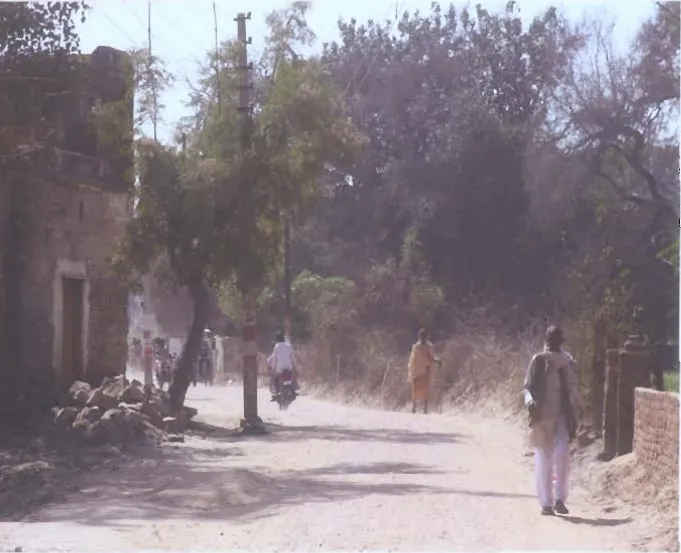
- What it is
- Rāja-ghāṭa is a ghāṭa (bathing and landing place) on the old course of the Yamunā in the south-east of Vṛndāvana, south of Ādi-badrī-ghāṭa.
- Visiting
- Śrī Vraja-maṇḍala Parikramā (2007) places Rāja-ghāṭa in the south-eastern part of Vṛndāvana, south of Ādi-badrī-ghāṭa, on the bank of the Yamunā's old course.
- Places here
- Caitanya Viśrāma Sthālī
In short
Rāja-ghāṭa is a ghāṭa (bathing and landing place) on the old course of the Yamunā in the south-east of Vṛndāvana, south of Ādi-badrī-ghāṭa.[1 +2] According to the local tradition recorded in Śrī Vraja-maṇḍala Parikramā (2007) and other guidebooks, here Kṛṣṇa, disguised as a boatman, ferried Śrīmatī Rādhārāṇī and the gopīs across the river and teased them in midstream.[1 +5] Śrīmad-Bhāgavatam tells no boat pastime, and no older text names this ghāṭa; Śrīla Rūpa Gosvāmī describes Kṛṣṇa's boat play on the Yamunā without naming a place.[7 +5] The Caitanya Viśrāma Sthālī is across the road.[1 +2]
Key facts
| Kind | ghāṭa |
|---|---|
| Region · area | Vṛndāvana |
| Also part of | Yamunā |
Divine pastimes
The boat play in the scriptures
Śrīmad-Bhāgavatam, Canto 10, tells no boat pastime of Kṛṣṇa and the gopīs, and Śrīla Prabhupāda's Kṛṣṇa book tells none either.[7 +2] Two commentators on the gopīs' song in ŚB 10.35, Śrīla Jīva Gosvāmī and Śrīla Śrīnātha Cakravartī, say that Yaśodā had complained that the gopīs made her son cross the Yamunā back and forth and carry their loads of yogurt; Śrīla Śrīnātha Cakravartī speaks of Kṛṣṇa as the Yamunā's boatman (summarised here, not translated). Neither names a ghāṭa.[13 +1] Among the games of the cowherd boys, Śrīla Viśvanātha Cakravartī Ṭhākura explains their "royal play" as stopping the girls of Vraja at a toll-ghāṭa to take a tax. His Sanskrit names no river; the BBT purport to the verse, by Śrīla Prabhupāda's disciples, renders his comment as a toll place on the riverbank where those crossing the Yamunā paid a small tax:[8 +1]
In Vṛndāvana there was a particular place on the riverbank where people who wanted to cross the Yamunā would pay a small tax. At times the cowherd boys would assemble in this area and prevent the young girls of Vṛndāvana from crossing the river, insisting that they had to pay a customs duty first.
Translation: Śrīla Prabhupāda's disciples (BBT)Śrīla Rūpa Gosvāmī names the boat play (nau-khelā) among Rādhā and Kṛṣṇa's pastimes in his Ujjvala-nīlamaṇi, and his anthology Padyāvalī collects verses on it, in which Kṛṣṇa is the gopīs' boatman on the Yamunā and a gopī fears the boat only because the restless Mādhava steers it (summarised here, not translated). No verse names a ghāṭa.[10 +2]
muktā taraṅga-nivahena pataṅga-putrī navyā ca naur iti vacas tava tathyam eva
śaṅkā-nidānam idam eva mamātimātraṃ tvaṃ cañcalo yad iha mādhava nāviko'si //
Śrīla Prabhupāda describes the same kind of pastime in general terms, without naming a place:[17]
General teaching (does not name the place)“Being a cowherd girl, Śrīmatī Rādhārāṇī regularly carries milk in a container and often goes to sell the milk on the other side of the Yamunā. To cross the river, She has to pay the boatman, and the spot where the boatman collects his fares is called the dāna-ghāṭi.”
Śrīla Prabhupāda, Śrī Caitanya-caritāmṛta, Madhya-līlā 14.173, purport · vedabase.io
Where the boat play took place
The Bhakti-ratnākara sets Kṛṣṇa's boat play elsewhere: at a ghāṭa on the Yamunā near Lohavana, where Rāi (Rādhā) and Her friends came with milk to cross and called the boatman of an old boat, and at Mānasī-gaṅgā by Govardhana. It does not mention Rāja-ghāṭa.[18 +1] Read more: The boat pastime on Mānasī-gaṅgā: Kṛṣṇa as the boatman →
Accounts differ Where Kṛṣṇa's boat pastime with the gopīs took place.
- Śrī Vraja-maṇḍala Parikramā (2007), Vṛndāvana, the Playground of God (2010), The Color Guide to Vṛndāvana (2000), the undated parikramā notes VṛndāvanaAt Rāja-ghāṭa in Vṛndāvana, on the Yamunā.
- Bhakti-ratnākara, Fifth Wave (1912 ed. p. 276)At a ghāṭa on the Yamunā near Lohavana: Rāi and Her friends came with milk to cross and called the boatman of an old boat.
- Śrī Vraja-maṇḍala Parikramā (2007), in its Lohavana chapter'At a Yamunā ghāṭa' near Lohavana Kṛṣṇa enjoyed boating pastimes with the gopīs, as described in the Bhakti-ratnākara (it quotes the lines 'eī ghāṭe kṛṣṇa naukā-krīḍā …'); 'This pastime place still lies here today'. The same book also sets a boat pastime at Rāja-ghāṭa.
- Bhakti-ratnākara, Fifth Wave (1912 ed. p. 209)At a ghāṭa of Mānasī-gaṅgā by Govardhana, where Kṛṣṇa as boatman ferried Rādhikā and Her friends.
Traditional accounts
According to the local tradition recorded in Śrī Vraja-maṇḍala Parikramā (2007), Vṛndāvana, the Playground of God (2010), The …
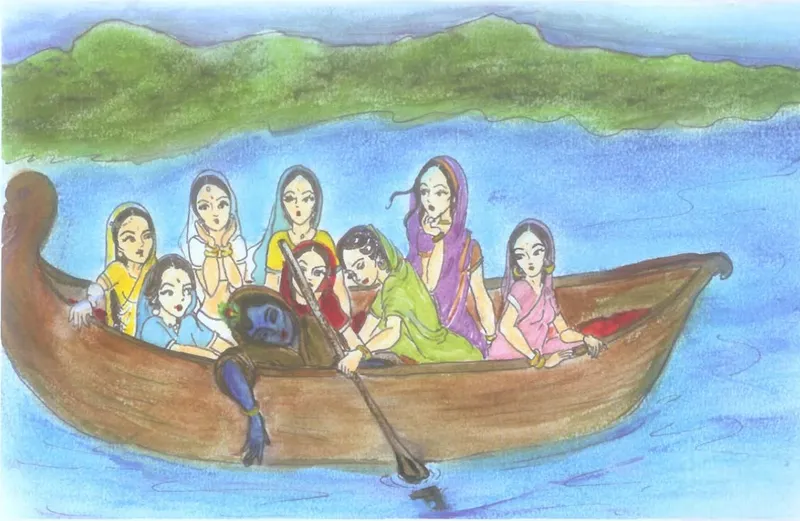
According to the local tradition recorded in Śrī Vraja-maṇḍala Parikramā (2007), Vṛndāvana, the Playground of God (2010), The Color Guide to Vṛndāvana (2000) and the undated parikramā notes Vṛndāvana, Kṛṣṇa, disguised as a boatman, took Śrīmatī Rādhārāṇī and the gopīs across the Yamunā here and teased them in midstream. They tell the rest differently: why the gopīs crossed, whose feet Kṛṣṇa washed, and what happened in midstream.[1 +5]
Accounts differ How the Rāja-ghāṭa boat pastime went (the guidebooks' versions).
- Śrī Vraja-maṇḍala Parikramā (2007)Halfway across, Kṛṣṇa made many excuses to delay the crossing; the gopīs ordered Him to hurry and tried to frighten Him with the name of Mahārāja Kaṁsa (hence 'Rāja-ghāṭa'). No feet-washing, food or flute.
- Vṛndāvana, the Playground of God (2010)The gopīs were going to sell milk products; Kṛṣṇa asked a high fare and in midstream asked to be paid in butter, and at last He revealed Himself to Rādhārāṇī.
- the undated parikramā notes Vṛndāvana; The Color Guide to Vṛndāvana (2000)In midstream Kṛṣṇa said He was too hungry to row and ate the gopīs' sweets, until they found His flute under His clothes.
According to the local tradition recorded in Śrī Vraja-maṇḍala Parikramā (2007), the name comes from this: halfway across, the gopīs tried to frighten Kṛṣṇa with the name of King Kaṁsa, and so the ghāṭa is called Rāja-ghāṭa, the king's ghāṭa. No older source gives this explanation, so it is not certain.[1]
Visiting today
Śrī Vraja-maṇḍala Parikramā (2007) places Rāja-ghāṭa in the south-eastern part of Vṛndāvana, south of Ādi-badrī-ghāṭa, on the bank of the Yamunā's old course. Vṛndāvana, the Playground of God (2010) shows the Rāja-ghāṭa area as a dirt lane between trees, with the Caitanya Viśrāma Sthālī across the road. Whether the river still reaches the ghāṭa is not stated.[1 +2]
Location
| Where it is | south-eastern part, south of Ādi-badrī-ghāṭa, on the bank of the Yamunā's old course[23] |
|---|
Places at Rāja-ghāṭa
1 places
Nearby places
Ādi-badrī-ghāṭa · Yamunā
Pictures
1 pictures
History
The Color Guide to Vṛndāvana (2000) lists Raj Ghāṭa as the thirty-ninth of forty riverside ghāṭas of Vṛndāvana and says that the ghāṭas were built of red sandstone under Rājput patronage between about 1580 and 1870; it names no builder for this one, and no date or inscription for it has been found.[20 +1] The historian Growse (1883) reports that a village called Raj-pur near Vṛndāvana was named after a Rāja-ghāṭa in the sixteenth century, but he does not say where that ghāṭa was, so it may not be this one.[22]
More on this place
The boat pastime on Mānasī-gaṅgā: Kṛṣṇa as the boatman
References
23 references
- Śrī Vraja-maṇḍala Parikramā (2007), PDF p. 344
- Vṛndāvana, the Playground of God (2010), Bhakti Caitanya Svāmī, PDF p. 236
- Vṛndāvana, the Playground of God (2010), Bhakti Caitanya Svāmī, PDF p. 237
- The Color Guide to Vṛndāvana (2000), Written and Photographed by Rājaśekhara dāsa Brahmacārī, PDF p. 152
- the undated parikramā notes Vṛndāvana, ¶296
- the undated parikramā notes Vṛndāvana, ¶298
- Śrīmad-Bhāgavatam 10.18.14, GRETIL
- Śrīmad-Bhāgavatam 10.18.15, GRETIL
- Śrīmad-Bhāgavatam 10.35.14–15, GRETIL
- Śrīla Rūpa Gosvāmī, Ujjvala-nīlamaṇi 15.223, GRETIL
- Śrīla Rūpa Gosvāmī, Ujjvala-nīlamaṇi 15.236, quoting Padyāvalī 270, GRETIL
- Padyāvalī (compiled by Śrīla Rūpa Gosvāmī), section 'atha nau-krīḍā' (boat play), verses 268, 270–272, GRETIL
- Śrīla Sanātana Gosvāmī: commentary on ŚB 10.18.14, Bhagavata Vidya Pith edition, ed. Bhagavata Rishi and Krishna Shankar Shastri, 1996
- Śrīla Jīva Gosvāmī: commentary on ŚB 10.35.14-15, Bhagavata Vidya Pith edition, ed. Bhagavata Rishi and Krishna Shankar Shastri, 1996
- Śrīla Viśvanātha Cakravartī Ṭhākura: commentary on ŚB 10.18.15, Bhagavata Vidya Pith edition, ed. Bhagavata Rishi and Krishna Shankar Shastri, 1996
- Śrīla Viśvanātha Cakravartī Ṭhākura: commentary on ŚB 10.18.15, Bhagavata Vidya Pith edition, ed. Bhagavata Rishi and Krishna Shankar Shastri, 1996
- Śrīla Prabhupāda, Śrī Caitanya-caritāmṛta, Madhya-līlā 14.173, purport · vedabase.io
- Śrīla Narahari Cakravartī, Bhakti-ratnākara, Fifth Wave (pañcama taraṅga), 1912 ed. p. 276, 2nd ed., 1912
- Śrīla Narahari Cakravartī, Bhakti-ratnākara, Fifth Wave, 1912 ed. p. 209, 2nd ed., 1912
- The Color Guide to Vṛndāvana (2000), Written and Photographed by Rājaśekhara dāsa Brahmacārī, PDF p. 31
- Muttra: A Gazetteer, District Gazetteers of the United Provinces of Agra and Oudh vol. VII
- Mathurá (1883), F. S. Growse, B.C.S., M.A. Oxon., C.I.E. (as the title page gives him, p. 326
- Śrī Vraja-maṇḍala Parikramā (2007), p. 662-663