Lohavana
लोहवन Hindi name proposed
Also called Lohajaṅghavana
- What it is
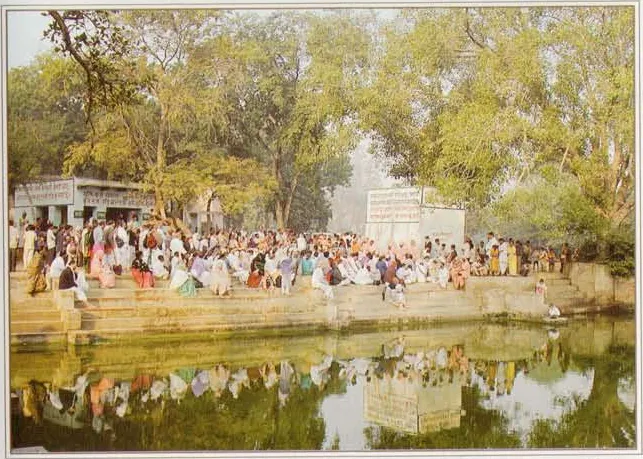
- Lohavana is one of the twelve forests of Vraja, across the Yamunā from Mathurā.
- Visiting
- Śrī Vraja-maṇḍala Parikramā (2007) places Lohavana just across the Yamunā from Mathurā, about two miles north-east of the Mathurā–Gokula highway, and lists three places of darśana: Kṛṣṇa-kuṇḍa …
- Places here
- Kṛṣṇa-kuṇḍa (Lohavana), Lohāsura's cave, Lauhāsura-kī-jaṅgha, Āyore-grāma
In short
Lohavana is one of the twelve forests of Vraja, across the Yamunā from Mathurā.[1 +10] With Bhadravana, Baelvana, Bhāṇḍīravana and Mahāvana it is one of the five forests on the eastern bank of the river.[2 +5] The Varāha Purāṇa calls it Lohajaṅgha-vana, the forest "protected by Lohajaṅgha", which destroys all sins.[1 +5] According to the Bhakti-ratnākara, Kṛṣṇa herded the cows here and killed the demon Lohajaṅgha, and Śrīla Prabhupāda quotes these words.[7 +5] Śrī Caitanya Mahāprabhu came to Lohavana on His tour of Vraja.[22 +4]
Key facts
| Kind | forest |
|---|---|
| Region · area | Bhāṇḍīravana |
| Ācāryas | Śrī Caitanya Mahāprabhu, Śrīla Rūpa Gosvāmī, Śrīla Rāghava Paṇḍita Gosvāmī of Govardhana, Śrīla Śrīnivāsa Ācārya, Śrīla Narottama dāsa Ṭhākura |
Why it is glorified
The Purāṇas count Lohavana among the twelve forests of Vraja, though each list gives it its own name and number.
The Purāṇas count Lohavana among the twelve forests of Vraja, though each list gives it its own name and number. An overview of all the lists is on the Vraja-maṇḍala page.[1 +5] In one chapter the Varāha Purāṇa says that the ninth forest is named Lohajaṅgha-vana, that Lohajaṅgha protects it, and that it destroys all sins; in its other list of the forests it calls the ninth forest Lohārgala-vana. Śrīla Rūpa Gosvāmī's Mathurā-māhātmya and the Bhakti-ratnākara quote the first verse as the words of the Ādi-varāha (summarised here, not translated).[1 +6]
लोहजङ्घवनं नाम लोहजङ्घेन रक्षितम् ।। नवमं तु वनं नाम सर्वपातकनाशनम् ॥ 44 ॥
lohajaṅghavanaṁ nāma lohajaṅghena rakṣitam
navamaṁ tu vanaṁ nāma sarvapātakanāśanam || 44 ||
The Padma Purāṇa calls the forest simply Loha and, describing Vraja as a lotus, names Lohavana its fifteenth petal.[1 +5] The Nārada Purāṇa also counts Lohajaṅgha as the ninth forest and says that one who bathes there obtains both enjoyment and liberation by the grace of Mahā-Viṣṇu (summarised here, not translated).[6 +1] How the lists name and number this forest and its neighbours is shown on the page of Baelvana.[1 +5]
Divine pastimes
Kṛṣṇa herds the cows
Śrīmad-Bhāgavatam (10.15.1) tells how Kṛṣṇa and Balarāma, when They reached the age of six to ten, were given charge of the cows and made the land of Vṛndāvana auspicious with Their footprints; it names no forest. The Garga-saṁhitā names Lohārgala among the forests through which Kṛṣṇa wandered with the cows.[29 +2]
General teaching (does not name the place)“At that time, all the cowherd men conferred and agreed to give those boys who had passed their fifth year charge of the cows in the pasturing ground. Given charge of the cows, Kṛṣṇa and Balarāma traversed Vṛndāvana, purifying the land with Their lotus footprints.”
Śrīla Prabhupāda, Kṛṣṇa, the Supreme Personality of Godhead, ch. 15 'Killing of Dhenukāsura' · vedabase.io
According to the Bhakti-ratnākara, Kṛṣṇa's herding of the cows at Lohavana was wonderful, and the place is filled with the fragrance of many flowers.[7 +5]
The demon Lohajaṅgha
The Bhakti-ratnākara says that here the Lord killed the demon Lohajaṅgha, and it gives the forest's name as Lohajaṅgha-vana; Śrīla Prabhupāda quotes these lines in his purport to the Caitanya-caritāmṛta (Madhya 18.67).[7 +5] No account of a demon Lohajaṅgha has been found in the Tenth Canto of Śrīmad-Bhāgavatam, and the Varāha Purāṇa speaks of Lohajaṅgha only as the protector of the forest; the sources differ on who he was (see below).[1 +5] The guidebooks connect the demon with Lohāsura's cave and with a stone at Lohavana, Lauhāsura-kī-jaṅgha; both have their own pages.[7 +4]
Śaṅkhacūḍa
The Garga-saṁhitā says that during the rāsa dance Kṛṣṇa went with the gopīs to Lohajaṅgha-vana, crowded with the mādhavī creepers of spring, and in the same chapter tells the killing of the demon Śaṅkhacūḍa. Śrīmad-Bhāgavatam (10.34) tells the killing of Śaṅkhacūḍa without naming a place.[30 +4] The places where other works set this pastime are described on the page of Śyāma-kuṭī.[30 +4] Read more: The killing of Śaṅkhacūḍa: when, where, and the jewel →
The boat pastime
According to the Bhakti-ratnākara, Kṛṣṇa began His boat pastime at a ghāṭa on the Yamunā near Lohavana: Śrī Rādhā and Her friends came to cross the river with milk products, and Kṛṣṇa waited as the boatman with a very old boat. The book supports it with a verse from Śrīla Rūpa Gosvāmī's anthology Padyāvalī, which names the Yamunā but no place.[7 +6] The ghāṭa has its own page, the ghāṭa of Kṛṣṇa's boating pastimes.[7 +5]
Traditional accounts
Śrīla Nārāyaṇa Bhaṭṭa Gosvāmī's Vraja-bhakti-vilāsa, quoting the Bṛhan-nāradīya, names Hṛṣīkeśa as the presiding Deity of …
Śrīla Nārāyaṇa Bhaṭṭa Gosvāmī's Vraja-bhakti-vilāsa, quoting the Bṛhan-nāradīya, names Hṛṣīkeśa as the presiding Deity of Lohajaṅghāna-vana, as it calls the forest.[36 +1] The book gives a circuit of the forest for the eleventh day of the bright fortnight of the month of Bhādra, with a prayer to the forest, and includes in it the place where the armies of Jarāsandha were defeated, where the pilgrim bathes in a Sūrya-kuṇḍa (summarised here, not translated).[4 +2] The Bṛhan-nāradīya and Vāyu Purāṇa verses that it quotes have not been found in the available texts.[4 +2]
The same book says that the forests and banyan trees on the northern bank of the Yamunā, Lohajaṅghāna-vana among them, are the kingdom of Śrī Baladeva, and those of the southern bank Śrī Kṛṣṇa's.[12 +1] The Garga-saṁhitā, among Balarāma's thousand names, calls Him the lord of the Lohārgala forest.[30 +4] How the guidebooks describe Balarāma's place in the forests across the Yamunā is shown on the page of Baelvana.[12 +1]
The Gosvāmīs and ācāryas
The Caitanya-caritāmṛta tells that on His tour of Vraja Śrī Caitanya Mahāprabhu crossed the Yamunā to Bhadravana, saw Śrīvana and …
Śrī Caitanya Mahāprabhu
The Caitanya-caritāmṛta tells that on His tour of Vraja Śrī Caitanya Mahāprabhu crossed the Yamunā to Bhadravana, saw Śrīvana and Lohavana, and went on to Mahāvana and Gokula.[22 +4]
‘śrīvana’ dekhi’ punaḥ gelā ‘loha-vana’
‘mahāvana’ giyā kailā janma-sthāna-daraśana
Śrī Caitanya Mahāprabhu then visited Śrīvana and Lohavana. He then went to Mahāvana and saw Gokula, the place of Lord Kṛṣṇa’s early childhood pastimes.
Translation: Śrīla A.C. Bhaktivedanta Swami PrabhupādaLater visitors
According to the Bhakti-ratnākara, Śrīla Rāghava Paṇḍita Gosvāmī of Govardhana showed Lohavana and the ghāṭa of the boat pastime to Śrīla Śrīnivāsa Ācārya and Śrīla Narottama dāsa Ṭhākura on their round of Vraja, and they had darśana of the images of Kṛṣṇa, Balarāma, Nṛsiṁha and others in that region; the book does not name a Gopīnātha.[18 +3] The same work tells that Śrīla Vīracandra Prabhu, on his own tour of Vraja, wandered in the Bhāṇḍīra, Śrī and Loha forests before he went to Gokula-Mahāvana.[41]
Śrīla Prabhupāda
Śrīla Prabhupāda names Lauhavana among the five forests on the eastern bank of the Yamunā, and among the twelve forests that …
Śrīla Prabhupāda names Lauhavana among the five forests on the eastern bank of the Yamunā, and among the twelve forests that pilgrims of his time visited, starting from Mathurā.[2 +7]
Names this place“There are twelve forests in the area of Vṛndāvana, and Madhuvana is one of them. Pilgrims from all parts of India assemble together and visit all twelve of these forests. There are five forests on the eastern bank of the Yamunā: Bhadravana, Bilvavana, Lauhavana, Bhāṇḍīravana and Mahāvana.”
Śrīla Prabhupāda, Śrīmad-Bhāgavatam, 4.8.42, purport · vedabase.io
Explaining the verse in which Śrī Caitanya Mahāprabhu visits Śrīvana and Lohavana, he quotes the Bhakti-ratnākara:[7 +5]
Names this placeOf Śrīvana (also called Bilvavana), the Bhakti-ratnākara states, devatā-pūjita bilvavana śobhāmaya: “The beautiful forest of Bilvavana is worshiped by all the demigods.” … “At Lohavana, Lord Kṛṣṇa used to tend cows. The demon named Lohajaṅgha was killed at this place.”
Śrīla Prabhupāda, Śrī Caitanya-caritāmṛta, Madhya-līlā 18.67, purport · vedabase.io
Songs
The song "Jaya Jaya Madana Gopāla Baṁśī Dhārī", whose last verse is signed with the name Narottama dāsa, glorifies the twelve …
The song "Jaya Jaya Madana Gopāla Baṁśī Dhārī", whose last verse is signed with the name Narottama dāsa, glorifies the twelve forests as places of Kṛṣṇa's pastimes and names Śrīvana, Lauha, Bhadra and Bhāṇḍīra in one line; it is shown on the page of Baelvana.[44]
Visiting today
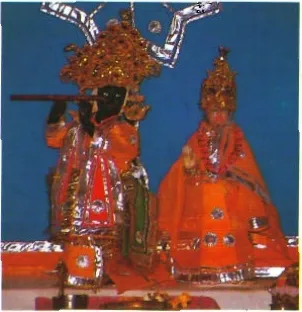
Śrī Vraja-maṇḍala Parikramā (2007) places Lohavana just across the Yamunā from Mathurā, about two miles north-east of the Mathurā–Gokula highway, and lists three places of darśana: Kṛṣṇa-kuṇḍa, Lohāsura's cave and Śrī Gopīnātha. Vṛndāvana-Dhāma Ki Jaya! (c. 1986) names the Deities in the temple on the bank of Kṛṣṇa-kuṇḍa Rādhā-Gopīnātha.[7 +4] The undated parikramā notes Lohavana list the same temple, the cave and the kuṇḍa, and add that local paṇḍitas worship a sandstone said to be the lower body of the demon as an expansion of Śanideva. These descriptions have not been checked on the spot.[7 +4]
Location
| Where it is | 'on the eastern bank of the Yamunā' (forest no. 3 of the twelve)[43] |
|---|
Places at Lohavana
4 places
Nearby places
Yamunā · Mathurā
Pictures
1 pictures
Where the sources differ
Accounts differ Who Lohajaṅgha was, after whom the forest is named.
- Varāha Purāṇa 153.44; Śrīla Rūpa Gosvāmī (Mathurā-māhātmya 352); the Ādi-vārāha verse quoted by the Bhakti-ratnākaraThe forest is protected by Lohajaṅgha (lohajaṅghena rakṣitam).
- Bhakti-ratnākara (Bengali), Śrī Vraja-maṇḍala Parikramā (2007), Vṛndāvana-Dhāma Ki Jaya! (c. 1986), the undated parikramā notes LohavanaKṛṣṇa killed the demon Lohajaṅgha here, where He herded the cows; the Bhakti-ratnākara gives the name Lohajaṅgha-vana in the next line (it does not say 'therefore'); Śrī Vraja-maṇḍala Parikramā (2007) and the undated parikramā notes Lohavana render it 'It is called Lohavana because …', and Vṛndāvana-Dhāma Ki Jaya! (c. 1986) quotes only the killing.
- Vraja-bhakti-vilāsa ch. 3 v.47 and ch. 9 v.21Lohajaṅgha is a sage (ṛṣi) who performed austerities, had Kṛṣṇa's darśana and went to Vaikuṇṭha; his image is honoured at Mathurā and a place of the ṛṣi is in Kāmyavana.
- the undated parikramā notes LohavanaThe demon was cut in two; his iron lower body, a sandstone, is worshipped as an expansion of Śanideva.
The wording of these accounts is our summary of the sources, not a published translation.
Accounts differ The name of the ninth forest.
- Varāha 153.44; Rūpa; Bhakti-ratnākara (verse)Lohajaṅgha-vana.
- Varāha 161.9; Garga-saṁhitā 2.10.21, 8.13.105Lohārgala(-vana).
- Padma Purāṇa 69.16, 69.51; Caitanya-caritāmṛta Madhya 18.67Loha / Lohavana.
- Ādi-purāṇa 9.19; Śrīla Prabhupāda (ŚB 4.8.42, CC Madhya 17.193)Lauha / Lauhavana.
Whether, and how often, Jarāsandha was defeated at Lohavana. The undated parikramā notes Lohavana say, without a source, that he was defeated here eighteen times, which is not certain; Śrīmad-Bhāgavatam counts seventeen battles for Mathurā, the eighteenth cut short when Kālayavana came.[37 +4]
Accounts differ Whether, and how often, Jarāsandha was defeated at Lohavana.
- the undated parikramā notes LohavanaEighteen times at Lohavana.
- Vraja-bhakti-vilāsa ch. 10A place of the defeat of Jarāsandha's akṣauhiṇīs (Sūrya-kuṇḍa) in the Lohavana circuit; no number.
- Śrīmad-Bhāgavatam 10.50.41-44Seventeen battles for Mathurā; before the eighteenth, Kālayavana besieged Mathurā.
More on this place
The killing of Śaṅkhacūḍa: when, where, and the jewel
References
48 references
- Varāha Purāṇa, adhyāya 161, verses 7-10, Sanskrit Wikisource
- Padma Purāṇa, Vṛndāvana-māhātmya (1) vv.16-17 (= Padma Pātāla-khaṇḍa 69.16-17)
- Ādi-purāṇa, (9) navamo'dhyāyaḥ vv.19-20, Śrī Veṅkaṭeśvara Press, Mumbai, 1929
- Śrīla Nārāyaṇa Bhaṭṭa Gosvāmī, Vraja-bhakti-vilāsa, chapter 1, list of the twelve forests quoted 'pādme', vv.13-17, printed p. 2, 1st ed., publ. Bābā Kṛṣṇadāsa, Kusuma-sarovara, Saṁvat 2008
- Śrīla Narahari Cakravartī, Bhakti-ratnākara, Fifth Wave, printed p. 185: the twelve forests, with the Padma Purāṇa and Skanda verses, 2nd ed., 1912
- Nārada Purāṇa, उत्तरार्धः/अध्यायः 79 v.79-12
- Śrī Vraja-maṇḍala Parikramā (2007), PDF p. 263
- Śrī Vraja-maṇḍala Parikramā (2007), PDF p. 264
- Vṛndāvana-Dhāma Ki Jaya! (c. 1986), by Dhruva Mahārāja dāsa, PDF p. 83
- the undated parikramā notes Lohavana, ¶18
- the undated parikramā notes Lohavana, ¶25
- Śrīla Nārāyaṇa Bhaṭṭa Gosvāmī, Vraja-bhakti-vilāsa, chapter 1, 'the two divisions of the twelve forests, north and south of the Yamunā', quoted 'ādivārāhe', printed p. 12, 1st ed., publ. Bābā Kṛṣṇadāsa, Kusuma-sarovara, Saṁvat 2008
- Śrīla Prabhupāda, Śrīmad-Bhāgavatam, 4.8.42, purport · vedabase.io
- Śrīla Prabhupāda, Śrī Caitanya-caritāmṛta, Madhya-līlā 17.193, purport · vedabase.io
- Śrīla Prabhupāda, Śrī Caitanya-caritāmṛta, Madhya-līlā 5.12, purport · vedabase.io
- Varāha Purāṇa, adhyāya 153, verse 44, Sanskrit Wikisource
- Śrīla Rūpa Gosvāmī, Mathurā-māhātmya v.352 ('of Lohajaṅgha-vana'), quoting the Ādi-vārāha
- Śrīla Narahari Cakravartī, Bhakti-ratnākara, Fifth Wave, printed p. 276: the tenth forest, Lohavana, 2nd ed., 1912
- Padma Purāṇa, Vṛndāvana-māhātmya (1) v.51 (= Padma Pātāla-khaṇḍa 69.51)
- Śrīla Narahari Cakravartī, Bhakti-ratnākara, Fifth Wave, printed p. 276: the boat pastime at a ghāṭa near Lohavana, 2nd ed., 1912
Show all 48 references
- Padyāvalī (anthology compiled by Śrīla Rūpa Gosvāmī), v.268, GRETIL
- Śrīla Prabhupāda, Śrī Caitanya-caritāmṛta, Madhya-līlā 18.67, purport · vedabase.io
- Śrīla Kṛṣṇadāsa Kavirāja Gosvāmī, Śrī Caitanya-caritāmṛta, CC Madhya-līlā 18.66, online edition · vedabase.io
- Śrīla Kṛṣṇadāsa Kavirāja Gosvāmī, Śrī Caitanya-caritāmṛta, Madhya-līlā 18.67, online edition · vedabase.io
- Śrīla Prabhupāda, Śrī Caitanya-caritāmṛta, Madhya-līlā 18.66, translation · vedabase.io
- Śrīla Prabhupāda, Śrīmad-Bhāgavatam, Canto 1, Introduction, Introduction (life of Śrī Caitanya Mahāprabhu) · vedabase.io
- Varāha Purāṇa, adhyāya 153, verse 44, Sanskrit Wikisource
- Nārada Purāṇa, उत्तरार्धः/अध्यायः 79 v.79-15 to 79-17
- Śrīmad-Bhāgavatam 10.15.1, GRETIL
- Garga-saṁhitā, Vṛndāvana-khaṇḍa (2), adhyāya 10, verses 20-21, Sanskrit Wikisource
- Śrīla Prabhupāda, Kṛṣṇa, the Supreme Personality of Godhead, ch. 15 'Killing of Dhenukāsura' · vedabase.io
- Garga-saṁhitā, Vṛndāvana-khaṇḍa (2), adhyāya 23, verse 1, Sanskrit Wikisource
- Śrīmad-Bhāgavatam 10.34.25, GRETIL
- Śrīmad-Bhāgavatam 10.34.31, GRETIL
- Garga-saṁhitā, Balabhadra-khaṇḍa (8), adhyāya 13 (Balabhadra's thousand names), verse 105, Sanskrit Wikisource
- Śrīla Nārāyaṇa Bhaṭṭa Gosvāmī, Vraja-bhakti-vilāsa, chapter 1, the presiding Deities of the twelve forests quoted from the Bṛhan-nāradīya, nos. 6, 9, 10, 12, printed p. 5, 1st ed., publ. Bābā Kṛṣṇadāsa, Kusuma-sarovara, Saṁvat 2008
- Śrīla Nārāyaṇa Bhaṭṭa Gosvāmī, Vraja-bhakti-vilāsa, chapter 10, 'the circumambulation of Lohavana' (quoted 'vāyupurāṇe'), printed p. 211, 1st ed., publ. Bābā Kṛṣṇadāsa, Kusuma-sarovara, Saṁvat 2008
- Śrīla Nārāyaṇa Bhaṭṭa Gosvāmī, Vraja-bhakti-vilāsa, chapter 2, vv.19-20 and the prose after v.20 (the forests and banyans of the two banks, and whose kingdom they are), printed p. 36, 1st ed., publ. Bābā Kṛṣṇadāsa, Kusuma-sarovara, Saṁvat 2008
- Śrīla Narahari Cakravartī, Bhakti-ratnākara, Fifth Wave (pañcama taraṅga), printed p. 276, vv.1696 and 1700-1701 in the Grantha Mandira numbering, 2nd ed., 1912
- Śrīla Narahari Cakravartī, Bhakti-ratnākara, Fifth Wave, printed p. 274: across the Yamunā to Surukhuru; the seventh forest, Bhadravana, 2nd ed., 1912
- Śrīla Narahari Cakravartī, Bhakti-ratnākara, Thirteenth Wave, printed p. 1025: Vīracandra Prabhu's tour of Vraja, 2nd ed., 1912
- Śrīla Prabhupāda, Śrī Caitanya-caritāmṛta, Madhya-līlā 1.239, purport · vedabase.io
- Śrīla Prabhupāda, Śrīmad-Bhāgavatam 4.8.42, purport (the list, as reprinted with numbers)
- Jaya Jaya Madana Gopāla Baṁśī Dhārī (Narottama dāsa Ṭhākura (as the song book credits it)) · song book
- the undated parikramā notes Lohavana, ¶11
- Śrīmad-Bhāgavatam 10.50.41, GRETIL
- Śrīmad-Bhāgavatam 10.50.43, GRETIL
- Śrīla Prabhupāda, Kṛṣṇa, the Supreme Personality of Godhead (Kṛṣṇa book), Chapter 50, 'Kṛṣṇa Erects the Dvārakā Fort' · vedabase.io