Raṅga Mahal (Nidhuvana)
रंग महल (निधुवन) Hindi name proposed
Also called Rang Mahal
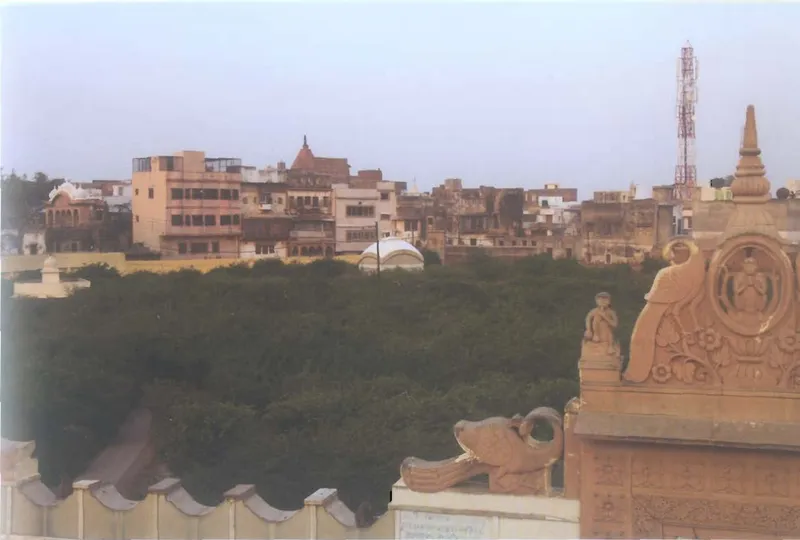
- What it is
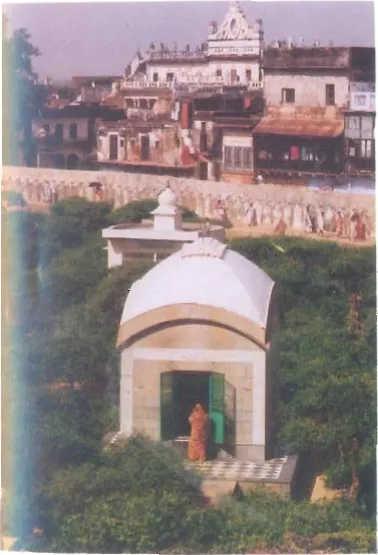
- The Raṅga Mahal is a small shrine at the far end of Nidhuvana, a walled garden in Vṛndāvana.
- Visiting
- The Color Guide to Vṛndāvana (2000) and the undated parikramā notes Vṛndāvana place the Raṅga Mahal at the far end of Nidhuvana, a small temple where a bed is kept for the Divine Couple to rest.
In short
The Raṅga Mahal is a small shrine at the far end of Nidhuvana, a walled garden in Vṛndāvana. According to the local tradition recorded in the guidebooks, Rādhā and Kṛṣṇa rest in Nidhuvana after the rāsa dance, and a bed is kept in the shrine for Them; Vṛndāvana, the Playground of God (2010) says that devotees made the building and keep a bed, perfumes and other articles in it.[1 +6] The Bhāgavatam names no grove for that rest, and no source found gives a builder or a date for the shrine.[1 +8] A second small temple of the same name stands in Sevā-kuñja.[12 +3]
Key facts
| Kind | temple |
|---|---|
| Region · area | Vṛndāvana · Nidhuvana |
| Ācāryas | Śrīla Viśvanātha Cakravartī Ṭhākura |
Divine pastimes
The rest after the rāsa
Śrīmad-Bhāgavatam (10.33.20–24 and 10.33.38) tells how the rāsa night ended. Kṛṣṇa wiped the faces of the tired gopīs, played with them in the Yamunā, strolled with them through a garden on its bank, and sent them home when a night of Brahmā had passed. It names no grove, and it does not tell of Rādhā and Kṛṣṇa resting apart from the other gopīs.[8 +3]
tataś ca kṛṣṇopavane jala-sthala- prasūna-gandhānila-juṣṭa-dik-taṭe
cacāra bhṛṅga-pramadā-gaṇāvṛto yathā mada-cyud dviradaḥ kareṇubhiḥ
Then the Lord strolled through a small forest on the bank of the Yamunā. This forest was filled to its limits with breezes carrying the fragrances of all the flowers growing on the land and in the water. Followed by His entourage of bees and beautiful women, Lord Kṛṣṇa appeared like an intoxicated elephant with his she-elephants.
Translation: Śrīla Prabhupāda's disciples (BBT)Commenting on this verse, Śrīla Viśvanātha Cakravartī Ṭhākura says (summarised here, not translated) that Kṛṣṇa went into that garden by the Yamunā, with its many thousands of kuñjas (bowers), for the pastime of sleep. He names no grove.[16] The guidebooks Vṛndāvana, the Playground of God (2010), The Color Guide to Vṛndāvana (2000) and the undated parikramā notes Vṛndāvana set this rest in Nidhuvana; Vṛndāvana-Dhāma Ki Jaya! (c. 1986) calls Nidhuvana the grove where Rādhā and Kṛṣṇa retire when They are tired from dancing.[1 +4]
Rādhā's dream of the golden youth
Śrīla Viśvanātha Cakravartī Ṭhākura's poem Svapna-vilāsāmṛtāṣṭaka tells how Rādhā told Kṛṣṇa of a dream. On a river-bank like the Yamunā's, in a forest like Vṛndāvana, a golden jewel among brāhmaṇas danced and wept, calling "Kṛṣṇa!" and "Where are You, Rādhe?", and flooded the world with love. Kṛṣṇa made His Kaustubha jewel shine so that the same scene appeared, and Rādhā, remembering Garga Muni's word that Kṛṣṇa's colour would sometimes be yellow, understood that the golden person was Kṛṣṇa Himself.[17 +2]
Garga Muni's words are Śrīmad-Bhāgavatam 10.8.13. In his purport Śrīla Prabhupāda writes that in Kali-yuga the Lord has appeared in a yellow colour as Gaurasundara; neither the verse nor the purport mentions the dream.[19 +2]
General teaching (does not name the place)“We actually see that in Kali-yuga, Bhagavān has appeared in pīta-varṇa, or a yellow color, as Gaurasundara, although the Bhāgavatam speaks of kṛṣṇa-varṇam. … Thus the Gauḍīya Vaiṣṇavas accept the conclusion that although Caitanya Mahāprabhu appeared in pīta color, He is Kṛṣṇa.”
Śrīla Prabhupāda, Śrīmad-Bhāgavatam, 10.8.13, purport · vedabase.io
The poem itself names no place where Rādhā and Kṛṣṇa were when She told Her dream, and the guidebooks that set it in Nidhuvana differ on the spot: Vṛndāvana, the Playground of God (2010) names this Raṅga Mahal; the accounts are set side by side on the page of Nidhuvana.[17 +2]
Śrīla Prabhupāda
Śrīla Prabhupāda's Kṛṣṇa book retells the end of the rāsa night in its thirty-third chapter.
Śrīla Prabhupāda's Kṛṣṇa book retells the end of the rāsa night in its thirty-third chapter. The passage is general: it names no grove and speaks of no rest.[8 +3]
General teaching (does not name the place)“When Kṛṣṇa saw that the gopīs were tired from dancing with Him, He immediately began to wipe His hands over their faces so that their fatigue would be relieved. … After this, Lord Kṛṣṇa and the gopīs came out of the water and began to stroll along the bank of the Yamunā”
Śrīla Prabhupāda, Kṛṣṇa, the Supreme Personality of Godhead (Kṛṣṇa book), Chapter 33, 'Description of the Rāsa Dance' · vedabase.io
Visiting today
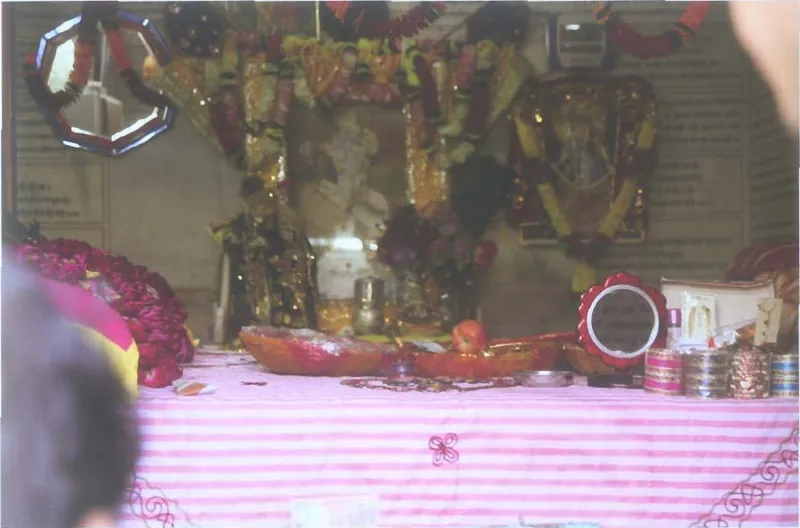
The Color Guide to Vṛndāvana (2000) and the undated parikramā notes Vṛndāvana place the Raṅga Mahal at the far end of Nidhuvana, a small temple where a bed is kept for the Divine Couple to rest. The photograph in Vṛndāvana, the Playground of God (2010) shows the bed with bangles, a mirror and small boxes beside it.[1 +4]
Vṛndāvana-Dhāma Ki Jaya! (c. 1986) describes a "sleeping temple" in Nidhuvana with a bed for the Divine Couple, the sleeping temple; no source says whether it is the Raṅga Mahal.[6] The guidebooks also give the name Raṅga Mahal to a small temple in Sevā-kuñja, which they connect with a different service of Kṛṣṇa to Rādhā (see Raṅga Mahal (Sevā-kuñja)); only the Nidhuvana shrine is described with a bed.[12 +3]
Nearby places
Place where Bāṅke-bihārī was found (Nidhuvana) · Svāmī Haridāsa's samādhi
Pictures
2 pictures
Where the sources differ
Where Kṛṣṇa decorated His beloved in the rāsa night. Śrīmad-Bhāgavatam (10.30.32–33) names no place; the commentator Vaṁśīdhara and Śrīla Viśvanātha Cakravartī Ṭhākura's Vraja-rīti-cintāmaṇi (2.82) name Śṛṅgāravaṭa. The guidebooks differ, and one of them sets it in Nidhuvana; their accounts are set side by side on the page of Nidhuvana.[22 +3]
References
27 references
- the undated parikramā notes Vṛndāvana, ¶185
- The Color Guide to Vṛndāvana (2000), Written and Photographed by Rājaśekhara dāsa Brahmacārī, PDF p. 102
- The Color Guide to Vṛndāvana (2000), Written and Photographed by Rājaśekhara dāsa Brahmacārī, PDF p. 103
- Vṛndāvana, the Playground of God (2010), Bhakti Caitanya Svāmī, PDF p. 182
- Vṛndāvana, the Playground of God (2010), Bhakti Caitanya Svāmī, PDF p. 184
- Vṛndāvana-Dhāma Ki Jaya! (c. 1986), by Dhruva Mahārāja dāsa, PDF p. 69
- Vṛndāvana, the Playground of God (2010), Bhakti Caitanya Svāmī, PDF p. 9
- Śrīmad-Bhāgavatam 10.33.20, GRETIL
- Śrīmad-Bhāgavatam 10.33.24
- Śrīmad-Bhāgavatam 10.33.38, GRETIL
- Śrīla Prabhupāda, Kṛṣṇa, the Supreme Personality of Godhead (Kṛṣṇa book), Chapter 33, 'Description of the Rāsa Dance' · vedabase.io
- Vṛndāvana, the Playground of God (2010), Bhakti Caitanya Svāmī, PDF p. 154
- The Color Guide to Vṛndāvana (2000), Written and Photographed by Rājaśekhara dāsa Brahmacārī, PDF p. 70
- The Color Guide to Vṛndāvana (2000), Written and Photographed by Rājaśekhara dāsa Brahmacārī, PDF p. 165
- the undated parikramā notes Vṛndāvana, ¶111
- Śrīla Viśvanātha Cakravartī Ṭhākura: commentary on ŚB 10.33.24
- Śrīla Viśvanātha Cakravartī Ṭhākura, Svapna-vilāsāmṛtāṣṭakam, verses 1-2
- Śrīla Viśvanātha Cakravartī Ṭhākura, Svapna-vilāsāmṛtāṣṭakam, verses 5 and 8
- Śrīmad-Bhāgavatam 10.8.13, GRETIL
- Śrīla Prabhupāda, Śrīmad-Bhāgavatam, 10.8.13, purport · vedabase.io
Show all 27 references
- Śrīla Viśvanātha Cakravartī Ṭhākura: commentary on ŚB 10.8.13, Bhagavata Vidya Pith edition, ed. Bhagavata Rishi and Krishna Shankar Shastri, 1996
- Śrīmad-Bhāgavatam 10.30.33, GRETIL
- Śrīla Prabhupāda, Kṛṣṇa, the Supreme Personality of Godhead (Kṛṣṇa book), Chapter 30, 'Kṛṣṇa’s Hiding from the Gopīs' · vedabase.io
- Vaṁśīdhara: commentary on ŚB 10.30.33
- Śrīla Viśvanātha Cakravartī Ṭhākura, Vraja-rīti-cintāmaṇi, dvitīya sarga (chapter 2) v. 82
- Vṛndāvana, the Playground of God (2010), Bhakti Caitanya Svāmī, p. 182
- The Color Guide to Vṛndāvana (2000), Written and Photographed by Rājaśekhara dāsa Brahmacārī, p. 88