Nidhuvana
निधुवन Hindi name proposed
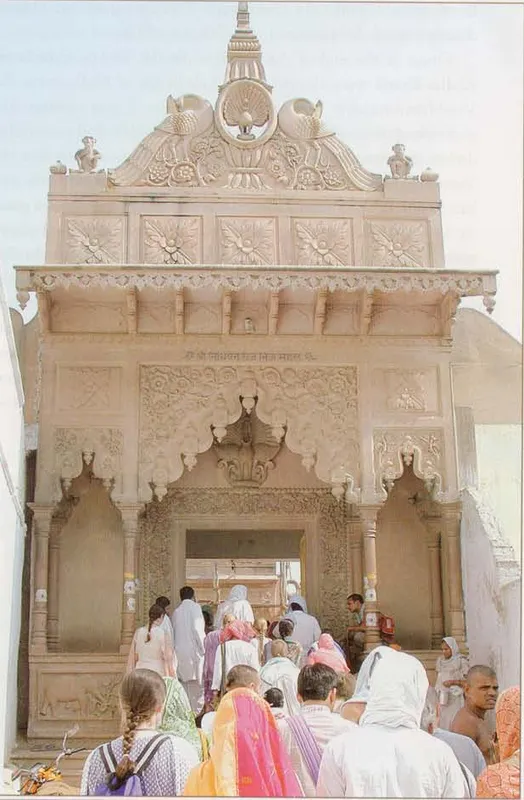
- What it is
- Nidhuvana is a walled grove in Vṛndāvana town, north of Sevā-kuñja.
- Visiting
- Śrī Vraja-maṇḍala Parikramā (2007) counts Nidhuvana as the eighth of the twelve forests within the Vṛndāvana parikramā, north of Sevā-kuñja, and Vṛndāvana, the Playground of God (2010) places it on …
- Places here
- Temple of Rādhā stealing Kṛṣṇa's flute (Nidhuvana), Raṅga Mahal (Nidhuvana), Sleeping temple (Nidhuvana), Rāsa-sthalī (Nidhuvana), Svāmī Haridāsa's samādhi +2 more
In short
Nidhuvana is a walled grove in Vṛndāvana town, north of Sevā-kuñja.[1 +4] Its name comes from the Sanskrit word nidhuvana, used for the confidential pastimes of Rādhā and Kṛṣṇa.[6 +3] Śrīla Viśvanātha Cakravartī Ṭhākura writes that here, north of Vaṁśīvaṭa, Kṛṣṇa disappeared from the gopīs in the night of the rāsa and delighted His dearest beloved, and the Bhakti-ratnākara calls it the place where Rādhā and Kṛṣṇa play with the sakhīs, Her companions.[7 +2] The guidebooks add that Śrī Svāmī Haridāsa found the Deity of Śrī Bāṅke-bihārī here.[3 +5] Śrīla Prabhupāda spoke of Nidhuvana as a place that people still go to see.[16]
Key facts
| Kind | kuñja |
|---|---|
| Region · area | Vṛndāvana |
| Ācāryas | Śrīla Viśvanātha Cakravartī Ṭhākura, Śrīla Jīva Gosvāmī, Gopāla Bhaṭṭa Gosvāmī, Śrīla Narahari Cakravartī Ṭhākura |
Why it is glorified
The dictionaries give nidhuvana as one word for the pastimes of love, and Śrīla Rūpa Gosvāmī uses nidhuvana-krīḍā for Hari's …
The name
The dictionaries give nidhuvana as one word for the pastimes of love, and Śrīla Rūpa Gosvāmī uses nidhuvana-krīḍā for Hari's pastimes with Rādhikā. Two guidebooks explain the name the same way, as a garden or forest of Rādhā and Kṛṣṇa's confidential pastimes. No source says when or by whom the grove was named.[6 +3]
In the Bhakti-ratnākara and other works
On Śrīla Śrīnivāsa Ācārya's tour of Vṛndāvana, the Bhakti-ratnākara names Nidhuvana right after Cīra-ghāṭa and before Keśī-ghāṭa, and says that Rādhā and Kṛṣṇa with the sakhīs are absorbed in Their pastimes "in this Nidhuvana" (summarised here, not translated).[9] A song signed by Yadunātha dāsa, which the same book quotes, tells that Śrī Caitanya Mahāprabhu, remembering His own pastimes in Nidhuvana, became restless and wept, calling out to the Yamunā.[17]
Vaṁśīdhara, a commentator on the Bhāgavatam, names Nidhuvana first among the new groves of Vṛndāvana where the cowherds came to live (ŚB 10.11.28).[18]
Divine pastimes
Kṛṣṇa leaves the gopīs
Śrīmad-Bhāgavatam (10.29–10.30) tells that during the rāsa Kṛṣṇa suddenly disappeared from the gopīs. Searching for Him, they found the footprints of one gopī beside His, and said that He had taken Her to a lonely place and left them behind. The Bhāgavatam names no place.[19]
anayārādhito nūnaṃ bhagavān harir īśvaraḥ / yan no vihāya govindaḥ prīto yām anayad rahaḥ
Truly the Personality of Godhead has been worshiped by Her. Therefore Lord Govinda, being pleased, has brought Her to a lonely spot, leaving us all behind.
Translation: Śrīla A.C. Bhaktivedanta Swami PrabhupādaŚrīla Viśvanātha Cakravartī Ṭhākura and Śrīla Sanātana Gosvāmī explain that this gopī is Śrī Rādhā, and Śrīla Prabhupāda's Kṛṣṇa book also names Her Rādhārāṇī; none of them names a place.[20 +3] Śrīla Viśvanātha Cakravartī Ṭhākura's Vraja-rīti-cintāmaṇi, his book on the places of Vraja, gives the place (summarised here, not translated): north of Vaṁśīvaṭa lies the forest Nidhuvana, where Kṛṣṇa disappeared from the beloveds who were eager for the rāsa and delighted His supreme beloved.[7 +1] Read more: Śrī Rādhā's māna at the autumn rāsa and how it was broken →
The decorating and the rest
The Bhāgavatam (10.30.32–33) tells that, on the way, Kṛṣṇa gathered flowers and sat down with His beloved to arrange Her hair; it names no place.[24 +1] Vaṁśīdhara says that the spot is now known as Śṛṅgāravaṭa, and the Vraja-rīti-cintāmaṇi also names the Śṛṅgāra banyan; neither names Nidhuvana.[26 +1]
When the rāsa night ended, the Bhāgavatam (10.33) tells, Kṛṣṇa wiped the faces of the tired gopīs, played with them in the Yamunā and strolled through a garden on its bank, and at the end of a night of Brahmā He sent them home. It names no grove.[28 +3] Śrīla Viśvanātha Cakravartī Ṭhākura writes (summarised here, not translated) that He then went into the Yamunā's garden of many thousands of kuñjas for the pastime of sleep, without naming a grove.[32] Vṛndāvana, the Playground of God (2010), The Color Guide to Vṛndāvana (2000), the undated parikramā notes Vṛndāvana and Vṛndāvana-Dhāma Ki Jaya! (c. 1986) say that Rādhā and Kṛṣṇa sometimes rest in Nidhuvana after the rāsa dance.[7 +4] Śrīla Kṛṣṇadāsa Kavirāja Gosvāmī's Govinda-līlāmṛta tells how, at the end of the night, Vṛndā sends the birds to wake the Divine Couple in Their kuñja, but it does not name Nidhuvana as the place.[36]
Rādhā's dream of the golden youth
In Śrīla Viśvanātha Cakravartī Ṭhākura's Svapna-vilāsāmṛtāṣṭaka (summarised here, not translated), Rādhā tells Kṛṣṇa of a dream: on a river-bank like the Yamunā's, a golden youth among brāhmaṇas danced and wept, calling "Kṛṣṇa!" and "Where are You, Rādhe?", and flooded the world with love. Kṛṣṇa showed Her the same scene in His Kaustubha jewel, and Rādhā, remembering Garga Muni's words that Kṛṣṇa's colour would sometimes be yellow, understood that the golden one was Kṛṣṇa Himself.[6 +3] The poem names no place; two guidebooks set the dream in Nidhuvana.[6 +4] Śrī Vraja-maṇḍala Parikramā (2007) ends the story with Kṛṣṇa promising to appear as Gaurāṅga with Rādhā's complexion and feelings; these words are the guidebook's, not the poem's.[11 +1] Read more: Nidhuvana: Śrī Rādhā's dream of the golden youth and the stolen flute →
āsan varṇās trayo hy asya gṛhṇato 'nuyugaṃ tanūḥ / śuklo raktas tathā pīta idānīṃ kṛṣṇatāṃ gataḥ
Your son Kṛṣṇa appears as an incarnation in every millennium. In the past, He assumed three different colors — white, red and yellow — and now He has appeared in a blackish color.
Translation: Śrīla A.C. Bhaktivedanta Swami PrabhupādaŚrīla Prabhupāda explains these words of Garga: in Kali-yuga the Lord has appeared in a yellow colour as Gaurasundara.[39 +2]
Traditional accounts
According to the Bengali Vṛndāvana-kathā (1920), the Vrajavāsīs say that once in Nidhuvana Śrī Rādhā sat on a throne in royal …
According to the Bengali Vṛndāvana-kathā (1920), the Vrajavāsīs say that once in Nidhuvana Śrī Rādhā sat on a throne in royal dress while Kṛṣṇa guarded the door dressed as a kotwal, a town police officer. Śrī Vraja-maṇḍala Parikramā (2007) tells the same pastime and says that poets of the Gauḍīya line describe it, but names none, so this may not be certain.[11 +1] The Bengali Bhaktamāla of Kṛṣṇadāsa Bābājī (1905) describes a jewelled house in secluded Nidhuvana, where Rādhā and Kṛṣṇa play with the sakhīs and Kṛṣṇa dresses Rādhikā.[43]
The undated parikramā notes Vṛndāvana (in two copies) and The Color Guide to Vṛndāvana (2000), in nearly the same words, say that Emperor Akbar visited Vṛndāvana in 1570 and that Śrīla Jīva Gosvāmī led him blindfolded into the kuñja of Nidhuvana; Śrī Vraja-maṇḍala Parikramā (2007) says instead that Akbar came in disguise with the singer Tānsena to hear Śrī Svāmī Haridāsa sing in his hut here. None of them gives evidence, so these accounts are not certain.[11 +4] Śrīla Prabhupāda said only that great kings such as Akbar and Mānsiṅgh used to come to Śrīla Rūpa Gosvāmī, naming no place.[48]
Another copy of the undated parikramā notes Vṛndāvana says that Śrī Gopāla Bhaṭṭa Gosvāmī worshipped his śālagrāma-śilās "in his place near Nidhivana" before Śrī Rādhā-Ramaṇa appeared; no other source says so, so this may not be certain.[49]
The Gosvāmīs and ācāryas
According to the Prema-vilāsa (edition of c. 1913), Śrī Caitanya Mahāprabhu, sending Śrīla Lokanātha Gosvāmī from Navadvīpa to …
According to the Prema-vilāsa (edition of c. 1913), Śrī Caitanya Mahāprabhu, sending Śrīla Lokanātha Gosvāmī from Navadvīpa to Vṛndāvana, named "the place Nidhuvana" among the places where he should live, with the Rāsa-sthalī, Vaṁśīvaṭa and Dhīra-samīra.[59 +1] Later, the book says, Śrīla Lokanātha Gosvāmī, going about Vṛndāvana with Śrīla Bhūgarbha Gosvāmī and recognising its places one by one, knew that Nidhuvana lay just ahead, wept and fell to the ground. It is the only account found of anyone recognising the grove.[60]
Śrīla Prabhupāda writes that, according to Śrīla Kavi-karṇapūra's Gaura-gaṇoddeśa-dīpikā (111), Śrī Jagannātha Ācārya was formerly "Durvāsā of Nidhuvana" in Kṛṣṇa's pastimes.[61 +1]
Śrīla Prabhupāda
On a morning walk in Los Angeles on 21 April 1973 Śrīla Prabhupāda told a story set in Nidhuvana …
On a morning walk in Los Angeles on 21 April 1973 Śrīla Prabhupāda told a story set in Nidhuvana:[16]
Names this placeIn Vṛndāvana, there is a place called Nidhuvana. … Nidhuvana. So that was a place... Still, people go to visit. So one Bhagavān dāsa Bābājī, he was chanting, and in the middle of his chanting he made [makes sound with hands like clapping] like this. … So "There was a goat entered Nidhuvana. So I drove it away.
Śrīla Prabhupāda, Morning Walk, Los Angeles, 21 April 1973 · vedabase.io
He also named Nidhuvana when two Western visitors who had seen it described it: in 1969 Allen Ginsberg's "little garden where the tree is", and in 1976 George Harrison's little temple in the garden with a bed for Rādhā and Kṛṣṇa. In neither conversation does he describe it further.[63 +1]
The teaching behind Rādhā's dream is in the Caitanya-caritāmṛta, in Śrīla Prabhupāda's translation (a general verse; it does not mention the dream or Nidhuvana):[65]
General teaching (does not name the place)“The loving affairs of Śrī Rādhā and Kṛṣṇa are transcendental manifestations of the Lord’s internal pleasure-giving potency. Although Rādhā and Kṛṣṇa are one in Their identity, previously They separated Themselves. Now these two transcendental identities have again united, in the form of Śrī Kṛṣṇa Caitanya. I bow down to Him, who has manifested Himself with the sentiment and complexion of Śrīmatī Rādhārāṇī although He is Kṛṣṇa Himself.”
Śrīla Prabhupāda, Śrī Caitanya-caritāmṛta, Ādi-līlā 1.5, translation · vedabase.io
Songs
A song credited in the song book to Śrīla Gaura-kiśora dāsa Bābājī tells of a gosāi who calls "Rādhe, Rādhe" at Keśī-ghāṭa, at …
A song credited in the song book to Śrīla Gaura-kiśora dāsa Bābājī tells of a gosāi who calls "Rādhe, Rādhe" at Keśī-ghāṭa, at Vaṁśīvaṭa, in Nidhuvana and in the kuñjas.[66]
A song of unknown authorship sings of Rādhā and Kṛṣṇa in one body, playing the flute in Nidhuvana and appearing in Nadīyā.[67]
Visiting today
The grove
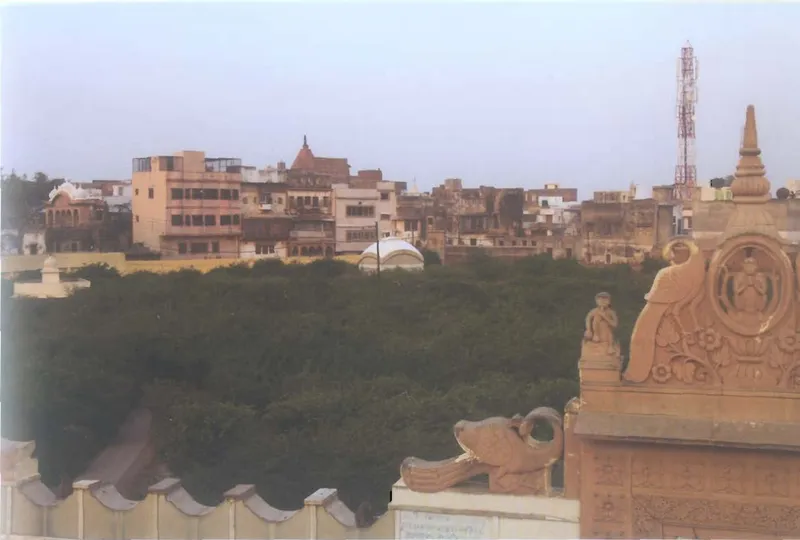
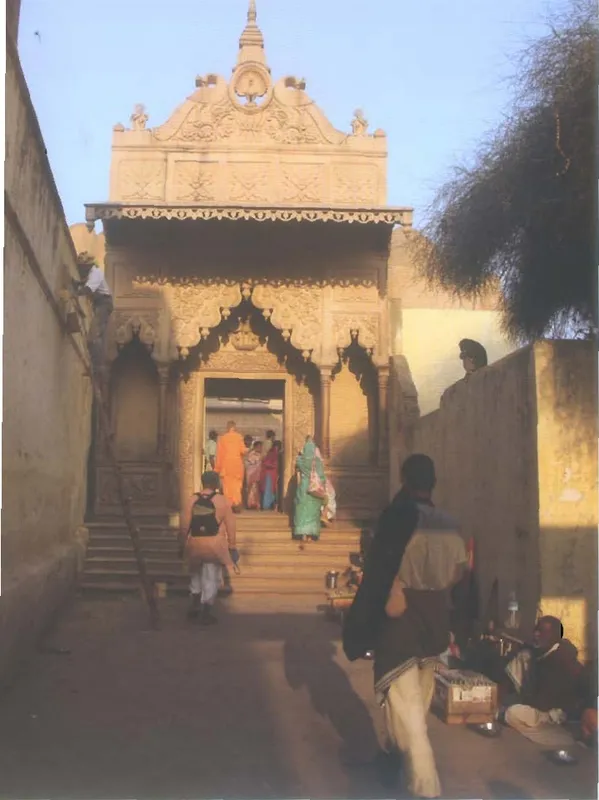
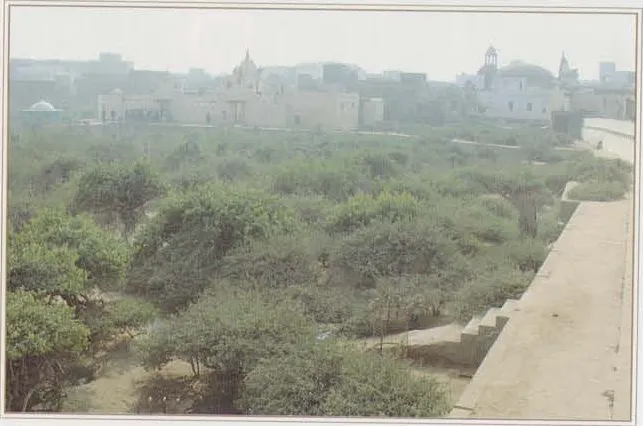
Śrī Vraja-maṇḍala Parikramā (2007) counts Nidhuvana as the eighth of the twelve forests within the Vṛndāvana parikramā, north of Sevā-kuñja, and Vṛndāvana, the Playground of God (2010) places it on the eastern side of the town. The plan in The Color Guide to Vṛndāvana (2000) shows it between the roads to Rādhā-Ramaṇa and to Cīra-ghāṭa, near Retiyā-bāzāra.[1 +4] Inside the walls the guidebooks list the Raṅga Mahal, a shrine of Rādhā holding Kṛṣṇa's flute, Viśākhā-kuṇḍa, a rāsa-sthalī, the place where Bāṅke-bihārī was found and Śrī Svāmī Haridāsa's samādhi.[4 +3] In that shrine, three guidebooks say, Śrīmatī Rādhārāṇī holds Kṛṣṇa's flute, with Her friends Lalitā and Viśākhā on either side.[13 +4]
The "sleeping temple"
The "sleeping temple" is a temple in the garden of Nidhuvana that only one guidebook names: Vṛndāvana-Dhāma Ki Jaya! (c. 1986) says that it has a bed for the Divine Couple, Śrī Rādhā and Kṛṣṇa.[34] The other guidebooks describe a small temple with a bed for Rādhā and Kṛṣṇa here under the name Raṅga Mahal; no source says whether the two are the same building.[7 +3] According to Vṛndāvana-Dhāma Ki Jaya!, Rādhā and Kṛṣṇa perform Their evening pastimes in Nidhuvana and, when tired from the dancing, rest in this part of the garden; it gives no position for the temple in the garden, no builder and no date.[34 +1] No scripture, older Vaiṣṇava text or statement of Śrīla Prabhupāda that names this temple has been found in the works searched.[28 +4]
Śrīmad-Bhāgavatam's account of the end of the rāsa night is told above (the decorating and the rest): it names no grove and tells of no bed and no sleep.[28 +4]
tataś ca kṛṣṇopavane jala-sthala- prasūna-gandhānila-juṣṭa-dik-taṭe
cacāra bhṛṅga-pramadā-gaṇāvṛto yathā mada-cyud dviradaḥ kareṇubhiḥ
Then the Lord strolled through a small forest on the bank of the Yamunā. This forest was filled to its limits with breezes carrying the fragrances of all the flowers growing on the land and in the water. Followed by His entourage of bees and beautiful women, Lord Kṛṣṇa appeared like an intoxicated elephant with his she-elephants.
Translation: Śrīla Prabhupāda's disciples (BBT)Some Canto 10 commentators, Śrīla Viśvanātha Cakravartī Ṭhākura and Śrīla Baladeva Vidyābhūṣaṇa among them, speak of a rest in the groves by the Yamunā after the dance, without naming a place (summarised here, not translated).[29 +2] Earlier that night, the gopī whom Kṛṣṇa had taken away alone became tired and could walk no further; Śrīla Viśvanātha Cakravartī Ṭhākura explains that this was Śrī Rādhā, and in the Bhāgavatam Kṛṣṇa then disappears. Śrīla Prabhupāda's Kṛṣṇa book tells this moment with Her tiredness, and speaks of no bed or sleep.[73]
General teaching (does not name the place)“She must have taken Kṛṣṇa into the deep forest and told Him, ‘My dear Kṛṣṇa, I am now very tired. I cannot go any further. Please carry Me wherever You like.’ When Kṛṣṇa was spoken to in this way, He might have told Rādhārāṇī, ‘All right, better get on My shoulder.’ But immediately Kṛṣṇa must have disappeared”
Śrīla Prabhupāda, Kṛṣṇa, the Supreme Personality of Godhead, Chapter 30, 'Kṛṣṇa’s Hiding from the Gopīs' · vedabase.io
Viśākhā-kuṇḍa
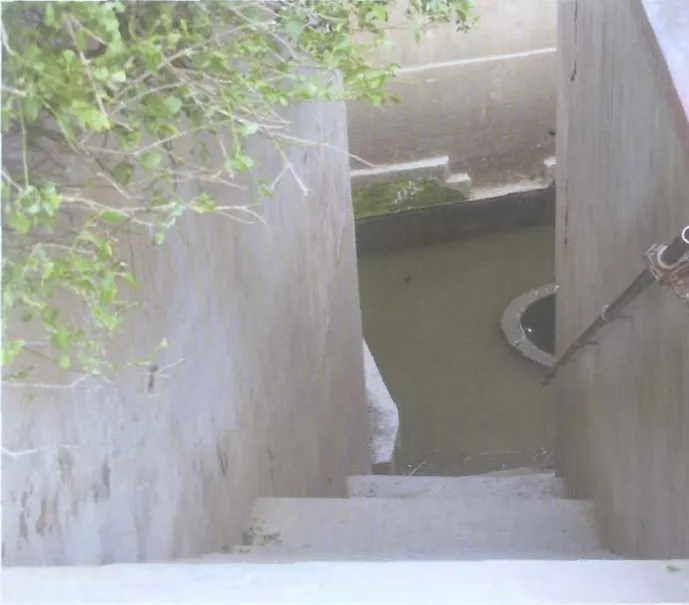
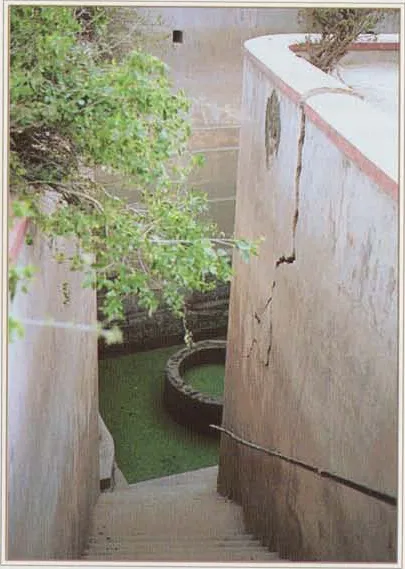
Viśākhā-kuṇḍa is a small tank inside the grove, dedicated to Viśākhā Sakhī; photographs in Śrī Vraja-maṇḍala Parikramā (2007) and Vṛndāvana, the Playground of God (2010) show a narrow flight of stone steps between high walls down to the water.[4 +5] According to Śrī Vraja-maṇḍala Parikramā (2007), Kṛṣṇa made this kuṇḍa of sweet water with His flute to quench the thirst of Viśākhā and the other sakhīs; Vṛndāvana, the Playground of God (2010) also records a local tradition that it was dug with His flute. Neither book cites a source.[11 +1]
The rāsa-sthalī
The plan of Nidhuvana in The Color Guide to Vṛndāvana (2000) marks a "Rāsa-sthali" below Viśākhā-kuṇḍa, the rāsa-sthalī of Nidhuvana; the book's text names none.[4] The Bhāgavatam tells the rāsa dance on the sandy bank of the Yamunā and names no place on the bank, neither Vaṁśīvaṭa nor Nidhuvana; the commentators name none either.[71 +7]
Location
| Where it is | 'North of Vaṁśīvaṭa'; 'on the eastern side of Vṛndāvana town'[88] plan: between roads 'to Radharamana' and 'to Chir Ghata', near 'Retia Bazara'[89] |
|---|
Places at Nidhuvana
7 places
- ↳Temple of Rādhā stealing Kṛṣṇa's flute (Nidhuvana)temple›
- ↳Raṅga Mahal (Nidhuvana)temple›
- ↳Sleeping temple (Nidhuvana)temple›
- ↳Rāsa-sthalī (Nidhuvana)rāsa-sthalī›
- ↳Svāmī Haridāsa's samādhisamādhi›
- ↳Place where Bāṅke-bihārī was found (Nidhuvana)pastime site (Deity appearance place)›
- ↳Viśākhā-kuṇḍa (Nidhuvana)kuṇḍa›
Nearby places
Vaṁśīvaṭa (Vṛndāvana) · Sevā-kuñja · Retiyā-bāzāra · Ṣaḍbhuja Mahāprabhu Mandira
Pictures
5 pictures
History
Śrī Svāmī Haridāsa and Śrī Bāṅke-bihārī
Six guidebooks, the Vṛndāvana-kathā (1920) and the Bengali Bhaktamāla (1905) agree that Śrī Svāmī Haridāsa found the Deity of Śrī Bāṅke-bihārī in Nidhuvana; no source gives a year or a document, and they differ on the exact spot, the place where Bāṅke-bihārī was found.[3 +8] The guidebooks call Śrī Svāmī Haridāsa a contemporary of the six Gosvāmīs, and three of them call him a follower of the Nimbārka-sampradāya; they give no dates or sources, so this is not certain.[3 +4] The historian Prabhudayāl Mītal (1966) writes that Śrī Svāmī Haridāsa lived in Nidhuvana for the rest of his life and died here, and that the ācāryas of his line lived here after him.[42 +3]
The Vṛndāvana-kathā says that the Deity first stayed in Nidhuvana and later had temples in the town; it gives no dates, so this is not certain.[12 +2] The historian A. W. Entwistle (1987) reports that the Deity stayed in Nidhuvana at least until the reign of Aurangzeb, and was taken to the present Bāṅke-bihārī Mandira site after a conflict while Lalitmohini was mahant (1766–1801); the present building is of 1864.[54 +1]
The wall
Entwistle also reports two writers, Kishordas and Gopal Kavi, who say that Haldhar and Bhudhar of Varṣāṇā, two followers of the poet Nawaldas, gave thirty thousand rupees for a wall around Nidhuvana and a shrine, and that Bhudhar gave his life rather than let the creepers of the grove be cut down. No date or document is given, so this is not certain.[58]
Where the sources differ
What the name Nidhuvana means: according to Vṛndāvana-Dhāma Ki Jaya!
What the name Nidhuvana means: according to Vṛndāvana-Dhāma Ki Jaya! (c. 1986) nidhi means sleep, which may not be right, since the dictionaries do not support it.[34]
Accounts differ Meaning of the name Nidhuvana.
- Śrī Vraja-maṇḍala Parikramā (2007)The book explains nidhu as the confidential pastimes of Rādhā and Kṛṣṇa.
- Vṛndāvana, the Playground of God (2010)The book explains Nidhuvana as a garden or forest of Rādhā and Kṛṣṇa's confidential pastimes.
- Vṛndāvana-Dhāma Ki Jaya! (c. 1986)'Nidhi translates as "sleep."' (spelling the place Nidhivana).
The same question was recorded once more for the "sleeping temple", where the one guidebook uses the reading "sleep" to explain why the Divine Couple rest there; it sets out the same accounts as above, and the meaning is not certain.[6 +2]
Where Kṛṣṇa disappeared from the gopīs: Vṛndāvana, the Playground of God (2010) sets it here, other books at Vaṁśīvaṭa or Govinda-ghāṭa.[7 +1]
Accounts differ Where Kṛṣṇa disappeared from the gopīs during the rāsa (the Bhāgavatam names no place).
- Śrīmad-Bhāgavatam 10.29.48Kṛṣṇa disappeared 'right there' (tatraiva); no place is named.
- Bhakti-ratnākara, Fifth Wave (1912 ed. p. 327)At Vaṁśīvaṭa, at the beginning of the rāsa, Kṛṣṇa decided to disappear with Rādhā; here He disappeared and heard the gopīs' lament, and here He also left Rādhā.
- Garga-saṁhitā, Aśvamedha-khaṇḍa 44.29-42 (a rāsa told in that khaṇḍa; Sanskrit only)Kṛṣṇa, standing with Rādhā under the Vaṁśīvaṭa, left Her there and disappeared; the gopīs, hearing Her weep, came to the bank at Vaṁśīvaṭa. (This concerns His leaving Rādhā, not His first disappearance from all the gopīs.)
- Śrī Vraja-maṇḍala Parikramā (2007)At Vaṁśīvaṭa Kṛṣṇa disappeared to soothe Rādhikā's māna and remove the other gopīs' pride.
Where the rāsa dance itself took place.[7 +3]
Accounts differ Where the rāsa dance itself (ŚB 10.33) took place, and whether it came before or after Kṛṣṇa's disappearance
- Śrīmad-Bhāgavatam 10.29.45–46, 10.32.11–12, 10.33.2–3before the disappearance Kṛṣṇa sported with the gopīs on the river's cool sandbank; the rāsa dance, with Kṛṣṇa between each two gopīs, began after His reappearance, 'there' on the Kālindī's bank; no place named
- Canto 10 commentators (Śrīla Sanātana Gosvāmī, Śrīla Jīva Gosvāmī, Śrīla Nārāyaṇa Bhaṭṭa, Vaṁśīdhara)the river is the Kālindī, unnamed because well known; Kṛṣṇa led the gopīs to another bank fit for the rāsa, or into the middle of the same bank; the dance began on the sandbank where He had sat and consoled them; 'on the Kālindī's bank'; no place named
- Bhakti-ratnākara, Fifth Wave (1912 ed. p. 328)the reappearance, the seating and the talk 'here' at the Vaṁśīvaṭa site; the great rāsa began on the sandbank of Śrī Yamunā shown there (ŚB 10.33.2 quoted)
- Śrī Caitanya-caritāmṛta Madhya 1.5 (Śrīla Prabhupāda's translation)Gopīnātha 'has begun the most melodious rāsa dance on the bank of the Yamunā in Vaṁśīvaṭa'
The wording of these accounts is our summary of the sources, not a published translation.
Where Kṛṣṇa decorated Rādhā on the rāsa night: according to The Color Guide to Vṛndāvana (2000) it was here, though the same book also puts the decorating at Śṛṅgāravaṭa, so the place is not certain.[14 +2]
Accounts differ Where Kṛṣṇa decorated His beloved in the rāsa night.
- Śrīmad-Bhāgavatam 10.30.32–33On the way, after Kṛṣṇa had left the other gopīs, 'here' He gathered flowers and arranged His beloved's hair; no place named.
- Vaṁśīdhara, Bhāvārtha-dīpikā-prakāśa on ŚB 10.30.33The spot where Kṛṣṇa arranged His beloved's hair is now well known as Śṛṅgāra-vaṭa (tat sthalam adhunā śṛṅgāra-vaṭa iti prasiddham).
- Śrīla Viśvanātha Cakravartī, Vraja-rīti-cintāmaṇi 2.82Under the Śṛṅgāra banyan, in a bower, He adorned His dearest beloved; the tree is still called Śṛṅgāra. The rāsa is not mentioned.
- The Color Guide to Vṛndāvana (2000), Nidhuvana entry'It is also here that Krishna decorates Rādhārāṇī with various kinds of cosmetics before performing the Rāsa dance.'
The wording of these accounts is our summary of the sources, not a published translation.
Where Rādhā and Kṛṣṇa rested after the rāsa, and whether the Govinda-līlāmṛta sets the night and dawn pastimes in Nidhuvana: according to Śrī Vraja-maṇḍala Parikramā (2007) it does, though the poem may not name the place at all.[6 +1]
Accounts differ What followed the rāsa dance, and where Kṛṣṇa (with Rādhā) rested afterwards
- Śrīmad-Bhāgavatam 10.33.22–24; Kṛṣṇa book ch. 33to relieve the fatigue Kṛṣṇa entered the Yamunā's water with all the gopīs, then strolled with them through a garden (Kṛṣṇa book: along the bank) by the Yamunā; no place named
- Śrīla Viśvanātha Cakravartī on ŚB 10.33.24He went into the Yamunā's garden of many thousands of kuñjas for the pastime of sleep; no grove named
- Garga-saṁhitā, Vṛndāvana-khaṇḍa 24.4–5tired from the rāsa, Rādhā and Kṛṣṇa stayed on the Yamunā's sandbank adorned by the Vaṁśīvaṭa
- The Color Guide to Vṛndāvana (2000); Vṛndāvana-Dhāma Ki Jaya! (c. 1986); Vṛndāvana, the Playground of God (2010)Rādhā and Kṛṣṇa (sometimes) rest in Nidhuvana after the rāsa dance; a bed is kept for Them there
Accounts differ Whether the Govinda-līlāmṛta sets Rādhā and Kṛṣṇa's night and dawn pastimes in Nidhuvana (recorded side by side, not harmonised).
- Śrī Vraja-maṇḍala Parikramā (2007)The book says that the Govinda-līlāmṛta and similar works describe Rādhā and Kṛṣṇa's confidential pastimes in Nidhuvana, and that the night pastimes, and the sleep at the end of the night, take place in its kuñjas.
- Govinda-līlāmṛta (Śrīla Kṛṣṇadāsa Kavirāja Gosvāmī)Tells the waking at night's end in a kuñja of pastimes (krīḍā-nikuñja), with Kṛṣṇa urged to leave the Yamunā's bank (1.10–12, 1.24, 1.31); the word nidhuvana occurs only as a common noun for the confidential pastimes (11.4, 14.100), as Śrīla Vṛndāvana Cakravartī's ṭīkā explains it (rahasya-līlā); the grove is not named.
Where Rādhā's dream of the golden youth took place.[6 +2]
Accounts differ Setting of Rādhā's dream of the golden youth (Svapna-vilāsa).
- Śrīla Viśvanātha Cakravartī, Svapna-vilāsāmṛtāṣṭakaNames no place where Rādhā and Kṛṣṇa were; the dream itself shows a river-bank like the Yamunā in a forest like Vṛndāvana; the last verse calls Kṛṣṇa 'kuñja-nṛpati'.
- Śrī Vraja-maṇḍala Parikramā (2007)At the end of the night, while the Divine Couple were sleeping in a keli-kuñja of Nidhuvana.
- Vṛndāvana, the Playground of God (2010)Rādhārāṇī and Kṛṣṇa 'were taking rest in Raṅga Mahal' — a building which, the same page says, the devotees have made.
Where in Nidhuvana Śrī Svāmī Haridāsa found Śrī Bāṅke-bihārī: according to Śrī Vraja-maṇḍala Parikramā (2007) and the Vṛndāvana-kathā (1920) in Viśākhā-kuṇḍa, according to three other guidebooks at a separate spot near the Raṅga Mahal; the exact spot may not be known.[1 +10]
Accounts differ Where in Nidhuvana Svāmī Haridāsa found the Deity of Bāṅke-bihārī.
- Śrī Vraja-maṇḍala Parikramā (2007)He found Śrī Bāṅke-bihārī 'in this same Viśākhā-kuṇḍa' in Nidhuvana; the Bāṅke-bihārī section and the twelve-forests list repeat that Bāṅke-bihārī manifested in / was recovered from Viśākhā-kuṇḍa.
- Vṛndāvana, the Playground of God (2010)'Near to the Raṅga Mahal is the place where he located the Deity of Bankebihārī'; Viśākhā-kuṇḍa is described separately as dug by Kṛṣṇa with His flute.
- The Color Guide to Vṛndāvana (2000)The Deity was found in the kuñja; 'This spot is just near the Rang Mahal'; the plan numbers '1. Appearance place of Bunke-bihārī' and '3. …
- the undated parikramā notes Vṛndāvana (Vrindavan notes)Same wording as The Color Guide to Vṛndāvana (2000): found in this kuñja, 'This spot is near the Rang Mahal'; Viśākhā's kuṇḍa mentioned separately.
How Emperor Akbar met the saints of Vṛndāvana. According to the undated parikramā notes Vṛndāvana (two copies) and The Color Guide to Vṛndāvana (2000), permission to build the great temples of the Gosvāmīs may have followed his visit; no document is given.[44 +2]
Accounts differ Accounts of Emperor Akbar's contact with the saints of Vṛndāvana (the sources do not refer to each other; recorded side by side, not merged).
- the undated parikramā notes Vṛndāvana, The Color Guide to Vṛndāvana (2000) (one family of texts)In 1570 Akbar visited Vṛndāvana; Śrīla Jīva Gosvāmī led him blindfolded into the kuñja of Nidhuvana; in commemoration permission was granted for the temples of Govindajī, Gopīnātha, Madana-mohana and Jugal-kiśora; Akbar funded a library at Rādhā-Dāmodara and supplied sandstone.
- Śrī Vraja-maṇḍala Parikramā (2007)Akbar, hearing of Svāmī Haridāsa from Tānsena, came in disguise with Tānsena to Haridāsa's hut in Nidhuvana to hear him sing; no date, no Śrīla Jīva Gosvāmī.
- Śrīla Prabhupāda, conversation, Bombay, 28 April 1977'Even big, big kings, Akbar, Mansingh, they used to..., used to come to Rūpa Gosvāmī.' No place named.
- Vṛndāvana-kathā (Pulinbihārī Datta, 1920)One afternoon Haridāsa sat singing on the Yamunā's bank while Akbar passed on the river in a royal barge; Akbar waited, invited him to Delhi as court singer and offered wealth; Haridāsa refused, and Akbar left with the young disciple Rāmatanu, later Miyāṅ Tānsen (p. 133). Elsewhere (p. 207) the Vrajavāsīs say he landed at Maunīdāsa's Ṭāṭī to meet Haridāsa, and, citing Growse, that in 1573 Akbar came to learn from Rūpa, Sanātana, Haridāsa and other sādhus and was taken blindfold to Nidhuvana.
Whether Śrī Svāmī Haridāsa was the teacher of the musician Tānsena, as the guidebooks say, is not certain; the accounts are set side by side on the page of his samādhi.[11 +3]
More on this place
Śrī Rādhā's māna at the autumn rāsa and how it was broken · Nidhuvana: Śrī Rādhā's dream of the golden youth and the stolen flute
References
89 references
- Śrī Vraja-maṇḍala Parikramā (2007), PDF p. 341
- Śrī Vraja-maṇḍala Parikramā (2007), PDF p. 344
- Vṛndāvana, the Playground of God (2010), Bhakti Caitanya Svāmī, PDF p. 141
- The Color Guide to Vṛndāvana (2000), Written and Photographed by Rājaśekhara dāsa Brahmacārī, PDF p. 165
- The Color Guide to Vṛndāvana (2000), Written and Photographed by Rājaśekhara dāsa Brahmacārī, PDF p. 105
- Śrī Vraja-maṇḍala Parikramā (2007), PDF p. 314
- Vṛndāvana, the Playground of God (2010), Bhakti Caitanya Svāmī, PDF p. 182
- Śrīla Rūpa Gosvāmī, Ujjvala-nīlamaṇi, 15.252, last quarter-verse, GRETIL
- Śrīla Narahari Cakravartī, Bhakti-ratnākara, Fifth Wave, 1912 ed. printed p. 325, 2nd ed., 1912
- Śrīla Viśvanātha Cakravartī Ṭhākura, Vraja-rīti-cintāmaṇi, dvitīya sarga (chapter 2) vv. 75–76
- Śrī Vraja-maṇḍala Parikramā (2007), PDF p. 315
- Śrī Vraja-maṇḍala Parikramā (2007), PDF p. 334
- Vṛndāvana, the Playground of God (2010), Bhakti Caitanya Svāmī, PDF p. 185
- The Color Guide to Vṛndāvana (2000), Written and Photographed by Rājaśekhara dāsa Brahmacārī, PDF p. 102
- The Color Guide to Vṛndāvana (2000), Written and Photographed by Rājaśekhara dāsa Brahmacārī, PDF p. 68
- Śrīla Prabhupāda, Morning Walk, Los Angeles, 21 April 1973 · vedabase.io
- Śrīla Narahari Cakravartī, Bhakti-ratnākara, Twelfth Wave, 1912 ed. printed p. 919, song beginning 'gadādhara narahari, kare dhari gaurahari' (rāga kāmoda), printed pp. 918-919, 2nd ed., 1912
- Vaṁśīdhara: commentary on ŚB 10.11.28, Bhagavata Vidya Pith edition, ed. Bhagavata Rishi and Krishna Shankar Shastri, 1996
- Śrīmad-Bhāgavatam 10.30.28, GRETIL
- Śrīla Viśvanātha Cakravartī Ṭhākura: commentary on ŚB 10.29.48
Show all 89 references
- Śrīla Sanātana Gosvāmī: commentary on ŚB 10.30.28
- Śrīla Prabhupāda, Kṛṣṇa, the Supreme Personality of Godhead (Kṛṣṇa book), Chapter 30, 'Kṛṣṇa's Hiding from the Gopīs' · vedabase.io
- Śrīmad-Bhāgavatam 10.30.35–36, GRETIL
- Śrīmad-Bhāgavatam 10.30.33, GRETIL
- Śrīla Prabhupāda, Kṛṣṇa, the Supreme Personality of Godhead (Kṛṣṇa book), Chapter 30, 'Kṛṣṇa’s Hiding from the Gopīs' · vedabase.io
- Vaṁśīdhara: commentary on ŚB 10.30.33
- Śrīla Viśvanātha Cakravartī Ṭhākura, Vraja-rīti-cintāmaṇi, dvitīya sarga (chapter 2) v. 82
- Śrīmad-Bhāgavatam 10.33.20, GRETIL
- Śrīmad-Bhāgavatam 10.33.24
- Śrīmad-Bhāgavatam 10.33.38, GRETIL
- Śrīla Prabhupāda, Kṛṣṇa, the Supreme Personality of Godhead (Kṛṣṇa book), Chapter 33, 'Description of the Rāsa Dance' · vedabase.io
- Śrīla Viśvanātha Cakravartī Ṭhākura: commentary on ŚB 10.33.24
- the undated parikramā notes Vṛndāvana, ¶185
- Vṛndāvana-Dhāma Ki Jaya! (c. 1986), by Dhruva Mahārāja dāsa, PDF p. 69
- Vṛndāvana, the Playground of God (2010), Bhakti Caitanya Svāmī, PDF p. 9
- Śrīla Kṛṣṇadāsa Kavirāja Gosvāmī, Govinda-līlāmṛta, sarga 1, vv. 10–12, after the editions of Haridas Das and Haridas Shastri
- Śrīla Viśvanātha Cakravartī Ṭhākura, Svapna-vilāsāmṛtāṣṭakam, verses 1-2
- Śrīla Viśvanātha Cakravartī Ṭhākura, Svapna-vilāsāmṛtāṣṭakam, verses 5 and 8
- Śrīmad-Bhāgavatam 10.8.13, GRETIL
- Śrīla Prabhupāda, Śrīmad-Bhāgavatam, 10.8.13, purport · vedabase.io
- Śrīla Viśvanātha Cakravartī Ṭhākura: commentary on ŚB 10.8.13, Bhagavata Vidya Pith edition, ed. Bhagavata Rishi and Krishna Shankar Shastri, 1996
- Pulinbihārī Datta, ch. 17 (saptadaśa pariccheda), list of Vṛndāvana's groves and gardens, no. 11 'নিধুবন', printed p. 196
- Śrī Śrī Bhaktamāla grantha, printed pp. 347-348, left-hand columns, in the book's description of Vṛndāvana's sights (after the pulina of the rāsa, before Gahvara-vana and Rādhā-bāga)
- the undated parikramā notes Vṛndāvana, ¶9
- the undated parikramā notes Vṛndāvana, ¶9
- The Color Guide to Vṛndāvana (2000), Written and Photographed by Rājaśekhara dāsa Brahmacārī, PDF p. 24
- Śrī Vraja-maṇḍala Parikramā (2007), PDF p. 316
- Śrīla Prabhupāda, Conversation = Vairāgya, Salaries, and Political Etiquette, Bombay, 28 April 1977 · vedabase.io
- the undated parikramā notes Vṛndāvana, ¶192
- Śrī Śrī Bhaktamāla grantha, chapter 'চরিত্র শ্রীহরিদাস স্বামী', printed p. 243, left-hand column
- the undated parikramā notes Vṛndāvana, ¶94
- The Colour Guide to Rādhā-kuṇḍa (1999), Rājaśekhara dāsa Brahmacārī, PDF p. 162
- Prabhudayāl Mītal, 'Braj kā prākṛtik aur bhaugolik varṇan', 'Katipay ramaṇīk sthal': 'निधिबन', printed p. 43
- A. W. Entwistle, ch. 5 §10 'Swami Haridas', printed p. 156, Egbert Forsten, Groningen, 1987
- Pulinbihārī Datta, ch. 9 (navama pariccheda), section on Bāṅke-bihārī, printed p. 131
- Śrī Vraja-maṇḍala Parikramā (2007), PDF p. 335
- A. W. Entwistle, ch. 5 §33 'Devotional activity in the latter part of the eighteenth century' (the ascetic followers of Swami Haridas and the conflict over Banke Bihari), printed p. 212, Egbert Forsten, Groningen, 1987
- A. W. Entwistle, ch. 5, end of §23 (just before §24 'Aurangzeb (1658-1707)'), printed p. 180, Egbert Forsten, Groningen, 1987
- Prema-vilāsa, seventh vilāsa, printed p. 45, left-hand column, Kolkata, 1913
- Prema-vilāsa, seventh vilāsa, printed p. 47, foot of the left-hand column and top of the right-hand column, Kolkata, 1913
- Śrīla Prabhupāda, Śrī Caitanya-caritāmṛta, Ādi-līlā 10.108, purport · vedabase.io
- Gaura-gaṇoddeśa-dīpikā, v.111
- Śrīla Prabhupāda, Room Conversation with Allen Ginsberg, Columbus, 13 May 1969 · vedabase.io
- Śrīla Prabhupāda, Conversation with George Harrison, London, 26 July 1976 · vedabase.io
- Śrīla Prabhupāda, Śrī Caitanya-caritāmṛta, Ādi-līlā 1.5, translation · vedabase.io
- Kothaya Go Premamayi Radhe Radhe (Gaura-kiśora dāsa Bābājī (as the song book credits it)) · song book
- Sundara Bālā Śacī Dulālā (not credited in the song book (author field empty; 'No specific author is known')) · song book
- The Color Guide to Vṛndāvana (2000), Written and Photographed by Rājaśekhara dāsa Brahmacārī, PDF p. 104
- Vṛndāvana, the Playground of God (2010), Bhakti Caitanya Svāmī, PDF p. 184
- Vṛndāvana-Dhāma Ki Jaya! (c. 1986), by Dhruva Mahārāja dāsa, PDF p. 68
- Śrīmad-Bhāgavatam 10.33.2, GRETIL
- Baladeva Vidyābhūṣaṇa: commentary on ŚB 10.33.19
- Śrīla Viśvanātha Cakravartī Ṭhākura: commentary on ŚB 10.30.38
- Śrī Vraja-maṇḍala Parikramā (2007), PDF p. 345
- Vṛndāvana, the Playground of God (2010), Bhakti Caitanya Svāmī, PDF p. 186
- Śrīmad-Bhāgavatam 10.29.45, GRETIL
- Śrīmad-Bhāgavatam 10.32.11-12, GRETIL
- Śrīmad-Bhāgavatam 10.33.3, GRETIL
- Śrīla Prabhupāda, Kṛṣṇa, the Supreme Personality of Godhead, Chapter 33, 'Description of the Rāsa Dance' · vedabase.io
- Śrīla Sanātana Gosvāmī: commentary on ŚB 10.29.45
- Śrīla Sanātana Gosvāmī: commentary on ŚB 10.32.11–12
- Śrīla Nārāyaṇa Bhaṭṭa: commentary on ŚB 10.33.2
- The Color Guide to Vṛndāvana (2000), Written and Photographed by Rājaśekhara dāsa Brahmacārī, PDF p. 94
- the undated parikramā notes Vṛndāvana, ¶181
- Vṛndāvana, the Playground of God (2010), Bhakti Caitanya Svāmī, PDF p. 183
- Pulinbihārī Datta, ch. 9 (navama pariccheda, 'বাঁকেবিহারীজী'), printed pp. 127 and 129
- Vṛndāvana-kathā, chapter 9 (navama pariccheda), printed p. 129, in the account of Svāmī Haridāsa; also chapter 17's list of gardens, printed p. 196
- Vṛndāvana, the Playground of God (2010), Bhakti Caitanya Svāmī, p. 182
- The Color Guide to Vṛndāvana (2000), Written and Photographed by Rājaśekhara dāsa Brahmacārī, p. 88