Sevā-kuñja
सेवा-कुंज Hindi name proposed
- What it is
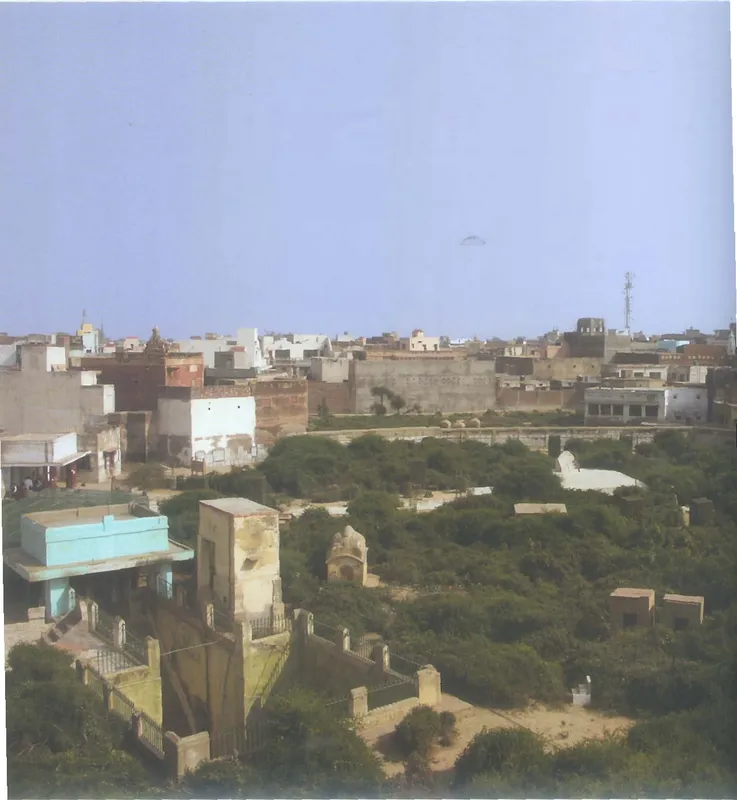
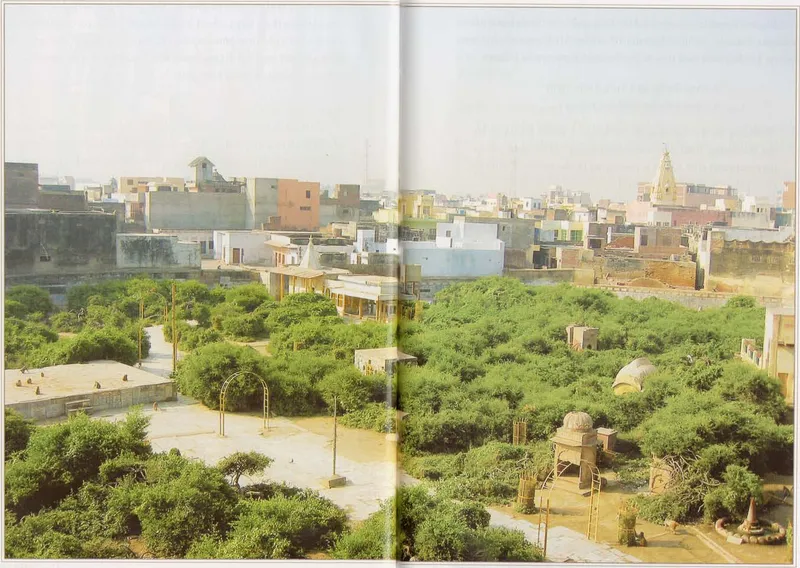
- Sevā-kuñja, "the grove of service", is a walled garden in the centre of Vṛndāvana.
- Visiting
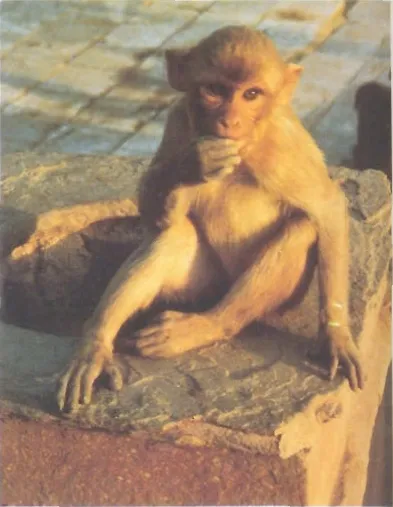
- The guidebooks describe a walled, overgrown grove, full of monkeys, entered from the east near Imlītalā and divided by a wall from Kiśorī-kuñja.
- Places here
- Rādhā-Dāmodara Mandira (Vṛndāvana), Raṅga Mahal (Sevā-kuñja), Lalitā-kuṇḍa (Sevā-kuñja), Keli-kadamba (Sevā-kuñja), Rāsa-sthalī (Sevā-kuñja) +2 more
In short
Sevā-kuñja, "the grove of service", is a walled garden in the centre of Vṛndāvana.[1 +5] The guidebooks call it the place where Kṛṣṇa served Śrīmatī Rādhārāṇī, decorating Her with flowers, and a place of the rāsa dance; according to the local tradition they record, Rādhā and Kṛṣṇa still come here every night.[1 +12] Śrīla Prabhupāda writes that the Gosvāmīs held their discourses at Sevākuñja, where Śrīla Jīva Gosvāmī established the Rādhā-Dāmodara temple, and in his letters "Seva Kunj" is the address of that temple.[16 +10] Śrīmad-Bhāgavatam tells the rāsa and Kṛṣṇa's care for His beloved without naming a grove.[27 +9]
Key facts
| Kind | kuñja |
|---|---|
| Region · area | Vṛndāvana |
| Ācāryas | Śrīla Rūpa Gosvāmī, Śrīla Sanātana Gosvāmī, Śrīla Jīva Gosvāmī, Śyāmānanda Paṇḍita (Duḥkhī Kṛṣṇadāsa), Śrīla A.C. Bhaktivedanta Swami Prabhupāda |
Why it is glorified
Only one text on the Bhāgavatam has been found that names Sevā-kuñja.
Only one text on the Bhāgavatam has been found that names Sevā-kuñja. The commentator Vaṁśīdhara, whom the editor of the text places in the nineteenth century, begins his commentary on the Tenth Canto by bowing to Śrī Rādhā, the daughter of Kīrti, united with the son of Nanda in Sevā-kuñja within Vṛndāvana, and by asking Her permission to write (summarised here, not translated).[37]
Divine pastimes
Kṛṣṇa's service to His beloved
The Bhāgavatam tells of Kṛṣṇa's personal care for His beloved in the rāsa night, without naming a place. Following His footprints, the gopīs see where He lifted Her up because the grass hurt the soles of Her feet, where He picked flowers for Her, and where He sat down to arrange Her hair and make Her a crown of flowers. Later, in the dance, He wiped the faces of the tired gopīs. Śrīla Prabhupāda's Kṛṣṇa book names this gopī Rādhārāṇī.[33 +5]
General teaching (does not name the place)“Dear friends, just see how Kṛṣṇa must have sat down here with Rādhārāṇī and tried to set flowers in Her hair. You can be certain that both of Them sat together here.”
Śrīla Prabhupāda, Kṛṣṇa, the Supreme Personality of Godhead (Kṛṣṇa book), Chapter 30, 'Kṛṣṇa’s Hiding from the Gopīs' · vedabase.io
The Canto 10 commentators enlarge these services, still naming no place (summarised here, not translated). Śrīla Viśvanātha Cakravartī Ṭhākura says that Kṛṣṇa could not bear the pain of Her feet, and that "wiped their faces" also means that He fanned and served the gopīs; Śrīla Sanātana Gosvāmī says that His pastimes with the gopīs took place in the nearby groves or on the rāsa ground itself.[40 +4] Śrīla Rūpa Gosvāmī's Ujjvala-nīlamaṇi gives a verse in which Kṛṣṇa decorates Rādhā; it names no place.[45] In the twenty verses on the origin of Rādhā-kuṇḍa that Śrīla Viśvanātha Cakravartī Ṭhākura gives in his commentary, such service is set at Rādhā-kuṇḍa.[6 +2] The guidebooks show these services at the Raṅga Mahal in this garden.
The rāsa dance
Śrīmad-Bhāgavatam sets the rāsa dance on the cool sandy bank of the Kālindī, the Yamunā, where "there" Govinda began the dance with the gopīs; it names no grove.[27 +5]
nadyāḥ pulinam āviśya gopībhir hima-vālukam / juṣṭaṃ tat-taralānandi kumudāmoda-vāyunā
Śrī Kṛṣṇa went with the gopīs to the bank of the Yamunā, where the sand was cooling and the wind, enlivened by the river’s waves, bore the fragrance of lotuses.
Translation: Śrīla Prabhupāda's disciples (BBT)The commentators also place the rāsa on the Yamunā's bank. Śrīla Jīva Gosvāmī says that the forest is Vṛndāvana itself and that Kṛṣṇa played His flute at the part of the bank still known in his day as Rāsaulī; none of them names Sevā-kuñja.[47 +1] Śrīla Prabhupāda's Kṛṣṇa book says that the gopīs ran toward the place known as Vaṁśīvaṭa.[49] Śrīla Viśvanātha Cakravartī Ṭhākura adds that Kṛṣṇa enjoyed such pastimes on countless other nights in Śrī Vṛndāvana, without naming a grove.[31 +1] The Rāsa-sthalī in this garden is described on its own page.
Rādhā apart from the gopīs
The Bhāgavatam tells that Kṛṣṇa disappeared from the gopīs to remove their pride, and later from the one gopī He had taken with Him.[49 +2] Śrīla Viśvanātha Cakravartī Ṭhākura explains that Rādhā had become offended because Kṛṣṇa treated all the gopīs alike, and that He disappeared to pacify Her.[42] In the Caitanya-caritāmṛta, Śrī Caitanya Mahāprabhu says that Kṛṣṇa stole Rādhārāṇī away from the rāsa, while Śrīla Rāmānanda Rāya says that She left the circle in anger and Kṛṣṇa searched for Her in the forest. Neither names a place.[53 +1] Read more: Śrī Rādhā's māna at the autumn rāsa and how it was broken →
Traditional accounts
The guidebooks explain the name: according to the local tradition they record, here Kṛṣṇa served Śrīmatī Rādhārāṇī, decorating …
The grove of service
The guidebooks explain the name: according to the local tradition they record, here Kṛṣṇa served Śrīmatī Rādhārāṇī, decorating Her hair with flowers and adorning Her; Śrī Vraja-maṇḍala Parikramā (2007) and Vṛndāvana-Dhāma Ki Jaya! (c. 1986) both tell it so.[1 +5] The 2007 book also quotes a couplet of the poet Bhakta Rasakhāna, which, it says, tells of his seeing Kṛṣṇa serve Rādhikā here; no edition of his poems was available to check it, so this is not certain.[3]
According to the guidebooks, Sevā-kuñja is a place of the rāsa dance. Vṛndāvana, the Playground of God (2010) says that it is understood to lie in the middle of the place where the rāsa of the Tenth Canto happened, and Śrī Vraja-maṇḍala Parikramā (2007) that Lalitā became thirsty here during the rāsa.[3 +6] The rāsa account in The Color Guide to Vṛndāvana (2000) follows Śrīla Prabhupāda's Kṛṣṇa book closely, in places word for word, though the Kṛṣṇa book does not name the grove.[29 +3] The undated parikramā notes Māna-sarovara say that at the rāsa here Rādhā, arriving late and seeing Kṛṣṇa dance with other gopīs, ran away and wept at the place of Māna-sarovara, where He found Her.[12 +1]
Śrī Vraja-maṇḍala Parikramā (2007) also calls the garden Nikuñjavana and counts it as the seventh of the twelve forests of Vṛndāvana town; it gives no source for that list, which may come from the Bengali Vṛndāvana-kathā of 1920.[1 +2]
The nightly pastimes
According to the local tradition recorded in the guidebooks, from the Vrajavāsīs and pūjārīs, Rādhā and Kṛṣṇa still perform Their pastimes in Sevā-kuñja every night, so everyone, even the monkeys, leaves at dusk. The Vṛndāvana-kathā (1920) already reports the same belief.[1 +4]
Śrīla Śyāmānanda Paṇḍita and the anklet
The Bhakti-ratnākara says that Śrīla Śyāmānanda Paṇḍita, then called Duḥkhī Kṛṣṇadāsa, found Rāī's (Rādhā's) anklet "in a new nikuñja" in Vṛndāvana, and that he received the name Śyāmānanda there; elsewhere it says that Śrīla Jīva Gosvāmī gave him the name. It does not name Sevā-kuñja.[57 +2] The Prema-vilāsa says that he found the anklet at a rāsa-sthalī and that Śrīla Jīva Gosvāmī recognised it, marked him with a tilaka and named him.[60 +1] Several guidebooks set the find here, where he swept the groves every day; others name Jhāḍū-maṇḍala (see below). According to the local tradition recorded in Vṛndāvana, the Playground of God (2010), Śrīmatī Rādhārāṇī gave him the small Deity of Śyāmasundara during this pastime; this is not certain, and the year it gives, 1578, has no stated source.[62 +3] Read more: How Śrīla Śyāmānanda Paṇḍita found Śrī Rādhā's anklet →
Other traditions
Two guidebooks say that Paurṇamāsī sits at the corner of Sevā-kuñja to help Rādhā and Kṛṣṇa in Their pastimes; her temple, the Paurṇamāsī-devī Mandira, stands at the edge of the garden.[5 +4] The undated parikramā notes Bilvavana record a local tradition, which is not certain, that the goddess of fortune, on Nārada's advice, is still performing austerities in Bilvavana across the Yamunā, meditating on the rāsa of Sevā-kuñja; no text was found that connects her austerities with this grove.[70] The Bhāgavatam says only that she performed austerities to obtain the dust of Kṛṣṇa's feet and never received the favour the gopīs received in the rāsa.[71 +3]
The Gosvāmīs and ācāryas
Śrīla Prabhupāda writes that the Gosvāmīs of Vṛndāvana, Śrīla Sanātana Gosvāmī and Śrīla Rūpa Gosvāmī among them, held learned …
Śrīla Prabhupāda writes that the Gosvāmīs of Vṛndāvana, Śrīla Sanātana Gosvāmī and Śrīla Rūpa Gosvāmī among them, held learned discourses at Sevākuñja, the spot where Śrīla Jīva Gosvāmī established the Rādhā-Dāmodara temple and where the samādhis of Śrīla Rūpa Gosvāmī and Śrīla Jīva Gosvāmī are.[16 +6]
Names this place“the foremost duty discharged by them was to hold learned discourses amongst themselves at Sevākuñja, Vṛndāvana (the spot where Śrī Rādhā-Dāmodara Temple was established by Śrīla Jīva Gosvāmī and where the actual samādhi tombs of Śrīla Rūpa Gosvāmī and Śrīla Jīva Gosvāmī are laid).”
Śrīla Prabhupāda, Śrīmad-Bhāgavatam, 2.2.5, purport · vedabase.io
The guidebooks add that Śrīla Rūpa Gosvāmī lived in a hut behind the Rādhā-Dāmodara temple, "in Sevā-kuñja", and wrote his books there, among them the Bhakti-rasāmṛta-sindhu and the Ujjvala-nīlamaṇi.[17 +3] The temple itself, and Śrīla Jīva Gosvāmī's founding of it, are described on the Rādhā-Dāmodara Mandira page.[16 +1]
Śrīla Prabhupāda
Śrīla Prabhupāda lived at the Rādhā-Dāmodara temple and gave its address as "Seva Kunj".
Śrīla Prabhupāda lived at the Rādhā-Dāmodara temple and gave its address as "Seva Kunj".[16 +2]
Names this place“Details of the house situated at Radha-Damodara Temple, Sevakunj, Vrindaban, District of Mathura, U.P.”
Śrīla Prabhupāda, Letter to Unknown (draft lease deed), 72-08-28, August 28th 1972 · vedabase.io
In a conversation of November 1977, asked which is the Manipuri temple in Vṛndāvana, he answered "The Sevā-kuñja", and Tamāla Kṛṣṇa added that it was in the charge of Manipuri devotees.[79]
Songs
In the opening prayer of his Gītār Gān, Śrīla Prabhupāda names Sevā-kuñja as the place of Śrī Rādhā-Dāmodara in lovely Vṛndāvana …
In the opening prayer of his Gītār Gān, Śrīla Prabhupāda names Sevā-kuñja as the place of Śrī Rādhā-Dāmodara in lovely Vṛndāvana and takes shelter at Their feet.[16 +3]
Visiting today
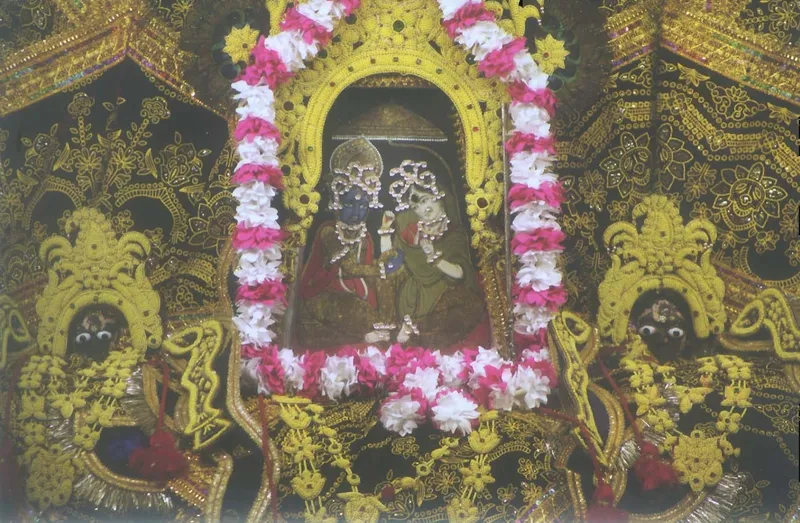
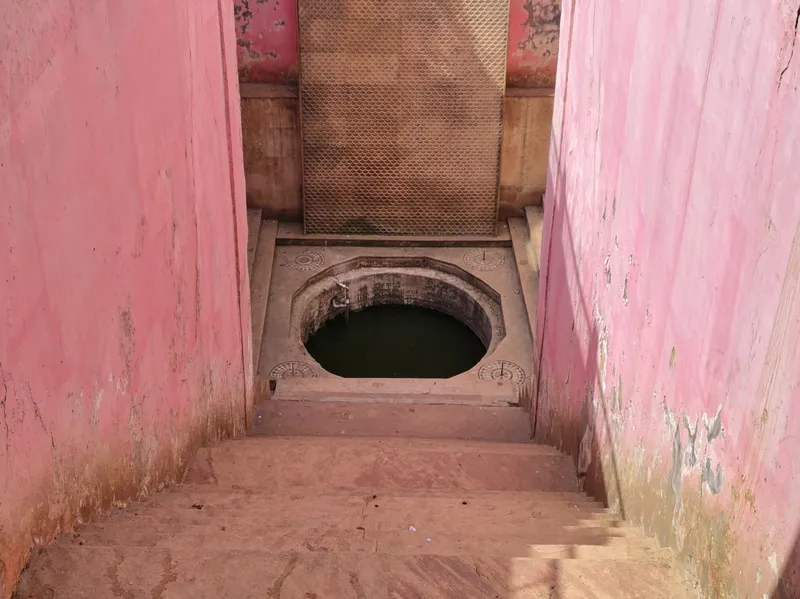
The guidebooks describe a walled, overgrown grove, full of monkeys, entered from the east near Imlītalā and divided by a wall from Kiśorī-kuñja. Inside are the small Raṅga Mahal temple, whose altar shows a picture of Kṛṣṇa serving Rādhā, Lalitā-kuṇḍa near the entrance, a rāsa-sthalī and a keli-kadamba. The Color Guide to Vṛndāvana (2000) printed its hours as 7 am to 12:30 pm, and 3:30 to 6 pm in summer or 4:30 to 7 pm in winter; these may have changed since.[1 +5] Near the garden, Śrī Vraja-maṇḍala Parikramā (2007) places the Rūpa-Sanātana Gauḍīya Maṭha and Dāna-bihārī at the crossing of four narrow lanes, among them Dāna-galī.[1 +1]
- The keli-kadamba. Śrī Vraja-maṇḍala Parikramā (2007) says that a keli-kadamba tree near Lalitā-kuṇḍa has knots that bulge out like round śālagrāmas; it tells no pastime of it.[3] It is not the keli-kadamba of Kāliya-ghāṭa from which Kṛṣṇa jumped into the lake.[7 +1] In 1920 the Vṛndāvana-kathā described the keli-kadamba of Sevā-kuñja with smooth black marks on its trunk, which, the pūjārīs said, came from Kṛṣṇa wiping His hands on it after eating butter; the author had seen a śālagrāma-shaped knot there twenty years before, on a branch since broken off. This is the pūjārīs' account and may not be old.[83]
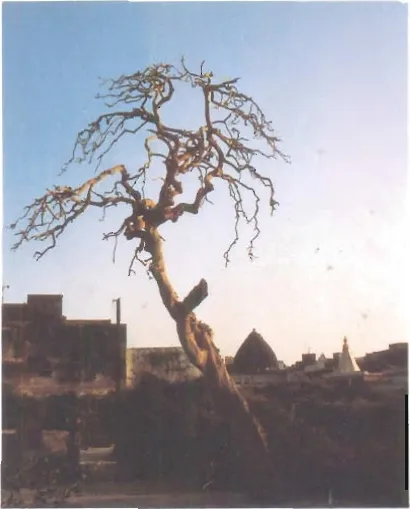
- The sacred tree. The Color Guide to Vṛndāvana (2000) photographs a gnarled, leafless "sacred tree" at Sevā-kuñja without naming its kind. It may be the keli-kadamba, but neither book says so.[3 +1]
- Lalitā's well. One guidebook tells of a well made by Kṛṣṇa for the thirsty Lalitā in the central part of the gardens, while the others tell the same pastime of Lalitā-kuṇḍa; the sources differ (see below). The Bhakti-ratnākara tells a similar story of Veṇu-kūpa, a well that appeared at the sound of Kṛṣṇa's flute for His thirsty beloved ones, near Brahma-kuṇḍa, not in Sevā-kuñja.[84 +2]
Location
| Where it is | 'Śrī Sevā-kuñja, the heart of Śrī Dhāma Vṛndāvana'[94] entered 'from the eastern side, near Imlī Tāla'; separated from Kiśorī-kuṇja by a wall; 'this small garden in the center of the town'[95] |
|---|
Places at Sevā-kuñja
7 places
Nearby places
Imlītalā (Vṛndāvana) · Kiśorī-kuñja · Paurṇamāsī-devī Mandira · Sītānātha Mandira (Vṛndāvana)
Pictures
6 pictures
History
In Śrīla Prabhupāda's usage Sevā-kuñja is a wider area than the walled garden. He calls Sevākuñja the spot where the Rādhā-Dāmodara temple stands, his letters and a lease deed of 1969–1973 give "Seva Kunj" as the locality of that temple and of Imlītalā, and in 1976 he spoke of "Imlitala, Seva-kunj". The Vṛndāvana-kathā (1920) already lists Sevā-kuñja among the quarters of the town.[16 +5]
The oldest dated descriptions of the garden are British and Bengali. A district gazetteer of 1911 calls Sevā-kuñja a large walled garden with a masonry tank, and reports the hearsay that the first shrine of Vṛndā-devī stood there, which is not certain.[75] The Vṛndāvana-kathā (1920) says that the Rāṇī of Ayodhyā had recently repaired the nearly ruined walls; it gives no date and does not name her.[76] Who has charge of the garden is told differently (see below).
Where the sources differ
Where the rāsa dance of the Tenth Canto took place, and whether in Sevā-kuñja: the Bhāgavatam and its commentators place it on …
Where the rāsa dance of the Tenth Canto took place, and whether in Sevā-kuñja: the Bhāgavatam and its commentators place it on the Yamunā's bank without naming a grove, the guidebooks here; the accounts are set side by side on the page of the Rāsa-sthalī of Sevā-kuñja.[5 +11]
Where Kṛṣṇa decorated His beloved's hair with flowers: in Sevā-kuñja according to some guidebooks, at Śṛṅgāravaṭa according to the commentator Vaṁśīdhara and other guidebooks.[6 +5]
Accounts differ Where Kṛṣṇa decorated His beloved's hair with flowers
- Śrīmad-Bhāgavatam 10.30.32–33; Kṛṣṇa book ch. 30the gopīs see where Kṛṣṇa picked flowers and sat with His beloved (Kṛṣṇa book: Rādhārāṇī) to arrange Her hair; no place named
- Vaṁśīdhara on ŚB 10.30.33that place is now famous as Śṛṅgāra-vaṭa; he does not say where it is
- Śrī Vraja-maṇḍala Parikramā (2007)at Śṛṅgāravaṭa, on the Yamunā's bank east of Imlītalā, where Rādhikā hid after leaving the rāsa, Kṛṣṇa decorated Her with flowers He had picked; endnote 4 prints ŚB 10.30.33
- the undated parikramā notes Vṛndāvana; The Color Guide to Vṛndāvana (2000); Vṛndāvana-Dhāma Ki Jaya! (c. 1986)at Sevā-kuñja Kṛṣṇa decorated Rādhārāṇī's hair with flowers and served Her
The wording of these accounts is our summary of the sources, not a published translation.
How Rādhā came to be apart from the other gopīs in the rāsa night, and where She went: according to the Bhāgavatam, its commentators, the Caitanya-caritāmṛta and the undated parikramā notes Māna-sarovara, the accounts differ.[12 +5]
Accounts differ How Rādhā came to be apart from the other gopīs in the rāsa night, and where She went
- Śrīmad-Bhāgavatam 10.29.48; Kṛṣṇa book ch. 29seeing the gopīs' pride in their good fortune (mānam: 'the false pride' in the vedabase word meanings), Kṛṣṇa disappeared from all of them right there; no gopī named (Kṛṣṇa book: to curb their false pride)
- Śrīmad-Bhāgavatam 10.30.37–38Kṛṣṇa had taken one gopī with Him; when she, proud, asked to be carried, He disappeared from her too
- Śrīla Viśvanātha Cakravartī on ŚB 10.29.48Rādhā became offended (māninī) because Kṛṣṇa enjoyed with all alike; He disappeared to pacify Her, taking Her with Him by force
- Śrī Caitanya-caritāmṛta, Madhya 8.101–103 (Śrī Caitanya's words; Śrīla Prabhupāda's translation and purport)Kṛṣṇa could not exchange love with Rādhārāṇī in the rāsa because of the other gopīs, 'therefore He stole Her away'; purport: out of fear of the other gopīs He took Her to a secluded place; Rāmānanda Rāya then replies with the account of Her leaving the rāsa (8.104–112)
Where Śrīla Śyāmānanda Paṇḍita found Śrī Rādhā's anklet: in Sevā-kuñja according to several guidebooks and the 1920 book, at Jhāḍū-maṇḍala according to another, in an unnamed grove or rāsa-sthalī according to the older Bengali works.[5 +5]
Accounts differ Where Śyāmānanda (Duḥkhī Kṛṣṇadāsa) found Śrīmatī Rādhārāṇī's anklet.
- Vṛndāvana, the Playground of God (2010)In the groves of the Sevā-kuñja area, which he cleaned every day; Lalitā then took him to Lalitā-kuṇḍa in the middle of Sevā-kuñja.
- The Color Guide to Vṛndāvana (2000); the undated parikramā notes VṛndāvanaIn Sevā-kuñja, which he swept daily ('very large in those days').
- Śrī Vraja-maṇḍala Parikramā (2007)At Jhāḍū-maṇḍala, which Śrīla Jīva Gosvāmī had given him to sweep.
- Bhakti-ratnākara, Fifteenth Wave song (1912 ed. p. 1060)In a new nikuñja in Vṛndāvana; no name.
The wording of these accounts is our summary of the sources, not a published translation.
Who gave Duḥkhī Kṛṣṇadāsa the name Śyāmānanda is told differently: the Bhakti-ratnākara, the Prema-vilāsa and the Vṛndāvana-kathā (1920) name Śrīla Jīva Gosvāmī, other texts name no giver, and the guidebooks connect the name with Śrīmatī Rādhārāṇī's mercy when he returned Her anklet. The accounts are set side by side on the Śyāmānanda Tilaka-sthāna page.[58 +5]
How large Sevā-kuñja was, and how it relates to the Rādhā-Dāmodara temple: the guidebooks say it was once much larger, but describe its old extent differently.[5 +5]
Accounts differ How large Sevā-kuñja was, and how it relates to the Rādhā-Dāmodara temple.
- Vṛndāvana, the Playground of God (2010)The whole area inside the parikramā path around Vṛndāvana town was originally Sevā-kuṇja; the name is now given to the small garden in the centre of the town.
- the undated parikramā notes Vṛndāvana'Seva Kunja is not just area within walls, but whole area for about a mile in each direction is Seva Kunja'; the Rādhā-Dāmodara temple is in its middle.
- The Color Guide to Vṛndāvana (2000); the undated parikramā notes VṛndāvanaSevā-kuñja was 'very large in those days'; the Rādhā-Dāmodara site and Śrīla Rūpa's bhajana-kuṭīra were 'formerly in the middle of Sevā-kuñja'.
- Śrī Vraja-maṇḍala Parikramā (2007)Sevā-kuñja 'lies just near the temple of Śrī Rādhā-Dāmodara, to the south-west'; the Rādhā-Dāmodara temple 'is situated within the area of Sevā-kuñja'.
What Kṛṣṇa made for the thirsty Lalitā, and how: according to the guidebooks, a kuṇḍa or a well, with His flute or His foot; it may be one water body or two.[3 +5]
Accounts differ What Kṛṣṇa made for His thirsty companions, how, and where.
- Vṛndāvana-Dhāma Ki Jaya! (c. 1986)a well, by pushing His flute into the ground, for Lalitā; in the central part of the Sevā-kuñja gardens.
- Śrī Vraja-maṇḍala Parikramā (2007)Lalitā-kuṇḍa, dug with His flute when Lalitā was thirsty during the rāsa, in Sevā-kuñja.
- Vṛndāvana, the Playground of God (2010)a kuṇḍa 'nearer to the entrance' said to have been dug with His flute.
- The Color Guide to Vṛndāvana (2000) and the undated parikramā notes Vṛndāvanaa kuṇḍa near the entrance, made by pushing His foot into the ground for Lalitā.
Who has charge of the garden: the Gosvāmīs of the Rādhā-Vallabha temple according to the 1920 book and the historian A. W. Entwistle (1987), or Manipuri devotees according to a conversation of 1977.[15 +3]
Accounts differ Who has charge of the Sevā-kuñja garden
- Vṛndāvana-kathā (Pulinbihārī Datta, 1920), p. 196Nikuñjavana (Sevā-kuñja), near the Rādhā-Dāmodara temple, is under the Gosvāmīs of the Rādhāvallabha temple (রাধাবল্লভ ঠাকুরের গোস্বামিগণের অধীন).
- A. W. Entwistle (1987), a historianEntwistle says that the walled garden is in the care of the Gosvāmīs of the Rādhā-vallabha temple; according to the sect's own account, Śrī Hita Harivaṁśa first installed Rādhā-vallabha for worship there in 1534.
- Room conversation, Vṛndāvana, 6 November 1977Asked which is the Manipuri temple in Vṛndāvana, Śrīla Prabhupāda answers 'The Sevā-kuñja'; Tamāla Kṛṣṇa adds: 'That Sevā-kuñja is under the charge of the Manipuri devotees.'
The wording of these accounts is our summary of the sources, not a published translation.
More on this place
How Śrīla Śyāmānanda Paṇḍita found Śrī Rādhā's anklet · Śrī Rādhā's māna at the autumn rāsa and how it was broken
References
95 references
- Śrī Vraja-maṇḍala Parikramā (2007), PDF p. 303
- Śrī Vraja-maṇḍala Parikramā (2007), PDF p. 304
- Śrī Vraja-maṇḍala Parikramā (2007), PDF p. 305
- Vṛndāvana, the Playground of God (2010), Bhakti Caitanya Svāmī, PDF p. 151
- Vṛndāvana, the Playground of God (2010), Bhakti Caitanya Svāmī, PDF p. 154
- The Color Guide to Vṛndāvana (2000), Written and Photographed by Rājaśekhara dāsa Brahmacārī, PDF p. 70
- Śrī Vraja-maṇḍala Parikramā (2007), PDF p. 341
- The Color Guide to Vṛndāvana (2000), Written and Photographed by Rājaśekhara dāsa Brahmacārī, PDF p. 39
- Vṛndāvana, the Playground of God (2010), Bhakti Caitanya Svāmī, PDF p. 9
- the undated parikramā notes Vṛndāvana, ¶111
- the undated parikramā notes Kāmyavana, ¶33
- the undated parikramā notes Māna-sarovara, ¶8
- Vṛndāvana-Dhāma Ki Jaya! (c. 1986), by Dhruva Mahārāja dāsa, PDF p. 65
- Vṛndāvana-Dhāma Ki Jaya! (c. 1986), by Dhruva Mahārāja dāsa, PDF p. 66
- Vṛndāvana-kathā, chapter 17 (saptadaśa pariccheda), section 2 'udyāna' (gardens), twelfth garden, printed p. 196
- Śrīla Prabhupāda, Śrīmad-Bhāgavatam, 2.2.5, purport · vedabase.io
- Śrī Vraja-maṇḍala Parikramā (2007), PDF p. 330
- The Color Guide to Vṛndāvana (2000), Written and Photographed by Rājaśekhara dāsa Brahmacārī, PDF p. 77
- The Color Guide to Vṛndāvana (2000), Written and Photographed by Rājaśekhara dāsa Brahmacārī, PDF p. 84
- the undated parikramā notes Vṛndāvana, ¶136
Show all 95 references
- the undated parikramā notes Vṛndāvana, ¶146
- Śrīla Prabhupāda, Letter to Gauracandra Goswami and others, 71-12-22, December 22nd 1971 · vedabase.io
- Śrīla Prabhupāda, Letter to Prosanta Mukherjee, 69-09-01, September 1st 1969 · vedabase.io
- Śrīla Prabhupāda, Letter to Unknown (draft lease deed), 72-08-28, August 28th 1972 · vedabase.io
- Śrīla Prabhupāda, Room Conversation, Vṛndāvana, 3 October 1976 · vedabase.io
- Vṛndāvana-kathā, list of the town's quarters (pallī), after the list of ghāṭas, printed p. 276
- Śrīmad-Bhāgavatam 10.29.45, GRETIL
- Śrīmad-Bhāgavatam 10.32.11-12, GRETIL
- Śrīmad-Bhāgavatam 10.33.2–3, GRETIL
- Śrīmad-Bhāgavatam 10.33.12, GRETIL
- Śrīmad-Bhāgavatam 10.33.25, GRETIL
- Śrīla Prabhupāda, Kṛṣṇa, the Supreme Personality of Godhead (Kṛṣṇa book), Chapter 32, 'Kṛṣṇa Returns to the Gopīs' · vedabase.io
- Śrīmad-Bhāgavatam 10.30.30, GRETIL
- Śrīmad-Bhāgavatam 10.33.20, GRETIL
- Śrīla Prabhupāda, Kṛṣṇa, the Supreme Personality of Godhead, Chapter 30, 'Kṛṣṇa’s Hiding from the Gopīs' · vedabase.io
- Śrīla Prabhupāda, Kṛṣṇa, the Supreme Personality of Godhead, Chapter 33, 'Description of the Rāsa Dance' · vedabase.io
- Vaṁśīdhara: commentary introduction to his canto 10 commentary, verses 8, 10 and 12, Bhagavata Vidya Pith edition, ed. Bhagavata Rishi and Krishna Shankar Shastri, 1996
- Śrīmad-Bhāgavatam ŚB 10.30.32–33, GRETIL
- Śrīla Prabhupāda, Kṛṣṇa, the Supreme Personality of Godhead (Kṛṣṇa book), Chapter 30, 'Kṛṣṇa’s Hiding from the Gopīs' · vedabase.io
- Śrīla Viśvanātha Cakravartī Ṭhākura: commentary on ŚB 10.30.30, second verse
- Śrīla Viśvanātha Cakravartī Ṭhākura: commentary on ŚB 10.33.20
- Śrīla Viśvanātha Cakravartī Ṭhākura: commentary on ŚB 10.29.48
- Śrīla Sanātana Gosvāmī: commentary on ŚB 10.33.19
- Śrīla Jīva Gosvāmī: commentary on ŚB 10.30.38
- Śrīla Rūpa Gosvāmī, Ujjvala-nīlamaṇi 5.91–5.93, GRETIL
- Śrīla Viśvanātha Cakravartī Ṭhākura: commentary on ŚB 10.36.15, verse xiii of the twenty verses, first half, Bhagavata Vidya Pith edition, ed. Bhagavata Rishi and Krishna Shankar Shastri, 1996
- Śrīla Jīva Gosvāmī: commentary on ŚB 10.29.3
- Baladeva Vidyābhūṣaṇa: commentary on ŚB 10.29.45
- Śrīla Prabhupāda, Kṛṣṇa, the Supreme Personality of Godhead, Chapter 29, 'The Rāsa Dance: Introduction' · vedabase.io
- Śrīla Viśvanātha Cakravartī Ṭhākura: commentary on ŚB 10.33.25
- Śrīmad-Bhāgavatam 10.29.48, GRETIL
- Śrīmad-Bhāgavatam 10.30.37–38, GRETIL
- Śrīla Prabhupāda, Śrī Caitanya-caritāmṛta, Madhya-līlā 8.102, translation and purport · vedabase.io
- Śrīla Prabhupāda, Śrī Caitanya-caritāmṛta, Madhya-līlā 8.105, translation · vedabase.io
- The Color Guide to Vṛndāvana (2000), Written and Photographed by Rājaśekhara dāsa Brahmacārī, PDF p. 74
- the undated parikramā notes Māna-sarovara, ¶9
- Śrīla Narahari Cakravartī, Bhakti-ratnākara, First Wave (prathama taraṅga), 1912 ed. p. 27, 2nd ed., 1912
- Śrīla Narahari Cakravartī, Bhakti-ratnākara, Sixth Wave (ṣaṣṭha taraṅga), 1912 ed. p. 457, 2nd ed., 1912
- Śrīla Narahari Cakravartī, Bhakti-ratnākara, Fifteenth Wave (pañcadaśa taraṅga), 1912 ed. p. 1060, song in rāga Suhai ('punaḥ suhai'), 2nd ed., 1912
- Prema-vilāsa, twelfth vilāsa (dvādaśa vilāsa), printed p. 87, end of the left column and right column, Kolkata, 1913
- Prema-vilāsa, twelfth vilāsa (dvādaśa vilāsa), printed p. 87: the last couplet but one of the left column, and lines 5–9 of the right column (line 8 holds only 'প্রমাণে।', carried over from line 7), Kolkata, 1913
- Vṛndāvana, the Playground of God (2010), Bhakti Caitanya Svāmī, PDF p. 96
- Vṛndāvana, the Playground of God (2010), Bhakti Caitanya Svāmī, PDF p. 98
- Vṛndāvana, the Playground of God (2010), Bhakti Caitanya Svāmī, PDF p. 100
- The Color Guide to Vṛndāvana (2000), Written and Photographed by Rājaśekhara dāsa Brahmacārī, PDF p. 97
- The Color Guide to Vṛndāvana (2000), Written and Photographed by Rājaśekhara dāsa Brahmacārī, PDF p. 75
- Vṛndāvana, the Playground of God (2010), Bhakti Caitanya Svāmī, PDF p. 156
- Śrī Vraja-maṇḍala Parikramā (2007), PDF p. 345
- Vṛndāvana, the Playground of God (2010), Bhakti Caitanya Svāmī, PDF p. 157
- the undated parikramā notes Bilvavana, ¶6
- Śrīmad-Bhāgavatam 10.16.36, GRETIL
- Śrīmad-Bhāgavatam 10.47.60, GRETIL
- Śrīla Prabhupāda, Śrī Caitanya-caritāmṛta, Madhya-līlā 9.120 and 9.122, translation · vedabase.io
- Śrīla Prabhupāda, Kṛṣṇa, the Supreme Personality of Godhead, Chapter 47, 'Delivery of the Message of Kṛṣṇa to the Gopīs' · vedabase.io
- Muttra: A Gazetteer, District Gazetteers of the United Provinces of Agra and Oudh vol. VII
- Vṛndāvana-kathā, chapter 17 (saptadaśa pariccheda), section 2 'udyāna', printed p. 197
- The Colour Guide to Rādhā-kuṇḍa (1999), Rājaśekhara dāsa Brahmacārī, PDF p. 126
- Śrī Vraja-maṇḍala Parikramā (2007), PDF p. 322
- Śrīla Prabhupāda, Room Conversation, Vṛndāvana, 6 November 1977 · vedabase.io
- Śrī Guru Vandana Kori (Maṅgalācaraṇa of Gītār-gān) (A.C. Bhaktivedanta Swami Prabhupāda (as the song book credits it)) · song book
- Śrī Vraja-maṇḍala Parikramā (2007), PDF p. 302
- Śrī Vraja-maṇḍala Parikramā (2007), PDF p. 346
- Pulinbihārī Datta, ch. 17 (saptadaśa pariccheda), section 'udyāna', twelfth garden (Nikuñjavana, called Sevā-kuñja), printed pp. 196–197
- Śrīla Narahari Cakravartī, Bhakti-ratnākara, Fifth Wave (pañcama taraṅga), 1912 ed. p. 448, 2nd ed., 1912
- the undated parikramā notes Vṛndāvana, ¶274
- Śrī Vraja-maṇḍala Parikramā (2007), PDF p. 315
- Vaṁśīdhara: commentary on ŚB 10.30.33
- Śrī Vraja-maṇḍala Parikramā (2007), PDF p. 310
- the undated parikramā notes Vṛndāvana, ¶128
- the undated parikramā notes Vṛndāvana, ¶130
- Śrī Vraja-maṇḍala Parikramā (2007), PDF p. 309
- A. W. Entwistle, ch. 8, §66.10 'Seva Kunj', printed p. 405, Egbert Forsten, Groningen, 1987
- A. W. Entwistle, §9 'Hit Harivansh', printed p. 155, Egbert Forsten, Groningen, 1987
- Śrī Vraja-maṇḍala Parikramā (2007), p. 584-585
- Vṛndāvana, the Playground of God (2010), Bhakti Caitanya Svāmī, p. 151