Sītānātha Mandira (Vṛndāvana)
सीतानाथ मन्दिर (वृन्दावन) Hindi name proposed
Also called Sītā-nātha Temple, Śrī Sītānātha
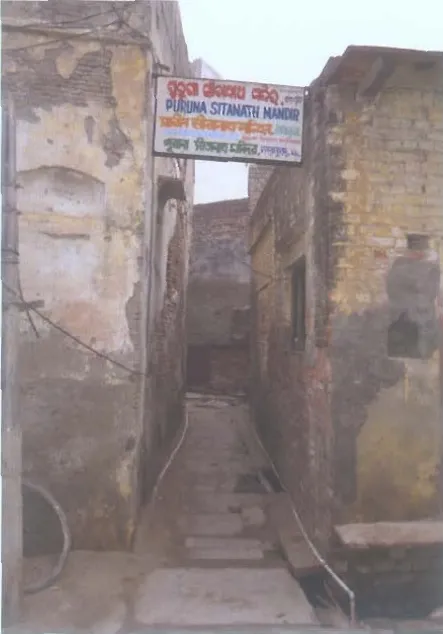
- What it is
- The Sītānātha Mandira is a temple of Śrī Advaita Ācārya and his wife, Śrī Sītā Ṭhākurāṇī, in Vṛndāvana town, right next to the Paurṇamāsī-devī Mandira.
- Visiting
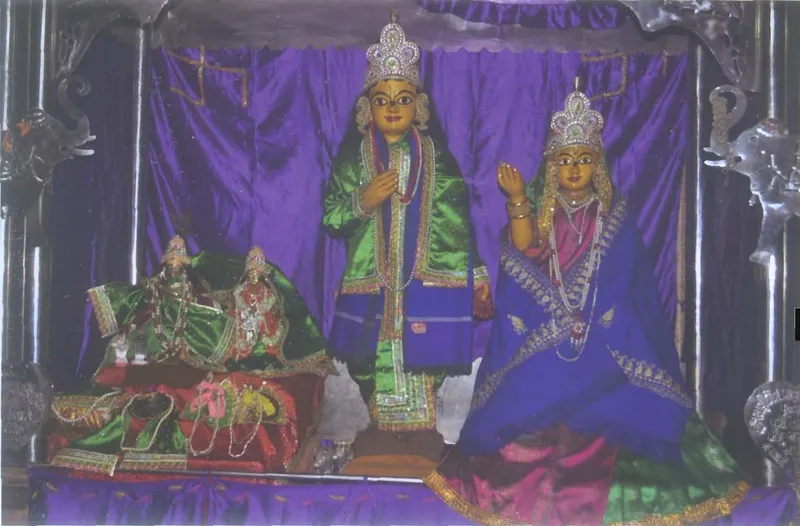
- Vṛndāvana, the Playground of God (2010) and The Color Guide to Vṛndāvana (2000) describe the temple as dedicated to Śrī Advaita Ācārya as Sītānātha and to Śrī Sītā, whose Deities stand on the altar.
In short
The Sītānātha Mandira is a temple of Śrī Advaita Ācārya and his wife, Śrī Sītā Ṭhākurāṇī, in Vṛndāvana town, right next to the Paurṇamāsī-devī Mandira. From its roof one looks over Sevā-kuñja and the neighbouring Kiśorī-kuñja.[1 +2] Sītānātha, "the lord of Sītā", is a name of Śrī Advaita Ācārya, because his wife was Sītā.[1 +2] No source reports a visit of Śrī Advaita Ācārya to this place, and none gives the temple's founder or date, so its age is not certain.[1 +3]
Key facts
| Kind | temple |
|---|---|
| Region · area | Vṛndāvana |
| Ācāryas | Śrī Advaita Ācārya |
The Gosvāmīs and ācāryas
The Caitanya-caritāmṛta calls Sītā Ṭhākurāṇī the wife of Śrī Advaita Ācārya, worshipped by the whole world, and tells how she went to see the newborn Śrī Caitanya Mahāprabhu with gifts. The verse is set in Navadvīpa and says nothing about this temple.[1 +2]
অদ্বৈত–আচার্য–ভার্যা, জগৎপূজিতা আর্যা,
নাম তাঁর ‘সীতা ঠাকুরাণী’।
আচার্যের আজ্ঞা পাঞা, গেল উপহার লঞা,
দেখিতে বালক–শিরোমণি । ১১১ ॥
advaita-ācārya-bhāryā, jagat-pūjitā āryā,
nāma tāṅra ’sītā ṭhākurāṇī’
ācāryera ājñā pāñā, gela upahāra lañā,
dekhite bālaka-śiromaṇi
One day shortly after Lord Caitanya Mahāprabhu was born, Advaita Ācārya’s wife, Sītādevī, who is worshipable by the whole world, took her husband’s permission and went to see that topmost child with all kinds of gifts and presentations
Translation: Śrīla A.C. Bhaktivedanta Swami PrabhupādaExplaining a prayer of Śrīla Narottama dāsa Ṭhākura, Śrīla Prabhupāda gave the meaning of the name (a general teaching, not about the temple):[1 +2]
General teaching (does not name the place)“Then he prays to Advaita Prabhu: hā hā prabhu sītā-pati advaita gosāi. Advaita Prabhu's wife's name was Sītā. Therefore He is sometimes addressed as sītā-pati.”
Śrīla Prabhupāda, Purport to Śrī Kṛṣṇa Caitanya Prabhu, Los Angeles, 11 January 1969 · vedabase.io
The Caitanya-caritāmṛta also says that Śrī Advaita Ācārya is the incarnation of Mahā-Viṣṇu, who creates the cosmic world through māyā.[2 +1]
Songs
The Advaitāṣṭaka, which the song book credits to Śrīla Sārvabhauma Bhaṭṭācārya, ends every verse with meditation on the lotus …
The Advaitāṣṭaka, which the song book credits to Śrīla Sārvabhauma Bhaṭṭācārya, ends every verse with meditation on the lotus feet of Advaita, the lord of Sītā.[7]
Visiting today
Vṛndāvana, the Playground of God (2010) and The Color Guide to Vṛndāvana (2000) describe the temple as dedicated to Śrī Advaita Ācārya as Sītānātha and to Śrī Sītā, whose Deities stand on the altar. The 2010 book places it right next to the Paurṇamāsī temple; both books describe the view over Sevā-kuñja and Kiśorī-kuñja from the courtyard or the roof.[1 +1]
Location
| Where it is | 'right next to the Paurṇamāsī temple'[8] Sevā Kuñja and Kiśor Ban are visible from its courtyard[9] |
|---|
Nearby places
Paurṇamāsī-devī Mandira · Sevā-kuñja · Kiśorī-kuñja
Pictures
1 pictures
History
The guidebook Śrī Vraja-maṇḍala Parikramā (2007) names a Śrī Sītānātha among "some of the principal ancient" temples of Vṛndāvana, without describing it or saying where it stands. A signboard photographed in 2010 reads "PURUNA SITANATH MANDIR", which probably means "the old Sītānātha temple". No source says who founded it or when.[1 +1]
Where the sources differ
How the sources name the form of which Śrī Advaita Ācārya is the incarnation: Mahā-Viṣṇu in the Caitanya-caritāmṛta, Sadāśiva in …
How the sources name the form of which Śrī Advaita Ācārya is the incarnation: Mahā-Viṣṇu in the Caitanya-caritāmṛta, Sadāśiva in the Gaura-gaṇoddeśa-dīpikā. Śrīla Prabhupāda said in 1975 that either way it does not matter, since Sadāśiva too is an expansion of Mahā-Viṣṇu.[2 +1]
Accounts differ How the sources name the form of which Śrī Advaita Ācārya is the incarnation: Mahā-Viṣṇu and Sadāśiva
- Śrī Caitanya-caritāmṛta Ādi-līlā 6.4 (= 1.12), Śrīla Prabhupāda's translation'Lord Advaita Ācārya is the incarnation of Mahā-Viṣṇu, whose main function is to create the cosmic world through the actions of māyā.'
- The Color Guide to Vṛndāvana (2000), entry on this temple'an incarnation of Lord Mahāvishnu'.
- Gaura-gaṇoddeśa-dīpikā vv.11, 76–77 and 80Śrī Advaita Ācārya, the incarnation as a devotee, is Śrī Sadāśiva (v.11); Sadāśiva, also called a vyūha, is Advaita Gosvāmī, whose form is not different from Śrī Caitanya's, and he danced in a cowherd's body near Kṛṣṇa in Vraja (vv.76–77); by Śrī Kṛṣṇa's grace Sadāśiva became twofold, Śiva himself and a cowherd form (v.80). The book does not name Mahā-Viṣṇu.
- Śrīla Prabhupāda, lecture on Śrī Caitanya-caritāmṛta Ādi-līlā 1.12, Māyāpur, 5 April 1975'Sometimes Advaita Ācārya is called Sadāśiva avatāra. The Sadāśiva is also expansion of Mahā-Viṣṇu. So either way you say, incarnation of Sadāśiva or Mahā-Viṣṇu, it doesn't matter.'
References
9 references
- Vṛndāvana, the Playground of God (2010), Bhakti Caitanya Svāmī, PDF p. 157
- The Color Guide to Vṛndāvana (2000), Written and Photographed by Rājaśekhara dāsa Brahmacārī, PDF p. 75
- Śrīla Kṛṣṇadāsa Kavirāja Gosvāmī, Śrī Caitanya-caritāmṛta, Ādi-līlā 13.111, online edition · vedabase.io
- Śrīla Prabhupāda, Purport to Śrī Kṛṣṇa Caitanya Prabhu, Los Angeles, 11 January 1969 · vedabase.io
- Śrī Vraja-maṇḍala Parikramā (2007), PDF p. 322
- Śrīla Kṛṣṇadāsa Kavirāja Gosvāmī, Śrī Caitanya-caritāmṛta, Ādi-līlā 6.4, online edition · vedabase.io
- Huhunkara Garjanadi Aho (Śrī Śrī Advaitāṣṭakam) (Sārvabhauma Bhaṭṭācārya (as the song book credits it)) · song book
- Vṛndāvana, the Playground of God (2010), Bhakti Caitanya Svāmī, p. 157
- The Color Guide to Vṛndāvana (2000), Written and Photographed by Rājaśekhara dāsa Brahmacārī, p. 61