Kiśorī-kuñja
किशोरी-कुंज Hindi name proposed
Also called Kiśor Ban
- What it is
- Kiśorī-kuñja is a walled garden next to Sevā-kuñja in the centre of Vṛndāvana, entered from Loī-bāzār.
- Visiting
- Vṛndāvana, the Playground of God says that Sevā-kuñja is entered from the east near Imlītalā, and Kiśorī-kuñja from Loī-bāzār near the post office.
In short
Kiśorī-kuñja is a walled garden next to Sevā-kuñja in the centre of Vṛndāvana, entered from Loī-bāzār. The guidebook Vṛndāvana, the Playground of God (2010) says that the two are really one grove, divided by a wall.[1] The same book says that Śrī Harirāma Vyāsa performed austerities here until he found the Deities he named Yugala-kiśora; other sources tell his story differently.[2] No scripture, Gosvāmī work or statement of Śrīla Prabhupāda that names the garden has been found in the works searched. Its only link with a pastime of Kṛṣṇa comes through Sevā-kuñja.[1 +5]
Key facts
| Kind | kuñja |
|---|---|
| Region · area | Vṛndāvana |
| Ācāryas | Hari Rāma Vyāsa (Harirāma Vyāsa) |
Divine pastimes
According to the local tradition recorded in Vṛndāvana, the Playground of God, Kṛṣṇa served Śrī Rādhā in Sevā-kuñja during the rāsa night, when She was tired. The book sets this in Sevā-kuñja, not in Kiśorī-kuñja itself, and gives no source, so it is not certain.[1 +1]
Śrīmad-Bhāgavatam tells Kṛṣṇa's care for the gopīs in the rāsa night without naming any place. He lifted His beloved where the grass hurt Her feet and arranged Her hair with flowers, and later He wiped the faces of the tired gopīs.[4 +5] Śrīla Prabhupāda's Kṛṣṇa book tells the wiping of their faces so:[9]
General teaching (does not name the place)“When Kṛṣṇa saw that the gopīs were tired from dancing with Him, He immediately began to wipe His hands over their faces so that their fatigue would be relieved.”
Śrīla Prabhupāda, Kṛṣṇa, the Supreme Personality of Godhead, Chapter 33, 'Description of the Rāsa Dance' · vedabase.io
Śrīla Viśvanātha Cakravartī Ṭhākura and Śrīla Baladeva Vidyābhūṣaṇa explain that the wiping stands for more: Kṛṣṇa also fanned and served the tired gopīs. They name no place (summarised here, not translated).[10] Śrīla Viśvanātha Cakravartī Ṭhākura also explains that Kṛṣṇa lifted His beloved because He could not bear Her pain.[7 +1] Śrī Vraja-maṇḍala Parikramā (2007) also sets Kṛṣṇa's service in Sevā-kuñja, reached by the lane Kuñja-galī; see that page.[4 +3]
Traditional accounts
Vṛndāvana, the Playground of God says that Śrī Harirāma Vyāsa performed austerities in Kiśorī-kuñja until the day he found the …
Vṛndāvana, the Playground of God says that Śrī Harirāma Vyāsa performed austerities in Kiśorī-kuñja until the day he found the Deities he named Yugala-kiśora. Later, it says, the Deities were taken across to Vyāsa-gherā, where Their temple, the Yugala-kiśora Mandira, stands now. The other sources tell his life and the finding of the Deity differently, and Śrī Vraja-maṇḍala Parikramā (2007) treats Kiśorīvana as another name of Vyāsa-gherā itself.[2]
Accounts differ Śrī Harirāma Vyāsa: when he came to Vṛndāvana, how the Yugala-kiśora Deity was found, and his teacher, as each source states it.
- Vṛndāvana, the Playground of God (2010)He came in the 15th century from Orsha, did austerities in Kiśorī-kuṇja and himself discovered the Deities he named Yugala-Kiśora; no teacher is named; the present sevaite, his 27th-generation descendant, is 'a Gauḍīya Vaiṣṇava'.
- Śrī Vraja-maṇḍala Parikramā (2007)Abhirāma Vyāsa of Orachā, a disciple of Mādhava dāsa (a disciple of Śrīla Mādhavendra Purī), 'revealed this deity through Harirāma Vyāsajī'; no date.
- The Color Guide to Vṛndāvana (2000)Calls him 'Hari Rāma Vyāsa Gosvāmī' and says that the builder of the Mirror temple, the Mahārāja of Begawar, Sawan Singh Juedeva, was his disciple; no date, no teacher.
- the Bengali Bhaktamāla of Kṛṣṇadāsa Bābājī (1905) (Kolkata 1905 edition, the Bengali Bhaktamāla of Kṛṣṇadāsa Bābājī (1905))Śrīman Mādhavendra Purī Gosvāmī's disciple was Śrīmatī Mādhava, and Mādhava's disciple was Śrīla Harirāma Gosāñi ('tāṁra śiṣya śrīla-harirāma ye gosāñi'), so his line is the Mādhvī sampradāya (ataeva tāṁra vaṁśa mādhvī-sampradāi); no Abhirāma is named; his country is called Jhannāpannā, and he gave up everything and lived in Vraja; no date.
The wording of these accounts is our summary of the sources, not a published translation.
Visiting today
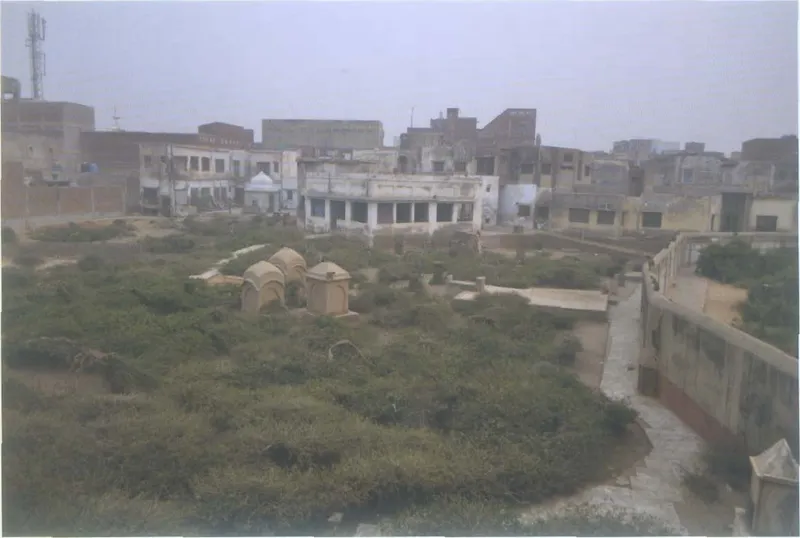
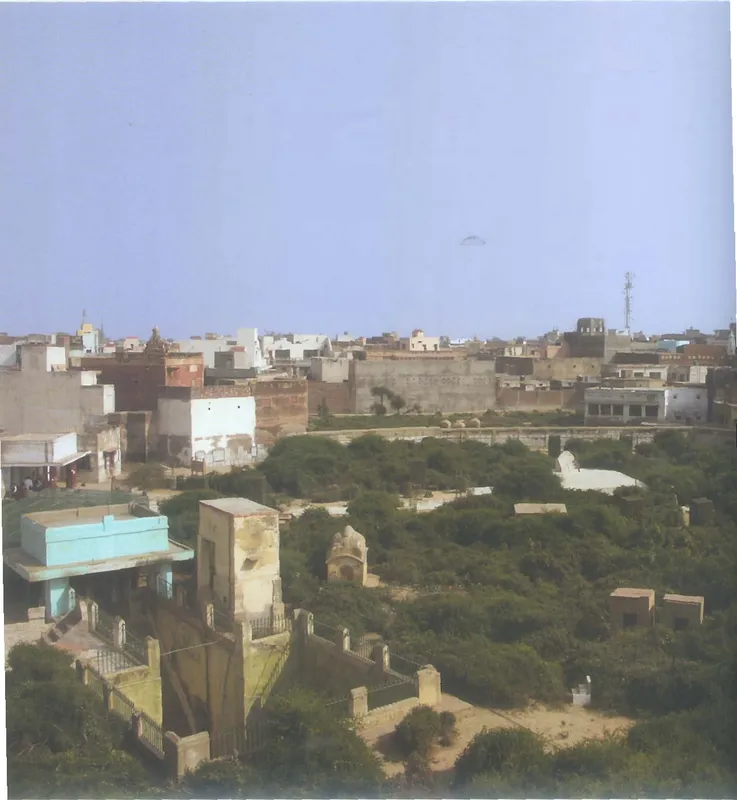
Vṛndāvana, the Playground of God says that Sevā-kuñja is entered from the east near Imlītalā, and Kiśorī-kuñja from Loī-bāzār near the post office. Its photograph from above shows a walled garden of low, bushy trees crossed by paths, with a few small shrines.[1 +4] The same book and The Color Guide to Vṛndāvana (2000) say that the garden can be seen from the roof or courtyard of the Sītānātha Mandira.[3 +3]
Location
| Where it is | 'entered from Loi Bazaar near the Post Office and Heera Jewelers'; 'next to Sevā-kuṇja'[16] adjoining Sevā Kuñja[17] |
|---|
Nearby places
Sevā-kuñja · Loī-bāzār · Sītānātha Mandira (Vṛndāvana)
Pictures
1 pictures
Where the sources differ
Accounts differ Kiśorīvana, Kiśorī-kuñja and Vyāsa-gherā: one place or several, and where the Yugala-Kiśora Deities were found.
- Śrī Vraja-maṇḍala Parikramā (2007), printed p. 644'Śrī Yugala-Kiśorajī is situated in Kiśorīvana, or Vyāsa-gherā, near Śrī Sevā-kuñja': the two names are given for one place, where the Deity now is; no move of the Deity is mentioned.
- Vṛndāvana, the Playground of God (2010), entries 34 and 69Kiśorī-kuṇja is a garden next to Sevā-kuṇja ('These two groves are essentially one, but somehow a wall was placed in the middle to separate them'); Śrī Harirāma Vyāsa found the Deities there, and They were later 'brought across' to Vyāsa Ghera, where They are now.
- The Color Guide to Vṛndāvana (2000), entry 31From the Sītā-nātha temple's courtyard 'one can see both Sevā Kuñja and the adjoining garden of Kiśor Ban'; nothing is said of Vyāsa-gherā or of the Deity there.
- Vraja-bhakti-vilāsa (Śrīla Nārāyaṇa Bhaṭṭa), printed p. 36Kiśorīvana is one of the forty-two forests on the north bank of the Yamunā, the bank opposite Vaṁśīvaṭa; elsewhere the book makes it a mokṣa-vana with a Navanīta-kuṇḍa between Kiśoravana and Viyogavana.
Where Kṛṣṇa served Śrī Rādhā in the rāsa night: one commentator places the arranging of Her hair at Śṛṅgāravaṭa, and the guidebooks set the service at Sevā-kuñja; the accounts are set side by side with Kuñja-galī, on the page of the four lanes by Sevā-kuñja.[15]
References
17 references
- Vṛndāvana, the Playground of God (2010), Bhakti Caitanya Svāmī, PDF p. 151
- Vṛndāvana, the Playground of God (2010), Bhakti Caitanya Svāmī, PDF p. 220
- Vṛndāvana, the Playground of God (2010), Bhakti Caitanya Svāmī, PDF p. 154
- Śrīmad-Bhāgavatam 10.30.30, GRETIL
- Śrīmad-Bhāgavatam 10.30.32, GRETIL
- Śrīmad-Bhāgavatam 10.30.33, GRETIL
- Śrīla Prabhupāda, Kṛṣṇa, the Supreme Personality of Godhead (Kṛṣṇa book), Chapter 30, 'Kṛṣṇa’s Hiding from the Gopīs' · vedabase.io
- Śrīmad-Bhāgavatam 10.33.20, GRETIL
- Śrīla Prabhupāda, Kṛṣṇa, the Supreme Personality of Godhead, Chapter 33, 'Description of the Rāsa Dance' · vedabase.io
- Śrīla Viśvanātha Cakravartī Ṭhākura: commentary on ŚB 10.33.20
- Śrīla Viśvanātha Cakravartī Ṭhākura: commentary on ŚB 10.30.30, second verse
- Vṛndāvana, the Playground of God (2010), Bhakti Caitanya Svāmī, PDF p. 152
- Vṛndāvana, the Playground of God (2010), Bhakti Caitanya Svāmī, PDF p. 157
- The Color Guide to Vṛndāvana (2000), Written and Photographed by Rājaśekhara dāsa Brahmacārī, PDF p. 75
- Vaṁśīdhara: commentary on ŚB 10.30.33
- Vṛndāvana, the Playground of God (2010), Bhakti Caitanya Svāmī, p. 151
- The Color Guide to Vṛndāvana (2000), Written and Photographed by Rājaśekhara dāsa Brahmacārī, p. 61