Paurṇamāsī-devī Mandira
पौर्णमासी-देवी मन्दिर Hindi name proposed
Also called Paurṇamāsī Temple, Purnamasi
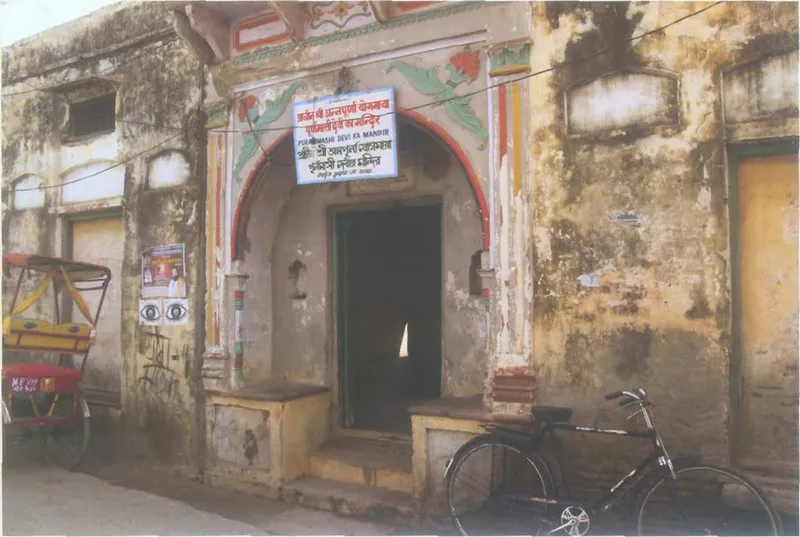
- What it is
- The Paurṇamāsī-devī Mandira is a small temple of Paurṇamāsī at the edge of Sevā-kuñja in Vṛndāvana, with the Sītānātha temple beside it.
- Visiting
- Śrī Vraja-maṇḍala Parikramā (2007) places the temple just east of Sevā-kuñja.
In short
The Paurṇamāsī-devī Mandira is a small temple of Paurṇamāsī at the edge of Sevā-kuñja in Vṛndāvana, with the Sītānātha temple beside it.[1 +4] Śrīla Jīva Gosvāmī writes that Paurṇamāsī is Yogamāyā, the Lord's own potency in charge of His pastimes, who appears in Vraja as an elderly ascetic woman.[2 +3] Śrīla Rūpa Gosvāmī and Śrīla Raghunātha dāsa Gosvāmī praise her as the one who brings Rādhā and Kṛṣṇa together.[3 +4] No scripture or Gosvāmī work found mentions the temple itself, and no source gives its founder or date.[1 +4]
Key facts
| Kind | temple |
|---|---|
| Region · area | Vṛndāvana |
Why it is glorified
Śrīla Raghunātha dāsa Gosvāmī, in his Vraja-vilāsa-stava, worships "Bhagavatī Paurṇamāsī", who arranges good fortune in the …
Śrīla Raghunātha dāsa Gosvāmī, in his Vraja-vilāsa-stava, worships "Bhagavatī Paurṇamāsī", who arranges good fortune in the cowherd village. In his words, she arranges through skilled sakhīs (Rādhā's girl companions) the daily meetings of Rādhā and Mādhava, and relishes Their happiness again and again (summarised here, not translated).[3 +4]
In his Rādhā-Kṛṣṇa-gaṇoddeśa-dīpikā, Śrīla Rūpa Gosvāmī names Paurṇamāsī first among Kṛṣṇa's messengers and calls her the crest-jewel of the perfected women of Vraja, "who brings the two together".[3 +4]
Divine pastimes
Yogamāyā of the rāsa dance
Śrīmad-Bhāgavatam opens the rāsa-līlā, Kṛṣṇa's dance with the gopīs, by saying that He relied on yoga-māyā, His internal potency. The Bhāgavatam does not name Paurṇamāsī.[11 +3]
Śrī Bādarāyaṇi said: Śrī Kṛṣṇa is the Supreme Personality of Godhead, full in all opulences, yet upon seeing those autumn nights scented with blossoming jasmine flowers, He turned His mind toward loving affairs. To fulfill His purposes He employed His internal potency.
Translation: Śrīla Prabhupāda's disciples (BBT)Śrīla Jīva Gosvāmī quotes these very words in his Gopāla-campū when he introduces Paurṇamāsī: the potency known as Yogamāyā, who has charge of the Lord's pastimes, took the form of an ascetic woman, and her common name was Paurṇamāsī. He says the same in his Saṅkalpa-kalpadruma (summarised here, not translated).[2 +5] The commentators on the verse describe yoga-māyā's work in the rāsa without naming her. Śrīla Śrīnātha Cakravartī says that the Lord left to the goddess whatever was difficult there, and Śrīla Viśvanātha Cakravartī Ṭhākura says that her good fortune is very great, since the Lord Himself relied on her. In one reading Śrīla Nārāyaṇa Bhaṭṭa Gosvāmī takes her to be an elderly female ascetic who assists the pastimes.[6 +3]
At the end of the rāsa chapters the Bhāgavatam says that the cowherd men, bewildered by Kṛṣṇa's māyā, thought their wives were at their sides. Most commentators explain this as yoga-māyā's work, each in his own way (summarised here, not translated).[11 +6]
The arranger of Rādhā and Kṛṣṇa's meetings
In the Gopāla-campū, Vṛndā comes from the depths of the forest to Paurṇamāsī almost day and night to consult her about Rādhā and Kṛṣṇa's pastimes, and Paurṇamāsī assures her that her māyā protects Them (summarised here, not translated).[3 +6]
Śrīla Rūpa Gosvāmī's drama Lalita-mādhava brings Paurṇamāsī on stage talking with Gārgī, the daughter of Garga Muni, as the one who guides Rādhā and Kṛṣṇa's pastimes (summarised here, not translated).[3 +7] At dusk in the same act she speaks this verse, which Śrīla Prabhupāda translates in the Caitanya-caritāmṛta:[4 +4]
The dust from cows and calves on the road creates a kind of darkness indicating that Kṛṣṇa is returning home from the pasture. Also, the darkness of evening provokes the gopīs to meet Kṛṣṇa. Thus the pastimes of Kṛṣṇa and the gopīs are covered by a kind of transcendental darkness and are therefore impossible for ordinary scholars of the Vedas to see.
Translation: Śrīla A.C. Bhaktivedanta Swami PrabhupādaWho Paurṇamāsī is
Śrīla Rūpa Gosvāmī calls her the mother of Sāndīpani Muni and a disciple of Nārada. He describes her as fair, wearing ochre cloth, with hair like white kāśa flowers, respected by Nanda and all the people of Vraja. At Nārada's instruction she left her son and the town of Avantī and came to Gokula out of love for her Lord.[2 +6] Another part of the same work dresses her differently (see below). Śrīla Prabhupāda also calls her the mother of Sāndīpani Muni and the grandmother of Madhumaṅgala.[5 +4]
In his Canto 10 commentary Śrīla Viśvanātha Cakravartī Ṭhākura three times has the gopīs name Paurṇamāsī as one from whom they learned about Kṛṣṇa, for example that He was Rāmacandra in a former birth.[26 +2]
Traditional accounts
The Color Guide to Vṛndāvana (2000) says that Paurṇamāsī always sits here at the corner of Sevā-kuñja to assist Rādhā and Kṛṣṇa …
The Color Guide to Vṛndāvana (2000) says that Paurṇamāsī always sits here at the corner of Sevā-kuñja to assist Rādhā and Kṛṣṇa in Their pastimes. Vṛndāvana, the Playground of God (2010) likewise says that from the edge of Sevā-kuñja she is in the ideal position to help with Their rāsa pastimes. Neither book names a source.[3 +1]
Older works place Paurṇamāsī's own home in Kṛṣṇa's pastimes near Nandagrāma. According to the Bhakti-ratnākara, she stays in a hut of leaves beside a secluded Paurṇamāsī-kuṇḍa at Nandīśvara, and Śrī Vraja-maṇḍala Parikramā (2007) puts her pond and cottage about a mile from Nandagrāma.[29 +1] According to the local tradition recorded in The Color Guide to Vṛndāvana, which gives no source, her original Deity is at Saṅket, between Varṣāṇā and Nandagrāma; no other source found mentions that Deity, so this is not certain.[5]
Śrīla Prabhupāda
Śrīla Prabhupāda does not speak of this temple by name.
Śrīla Prabhupāda does not speak of this temple by name. In his Kṛṣṇa book, Śrīmatī Rādhārāṇī speaks to the bee and names Paurṇamāsī as the gopīs' teacher about Kṛṣṇa's former births:[26 +2]
General teaching (does not name the place)“You do not know much about Kṛṣṇa – how ungrateful and hardhearted He has been, not only in this life but in His previous lives also. We have all heard this from our grandmother Paurṇamāsī. She has informed us that Kṛṣṇa was born in a kṣatriya family previous to this birth and was known as Rāmacandra.”
Śrīla Prabhupāda, Kṛṣṇa, the Supreme Personality of Godhead (Kṛṣṇa book), Chapter 47, 'Delivery of the Message of Kṛṣṇa to the Gopīs' · vedabase.io
On the yoga-māyā of the rāsa, he writes in general:[11 +3]
General teaching (does not name the place)“The specific words used in Śrīmad-Bhāgavatam are yogamāyām upāśritaḥ, which mean that this dancing with the gopīs is on the platform of yogamāyā, not mahāmāyā. The dancing of young boys and girls within the material world is in the kingdom of mahāmāyā, or the external energy. The rāsa dance of Kṛṣṇa with the gopīs is on the platform of yogamāyā.”
Śrīla Prabhupāda, Kṛṣṇa, the Supreme Personality of Godhead (Kṛṣṇa book), Chapter 29, 'The Rāsa Dance: Introduction' · vedabase.io
Songs
A Bengali song in praise of the people of Vraja greets Paurṇamāsī as Yogamāyā, who arranges Rādhā and Kṛṣṇa's pastimes and keeps …
A Bengali song in praise of the people of Vraja greets Paurṇamāsī as Yogamāyā, who arranges Rādhā and Kṛṣṇa's pastimes and keeps Them hidden.[31]
Visiting today
Śrī Vraja-maṇḍala Parikramā (2007) places the temple just east of Sevā-kuñja. Vṛndāvana, the Playground of God (2010) puts it a few metres from the entrance of Sevā-kuñja, with a signboard read in part as "…MASHI DEVI KA MANDIR", and The Color Guide to Vṛndāvana (2000) at the corner of Sevā-kuñja. The Sītānātha temple is next to it.[1 +4]
Location
| Where it is | near Sevā-kuñja, to the east[33] 'Just a few meters from the entrance to Sevā-kuṇja'; 'right on the edge of Sevā-kuṇja'[34] |
|---|
Nearby places
Sevā-kuñja · Sītānātha Mandira (Vṛndāvana)
Pictures
2 pictures
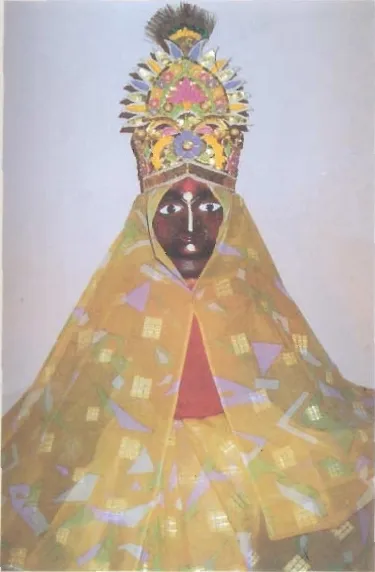
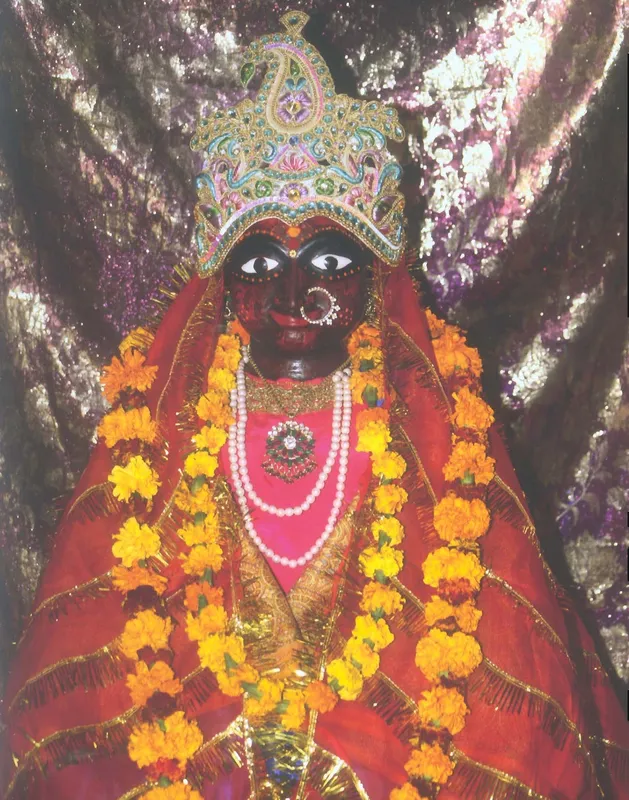
Where the sources differ
Where Paurṇamāsī stays, and where her original Deity is, the sources tell differently; the accounts are set side by side on the page of Pūrṇamāsī's cave at Nandagrāma.[3 +1]
Where Paurṇamāsī and Vṛndā confer about Rādhā and Kṛṣṇa's pastimes is told differently and is not certain; the accounts are set side by side on the page of Vṛndā-kuṇḍa.[5 +1]
How the gopīs' husbands were kept from noticing that their wives had gone to the rāsa: the Bhāgavatam says that Kṛṣṇa's māyā bewildered them, and the commentators explain this in different ways.[12 +3]
Accounts differ How Paurṇamāsī is dressed: in ochre cloth, or in white cloth with many jewels.
- Rādhā-Kṛṣṇa-gaṇoddeśa-dīpikā, bṛhad-bhāga (part 1) v.67; Vṛndāvana, the Playground of God (2010), quoting these versesshe wears ochre cloth (kāṣāya-vāsanā; Vṛndāvana, the Playground of God (2010): 'red garments'), is fair and has hair like kāśa flowers
- Rādhā-Kṛṣṇa-gaṇoddeśa-dīpikā, laghu-bhāga (part 2) v.90her complexion is like molten gold; she wears white cloth and many jewels
References
34 references
- Śrī Vraja-maṇḍala Parikramā (2007), PDF p. 345
- Vṛndāvana, the Playground of God (2010), Bhakti Caitanya Svāmī, PDF p. 154
- Vṛndāvana, the Playground of God (2010), Bhakti Caitanya Svāmī, PDF p. 156
- Vṛndāvana, the Playground of God (2010), Bhakti Caitanya Svāmī, PDF p. 157
- The Color Guide to Vṛndāvana (2000), Written and Photographed by Rājaśekhara dāsa Brahmacārī, PDF p. 75
- Śrīla Jīva Gosvāmī, Gopāla-campū, Pūrva-campū 2 (dvitīyaṃ pūraṇam), prose section [28], GRETIL
- Śrīla Jīva Gosvāmī, Saṅkalpa-kalpadruma 88, GRETIL
- Śrīla Raghunātha dāsa Gosvāmī, Vraja-vilāsa-stava 25
- Śrīla Jīva Gosvāmī, Gopāla-campū, Pūrva-campū 15 (pañcadaśaṃ pūraṇam), prose section [40], GRETIL
- Rādhā-Kṛṣṇa-gaṇoddeśa-dīpikā, laghu-bhāga, v.88 and vv.90–92 (index labels 'part 2 v.88', 'v.90'–'v.92')
- Śrīmad-Bhāgavatam 10.29.1, GRETIL
- Śrīmad-Bhāgavatam 10.33.37, GRETIL
- Śrīla Prabhupāda, Kṛṣṇa, the Supreme Personality of Godhead (Kṛṣṇa book), Chapter 29, 'The Rāsa Dance: Introduction' · vedabase.io
- Śrīla Prabhupāda, Kṛṣṇa, the Supreme Personality of Godhead (Kṛṣṇa book), Chapter 33, 'Description of the Rāsa Dance' · vedabase.io
- Śrīla Śrīnātha Cakravartī: commentary on ŚB 10.29.1
- Śrīla Viśvanātha Cakravartī Ṭhākura: commentary on ŚB 10.33.37
- Śrīla Jīva Gosvāmī, Gopāla-campū, Pūrva-campū 15, prose sections [44]–[47], GRETIL
- Śrīla Rūpa Gosvāmī, Lalita-mādhava, Act 1, v.14 and the prose speeches numbered 23–24 after it (index labels '(1) … v.14', '(1) … after v.14')
- Śrīla Prabhupāda, Śrī Caitanya-caritāmṛta, Antya-līlā 1.188, translation and purport · vedabase.io
- Śrīla Prabhupāda, Śrī Caitanya-caritāmṛta, Antya-līlā 1.189, purport · vedabase.io
Show all 34 references
- Śrīla Rūpa Gosvāmī, Lalita-mādhava, Act 1, v.23 (speech 63 of the text; index label '(1) mukha-kamalāni ca khedayann akhaṇḍaḥ v.23')
- Śrīla Rūpa Gosvāmī, Lalita-mādhava, Act 1 ('Sāyam-utsava'), v.13 mukha-kamalāni ca khedayann akhaṇḍaḥ v.13')
- Śrīla Rūpa Gosvāmī, Lalita-mādhava, Act 1, v.23 (speech 63 of the text; index label '(1) mukha-kamalāni ca khedayann akhaṇḍaḥ v.23')
- Śrīla Prabhupāda, Śrī Caitanya-caritāmṛta, Antya-līlā 1.150, purport · vedabase.io
- Śrīla Rūpa Gosvāmī, Rādhā-Kṛṣṇa-gaṇoddeśa-dīpikā, bṛhad-bhāga, vv.67–69 (index labels 'part 1 v.67'–'v.69')
- Śrīla Viśvanātha Cakravartī Ṭhākura: commentary on ŚB 10.31.4
- Śrīla Viśvanātha Cakravartī Ṭhākura: commentary on ŚB 10.47.17, Bhagavata Vidya Pith edition, ed. Bhagavata Rishi and Krishna Shankar Shastri, 1996
- Śrīla Prabhupāda, Kṛṣṇa, the Supreme Personality of Godhead (Kṛṣṇa book), Chapter 47, 'Delivery of the Message of Kṛṣṇa to the Gopīs' · vedabase.io
- Śrīla Narahari Cakravartī, Bhakti-ratnākara, Fifth Wave (pañcama taraṅga), 1912 ed. p. 223, at Nandīśvara, 2nd ed., 1912
- Śrī Vraja-maṇḍala Parikramā (2007), PDF p. 212
- Jaya Jaya Braja Bāsī Śreṣṭha Nanda Rāja (Narottama dāsa Ṭhākura (as the song book credits it)) · song book
- the undated parikramā notes Nandagrāma, ¶38
- Śrī Vraja-maṇḍala Parikramā (2007), p. 664-665
- Vṛndāvana, the Playground of God (2010), Bhakti Caitanya Svāmī, p. 154