Sutala Vana
सुतल वन Hindi name proposed
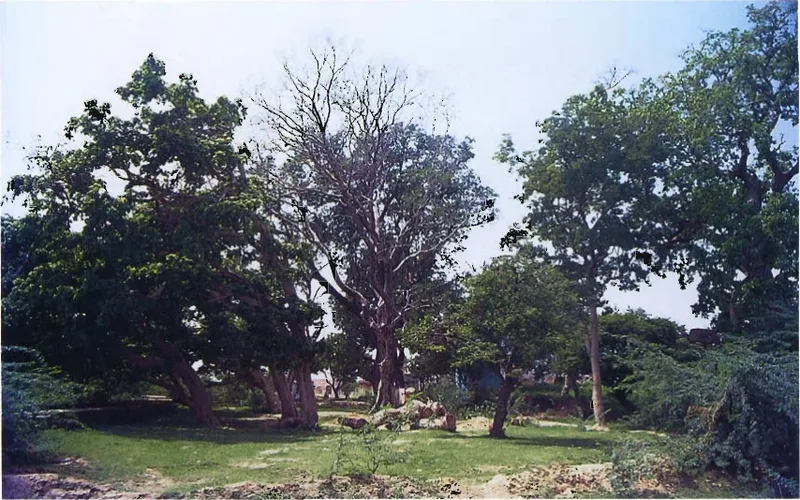
- What it is
- Sutala Vana is a small grove on the banks of Apsarā-kuṇḍa at Govardhana, described by a single guidebook, Govardhana Hill (2001).
- Visiting
- According to Govardhana Hill (2001), the grove used to have many pairs of kadamba and tamāla trees; the book takes the tamālas to stand for Kṛṣṇa and the kadambas for Rādhārāṇī and the gopīs.
In short
Sutala Vana is a small grove on the banks of Apsarā-kuṇḍa at Govardhana, described by a single guidebook, Govardhana Hill (2001). The book says that the grove is believed to be one of the places where the rāsa-līlā, Kṛṣṇa's dance with the gopīs, took place.[1] Śrīmad-Bhāgavatam sets that dance on the bank of the Yamunā and names no place at Govardhana.[2 +5] Near the grove the same guidebook shows a small pond, Sutala-kuṇḍa, close to the Maṇi-kaṇḍalī cave, Śrīla Rāghava Paṇḍita's cave.[1 +1]
Key facts
| Kind | forest |
|---|---|
| Region · area | Govardhana |
Divine pastimes
Śrīmad-Bhāgavatam (10.29–10.33) tells the rāsa-līlā on moonlit autumn nights. Kṛṣṇa takes the gopīs to the sandy bank of a river, which the translation and the commentators name as the Yamunā, and there He begins the dance. The chapters do not name Sutala Vana, Apsarā-kuṇḍa or any other place at Govardhana.[2 +5]
tatrārabhata govindo rāsa-krīḍām anuvrataiḥ / strī-ratnair anvitaḥ prītair anyonyābaddha-bāhubhiḥ
There on the Yamunā’s banks Lord Govinda then began the pastime of the rāsa dance in the company of those jewels among women, the faithful gopīs, who joyfully linked their arms together.
Translation: Śrīla Prabhupāda's disciples (BBT)The commentators also place the dance on the bank of the Yamunā; Śrīla Sanātana Gosvāmī says that the river and the forest are not named because they are well known. Śrīla Viśvanātha Cakravartī Ṭhākura reads the closing verse to mean that Kṛṣṇa had countless such pastimes on the nights of all twelve months in Śrī Vṛndāvana, but he names no site for them (summarised here, not translated).[3 +2] Śrīla Prabhupāda's Kṛṣṇa book also sets the dance on the bank of the Yamunā.[6] Read more: The spring rāsa at Govardhana: Pārāsaulī, Candra-sarovara and Paiṭhā →
The guidebook's belief is a later local tradition and does not carry the authority of the Bhāgavatam's account; the block sets out what each source says:
Accounts differ Where the rāsa-līlā took place: the Bhāgavatam's account and Govardhana Hill: India's Most Sacred Mountain (2001)'s belief about Sutala Vana
- Śrīmad-Bhāgavatam 10.29.45, 10.32.11-12, 10.33.2 (translation by Śrīla Prabhupāda's disciples)on the sandy bank of the river, the Kālindī (Yamunā), on autumn moonlit nights; 'there' Govinda began the rāsa dance; no other place is named
- Śrīmad-Bhāgavatam 10.33.25Kṛṣṇa enjoyed in this way 'all those moonlit nights'; no place named
- Canto 10 commentators (Sanātana, Jīva, Vaṁśīdhara, Śrīla Nārāyaṇa Bhaṭṭa, Baladeva on 10.29.45; Sanātana and Jīva on 10.32.11-12)the bank of the Yamunā (Jīva: in the forest of Vṛndāvana), too well known to need naming; for the dance Kṛṣṇa took the gopīs to another bank fit for the rāsa or, in a second reading, into the middle of the same bank
- Śrīla Viśvanātha Cakravartī on 10.33.25besides the autumn full-moon rāsa, Kṛṣṇa had countless such pastimes on the nights of all twelve months in Śrī Vṛndāvana; no particular site named
Visiting today
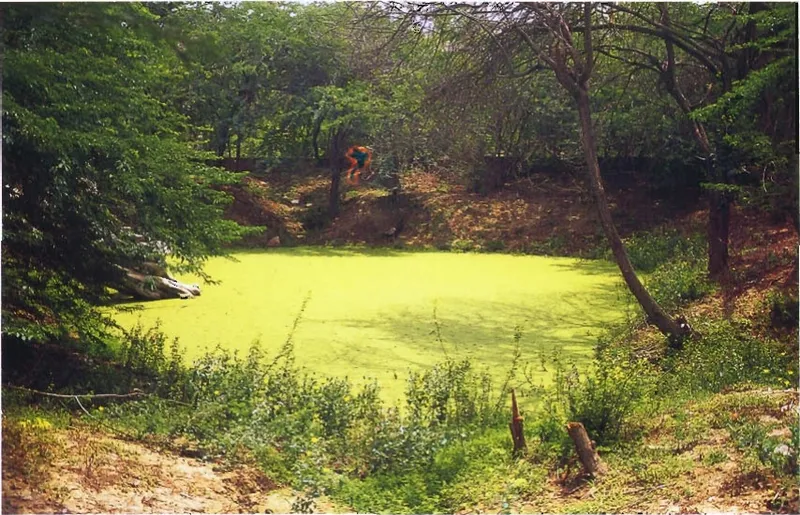
According to Govardhana Hill (2001), the grove used to have many pairs of kadamba and tamāla trees; the book takes the tamālas to stand for Kṛṣṇa and the kadambas for Rādhārāṇī and the gopīs.[1] The same book calls Sutala-kuṇḍa a sacred kuṇḍa and prints a photograph of the secluded pond, where, its caption says, peacocks like to drink. It gives no pastime for the kuṇḍa itself.[1 +1]
Location
| Where it is | On the banks of Apsarā-kuṇḍa[11] |
|---|
Places at Sutala Vana
1 places
Also listed here
- Sutala-kuṇḍa kuṇḍa
Nearby places
Apsarā-kuṇḍa
Pictures
2 pictures
References
11 references
- Govardhana Hill: India's Most Sacred Mountain (2001), Rajasekhara dasa Brahmacari, PDF p. 125
- Śrīmad-Bhāgavatam 10.29.45, GRETIL
- Śrīmad-Bhāgavatam 10.32.11-12, GRETIL
- Śrīmad-Bhāgavatam 10.33.2, GRETIL
- Śrīmad-Bhāgavatam 10.33.25, GRETIL
- Śrīla Prabhupāda, Kṛṣṇa, the Supreme Personality of Godhead (Kṛṣṇa book), Chapter 29, 'The Rāsa Dance: Introduction' · vedabase.io
- Śrīla Prabhupāda, Kṛṣṇa, the Supreme Personality of Godhead (Kṛṣṇa book), Chapter 32, 'Kṛṣṇa Returns to the Gopīs' · vedabase.io
- Govardhana Hill: India's Most Sacred Mountain (2001), Rajasekhara dasa Brahmacari, PDF p. 126
- Śrīla Sanātana Gosvāmī: commentary on ŚB 10.29.45
- Śrīla Viśvanātha Cakravartī Ṭhākura: commentary on ŚB 10.33.25
- Govardhana Hill: India's Most Sacred Mountain (2001), Rajasekhara dasa Brahmacari, p. 111