Govardhana
गोवर्धन
Also called Girirāja
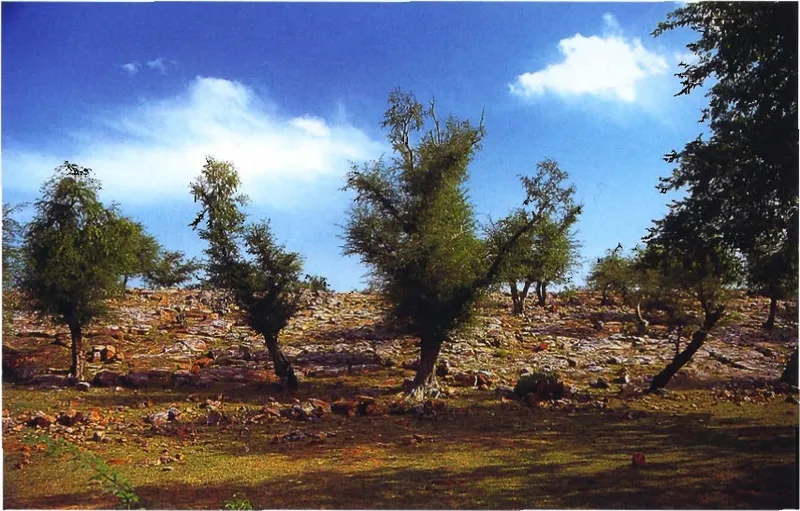
- What it is
- Govardhana is the hill that Kṛṣṇa lifted with one hand and held up for seven days, so that the people and cows of Vraja could shelter under it from Indra's rain.
- Visiting
- Gauḍīya Vaiṣṇavas, the followers of Śrī Caitanya Mahāprabhu, do not climb Govardhana.
- Places here
- Pārāsaulī, Annakūṭa-kṣetra, Pūñcharī, Paiṭhā-grāma, Jatīpurā +66 more
In short
Govardhana is the hill that Kṛṣṇa lifted with one hand and held up for seven days, so that the people and cows of Vraja could shelter under it from Indra's rain[1 +5]. Here He received the first Govardhana-pūjā, the worship of the hill, when He took a huge form, declared that He was the hill and ate the offerings[7 +5]. Śrīla Rūpa Gosvāmī ranks Govardhana above the forest of Vṛndāvana, and Rādhā-kuṇḍa, at its foot, above all[13 +2]. The Caitanya-caritāmṛta tells how Śrī Caitanya Mahāprabhu embraced one of its rocks but would not climb it[12 +5]. The Varāha Purāṇa places the hill two yojanas (an old measure of distance) west of Mathurā[21 +1].
Key facts
| Kind | hill |
|---|---|
| Also part of | Vṛndāvana (forest) |
| Ācāryas | Śrīla Mādhavendra Purī, Śrī Caitanya Mahāprabhu, Śrīla Rūpa Gosvāmī, Śrīla Sanātana Gosvāmī |
Why it is glorified
Śrīla Rūpa Gosvāmī's Upadeśāmṛta (verse 9) ranks the holy places: Govardhana stands above the forest of Vṛndāvana, because Kṛṣṇa …
Śrīla Rūpa Gosvāmī's Upadeśāmṛta (verse 9) ranks the holy places: Govardhana stands above the forest of Vṛndāvana, because Kṛṣṇa raised it with His hand and it was the site of His loving pastimes; above all stands Rādhā-kuṇḍa, at the foot of the hill[13 +2].
vaikuṇṭhāj janito varā madhu-purī tatrāpi rāsotsavād
vṛndāraṇyam udāra-pāṇi-ramaṇāt tatrāpi govardhanaḥ
rādhā-kuṇḍam ihāpi gokula-pateḥ premāmṛtāplāvanāt
kuryād asya virājato giri-taṭe sevāṁ vivekī na kaḥ
The holy place known as Mathurā is spiritually superior to Vaikuṇṭha, the transcendental world, because the Lord appeared there. Superior to Mathurā-purī is the transcendental forest of Vṛndāvana because of Kṛṣṇa’s rāsa-līlā pastimes. And superior to the forest of Vṛndāvana is Govardhana Hill, for it was raised by the divine hand of Śrī Kṛṣṇa and was the site of His various loving pastimes. And, above all, the superexcellent Śrī Rādhā-kuṇḍa stands supreme, for it is overflooded with the ambrosial nectarean prema of the Lord of Gokula, Śrī Kṛṣṇa. Where, then, is that intelligent Person who is unwilling to serve this divine Rādhā-kuṇḍa, which is situated at the foot of Govardhana Hill?
Translation: Śrīla A.C. Bhaktivedanta Swami PrabhupādaIn the Bhāgavatam the gopīs, the cowherd girls of Vraja, call Govardhana hari-dāsa-varya, the best of the Lord's servants, because it gives Kṛṣṇa, Balarāma, their friends and their cows water, grass, caves and roots[23 +5]. The Caitanya-caritāmṛta tells that Śrī Caitanya Mahāprabhu recited this verse as He walked around the hill[12 +5].
hantāyam adrir abalā hari-dāsa-varyo
yad rāma-kṛṣṇa-caraṇa-sparaśa-pramodaḥ
mānaṃ tanoti saha-go-gaṇayos tayor yat
pānīya-sūyavasa-kandara-kandamūlaiḥ
Of all the devotees, this Govardhana Hill is the best! O my friends, this hill supplies Kṛṣṇa and Balarāma, as well as Their calves, cows and cowherd friends, with all kinds of necessities — water for drinking, very soft grass, caves, fruits, flowers and vegetables. In this way the hill offers respect to the Lord. Being touched by the lotus feet of Kṛṣṇa and Balarāma, Govardhana Hill appears very jubilant.
Translation: Śrīla A.C. Bhaktivedanta Swami PrabhupādaGovardhana is thus honoured in two ways: as Kṛṣṇa Himself, since Kṛṣṇa declared that He was the hill and the Garga-saṁhitā calls it Hari's form, and as His best servant[7 +5]. The Brahma-vaivarta Purāṇa explains the name: Govardhana is the one who always nourishes (vardhayati) the cows (gāḥ)[30].
The Garga-saṁhitā says that seeing Govardhana frees one from further birth and that no tīrtha (holy place) equals it[29 +4], and the Padma Purāṇa calls the hill the abode of eternal rasa, the sweetness of loving exchange with Kṛṣṇa[13 +3]. The Varāha Purāṇa promises freedom from rebirth to one who bathes in Mānasī-gaṅgā, sees Hari at Govardhana and walks around the hill[22 +3]; in the Bhakti-ratnākara Śrīla Rāghava Paṇḍita repeats this and names the Deity Harideva[40].
Where the hill came from
The Garga-saṁhitā says that Govardhana first appeared in Goloka, Kṛṣṇa's own abode, from an effulgence that came out of Kṛṣṇa's heart when Śrī Rādhā asked for a secluded place for the rāsa dance[26 +5]. On earth the hill was born to the wife of Mount Droṇa[28 +5]. The sage Pulastya later carried him towards Kāśī; in Vraja the hill remembered that Kṛṣṇa would appear there, grew heavy and would not rise, and Pulastya cursed him to shrink every day by the size of a sesame seed[47 +5].
The Nārada Purāṇa tells it differently, of a brāhmaṇa named Govardhana who asked Viṣṇu to stand on his back[55 +1]. According to the Vraja-bhakti-vilāsa, citing the Ādi-varāha, and two guidebooks, Śrī Vraja-maṇḍala Parikramā (2007) and the undated parikramā notes Govardhana, Hanumān was carrying the hill for Rāma's bridge and put it down in Vraja when he heard that the bridge was finished[47 +4]. Read more: How Govardhana came to Vraja: the accounts of the hill's origin →
Accounts differ How Govardhana came to stand in Vraja
- Garga-saṁhitā 2.2 and 3.9born of Droṇācala's wife in Śālmalī-dvīpa (after manifesting from Kṛṣṇa's heart in Goloka), carried by Pulastya towards Kāśī, set down in Vraja and would not rise
- 'Ādi-varāha Purāṇa' as reported by Śrī Vraja-maṇḍala Parikramā (2007) and the undated parikramā notes GovardhanaHanumān uprooted him from Uttarāñcala for Rāma's bridge and set him down in Vraja when the bridge was complete; Rāma promised to hold him in Dvāpara
- Vraja-bhakti-vilāsa (Śrīla Nārāyaṇa Bhaṭṭa), ch. 5, citing the Ādi-vārāhaHanumān, at Rāma's order, was carrying Govardhana from the north (uttarāt) on his shoulder; when a heavenly voice said the bridge was complete he threw him down here ('prakṣipya vanītale'), and Govardhana, Hari's devotee, prepared to curse him
- Varāha Purāṇa textno such story in the available text
Divine pastimes
The first Govardhana-pūjā
Kṛṣṇa had the cowherds use everything they had gathered for a sacrifice to Indra to worship the cows, the brāhmaṇas and Govardhana Hill instead. They offered their gifts to the hill and walked around it with their cows[10 +4]. Then Kṛṣṇa took another, huge form, declared that He was the hill and ate the offerings, the first Annakūṭa (a hill of food); with the people of Vraja He bowed down to that form[7 +5].
kṛṣṇas tv anyatamaṃ rūpaṃ gopa-viśrambhaṇaṃ gataḥ / śailo 'smīti bruvan bhūri balim ādad bṛhad-vapuḥ
Kṛṣṇa then assumed an unprecedented, huge form to instill faith in the cowherd men. Declaring “I am Govardhana Mountain!” He ate the abundant offerings.
Translation: Śrīla Prabhupāda's disciples (BBT)According to Śrīla Jīva Gosvāmī and Śrīla Viśvanātha Cakravartī Ṭhākura, this was the first day of the bright half of Kārttika[64 +2], the day the Skanda, Padma and Nārada Purāṇas set for the yearly worship of Govardhana[67 +2]. The Bhāgavatam names no village for the Annakūṭa. According to the Bhakti-ratnākara it took place at Aniyora[7 +5], and the guidebook Govardhana Hill (2001) calls the hillside there Annakūṭa-kṣetra; other texts describe the place differently. Read more: The first Govardhana-pūjā and the Annakūṭa →
The accounts of where this Annakūṭa took place are set out on the page of Aniyora.[7 +5]
The lifting of the hill
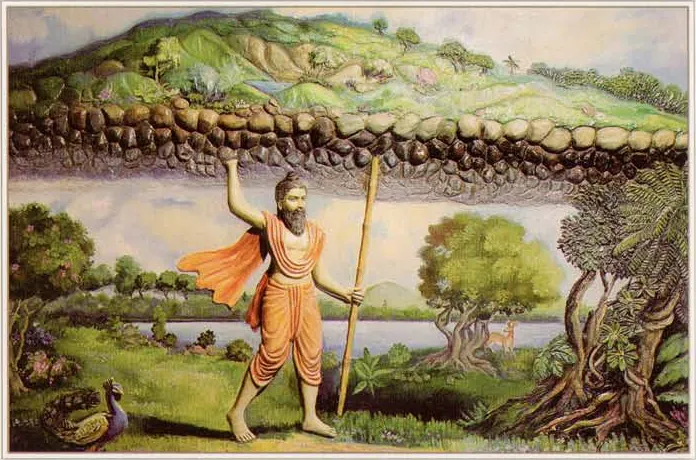
Angry at the loss of his sacrifice, Indra sent the clouds of universal destruction against Vraja[74 +1]. Kṛṣṇa lifted Govardhana with one hand, as easily as a child holds up a mushroom, and the people of Vraja entered the hollow under the hill with their cows, wagons, servants and priests[1 +3]. For seven days He held it up while they sheltered there[1 +5].
ity uktvaikena hastena kṛtvā govardhanācalam / dadhāra līlayā viṣṇuś chatrākam iva bālakaḥ
Having said this, Lord Kṛṣṇa, who is Viṣṇu Himself, picked up Govardhana Hill with one hand and held it aloft just as easily as a child holds up a mushroom.
Translation: Śrīla Prabhupāda's disciples (BBT)Śrīla Prabhupāda's own translation of a verse of the Second Canto tells the same[79]:
Names this place“Lord Kṛṣṇa, out of His causeless mercy upon the inhabitants of Vraja, held up the hill known as Govardhana with one hand only, although He was only seven years old.”
Śrīla Prabhupāda, Śrīmad-Bhāgavatam, 2.7.32, translation · vedabase.io
When the storm was over, Kṛṣṇa put the hill back in its own place, just as it had stood before[80 +2]. The Bhāgavatam thus says that Govardhana stands where it stood before the lifting[81]. Afterwards Surabhi, the mother of the cows, bathed Kṛṣṇa with her milk, Indra bathed Him with water of the heavenly Gaṅgā drawn up by the trunk of his elephant Airāvata, and Indra named Him Govinda[83 +3]. According to the commentators, this bath was at a Śakra-kuṇḍa or at Govinda-kuṇḍa[83 +2]. Read more: The lifting of Govardhana Hill, Indra's homage and the name Govinda →
The toll pastime and the spring rāsa
The Bhāgavatam does not tell Kṛṣṇa's toll pastime, the dāna-keli[89 +3]; the Gosvāmīs do. Śrīla Raghunātha dāsa Gosvāmī's Vraja-vilāsa-stava praises the Kṛṣṇa-vedī, where Kṛṣṇa, posing as the collector of a toll on milk products, stopped Śrī Rādhā and Her friends[93 +1]. According to the Bhakti-ratnākara, some call Dāna-ghāṭī the Kṛṣṇa-vedī, and Śrīla Rūpa Gosvāmī described its toll pastime in his Dāna-keli-kaumudī[94].
The Bhāgavatam tells the rāsa dance on autumn nights by the Yamunā[95 +5], but other texts tell of a rāsa at Govardhana in spring. The Caitanya-caritāmṛta says that Kṛṣṇa held the rāsa at Govardhana in springtime[101 +1], and Śrīla Jīva Gosvāmī's Gopāla-campū sets it on the night Ariṣṭa was killed[103 +4]. According to the Bhakti-ratnākara it was at Pārāsaulī, and Kṛṣṇa rested at Candra-sarovara[108].
Other pastimes at the hill
In the account of Brahmā's theft of the calves, the Bhāgavatam tells how the cows grazing on top of Govardhana saw their calves near Vraja and ran down to them out of love[109]. It names no place for the killing of the bull demon Ariṣṭa[110 +2], but the Varāha Purāṇa sets the fight on the circuit of Govardhana: after killing him Kṛṣṇa made a tīrtha with His heel, and Rādhā made a kuṇḍa (a sacred pond) nearby that bears Her name, Rādhā-kuṇḍa[113]. Śrīla Sanātana Gosvāmī says that the two kuṇḍas made then are still seen at the eastern edge of Govardhana[66 +4], and Śrīla Raghunātha dāsa Gosvāmī praises the hill for carrying on its head both the kuṇḍa born from Kṛṣṇa's foot and the jewel Rādhā-kuṇḍa[118].
Śrī Caitanya Mahāprabhu at Govardhana
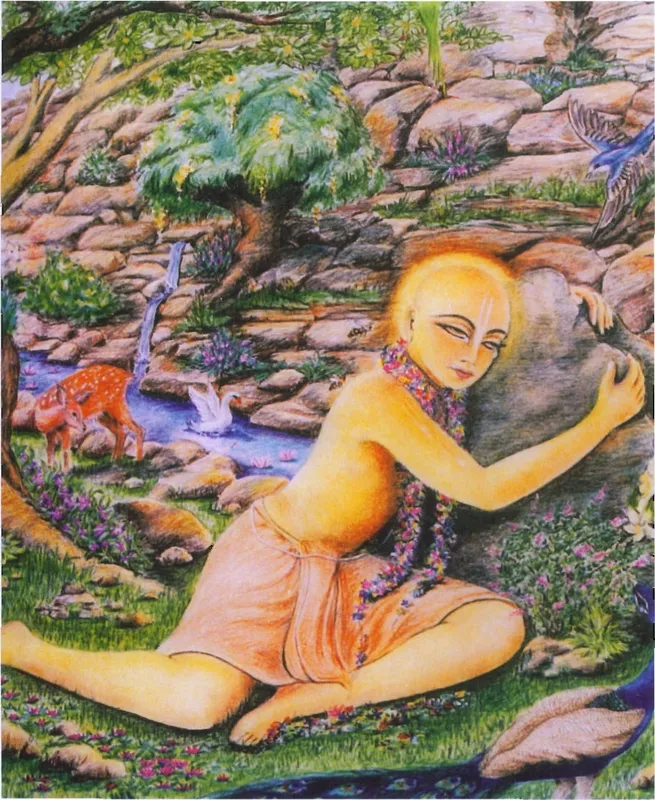
The Caitanya-caritāmṛta tells that Śrī Caitanya Mahāprabhu first saw Govardhana from Sumanas Lake[119 +1]. Śrīla Kṛṣṇadāsa Kavirāja Gosvāmī's Govinda-līlāmṛta uses both names, Sumanas and Kusuma, for one lake, today's Kusuma-sarovara[121]. On seeing the hill He fell to the ground in obeisance, embraced one of its rocks and became mad with love[12 +5].
govardhana dekhi’ prabhu ha-ilā daṇḍavat
‘eka śilā’ āliṅgiyā ha-ilā unmatta
When the Lord saw Govardhana Hill, He immediately offered obeisances, falling down on the ground like a rod. He embraced one piece of rock from Govardhana Hill and became mad.
Translation: Śrīla A.C. Bhaktivedanta Swami PrabhupādaThe book tells that He stayed at the temple of Harideva but would not climb the hill, so Gopāla, the Deity then worshipped on the hill, came down to Gāṅṭhuli, where Mahāprabhu saw Him for three days[16 +7]. He bathed in Mānasī-gaṅgā and walked around the hill[12 +5].
Traditional accounts
Several texts describe Govardhana as a body.
The hill as a body
Several texts describe Govardhana as a body. The Garga-saṁhitā says its kuṇḍas and stones are its limbs: Mānasī-gaṅgā its eyes, Govinda-kuṇḍa its lips, Rādhā-kuṇḍa its tongue[72 +2]. Śrīla Viśvanātha Cakravartī Ṭhākura says it has the form of a peacock, with Mānasī-gaṅgā as its neck and the lakes of Rādhā and Kṛṣṇa as its eyes, and asks whether Kusuma-sarovara is its face[128 +2]. Modern guidebooks describe a peacock, with its tail at Pūñcharī according to Govardhana Hill (2001) and the undated parikramā notes Govardhana; Śrī Vraja-maṇḍala Parikramā (2007) describes a sitting cow that can also be likened to a peacock.
Accounts differ The form ('body') of the hill and which kuṇḍa is which limb
- Garga-saṁhitā, Girirāja-khaṇḍa 3.8.4-11mouth below Śṛṅgāra-maṇḍala (where the Annakūṭa was done); eyes Mānasī-gaṅgā; lips Govinda-kuṇḍa; chin Kṛṣṇa-kuṇḍa; tongue Rādhā-kuṇḍa; cheeks Lalitā-saras; Airāvata's footprint his foot; Surabhi's hoofprints his wings; Puccha-kuṇḍa his tail (no animal named)
- Śrīla Viśvanātha Cakravartī, Vraja-rīti-cintāmaṇi 3.23, 3.26, 3.29peacock-shaped (mayūrākṛti); its neck is the Mānasa-jāhnavī (Mānasī-gaṅgā); 3.26 asks whether the lotus lake Kusumākara (Kusuma-sarovara) is the face of the best of mountains; 3.29 the lakes of Śrī Rādhikā and Kṛṣṇa are its eyes
- Śrīla Kṛṣṇadāsa Kavirāja Gosvāmī, Govinda-līlāmṛta 7.109the two lakes at the bowed head of the hill are its two eyes (no animal named)
- Govardhana Hill: India's Most Sacred Mountain (2001)a peacock with its head tucked into its side: face Kuṣuma-sarovara, neck Mānasī-gaṅgā, mouth Mukharavinda, eyes Rādhā-kuṇḍa and Śyāma-kuṇḍa, tail Balarāma Sthali to Punchari
Marks of the pastimes
According to Śrīla Viśvanātha Cakravartī Ṭhākura, the stones of Govardhana grow soft at the touch of Kṛṣṇa's and Balarāma's feet and keep their footprints[131]. The Garga-saṁhitā says that the hill melted with joy at Kṛṣṇa's bath and kept the print of His hand[132]. It also names a stone marked by Kṛṣṇa's crown, a stone He sounded like an instrument, a place called Kanduka where He played ball, and Droṇa, where the leaves became cup-shaped after He ate yogurt from leaf cups with the boys; it does not say where they are[133 +7]. The guidebook Śrī Vraja-maṇḍala Parikramā (2007) shows a musical stone near Śyāma-kuṭī and a place where Kṛṣṇa played ball near Rudra-kuṇḍa[141 +1].
The lakes of the Vraja-vilāsa-stava, verse 79
Śrīla Raghunātha dāsa Gosvāmī's Vraja-vilāsa-stava (verse 79) praises the best lakes that shine all around Govardhana and names them: Sīri, Brahma, Kadamba-khaṇḍa, Sumanas, Rudra, Apsarā, Gaurikā, Jyotsnā-mokṣaṇa, Mālyahāra, Vibudhāri and Indradhvaja (summarised here, not translated). The verse gives only the names, not where each lake lies, and a pond that carries one of these names today is not thereby the lake of the verse.[143 +1] What the texts say of eight of these lakes:
- Sīri, first in the verse's list. His Govardhanāśraya-daśaka (verse 3) also names a Sīri kuṇḍa first among the kuṇḍas around Govardhana.[143 +3]
- Gaurikā. His Govardhanāśraya-daśaka (verse 4) names a lake Gaurī in a similar list; neither hymn says that Gaurikā and Gaurī are one lake, or that either is the Gaurī-kuṇḍa of the circuit.[143 +3]
- Jyotsnā-mokṣaṇa, which the Govardhanāśraya-daśaka (verse 4) names first among the lakes on all sides of Govardhana. No other text found names this lake.[143 +3]
- Mālyahāra, named again in the Govardhanāśraya-daśaka (verse 4); neither hymn says where it is. His Muktā-carita begins its story of the pearls at a lake called Mālya-haraṇa at Govardhana, where Rādhā and Her friends made pearl ornaments at the Kārttika festival of lamps; no source found says that this is the Mālyahāra of the hymns.[143 +6]
- Vibudhāri. The verse has vibudhārīndra-dhvaja, which the English rendering in Govardhana Hill (2001) divides into two lakes, Vibudhāri and Indradhvaja; no other source names a lake Vibudhāri.[143 +2]
- Indradhvaja. His Govardhanāśraya-daśaka (verse 4) names a lake Balāri-dhvaja, "the banner of Bala's enemy", that is, of Indra, in a similar list.[143 +2] Other texts give the name to other kinds of place: the Varāha Purāṇa to a bathing tīrtha in the east of the Govardhana circuit, where Indra's banner was raised; according to the Vraja-bhakti-vilāsa, it is a forest where Indra, carrying his banner before Kṛṣṇa, attained fulfilment, with a kuṇḍa of five tīrthas in its middle; and according to the Bhakti-ratnākara, the round passes the Indradhvaja-vedī, the altar where Nanda Rāya used to worship Indra.[151 +2] Śrīmad-Bhāgavatam (10.24) tells the preparations for Indra's sacrifice without naming their place.[61 +3]
- Kadamba-khaṇḍa. The Varāha Purāṇa names a kuṇḍa called Kadamba-khaṇḍa, with clear water, on the circuit of Govardhana, and the Garga-saṁhitā a Kadamba-khaṇḍa tīrtha, always joined with Hari's pastimes, which it calls the chest of the hill.[143 +5] According to the Vraja-bhakti-vilāsa, Kadamba-khaṇḍa is a forest near Cakra-tīrtha with Harideva-kuṇḍa in its middle. The sources differ on whether the name means a lake, a kuṇḍa, a tīrtha or a forest.[160]
- Rudra. His Govardhanāśraya-daśaka (verse 3) has a "Hara" kuṇḍa where verse 79 has Rudra, and the Garga-saṁhitā (3.8.11) names a Rudra-kuṇḍa as the "anger" of Govardhana; neither text says that these are the Rudra lake of verse 79.[143 +4]
Bhadāvara
Bhadāvara, now called Bhadāhara, is a village that Śrī Vraja-maṇḍala Parikramā (2007) gives as the home of Bhadrā, one of the eight leaders of the groups of gopīs, the cowherd girls of Vraja. The book does not say where the village lies, and it is the only source that connects Bhadrā with it.[162]
Śrīla Rūpa Gosvāmī's Ujjvala-nīlamaṇi names Bhadrā among the gopīs known from scripture and counts her among the leaders of groups, and his Rādhā-Kṛṣṇa-gaṇoddeśa-dīpikā names her among Kṛṣṇa's chief beloveds in those groups, with Rādhā, Candrāvalī, Śyāmalā and Pālikā.[162 +2]
Explaining the verses in which the gopīs greet Kṛṣṇa when He comes back to them on the night of the rāsa dance, the commentators on Śrīmad-Bhāgavatam name Bhadrā as the eighth of His principal gopīs (summarised here, not translated). Śrīla Jīva Gosvāmī calls her taṭasthā, neutral, and says that she belongs neither to Candrāvalī's group nor to Rādhā's. None of them says where Bhadrā lived.[162 +3]
Śrīla Prabhupāda names neither Bhadrā nor the village. Telling how Kṛṣṇa returned to the gopīs, he cites the Skanda Purāṇa on the eight most prominent gopīs, among whom the commentators count Bhadrā (a general reference):[162 +3]
General teaching (does not name the place)“It is said in the Skanda Purāṇa that out of many thousands of gopīs, 16,000 are prominent, out of those 16,000 gopīs, 108 are especially prominent, out of these 108 gopīs, eight are still more prominent, out of those eight gopīs, Rādhārāṇī and Candrāvalī are even more prominent, and out of these two gopīs, Rādhārāṇī is the most prominent.”
Śrīla Prabhupāda, Kṛṣṇa, the Supreme Personality of Godhead (Kṛṣṇa book), Chapter 32, 'Kṛṣṇa Returns to the Gopīs' · vedabase.io
The Gosvāmīs and ācāryas
Like Mahāprabhu, Śrīla Rūpa Gosvāmī and Śrīla Sanātana Gosvāmī did not climb the hill, and Gopāla gave them darśana, letting them …
Like Mahāprabhu, Śrīla Rūpa Gosvāmī and Śrīla Sanātana Gosvāmī did not climb the hill, and Gopāla gave them darśana, letting them see Him[13 +9]. Śrīla Prabhupāda writes that the Gosvāmīs used to walk around Govardhana[187]. According to the Bhakti-ratnākara, Śrīla Sanātana Gosvāmī lived at Cakra-tīrtha in a forest hut, his bhajana-kuṭī, and walked around the hill every day. When he grew old, Kṛṣṇa came as a cowherd boy with a Govardhana stone bearing His footprint and told him that walking around the stone would complete his parikramā, his circuit of the hill[188 +7].
Śrī Caitanya Mahāprabhu gave Śrīla Raghunātha dāsa Gosvāmī a stone from Govardhana and told him that it is Kṛṣṇa's form; Śrīla Raghunātha dāsa Gosvāmī took the gift to mean that Mahāprabhu was giving him a place near Govardhana[12 +4].
prabhu kahe, — “ei śilā kṛṣṇera vigraha
iṅhāra sevā kara tumi kariyā āgraha
Śrī Caitanya Mahāprabhu instructed Raghunātha dāsa, “This stone is the transcendental form of Lord Kṛṣṇa. Worship the stone with great eagerness.”
Translation: Śrīla A.C. Bhaktivedanta Swami PrabhupādaŚrīla Kavi-karṇapūra's Gaura-gaṇoddeśa-dīpikā says that Śrīla Rāghava Paṇḍita made his home at Govardhana; in the Bhakti-ratnākara he guides Śrīla Śrīnivāsa Ācārya and Śrīla Narottama dāsa Ṭhākura around the hill[40 +1]. The same book tells that Śrī Nityānanda Prabhu stayed some days at Govardhana and wore round His neck a Govardhana stone that a brāhmaṇa devoted to Balarāma had bound in gold[200].
Śrīla Prabhupāda
Śrīla Prabhupāda explains Śrīla Rūpa Gosvāmī's ranking in his purport to The Nectar of Instruction …
Śrīla Prabhupāda explains Śrīla Rūpa Gosvāmī's ranking in his purport to The Nectar of Instruction[14]:
Names this place“It is also at Govardhana Hill that Kṛṣṇa tends the cows with His cowherd friends, and there also He had His rendezvous with His most beloved Śrī Rādhā and engaged in loving pastimes with Her.”
Śrīla Prabhupāda, The Nectar of Instruction (Upadeśāmṛta), Text 9, purport · vedabase.io
He wrote that Kṛṣṇa declared that He was Govardhana Hill to convince the devotees that the hill and He are identical[10], and in 1969 that the hill is still in Vṛndāvana and is worshipped by devotees as Kṛṣṇa Himself[201 +1]. Kṛṣṇa chose the hill for worship, he said, because from His time its grass fed the cows[203 +1].
His party passed Govardhana Hill on a Vraja parikramā on 28 November 1971[205]. In October and November 1977, during his last illness, he wished to go to Govardhana for the parikramā and the Govardhana-pūjā by bullock cart; on 10 November the trip was given up because of his health, and he said the other devotees could go[206 +2].
Songs
In his Govardhana-vāsa-prārthanā-daśaka Śrīla Raghunātha dāsa Gosvāmī prays to the hill for a home near it.
In his Govardhana-vāsa-prārthanā-daśaka Śrīla Raghunātha dāsa Gosvāmī prays to the hill for a home near it[45 +1]. The two verses below praise the hill for nourishing the cows and say that Śrī Śacīnandana (Mahāprabhu) has given the poet to the hill[210].
sthala-jala-tala-śaṣpair bhūruha-chāyayā ca
pratipadam anukālaṁ hanta samvardhayan gāḥ
tri-jagati nija-gotraṁ sārthakaṁ khyāpayan me
nija-nikaṭa-nivāsaṁ dehi govardhana tvam
Śrīla Narottama dāsa Ṭhākura sings of Govardhana as a secluded place where Rādhā and Kṛṣṇa rest, and of his wish to serve Them there[211].
govardhana girivara kevala nirjana sthala
rāi kānu karibe śayane
lalitā-viśākhā-saṅge sevana kariba raṅge
sukhamaya rātūla caraṇe
Visiting today
Gauḍīya Vaiṣṇavas, the followers of Śrī Caitanya Mahāprabhu, do not climb Govardhana. Mahāprabhu would not, and He told Śrīla Jagadānanda Paṇḍita not to climb it to see Gopāla[18 +5]. Śrīla Prabhupāda gives the reason[183]:
Names this place“One should also avoid climbing Govardhana Hill to see the Gopāla Deity. Since Govardhana Hill itself is identical with Gopāla, one should not step on the hill or touch it with his feet. One may see Gopāla when He goes elsewhere.”
Śrīla Prabhupāda, Śrī Caitanya-caritāmṛta, Antya-līlā 13.39, purport · vedabase.io
The parikramā around the hill goes back to its first worship, when the people of Vraja walked around Govardhana with their cows[10 +4]. The Varāha Purāṇa names a day for it, the ekādaśī (eleventh day) of the bright half of Bhādrapada, kept with a fast and begun with a sunrise bath in Mānasī-gaṅgā[212]. Read more: Govardhana parikramā →
In 1970 Śrīla Prabhupāda wrote how the people of Vṛndāvana still keep the Govardhana-pūjā at the hill[10 +1]:
Names this place“(Following the inauguration of Govardhana-pūjā, people in Vṛndāvana still dress nicely and assemble near Govardhana Hill to offer worship and circumambulate the hill, leading their cows all around.)”
Śrīla Prabhupāda, Kṛṣṇa, the Supreme Personality of Godhead (Kṛṣṇa book), Chapter 24, Worshiping Govardhana Hill · vedabase.io
Location
| Where it is | 'Śyāma Kuṭira also marks the spot where Govardhana Hill first starts to appear above the ground'[226] 'In the dense jungle behind Gvāl Pokharā, one can see where Govardhana Hill actually begins to emerge from the ground'; it rises to 'its highest point just before the village of Aniyor' and 'finally disappears under the ground just before Apsarā Kuṇḍa'[227] |
|---|
Places at Govardhana
105 places
Areas (26)
Pārāsaulī
परासौलीPārāsaulī is a village in the lowlands of Govardhana, about one and a quarter miles south-east of Govardhana town, according to the guidebook Śrī Vraja-maṇḍala Parikramā …
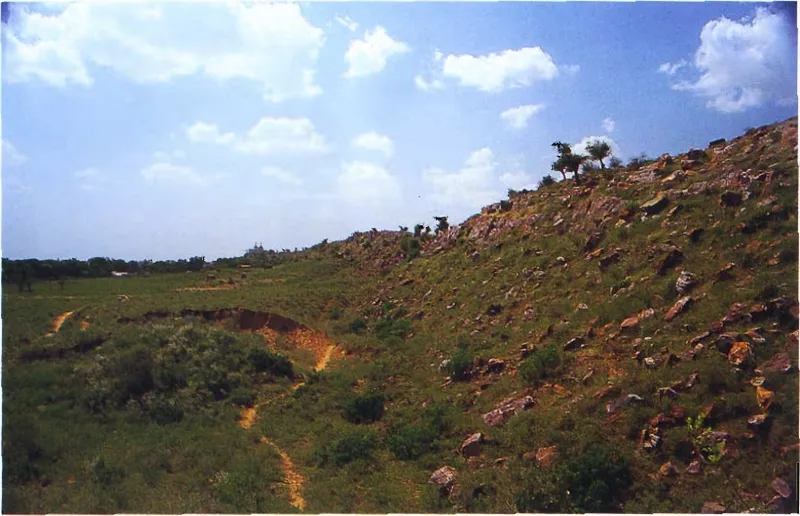
Annakūṭa-kṣetra
अन्नकूट-क्षेत्रAnnakūṭa-kṣetra, the field of the Annakūṭa, is the name that the guidebook Govardhana Hill (2001) gives to the stretch of Govardhana Hill from Dāna-nivartana-kuṇḍa up to …
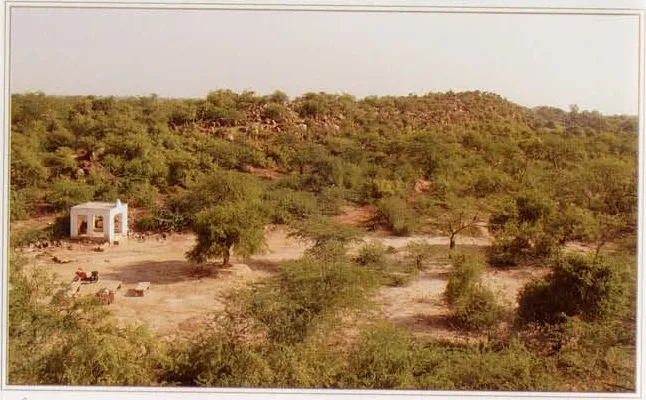
Pūñcharī
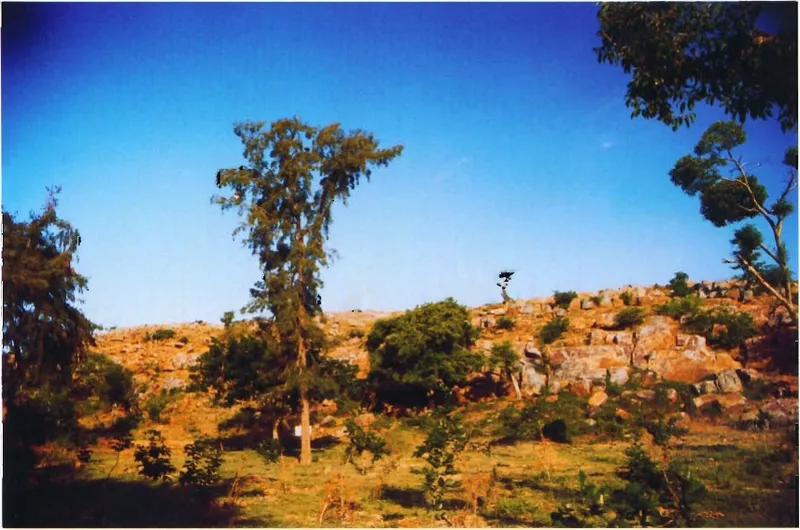
पूँछरीPūñcharī is the village at the southern end of Govardhana Hill, at the opposite end of the hill from Rādhā-kuṇḍa.
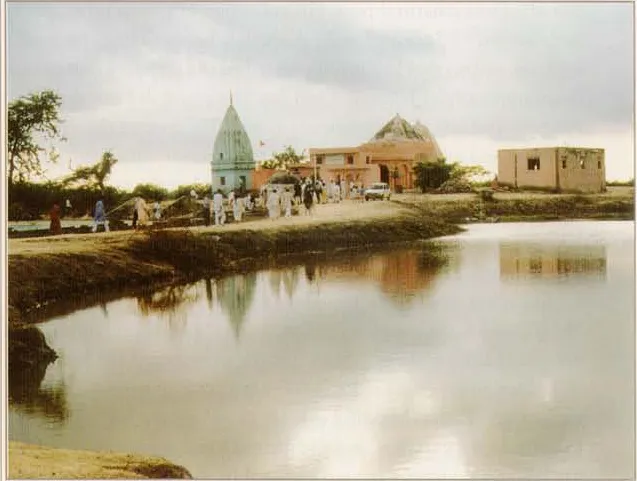
Paiṭhā-grāma
पैठा-ग्रामPaiṭhā is a village of the Govardhana area, two miles south of Pārāsaulī, according to the guidebook Śrī Vraja-maṇḍala Parikramā (2007).
Jatīpurā
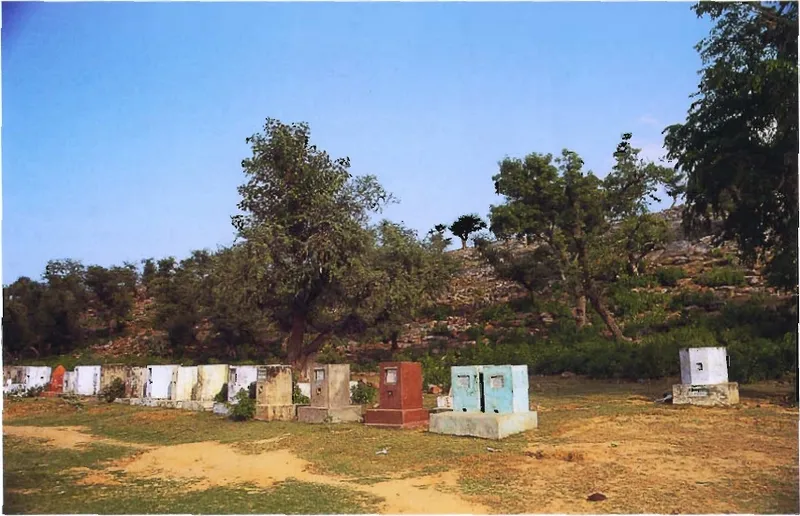
जतीपुराJatīpurā is a village on the west side of Govardhana Hill, across the hill from Aniyora; the Gopāla temple stands on the hilltop above it.
Gāṅṭholī
गाँठोलीGāṅṭholī is a village west of Govardhana Hill, on the road from Govardhana to Ḍīg.
Show all (26)
Principal places, in parikramā order
- 3Mukharāī›
- 4Kusuma-sarovara›
- 5Nārada-kuṇḍa (Govardhana)›
- 6Ratna-siṁhāsana›
- 7Śyāma-kuṭī›
- 8Gvāla-pokharā›
- 9Killola-kuṇḍa (Govardhana)›
- 10Pāleī›
- 11Mānasī-gaṅgā›
- 12Harideva Mandira›
- 13Brahma-kuṇḍa (Govardhana)›
- 14Manasā-devī Mandira›
Kuṇḍas
16 placesKuñjas of the sakhīs
1 placePlaces of the ācāryas
1 placeTemples and shrines
8 placesAlso described on this page
- Bajanī-śilā (Śyāma-kuṭī) śilā
- Bhadāvara village
- Kṛṣṇa Vedi
- Place where Kṛṣṇa used to play ball (Rudra-kuṇḍa) pastime site
Also listed here
- Balarāma Mukut-śilā śilā
- Bhaktivedānta Aśrāma āśrama
- Gaurikā Lake kuṇḍa
- Hariju-kuṇḍa kuṇḍa
- Imprint of Kṛṣṇa's crown (Rāghava Paṇḍita's cave) śilā
- Indradhvaja Lake kuṇḍa
- Jyotsnā-mokṣaṇa Lake kuṇḍa
- Jāna-ajāna trees (Rudra-kuṇḍa) tree
- Kadamba grove (Śyāma-ḍhāka) grove
- Kadamba-khaṇḍa Lake kuṇḍa
- Madana-mohana Mandira (Surabhi Vana) temple
- Mālyahāra Lake kuṇḍa
- Nāthajī Mandira (Govardhana chart key 53) temple
- Pūjanī-śilā (Rudra-kuṇḍa) śilā
- Rudra Lake (Vraja-vilāsa-stava 79) kuṇḍa
- Rādhikā's sitting-place (Rudra-kuṇḍa) baiṭhaka
- Rāsa-sthali (Candra-sarovara) rāsa-sthalī
- Samādhis (Govardhana chart key 60) samādhi
- Sant Nivas
- Sīri Lake kuṇḍa
- Sūrya-kuṇḍa (on Sanātana Gosvāmī's twenty-four-mile parikramā) kuṇḍa
- Vibudhāri Lake kuṇḍa
- Śiva Mandira (Govardhana chart key 38) temple
- Śiva Mandira (beside Gopāla Rāya Mandira) temple
Nearby places
Mathurā · Tālavana · Nandagrāma
Pictures
8 pictures
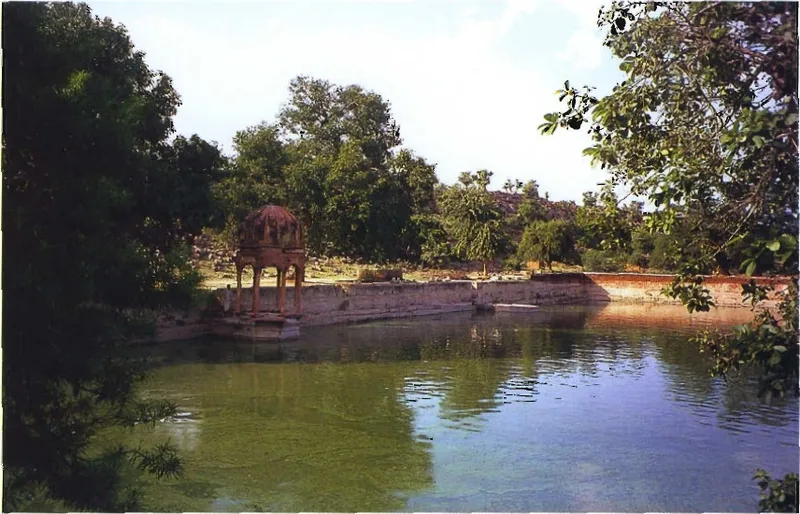
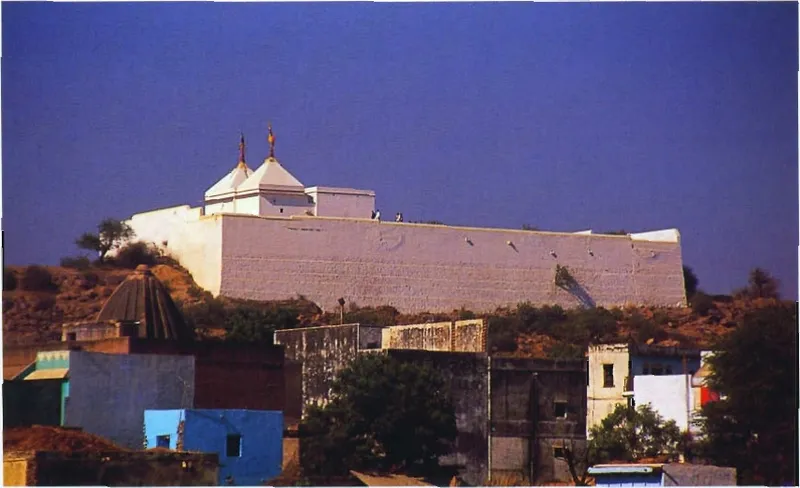
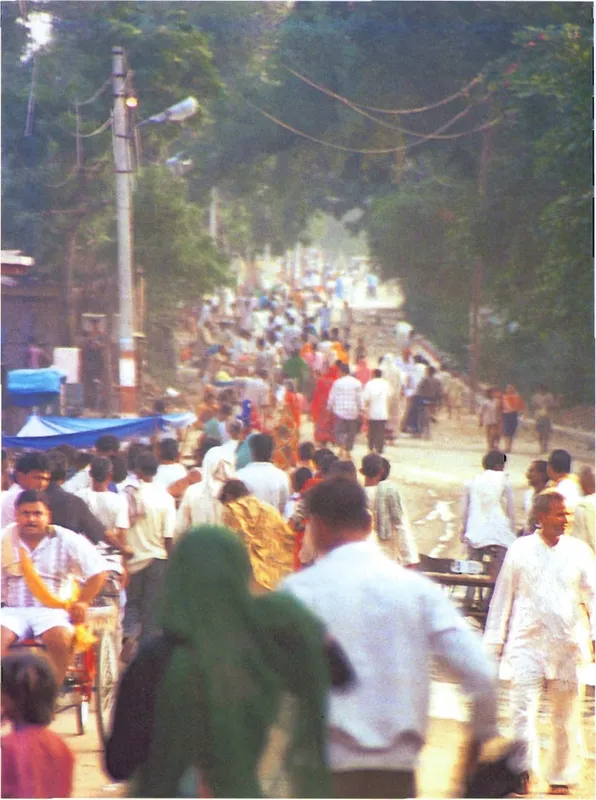
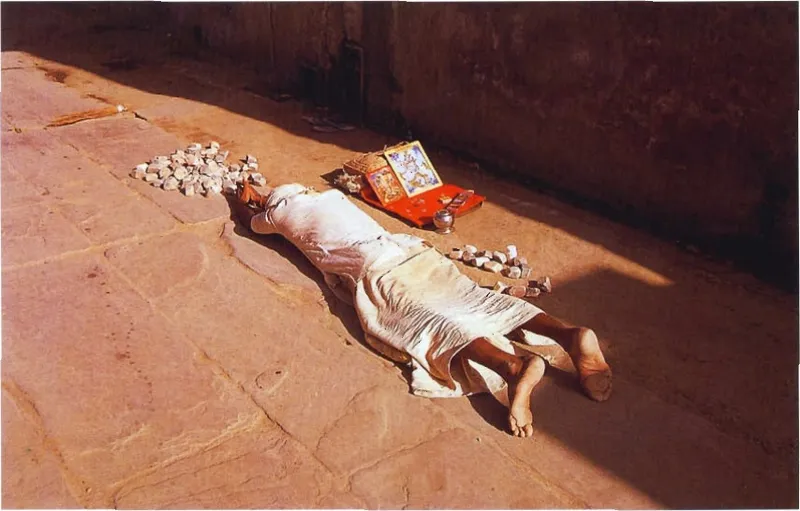
History
The Caitanya-caritāmṛta tells that a cowherd boy brought milk to Śrīla Mādhavendra Purī after he walked around the hill[167]. In a dream the boy, Gopāla, said that Vajra had installed Him, and asked to be taken out of the bush where His priest had hidden Him and placed on top of the hill[167 +7]. Śrīla Mādhavendra Purī had the Deity carried up the hill, installed Him and held an Annakūṭa for Him[167 +5]; the guidebook Govardhana Hill (2001) places this at the Gopāla Rāya temple[175].
Gopāla was still worshipped at Govardhana when the Caitanya-caritāmṛta was written. Today He is at Nāthadvāra in Rājasthān, in the care of the descendants of Śrī Vallabhācārya, as Śrīla Prabhupāda writes after Śrīla Bhaktivinoda Ṭhākura[176 +4]. According to the historian A. W. Entwistle (1987), the custodians of the Deity, known there as Śrīnāthjī, decided in 1669 to move Him from Govardhana[181]; the guidebook Govardhana Hill (2001) gives about 1670[175 +2]. Read more: The Gopāla Deity of Govardhana →
Where the sources differ
How Kṛṣṇa held the hill: with one hand in the Bhāgavatam, with the left hand according to the commentators, and with the little …
How Kṛṣṇa held the hill: with one hand in the Bhāgavatam, with the left hand according to the commentators, and with the little finger of the left hand in Śrīla Prabhupāda's Kṛṣṇa book[1 +8].
Accounts differ How, and by whom, the hill was held up
- Śrīmad-Bhāgavatam 10.25.19; Garga-saṁhitā 3.3.15; Viṣṇu Purāṇa 5.11.16Kṛṣṇa, with one hand
- Harivaṁśa 61.30; Bhakti-rasāmṛta-sindhu 2.1.62, 3.3.18, 4.2.8, 4.8.31; Brahma-vaivarta 4.94.51; Bhakti-ratnākara (Fifth Wave)with the left hand or arm: Harivaṁśa savyena pāṇinā; BRS 2.1.62 vāmaḥ… bhuja-daṇḍaḥ; in BRS 3.3.18 His friends ask Him to put the hill on Śrīdāmā's hand, or to shift it for a moment to His right hand and let them massage His left arm (doṣṇas te … savyasya saṃvāhanam); BRS 4.2.8 'savya-kara-kandūkitācalendraḥ'; BRS 4.8.31 'tuṅgite savye doṣṇi'; Brahma-vaivarta 'vāma-hastena'; Bhakti-ratnākara: kṛṣṇa bāma kare dhari (held with His left hand)
- Kṛṣṇa book ch. 25; Teachings of Lord Kapila 17; Śrī Vraja-maṇḍala Parikramā (2007); Vṛndāvana-Dhāma Ki Jaya! (c. 1986)on the little finger of His left hand
- Padma Purāṇa, Pātāla-khaṇḍa 73.21The verse calls it the hill that Kṛṣṇa and Balarāma lifted with their hands (kṛṣṇa-rāma-karoddhṛtam).
The wording of these accounts is our summary of the sources, not a published translation.
Where Vyomāsura was killed: Śrīla Prabhupāda's Kṛṣṇa book sets the game on the top of Govardhana Hill and says that he was killed there; other sources say Kāmyavana[217 +2].
Accounts differ Where Vyomāsura's game and cave were, and where he was killed
- Śrīmad-Bhāgavatam 10.37.26-33on the mountain slopes; a mountain cave sealed with a boulder; no name
- Śrīla Prabhupāda, Kṛṣṇa book ch. 37 and ch. 38The game was played 'on the top of Govardhana Hill'; the boys were put 'in the caves of the mountain'; 'the boys went to tend the cows on Govardhana Hill, and it was there that Vyomāsura was killed'.
- Vaṁśīdharathe slopes are Govardhana's plateaus
- Śrī Vraja-maṇḍala Parikramā (2007)The cave in which Vyomāsura hid the boys is 'in the middle of' the Indrasena Hill at Kāmyavana, near the stone slide; Kṛṣṇa killed Vyomāsura here.
The size of the hill today and the length of the parikramā: each guide gives its own figures[22 +5].
Accounts differ Present size of the hill and length of the parikramā (practical figures, each from its own date)
- Śrīla Prabhupāda, Govardhana Pūjā lecture, New York, 14 Nov 1966'not less than at least five, six miles' area, very big hill'
- Vṛndāvana-Dhāma Ki Jaya! (c. 1986)'only about eighty feet at its highest point'; Śrīla Sanātana's circuit 'a distance of twenty-one kilometers'
- Govardhana Hill: India's Most Sacred Mountain (2001)'about seven miles long'; parikramā 'about fourteen miles (23 km.)'
- Śrī Vraja-maṇḍala Parikramā (2007)'the fourteen-mile long parikramā of Govardhana'; 'some fourteen miles west of Mathurā'
Taking stones from the hill for worship: Śrīla Prabhupāda's Kṛṣṇa book (ch. 24) says that followers may collect small rocks from the hill and worship them at home; in a letter of 1975 he put such worship off for later, and in a letter of 1976 he asked that a particular rock be returned to the hill. Each statement answers its own occasion, and none is given here as a general rule[10 +4].
Accounts differ Taking stones from Govardhana Hill for worship
- Śrīla Prabhupāda, Kṛṣṇa book ch. 24followers 'may therefore collect small rocks or pebbles from Govardhana Hill and worship them at home'
- Śrīla Prabhupāda, letter to Giriraja, 5 July 1969'Sometimes devotees take stone from Govardhana Hill and keep it at home as a representation of Krishna, and they worship in this way'
- Śrīla Prabhupāda, letter to Batu Gopala, 12 June 1975'as far as worshiping a Govardhana Sila from Govardhana hill, that we shall see later on'
- Śrīla Prabhupāda, letter to Palika'The Govardhana rock should be returned to Mt. Govardhana as soon as possible'
More on this place
The first Govardhana-pūjā and the Annakūṭa · The lifting of Govardhana Hill, Indra's homage and the name Govinda · How Govardhana came to Vraja: the accounts of the hill's origin · Govardhana parikramā
- →The first Govardhana-pūjā and the Annakūṭaarticle›
- →The lifting of Govardhana Hill, Indra's homage and the name Govindaarticle›
- →How Govardhana came to Vraja: the accounts of the hill's originarticle›
- →Govardhana parikramāarticle›
- →The Gopāla Deity of Govardhanaarticle›
- →Kṛṣṇa's toll pastime (dāna-līlā) at Govardhana and Varṣāṇāarticle›
- →The body of Govardhana: mouth, eyes, neck and the peacockarticle›
References
227 references
- Śrīmad-Bhāgavatam 10.25.19, GRETIL
- Śrīmad-Bhāgavatam 10.25.23, GRETIL
- Garga-saṁhitā, Girirāja-khaṇḍa (3), adhyāya 3, verse 15, Sanskrit Wikisource
- Garga-saṁhitā, Girirāja-khaṇḍa (3), adhyāya 3, verse 23, Sanskrit Wikisource
- Viṣṇu Purāṇa, 5.11.16, GRETIL
- Harivaṁśa, HV 61.30, GRETIL
- Śrīmad-Bhāgavatam 10.24.35, GRETIL
- Śrīmad-Bhāgavatam 10.24.36, GRETIL
- Garga-saṁhitā, Girirāja-khaṇḍa (3), adhyāya 2, verse 21, Sanskrit Wikisource
- Śrīla Prabhupāda, Kṛṣṇa, the Supreme Personality of Godhead (Kṛṣṇa book), Chapter 24, Worshiping Govardhana Hill · vedabase.io
- Śrīla Prabhupāda, Śrī Caitanya-caritāmṛta, Madhya-līlā 4.86, purport · vedabase.io
- Govardhana Hill: India's Most Sacred Mountain (2001), Rajasekhara dasa Brahmacari, PDF p. 26
- Śrīla Rūpa Gosvāmī, Upadeśāmṛta 9 (The Nectar of Instruction, text 9), online edition · vedabase.io
- Śrīla Prabhupāda, The Nectar of Instruction (Upadeśāmṛta), Text 9, purport · vedabase.io
- The Colour Guide to Rādhā-kuṇḍa (1999), Rājaśekhara dāsa Brahmacārī, PDF p. 15
- Śrīla Kṛṣṇadāsa Kavirāja Gosvāmī, Śrī Caitanya-caritāmṛta, CC Madhya-līlā 18.16, online edition · vedabase.io
- Śrīla Kṛṣṇadāsa Kavirāja Gosvāmī, Śrī Caitanya-caritāmṛta, CC Madhya-līlā 18.32, online edition · vedabase.io
- Śrīla Kṛṣṇadāsa Kavirāja Gosvāmī, Śrī Caitanya-caritāmṛta, CC Madhya-līlā 18.25, online edition · vedabase.io
- Śrīla Prabhupāda, Śrī Caitanya-caritāmṛta, Madhya-līlā 18, chapter summary (from Bhaktivinoda Ṭhākura's Amṛta-pravāha-bhāṣya) · vedabase.io
- Govardhana Hill: India's Most Sacred Mountain (2001), Rajasekhara dasa Brahmacari, PDF p. 38
Show all 227 references
- Varāha Purāṇa, adhyāya 164, verse 1, Sanskrit Wikisource
- Govardhana Hill: India's Most Sacred Mountain (2001), Rajasekhara dasa Brahmacari, PDF p. 34
- Śrīmad-Bhāgavatam 10.21.18, GRETIL
- Śrīla Prabhupāda, Kṛṣṇa, the Supreme Personality of Godhead (Kṛṣṇa book), Chapter 21, The Gopīs Attracted by the Flute · vedabase.io
- Śrīla Prabhupāda, Śrī Caitanya-caritāmṛta, Madhya-līlā 18.34, purport · vedabase.io
- Śrī Vraja-maṇḍala Parikramā (2007), PDF p. 106
- Govardhana Hill: India's Most Sacred Mountain (2001), Rajasekhara dasa Brahmacari, PDF p. 24
- Vṛndāvana-Dhāma Ki Jaya! (c. 1986), by Dhruva Mahārāja dāsa, PDF p. 37
- Garga-saṁhitā, Girirāja-khaṇḍa (3), adhyāya 10, verse 14, Sanskrit Wikisource
- Brahma-vaivarta Purāṇa, 4.21.87, Sanskrit Wikisource
- Garga-saṁhitā, Girirāja-khaṇḍa (3), adhyāya 1, verse 11, Sanskrit Wikisource
- Garga-saṁhitā, Girirāja-khaṇḍa (3), adhyāya 7, verse 2, Sanskrit Wikisource
- Garga-saṁhitā, Girirāja-khaṇḍa (3), adhyāya 7, verse 3, Sanskrit Wikisource
- Garga-saṁhitā, Girirāja-khaṇḍa (3), adhyāya 10, verses 22-23, Sanskrit Wikisource
- Garga-saṁhitā, Girirāja-khaṇḍa (3), adhyāya 7, verse 6, Sanskrit Wikisource
- Padma Purāṇa, 5.69.39, Sanskrit Wikisource
- Varāha Purāṇa, adhyāya 164, verses 10-12, Sanskrit Wikisource
- Varāha Purāṇa, adhyāya 164, verses 23-26, Sanskrit Wikisource
- the undated parikramā notes Govardhana, ¶4
- Śrīla Narahari Cakravartī, Bhakti-ratnākara, Fifth Wave, 1912 ed. p. 205; text Bhakti-ratnākara, taraṅgas 1–8 vv. 678-683, 2nd ed., 1912
- Garga-saṁhitā, Girirāja-khaṇḍa (3), adhyāya 9, verses 33-34, Sanskrit Wikisource
- Garga-saṁhitā, Girirāja-khaṇḍa (3), adhyāya 9, verse 34, Sanskrit Wikisource
- Garga-saṁhitā, Girirāja-khaṇḍa (3), adhyāya 9, verse 39, Sanskrit Wikisource
- Garga-saṁhitā, Girirāja-khaṇḍa (3), adhyāya 9, verse 43, Sanskrit Wikisource
- Govardhana Hill: India's Most Sacred Mountain (2001), Rajasekhara dasa Brahmacari, PDF p. 23
- Garga-saṁhitā, Vṛndāvana-khaṇḍa (2), adhyāya 2, verse 10, Sanskrit Wikisource
- Śrī Vraja-maṇḍala Parikramā (2007), PDF p. 108
- Govardhana Hill: India's Most Sacred Mountain (2001), Rajasekhara dasa Brahmacari, PDF p. 30
- the undated parikramā notes Govardhana, ¶7
- Garga-saṁhitā, Vṛndāvana-khaṇḍa (2), adhyāya 2, verses 30-31, Sanskrit Wikisource
- Garga-saṁhitā, Vṛndāvana-khaṇḍa (2), adhyāya 2, verses 36-37, Sanskrit Wikisource
- Garga-saṁhitā, Vṛndāvana-khaṇḍa (2), adhyāya 2, verse 48, Sanskrit Wikisource
- Garga-saṁhitā, Girirāja-khaṇḍa (3), adhyāya 9, verse 46, Sanskrit Wikisource
- Śrī Vraja-maṇḍala Parikramā (2007), PDF p. 109
- Nārada Purāṇa, उत्तरार्धः/अध्यायः 80 v.80-93 to 80-96 (first half): Uttara-bhāga, chapter 80, verses 93-96a
- Nārada Purāṇa, उत्तरार्धः/अध्यायः 80 v.80-97 (second half) to 80-101: Uttara-bhāga, chapter 80, verses 97b-101
- Vraja-bhakti-vilāsa (Nārāyaṇa Bhaṭṭa), Sanskrit with Hindi translation, Nārāyaṇa Bhaṭṭa (Sanskrit), Saṁvat 2008
- the undated parikramā notes Govardhana, ¶10
- the undated parikramā notes Govardhana, ¶11
- the undated parikramā notes Govardhana, ¶12
- Śrīmad-Bhāgavatam 10.24.25, GRETIL
- Śrīmad-Bhāgavatam 10.24.32-33, GRETIL
- Garga-saṁhitā, Girirāja-khaṇḍa (3), adhyāya 2, verse 19, Sanskrit Wikisource
- Śrīla Sanātana Gosvāmī, Śrīla Jīva Gosvāmī: commentary on ŚB 10.24.1, Bhagavata Vidya Pith edition, ed. Bhagavata Rishi and Krishna Shankar Shastri, 1996
- Śrīla Viśvanātha Cakravartī Ṭhākura: commentary on ŚB 10.29.1
- Śrīla Jīva Gosvāmī: commentary on ŚB 10.45.3, Bhagavata Vidya Pith edition, ed. Bhagavata Rishi and Krishna Shankar Shastri, 1996
- Skanda Purāṇa, 2.4.10.22-24, Sanskrit Wikisource
- Padma Purāṇa, खण्डः 6 (उत्तरखण्डः)/अध्यायः 122 vv. 29-31: Uttara-khaṇḍa 122.29-31, Sanskrit Wikisource
- Nārada Purāṇa, पूर्वार्धः/अध्यायः 110 v.110-35 to 110-37: Pūrva-bhāga, chapter 110, verses 35-37
- Śrīla Narahari Cakravartī, Bhakti-ratnākara, Fifth Wave, 1912 ed. p. 201, 2nd ed., 1912
- Śrīla Prabhupāda, Śrī Caitanya-caritāmṛta, Madhya-līlā 18.26, purport (quoting Bhakti-ratnākara, Fifth Wave) · vedabase.io
- Garga-saṁhitā, Girirāja-khaṇḍa (3), adhyāya 8, verse 4, Sanskrit Wikisource
- Govardhana Hill: India's Most Sacred Mountain (2001), Rajasekhara dasa Brahmacari, PDF p. 91
- Śrīmad-Bhāgavatam 10.25.2, GRETIL
- Śrīmad-Bhāgavatam 10.25.7, GRETIL
- Śrīmad-Bhāgavatam 10.25.20, GRETIL
- Śrīmad-Bhāgavatam 10.25.21, GRETIL
- Śrīmad-Bhāgavatam 10.25.22, GRETIL
- Śrīla Prabhupāda, Śrīmad-Bhāgavatam, 2.7.32, translation · vedabase.io
- Śrīmad-Bhāgavatam 10.25.25, GRETIL
- Śrīmad-Bhāgavatam 10.25.28, GRETIL
- Śrīla Prabhupāda, Kṛṣṇa, the Supreme Personality of Godhead (Kṛṣṇa book), Chapter 25, 'Devastating Rainfall in Vṛndāvana' · vedabase.io
- Śrīmad-Bhāgavatam 10.27.22-23, GRETIL
- Garga-saṁhitā, Girirāja-khaṇḍa (3), adhyāya 4, verse 9, Sanskrit Wikisource
- Viṣṇu Purāṇa, 5.12.2, GRETIL
- Śrīla Prabhupāda, Kṛṣṇa, the Supreme Personality of Godhead (Kṛṣṇa book), Chapter 27, Prayers by Indra, the King of Heaven · vedabase.io
- Śrīla Sanātana Gosvāmī, Śrīla Jīva Gosvāmī: commentary on ŚB 10.27.22-23, Bhagavata Vidya Pith edition, ed. Bhagavata Rishi and Krishna Shankar Shastri, 1996
- Vaṁśīdhara, Śrīla Sanātana Gosvāmī, Śrīla Jīva Gosvāmī: commentary on ŚB 10.27.24, Bhagavata Vidya Pith edition, ed. Bhagavata Rishi and Krishna Shankar Shastri, 1996
- Śrīmad-Bhāgavatam 10.18.15, GRETIL
- Śrīmad-Bhāgavatam 10.35.14, GRETIL
- Śrīla Prabhupāda, Kṛṣṇa, the Supreme Personality of Godhead (Kṛṣṇa book), Chapter 18, 'Killing the Demon Pralambāsura' · vedabase.io
- Śrīla Prabhupāda, Kṛṣṇa, the Supreme Personality of Godhead (Kṛṣṇa book), Chapter 35, 'The Gopīs’ Feelings of Separation' · vedabase.io
- Śrīla Raghunātha dāsa Gosvāmī, Vraja-vilāsa-stava, verse 77
- Śrīla Narahari Cakravartī, Bhakti-ratnākara, Fifth Wave, 1912 ed. p. 204, 2nd ed., 1912
- Śrīmad-Bhāgavatam 10.29.1, GRETIL
- Śrīmad-Bhāgavatam 10.29.45, GRETIL
- Śrīmad-Bhāgavatam 10.29.48, GRETIL
- Śrīmad-Bhāgavatam 10.32.11-12, GRETIL
- Śrīmad-Bhāgavatam 10.33.2, GRETIL
- Śrīmad-Bhāgavatam 10.33.3, GRETIL
- Śrīla Kṛṣṇadāsa Kavirāja Gosvāmī, Śrī Caitanya-caritāmṛta, CC Ādi-līlā 17.282, online edition · vedabase.io
- Śrīla Prabhupāda, Śrī Caitanya-caritāmṛta, Ādi-līlā 17.282, translation · vedabase.io
- Śrīla Jīva Gosvāmī, Gopāla-campū, Pūrva-campū, pūraṇa 31, verse 53, GRETIL
- Śrīla Jīva Gosvāmī, Gopāla-campū, Pūrva-campū, pūraṇa 31, verse 56 and the opening of prose [82], GRETIL
- Śrīla Jīva Gosvāmī, Gopāla-campū, Pūrva-campū, pūraṇa 31 (nānā-rāga-vicitra-caritra-citram), prose ¶[6] and ¶[8]
- Śrīla Jīva Gosvāmī, Gopāla-campū, Pūrva-campū, pūraṇa 31, prose ¶[57]
- Śrīla Jīva Gosvāmī, Gopāla-campū, Pūrva-campū, pūraṇa 31, prose ¶[74]
- Śrīla Narahari Cakravartī, Bhakti-ratnākara, Fifth Wave, 1912 ed. p. 200, 2nd ed., 1912
- Śrīmad-Bhāgavatam 10.13.29, GRETIL
- Śrīmad-Bhāgavatam 10.36.1, GRETIL
- Śrīmad-Bhāgavatam 10.36.15, GRETIL
- Śrīla Prabhupāda, Kṛṣṇa, the Supreme Personality of Godhead (Kṛṣṇa book), Chapter 36, 'Kaṁsa Sends Akrūra for Kṛṣṇa' · vedabase.io
- Varāha Purāṇa, adhyāya 164, verses 31-36, Sanskrit Wikisource
- Śrīla Sanātana Gosvāmī, Śrīla Jīva Gosvāmī: commentary on ŚB 10.36.1, Bhagavata Vidya Pith edition, ed. Bhagavata Rishi and Krishna Shankar Shastri, 1996
- Vaṁśīdhara, Śrīla Jīva Gosvāmī: commentary on ŚB 10.36.6, Bhagavata Vidya Pith edition, ed. Bhagavata Rishi and Krishna Shankar Shastri, 1996
- Śrīla Sanātana Gosvāmī, Śrīla Jīva Gosvāmī: commentary on ŚB 10.36.15, Bhagavata Vidya Pith edition, ed. Bhagavata Rishi and Krishna Shankar Shastri, 1996
- Śrīla Jīva Gosvāmī: commentary on ŚB 10.36.16, Bhagavata Vidya Pith edition, ed. Bhagavata Rishi and Krishna Shankar Shastri, 1996
- Śrīla Raghunātha dāsa Gosvāmī, Govardhanāśraya-daśaka, verse 5
- Śrīla Kṛṣṇadāsa Kavirāja Gosvāmī, Śrī Caitanya-caritāmṛta, CC Madhya-līlā 18.15, online edition · vedabase.io
- Śrīla Prabhupāda, Śrī Caitanya-caritāmṛta, Madhya-līlā 18.15, translation · vedabase.io
- Śrīla Kṛṣṇadāsa Kavirāja Gosvāmī, Govinda-līlāmṛta, sarga 6, verses 44–45, after the editions of Haridas Das and Haridas Shastri
- Śrīla Kṛṣṇadāsa Kavirāja Gosvāmī, Śrī Caitanya-caritāmṛta, CC Antya-līlā 13.39, online edition · vedabase.io
- Śrīla Kṛṣṇadāsa Kavirāja Gosvāmī, Śrī Caitanya-caritāmṛta, CC Antya-līlā 6.294, online edition · vedabase.io
- Śrīla Kṛṣṇadāsa Kavirāja Gosvāmī, Śrī Caitanya-caritāmṛta, CC Madhya-līlā 18.26, online edition · vedabase.io
- Śrīla Kṛṣṇadāsa Kavirāja Gosvāmī, Śrī Caitanya-caritāmṛta, CC Madhya-līlā 18.45, online edition · vedabase.io
- Garga-saṁhitā, Girirāja-khaṇḍa (3), adhyāya 8, verse 5, Sanskrit Wikisource
- Garga-saṁhitā, Girirāja-khaṇḍa (3), adhyāya 8, verse 10, Sanskrit Wikisource
- Śrīla Viśvanātha Cakravartī Ṭhākura, Vraja-rīti-cintāmaṇi 3.23 and 3.26
- Śrīla Viśvanātha Cakravartī Ṭhākura, Vraja-rīti-cintāmaṇi 3.29
- Śrīla Kṛṣṇadāsa Kavirāja Gosvāmī, Govinda-līlāmṛta 7.109, after the editions of Haridas Das and Haridas Shastri
- Śrīla Sanātana Gosvāmī, Śrīla Viśvanātha Cakravartī Ṭhākura: commentary on ŚB 10.21.18, Bhagavata Vidya Pith edition, ed. Bhagavata Rishi and Krishna Shankar Shastri, 1996
- Garga-saṁhitā, Girirāja-khaṇḍa (3), adhyāya 4, verse 12, Sanskrit Wikisource
- Garga-saṁhitā, Girirāja-khaṇḍa (3), adhyāya 7, verse 9, Sanskrit Wikisource
- Garga-saṁhitā, Girirāja-khaṇḍa (3), adhyāya 8, verse 7, Sanskrit Wikisource
- Garga-saṁhitā, Girirāja-khaṇḍa (3), adhyāya 7, verse 11, Sanskrit Wikisource
- Garga-saṁhitā, Girirāja-khaṇḍa (3), adhyāya 7, verse 12, Sanskrit Wikisource
- Garga-saṁhitā, Girirāja-khaṇḍa (3), adhyāya 8, verse 8, Sanskrit Wikisource
- Garga-saṁhitā, Girirāja-khaṇḍa (3), adhyāya 7, verse 22, Sanskrit Wikisource
- Garga-saṁhitā, Girirāja-khaṇḍa (3), adhyāya 7, verse 23, Sanskrit Wikisource
- Garga-saṁhitā, Girirāja-khaṇḍa (3), adhyāya 7, verse 24, Sanskrit Wikisource
- Śrī Vraja-maṇḍala Parikramā (2007), PDF p. 115
- Śrī Vraja-maṇḍala Parikramā (2007), PDF p. 133
- Śrīla Raghunātha dāsa Gosvāmī, Vraja-vilāsa-stava, Stavāvalī, section (9) Vraja-vilāsa-stava, v.79
- Śrīla Raghunātha dāsa Gosvāmī, Vraja-vilāsa-stava, as quoted in the Bhakti-ratnākara, Fifth Wave, 1912 ed. p. 208: 'stavāvalyāṁ vraja-vilāse' verse '৮৯' (Govardhana Hill: India's Most Sacred Mountain (2001) cites it as verse 79), 2nd ed., 1912
- Govardhana Hill: India's Most Sacred Mountain (2001), Rajasekhara dasa Brahmacari, PDF p. 81
- Śrīla Raghunātha dāsa Gosvāmī, Govardhanāśraya-daśaka, Stavāvalī hymn (5) Śrī-govardhanāśraya-daśaka, v.3
- Śrīla Raghunātha dāsa Gosvāmī, Govardhanāśraya-daśaka, Stavāvalī section (5) Śrī-govardhanāśraya-daśaka, v.4
- Śrīla Raghunātha dāsa Gosvāmī, Vraja-vilāsa-stava, verse 79
- Śrīla Raghunātha dāsa Gosvāmī, Govardhanāśraya-daśaka, verse 4
- Śrīla Raghunātha dāsa Gosvāmī, Muktā-carita, prose, para 13, GRETIL
- Varāha Purāṇa, adhyāya 164, verses 39-40, Sanskrit Wikisource
- Śrīla Nārāyaṇa Bhaṭṭa, Vraja-bhakti-vilāsa, ch. 5 (Govardhana), §§ 12-13: Indradhvaja-vana and Pañca-tīrtha-kuṇḍa, quoting the 'Śakra-yāmala', printed p. 115; Grantha Mandira text (5) v.12, 1st ed., publ. Bābā Kṛṣṇadāsa, Kusuma-sarovara, Saṁvat 2008
- Śrīla Narahari Cakravartī, Bhakti-ratnākara, Fifth Wave, 1912 ed. p. 199, 2nd ed., 1912
- Śrīmad-Bhāgavatam 10.24.1, GRETIL
- Śrīmad-Bhāgavatam 10.24.38, GRETIL
- Śrīla Prabhupāda, Kṛṣṇa, the Supreme Personality of Godhead (Kṛṣṇa book), Chapter 24, 'Worshiping Govardhana Hill', opening · vedabase.io
- Varāha Purāṇa, adhyāya 164, verses 28-29, Sanskrit Wikisource
- Garga-saṁhitā, Girirāja-khaṇḍa (3), adhyāya 7, verse 26, Sanskrit Wikisource
- Garga-saṁhitā, Girirāja-khaṇḍa (3), adhyāya 8, verse 9, Sanskrit Wikisource
- Śrīla Nārāyaṇa Bhaṭṭa, Vraja-bhakti-vilāsa, ch. 2, § 50 'Govardhana-liṅga' (the marks of Govardhana, quoted under 'ādivārāhe'), printed p. 47; Grantha Mandira text (2) part 12 v.50, 1st ed., publ. Bābā Kṛṣṇadāsa, Kusuma-sarovara, Saṁvat 2008
- Garga-saṁhitā, Girirāja-khaṇḍa (3), adhyāya 8, verse 11, Sanskrit Wikisource
- Śrī Vraja-maṇḍala Parikramā (2007), PDF p. 137
- Śrīla Rūpa Gosvāmī, Ujjvala-nīlamaṇi, Hari-priyā-prakaraṇa (chapter 3), verses 56 and 60, GRETIL
- Śrīla Rūpa Gosvāmī, Rādhā-Kṛṣṇa-gaṇoddeśa-dīpikā, part 2, vv.142-144
- Śrīla Viśvanātha Cakravartī Ṭhākura: commentary on ŚB 10.32.8
- Śrīla Prabhupāda, Kṛṣṇa, the Supreme Personality of Godhead (Kṛṣṇa book), Chapter 32, 'Kṛṣṇa Returns to the Gopīs' · vedabase.io
- Śrīla Kṛṣṇadāsa Kavirāja Gosvāmī, Śrī Caitanya-caritāmṛta, CC Madhya-līlā 4.23, online edition · vedabase.io
- Śrīla Kṛṣṇadāsa Kavirāja Gosvāmī, Śrī Caitanya-caritāmṛta, CC Madhya-līlā 4.37, online edition · vedabase.io
- Śrīla Kṛṣṇadāsa Kavirāja Gosvāmī, Śrī Caitanya-caritāmṛta, CC Madhya-līlā 4.41, online edition · vedabase.io
- Śrīla Kṛṣṇadāsa Kavirāja Gosvāmī, Śrī Caitanya-caritāmṛta, CC Madhya-līlā 4.42, online edition · vedabase.io
- Śrīla Kṛṣṇadāsa Kavirāja Gosvāmī, Śrī Caitanya-caritāmṛta, CC Madhya-līlā 4.53, online edition · vedabase.io
- Śrīla Kṛṣṇadāsa Kavirāja Gosvāmī, Śrī Caitanya-caritāmṛta, CC Madhya-līlā 4.86, online edition · vedabase.io
- The Colour Guide to Rādhā-kuṇḍa (1999), Rājaśekhara dāsa Brahmacārī, PDF p. 35
- Śrī Vraja-maṇḍala Parikramā (2007), PDF p. 127
- Govardhana Hill: India's Most Sacred Mountain (2001), Rajasekhara dasa Brahmacari, PDF p. 99
- Śrīla Prabhupāda, Śrī Caitanya-caritāmṛta, Madhya-līlā 4.1, purport · vedabase.io
- Śrīla Kṛṣṇadāsa Kavirāja Gosvāmī, Śrī Caitanya-caritāmṛta, CC Madhya-līlā 17.168, online edition · vedabase.io
- The Colour Guide to Rādhā-kuṇḍa (1999), Rājaśekhara dāsa Brahmacārī, PDF p. 140
- Vṛndāvana-Dhāma Ki Jaya! (c. 1986), by Dhruva Mahārāja dāsa, PDF p. 42
- Śrī Vraja-maṇḍala Parikramā (2007), PDF p. 129
- A. W. Entwistle, ch. 5, printed p. 184, Egbert Forsten, Groningen, 1987
- the undated parikramā notes Govardhana, ¶103
- Śrīla Prabhupāda, Śrī Caitanya-caritāmṛta, Antya-līlā 13.39, purport · vedabase.io
- Govardhana Hill: India's Most Sacred Mountain (2001), Rajasekhara dasa Brahmacari, PDF p. 98
- Śrīla Rūpa Gosvāmī, Bhakti-rasāmṛta-sindhu, 2.1.62, GRETIL
- Śrīla Rūpa Gosvāmī, Mathurā-māhātmya vv. 404-405, quoting the Skanda Purāṇa, Mathurā-khaṇḍa
- Śrīla Prabhupāda, The Nectar of Devotion, Chapter 6, item 9 (parenthetical note) · vedabase.io
- Śrīla Narahari Cakravartī, Bhakti-ratnākara, Fifth Wave, 1912 ed. p. 208, 2nd ed., 1912
- Śrīla Narahari Cakravartī, Bhakti-ratnākara, Fifth Wave, 1912 ed. pp. 208-209; text Bhakti-ratnākara, taraṅgas 1–8 vv. 730-737, 2nd ed., 1912
- Śrī Vraja-maṇḍala Parikramā (2007), PDF p. 120
- Śrī Vraja-maṇḍala Parikramā (2007), PDF p. 121
- Śrī Vraja-maṇḍala Parikramā (2007), PDF p. 331
- Vṛndāvana, the Playground of God (2010), Bhakti Caitanya Svāmī, PDF p. 52
- Vṛndāvana, the Playground of God (2010), Bhakti Caitanya Svāmī, PDF p. 53
- Śrī Vraja-maṇḍala Parikramā (2007), PDF p. 325
- Śrīla Kṛṣṇadāsa Kavirāja Gosvāmī, Śrī Caitanya-caritāmṛta, CC Antya-līlā 6.307, online edition · vedabase.io
- Śrīla Prabhupāda, Śrī Caitanya-caritāmṛta, Antya-līlā 6.294, purport · vedabase.io
- The Colour Guide to Rādhā-kuṇḍa (1999), Rājaśekhara dāsa Brahmacārī, PDF p. 41
- Gaura-gaṇoddeśa-dīpikā, v.162
- Śrīla Narahari Cakravartī, Bhakti-ratnākara, Fifth Wave, 1912 ed. pp. 206-208; text Bhakti-ratnākara, taraṅgas 1–8 vv. 695-696, 720-721, 2nd ed., 1912
- Śrīla Prabhupāda, Letter to Giriraja, Letter 69-07-05, July 5th 1969 · vedabase.io
- Śrīla Prabhupāda, Letter to Govardhana, Letter 69-12-25, December 25th 1969 · vedabase.io
- Śrīla Prabhupāda, Morning Walk, Vṛndāvana, 23 April 1975 · vedabase.io
- Śrīla Prabhupāda, Teachings of Lord Kapila, the Son of Devahūti, Chapter 17, under Text 42 (ŚB 3.25.42) · vedabase.io
- Śrīla Prabhupāda, Parikramā on the Way to Gokula, Vṛndāvana, 28 November 1971 · vedabase.io
- Śrīla Prabhupāda, Room Conversation, Vṛndāvana, 26 October 1977 · vedabase.io
- Śrīla Prabhupāda, Room Conversation, Vṛndāvana, 10 November 1977 · vedabase.io
- Govardhana Hill: India's Most Sacred Mountain (2001), Rajasekhara dasa Brahmacari, PDF p. 7
- Śrīla Raghunātha dāsa Gosvāmī, Govardhana-vāsa-prārthanā-daśaka, verse 8
- Nija Pati Bhuja (Śrī Śrī Govardhana-vāsa-prārthanā-daśakam) (Raghunātha dāsa Gosvāmī (as the song book credits it)) · song book
- Govardhana Girivara Kevala Nirjana Sthala (Narottama dāsa Ṭhākura (as the song book credits it, attributed from its book Prārthanā)) · song book
- Varāha Purāṇa, adhyāya 164, verses 17-18, Sanskrit Wikisource
- Śrīla Prabhupāda, Light of the Bhāgavata, Text 45, purport · vedabase.io
- Śrīla Sanātana Gosvāmī, Śrīla Jīva Gosvāmī, Śrīla Viśvanātha Cakravartī Ṭhākura: commentary on ŚB 10.25.19, Bhagavata Vidya Pith edition, ed. Bhagavata Rishi and Krishna Shankar Shastri, 1996
- Śrīla Sanātana Gosvāmī: commentary on ŚB 10.25.22, Bhagavata Vidya Pith edition, ed. Bhagavata Rishi and Krishna Shankar Shastri, 1996
- Śrīla Prabhupāda, Kṛṣṇa, the Supreme Personality of Godhead (Kṛṣṇa book), Chapter 25, Devastating Rainfall in Vṛndāvana · vedabase.io
- Śrīla Prabhupāda, Kṛṣṇa, the Supreme Personality of Godhead (Kṛṣṇa book), Chapter 37, 'Killing the Keśī Demon and Vyomāsura' · vedabase.io
- Vaṁśīdhara: commentary Vaṁśīdhara, Bhāvārtha-dīpikā-prakāśa, on ŚB 10.37.26, Bhagavata Vidya Pith edition, ed. Bhagavata Rishi and Krishna Shankar Shastri, 1996
- Śrīla Prabhupāda, Kṛṣṇa, the Supreme Personality of Godhead (Kṛṣṇa book), Chapter 38, 'Akrūra's Arrival in Vṛndāvana' · vedabase.io
- Govardhana Hill: India's Most Sacred Mountain (2001), Rajasekhara dasa Brahmacari, PDF p. 71
- Vṛndāvana-Dhāma Ki Jaya! (c. 1986), by Dhruva Mahārāja dāsa, PDF p. 67
- the undated parikramā notes Govardhana, ¶9
- Śrīla Prabhupāda, Letter to Batu Gopala, Letter 75-06-12, June 12th 1975 · vedabase.io
- Śrīla Prabhupāda, Letter to Palika, Letter 76-06-18 (vedabase heading), June 18th 1976 (as vedabase gives it) · vedabase.io
- the undated parikramā notes Govardhana, ¶18
- Govardhana Hill: India's Most Sacred Mountain (2001), Rajasekhara dasa Brahmacari, p. 42
- Govardhana Hill: India's Most Sacred Mountain (2001), Rajasekhara dasa Brahmacari, p. 45